YubNub Social YubNub Social
    #racism #elections #conservatives #gerrymandering
    Advanced Search
  • Login
  • Register

  • Day mode
  • © 2026 YubNub Social
    About • Directory • Contact Us • Developers • Privacy Policy • Terms of Use • shareasale • FB Webview Detected • Android • Apple iOS • Get Our App

    Select Language

  • English
Night mode toggle
Featured Content
Community
New Posts (Home) ChatBox Popular Posts Reels Game Zone Top PodCasts
Explore
Explore
© 2026 YubNub Social
  • English
About • Directory • Contact Us • Developers • Privacy Policy • Terms of Use • shareasale • FB Webview Detected • Android • Apple iOS • Get Our App
Advertisement
Stop Seeing These Ads

Discover posts

Posts

Users

Pages

Blog

Market

Events

Games

Forum

The Lighter Side
The Lighter Side
2 yrs

All-Female Auto Repair Shop Lets Clients Get Mani-Pedis While Waiting For Their Cars
Favicon 
www.goodnewsnetwork.org

All-Female Auto Repair Shop Lets Clients Get Mani-Pedis While Waiting For Their Cars

A Pennsylvania entrepreneur left her 6-figure engineering job to volunteer at mechanic shops around her area to learn how to fix cars‚ and founded the Girls Auto Clinic when she was finished. The GAC is the first of its kind in the nation‚ and offers car care memberships‚ car care education classes‚ and hands-on mechanic […] The post All-Female Auto Repair Shop Lets Clients Get Mani-Pedis While Waiting For Their Cars appeared first on Good News Network.
Like
Comment
Share
The Lighter Side
The Lighter Side
2 yrs

Margot Robbieand#039;s Heartwarming Surprise Visit Brightens Lives At Young Care Oz
Favicon 
www.sunnyskyz.com

Margot Robbieand#039;s Heartwarming Surprise Visit Brightens Lives At Young Care Oz

Like
Comment
Share
Fun Facts And Interesting Bits
2 yrs

Do You Remember? Spider-Man and His Amazing Friends
Favicon 
theretronetwork.com

Do You Remember? Spider-Man and His Amazing Friends

Marvel Comics’ famed webslinger returned to Saturday morning in 1981 with a pair of new companions. In this incarnation‚ Peter Parker was a college student at Empire State University‚ boarding with his Aunt May. While CONTINUE READING... The post Do You Remember? Spider-Man and His Amazing Friends appeared first on The Retro Network.
Like
Comment
Share
Hot Air Feed
Hot Air Feed
2 yrs

How the NeverTrump Grift Works
Favicon 
hotair.com

How the NeverTrump Grift Works

How the NeverTrump Grift Works
Like
Comment
Share
Hot Air Feed
Hot Air Feed
2 yrs

Regrets. Katie Porter Has a Few After CA Senate Primary Loss ... Kinda
Favicon 
hotair.com

Regrets. Katie Porter Has a Few After CA Senate Primary Loss ... Kinda

Regrets. Katie Porter Has a Few After CA Senate Primary Loss ... Kinda
Like
Comment
Share
Science Explorer
Science Explorer
2 yrs

The World’s Rarest Fish Is Making A Comeback‚ One Ridiculous Baby At A Time
Favicon 
www.iflscience.com

The World’s Rarest Fish Is Making A Comeback‚ One Ridiculous Baby At A Time

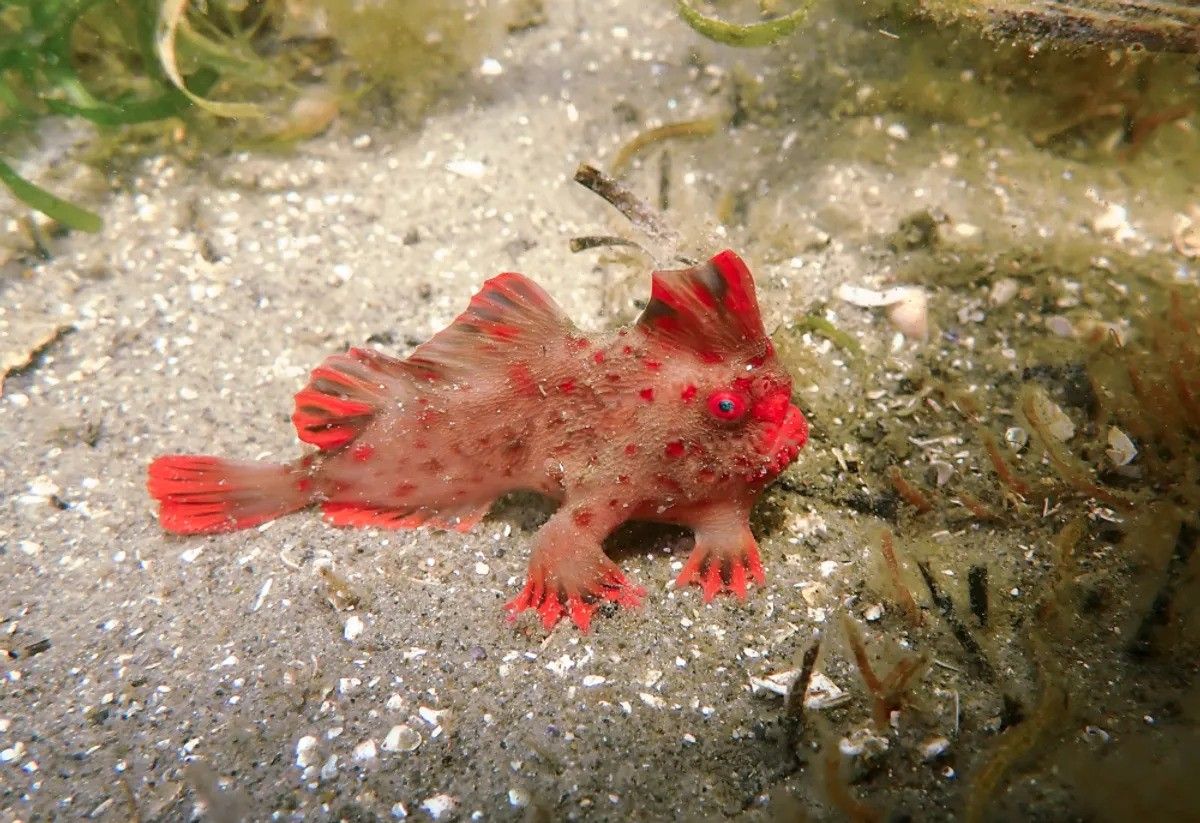
Behold‚ the rarest fish in the world! The red handfish‚ Thymichthys politus‚ is known from just two small patches of reef off the coast of Tasmania‚ thought to be home to around 100 adults. Habitat degradation and climate change have threatened them with extinction‚ but thanks to a breeding program‚ they welcomed 21 hatchlings in 2023.It was the second time red handfish have been successfully bred in captivity‚ and gave rise to a new generation that represented a quarter of their wild population. Mother handfish will care for their eggs until they hatch after around 50 days.The goal? To release these babies into the wild and bolster the wild breeding population. However‚ before they can swim in the big blue‚ they've got to graduate handfish school.“Handfish school is an initiative funded by our supporters at Foundation for Australia’s Most Endangered species‚ and its purpose is to develop ‘street smart’ skills for handfish that have been raised in captivity‚” University of Tasmania handfish experts Dr Jemina Stuart-Smith and Dr Andrew Trotter told IFLScience.   IFLScience is not responsible for content shared from external sites.“It includes introducing more complex habitats‚ other species‚ and conditions that they’re likely to encounter in the wild. It’s really an acclimation period that provides an opportunity for fish to learn natural behaviours such as finding food‚ seeking shelter‚ interacting with conspecific species‚ and navigating in the sea. The purpose is to increase their chances of survival upon release.”Even getting to the stage of having eggs was a tricky task for the red handfish team‚ as there’s a lot we still don’t know about the world’s rarest fish. For instance‚ it was only recently that we learned how to tell the males and females apart‚ which – as you can imagine – is a handy thing to know when trying to pair up possible mates. It’s also unclear exactly what environmental clues these fish use to know when it’s breeding season‚ but the team has seen two successful captive breeding events nonetheless.The difficulties don’t end once the wee bundles of joy hatch‚ either. Coming out as fully-formed 10-millimeter (0.4-inch) handfish‚ feeding and caring for them is a challenge in itself.“If you’ve never seen a handfish before‚” reads a quote on the Handfish Conservation Project website‚ “imagine dipping a toad in some brightly coloured paint‚ telling it a sad story‚ and forcing it to wear gloves two sizes too big.”The species' capacity to thrive in the wild depends on the specific habitat they need to breed.Image courtesy of Tyson BessellIf that doesn’t sell you on these critters‚ frankly I don’t know what will‚ but by Stuart-Smith and Trotter’s accounts‚ they’ve got great personalities‚ too.“They’re quirky little creatures that seem to be quite social – they’re often found together in the wild. They’re also ambush or ‘sit-and-wait’ predators that live on the seafloor‚ so they spend most of their time standing still. But they also use fin displays in communication‚ which is often directed at us humans‚ although we don’t understand what they’re trying to tell us!”Restoring the species won’t be easy‚ as unless the seaweedy habitat they need to breed is restored‚ and stays that way‚ the species will remain vulnerable. However‚ bumping up their wild populations with recruits from the captive breeding and release program is a step towards bringing red handfish back from the brink‚ each ridiculous hatchling representing a step in the right direction.“Handfish represent part of the natural ecosystem‚ and are endemic to Tasmania‚” concluded Stuart-Smith and Trotter‚ “so losing them would mean losing part of our unique natural values and biodiversity.”For more information on red handfish‚ visit the Handfish Conservation Project website‚ or check out the Institute for Marine and Antarctic Studies. Red handfish work is made possible through funding from the Foundation for Australia’s Most Endangered species‚ the Australian Government’s Department of Climate Change‚ Energy‚ the Environment and Water (DCCEEW)‚ and the Institute for Marine and Antarctic Studies at the University of Tasmania.
Like
Comment
Share
Science Explorer
Science Explorer
2 yrs

What Is Bed Rotting‚ And Is It Healthy?
Favicon 
www.iflscience.com

What Is Bed Rotting‚ And Is It Healthy?

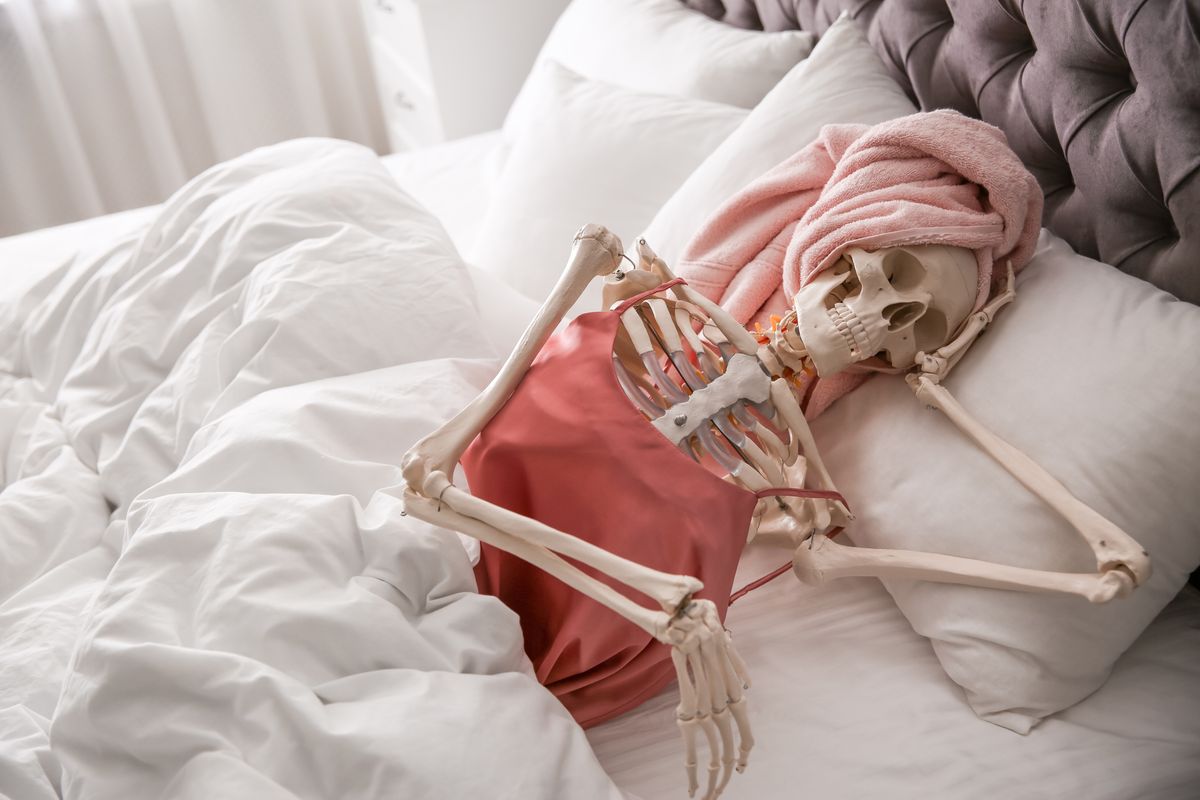
If you’ve not heard the term “bed rotting” before‚ you could be forgiven for assuming it’s a description of a rather unfortunate décor mishap‚ or perhaps a detail from a particularly gruesome serial killer case. If you have heard of it‚ there’s a pretty good chance you think it has something to do with depression‚ or is just the latest excuse for Gen Z to be lazy.But if you ask some of those who choose to practice it‚ they might reply that it’s a wonderful self-care intervention and that we all could benefit from a little bed rotting now and then.Is there anything to these claims? Potentially – but experts aren’t entirely convinced. So‚ what is “bed rotting”? Is it… safe? Should you do it?Well – spoiler alert – you might be doing it right now.What is “bed rotting”?Grim as it may sound‚ “bed rotting” is actually relatively benign on its surface: it’s the practice of simply staying in bed all day. You might think of it as a “duvet day” if you’re a bit older than Gen Z‚ or “vegging out” if you’re a bit older than that; the main point is‚ you don’t get up‚ and you don’t try to be productive.“You could be watching films‚ scrolling on social media‚ talking on the phone‚ eating‚ or anything you would normally do if you were at home relaxing‚” psychologist Robert Common told The Independent last year.“This differs from bed rest to recover from illness or injury‚” he explained‚ “and is often used as a method of dealing with stress or anxiety.”Like so many recently-coined evocative terms – we’re looking at you‚ goblin mode – examples are most readily found on TikTok‚ where some influencers can be seen in appropriately social media-ready beds‚ advertising their rejection of the hustle culture that can sometimes dominate our lives. Jeffrey Gardere‚ a clinical psychologist and professor at Touro University's School of Health Sciences‚ told Health that it’s most popular amongst Gen Z and women – two groups that are more stressed out than pretty much anyone else these days.“Our society tends to put too much emphasis [on] and‚ in some ways‚ [glorifies] being busy or productive all the time‚” Nicole Hollingshead‚ a psychologist and clinical assistant professor of family and community medicine at Ohio State University Wexner Medical Center‚ told Health. “This can lead to feeling burnt out and not allow us time to rest or recharge without labeling this as ‘being lazy.'”Is there any benefit to bed rotting?There’s no denying that mulching around in bed can feel better than‚ say‚ forcing yourself to shower‚ hauling yourself to work‚ and putting in eight or nine hours at a desk job. But bed rotting goes deeper than a little self-indulgence.“We live in a very fast-paced world‚ so stepping back‚ reconnecting with yourself‚ recharging your batteries and rebuilding some mental and physical energy is always a positive thing to do‚” Common told The Independent. “In fact‚ it’s something that more of us should be scheduling into our routines if we can.”It isn’t just rest for your body – although that’s undeniably important. Getting enough rest is crucial for good mental health‚ and bed rotting offers a chance for mental recuperation; it can be a break from everyday stress and exhaustion‚ and “puts us in a stronger position to reassess our goals and find the motivation to reach for them‚ manage our commitments and explore personal interests and hobbies without burning ourselves out‚” Common explained.A day‚ or even just a few extra hours‚ spent lounging in bed can help you cope with anything from being tired from a tough project at work to a full-on existential crisis. But can it be taken too far?The dangers of bed rottingThere are a couple of things to be careful of when it comes to bed rotting. First of all‚ you want to be sure that it’s not a symptom of something more pathological: “Some people [bed rot] because they suffer from depression‚ or their mental health could be suffering in a lot of different ways‚” Tiktok creator @lifeasraven‚ who has made a number of videos on the subject‚ told Glamour. “Some people with ADHD also struggle with this.” But if that’s the case‚ then bed rotting probably isn’t going to be beneficial. Before “bed rotting”‚ staying in bed all day was called dysania‚ and it’s a classic symptom of depression and anxiety. It’s also something of a self-fulfilling prophecy: “For somebody who is depressed‚ bed rotting sounds like a way of potentially withdrawing from others‚ not having social connections‚” Lynn Bufka‚ associate executive director for practice research and policy at the American Psychological Association‚ told TODAY.com. “In the longer term‚ it may [reinforce] the idea that we can't handle whatever it is that we're avoiding.”There are also physical problems that bed rotting might be covering for: Raven noted that she’d seen people discovering thyroid or other hormonal issues that were contributing to an inability to get out of bed. It goes without saying that “doing nothing” is not much of a strategy for dealing with these very real physiological problems – and‚ in fact‚ it may make things worse‚ as prolonged lack of movement has known detrimental effects on the body.“When blood isn’t constantly pumping‚ it has a tendency to clot‚” Daniel Landau‚ board-certified in hematology‚ internal medicine‚ and medical oncology‚ told TODAY.com. “When we walk or stretch‚ the muscles contract along the veins and force them to move the blood around. When we aren’t moving‚ the veins aren’t able to push the blood around.”Too much of a good thingEven when bed rotting isn’t a symptom of something more sinister‚ there’s still a possibility that it could create problems that weren’t there previously. Spending too much time doomscrolling‚ for example‚ may trigger anxieties you never had before; isolation from friends and family can induce depression.But the real danger from bed rotting is something much more quotidian – and‚ frankly‚ kind of an obvious victim of a practice that involves staying in bed all day: It messes with your sleep schedule.“Bed rotting is likely to interfere with your sleep‚” physician assistant and tiktoker @medexplained2you told Glamour‚ “because the body is actually naturally conditioned – when it's in bed – to release certain hormones that tell you to power down.”“But if you stay in bed all day and then also try to go to bed‚ without ever having any breaks‚ your brain will get confused‚” he explained. “It won't know when you want to go to sleep or when you want to stay awake‚ and likely you will have an increase[d] risk of insomnia.”That’s why‚ if you must rot‚ experts suggest that you do it somewhere other than your bed. It’s worthwhile making sure there’s a time gap between rotting and sleeping‚ too – basically‚ anything you can do to separate the bed from the rot is going to be beneficial.The key‚ as ever‚ is balance. Feel free to bed rot now and then – but try not to take it too far‚ and make sure you’re doing it for the right reasons. Remember to try and stay at least a little active‚ even on a bed rotting day‚ and seriously consider leaving your bed to do it – sure‚ it won’t technically count as bed rotting‚ but we won’t tell if you don’t.“Spending the odd day here and there throughout the month bed rotting is unlikely to do you any damage – quite the reverse‚” said Common. But “whilst rest is important for wellbeing‚ exercise is also a powerful tool for maintaining good mental and physical health‚” he explained – noting that “it’s also important to expend enough energy during the day to fall asleep on time‚ and maximize the benefits that come with proper sleep.”“As with all things in life‚ balance is key‚” he said. “Ultimately‚ it’s about not being on either extreme of the spectrum.”The content of this article is not intended to be a substitute for professional medical advice‚ diagnosis‚ or treatment. Always seek the advice of qualified health providers with questions you may have regarding medical conditions.  All “explainer” articles are confirmed by fact checkers to be correct at time of publishing. Text‚ images‚ and links may be edited‚ removed‚ or added to at a later date to keep information current.
Like
Comment
Share
Science Explorer
Science Explorer
2 yrs

New Species Of Punk Beetle Was Almost Mistaken For Bird Poop
Favicon 
www.iflscience.com

New Species Of Punk Beetle Was Almost Mistaken For Bird Poop

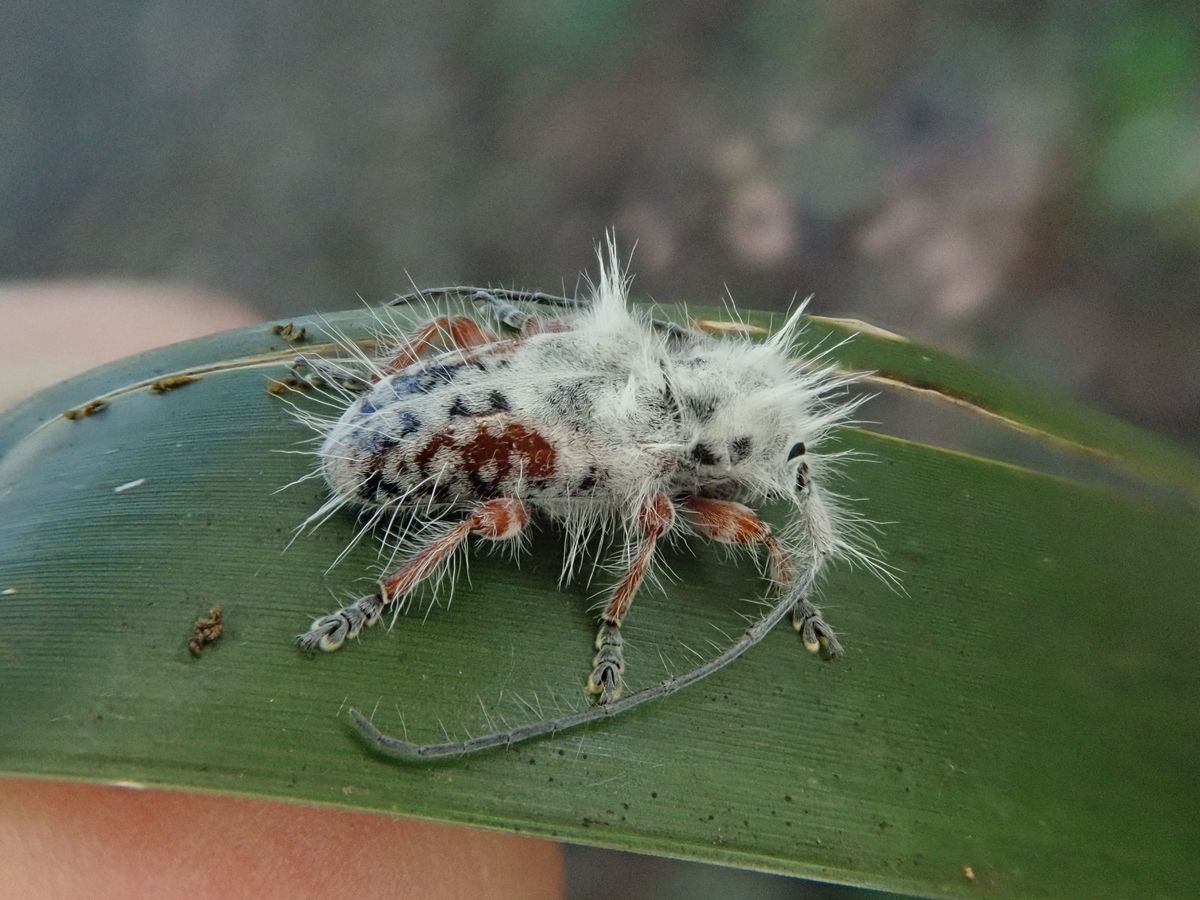
In the bird-eat-bug world of Australia’s rainforests‚ a slightly better chance of survival is given to those who act tough or stay hidden. Alternatively‚ some opt to look so gross that even starving predators aren’t tempted to risk eating them. A brilliant example of this latter tactic has recently been found in the form of a punky Australian beetle that looks like a cross between bird crap and a fungi-infected corpse. The kooky longhorn beetle was discovered by a team from the University of Queensland during a recent expedition to the rainforests of Australia’s Gold Coast. While the bug has since been identified as a new species‚ it very nearly remained undetected because the researchers briefly mistook it for bird poop.“I was walking through the campsite at Binna Burra Lodge one morning and something on a Lomandra leaf caught my eye‚” James Tweed‚ the PhD candidate at the University of Queensland who made the discovery‚ said in a statement.“To my amazement‚ I saw the most extraordinary and fluffiest longhorn beetle I had ever seen. Measuring 9.7 millimetres [a little over 1/3 of an inch]‚ it was a striking red and black beauty covered in long white hairs‚” added Tweed.Upon returning from the expedition‚ Tweed pored over scientific papers to see what species the beetle might belong to‚ but he couldn’t find a match. Seeking answers‚ he posted photographs of the mystery species to an Australasian beetle Facebook group. While the post gathered plenty of interest and fanfare‚ no one could identify the insect. After getting into contact with the Australian National Insect Collection in Canberra‚ Tweed was finally able to confirm the beetle was a completely new species that even belonged to a new genus: Excastra albopilosa.“We chose the name Excastra for the genus‚ which is Latin for ‘from the camp’‚ and for the species name‚ we decided on albopilosa which translates to ‘white and hairy’‚” explained Tweed.It's official: Excastra albopilosa is a new species and genus of insect.Image credit: Lingzi Zhou‚ Australian National Insect CollectionAs for its unusual appearance‚ the researchers believe it might be an example of Batesian mimicry‚ an evolutionary  “trick” used by harmless species to appear more dangerous than they actually are. The fine white hairs that cover the beetle may have evolved to make the insect look like it’s been infected with a pathogenic fungus‚ making it an unappetizing sight for swooping birds. “We don’t yet know what these hairs are for‚ but our primary theory is that they make the insect look like it’s been killed by an insect-killing fungus‚” Tweed speculates. “This would possibly deter predators such as birds from eating it‚ but until someone can find more specimens and study this species further‚ we won’t be able to say for sure why this beetle is so hairy‚” he said.The natural world has many inventive examples of Batesian mimicry. For instance‚ the greater mouse-eared bat makes a noise that sounds like the defensive buzzes of hornet wasps when barn owls enter their caves. Terrified of being stung‚ the owl will hear the noise and swiftly exit the bat’s home‚ unaware they have been duped.The study is published in the Australian Journal of Taxonomy.
Like
Comment
Share
Science Explorer
Science Explorer
2 yrs

This Is The Face Of A
Favicon 
www.iflscience.com

This Is The Face Of A "Vampire" From 16th-Century Italy

A 16th-century “vampire” who was buried with a stone brick in her mouth has been resurrected thanks to the work of a facial reconstruction expert. Discovered in a mass grave for plague victims‚ the long-dead woman may have been suspected of spreading the disease through her bloodthirst‚ hence the need to bung up her evil gob.The body was first uncovered in 2006 during excavations of a burial site on the island of Lazzaretto Nuovo in the Venice lagoon. Once used as a sanatorium for plague sufferers‚ the island became the final resting place for large numbers of people who died during an outbreak in 1576.Despite preceding the publication of Bram Stoker’s Dracula by more than 300 years‚ this period in European history saw a surge in vampire hysteria as village folk began to seek supernatural scapegoats for the deadly diseases that ravaged the continent. The vampire theory is thought to have been spread by Italian gravediggers who regularly came into contact with gruesome decomposing corpses while reopening mass burials in order to add more bodies.These rotting remains would often appear horribly bloated with bodily fluids oozing from their mouths and noses‚ leading to the idea that they were feasting on the blood of their grave-mates. In some cases‚ the shrouds placed over the corpses’ mouths may have decomposed‚ sparking the idea that vampires somehow drew their strength from eating these pieces of cloth.Analyzing the female cadaver back in 2010‚ researchers concluded that the brick was intentionally placed in the woman’s mouth by gravediggers who noticed that she had “eaten” her face shroud. The insertion of the hard stone may therefore have been intended to prevent her from magically spreading the plague by biting other victims.The woman may have been suspected of eating the flesh of other corpses.Image credit: Cicero Moraes‚ OrtogOnline‚ 2024 (CC BY 4.0)Further analysis of the bones indicated that the woman was in her 60s when she died and mainly ate vegetables and grains – a diet indicative of a lowly social class. While this information brings us no closer to understanding why this individual might have been considered a vampire‚ subsequent research threw cold water on the whole idea by suggesting that the brick may have ended up in the corpse’s mouth by accident.To reconstruct the woman’s face‚ 3D designer and forensic expert Cícero Moraes first sketched the frontal and lateral view of the skull‚ as well as the dental arches‚ using measurements and projections of the actual cranium. This model was then digitally fleshed out by morphing the computed tomography scan of a modern individual’s face in order to fit the contours of the ancient skull.A brick may have been inserted into the woman's mouth to prevent her from feasting on flesh.Image credit: Cicero Moraes‚ OrtogOnline‚ 2024 (CC BY 4.0)Moraes then created a replica of the brick out of Styrofoam‚ and conducted a series of experiments to determine if the object could have been deliberately inserted into the woman’s mouth after her death. Results indicated that the brick could have been placed within the oral cavity without damaging the teeth or soft tissue‚ although it’s still unclear if this was done intentionally or not. The research is published in the journal OrtogOnline.
Like
Comment
Share
Strange & Paranormal Files
2 yrs

Strange creature photographed in the Hudson River
Favicon 
anomalien.com

Strange creature photographed in the Hudson River

Recently‚ a peculiar sight captured attention in the Hudson River‚ which meanders through the eastern region of New York State‚ USA: a large‚ snake-like creature spotted floating on the water’s surface was photographed. For years‚ reports of a similar entity have surfaced in the Hudson River‚ occasionally accompanied by photographic evidence. However‚ journalists and local officials have typically dismissed these sightings as mere snags or large fish. In 2018‚ sonar technology detected a moving object measuring approximately 14 feet in length (4.2 meters) within the water column. Despite initial intrigue‚ this phenomenon was later attributed to a rare and elderly sturgeon. Could this be proof of a monster living in the deepest section of the Hudson River? Sturgeon‚ once plentiful in the Hudson a century ago‚ have since dwindled to near extinction‚ making encountering such a sizable specimen a stroke of remarkable fortune—or so it seemed. Perhaps it wasn’t a sturgeon after all. Dubbed “Kipsey‚” this enigmatic snake-like creature is frequently sighted in the Hudson River Valley‚ particularly near the city of Poughkeepsie. The most recent sighting of the alleged Kipsey occurred one early morning in March‚ when Jo-Ann Martin captured a photo and promptly shared it on her social media page‚ encouraging speculation and theories from fellow observers. While some speculated that Martin had merely captured a piece of driftwood resembling a serpentine form‚ others humorously suggested a transatlantic visit from “Nessie‚” the famous Loch Ness Monster. However‚ a faction remained convinced that there exists something substantial and mysterious within the Hudson‚ defying simple explanations like that of a sturgeon. The post Strange creature photographed in the Hudson River appeared first on Anomalien.com.
Like
Comment
Share
Showing 100657 out of 120817
  • 100653
  • 100654
  • 100655
  • 100656
  • 100657
  • 100658
  • 100659
  • 100660
  • 100661
  • 100662
  • 100663
  • 100664
  • 100665
  • 100666
  • 100667
  • 100668
  • 100669
  • 100670
  • 100671
  • 100672
Advertisement
Stop Seeing These Ads

Edit Offer

Add tier


Select an image
Delete your tier
Are you sure you want to delete this tier?

Reviews

In order to sell your content and posts, start by creating a few packages. Monetization

Pay By Wallet

Payment Alert

You are about to purchase the items, do you want to proceed?

Request a Refund