YubNub Social YubNub Social
    #satire #democrats #loonylibs #iran #comedy
    Advanced Search
  • Login
  • Register

  • Night mode
  • © 2026 YubNub Social
    About • Directory • Contact Us • Developers • Privacy Policy • Terms of Use • shareasale • FB Webview Detected • Android • Apple iOS • Get Our App

    Select Language

  • English
Night mode toggle
Featured Content
Community
New Posts (Home) ChatBox Popular Posts Reels Game Zone Top PodCasts
Explore
Explore
© 2026 YubNub Social
  • English
About • Directory • Contact Us • Developers • Privacy Policy • Terms of Use • shareasale • FB Webview Detected • Android • Apple iOS • Get Our App
Advertisement
Stop Seeing These Ads

Discover posts

Posts

Users

Pages

Blog

Market

Events

Games

Forum

Science Explorer
Science Explorer
2 yrs

Virga: When Rain Vanishes Before It Hits The Ground
Favicon 
www.iflscience.com

Virga: When Rain Vanishes Before It Hits The Ground

Have you ever driven through what appeared from a distance to be an active patch of rainfall coming from dense cloud cover‚ just to find the land underneath dry as a bone? That’s virga‚ baby!Virga‚ from the Latin word meaning "rod" or "branch"‚ refers to the wisps attached to the underside of rain clouds that give the appearance of heavy rainfall. Unlike regular rain‚ however‚ virga trails will never reach the ground.Sometimes referred to as jellyfish clouds‚ these rain clouds function in the same way as ones producing regular rain‚ they only become virga when the droplets meet a layer of dry or warm air on their journey to the ground. This low patch of dry‚ warm air causes the raindrops to evaporate as they pass through‚ halting the formation of regular rainfall.The streaks commonly descend vertically beneath the cloud but can hook almost horizontally at their ends. This can be a result of strong winds‚ but ordinarily occurs as the droplets begin to vaporize closer to the Earth’s surface‚ causing the terminal fall velocity of the particles to decrease as they travel.The formations look particularly beautiful at sunset.Image credit: John Robert McPherson / Wikimedia Commons (CC BY-SA 4.0)When virga occurs in mid or high-level clouds‚ the droplets consist of ice crystals and appear pale‚ while low-level virga is made up of water droplets and can appear grey in color. Fallstreak holes are a distinct formation of virga that can form as a result of aircraft passing through mid-level cloud cover.Virga formations can be quite problematic for nearby aircraft due to the formation of microbursts. As the droplets evaporate nearer Earth’s surface‚ they cool the air around them‚ causing the cold air above to suddenly sink. These microbursts can cause moderate to severe turbulence for aircraft traveling through the weather system.Commonly forming in deserts or at high altitudes‚ virga can occur in cirrocumulus‚ altocumulus‚ altostratus‚ nimbostratus‚ cumulonimbus‚ cumulus‚ and stratocumulus clouds. And‚ while it is not a rare phenomenon‚ caught under the right lighting it can look particularly dazzling.All “explainer” articles are confirmed by fact checkers to be correct at time of publishing. Text‚ images‚ and links may be edited‚ removed‚ or added to at a later date to keep information current.

Like
Comment
Share
Science Explorer
Science Explorer
2 yrs

Pseudoscience Vs Science: How To Spot The Difference
Favicon 
www.iflscience.com

Pseudoscience Vs Science: How To Spot The Difference

This article first appeared in Issue 15 of our free digital magazine CURIOUS. We exist in an increasingly online world that bombards us with information at every opportunity. A simple scroll on our favorite websites‚ news outlets‚ and social media platforms can bring a torrent of (sometimes questionable) content down on our heads‚ and it can be a nightmare to decipher the fact from the fiction – especially when it comes to science.It’s no wonder‚ therefore‚ that we find ourselves asking more and more often: Is this science or is it snake oil? And‚ more importantly‚ how can we tell?This distinction‚ also known as the demarcation problem‚ is “key to most of the fundamental problems in the philosophy of science‚” according to Karl Popper‚ one of the 20th century's most influential philosophers.Despite its importance‚ it’s not always easy to know what’s science and what’s not. Fortunately‚ there are some tell-tale signs that may help in navigating the maze of misinformation out there – here’s how to spot a pseudoscience in the wild.Pseudoscience: a historyPseudoscience is a system of thought or a theory that is erroneously regarded as scientific despite not being rooted in science. Pseudoscientific ideas predate the scientific era‚ and in some cases are ancient – the practice of astrology can be traced back to the 3rd millennium BCE‚ for example.Things really got going in the 19th century‚ which saw a burgeoning of pseudoscientific ideas. Practices such as phrenology – the idea that bumps on the skull can reveal aspects of our personalities – spirituality‚ and telepathy became popular‚ and proponents of them often published their beliefs in books and magazines‚ presented as "research".The dawn of the Space Age in 1957 saw things take an extraterrestrial turn‚ with ancient astronaut theories taking off. However‚ by the end of the 20th century‚ skepticism had begun to grow and various societies aiming to counter pseudoscience popped up‚ including the Center for Inquiry (1991) and Skeptics Society (1992).Famous examplesToday‚ belief in pseudoscientific theories is still rife – you only need spend five minutes on TikTok for evidence of that.Popular examples include the previously mentioned astrology – the concept that the movements of celestial bodies somehow influence our daily lives – which has reams of fans despite evidence it isn’t real; numerology – the belief that the numerical values of our birth and name can reveal deep truths about us; and the handwriting-based personality practice called graphology.You might also be familiar with homeopathy‚ cryptozoology (seriously‚ where is Nessie?)‚ pseudoarchaeology (looking at you‚ Atlantis)‚ acupuncture‚ and aromatherapy‚ which are all largely considered to be pseudoscience. And that’s naming just a few.But what separates these ideas apart from legitimate science?Science vs. pseudoscienceA quick Google will tell you that science is “the systematic study of the structure and behaviour of the physical and natural world through observation‚ experimentation‚ and the testing of theories against the evidence obtained” – which is a lot of words to essentially say that science adheres to the scientific method.This begins with a question‚ which is developed into a hypothesis and tested in a series of experiments‚ the results of which can be used to draw new conclusions. Ultimately‚ the process enables us to generate knowledge‚ make predictions‚ and advance our understanding.A pseudoscience‚ on the other hand‚ may present itself as scientific‚ but is in fact incompatible with this method. It often starts with a conclusion and works backwards to find the evidence to “prove” it.Even with these intrinsic differences‚ it’s not always clear where pseudoscience ends and science begins: alchemy paved the way for the science of chemistry‚ after all.A crucial tenet of “science” is that it builds on previous knowledge‚ using what has come before‚ alongside new evidence‚ to support or refute a theory. Because of this‚ it is highly adaptable and can change in light of new information.For example‚ a widely accepted scientific theory‚ like Einstein’s relativity‚ may be the best current explanation that we have for something‚ but only until a better one comes along.“Anything that is truly scientific is going to allow for that kind of refinement and even that kind of rejection‚” Rachel Ankeny‚ a professor of philosophy of science at the University of Adelaide‚ told IFLScience.Subscribe to our newsletter and get every issue of CURIOUS delivered to your inbox free each month.However‚ pseudoscience‚ which has likely not been subjected to such scrutiny and stringent testing‚ tends to be much less malleable. “For something to be a scientific fact‚ typically‚ they have to be a finding that has resulted from careful attention to building empirical evidence. [...] In different fields‚ these are going to be different but it often involves observations‚ testing‚ and measuring through experimentations‚” Ankeny added. The same cannot be said of pseudoscience‚ which instead of repeatedly carrying out rigorous testing relies on claims of “ancient methods” used for “thousands of years” or cherry-picks its evidence from real existing data‚ sometimes just one small study‚ not widely evaluating any further or updated findings and often taking those findings out of context to fit a foregone conclusion.Even with these intrinsic differences‚ it’s not always clear where pseudoscience ends and science begins. And sometimes it can seem like the fields themselves are confused: the pseudoscience of alchemy paved the way for the science of chemistry‚ after all.So how can you work out what to take seriously when the waters are so diluted? (Yes‚ that was a homeopathy joke.)How to spot a pseudoscienceGwyneth Paltrow’s Goop‚ which sells many unscientific “wellness” items‚ from healing crystals to energy rebalancing stickers‚ has an estimated annual revenue of $18-60 million.The first thing to ask yourself is “Where has this come from?”. Experts are experts for a reason‚ and if they’re touting something then it’s likely to be more valid than if‚ say‚ you heard it from your mom’s friend’s neighbor. Always question a big claim’s sources.The next thing you might want to consider is “Why?”; what is the purpose of this theory‚ and what could someone gain from it? Science generally strives for discoveries to open up new avenues of research‚ advance knowledge‚ and perhaps influence current policies or worldviews. Its purpose tends to be more altruistic than pseudoscience‚ which may be pushing an agenda – perhaps someone stands to benefit financially or in some other way by pushing this idea. Gwyneth Paltrow’s Goop‚ for example‚ which sells many unscientific “wellness” items‚ from healing crystals to energy rebalancing stickers‚ has an estimated annual revenue of between $18-60 million.If in doubt‚ you can always turn to The Research. As we’ve established‚ science is supported by a broad body of evidence that has stood up to peer review and the scrutiny of scientific peers. Robust evidence is more likely to suggest something is science‚ whereas limited‚ flimsy‚ or cherry-picked data hints otherwise.If we’re talking science‚ this evidence is likely to have changed over time‚ so you should look out for an evolution of ideas. If the principles are more or less unchanged since a concept was first introduced‚ or no new research has been conducted‚ you could have a pseudoscience on your hands.In a similar vein‚ you could consider how a theory responds to challenges. If it‚ or its supporters‚ ignore or refuse to accept contradictory evidence‚ it may not be legitimate. Science‚ on the other hand‚ embraces challenges.Last but not least‚ let’s return to our old friend Karl Popper. His theory of falsification posits that for a theory to be considered scientific‚ it must be able to be tested and conceivably proven false. However‚ many pseudoscientific claims cannot be tested and so cannot be proven or‚ crucially‚ disproven. Where pseudoscience shies away from falsification‚ science seeks it‚ something that can be useful to contemplate when looking to uncover a pseudoscience.Armed with these top tips‚ you can not only satisfy your skepticism but‚ according to Popper‚ you can solve most of the problems in the philosophy of science. We bet that wasn’t in your horoscope for today.CURIOUS magazine is a digital magazine from IFLScience featuring interviews‚ experts‚ deep dives‚ fun facts‚ news‚ book excerpts‚ and much more. Issue 18 is out now.
Like
Comment
Share
Science Explorer
Science Explorer
2 yrs

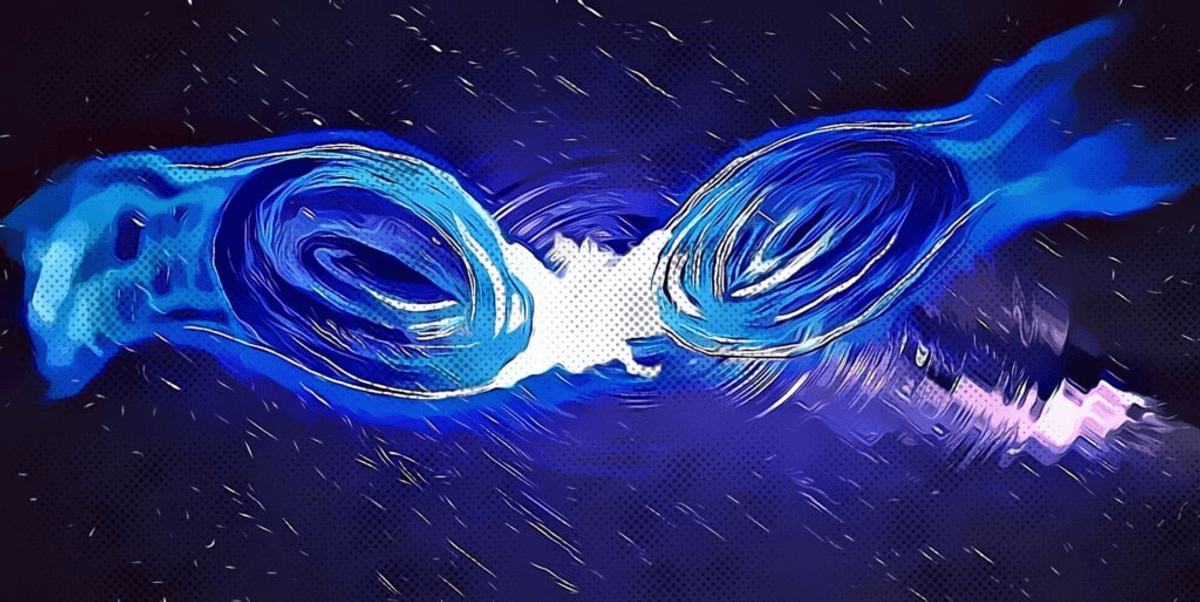
Merging Dark Matter Stars Could Have Produced An Unusual Gravitational Wave
Favicon 
www.iflscience.com

Merging Dark Matter Stars Could Have Produced An Unusual Gravitational Wave

At least one of the gravitational waves detected by the LIGO and Virgo detectors might not be from black holes or neutron stars‚ but something even more exotic‚ physicists have claimed. Known as boson stars or dark matter stars‚ we have no other evidence these objects even exist. However‚ they would be useful in explaining some aspects of the universe that don’t currently make sense‚ as well as the exceptional features of this wave.Gravitational wave detectors were established to capture mergers between objects we already knew existed‚ such as black holes and neutron stars. Despite uncertainty as to whether we have detected a merger between one of each‚ signs of two black holes colliding have only been overshadowed for recent scientific importance by neutron star mergers. However‚ an additional hope for the detectors was that they would find new objects‚ whose existence was uncertain or barely guessed at. An international team thinks one detected gravitational wave‚ GW190521‚ might have done just that. Their bet is on a merger between two stars made from particles different from those that make up most of the familiar universe.Bosons are a class of subatomic particles with integer spins. Besides photons‚ which we know well‚ and the Higgs boson‚ where at least the name is familiar‚ the category includes a class of particles little known to non-physicists. While photons lack mass‚ and Higgs bosons have exceptionally short lives‚ it has been proposed that undiscovered bosons could form stars where they are clumped in pockets left over from the Big Bang."Boson stars behave very much like black holes but they are fundamentally different‚ as they lack the two most distinctive (and somewhat problematic) aspects of black holes: their no-return surface known as event horizon‚ and the singularity in the interior‚ where laws of physics break down‚” said study author Dr Sanchis-Gual of the University of Valencia in a statement.If so‚ we might not be able to see such stars – but their mass could contribute to the explanation for the frustratingly elusive dark matter. On their own‚ such boson stars would be almost impossible to find‚ but if two are in close orbits around each other they would produce a lasting gravitational wave at the edge of our capacity to detect. If the orbits decayed until the two stars collide‚ the result would be a gravitational wave superficially similar to those we have seen.The challenge would be distinguishing such a wave from one produced by two black holes. But one wave is thought to show the signs.A comparison of the gravitational wave GW190521 as detected by the LIGO network and a simulation of two boson stars‚ along with a diagram of the stars' orbits degradingImage Credit: Galician Institute of High Energy PhysicsWhen GW190521 was first detected it was announced as the product of the two heaviest (and most distant) black holes we had yet seen merging‚ with a combined mass of 142 times that of the Sun.However‚ details of the event puzzled astronomers. For one thing‚ the location appeared to be in the disk around a supermassive black hole‚ which was unexpected. Moreover‚ the larger object before the merger had a mass of 85 times that of the Sun‚ a size thought to be impossible for a single star to produce. Although a previous merger of less massive black holes offered a possible explanation‚ the event remains an oddity.In two papers‚ Sanchis-Gaul and co-authors propose GW190521’s components are more likely to have been boson stars than black holes. They argue that the methods currently used to process gravitational waves are designed on the assumption that anything contributing to a wave‚ and larger than a certain mass‚ is a black hole. By scrapping these assumptions and simulating what would happen if boson stars merged‚ the team produced an outcome similar to GW190521. They also provide evidence another gravitational wave‚ GW190426‚ was not produced by boson stars‚ while GW200220 probably wasn’t either.The fact a simulation matches the observation doesn’t prove GW190521 was a boson star merger‚ or even that boson stars exist. Alternative explanations for GW190521 have been offered‚ but these also require changes to the way we picture the universe. Debates about the nature of this event will continue for some time‚ but with luck‚ future gravitational wave detections will be made that require novel explanations‚ helping us determine which is right.A paper on how the authors searched for signs of boson stars in specific gravitational waves is published in the journal Physical Review D.A more general discussion on how to process gravitational wave data to allow for more possibilities is published open access in the journal Physical Review X.
Like
Comment
Share
Strange & Paranormal Files
2 yrs

Cat was found in the morgue eating corpses
Favicon 
anomalien.com

Cat was found in the morgue eating corpses

A shocking discovery was made in a hospital in Vantaa‚ Finland‚ when a cat was found eating corpses in the morgue. The animal had a sad and lonely life‚ as he was emaciated‚ neglected and had no owner who cared for him‚ reports mtvuutiset.fi. The cat was discovered by a hospital employee who saw him sneaking into the morgue through a ventilation shaft and feeding on the bodies of the deceased. The employee was horrified by the sight and alerted the animal protection authorities‚ who came to the hospital and took the cat to a shelter. The cat was in a very poor condition when he arrived at the shelter. He was skinny‚ dirty and had parasites on his fur and skin. He also had a microchip implanted in his neck‚ but it turned out that his registered owner had died a long time ago and no one had adopted him afterwards. The cat had been living on the streets‚ scavenging for food and shelter. The cat was named Rontti‚ which means “rascal” in Finnish. He was given medical treatment and food at the shelter‚ but he did not show much interest in humans or other cats. He seemed to be traumatized by his experiences and preferred to be alone. He rarely played or cuddled with anyone‚ and often hid in a corner. The shelter staff tried to find a new home for Rontti‚ but they did not succeed. No one wanted to adopt a cat that had eaten human flesh‚ as they found it disgusting and disturbing. Rontti now are spending his last days at the shelter. The post Cat was found in the morgue eating corpses appeared first on Anomalien.com.
Like
Comment
Share
Strange & Paranormal Files
2 yrs

The Strange Story of the Grave of Copernicus
Favicon 
anomalien.com

The Strange Story of the Grave of Copernicus

Nicholas Copernicus was the astronomer who‚ five centuries ago‚ explained that Earth revolves around the Sun‚ rather than vice versa. A true Renaissance man‚ he also practised as a mathematician‚ engineer‚ author‚ economic theorist and medical doctor. Upon his death in 1543 in Frombork‚ Poland‚ Copernicus was buried in the local cathedral. Over the subsequent centuries‚ the location of his grave was lost to history. Nicholas Copernicus‚ or Mikolaj Kopernik in Polish‚ was born in Torun in 1473. He was the youngest of four children born to a local merchant. After his father’s death‚ Copernicus’s uncle assumed responsibility for his education. The young scholar initially studied at the University of Kraków between 1491 and 1494‚ and later at Italian universities in Bologna‚ Padua and Ferrara. After studying medicine‚ canon law‚ mathematical astronomy‚ and astrology‚ Copernicus returned home in 1503. He then worked for his influential uncle‚ Lucas Watzenrode the Younger‚ who was the Prince-Bishop of Warmia. Copernicus worked as a physician while continuing his research in mathematics. At that time‚ both astronomy and music were considered branches of mathematics. During this period‚ he formulated two influential economic theories. In 1517‚ he developed the quantity theory of money‚ which was later re-articulated by John Locke and David Hume‚ and popularised by Milton Friedman in the 1960s. In 1519‚ Copernicus also introduced the concept now known as Gresham’s law‚ a monetary principle addressing the circulation and valuation of money. Jan Matejko – Nicolaus Copernicus. Sketch to the Painting “Astronomer Copernicus‚ or Conversation with God” The Copernican model of the universe The cornerstone of Copernicus’s contributions to science was his revolutionary model of the universe. Contrary to the prevailing Ptolemaic model‚ which maintained that Earth was the stationary centre of the universe‚ Copernicus argued that Earth and other planets revolve around the Sun. Copernicus was further able to compare the sizes of the planetary orbits by expressing them in terms of the distance between the Sun and Earth. Copernicus feared how his work would be received by the church and fellow scholars. His magnum opus‚ “De Revolutionibus Orbium Coelestium” (On the Movement of the Celestial Spheres)‚ was only published just before his death in 1543. The publication of this work set the stage for groundbreaking shifts in our understanding of the universe‚ paving the way for future astronomers such as Galileo‚ who was born more than 20 years after Copernicus’s death. The search for Copernicus The Frombork Cathedral serves as the final resting place of more than 100 people‚ most of whom lie in unnamed graves. There were several unsuccessful attempts to locate Copernicus’s remains‚ dating as far back as the 16th and 17th centuries. Another failed attempt was made by the French emperor Napoleon after the 1807 Battle of Eylau. Napoleon held Copernicus in high regard as a polymath‚ mathematician and astronomer. In 2005‚ a group of Polish archaeologists took up the search. They were guided by the theory of historian Jerzy Sikorski‚ who claimed that Copernicus‚ serving as the Canon of Frombork Cathedral‚ would have been buried near the cathedral altar for which he was responsible during his tenure. This was the Altar of Saint WacÅ‚aw‚ now known as the Altar of the Holy Cross. Thirteen skeletons were discovered near this altar‚ including an incomplete skeleton belonging to a male aged between 60 and 70 years. This particular skeleton was identified as the closest match to that of Copernicus. Forensic science The skull of the skeleton served as the basis for a facial reconstruction. In addition to morphological studies‚ DNA analysis is often used for the identification of historical or ancient remains. In the case of the presumed remains of Copernicus‚ a genetic identification was possible due to the well-preserved state of the teeth. A significant challenge lay in identifying a suitable source of reference material. There were no known remains of any relatives of Copernicus. An unlikely find In 2006‚ however‚ a new source of DNA reference material came to life. An astronomical reference book used by Copernicus for many years was found to contain hair among its pages. This book had been taken to Sweden as war booty following the Swedish invasion of Poland in the mid-17th century. It is currently in the possession of the Museum Gustavianum at Uppsala University. A meticulous examination of the book revealed several hairs‚ thought likely to belong to the book’s primary user‚ Copernicus himself. Consequently‚ these hairs were assessed as potential reference material for genetic comparison with the teeth and bone matter recovered from the tomb. The hairs were compared with the DNA from the teeth and bones of the discovered skeleton. Both the mitochondrial DNA from the teeth and the skeletal sample matched those of the hairs‚ strongly suggesting that the remains were indeed those of Nicholas Copernicus. The multidisciplinary effort‚ involving archaeological excavation‚ morphological studies and advanced DNA analysis‚ has led to a compelling conclusion. The remains discovered near the Altar of the Holy Cross in Frombork Cathedral are highly likely to be those of Nicholas Copernicus. This monumental find not only sheds light on the final resting place of one of the most influential figures in the history of science‚ but also showcases the depth and sophistication of modern scientific methods in corroborating historical data. Darius von Guttner Sporzynski‚ Historian‚ Australian Catholic University This article is republished from The Conversation under a Creative Commons license. Read the original article. The post The Strange Story of the Grave of Copernicus appeared first on Anomalien.com.
Like
Comment
Share
National Review
National Review
2 yrs

‘Gender-Affirming Care’ Is Increasingly Being Recognized as Unscientific
Favicon 
www.nationalreview.com

‘Gender-Affirming Care’ Is Increasingly Being Recognized as Unscientific

New studies raise more red flags on pediatric gender medicine.
Like
Comment
Share
National Review
National Review
2 yrs

The Supreme Court’s Chance to Revive a Neglected Civil Right
Favicon 
www.nationalreview.com

The Supreme Court’s Chance to Revive a Neglected Civil Right

Sheetz comes to the Court asking it to confirm the role of the Takings Clause in securing one’s right to build on property free of predatory conditions by the government.
Like
Comment
Share
National Review
National Review
2 yrs

Iran’s Regional Aggression Masks Its Weaknesses
Favicon 
www.nationalreview.com

Iran’s Regional Aggression Masks Its Weaknesses

Beset by internal and external pressures‚ the regime finds its grip on power increasingly imperiled.
Like
Comment
Share
National Review
National Review
2 yrs

The AWOL Defense Secretary
Favicon 
www.nationalreview.com

The AWOL Defense Secretary

Loose lips may sink ships‚ but a spectacularly dysfunctional lack of communication at the top of the U.S. government is its own problem.
Like
Comment
Share
Twitchy Feed
Twitchy Feed
2 yrs

'You URNed It': Young Alabama Man Steals the Spotlight From Bass Pro Shop Man
Favicon 
twitchy.com

'You URNed It': Young Alabama Man Steals the Spotlight From Bass Pro Shop Man

'You URNed It': Young Alabama Man Steals the Spotlight From Bass Pro Shop Man
Like
Comment
Share
Showing 102293 out of 113235
  • 102289
  • 102290
  • 102291
  • 102292
  • 102293
  • 102294
  • 102295
  • 102296
  • 102297
  • 102298
  • 102299
  • 102300
  • 102301
  • 102302
  • 102303
  • 102304
  • 102305
  • 102306
  • 102307
  • 102308
Advertisement
Stop Seeing These Ads

Edit Offer

Add tier


Select an image
Delete your tier
Are you sure you want to delete this tier?

Reviews

In order to sell your content and posts, start by creating a few packages. Monetization

Pay By Wallet

Payment Alert

You are about to purchase the items, do you want to proceed?

Request a Refund