YubNub Social YubNub Social
    #satire #democrats #loonylibs #iran #comedy
    Advanced Search
  • Login
  • Register

  • Night mode
  • © 2026 YubNub Social
    About • Directory • Contact Us • Developers • Privacy Policy • Terms of Use • shareasale • FB Webview Detected • Android • Apple iOS • Get Our App

    Select Language

  • English
Night mode toggle
Featured Content
Community
New Posts (Home) ChatBox Popular Posts Reels Game Zone Top PodCasts
Explore
Explore
© 2026 YubNub Social
  • English
About • Directory • Contact Us • Developers • Privacy Policy • Terms of Use • shareasale • FB Webview Detected • Android • Apple iOS • Get Our App
Advertisement
Stop Seeing These Ads

Discover posts

Posts

Users

Pages

Blog

Market

Events

Games

Forum

BlabberBuzz Feed
BlabberBuzz Feed
2 yrs

WATCH: AOC Reveals Her 'Birdbrain' Solution To Border Crisis
Favicon 
www.blabber.buzz

WATCH: AOC Reveals Her 'Birdbrain' Solution To Border Crisis

Like
Comment
Share
BlabberBuzz Feed
BlabberBuzz Feed
2 yrs

Data Reveals Shocking Reality: What Percentage Of Illegal Migrants Will Get Deported Under President Biden's Administration?
Favicon 
www.blabber.buzz

Data Reveals Shocking Reality: What Percentage Of Illegal Migrants Will Get Deported Under President Biden's Administration?

Like
Comment
Share
Living In Faith
Living In Faith
2 yrs

4 Ways Christians Can Help the Homeless
Favicon 
www.christianity.com

4 Ways Christians Can Help the Homeless

Homelessness is something that will not be fixed overnight; however‚ there are many things we can do that will help in the long run. These simple things can help the homeless population in many ways‚ even if it feels you could be doing more.
Like
Comment
Share
Living In Faith
Living In Faith
2 yrs

Storing the Treasure of Your Heart in Heaven - First15 - January 9
Favicon 
www.christianity.com

Storing the Treasure of Your Heart in Heaven - First15 - January 9

Why should we spend time alone with God? Why is meeting with God in the secret place so important?
Like
Comment
Share
Living In Faith
Living In Faith
2 yrs

A Prayer for the Right Pace - Your Daily Prayer - January 9
Favicon 
www.ibelieve.com

A Prayer for the Right Pace - Your Daily Prayer - January 9

Paul knew following Jesus in a world full of temptations was going to be arduous‚ like running a long race. One that would require the right pacing. He knew we would fare better if we didn’t come out the gate ablaze and burn out too quickly. 
Like
Comment
Share
Living In Faith
Living In Faith
2 yrs

Why We Need the Bad News of Israelite History
Favicon 
www.thegospelcoalition.org

Why We Need the Bad News of Israelite History

“They’re awful‚” one student lamented. Others fidgeted and some looked down while their fellow student shared her impressions of the Israelites’ antics in the Old Testament narratives I’d assigned the class to read. She went on to complain of dismemberment‚ distasteful lifestyles‚ and brutal sexual assault. My class forced many students to confront these shameful realities from Israel’s history for the first time. It was clear the whole class needed to process them together. Biblical Israel’s story is riddled with bad news. Until they get to my class‚ many of my evangelical Christian students have never read or heard about these hard stories in Scripture. But we need to own them. Part of what makes the good news of Jesus the Messiah good news is the bad news we find in the narratives of the Old Testament. Many modern Christians start with creation and the fall then jump directly to Calvary. There’s nothing wrong with the creation-fall-salvation model except that the habit of skipping the in-between part—Israel’s messy history—can lead us to think it insignificant. There’s nothing wrong with the creation-fall-salvation model except that the habit of skipping the in-between part—Israel’s messy history—can lead us to think it insignificant. The Bible doesn’t move directly from the promises of the Torah story to the four Gospels. The two are connected by the Israel story. The great merciful acts of Yahweh fill the pages of this rich history. Yet no biblical author shies away from human sinfulness. We read about rebellion from the land of promise to Mesopotamia and back. And we need to listen carefully because the bad news within redemptive history culminates in the teaching‚ death‚ and resurrection of the Messiah. Three examples make this clear. When Jonathan Was a Youth The non-chronological arrangement of the book of Judges sets up a shocker of an ending. After things get worse from one deliverer to the next‚ the book ends with a pair of horrific narratives too depraved to be described by the repeated characterization that “the Israelites did what was evil in the eyes of Yahweh” (translation mine‚ Judg. 2:11; 3:7‚ 12; 4:1; 6:1; 10:6; 13:1). Instead‚ the narrator says‚ “Everyone did what was right in his own eyes” (17:6; 21:25). But when did things get so bad? At the conclusion of the Danite false-worship debacle and in the middle of the civil war sparked by the Benjamites’ crime against the Levite’s concubine‚ the narrator reveals these things took place in the days of the grandsons of Moses and Aaron (18:30; 20:28). To underline the point‚ the narrator says five times that Jonathan the grandson of Moses was still “young” (17:7‚ 11‚ 12; 18:3‚ 15). Anyone who looks back with longing to the days when Israel first entered the land of promise should reread the ending of Judges. There’s no such thing as the good old days—at least not in the highlands of Benjamin and Ephraim. Moses’s grandson is still young in the days when “everyone did what was right in his own eyes.” When Menahem Compromised If asked‚ Menahem the ruler of the northern kingdom of Israel might explain that political leaders sometimes need to make difficult decisions for the greater good. By this‚ Menahem would be referring to his decision to put Israel under vassalage to the Assyrian empire. How did Menahem pay excessive tribute to Assyria? With other people’s silver‚ of course. The book of Kings explains that Menahem made this decision to strengthen his own rule (2 Kings 15:19‒20). If this isn’t bad enough‚ the author includes a gruesome war crime of Menahem to show his evil character. The biblical text remembers Menahem for ripping open the pregnant women of Tiphsah as retaliation for them not surrendering immediately (v. 16). The ancient Assyrians of Menahem’s day weren’t shy about the brutalities they inflicted on their enemies. Sickening atrocities fill the royal inscriptions and the walls of Assyrian palaces. Yet the Assyrians don’t normally celebrate Menahem’s despicable act. Only one ancient Assyrian inscription and only one visual relief memorialize this behavior. These rare cases stand in sharp contrast to a long line of Assyrian kings who had their scribes and sculptors repeatedly memorialize the dismemberment‚ skinning alive‚ and torture of those they defeated. Menahem’s vile actions set him apart with the worst of the Assyrian kings. When Nehemiah Pummeled Rebels Nehemiah does what many leaders only dream about in secret. He physically rips out the beards and beats the rebellious men of Jerusalem who’d entered apostate marriages (Neh. 13:25). Nehemiah knows what’s at stake. Twelve years earlier‚ the returned exiles had solemnly promised to obey God’s will. The Judeans had put their promise into writing‚ and they signed it (Neh. 10)‚ but now they no longer remember their oath. In Nehemiah’s second term as governor‚ he uses the people’s promise as a checklist to expose their sin (13:4‒31). They rebelled against everything they’d promised‚ so sinners filled the streets of Jerusalem once again. It’s as though the exile never happened. Yahweh’s mercy and love appear everywhere in the Old Testament. But the bad news of sinful rebellions also fills the pages of the Israel story. In narratives that take us from the garden to the Babylonian exile‚ we’re tempted to ask what could be worse. The answer is what happened at Golgotha. We All Need Bad News First Pastors‚ conference speakers‚ and bloggers have long bemoaned the biblical illiteracy of today’s Christians. But this isn’t merely a matter of inconvenience. It’s not just that we need to offer a remedial explanation of the biblical accounts former generations knew well. No‚ when younger generations skip Israel’s story‚ it impoverishes the gospel. We need these stories to strengthen our vision of the good news in at least two ways. In narratives that take us from the garden to the Babylonian exile‚ we’re tempted to ask what could be worse. The answer is what happened at Golgotha. First‚ when we read about rebellion in the Scriptures‚ we learn to recognize it in ourselves. The Old Testament doesn’t merely give us pictures of others’ sin; its historical narratives are mirrors to show us our sin (1 Cor. 10:6‚ 11; James 1:23‒25). Second‚ reading about this long history of rebellion shows us the lengths to which Yahweh goes in pursuit of his people. Again and again‚ Yahweh acted with redeeming grace. Jesus infers that the Old Testament bears sufficient witness to God’s redeeming purposes—enough to leave us without excuse if we reject Christ’s resurrection from the dead (Luke 16:31). For this reason‚ the students in my classes need to study Old Testament history even if Israel’s sinfulness leaves them slack-jawed. Only those who understand the depth of human sinfulness can see the need for repentance and the expansiveness of grace. Yahweh in his wisdom has been pleased to present ancient Israel in all its messiness. We need the bad news to recover the goodness of the good news. We need the Israel story that culminates in the teaching‚ death‚ and resurrection of our Lord.

Like
Comment
Share
Living In Faith
Living In Faith
2 yrs

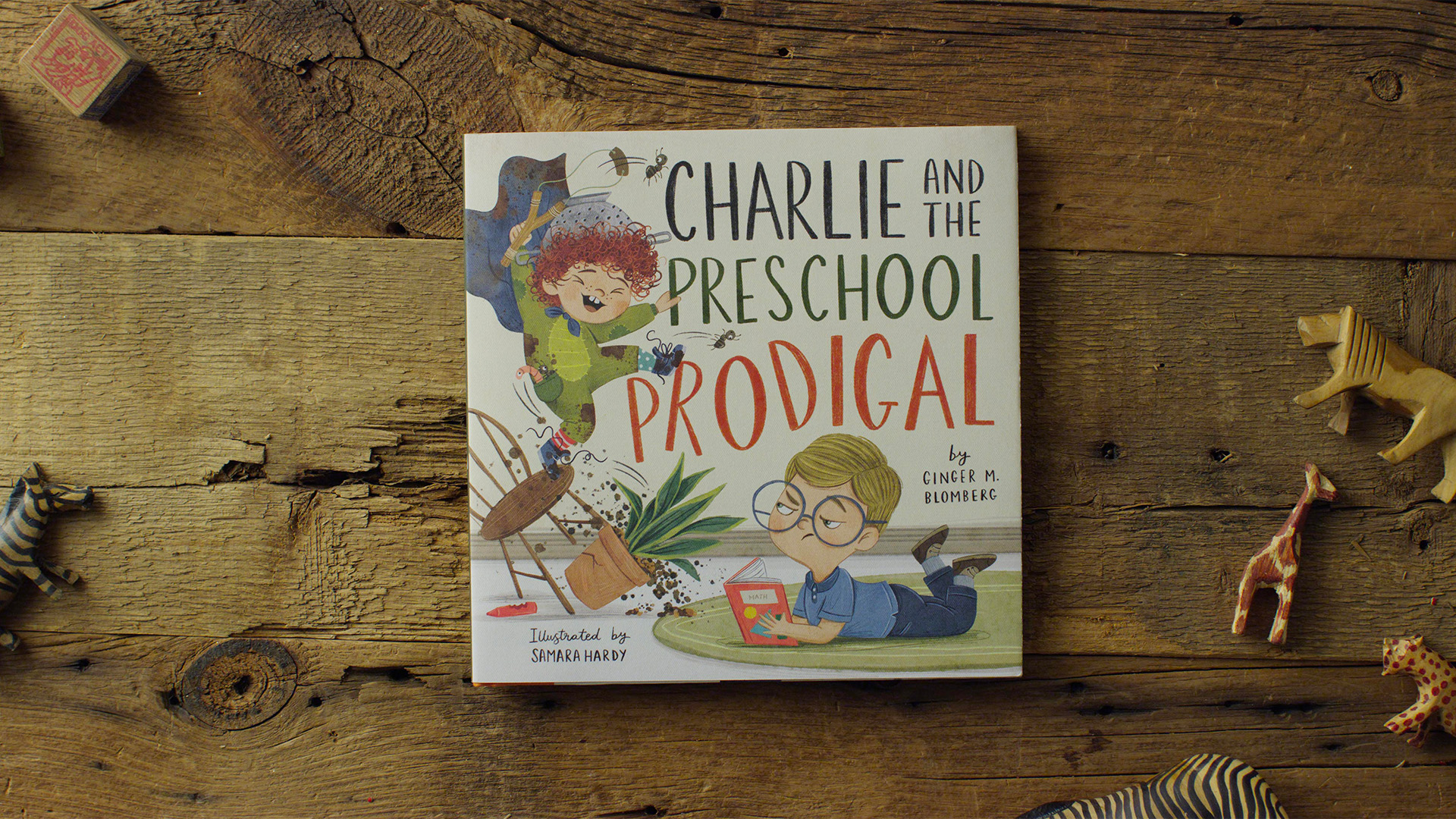
New from TGC Kids: ‘Charlie and the Preschool Prodigal’
Favicon 
www.thegospelcoalition.org

New from TGC Kids: ‘Charlie and the Preschool Prodigal’

I was once a four-foot-tall enforcer. I followed the rules‚ and I wanted to make sure other children did too. I told my parents one time that I could control the misbehaving boys in my class with just a look. Only later‚ when I was fully grown‚ did I recognize myself in the character of the older brother from the parable of the prodigal son. Like him‚ my problem wasn’t that I tried to do what was right. It was that I took pride in doing what was right. It made me feel like I deserved God’s approval. That’s why‚ when Ginger Blomberg’s manuscript about a preschool prodigal came across my desk‚ it made me squirm at first. It reminded me that no matter how well I keep the rules‚ I cannot earn God’s approval. But thanks be to God‚ that approval is freely offered to me—as well as to other “older brothers” and prodigals of all stripes—through Jesus Christ. Charlie and the Preschool Prodigal is the newest book in our TGC Kids series. It retells the parable of the prodigal son in a modern-day‚ fictional setting. Whether your kids are rule keepers or boundary pushers‚ this is a story they need. It’s never too early to start teaching your children about God’s grace. I interviewed Blomberg about why she wrote the book and the message she hopes will come through to kids (and parents). Where did the idea for Charlie and the Preschool Prodigal come from? Around the time I turned 30‚ I read The Prodigal God by Tim Keller. The book’s description of God’s grace changed my life‚ and it is still changing my life. Keller’s analysis of Jesus’s parable of the prodigal son‚ with its extended discussion on the older brother’s equal need for grace‚ reoriented my thinking on many things‚ including my relationships with my own siblings and my children. Eddie‚ the younger brother in the story‚ is an amalgamation of stories about my younger siblings and my own kids. My little brother really did crash down the stairs in a cardboard box (I’m pretty sure I pushed him; although‚ in my defense‚ he was enthusiastic about trying it). Once‚ one of my toddlers wandered out of our front yard—near a busy street— while I was putting away some toys in the carport. He hid under a neighbor’s bush for the longest four minutes of my life before I found him. A couple of Eddie’s antics are fabricated‚ but most of them have some basis in personal experience. I based the character of Charlie‚ the older brother‚ almost entirely on myself. What was the biggest challenge to adapting the parable of the prodigal son into a modern-day story for a young audience? The ending. The original parable’s ending is so countercultural for us. We don’t have a good paradigm for what happens when we work really hard and things don’t turn out the way we wanted. We have been taught to expect and aspire to the kind of story where people who do right actions are rewarded. Jesus ends his parable with the older brother‚ the one who believes he has done everything right‚ feeling resentful and standing outside the feast. He thinks his younger brother has gotten away with some very bad behavior. The father comes outside to the older brother and invites him to join the feast‚ but Jesus does not tell us how the older brother responds. The older brother’s intentional separation from his father and brother here shows that he needs his father’s grace every bit as much as his reckless younger brother does. It was a difficult decision‚ but with the advice and blessing of my editor‚ I left the older brother’s final choice unknown in this story‚ just like Jesus does in the original parable. What does self-righteousness look like in a child’s world? A self-righteous child might look like Luisa in Encanto‚ cracking under the pressure (drip‚ drip‚ drip). Or like Edward in The Prince and the Pauper‚ swinging between the fear of letting people down and a desire to just run away from it all. Or like Elsa‚ the ice queen in Frozen‚ who would rather live in isolation than risk making a big mistake. It might look like Alice Wendleken‚ the “holy-looking” girl in The Best Christmas Pageant Ever‚ who keeps a list of every naughty thing the Herdman kids do‚ hoping to get them kicked out of the Christmas pageant and the church. Or Javert‚ who gave his life to pursuing Jean Valjean in Les Miserables because he could not stand the idea that someone‚ somewhere‚ may have gotten away with something. Of course‚ it might look like the older brother in the parable of the prodigal son who cuts himself off from his brother and his father because of his own self-righteousness. Each of these manifestations has the same core error; each of those characters is thinking‚ Everything depends on me. It might be exhilarating‚ but it’s also a frightening burden to feel like you are in charge of the world. Self-righteousness is lonely because very few people can measure up to our exacting standards. In my experience‚ childhood self-righteousness feels like trying to do things right‚ not out of love but out of pride‚ fear‚ or hope of recognition. It was defined by a very small comprehension of God’s grace. It’s only when we are grasped by the astounding gift of God’s grace that we become able to extend grace to others. How would you‚ as a parent‚ talk with children who struggle with the way Eddie’s dad lets him off the hook? No one‚ including Eddie‚ ever really gets “off the hook.” The book does not detail the consequences Eddie might face later‚ but it implies that he will have some in addition to the natural consequences of fear and separation he experiences when he runs away. It is important that we teach our kids the law by providing them with consequences for their actions. The Bible is clear that sin always has consequences (Rom. 6:23). God’s law teaches us about goodness and justice‚ gives us wisdom for living well‚ and provides instructions for making this broken world a better place. More importantly‚ though‚ the law is a road to lead us to God through grace. Grace is the other vital part of this answer. All sin costs; the only question is who pays. Justice is when the sinner pays. Injustice is when the victim pays. Grace is when God fulfills justice by paying the cost himself. The Bible is clear that no matter how well we follow the law‚ none of us can follow it perfectly enough to actually save ourselves (Rom. 3:23; Eph. 2). Salvation can only come through Jesus Christ‚ who lived and loved perfectly (2 Cor. 5:21). Because we are all broken‚ we all have a natural bent to try to either escape justice or pay everything ourselves rather than turning to God. Some of us try to save ourselves by just running away from the cost of the law‚ like the younger brother in Jesus’s parable of the prodigal son. Some of us‚ like the parable’s older brother‚ try to save ourselves by following the law‚ thinking if we can just do everything right‚ we can work hard enough to pay off all the costs somehow. In “older brother” thinking‚ God owes us something. Eddie needs there to be consequences‚ but even more than that—the whole point of the consequences and the reunion—he needs to be safe in his father’s love. His older brother needs exactly the same thing. Charlie thinks he has earned the right to tell his brother and father what to do‚ but his self-righteous‚ unloving attitude is evidence that he needs his father’s grace and love just as much as his brother does. We need a right relationship with our Heavenly Father. But as sinners‚ we don’t have a way to come to him. The only way is God’s grace. Without the law‚ grace is cheap. Without grace‚ the law is crushing. Praise God‚ Jesus has fulfilled the law and given us grace.
Like
Comment
Share
Daily Caller Feed
Daily Caller Feed
2 yrs

Michigan Wins National Championship After Hammering Washington‚ 34-13; Completes Immortal Undefeated 15-0 Season
Favicon 
dailycaller.com

Michigan Wins National Championship After Hammering Washington‚ 34-13; Completes Immortal Undefeated 15-0 Season

Michigan are the national champions
Like
Comment
Share
Daily Caller Feed
Daily Caller Feed
2 yrs

Chabad Lubavitch Synagogue Erupts Into Chaos After Members Refuse To Allow Secret Tunnel To Be Sealed: REPORT
Favicon 
dailycaller.com

Chabad Lubavitch Synagogue Erupts Into Chaos After Members Refuse To Allow Secret Tunnel To Be Sealed: REPORT

Jewish members could be seen flipping what appears to be table
Like
Comment
Share
Daily Caller Feed
Daily Caller Feed
2 yrs

Memphis Grizzlies’ Ja Morant Out For The Rest Of The Season After Undergoing Shoulder Surgery
Favicon 
dailycaller.com

Memphis Grizzlies’ Ja Morant Out For The Rest Of The Season After Undergoing Shoulder Surgery

Damn‚ Ja ... damn
Like
Comment
Share
Showing 102329 out of 113260
  • 102325
  • 102326
  • 102327
  • 102328
  • 102329
  • 102330
  • 102331
  • 102332
  • 102333
  • 102334
  • 102335
  • 102336
  • 102337
  • 102338
  • 102339
  • 102340
  • 102341
  • 102342
  • 102343
  • 102344
Advertisement
Stop Seeing These Ads

Edit Offer

Add tier


Select an image
Delete your tier
Are you sure you want to delete this tier?

Reviews

In order to sell your content and posts, start by creating a few packages. Monetization

Pay By Wallet

Payment Alert

You are about to purchase the items, do you want to proceed?

Request a Refund