YubNub Social YubNub Social
    Advanced Search
  • Login
  • Register

  • Night mode
  • © 2025 YubNub Social
    About • Directory • Contact Us • Developers • Privacy Policy • Terms of Use • shareasale • FB Webview Detected • Android • Apple iOS • Get Our App

    Select Language

  • English
Install our *FREE* WEB APP! (PWA)
Night mode toggle
Community
New Posts (Home) ChatBox Popular Posts Reels Game Zone Top PodCasts
Explore
Explore
© 2025 YubNub Social
  • English
About • Directory • Contact Us • Developers • Privacy Policy • Terms of Use • shareasale • FB Webview Detected • Android • Apple iOS • Get Our App
Advertisement
Stop Seeing These Ads

Discover posts

Posts

Users

Pages

Blog

Market

Events

Games

Forum

Reclaim The Net Feed
1 w

Digital IDs and AI Dreams: How Canada and Europe Plan to Sync the Future
Favicon 
reclaimthenet.org

Digital IDs and AI Dreams: How Canada and Europe Plan to Sync the Future

If you're tired of censorship and dystopian threats against civil liberties, subscribe to Reclaim The Net. European and Canadian officials have expanded their cooperation on digital policy with new agreements that link digital identity infrastructure, artificial intelligence development, and management of online information. The partnership, presented as a joint effort to strengthen “trust” and “information integrity,” commits both sides to exploring systems that would connect citizens’ digital credentials across borders while sharing data for AI research. We obtained a copy of the joint statement for you here. Two memoranda of understanding were signed: one on Digital Credentials and Trust Services and another on Artificial Intelligence. The digital credentials agreement creates a working forum for joint experiments, technical coordination, and the testing of “digital identity wallets.” These wallets are software tools that store verified identity documents, allowing people to confirm their identity online or in person using standardized credentials backed by government trust frameworks. The artificial intelligence memorandum focuses on the infrastructure behind large AI systems. It establishes a “structured dialogue on data spaces,” a term referring to controlled environments where data can be exchanged among multiple organizations under a common governance framework. While the purpose is described as supporting innovation, such data-sharing arrangements could also increase the circulation of personal or behavioral data between jurisdictions, raising questions about oversight and consent. Beyond technical matters, the AI plan promises to “accelerate AI adoption in strategic sectors” and to develop “advanced AI models for the public good.” It sets out to align Europe’s and Canada’s approaches on infrastructure, standards, and regulation, drawing the two regions closer in how they design and control large AI ecosystems. Another section of the partnership turns to media and information control. The governments agreed to “cooperation on enhancing information integrity online” and pledged to fund efforts “strengthening independent media by supporting local journalism.” Officially, this is aimed at combating “foreign information manipulation” and addressing the challenges of generative AI. The phrase “information integrity” appears with growing frequency in international policy documents, and its use in the EU–Canada partnership lands in the middle of an already expanding global trend. The wording may sound neutral, but it often signals a preference for managed information flows rather than open public debate. A July 2025 development at the United Nations illustrates why the term can raise concerns. The UN’s first Global Risk Report placed what it called “mis- and disinformation” among the most severe global threats. Inside that same report, the organization announced a new task force whose purpose is to examine how unauthorized narratives might interfere with the UN’s operations, particularly the 2030 Agenda. The framing is presented as a matter of public welfare, yet the described mission is not about encouraging transparency or open discussion. It is about maintaining a communication environment that protects institutional priorities. According to the report, survey participants from governments, NGOs, companies, and other groups broadly supported coordinated government action and multistakeholder coalitions to confront the identified risks. What is missing is any call for more open communication or stronger protections for free expression. The dominant approach favors centralized management of public narratives, reinforcing the idea that the solution to contested information is tighter control rather than broader participation. The first meeting of the Canada–EU Digital Partnership Council was held in Montreal on December 8, co-chaired by Canada’s Minister of Artificial Intelligence and Digital Innovation Evan Solomon and European Commission Executive Vice-President Henna Virkkunen. This meeting put earlier commitments into action, following the EU–Canada Digital Partnership announced in late 2023 and the Strategic Partnership of the Future statement adopted at the June 2025 summit. For the European Union, this partnership supports its European Digital Identity (EUDI) Wallet initiative, which aims to give citizens a unified digital container for verified credentials usable across public and private services. Canada has been pursuing similar goals through its Pan-Canadian Trust Framework and several provincial pilots, but it has not yet introduced a single national wallet. The cross-border cooperation suggests that any federal system in Canada will be built with global standards such as W3C Verifiable Credentials and eIDAS in mind. If you're tired of censorship and dystopian threats against civil liberties, subscribe to Reclaim The Net. The post Digital IDs and AI Dreams: How Canada and Europe Plan to Sync the Future appeared first on Reclaim The Net.
Like
Comment
Share
Reclaim The Net Feed
1 w

EU Revives Plan for Year-Long Data Retention Across Digital Services, Including Encrypted Apps
Favicon 
reclaimthenet.org

EU Revives Plan for Year-Long Data Retention Across Digital Services, Including Encrypted Apps

If you're tired of censorship and dystopian threats against civil liberties, subscribe to Reclaim The Net. European governments are preparing to revisit one of the EU’s most controversial surveillance ideas: forcing online services to retain vast amounts of user data for up to a year. A Council paper now circulating (via Netzpolitik) among member states outlines a plan that would apply not only to telecom operators but to nearly every major digital service, including cloud platforms, domain hosts, payment processors, and even end-to-end encrypted messengers such as WhatsApp and Signal. Officials insist they do not intend to compromise encryption or read private messages. What they want is the so-called metadata: who contacted whom, from where, at what time, and through which service. This form of tracking, while technically outside the message content, can still provide a detailed picture of someone’s social network, movements, and daily behavior. The push represents a sharp departure from existing limits. Previous EU and German laws, both struck down by the Court of Justice of the European Union (CJEU) and national courts, had already been judged unlawful for collecting everyone’s data “without differentiation, restriction or exception.” Those rulings required that any retention be narrowly targeted and proportionate. Despite that, the new draft takes the opposite path, proposing to widen the net instead of narrowing it. Germany’s government has been exploring a shorter-term model, keeping IP addresses and port numbers for a few months, but the Council paper shows that most EU states are lobbying for a far more comprehensive scheme. More: Germany Turns Its Back on Decades‑Old Privacy Protections with Sweeping Surveillance Bill They are asking for “the widest possible coverage” across internet services, explicitly naming VPN providers, hosting companies, cryptocurrency traders, gaming and ridesharing platforms, and e-commerce intermediaries. In effect, any business that connects people online could become a state-mandated data warehouse. Although some officials claim the retention would focus on subscriber details like IP addresses, several states want to go much further. Their proposals call for recording the serial numbers of internet devices and collecting “communication connection data” that reveals who interacts with whom, when, and how. That language mirrors the now-defunct 2006 EU Data Retention Directive, which required telecom companies to log every phone call, email, and text message for potential use by investigators. The document also shows interest in location tracking. Mobile networks continuously record where a phone connects, which allows near-real-time mapping of a person’s movements. Proponents suggest using this data to locate missing persons, though the paper concedes that “not all cases of missing persons constitute a potential offense.” Even so, several states want the power to retain these records for everyone, not just for targeted investigations. Earlier EU and national frameworks limited storage to about six months. The current proposal nearly doubles that. Most governments are pressing for a one-year minimum, with some arguing that Brussels should only set the floor, not the ceiling, so national authorities can keep data even longer. Law enforcement agencies have previously said that data older than a few weeks rarely plays a critical role. Germany’s Federal Criminal Police Office, for example, has stated that “a storage commitment of two to three weeks would be sufficient on a regular basis.” The new plan disregards that assessment entirely. Each member state would be allowed to decide what counts as a “serious” crime, effectively opening the door for the same surveillance data to be used in routine investigations of online harassment or “hate speech,” and other pro-censorship buzzwords. That flexibility means a system built for exceptional threats could easily become the foundation for day-to-day policing. Once the data exists, the temptation to expand access is constant. The Council itself acknowledges that previous laws were struck down because they treated every person as a potential suspect. Yet the new plan offers no clear explanation of how it would comply with those rulings. Instead, some member states propose to “reassess the necessity and proportionality” of retention in light of “technological developments and changing ways of committing crimes.” In simpler terms, they want to reinterpret the legal boundaries rather than adapt their proposals to them. The European Commission has already completed preliminary surveys and a public consultation. An impact assessment is due in early 2026, followed by a legislative proposal expected “at the end of the first half of 2026.” If the plan moves forward, Europe could see the return of broad-scale data retention under a new label. For ordinary users, that would mean their online activities, emails sent, calls made, apps used, and locations visited could be quietly stored for a year or more, accessible to state authorities whenever an investigation demands it. If you're tired of censorship and dystopian threats against civil liberties, subscribe to Reclaim The Net. The post EU Revives Plan for Year-Long Data Retention Across Digital Services, Including Encrypted Apps appeared first on Reclaim The Net.

Like
Comment
Share
Reclaim The Net Feed
1 w

AI Is YouTube’s New Gatekeeper
Favicon 
reclaimthenet.org

AI Is YouTube’s New Gatekeeper

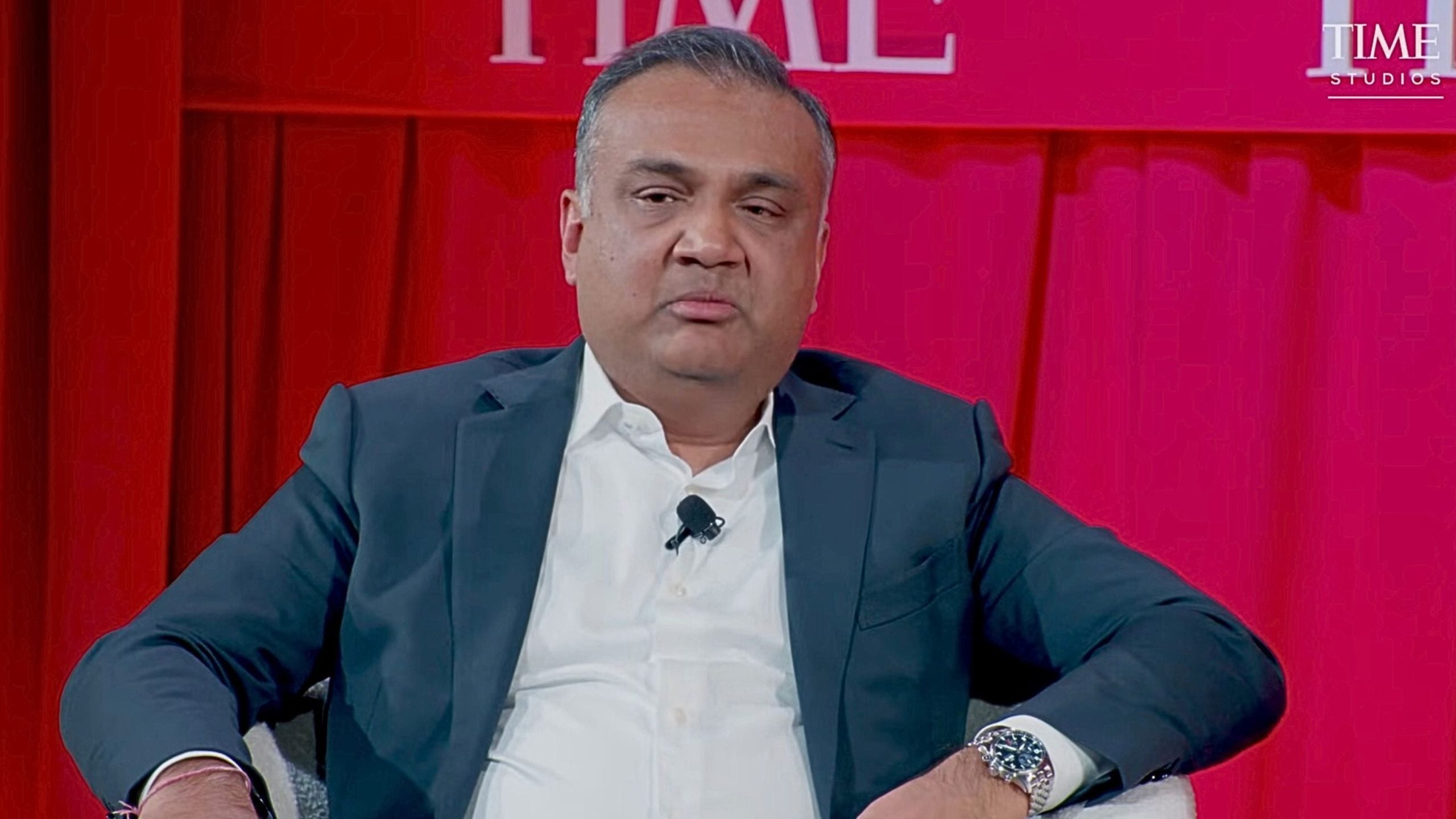
If you're tired of censorship and dystopian threats against civil liberties, subscribe to Reclaim The Net. YouTube CEO Neal Mohan, freshly anointed TIME’s 2025 CEO of the Year, recently sat down with the magazine to deliver a masterclass in corporate optimism. With the enthusiasm of someone who’s never had one of their mundane videos flagged for “graphic content” for laughing too hard, Mohan described his company’s “North Star” as “giving everyone a voice.” Then, without even flinching, he explained how artificial intelligence will be supercharging YouTube’s already notorious censorship machine. “AI will create an entirely new class of creators that today can’t do it because they don’t have the skills or they don’t have the equipment,” he said. “But the same rule will apply, which is, there will be good content and bad content, and it will be up to YouTube and our investment in technology and the algorithms to bring that to the fore.” YouTube wants to fill the site with AI-generated content while simultaneously using other AI to judge what gets to stay up. The circle of platform life, run by code, shaped by code, cleaned up by more code. And when it comes to removing creators entirely? That’s also part of the plan. “AI will make our ability to detect and enforce on violative content better, more precise, and able to cope with scale,” Mohan claimed. “Every week, literally, the capabilities get better.” Mohan is talking about an AI system that has already wrongly nuked creators across the platform, with YouTube downplaying or outright contradicting its role depending on which press release you’re reading. For a company allegedly trying to “give everyone a voice,” it’s been spending a lot of time erasing them. Mohan’s interviews read like a sci-fi script where a benevolent overlord insists the machines are here to help. Meanwhile, in the real world, YouTubers are fighting for the digital equivalent of habeas corpus. Then there’s Enderman, a tech and malware-focused creator with over 350,000 subscribers. His channel was shut down after YouTube mistakenly tied him to another, unrelated channel that had been hit with copyright strikes. Same story for gaming channel Scrachit Gaming and animation creator 4096. All three were linked by YouTube’s moderation system to a phantom menace of a channel and terminated. After backlash, their channels were reinstated in November. YouTube insists these weren’t AI decisions. A spokesperson told Mashable that these terminations were “not determined by automated enforcement.” But in November, YouTube quietly updated its “Content Moderation & Appeals” FAQ and admitted that it uses “both automation and humans to detect and terminate related channels.” So which is it? Human error or robot sabotage? They won’t say. They’re hoping no one notices. Popular YouTuber MoistCr1TiKaL didn’t need a committee to reach a verdict on Mohan’s vision. “We haven’t seen anything positive on YouTube as a result of these AI tools that Neal speaks so highly of. They’re a fucking scourge right now,” he said. “AI should never be able to be the judge, jury, and executioner…Neal seems to have a different vision in mind.” He’s not wrong. YouTube’s AI hallucinated that a clip of horror gamer SpooknJukes laughing was “graphic content.” It demonetized the video, flagged it with an age restriction, and forced the creator to edit out the laughter to get monetization back. Yes, laughing. In October, tech YouTubers Britec09 and CyberCPU Tech had their videos removed for showing how to install Windows 11 without a Microsoft account. YouTube said the tutorials were “harmful or dangerous.” The videos were restored a month later, quietly, without apology. And for Pokémon creator SplashPlate? A “low-value” content strike wiped his channel off the map on December 9. It was reinstated the next day. Another hit-and-run enforcement from an AI system that’s “getting better every week,” according to Mohan. Mohan can say YouTube is about “giving everyone a voice,” but the numbers tell a different story. Channels are being terminated by mistake. Appeals take days or weeks if they’re reviewed at all. Public outrage has become the only reliable method of tech support. Lose your account? Better hope you’re trending on X. This isn’t some growing pain of a new moderation tool. It’s YouTube’s actual plan. Automate content creation, automate content policing, and automate user removal. The same platform that launched careers by letting amateurs speak freely is now making sure machines decide who gets to stay. And if you’re one of the unlucky few targeted by that system? Don’t worry. YouTube’s “North Star” is still to give you a voice. You’ll just need to make sure your voice sounds algorithmically compliant, inoffensive to bots, and indistinguishable from the kind of “new creators” YouTube’s AI will be manufacturing in bulk. AI is here to help. Just ask the people who it hasn’t flagged yet. If you're tired of censorship and dystopian threats against civil liberties, subscribe to Reclaim The Net. The post AI Is YouTube’s New Gatekeeper appeared first on Reclaim The Net.

Like
Comment
Share
Hot Air Feed
Hot Air Feed
1 w

The Bizarro World of MTG, Tucker, Candace, and the Woke Right
Favicon 
hotair.com

The Bizarro World of MTG, Tucker, Candace, and the Woke Right

The Bizarro World of MTG, Tucker, Candace, and the Woke Right
Like
Comment
Share
Hot Air Feed
Hot Air Feed
1 w

Going to War With the Senate Over Taliban Funding
Favicon 
hotair.com

Going to War With the Senate Over Taliban Funding

Going to War With the Senate Over Taliban Funding
Like
Comment
Share
The Blaze Media Feed
1 w

Senate tanks GOP solution to Obamacare subsidy problems
Favicon 
www.theblaze.com

Senate tanks GOP solution to Obamacare subsidy problems

The Senate failed to pass the Republican-led health care bill as the deadline to extend Obamacare subsidies fast approaches. The Health Care Freedom for Patients Act failed to pass in a 51-48 vote after one Republican, Sen. Rand Paul of Kentucky, joined 47 Democrats to vote against it. 51 Republicans voted in favor of the legislation, but the bill ultimately failed due to the 60-vote threshold. Notably, Republican Sen. Steve Daines of Montana was not present for the vote. The bill would also foster competition and broaden health care.Certain subsidies from former President Barack Obama's landmark health care bill, known as the Affordable Care Act, are set to expire at the end of the year. Notably, these ACA subsidies are the reason Senate Democrats decided to shut down the government in October.Despite facilitating the longest government shutdown in history, Senate Democrats have not struck a deal with Republicans to address health care. RELATED: Democrat senator makes stunning admission about Obamacare failures Kayla Bartkowski/Bloomberg via Getty ImagesThe Health Care Freedom for Patients Act, authored by Republican Sens. Bill Cassidy of Louisiana and Mike Crapo of Idaho, would have allowed these Obamacare subsidies to lapse, instead directing funds to individual health savings accounts. While this bill ultimately failed, other Republican lawmakers have drafted their own legislation to address the impending problem. Republican Sen. Rick Scott of Florida introduced the More Affordable Care Act, which would also redirect federal subsidies to HSA-style accounts called Trump Health Freedom Accounts. The bill would additionally foster competition and broaden health care options for states by establishing the Health Freedom Waiver Program.RELATED: Republicans race to pass competing health care bill as clock ticks on Obamacare subsidies Photo by Nathan Posner/Anadolu via Getty ImagesThe companion bill to Scott's legislation was also introduced in the House by Republican Study Committee Chairman August Pfluger. At this time, no vote has been scheduled on the bill in either the House or the Senate. Like Blaze News? Bypass the censors, sign up for our newsletters, and get stories like this direct to your inbox. Sign up here!
Like
Comment
Share
The Blaze Media Feed
1 w

'6-7' gets 86'd! JD Vance jokes about banning meme — and one company actually does it
Favicon 
www.theblaze.com

'6-7' gets 86'd! JD Vance jokes about banning meme — and one company actually does it

Vice President JD Vance has had enough of the nonsensical viral meme that has children saying "six seven."The meme, which children have explained does not have a real meaning, involves simply saying the numbers and then performing a meaningless hand gesture.'Where did this even come from? I don't understand it.'Guided missalThe vice president jokingly expressed his disdain for the meme on X recently, saying, "Yesterday at church the Bible readings started on page 66-67 of the missal, and my 5-year-old went absolutely nuts repeating 'six seven' like 10 times."Vance continued, "And now I think we need to make this narrow exception to the first amendment and ban these numbers forever.""Where did this even come from? I don't understand it. When we were kids all of our viral trends at least had an origin story," he added.Hold the memeLittle did Vance know, one company was already in the middle of instituting its own ban.RELATED: Why the kids are not all right — and Boomers still pretend nothing’s wrong — (@) According to People, In-N-Out Burger has officially retired the number 67 from its ordering system, meaning the digits are skipped over when customers receive their order numbers to wait in the queue.The West Coast chain had been hit with crowds of children anticipating, and filming, the number being called in the restaurant. When the number is called, the children cheer as if they've taken another victory.People also reported that a Los Angeles location of In-N-Out Burger confirmed the company had also banned the number 69 from its ticket system.Origin unknownAlthough the children themselves admit they are purposely doing a trend that has no meaning with "six seven," many adults simply can't help but look for an origin story for the meme.RELATED: Joe Rogan says we’re at ‘step 7’ on the road to civil war. Is he right? Glenn Beck answers Dictionary.com deemed "six seven" its "Word of the Year" and claimed the "most modern use" of the phrase is attributed to a rap song called "Doot Doot (6 7)" by the artist Skrilla.People said the meme may also be attributed to NBA player LaMelo Ball from the Charlotte Hornets because he wears the number 67.Like Blaze News? Bypass the censors, sign up for our newsletters, and get stories like this direct to your inbox. Sign up here!
Like
Comment
Share
The Blaze Media Feed
1 w

'I thought I'd die young': Jelly Roll breaks down in tears as Joe Rogan delivers huge surprise in emotional clip
Favicon 
www.theblaze.com

'I thought I'd die young': Jelly Roll breaks down in tears as Joe Rogan delivers huge surprise in emotional clip

Joe Rogan surprised music star Jelly Roll with a huge announcement that brought the singer to tears during a Wednesday episode of "The Joe Rogan Experience."During the podcast, Rogan played a recorded video of country music artist Craig Morgan inviting Jelly Roll to become a member of the Grand Ole Opry.'God will make things bigger than your dreams.'"Jelly Roll, you're officially invited to become a member of the Grand Ole Opry," Morgan stated.Jelly Roll removed his headphones and placed his head in his hands, tearing up in response to the news. He then asked Rogan for a hug, and the two men shared an emotional moment."It don't get no bigger in country music, bubba. That's as big as it gets," Jelly Roll told Rogan. He explained that he once purchased tickets to watch Morgan perform at the Opry and was moved to tears by his song "Almost Home."RELATED: Country music star and former drug dealer Jelly Roll gives powerful testimony before Congress about dangers of fentanyl Jelly Roll. Photo by Gabe Ginsberg/Getty Images for iHeartRadio"It's the most tear-jerking song about a homeless man, and it just reminded me of jail," Jelly Roll said. "I just remember thinking … 'I want to make people feel the way he makes me feel.'""Well, you've done that, man," Rogan told Jelly Roll. "That feeling that he gave you, you've given to many, many people. It's an incredible gift."Jelly Roll expressed that he had always dreamed of being on Rogan's podcast. While he felt honored to be a guest on the show, he considered it an even greater honor to call Rogan a friend.RELATED: Joe Rogan stuns podcast host with wild new theory about Jesus — and AI Joe Rogan. Photo by Elsa/Getty Images"I just never thought this was a journey, dude. I thought I'd die young, or I thought I'd kill myself. I didn't think I was going to be able to figure it out," Jelly Roll told Rogan. "If God gets involved, you have a little humility, I think the rest can work itself out, Joe.""Amazing things can happen if you live your life true," Rogan replied."I didn't even dream of it," Jelly Roll told Rogan. "God will make things bigger than your dreams. Somebody out there right now is dreaming of something, and it's too small. Dream bigger, baby." Like Blaze News? Bypass the censors, sign up for our newsletters, and get stories like this direct to your inbox. Sign up here!
Like
Comment
Share
The Blaze Media Feed
1 w

Erika Kirk joins Glenn Beck to discuss Charlie’s legacy and his book on honoring the Sabbath
Favicon 
www.theblaze.com

Erika Kirk joins Glenn Beck to discuss Charlie’s legacy and his book on honoring the Sabbath

Erika Kirk, the widow of Turning Point USA founder Charlie Kirk, joined “The Glenn Beck Program” on Thursday morning. She discussed her late husband’s legacy and the release of his new and final book, which emphasizes the significance of honoring the Sabbath.“My husband’s legacy is not about his murder. My husband’s legacy is what he left behind,” Erika Kirk told Blaze Media co-founder Glenn Beck. — (@) “[Charlie Kirk] writes about the Sabbath and honoring the Sabbath,” Beck stated. “And I have to tell you, if I didn’t honor the Sabbath, I would have been dead a long time ago. ... There’s just not enough hours in the day to do everything. If I didn’t shut down and concentrate on God and my family for one day — total shutdown — I wouldn’t have made it.”Erika Kirk mentioned that her late husband would say that honoring the Sabbath is the only commandment in which those who break it miss out on the blessing, not God.'You don’t know how long you’ll be here. But you know that you have time, and you are in control of your time.'“We live in a day and age where people are trying to separate the Old Testament from the New Testament. You cannot pick and choose portions of the Bible,” Erika Kirk said. She explained that even though her husband’s schedule demanded long hours, he prioritized a day of rest.RELATED: As Charlie Kirk's accused killer prepares for court, judge considers whether to let media cameras roll Erika Kirk. Photo by Jonathan Ernst-Pool/Getty Images“You have a decision to make. Are you going to blow through your adrenals, spike up your cortisol levels forever, and just try to wear it as a badge of honor, like, 'I’ll sleep when I’m dead'?” Erika Kirk said. “You don’t know how long you’ll be here. But you know that you have time, and you are in control of your time. And you are in control of how you use your time.”Erika Kirk argued that Christians who claim to be too busy for a break are violating a commandment.RELATED: Joe Rogan says reaction to Kirk assassination shows the US is close to civil war Photo by Trent Nelson/The Salt Lake Tribune/Getty Images“You are involving idols in your life. You’re putting other gods before the one true God,” she remarked.“If you can’t get a full 24 hours in, work it in through your week. Maybe you just sunset your device from 5:00 p.m. up until the next morning,” she continued. “There’s a way for you to be able to do this and not put pressure on yourself, where you’re letting yourself down.”Like Blaze News? Bypass the censors, sign up for our newsletters, and get stories like this direct to your inbox. Sign up here!
Like
Comment
Share
The Blaze Media Feed
1 w

Michigan fires football coach Sherrone Moore amid sex scandal
Favicon 
www.theblaze.com

Michigan fires football coach Sherrone Moore amid sex scandal

University of Michigan head football coach Sherrone Moore was in custody Wednesday night as a suspect in an alleged assault, only hours after his “inappropriate relationship with a staff member” was exposed and he was fired.“U-M head football coach Sherrone Moore has been terminated, with cause, effective immediately,” the school said in a statement. “Following a University investigation, credible evidence was found that Coach Moore engaged in an inappropriate relationship with a staff member.”“Sherrone Moore got fired yesterday and ended up in police custody because he melted down and crashed out. This is one of the most incredible crash-outs we’ve ever seen,” BlazeTV host Jason Whitlock says on “Fearless.”“What happened to Sherrone Moore? Absolutely amazing, breathtaking. You feel sorry for him. You want to laugh at him. You wonder, ‘How can you be this stupid?’ Well, men have been being this stupid for a long, long time,” Whitlock continues.“Getting promoted to a position of power, authority, and wealth, and using that power, authority, and wealth to have extramarital affairs or to participate in illicit sexual activity. Here’s the thing, though: If he had not lost to Ohio State on Thanksgiving weekend, Sherrone Moore would likely still be the head coach at the University of Michigan,” he adds.And Whitlock isn’t just saying that to say it, but rather explains that Michigan knew about the affair with the staffer.“He’s banging his assistant and traveling around with her, obviously under the auspices of ‘football business.’ There have been pictures floating around on Twitter of Sherrone Moore and her walking around the campus together in Ann Arbor, Michigan,” Whitlock says.“This scandal has been covered up for at least a month, if not a year,” he continues. “The rumors are — and it’s circulated all over social media, and people have been talking about this behind the scenes — that Sherrone Moore impregnated this woman ... talked her into ending the pregnancy, and then commissioned this pay raise for this woman, and now that he’s lost to Ohio State, now it all comes out, and Michigan has their excuse.”Want more from Jason Whitlock?To enjoy more fearless conversations at the crossroads of culture, faith, sports, and comedy with Jason Whitlock, subscribe to BlazeTV — the largest multi-platform network of voices who love America, defend the Constitution, and live the American dream.
Like
Comment
Share
Showing 1274 out of 103513
  • 1270
  • 1271
  • 1272
  • 1273
  • 1274
  • 1275
  • 1276
  • 1277
  • 1278
  • 1279
  • 1280
  • 1281
  • 1282
  • 1283
  • 1284
  • 1285
  • 1286
  • 1287
  • 1288
  • 1289
Advertisement
Stop Seeing These Ads

Edit Offer

Add tier


Select an image
Delete your tier
Are you sure you want to delete this tier?

Reviews

In order to sell your content and posts, start by creating a few packages. Monetization

Pay By Wallet

Payment Alert

You are about to purchase the items, do you want to proceed?

Request a Refund