YubNub Social YubNub Social
    #astronomy #nightsky #florida #humor #law #loonylibs #electionfraud #voterfraud #civilrights #trans #lawsuit #funny #jupiter #policemisconduct #lies
    Advanced Search
  • Login
  • Register

  • Night mode
  • © 2026 YubNub Social
    About • Directory • Contact Us • Developers • Privacy Policy • Terms of Use • shareasale • FB Webview Detected • Android • Apple iOS • Get Our App

    Select Language

  • English
Community
New Posts (Home) ChatBox Popular Posts Reels Game Zone Top PodCasts
Explore
Explore
© 2026 YubNub Social
  • English
About • Directory • Contact Us • Developers • Privacy Policy • Terms of Use • shareasale • FB Webview Detected • Android • Apple iOS • Get Our App
Advertisement
Stop Seeing These Ads

Discover posts

Posts

Users

Pages

Blog

Market

Events

Games

Forum

Conservative Voices
Conservative Voices
4 w

Favicon 
spectator.org

The ‘Donroe’ Doctrine Comes Into Its Own

President Trump is threatening to side with Argentina in its historical dispute with the U.K. over the Falkland Islands and tilt to Morocco in its standoff with Spain over imperial remnants in north Africa. He strongly signaled the shift following refusals by both NATO allies to support U.S. and Israeli air strikes on Iran and help reopen the Strait of Hormuz. (RELATED: Trump Delivers Europe’s Much-Needed Wake-Up Call) Trump’s posturing is consistent with his policy of realpolitik aimed at consolidating U.S. control over the Western hemisphere while aligning with new regional players in the Middle East, Africa, and eastern Europe at the expense of legacy allies, whose value he has long questioned and who have proved their unreliability by failing to turn up in the Persian Gulf. (RELATED: Trump’s NATO Dilemma) Britain and Spain, once Europe’s greatest overseas empires, now ruled by delusional leftist cabals wanting to oppose Trump at any cost and go Green. While casting off century-old ties to embrace untested new alliances carries risks for the U.S., it could spell disaster for Britain and Spain, once Europe’s greatest overseas empires, now ruled by delusional leftist cabals wanting to oppose Trump at any cost and go Green. When in 1982 Argentina invaded the remote Falkland Islands, which Britain had absentmindedly kept following a failed 19th-century attempt to invade Argentina, the Reagan administration was initially divided over a response. U.N. ambassador Jeane Kirkpatrick advocated strict neutrality, citing international legal arguments favoring Argentina’s claims on the small archipelago 200 miles from its mainland. But the “Special Relationship” prevailed, and Secretary of State Alexander Haig, a former NATO supreme commander, told the Argentines that the U.S. would side with the U.K. if it came to a war. U.S. satellite intelligence was key to securing the quick victory needed by overstretched British forces. A surreptitious U.S. supply of what were then recently developed shoulder-fired Stinger heat-seeking missiles enabled British paratroopers to repel Argentine air attacks while moving inland. British warships and long-range bombers were fueled and provisioned at a joint base in the Azores. Even so, Argentina’s single squadron of Mirage jet fighters sank a number of British frigates and transport ships but lacked the fuel capacity to hit the aircraft carrier and deal a decisive blow to the British task force. “It was a close-run thing,” admits Royal Marine general Julian Thompson, who commanded British land forces in the Falklands. Any military operation at such scale would be impossible today without substantial U.S. support, which might now go to Argentina. Invoking his “Donroe” doctrine in favor of Buenos Aires could be a masterful stroke for Trump that would align all of Latin America behind him and even gain continental backing for his bid on Greenland. (RELATED: The ‘Donroe’ Doctrine at Sea) Argentina’s conservative populist president, Javier Milei, is close to Trump and, unlike the ruling generals’ junta of the 1980s, has been twice elected by large majorities. He is undertaking a military buildup to correct past deficiencies, greatly expanding the air force with large purchases of American F-16s and acquiring midair refueling tankers from Israel. (RELATED: Milei’s Isaac Accords Expands Pro-Israel Networks) When Keir Starmer was refusing to send even a minesweeper to the Strait of Hormuz, Argentina’s navy was in training exercises with the U.S. aircraft carrier USS Dwight D. Eisenhower in the South Atlantic. While Argentina has been building up its military, the British have been breaking theirs down. A bloated woke-mod bureaucracy primarily concerned with enforcing DEI and gender-based promotions has reduced the army’s size by about half since the Falklands War. The legendary British Royal Navy that once ruled the waves has become a pathetic caricature of its former self, shrinking from over 70 vessels in 1982 to about two dozen today, with more admirals than ships. Its latest generation of frigates, supposedly designed to replace quantity with high-tech efficiency, hardly work. Two recently built aircraft carriers can’t get to sea without repeatedly going back for repairs, and all three Trident nuclear submarines were stuck for servicing at harbor while Russian frigates recently probed British waters. When war erupted in the Falklands, Britain’s admiralty stunned the Argentines by mobilizing a full naval task force to the South Atlantic in 48 hours. It’s now taken two weeks to move a single destroyer to the Mediterranean in response to Iranian drone strikes on the British air base in Cyprus. A government in such a vulnerable position would be seeking negotiations with Argentina over the Falklands ASAP, begging Trump to mediate. But common sense does not seem to prevail on Britain’s current Labour bosses, given the vitriol from some of their chief spokespersons over Iran. The group running Britain today that just got hammered in local elections and prefers buying oil from Norway than tapping its own North Sea reserves to stay “Net Zero,” would probably recoil at a deal with “Fascist” Milei, who never misses a chance to deride their globalist agenda. They may prefer to go down in some woke crusade draped in the rainbow flag and legalistic arguments about the rights of 5,000 or so Falklanders, dragging what’s left of British power and prestige down with them. (RELATED: The Fall of Britain — and the Warning for America) A similar situation is developing with Spain involving a longstanding dispute with Morocco over Ceuta and Melilla, two castle-walled city enclaves on the Moroccan coast. Morocco claims them as its territory, and Spain, with significant Spanish populations residing in both port towns, garrisoned by regiments of its prideful Legion, can’t give them up. America’s close relations with both contenders diminish the chances of an aggressive Moroccan move, which would be unthinkable while the U.S. operates strategic naval and air bases just across the Strait of Gibraltar in a treaty alliance with Spain. But leftist Prime Minister Pedro Sánchez is now changing that. (RELATED: What’s Wrong With Spain? It’s Pedro Sánchez.) His reckless embrace of radical Islam by backing Hamas against Israel and shutting down U.S. access to its Spanish bases for any operations against Iran has triggered Trump’s calls to expel Spain from NATO. Senator Lindsey Graham recently suggested closing the U.S. bases in Spain, publicly remarking that, by the way, “Ceuta and Melilla are not Spanish.” The U.S. just conducted major military exercises with Morocco, whose absolutist King Mohammed, closely aligned with Saudi Arabia’s pro-U.S. line against Iran, could offer to host U.S. bases just across the narrow waterway from Spain. While Spain maintained past military superiority over Morocco, the balance has recently shifted with substantial new Moroccan acquisitions of military hardware and technology from the U.S. and Israel. Back in 1975, the U.S. winked at Morocco’s mobilization of a “Green March” (nothing to do with climate change) to reclaim Spanish Western Sahara. U.S. Secretary of State Henry Kissinger, at the time, pressured the Spanish government, then in the throes of transitioning from the Franco dictatorship to a constitutional monarchy, to hand over the largely uninhabited phosphate-rich desert expanse to King Mohammed’s wily father, Hassan. Trump could now repeat the exercise over Ceuta and Melilla, with far deeper and more serious political consequences for Spain and its fragile monarchy under King Felipe, while reaping substantial benefits in Africa. Conflicts that inevitably develop between allies are usually resolved when all sides act within a rational strategic framework. But if policymakers place capricious, self-destructive, lab-induced ideologies above their own self-interest, problems become intractable and can result in tragic consequences. READ MORE from Martin Arostegui: The Barcelona Censorship Club, Hosted by Pedro Sánchez Trump’s Pakistan Card and Iran’s ‘Paranoid Inertia’ Ahmad Vahidi Is Now Calling the Regime’s Shots

Like
Comment
Share
Conservative Voices
Conservative Voices
4 w

UK PM Keir Starmer
Favicon 
spectator.org

UK PM Keir Starmer

“UK PM Keir Starmer,” editorial cartoon by Tom Stiglich for The American Spectator on May 11, 2026.
Like
Comment
Share
Conservative Voices
Conservative Voices
4 w

Favicon 
spectator.org

The Illusion of Progress, the Reality of Power

Great Power Diplomacy: The Skill of Statecraft from Attila the Hun to Kissinger By A. Wess Mitchell  Princeton, 2025, 352 pages, $27 “In history,” wrote Winston Churchill, “lies all the secrets of statecraft.” In his new and important book Great Power Diplomacy: The Skill of Statecraft from Attila the Hun to Kissinger, A. Wess Mitchell, who served as assistant secretary of state for European and Eurasian affairs in the first Trump administration and is a principal at the Marathon Initiative, uses historical examples across two millennia to highlight the crucial role of diplomacy in great power politics. Mitchell’s purpose in writing this book is to overcome “the conceit that humankind is progressing toward an apotheosis in which brave new ideas and technology will free us from the age-old dictates of geography, history, and human nature.” Mitchell acknowledges that in great power politics, diplomacy unsupported by military power is little more than bluff. Much of history is made up of human tragedy, and the statesmen who have been most successful in advancing the interests of their countries have approached international politics with what Robert Kaplan calls a “tragic mind.” All of the advances of science, medicine, health, technology, and education have not altered human nature. What Hans Morgenthau called “power politics” still rules in international relations. Statecraft should not be a profession of idealists. Diplomacy is conducted not by the pious pronouncements of the Sermon on the Mount, but by the wily maneuverings counseled by Niccolo Machiavelli in The Prince. The statesmen profiled by Mitchell include the Byzantine Empire’s 5th century court chamberlain Chrysaphius whose wise diplomacy and appeasement of the Huns preserved Byzantine independence in the face of multi-front threats (the other threat being from Persia); Francesco Foscario, the Doge of Venice in the mid-15th century, who used diplomacy, trade, and what today we call geoeconomics to stave off the threat from other Italian states and gain time to prepare for defending against the Ottoman Empire; France’s Queen Regent Louise of Savoy and Cardinal Richelieu, who forged diplomatic alliances with Protestant powers to offset the threat of encirclement by Catholic Spain and Austria (ruled by the Hapsburgs); Austria’s Anton von Kaunitz-Rittberg and Klemens von Metternich, whose foreign policies Mitchell characterizes as “confederal diplomacy” where cunning was substituted for strength in providing for Austria’s security in the wake of the Napoleonic wars; German Chancellor Otto von Bismarck, who after waging war to unify Germany under Prussia’s leadership in the mid-1860s-early 1870s, used diplomacy to establish and maintain a general European peace for three decades; Great Britain’s foreign secretary Lord Lansdowne, who broke with Lord Salisbury’s policy of “splendid isolation” to gain continental allies in time to prepare for the outbreak of World War I; and U.S. President Richard Nixon and top foreign policy adviser Henry Kissinger, who used diplomacy — détente with the Soviet Union, the opening to China, disengagement from the Vietnam War — to set the stage for America’s victory in the Cold War. Mitchell acknowledges that in great power politics, diplomacy unsupported by military power is little more than bluff. “Hard power,” in other words, is an essential ingredient in successful diplomacy. A nation’s particular circumstances dictate what diplomatic strategy is most appropriate. Mitchell divides strategy into three categories: strategies of conciliation (which include deflection, appeasement, and détente); strategies of enmeshment (involving nations with shared economic and political interests); and strategies of isolation (coalition-building to isolate a potential enemy). Sometimes these strategies overlap. The most successful diplomats, Mitchell notes, usually exhibited “patience, prudence, flexibility, indirection, and self-control.” In the post-Cold War world, history did not come to its Hegelian end. Nor did history reach the Kantian apogee of perpetual peace. All of the diplomatic achievements recounted in Mitchell’s book were temporary. The Byzantine and Venetian empires eventually fell. France exhausted itself in Louis XIV’s wars. The Habsburgs lost power as their empires faded. Germany, without Bismarck’s guiding hand, produced a coalition of enemies and led Europe on the road to a suicidal war. Great Britain exhausted itself in two world wars. The United States, in forging a de facto alliance with Communist China to defeat the Soviet Union in the Cold War, helped facilitate China’s rise as an opposing great power in the 21st century. Global politics do not lend themselves to permanent solutions. READ MORE from Francis P. Sempa: One Cheer for Ted Turner Winston Churchill and Donald Trump: The Elite’s Favorite Villains Trumpian Geoeconomics and Indo-Pacific Geopolitics
Like
Comment
Share
Conservative Voices
Conservative Voices
4 w

Favicon 
spectator.org

The House Should Censure Hakeem Jeffries

Simply put? No responsible Member of Congress should be so careless with his or her public platform that they use rhetoric capable of inciting violence. (RELATED: Now We Know What ‘Maximum Warfare, Everywhere, All the Time’ Means) Which is exactly what House Minority Leader Hakeem Jeffries has been doing. With not one but three assassination attempts made on President Trump. And, as noted over there in the HuffPost: In June 2022, a man was arrested near Justice Brett Kavanaugh’s Maryland home with an assortment of weapons after authorities said he called a local emergency communications center and expressed an intent to kill Kavanaugh. Legislators subsequently ramped up a campaign to provide more security for the court’s nine justices, authorizing an initial security boost in 2022. Most recently, the Democrat House Leader was out there calling for “maximum warfare” against Trump in the ongoing redistricting battles that are taking place as routine this election year. He also went out of his way to characterize the Supreme Court as “illegitimate” for a decision that narrowed parts of the Voting Rights Act of 1965. Jeffries went on to say that: “It’s an unacceptable decision. This isn’t even really the Roberts Court. It’s the Trump Court. This is a scheme to suppress the vote and rig the Midterm elections and beyond.” So what does the House have on its hands? A member — the Minority Leader no less — who is accusing the Supreme Court of “a scheme to suppress the vote and rig the Midterm elections and beyond.” And they wonder what inspires a crazy guy to plot the assassination of a Supreme Court Justice? Or launch an assassination attempt not just on the president but on a good bit of the Washington establishment at the once-peaceful annual White House Correspondents Dinner? (RELATED: Bullet Points and Blind Spots) Not to mention those earlier attacks on the President in Butler, Pennsylvania, and a prevented attack at his own Mar-a-Lago golf course. Jeffries’ comments came in the wake of a disclosure in 2022 from the Department of Homeland Security, reported here by Newsweek as follows: The Department of Homeland Security (DHS) is warning of an increase in threats of violence, including against Supreme Court Justices, if Roe v. Wade is overturned, according to a new report. On Wednesday, NBC News obtained a DHS memo on threats if the nation’s highest court goes through with overturning Roe v. Wade, the landmark 1973 ruling that guaranteed the right for women to get an abortion nationwide. The memo said: “Some of these threats discussed burning down or storming the U.S. Supreme Court and murdering Justices and their clerks, members of Congress, and lawful demonstrators.” The bottom line here is that House Minority Leader Jeffries has been out there with rhetoric that all too easily can be used to stir violence with attacks against not only the president but the Supreme Court and others in Washington as well. Jeffries has shown not the slightest indication of either apologizing for his rhetoric or stopping it. So the House should step forward and make it crystal clear that Jeffries rhetoric is not acceptable. It’s time for the House to censure House Minority Leader Hakeem Jeffries. READ MORE from Jeffrey Lord: Rubio and the Pope Three Cheers for Rudy Giuliani Would Congressman Seth Moulton Charge Harry Truman With War Crimes? Image licensed under Creative Commons Attribution 4.0 International.
Like
Comment
Share
Conservative Voices
Conservative Voices
4 w

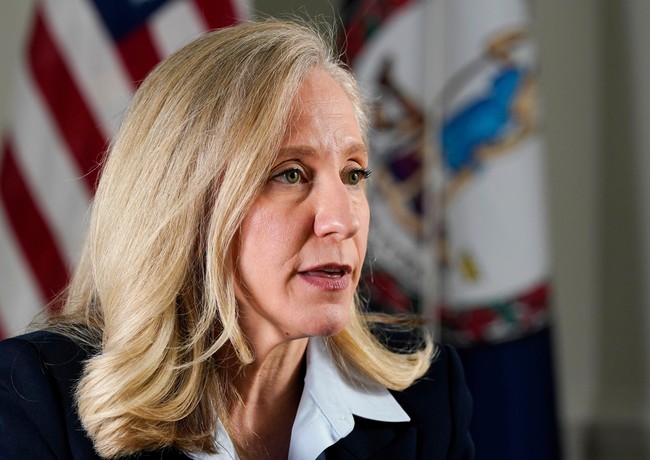
The Fall of Virginia’s Icarus
Favicon 
townhall.com

The Fall of Virginia’s Icarus

The Fall of Virginia’s Icarus
Like
Comment
Share
Conservative Voices
Conservative Voices
4 w

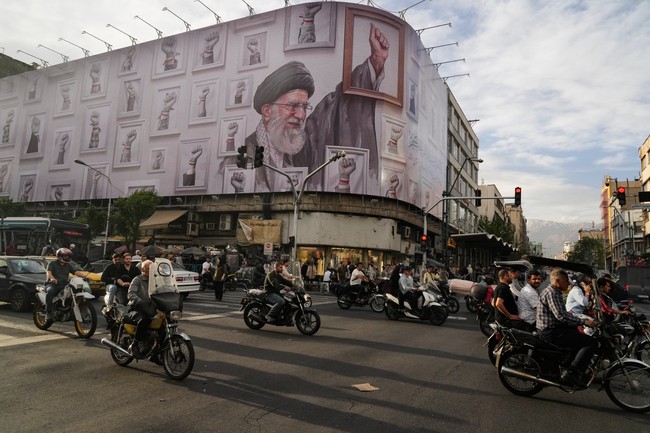
Iran's Crumbling Dictatorship Faces Its Final Reckoning
Favicon 
townhall.com

Iran's Crumbling Dictatorship Faces Its Final Reckoning

Iran's Crumbling Dictatorship Faces Its Final Reckoning
Like
Comment
Share
Conservative Voices
Conservative Voices
4 w

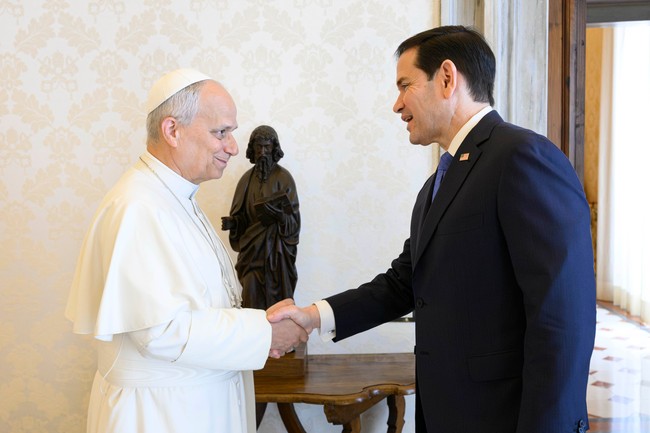
When the Pope Isn't Right
Favicon 
townhall.com

When the Pope Isn't Right

When the Pope Isn't Right
Like
Comment
Share
Conservative Voices
Conservative Voices
4 w

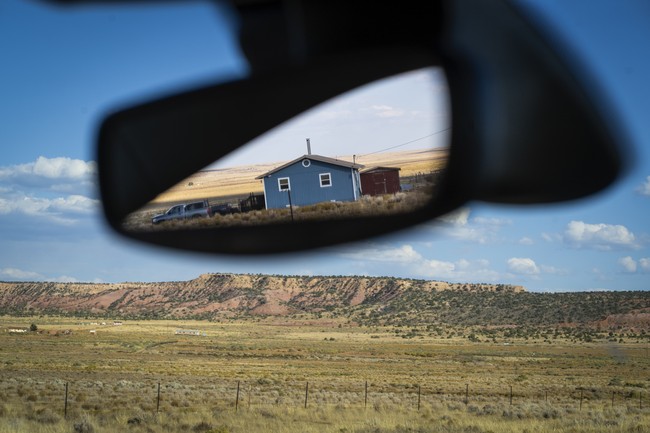
Living in the Rearview Mirror
Favicon 
townhall.com

Living in the Rearview Mirror

Living in the Rearview Mirror
Like
Comment
Share
Conservative Voices
Conservative Voices
4 w

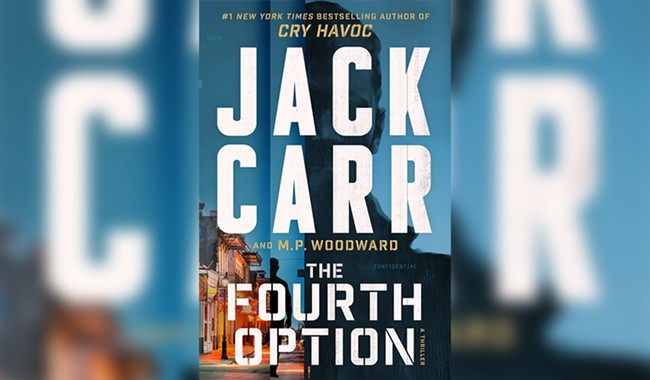
Jack Carr’s 'The Fourth Option' and the Return of the American Gunslinger
Favicon 
townhall.com

Jack Carr’s 'The Fourth Option' and the Return of the American Gunslinger

Jack Carr’s 'The Fourth Option' and the Return of the American Gunslinger
Like
Comment
Share
Conservative Voices
Conservative Voices
4 w

‘The View’ Is a Cancer on the Culture and the Country
Favicon 
townhall.com

‘The View’ Is a Cancer on the Culture and the Country

‘The View’ Is a Cancer on the Culture and the Country
Like
Comment
Share
Showing 3671 out of 125351
  • 3667
  • 3668
  • 3669
  • 3670
  • 3671
  • 3672
  • 3673
  • 3674
  • 3675
  • 3676
  • 3677
  • 3678
  • 3679
  • 3680
  • 3681
  • 3682
  • 3683
  • 3684
  • 3685
  • 3686
Advertisement
Stop Seeing These Ads

Edit Offer

Add tier


Select an image
Delete your tier
Are you sure you want to delete this tier?

Reviews

In order to sell your content and posts, start by creating a few packages. Monetization

Pay By Wallet

Payment Alert

You are about to purchase the items, do you want to proceed?

Request a Refund