YubNub Social YubNub Social
    #virginia #freedom #astronomy #police #humor #nightsky #moon #history #liberty #crime #animalbiology #thanksgiving #supermoon #perigee #zenith
    Advanced Search
  • Login
  • Register

  • Night mode
  • © 2025 YubNub Social
    About • Directory • Contact Us • Developers • Privacy Policy • Terms of Use • shareasale • FB Webview Detected • Android • Apple iOS • Get Our App

    Select Language

  • English
Install our *FREE* WEB APP! (PWA)
Night mode toggle
Community
New Posts (Home) ChatBox Popular Posts Reels Game Zone Top PodCasts
Explore
Explore
© 2025 YubNub Social
  • English
About • Directory • Contact Us • Developers • Privacy Policy • Terms of Use • shareasale • FB Webview Detected • Android • Apple iOS • Get Our App
Advertisement
Stop Seeing These Ads

Discover posts

Posts

Users

Pages

Blog

Market

Events

Games

Forum

Conservative Voices
Conservative Voices
5 w

Zelensky’s Top Man Is a Big Problem
Favicon 
www.theamericanconservative.com

Zelensky’s Top Man Is a Big Problem

Foreign Affairs Zelensky’s Top Man Is a Big Problem One threat to Ukraine’s democracy is coming from inside the house. (Photo by Maxym Marusenko/NurPhoto via Getty Images) U.S. policy on Russia–Ukraine seems to vacillate depending on which foreign leader President Donald Trump lately deems the biggest irritant and obstacle to peace: Ukraine’s Volodymyr Zelensky or Russia’s Vladimir Putin. But Trump should from time to time direct his frustrations against a lesser-known figure: Andriy Yermak, Zelensky’s chief of staff and right-hand man. Since Russia’s February 2022 invasion, Yermak has become as powerful as the Ukrainian president, if not more so. Yermak has wielded his enormous influence in the Zelensky government to control the flow of information between Kiev’s leadership and Western capitals about the war; to push a hardline negotiating stance that many analysts consider counter-productive; and to sideline ministers in a bid to control Ukraine’s diplomatic channels. He has also sought to marginalize figures and institutions crucial to the war effort, including Ukraine’s Main Directorate of Intelligence. The agency’s respected and battle-hardened chief, Kyrylo Budanov, reportedly has faced repeated attempts by Yermak to elbow him out of government. Yermak’s profound and peculiar influence over Zelensky raises broader concerns that go beyond the present war. The two men rallied Ukrainians in the early weeks of Putin’s invasion, bravely refusing to flee the country and even defiantly proclaiming their continued presence, but these days, their cloistered partnership increasingly threatens a fundamental value for which the Ukrainians are fighting: Western-style democracy. Yermak has branded critics of Zelensky as Russian stooges, weaponized government institutions against domestic political enemies, obstructed Ukraine’s campaign against corruption, and according to critics created a new system of oligarchy. Yermak’s story didn’t begin in the world of politics. He was an attorney, film producer, and occasional importer of luxury fashion products when he first met Zelensky—at the time, a comedian and actor—in 2011. The two hit it off, with Yermak, who is single and childless, later saying he had admired how Zelensky talked about family life. In 2019, Yermak worked on Zelensky’s presidential election campaign and, after a decisive victory, became a top foreign policy advisor in the new administration. The next year, Yermak was appointed head of the Office of the President of Ukraine, a position he has transformed into a bottleneck of the Zelensky government.  By all accounts, Zelensky and Yermak are inseparable friends and confidants. The pro-Ukrainian journalist Christopher Miller of the Financial Times, in a profile of Yermak published this July, reported that the two men even sleep near each other in the president’s bunker, often after a night playing table tennis or watching classic movies. In the early mornings, they lift weights together, with the hulking, six-foot-plus Yermak presumably adding more plates to the barbell than the diminutive Zelensky. Afterwards, Yermak labors intensely for many hours in his office, two floors below the president’s. “There’s now no path to Zelensky that bypasses Yermak,” one former chief of staff to a Ukrainian president told Miller. “And that’s the problem.” When Zelensky arrived at DC two weeks ago for yet another White House meeting with Trump, Yermak was there on the tarmac, “welcoming” the Ukrainian leader as he deplaned. And there he was during the working lunch with Trump’s inner circle, sitting on Zelensky’s right. In the weeks prior, Yermak had been active behind the scenes, preparing the Ukrainian team for yet another White House meeting and expressing the hope—a false hope, as it turned out—that Trump was ready to give Ukraine long-range Tomahawk missiles. (Yermak also had pushed for the White House meeting in February—the disastrous one now known as the “blowup” in the Oval Office.) Several analysts took the recent meeting—which degenerated into a shouting match behind closed doors—as evidence that Yermak misreads DC and gives poor advice on how to manage relations with the White House. They pointed also to Zelensky’s meeting with the heads of hawkish American think tanks—most of which oppose Trump’s brand of MAGA conservatism—an apparent waste of precious time and possible annoyance to White House officials who favor foreign-policy restraint. This line of criticism isn’t new. In June, POLITICO reported on U.S. elites’ bipartisan disdain for Yermak and the widely held view that he is “uninformed about U.S. politics, abrasive and overly demanding with U.S. officials.” Still, however much antipathy he may draw from U.S. elites, Yermak is a savvy political operator, and ultimately he and Zelensky got much of what they wanted from their trip. Though Trump passed on providing Tomahawks, the presidential pendulum swung back against Russia. A previously announced Trump–Putin summit in Budapest was put on ice, the U.S. lifted restrictions on Ukraine’s launching Western-provided missiles into Russia, and Trump announced the first sanctions against Moscow of his second term.  But while Yermak may succeed in scoring political wins and advancing a hopeful narrative of approaching victory over Russia, that narrative increasingly is contradicted by the worsening battlefield situation. For all Yermak’s successes at securing Western support, his machinations arguably have made any future diplomatic resolution with Russia less likely. And without a negotiated settlement, Ukraine is unlikely to survive as a sovereign and democratic, albeit truncated, state.  Consider the Ukrainians’ insistence on a trilateral leaders’ meeting with Trump, Zelensky, and Putin. The demand has agitated the Kremlin, which favors preparatory meetings to hammer out details before the three presidents convene to sign an agreement. Some American experts also recommend a series of lower-level meetings to pave the way for a peace summit. After all, it’s rather unlikely that the three presidents, if they met to finalize a post-war settlement, could find agreement on tricky issues, such as how wide a demilitarized zone in eastern Ukraine should be. But Trump himself has embraced headline-grabbing, presidential-level discussions, creating an opportunity for Kiev. By insisting on such a summit, the Ukrainian government can present itself as cooperative with the American president and Putin as an intransigent opponent of diplomacy. Yermak has masterfully exploited that opportunity, but he has thereby helped delay the long and arduous diplomatic process that may be necessary to end a war that continues to devastate Ukraine. Yermak also racks up short-term political wins in the cut-throat game of Ukrainian domestic politics. During the 2019 campaign, Zelensky was surrounded by a retinue of loyal and competent underlings, many of whom have been discarded as Yermak eliminates political rivals and secures promotions for personal allies to top positions. He is also widely believed to have engineered the ouster of Valery Zaluzhny—who became a political threat to Zelensky after achieving almost mythic popularity commanding Ukraine’s military early in the war—sending him to London, where he serves as an ambassador.  After the Oval Office blowup in February, Vice President J.D. Vance’s office reached out to Zaluzhny, seeing him as a potential replacement for Zelensky, but Yermak convinced the former general to reject the calls. The episode illustrates that the White House cannot rein in Zelensky without attending to the equally powerful Yermak, who has demonstrated real political acumen. But Yermak’s personal political victories have eroded Ukraine’s fragile democracy, neutering its parliament and other representative institutions. “We don’t have a proper functioning Cabinet of ministers,” Daria Kaleniuk, head of the Anti-Corruption Action NGO, told POLITICO. “Instead, we have some quasi-Cabinet of ministers headed by Yermak, who controls access to the president’s agenda and to the president himself.” As Yermak has thrown his weight around in Kiev’s political arena, ordinary Ukrainians outside the halls of power have taken note. After Zelensky signed a law constraining the independence of anti-corruption watchdogs in July—a power grab devised and implemented by Yermak—street protesters made clear which man they thought most deserved their opprobrium. “Yermak out!” they chanted. “F— Yermak!” Facing political blowback, Zelensky reversed the move. Suspicions of stifling corruption investigations have long surrounded Yermak and contributed to Ukrainians’ distrust of him; a government case against his younger brother Denys for bribery was secretly closed in 2021. A divide between Yermak and the Ukrainian people has also emerged on the question of how the war should end. A strong majority of Ukrainians—69 percent—say Kiev should seek to negotiate with Russia to end the war as soon as possible, according to a recent Gallup survey. Only 24 percent said the Ukrainian government should fight until victory. Nevertheless, Yermak shoots down talk of making concessions to Moscow and constricts Kiev’s diplomatic strategy. In an article published last year in Foreign Affairs, Yermak laid out his vision of Ukraine’s path to peace. “Step One: Win the War.” To be sure, Putin may never settle for any outcome to the war other than Ukraine’s total military capitulation. But as the war grinds on toward that dreary outcome, the Ukrainians should be ready to embrace good-faith, sub-presidential negotiations in case the Kremlin decides it wants peace. Moreover, the Ukrainians need to prepare for what would follow a negotiated settlement: Years weeding out systemic corruption, shoring up Ukraine’s representative institutions, and finally making a clean break with post-Soviet structures of oligarchic authority. Judging by his contributions throughout the war, Yermak, if he remained a powerful figure after its resolution, would impede Ukraine’s efforts to achieve each of those goals. As the Trump administration appraises threats to the Ukrainian state, they should find ways to outmaneuver not only the president in Moscow, but the man who runs the Office of the President in Kiev. The post Zelensky’s Top Man Is a Big Problem appeared first on The American Conservative.
Like
Comment
Share
Intel Uncensored
Intel Uncensored
5 w News & Oppinion

rumbleBitchute
TPUSA Insider Reveals Erika Kirk Gave Security Stand Down Order at UVU Event
Like
Comment
Share
Intel Uncensored
Intel Uncensored
5 w

Israeli-U.S. Geoengineering Company ‘Stardust’ to Begin Blocking the Sun with Airborne Chemicals ‘As Soon as April’
Favicon 
www.sgtreport.com

Israeli-U.S. Geoengineering Company ‘Stardust’ to Begin Blocking the Sun with Airborne Chemicals ‘As Soon as April’

by Jon Fleetwood, Jon Fleetwood: Company will not disclose what the aerosol is made of, raising informed consent worries. Israeli-U.S. geoengineering company Stardust Solutions has announced a $60 million fundraising round for its efforts to block the sun by spraying particles into the atmosphere. Stardust says they have created a powder that they promise “wouldn’t […]
Like
Comment
Share
100 Percent Fed Up Feed
5 w

How An EMP Attack Could Cripple Your Daily Life And How To Stop It
Favicon 
100percentfedup.com

How An EMP Attack Could Cripple Your Daily Life And How To Stop It

An electromagnetic pulse (EMP) is a real threat that can instantly destroy electronic devices and cripple modern infrastructure, originating from either a high-altitude nuclear detonation or an extreme solar storm. Many common household items are surprisingly vulnerable, including refrigerators, electrical well pumps, landline phones, smart home devices and the chargers for power tools. Life-sustaining medical equipment like CPAP machines, insulin pumps and pacemakers are at high risk, which could have fatal consequences for those who depend on them. Proactive preparedness is essential and involves using surge protectors, keeping non-electronic backups (like basic thermostats and phones) and storing critical backup electronics in shielded Faraday cages. Building resilience requires a layered approach, including maintaining stocks of simple replacement parts, installing specialized surge protection and understanding your home’s specific vulnerabilities to mitigate the effects of an EMP. Article by Jacob Thomas, republished with permission from Naturalnews.com In an increasingly digital world, your dependence on technology is absolute. But what if a single, invisible event could erase that progress in an instant? The threat of an electromagnetic pulse (EMP), a massive burst of electromagnetic energy, is not just science fiction; it’s a potential reality that could devastate the electronic infrastructure of modern society. While many are aware of the risk to smartphones and computers, the vulnerability of everyday household items is far more extensive and surprising. An EMP generates a powerful electromagnetic pulse so intense that it can destroy a wide range of electronic devices. This pulse can originate from two primary sources: The high-altitude detonation of a nuclear device An extreme solar storm, such as the historic Carrington Event of 1859, which caused telegraph systems to fail and even spark. As explained by BrightU.AI‘s Enoch, “when an EMP occurs, the resulting energy surge can fry sensitive circuitry directly or travel through the power grid, overloading and destroying anything connected to it.” Your home’s hidden vulnerabilities Beyond your phone and computer, numerous essential appliances and systems are at risk. Here are some of the most critical: Refrigerators and freezers: The electronics controlling the compressor are highly vulnerable. A grid surge could bypass your kitchen’s circuit breaker, destroying the appliance. Electrical well pumps: For rural homes, a destroyed well pump means no water. The pump is doubly vulnerable, susceptible to both the direct EMP effect and any grid surge drawn to its grounding. Landline phones: Even traditional landlines are not safe. The EMP’s energy can travel more easily through phone lines than power cables, frying the phone’s circuitry. It can even spark and hurt you if you happen to be holding the phone to your face at the time. Smart home devices: Your Wi-Fi router, smart thermostat and similar devices are easily destroyed. This could leave your furnace or air conditioner operational but uncontrollable. Power tool smart chargers: The tools themselves may be safe, but the smart chargers for their lithium-ion batteries are highly vulnerable, especially when plugged in and actively charging. Here are some prevention tips: Plug your refrigerator into a high-quality surge protector. While the protector may be sacrificed, it could buffer the appliance, allowing you to run it on a generator later. Install a dedicated lightning arrester for the pump to absorb the brunt of the surge. Keep a simple, non-electronic backup or rotary phone. The overhead lines might survive, allowing you to reconnect and get service. Keep a basic, $20 replacement thermostat in your emergency stocks to regain manual control of your HVAC system. Unplug chargers when not in use and remove the battery. Prioritize tools with simple, “old-fashioned” chargers. The most alarming vulnerabilities lie in life-sustaining medical equipment. If you rely on such devices, keep a backup stored safely, preferably unpowered and underground. For pacemaker users, do not delay scheduled upgrades to newer, better-shielded models. CPAP machines and insulin pumps: These devices can be interrupted or destroyed by the intense electromagnetic interference. Pacemakers: Older models are highly susceptible to damage or service interruption. An EMP could deliver a potentially fatal blow. How to build resilience The key to surviving an EMP is a layered approach to preparedness: Maintain backup stocks: Store simple replacements for critical items like thermostats, landline phones and medical devices. Utilize Faraday cages: Store your backup electronics in these shielded enclosures to protect them from the pulse. Install surge protection: Use high-quality surge protectors and lightning arresters for your home and well pump. Consider specialized shielding: Products like protective cloths and vehicle-specific devices are marketed as military-grade solutions for safeguarding generators, radios and car electronics. The silent threat of an EMP forces a sobering evaluation of your technological dependencies. By understanding the surprising vulnerabilities in your own home and taking proactive, practical steps today, you can build a foundation of resilience for an uncertain tomorrow. Watch this video to learn more about EMP and how it can affect your daily life. This video is from the EMP for Dummies channel on Brighteon.com. Sources include: AskAPrepper.com AllTheScience.org BrightU.ai Brighteon.com MORE: Here’s Why I Think An “EMP” Is The Biggest Threat To America Right Now What is the biggest threat to America....right now? Kamala Harris?  Thankfully she's gone. Joe Biden?  Also gone. Barack Obama?  Never really gone. Soros?  The puppet master behind Biden, but his funding is being cut off (USAIDS). China?  Always on the list. Democrats? RINOs? Election theft? Nuclear attack? All of these things are serious threats, but I want to tell you about something often not discussed....but the impact could be bigger than anything above. Yes, really. It's called an EMP attack. What's an "EMP" anyway? Good question! An EMP, or Electromagnetic Pulse, is a powerful burst of energy that can disrupt or damage electronic devices and electrical systems. It's like a super strong wave of energy that can mess with anything that uses electricity. This includes cell phones, computers, cars, and even the power grid that gives electricity to homes and businesses. You may have heard about it before, but it's not commonly discussed. So let me break it all down for you... Likelihood of an EMP Attack: Technological Feasibility: Creating an effective EMP weapon is technologically challenging. It typically involves nuclear detonations at high altitudes or sophisticated non-nuclear devices. The complexity of these technologies limits their availability mostly to advanced military powers. Global Politics and Deterrence: The United States has strong diplomatic relations and defense systems, which act as deterrents against direct attacks from other major powers. The doctrine of mutually assured destruction (MAD) often serves as a deterrent against nuclear-based EMP attacks, as such an attack could lead to a full-scale nuclear war. Non-State Actors: The greater risk may come from non-state actors (like terrorist groups) who might not be deterred by traditional means. However, their access to the necessary technology is typically quite limited. Natural EMPs: There is also the risk of a natural EMP caused by a solar storm, similar to the Carrington Event of 1859. While not a deliberate attack, the effects could be similarly disruptive. Most Likely Ways an EMP Could Happen: High-Altitude Nuclear Detonation: A nuclear bomb detonated high in the atmosphere could create a powerful EMP. This would require intercontinental ballistic missile (ICBM) capabilities. Non-Nuclear EMP Devices: These devices can be designed to target specific areas or systems without the broader destruction caused by nuclear weapons. However, their effective range and power are generally less than a nuclear EMP. Cyber-Physical Attacks: A coordinated cyber-attack on power grids and electronic systems could mimic some effects of an EMP, though technically different. Solar Storms: A severe solar storm hitting the Earth could create natural EMP effects, disrupting electrical systems and communications. The Fallout From an EMP: Power Outage: EMPs can knock out electricity everywhere, like turning off a big light switch for a whole city or even a country. No Internet or Phones: Imagine not being able to call, text, or use the internet. That's what happens with an EMP. Water Supply Issues: Without power, getting clean water to homes and buildings becomes really hard. Food Shortage: Stores need electricity to keep food fresh. Without it, a lot of food can go bad quickly. No Heating or Air Conditioning: Houses and buildings would lose heating in winter and air conditioning in summer. Hospitals Struggle: Hospitals rely on power for life-saving equipment. An EMP could put many lives at risk. Transportation Problems: Cars, buses, and trains might not work, making it tough to get around. Banking and Money Problems: ATMs and credit card machines need power, so buying things could become really difficult. Emergency Services Disrupted: Police, fire, and ambulance services could be severely affected. Danger to Airplanes: Planes flying when an EMP hits could have serious trouble. Schools Closing: With no power, schools might have to close. No Radio or TV: News and entertainment through radio and TV would be cut off. Damage to Electronics: An EMP can break things like computers, TVs, and even some toys. Industrial Shutdowns: Factories and other big workplaces would have to stop work. Fuel Shortages: Gas stations need power to pump gas, so cars might run out of fuel. Increased Crime: Without alarms or streetlights, there might be more thefts and other crimes. Health Risks from Spoiled Food: Without fridges, food can spoil and make people sick. Waste Disposal Problems: Trash and sewage systems might not work properly. Mental Health Stress: The sudden change and uncertainty can be really stressful and scary for people. Long-Term Recovery: Fixing everything after an EMP can take a really long time and be very hard. Life In America Following an EMP Attack: Week 1: Immediate Chaos and Confusion In the immediate aftermath, there would be widespread panic and confusion. The EMP, having disabled all electronics, would leave individuals without means of communication; cell phones, internet, and radio would be rendered useless. Transportation systems would grind to a halt. Modern vehicles with electronic components would fail, leading to widespread traffic jams and stranded individuals. Emergency services would be severely hampered, struggling to respond to incidents without their usual communication and transportation infrastructure. There would be a run on stores for essential supplies as people quickly realize the severity of the situation. This could lead to shortages and even looting in some areas. Week 2-3: Adapting to the New Reality Communities would begin to adapt. Those with older, non-electronic vehicles and equipment would find themselves at an advantage. People would turn to bicycles, horses, or simply walking for transportation. The lack of refrigeration and electronic banking systems would lead to a reliance on cash transactions and bartering. Localized trading systems might emerge. Battery-operated or hand-crank radios would become vital sources of information, assuming some radio stations could continue broadcasting. There would be a significant increase in manual labor as machines and automated systems used in manufacturing and agriculture would be non-operational. Week 4 and Beyond: Long-Term Adjustments Social structures would begin to shift, with communities becoming more localized and self-sufficient. Neighbors would need to work together for survival, leading to a resurgence of community-oriented living. Food shortages could become a serious issue. Without modern transportation and preservation methods, communities would have to rely on locally sourced food, leading to a rise in gardening and small-scale farming. Health care would face severe challenges. Hospitals would struggle without modern equipment, leading to a reliance on more traditional methods of treatment and an increased need for medical knowledge within communities. Education would revert to non-digital methods. Schools, if they remained open, would rely on books and oral teaching methods. Over time, there might be efforts to rebuild some form of electrical infrastructure, but this would be a slow and difficult process given the extent of the damage caused by the EMP. Now you see what I'm talking about? As usual, I don't like to just leave you hanging with the bad news....I like to give you solutions! And I have one here. You know I've got you covered! There ARE things you can do right now to make sure you and your family will stay safe and be able to survive in the event we end up living through an EMP strike. Imagine losing all lights and heating in the winter? Negative 10 degrees outside and suddenly you're back in the stone age? Follow the link below to find out what you can do right now. TAKE ACTION NOW Let's all stay safe together, ok?
Like
Comment
Share
One America News Network Feed
5 w

President Trump says he is in good health after revealing he got an MRI earlier this month.
Favicon 
www.youtube.com

President Trump says he is in good health after revealing he got an MRI earlier this month.

President Trump says he is in good health after revealing he got an MRI earlier this month.
Like
Comment
Share
NEWSMAX Feed
NEWSMAX Feed
5 w

Chris Salcedo slams Dems who do this one thing
Favicon 
www.youtube.com

Chris Salcedo slams Dems who do this one thing

Chris Salcedo slams Dems who do this one thing
Like
Comment
Share
Front Page Mag Feed
Front Page Mag Feed
5 w

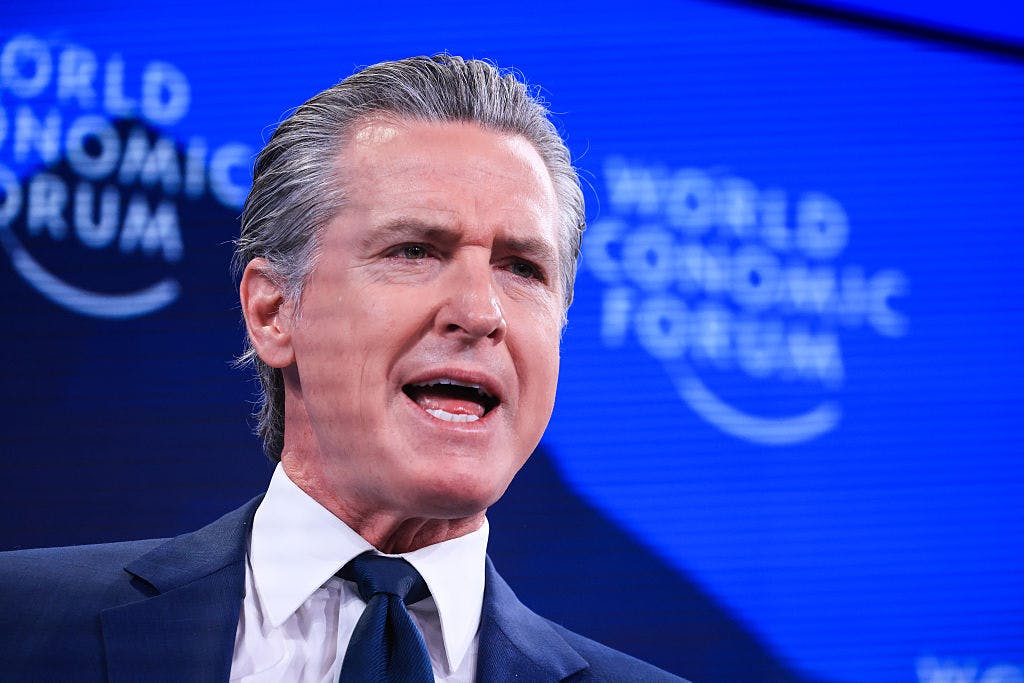
Gov. Newsom: I’m Only Running for President Because Trump Sent the National Guard to LA
Favicon 
www.frontpagemag.com

Gov. Newsom: I’m Only Running for President Because Trump Sent the National Guard to LA

He's lying. The post Gov. Newsom: I’m Only Running for President Because Trump Sent the National Guard to LA appeared first on Frontpage Mag.
Like
Comment
Share
BlabberBuzz Feed
BlabberBuzz Feed
5 w

Surprise Twist: Half Of ‘Communist’ Zohran Mamdani’s Campaign Money Isn’t Even From New York City!
Favicon 
www.blabber.buzz

Surprise Twist: Half Of ‘Communist’ Zohran Mamdani’s Campaign Money Isn’t Even From New York City!

Like
Comment
Share
The Lighter Side
The Lighter Side
5 w

Spain expands marine protections with six new biodiversity hotspots
Favicon 
www.optimistdaily.com

Spain expands marine protections with six new biodiversity hotspots

BY THE OPTIMIST DAILY EDITORIAL TEAM In a move to bolster ocean conservation, Spain designated six new marine zones: five as marine protected areas (MPAs) and one as a seabird sanctuary, which adds an impressive 17,000 square kilometers of protected waters. This strategic expansion raises Spain’s total marine protection to 22.45 percent, edging closer to its 2025 target of 25 percent. The newly protected zones include some of the most biologically important and ecologically vulnerable parts of Spanish waters: the Mallorca Channel seamounts, Seco de Palos’ pockmark fields, the Capbreton canyon system, the Alboran Sea banks, and the Central Catalan Coast. The sixth site has been identified as an area of special importance for seabirds. From overlooked ecosystems to protected sanctuaries These areas are more than dots on a map. They host rare and fragile marine habitats that have long flown under the radar. Oceana, a leading marine conservation NGO, played a key role in bringing them into the spotlight. Years of advocacy and scientific research, including multiple deep-sea expeditions, provided critical data for the designations. “It is deeply satisfying to see these high-value ecological areas finally receive protection,” said Michael Sealey, policy advisor for Oceana in Europe. One of the standout sites is the Mallorca Channel, where Oceana used remotely operated vehicles and a research catamaran to explore largely uncharted seamount ecosystems. In Cabo de Palos, the organization was the first to document lush seabeds of soft corals and gorgonians, even uncovering a new species of giant foraminifera, a discovery that underscores the need for protective measures. “These are not just any sites—they are hotspots of biodiversity,” noted Ricardo Aguilar, Oceana’s director of expeditions. “Our research, alongside work from the broader scientific community, has shown how urgently these ecosystems need protection.” A milestone for marine conservation in Europe The move aligns with broader conservation targets under the EU Biodiversity Strategy for 2030 and the commitments made at the UN Ocean Conference. The six sites fall under the LIFE INTEMARES project, a European initiative aimed at creating a coherent, science-led network of MPAs across EU waters. Once these sites are reviewed and approved by the European Commission for inclusion in the Natura 2000 Network, Spain will have six years to develop and implement detailed management plans. In the meantime, precautionary rules must be put in place to guard against harmful practices, such as bottom trawling, that could jeopardize conservation goals. “This expansion is a critical step toward building a resilient network of marine ecosystems,” said Sealey. “But the work doesn’t end here—what’s urgently needed now is strong, science-based management.” Benefits ripple beyond biodiversity While the ecological significance is clear, these protections also promise broader benefits. Healthier marine ecosystems can strengthen coastal economies by supporting sustainable fisheries, bolstering food security, and creating nature-based tourism opportunities. In a time when marine ecosystems face mounting pressures from climate change, overfishing, and industrial activities, Spain’s action represents a proactive step toward long-term resilience. It also serves as a model for how nations can meet international conservation goals through science-driven, collaborative efforts.The post Spain expands marine protections with six new biodiversity hotspots first appeared on The Optimist Daily: Making Solutions the News.
Like
Comment
Share
The Lighter Side
The Lighter Side
5 w

Things to consider when deciding on the perfect Halloween costume
Favicon 
www.optimistdaily.com

Things to consider when deciding on the perfect Halloween costume

BY THE OPTIMIST DAILY EDITORIAL TEAM Halloween is approaching, and if you’re still unsure about what costume to wear, don’t worry! It’s natural to feel overwhelmed when there are so many options available. Sophie Strauss, a Los Angeles-based stylist, recommends asking yourself five essential questions to help limit your costume ideas in a fun, budget-friendly, and sustainable way. Here’s how to start. Embrace your Halloween personality First, consider what type of Halloween enthusiast you are. Do you enjoy going all out, or are you more of the “throw-on-cat-ears” type? Strauss says, “There’s no right or wrong.” Be honest with yourself. Forcing yourself into someone you are not may detract from the enjoyment of the season. Do you want to lean into pop culture or spooky season? Strauss recommends getting inspiration from popular culture. “TV shows, movies, memes, and trending topics can all be great sources for a costume,” she suggests. Last year, she dressed like Tim Riggins from Friday Night Lights, inspired by re-watching vintage series. If the eerie season is more your thing, why not channel a legendary evil like Cruella de Vil? Strauss emphasizes that it does not require much effort—just grab some black and white hairspray and a fur jacket. What’s in your closet? Before you go shopping, check your own closet. You may already have pieces that can be combined into a costume. Strauss recounts how a simple denim jumpsuit, red bandana, and lipstick could turn someone into Rosie the Riveter. And don’t forget to ask your friends! Borrowing stuff is an excellent method to incorporate interesting, fresh components into your outfit without paying money. Sustainable alternatives for a unique look Instead of purchasing a new outfit, consider thrifting or obtaining second-hand parts. Pre-made costumes from big-box stores are typically wasteful because they are only worn once. Strauss promotes reusing clothes or finding unusual goods at a thrift store. If you have to purchase something new, make sure it is something you will wear beyond Halloween. Choosing a Halloween costume does not need to be stressful or expensive. By thinking creatively, borrowing, and thrifting, you may achieve a fun, unique appearance without breaking the bank or the earth. With a little imagination and these five guiding questions, you’ll be ready for a great Halloween!The post Things to consider when deciding on the perfect Halloween costume first appeared on The Optimist Daily: Making Solutions the News.
Like
Comment
Share
Showing 4950 out of 101372
  • 4946
  • 4947
  • 4948
  • 4949
  • 4950
  • 4951
  • 4952
  • 4953
  • 4954
  • 4955
  • 4956
  • 4957
  • 4958
  • 4959
  • 4960
  • 4961
  • 4962
  • 4963
  • 4964
  • 4965
Advertisement
Stop Seeing These Ads

Edit Offer

Add tier


Select an image
Delete your tier
Are you sure you want to delete this tier?

Reviews

In order to sell your content and posts, start by creating a few packages. Monetization

Pay By Wallet

Payment Alert

You are about to purchase the items, do you want to proceed?

Request a Refund