YubNub Social YubNub Social
    #music #tew #tuba #militarymusic #armymusic #armyband #satire #democrats #loonylibs #iran #quintet #tew2026 #comedy #solocompetition #competition
    Advanced Search
  • Login
  • Register

  • Night mode
  • © 2026 YubNub Social
    About • Directory • Contact Us • Developers • Privacy Policy • Terms of Use • shareasale • FB Webview Detected • Android • Apple iOS • Get Our App

    Select Language

  • English
Night mode toggle
Featured Content
Community
New Posts (Home) ChatBox Popular Posts Reels Game Zone Top PodCasts
Explore
Explore
© 2026 YubNub Social
  • English
About • Directory • Contact Us • Developers • Privacy Policy • Terms of Use • shareasale • FB Webview Detected • Android • Apple iOS • Get Our App
Advertisement
Stop Seeing These Ads

Discover posts

Posts

Users

Pages

Blog

Market

Events

Games

Forum

Worth it or Woke?
Worth it or Woke?
6 w

Melania
Favicon 
worthitorwoke.com

Melania

Melania offers an intimate, behind-the-scenes look at First Lady Melania Trump’s life during the pivotal twenty days leading up to her husband’s second presidential inauguration, capturing private moments, transition preparations, and her return to public duties in a rarely seen personal light. The post Melania first appeared on Worth it or Woke.
Like
Comment
Share
The Lighter Side
The Lighter Side
6 w

3 undeniable reasons Gen X is known as the 'forgotten generation'
Favicon 
www.upworthy.com

3 undeniable reasons Gen X is known as the 'forgotten generation'

Generation X is made up of people who were born between 1965 and 1980. Compared to other generations like Baby Boomers and Millennials, Gen X has earned a reputation that they tend to slide under the radar—and are easily "forgotten" about. It's a trait that has also earned them the nickname the "middle child" generation. However, it's a sentiment that many Gen X'ers can attest to experiencing. In an online community of Gen X'ers, one member named @BizarroMax attempted to explain why Gen X is the "forgotten generation".The expert humorously discussed the "generational strife" between Boomers, Millennials, and Gen Z, making a hilarious point about why Gen X seems to be frequently forgotten about. The post went viral among Gen X'ers who feel 'seen' by her expert take. - YouTube www.youtube.com Why Gen X is the "forgotten generation"@BizarroMax shared the three reasons why Gen X is ignored according to the leadership expert. "Gen X, I didn’t forget you, even if the rest of the world has. But I have no advice for you. For a few reasons. First, you don’t need it. You are the most independent and self-sufficient generation in the history of mankind and there is literally nothing I can teach you," she said.The expert continued with two more reasons. "Second, even if I did have something to tell you, you wouldn’t care. Third, the reason we ignore you is because the rest of us are all terrified of you. If the zombie apocalypse ever happens, we are all hiding behind you. Somehow, you’ll know what to do.” Gen X friends hang out together.Photo credit: CanvaMany fellow Gen X'ers agreed. In the comments section, member @Sirenista_D wrote, "We wouldn't 'know' what to do but we def are the 'figure it out' crew," and member MNConcerto replied, "Because we had to. Damn we were left alone nobody helped us figure it out or problem solve, we had to do it. You got yourself into this mess, now get yourself out."Others leaned into the comedic nature of the expert's observation about Gen X: "My body already hurts for no reason. You fight the zombies," member @fohktor wrote, to which fellow member @DocMcCracken humorously responded, "Zombie apocalypse? I've seen enough movies, not worth the hanging around in the after suffering, just get it over quick, I'm tired already and I just woke up."Some poked fun at their generation's independent ways: "Gen X doesn't do 'leadership conferences'," @corneliusvanhouten wrote, followed by @Chalice_Ink's reply, "We might go, but we don’t pay attention." Member @Efficient_Weather_13 also commented, "I’ll go, but I’m gonna complain the whole time," to which member @Current-Anybody9331replied, "And make it awkward for anyone who talks to me." Gen Xers are known to be independent and self-sufficient.Photo credit: CanvaAccording to Michele M. Kroll, Ph.D., a University of New Hampshire Older Adult Health & Well-Being Field Specialist, Gen X is often called the "forgotten generation" as well as the "latchkey" generation, "as they were often left unsupervised at home or after school until their parents came home from work. This was due to increased numbers of dual income households and parental divorce," she wrote in her article, "Generation X... "The Forgotten Generation". Dr. Kroll notes that this instilled independence and resilience, adding that "the sandwich generation causes additional stress by juggling many responsibilities from caregiving of children to aging parents."Despite these challenges, Dr. Kroll adds that Gen Xers are "notably satisfied with their life, health and career." And another member of the Gen X community, @Sensitive-Question42, summed it up perfectly: "God I’m so happy that this is my generation. I love being overlooked (not being sarcastic or ironic either, surprisingly for us). I just like being left to my own devices and working things out for myself."This article originally appeared last year. It has been updated.
Like
Comment
Share
The Lighter Side
The Lighter Side
6 w

A woman accidentally said, 'Love you!' to an important client. His response was perfect.
Favicon 
www.upworthy.com

A woman accidentally said, 'Love you!' to an important client. His response was perfect.

Some people have a hard time saying, "I love you," even when they feel it, but for others, telling their friends and family that they love them is just second nature. Every time your loved one leaves the house, you say, "Bye, love you!" Before hopping into bed at night, you say, "G'nite, love you!" Just before getting off a call with them, it's "Talk to you later, love you!"That sweet, ingrained habit is all well and good until it spills over into your work life, especially when you're talking to an important client, where the boundaries of professional conduct are particularly important to uphold. (You can feel the cringe coming, can't you?)A woman shared an oh-so-human story about absent-mindedly telling a client she loved him, and his thoughtful response to it got people cheering. "Accidentally said 'Love you!' at the end of a call with an important client yesterday," wrote a Reddit user. "I heard him giggle as I hung up, and I was mortified. Today, I saw he emailed me this:" from MadeMeSmile The email began, "Hey—Just wanted to say that I didn't mean to laugh at you when you accidentally signed off on our call with a 'love you.' I just found it funny because I've definitely done that before, and I know it happens."Okay, phew, he understood that the laughing was mortifying and he wasn't bothered by the "love you." But then he added the absolute best thing he could have said about the situation:"I'm glad you have enough love in your life that that response comes naturally. If anything, you should be proud of that. :)"Then he mercifully resumed their professional conversation. "Have a great weekend! We'll follow up about my call with Chris on Wednesday, as discussed." It's hard to come back from telling a client "Love you!"Photo credit: Canva He didn't just ignore the elephant in the room and let it hang over her like an awkward cloud. He put her at ease, letting her know he's done it before and it happens and is no big deal. But then he took it a step further, adding a deeper human layer to the moment by acknowledging the fact that the words flowing so automatically and easily for her meant she was surrounded by love.The client's emotional intelligence and thoughtful response warmed people's hearts."What a great and respectful response. He is completely right, it’s such a beautiful thing to have that much love in your life that it comes out naturally.""You work with good people.""Honestly, this made my day
Like
Comment
Share
The Lighter Side
The Lighter Side
6 w

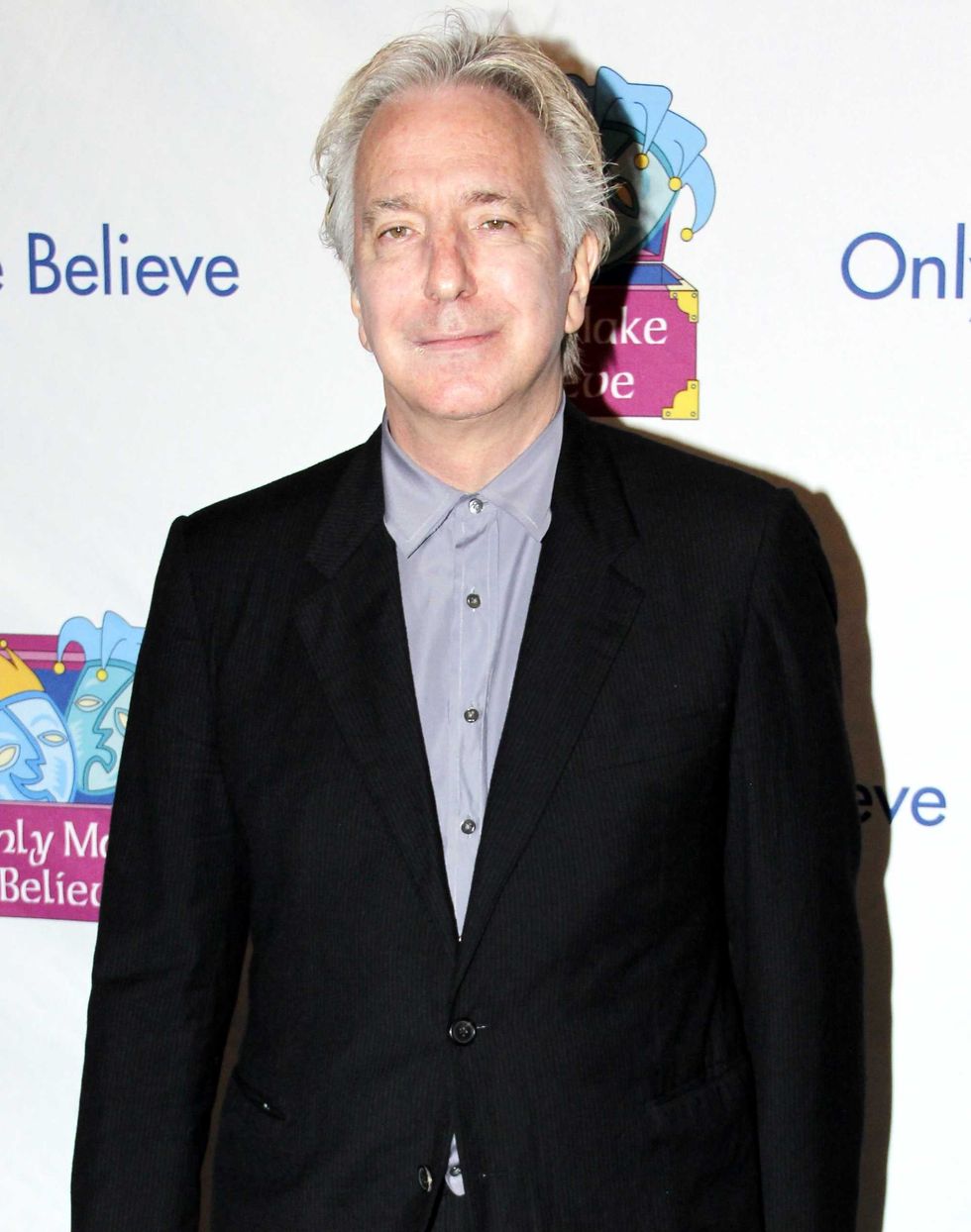
Actor reveals Alan Rickman's loving gesture when terminally ill children visited the Harry Potter set
Favicon 
www.upworthy.com

Actor reveals Alan Rickman's loving gesture when terminally ill children visited the Harry Potter set

It's impossible for many to believe that it has been just over ten years since beloved actor Alan Rickman passed away from pancreatic cancer. Known for his brilliant tapestry of work, from the infamous villain Hans Gruber in Die Hard to the deliciously menacing Professor Severus Snape in the Harry Potter series, he truly made the "bad guy" so fun to watch.And of course, there was so much more to his repertoire than villainy. He could powerfully sing, as he portrayed in Sweeney Todd: The Demon Barber of Fleet Street. He showed up with conviction in the Jane Austen adaptation of Sense and Sensibility. He could also portray the lovesick but conflicted husband with perfection as seen in Richard Curtis's Love, Actually. He was classically trained and loved by fellow entertainers, friends, and family.But he was most adored for his down-to-earth generosity of spirit. His widow, Rima Horton, has recently been inspiring others to get involved in the non-profit Pancreatic Cancer UK by urging them to spread the word about the disease. She notes that Rickman had "so much more to give" had his life not been tragically cut short. Alan Rickman's widow has kind words for him in tribute. www.youtube.com, E! News Harry Potter co-star Tom Felton (who is currently reprising his role of Draco Malfoy on the Broadway stage in Harry Potter and The Cursed Child) shared beautiful words about Rickman in a piece for The Guardian. "He was nothing but kind, genuine, seemingly unfazed by anything happening around us, and always had time for everyone. I learned just as much—if not more—from Alan off-camera as I did when we were filming."Felton also notes that Rickman refused special treatment. "He could have had his food delivered to his trailer, like the rest of the cast (including me). Instead, he queued up for his own breakfast and lunch, head to toe in his Snape costume and wig, holding a plastic tray and waiting his turn in the usually long line behind a carpenter, set director, burly cameraman, and Gringotts goblin—an image I will never forget. I didn't realize it then, but I think now Alan's silent message was: 'We're all in this together.'" See on Instagram There was an especially wonderful aspect of Rickman that Felton recalls. "He taught me a great deal about charity. He would often have half a dozen people visit the studio each day, and would claim they were his cousins or friends. Really, he was offering terminally ill children and their families a chance to see behind the curtains. He also taught me that children don't want to meet actors, but the characters they play."Brian Cox, another actor who worked with Rickman in the 1980 mini TV series, Thérèse Raquin, shared with The Guardian how much he respected him as an artist. "His standards were very high. Alan might have appeared laid back, but he was endlessly driven, very firm, totally reliable. There was nothing flaky about him. No nonsense. No rubbish."He added that his friendship was also extraordinary. "Everybody knew he was an extraordinary actor, but as we became friends, I realized what an extraordinary person he was too. I had so much respect for Alan. So many people relied on him. He was so kind and supportive to those who were struggling. He'd seek them out and sort them out, listen to the problems without presumption, and gently came up with solutions."In Daniel Radcliffe's glowing tribute to Rickman shortly after his death, he praises him as an actor and a man. "Alan Rickman is undoubtedly one of the greatest actors I will ever work with. He is also, one of the loyalest (sic) and most supportive people I've ever met in the film industry. He was so encouraging of me both on set and in the years post-Potter. I'm pretty sure he came and saw everything I ever did on stage both in London and New York. He didn't have to do that." See on Instagram
Like
Comment
Share
The Lighter Side
The Lighter Side
6 w

Mom shares hard truths for travel ball parents who think their kids will get a sports scholarship
Favicon 
www.upworthy.com

Mom shares hard truths for travel ball parents who think their kids will get a sports scholarship

In December 2025, Katherine Van Dyck, a senior legal fellow at the American Economic Liberties Project, testified before the U.S. House Committee on Education and the Workforce's Subcommittee on Early Childhood, Elementary, and Secondary Education about the growing takeover of youth sports by private equity firms. This new profit-driven system is replacing once-affordable community sports organizations with pricey programs that exclude many families.At the center of this new youth sports paradigm is the bargain these leagues offer parents: If you pay thousands upon thousands of dollars, your child will have the opportunity to earn a college scholarship and possibly make it to the pros. During her testimony, Van Dyck noted that many parents have bought into the promise.Parents overestimate the chances their children will receive athletic scholarshipsVan Dyck shared a poll showing that 49% of parents whose children participate in youth sports (ages 7-18) are "confident" their child will receive an athletic scholarship. Unfortunately, only about 7% of high school athletes go on to play college sports, and just 2% receive an athletic scholarship. "Families are going into debt, and it's based on a lie," she said in her testimony. "Forty-nine percent of parents believe their children will get an athletic scholarship. In fact, only two percent of college applicants actually do." @bobbyleebaseball What was once recreational neighborhood fun has become mandatory travel sports. Families are being convinced that it is the only way for children to be competitive in the sport, and that if they aren’t giving in to the pressure then they are failing their children. It is not true. Families are spending thousands a year, and hurting their children’s health and development along the way, because they don’t realize they are being manipulated into spending. It’s a marketing scheme meant to keep registration numbers and tournament participation high, to extract as much as they can from families. And parents have been convinced that if they aren’t doing it, then their children’s are missing out. Everyone is sounding the alarm, and it has now made its way to the U.S. House Committee on Education and the Workforce Subcommittee on Early Childhood Education. #congress #baseball #youthsports #youthbaseball #children If 49% seems like an anomaly, a 2024 study found similarly inflated expectations: 34% of parents with children ages 6 to 17 believe their kids will play college sports, and 27% think they are likely to receive a college scholarship.Youth leagues often dangle the scholarship carrot in front of parents who face either heavy debt or foregoing college altogether. They also appear to brandish the stick, suggesting that parents who don't pay up aren't doing everything possible to help their kids succeed. Parents posing with their young kids on a basketball court. via Canva/Photos"The industry has learned that the easiest way to get parents to ignore their instincts is to convince them that their instincts are selfish," said Dr. Jennifer Fraser, who studies youth sports psychology, according to Beyond the Drill. "Parents will endure almost anything if they believe it's what their child needs to succeed."Melissa Panzer, a TikToker who focuses on the challenges of being a working mom, recently went viral with a video responding to Van Dyck's testimony and unpacking why so many parents are hedging their bets on a college scholarship. She also outlined a new way forward for parents who don't buy the story the youth leagues are selling. @seriouslymakeitmakesense This clip isn’t about sports. It’s about how families are being squeezed. For context: • There are roughly 8 million high school athletes in the U.S. each year • About 160,000 will receive any athletic scholarship money • Most scholarships are partial, not full rides • Meanwhile, youth sports has grown into a $30+ billion industry — almost entirely funded by families That mismatch isn’t an accident. It’s the business model. In the meantime, while the system remains broken, here are a few things that can help soften the blow: • Ask what your child actually enjoys — not what feels strategic • Set a clear family budget before the season starts • Remember that most college pathways do not run through elite youth sports • Know that opting out is not “falling behind” Parents aren’t the problem. They’re the product.
Like
Comment
Share
The Lighter Side
The Lighter Side
6 w

Why intergenerational 'culture buddies' could be the antidote to loneliness everywhere
Favicon 
www.upworthy.com

Why intergenerational 'culture buddies' could be the antidote to loneliness everywhere

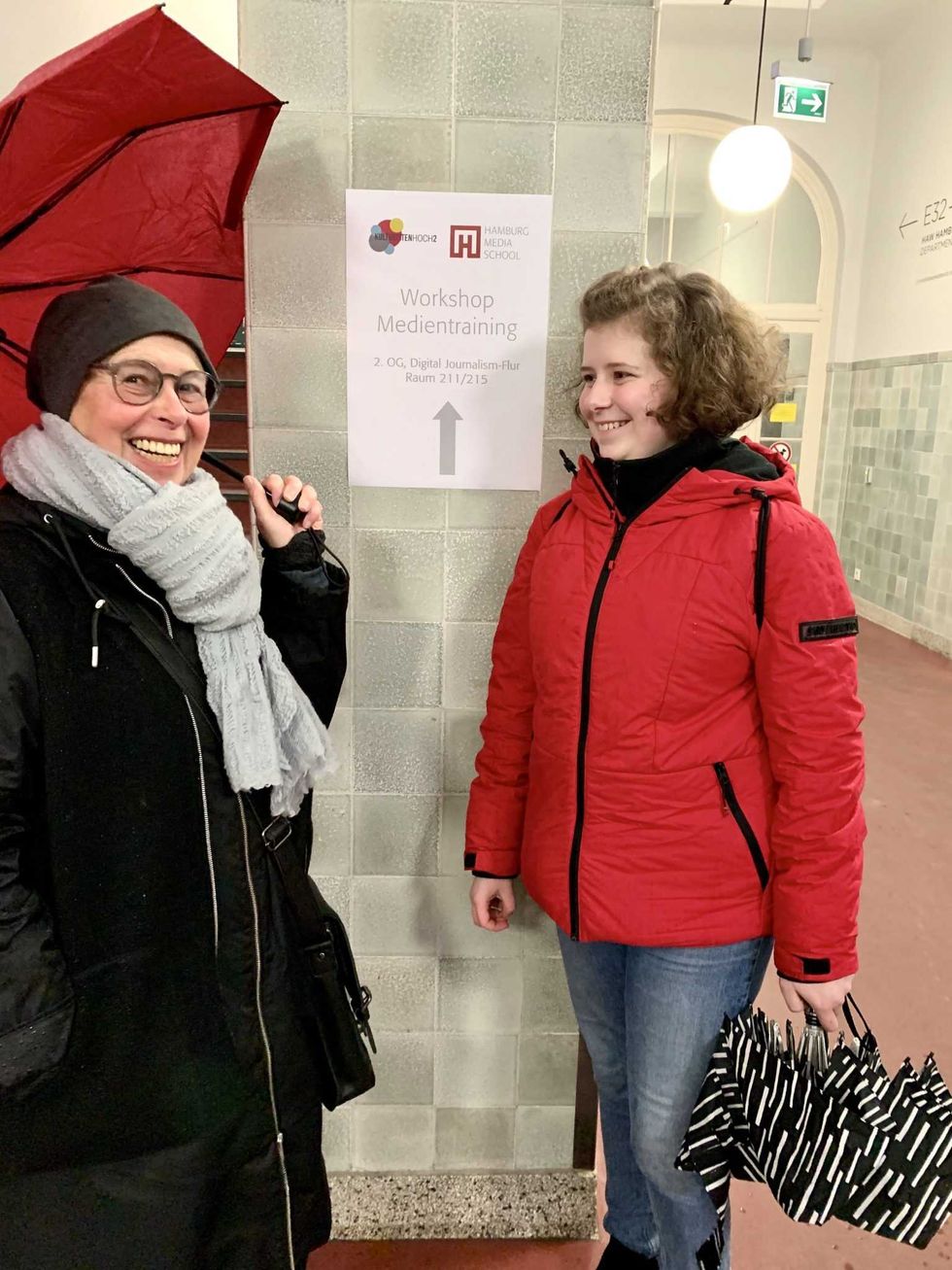
Picture yourself at eighty-five. You live alone in a fourth-floor apartment in a busy city. You loved the theater in your youth, savoring the thrill as the lights dimmed and the crowd fell to a hush. Now, money is tight, sitting for hours is hard on your body, and perhaps most heartbreaking of all, you have no one to go with.For millions of older adults around the world, this scenario is more than hypothetical; it's everyday life. Loneliness has become an increasingly widespread issue, affecting physical health as much as smoking or obesity. But in Hamburg, Germany, a remarkable social initiative is offering a different kind of remedy for loneliness among the elderly. A high school volunteer with her senior "tandem." Photo credit: Kulturisten Hoch ZweiThis approach, often referred to as "social medicine," drives KULTURISTENHOCH2 (Culture to the Power of Two), a non-profit redefining aging, youth, and the transformative power of human connection.Unpacking KULTURISTENHOCH2 At its heart, KULTURISTENHOCH2 (also known as KH2) is a "culture buddies" program with a simple, beautiful mission. The project pairs high school students with older neighbors living on low incomes to forge meaningful intergenerational connections.The project was founded in 2016 by Christine Worth, a former marketing executive inspired by her family history. She remembers watching her father's world grow smaller due to dementia, aging, and isolation, and realized that getting older is an unaddressed social problem. Worth found that for many seniors, not having someone to share the day with was the biggest barrier to leaving the house. KH2 makes leaving the house more accessible to senior citizens. Photo credit: Kulturisten Hoch ZweiThrough KH2, seniors are given a "VIP pass" to an unbelievable, culturally rich city. Paired with a local teenager, these elders enjoy free tickets to concerts, plays, and art exhibits, proving that a shared cultural experience can bridge even the largest age gaps.How the program works KH2 is designed to remove every barrier that might keep an older person at home, creating a safe, comfortable, and dignified experience from start to finish.The pairing processThe initiative starts in local schools, where students sixteen and older volunteer to join KH2. These "young buddies" are paired with seniors ages 63 and older—many of whom are living on low incomes or with physical disabilities—within their district, allowing them to attend a wide range of cultural events free of charge.Seniors are identified and registered as participants if they meet age and income requirements and express an interest in cultural participation. Many "culture buddies" stay in contact after the program ends. Photo credit: Kulturisten Hoch ZweiAfter matching, the student will contact the senior, coordinate logistics, and accompany them to selected events. Over time, many connections evolve into lasting relationships, with approximately 20% of "generational tandems" reportedly maintaining regular contact beyond the official program.Door-to-door companionshipTickets are provided free of charge by KultureLebe Hamburg e.V., a partner program that champions the belief that "culture is not a luxury, culture is food" and arranges free cultural experiences for people on low incomes.The student arranges a meeting time and place, often picking the senior up from their home and, if requested, accompanying them door-to-door. Travel typically takes place via public transportation, with the student offering practical assistance along the way, such as navigating stairs, reading signage, and more.Students commit to at least three cultural outings per school year, though many choose to volunteer more often.Walking in their shoesOne of the most impactful aspects of KH2 is how it prepares the students. Before meeting their senior partners, teens receive specialized training designed to ensure the needs of older adults are met.Beyond discussing aging and how to navigate communication with seniors, students wear a 77-pound "aging simulation suit," which restricts movement and vision. They are given "ear defenders" to simulate hearing loss and practice using wheelchairs and walkers to experience the physical challenges of older age and its practical challenges.Cultural experiences for allEvents include a broad range of programs, including the theater, opera, orchestral events, cinema, gallery openings, and festivals. Here, culture serves as a natural "conversation starter" between generations, as shared performances and exhibitions open the door to exchanging perspectives and life stories.While student participants receive certificates for their volunteer work, the real reward lies in personal growth. Through engaging with seniors from a different generation, they gain a deeper understanding of history, empathy, and human connection.Sustaining and expanding KH2 The program started with three pilot schools and 37 seniors, and expanded quickly. By the end of 2019, around 165 students and 175 seniors were active in KH2, with more than 850 pairings activated across Hamburg. KH2 provides students with excellent life skills and lasting connections. Photo credit: Kulturisten Hoch ZweiKeeping KH2 running requires significant support. Around 25% of its funding comes from government agencies, with the remainder provided by private foundations, corporate sponsors, and grassroots fundraising efforts.The science behind the magic of connection Public health experts are increasingly recognizing that health extends beyond diet and exercise. A groundbreaking 2023 report from the World Health Organization (WHO) linked participation in arts and culture to tangible health benefits, including reduced depression, improved cognitive function, and even increased life expectancy."For too long we have seen Science and the Arts as separate endeavors," said Sir Jeremy Farrar, chief scientist at the WHO. "But these silos were not always so. Through much of human history, the creative interface of different disciplines has been a catalyst for both innovation and healing."In this sense, KH2 functions as more than a community program; it serves as a preventative health strategy.Creating lasting partnerships In a society increasingly shadowed by loneliness and isolation, KH2 is grounded in the belief that real change happens through encounter and exchange. Through its life-changing cultural tandems, older adults regain mobility, confidence, and a renewed sense of belonging as active members of society.By connecting two groups who might otherwise never meet—teenagers just beginning their lives and seniors reflecting on theirs—KH2 creates moments in which age quietly falls away, leaving two souls moved by art.

Like
Comment
Share
The Lighter Side
The Lighter Side
6 w

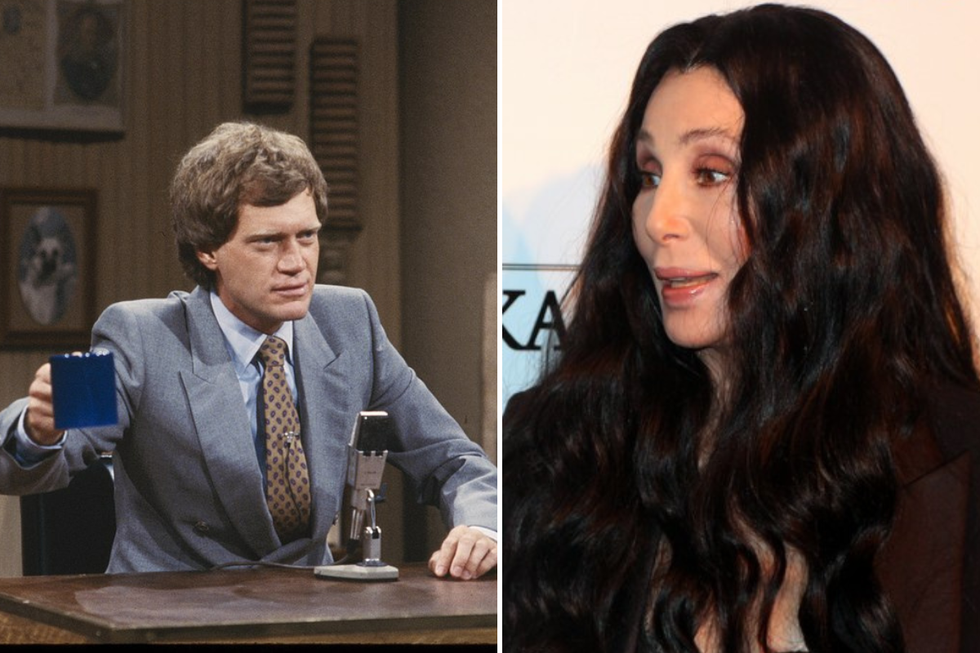
In 1986, Cher bravely stood up to David Letterman during an uncomfortable, sexist interview
Favicon 
www.upworthy.com

In 1986, Cher bravely stood up to David Letterman during an uncomfortable, sexist interview

Cher had accomplished a laundry list of amazing feats by the time the 1980s rolled around. She'd hit number one on the Billboard Hot 100, had international number-one hits, starred on television and on Broadway, and established herself as an acclaimed actress. In 1988, she even won an Oscar for Best Actress for her role in Moonstruck.But as of 1986, there was still one major thing she hadn't done: appear on Late Night with David Letterman.It wasn't for lack of trying on Letterman's part. He'd been trying to get Cher on his show for years and, with the help of a hefty appearance fee, sealed the deal in 1986. The audience was excited. Letterman was excited. But when Cher finally walked out onstage, things didn't get off to the smoothest start. Cher was the biggest phenomenon on the planet for the better part of the '70s and '80s.Casblanca Records/Wikimedia CommonsAfter Letterman complimented how she smelled, Cher crossed her arms and deadpanned, "Is this as good as it gets?"Letterman and the audience laughed it off, but the vibe was clearly tense from the get-go."I know you didn't want to come on here, so why, finally... did you decide to come on?" he askedCher laughed and joked that she only came on so she could pay an expensive hotel bill. "No, I don't know, because I thought that I would never want to do this show with you," she added."Why?" Letterman asked. "Because you thought I was a...""An a**hole," Cher bluntly said. After Letterman riffed briefly on the audience reaction, Cher elaborated: "It was frightening because I see how you deal with your guests and sometimes it's really great and you seem to like them, but if you don't like them, you might as well take a picnic lunch."From there, Letterman pivoted: "You look great... How many tattoos do you have?"The interaction has since become an iconic moment, rewatched again and again over the past several decades. The official YouTube clip of the interview currently has more than three million views. - YouTube www.youtube.com Though beloved by his male fans, Letterman hasn't always had the greatest reputation for his treatment of guests, women in particular. This was a pattern that played out for years. Letterman was known to tease, and at times outright bully, certain guests more than others. In a 1988 interview, he mocked Shirley MacLaine for her belief in past lives. During a 1986 sit-down with Farrah Fawcett, who appeared nervous and a bit loopy, Letterman had little trouble getting laughs at her expense. Even years later, interviews with Lindsay Lohan, Paris Hilton, and Jennifer Aniston were widely criticized as mean-spirited or gross. And in 1994, an interview with Madonna turned openly contentious, with both sides trading barbs.But it wasn't just Letterman. The cruelty of late-night television reached something of a peak in the early 2000s, when hosts routinely mocked female stars like Britney Spears, who was struggling through a highly public mental health crisis. One notable exception was host Craig Ferguson, whose 2007 monologue stood out for its striking empathy in sharp contrast to many of his peers: - YouTube www.youtube.com Even today, women who appear on late-night shows often find themselves either the butt of the joke or an object of desire.Research published in The Critical Review of Social Sciences Studies asserts, "Female guests often appear as spectacles for male hosts' humor rather than as authoritative contributors to public discourse. ... The quick-witted, often satirical male hosts discuss political and public affairs in ways that pose hegemonic challenges for female participants, limiting their discursive power."It’s no wonder that Cher didn't exactly see the Letterman set as a safe space to let her guard down. And in typical Cher fashion, she made her feelings about Letterman clear right from the start. The exchange is an unforgettable moment that works as both a public call-out and an icebreaker. That night in 1986, Cher and Letterman ultimately went on to have a nice (if playfully combative) interview.For his part, Letterman has since expressed regret about many aspects of his time hosting Late Night, including what he has described as a "toxic work environment" marked by "sexual favoritism" and scandals. It's hard not to wonder whether Cher picked up on those bad vibes at the time and chose to call them out in the only way she knew how, which is exactly why people still love her.
Like
Comment
Share
The Lighter Side
The Lighter Side
6 w

Video explains why it's nearly impossible to clap along to the classic Eagles hit 'Take It Easy'
Favicon 
www.upworthy.com

Video explains why it's nearly impossible to clap along to the classic Eagles hit 'Take It Easy'

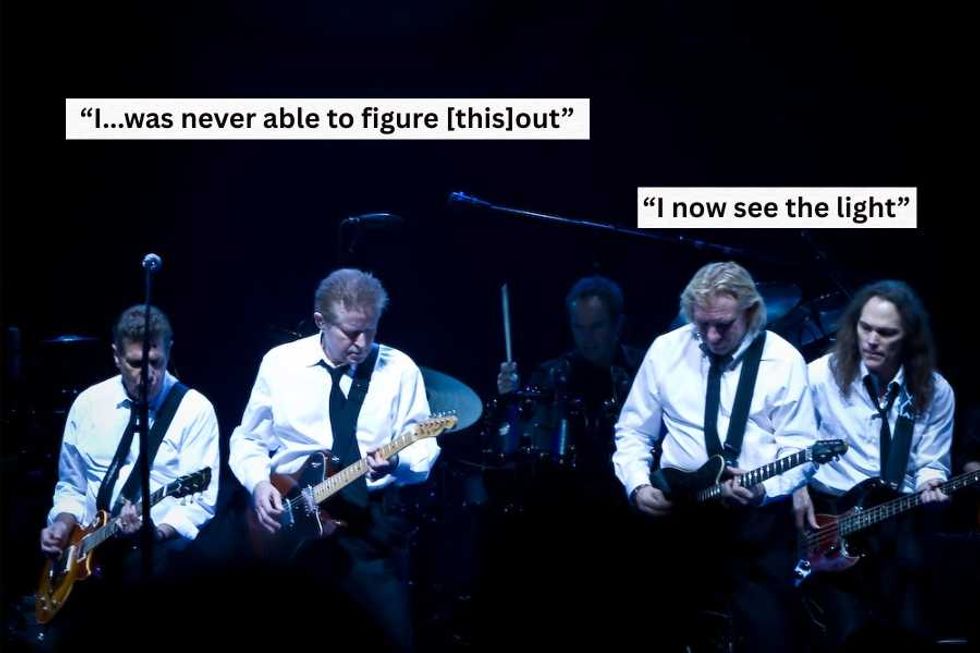
Eagles’ debut single, the twangy 1972 anthem "Take It Easy," is a staple of classic rock radio—the perfect soundtrack to hand-cranking the windows down in your old car, feeling that summer air hit your face, and cruising a back road at sunset, all while tapping along on your steering wheel. But in that moment, you may have found yourself somewhat disoriented: When the drums kick in, it might sound like the breezy rhythm has done a backflip. Why is this happening? Thanks to some helpful musicians on the Internet, we now have answers. Rest assured: If you ever find yourself singing "Take It Easy" karaoke or trying to clap along to an Eagles cover band, you won’t find yourself embarrassed and messing up the downbeat. - YouTube www.youtube.com Take it easy—it's not hard to re-train your earDesi Serna, a guitar instructor and music theory expert, addressed the "Take It Easy" confusion in a YouTube video, explaining this rhythmic confusion with plenty of technical detail. But let’s keep it simple: When you hear the song’s first prominent guitar strum, your brain might naturally interpret that as the downbeat (in this case, the "1" of the "1, 2, 3, 4"), but that’s not really what’s happening. If you try to clap along that way, you’ll be totally thrown off around the 14-second mark, as the full band crashes in. But there’s an easy way to re-train your ear, even if you’re not trying to play the song on an instrument. As Serna shows in the clip, you just have to feel that first strum as a "pickup note"—in other words, those big chords are the beat just before the "1" (so something like this: "strum—1—and—2—and—3—and—4—strum—1…"). It makes total sense once you try it out.This "Take It Easy" confusion has led to multiple explainer videos, including another from a drummer who describes the song as having a "deceptive drum intro." Their clip is short and to the point—perfect for anyone who wants to skip the music theory and get straight to the nitty gritty. - YouTube www.youtube.com "Thanks to you, I now see the light"Lots of people reacted to Serna’s breakdown with a mixture of relief and elation. Here are some of the best comments: "The remedy for the age old problem. Lol""Although I know what it should be, because I've always done it the other way, it still trips me up sometimes…""Been playing it wrong for 30 years""I’ve noticed this for years but was never able to figure out why the beat changed when the drums came in, thank you!!! Great video!"THANK YOU for clearing this up!""One of my favorite songs man thank you""Thank you for breaking that down! That intro always sounded off to me but I never took the time to analyze it.""That apparent rhythm change had always bothered me. Thank for making sense of it""I always sensed something to be rhythmically 'wrong' in this intro. Thanks to you I now see the light."Of course, "Take It Easy" isn’t the only classic song with a puzzling intro rhythm. As guitarist Paul Davids shows in a YouTube video, you might also find yourself confused by The Beatles’ "Drive My Car" and James Taylor’s "Secret of Life," among others. - YouTube www.youtube.com
Like
Comment
Share
The Lighter Side
The Lighter Side
6 w

Speaking coach shares 4-step conversation framework to quickly sound clear and confident
Favicon 
www.upworthy.com

Speaking coach shares 4-step conversation framework to quickly sound clear and confident

Ever get into a conversation and either lose your place, have trouble expressing your thoughts, or end up meandering around your point? This could happen during a work meeting, an interview, or when you and your friends are trying to decide on restaurant for dinner. If this sounds like you, there’s a conversation framework that could help.Communication expert and speech coach Vinh Giang shared a conversation framework to help you be clear and confident in your points without waffling or beating around the bush with extra verbiage. He presents the acronym "P.R.E.P.": point, reason, example, and point. - YouTube youtu.be P.R.E.P. helps you declare your idea, express why it’s important, provide an example of how it can or has already worked, and then reiterate your point to hammer it home. This is a great way to help you distill what you want to communicate while filtering out all the other noise buffering in your brain.Here’s an example of how it could work in a conversation with your friends about where to meet for dinner:Point: “We should get tacos again from that place by Christine’s apartment.”Reason: “We spend so much time choosing a restaurant that we lose time hanging out, but when we got tacos it was delicious, quick, and convenient.”Example: “Last time, we debated for over an hour where to eat and it took 30 minutes to drive there and find parking, but when we got tacos it was a short drive and Christine only had to walk from her apartment to get there.”Point: “I really think that taco spot can be our go-to place to eat and hang out.”In that example, the person clearly laid out their idea so others could fully understand and either 1) agree or 2) provide clear counterpoints to the idea. As you can see, P.R.E.P. can be an effective and clean conversation framework. @ko.communication Replying to @wlove1967 What the PREP framework can sound like. #communication #communicationcoach #corporatelife Communication experts offer their take on P.R.E.P.Speech and communication professionals reached out to Upworthy to offer their thoughts on the P.R.E.P. framework.“I find the P.R.E.P. framework helpful when answering questions or sharing perspectives, especially in large group settings, because it helps ensure your point comes across clearly and concisely,” said public relations expert and Vice President of SKDK, Vishakha Mathur. “The structured approach also leaves little room for miscommunication, as long as the audience is actively listening.”“Something that Vinh Giang brings up in the video that is a good point is that most people just go out and try to ‘wing it’ in conversations or when they're trying to communicate an idea,” said communication coach Jeff Callahan. “One huge positive that Giang doesn't touch on is that giving someone a reason after making a point gives them a reason to go along with the idea. This prevents defensiveness and allows the other person an easy on-ramp to get on board with your idea.” @gordonwilliams.co Understanding the PREP framework when answering questions #fyp #publicspeaking #publicspeakingtips “A core of confident public speaking is filtering information so your brain doesn't go haywire in the uncertainty. This is even more true for ADHDers,” said public speaking trainer and ADHD coach Sammie Walker Herrera. “P.R.E.P. is a simple, solid framework for organizing one's spoken answer on the spot.”“We literally use P.R.E.P. daily with clients that we coach for public speaking one-on-one and in workshops,” said LaQuita Cleare, founder of Clear Communication Academy.The one primary critique that experts have for the P.R.E.P. is when speakers follow the framing too strictly. If P.R.E.P. is clung to tightly, it could stifle natural conversation.“One problem that I see with clients is that they can become too robotic if they take P.R.E.P. too literally,” said Cleare. “So it's important that it feels natural and fluid.”The next time you’re having trouble expressing yourself or explaining a point, try P.R.E.P. out. It could make conversations clearer and quicker, making you feel more understood.
Like
Comment
Share
The Lighter Side
The Lighter Side
6 w

The one sign that someone is highly intelligent, according to genius inventor Nikola Tesla
Favicon 
www.upworthy.com

The one sign that someone is highly intelligent, according to genius inventor Nikola Tesla

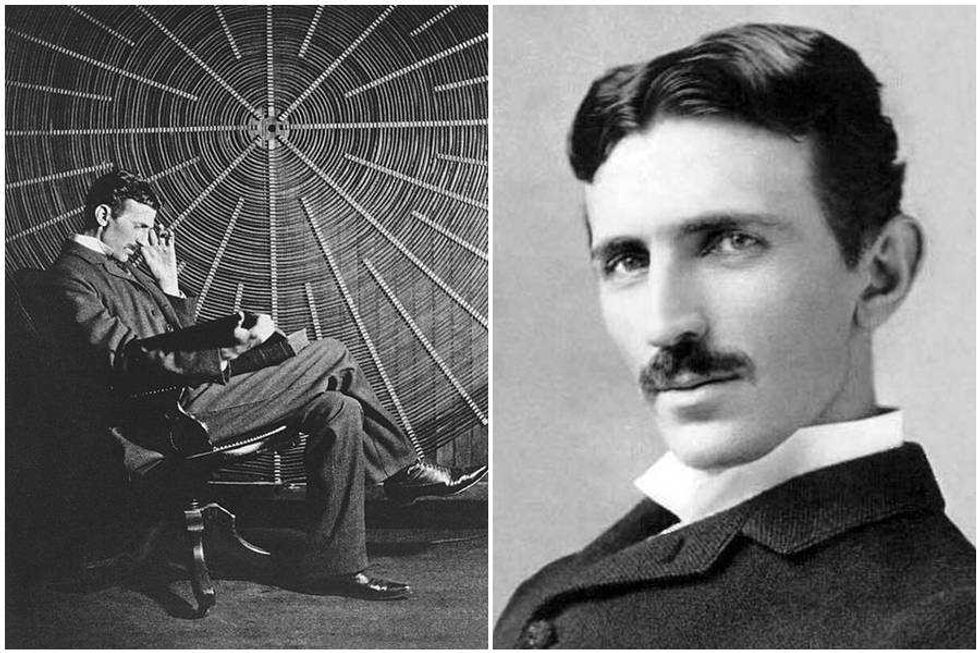
Nikola Tesla was one of the most brilliant people who ever lived. He invented alternating current (AC), which still powers most homes around the world today. A true maverick, Tesla also experimented with radio waves, robotics, and wireless energy. He was also famously eccentric, known for his preference for solitude, fear of germs, and obsession with the number three.Julian de Medeiros, a TikToker and Substack writer who shares his thoughts on philosophy, recently explained how Tesla believed he could tell if someone was highly intelligent—an observation that sheds light on how the exceptionally gifted often see the world very differently from the rest of us.Signs someone is highly intelligent"Here's a simple sign that somebody is highly intelligent, and this is a rule that was formulated by the inventor Nikola Tesla, who once said: 'The more intelligent somebody is, the fewer friends they have,'" de Medeiros said. While, at first glance, that may seem tragic, de Medeiros went on to explain why it wasn't as bad as it seemed: "He meant that intelligent people don't need to be liked by everybody; instead, they have a small group of trusted friends, confidants, people they can rely upon no matter what." @julianphilosophy Tesla on intelligence #friends #intelligence #work #power Tesla believed that, by definition, intelligence attracted fewer people, de Medeiros explained, adding: "He said that to be intelligent was to speak and think independently in a world of conformists. This meant you couldn't appeal to everybody. Instead, an intelligent person selected their friends carefully. They wanted friends who brought out the best in them to have intellectual discussions and debates with." According to modern research, highly intelligent people often flip the script when it comes to socializing and happiness. For most people, frequent social interaction with close friends is linked to greater happiness. However, for those with abnormally high IQs, the opposite tends to be true: they report being happier in solitude than when spending time with friends.Why do highly intelligent people prefer solitude?"The findings in here suggest (and it is no surprise) that those with more intelligence and the capacity to use it ... are less likely to spend so much time socializing because they are focused on some other longer-term objective," Carol Graham, a Brookings Institution researcher who studies the economics of happiness, told The Independent. Nikola Tesla with his equipment. via Wikimedia CommonsThis perspective makes sense when considering someone like Tesla. He was known for being an incredibly introspective and deeply introverted person, performing complex experiments in his mind rather than drafting, writing, or drawing them on paper. He also shut out distractions, including other people, so he could focus on discovering new things.Tesla's passion for his work was so intense that it kept him from having intimate relationships. "[An] inventor's nature is so forceful, so wild and passionate, that by giving himself to a woman, he would give everything and nothing would be left for his chosen field," he once said. Tesla's remarks suggest that, for some people, having a small circle of friends and a robust inner world are enough to get them through life, and research seems to bear that out. For most people, having only a few friends would likely feel like a curse. But when you're Tesla, and your ideas occupy your time and passion as fully as other people's friendships do, you don't need many.Follow Julian de Medeiros on Substack.
Like
Comment
Share
Showing 5512 out of 113558
  • 5508
  • 5509
  • 5510
  • 5511
  • 5512
  • 5513
  • 5514
  • 5515
  • 5516
  • 5517
  • 5518
  • 5519
  • 5520
  • 5521
  • 5522
  • 5523
  • 5524
  • 5525
  • 5526
  • 5527
Advertisement
Stop Seeing These Ads

Edit Offer

Add tier


Select an image
Delete your tier
Are you sure you want to delete this tier?

Reviews

In order to sell your content and posts, start by creating a few packages. Monetization

Pay By Wallet

Payment Alert

You are about to purchase the items, do you want to proceed?

Request a Refund