YubNub Social YubNub Social
    #freedom #privacy #surveillancestate #police\ #alpr #flock
    Advanced Search
  • Login
  • Register

  • Day mode
  • © 2026 YubNub Social
    About • Directory • Contact Us • Developers • Privacy Policy • Terms of Use • shareasale • FB Webview Detected • Android • Apple iOS • Get Our App

    Select Language

  • English
Community
New Posts (Home) ChatBox Popular Posts Reels Game Zone Top PodCasts
Explore
Explore
© 2026 YubNub Social
  • English
About • Directory • Contact Us • Developers • Privacy Policy • Terms of Use • shareasale • FB Webview Detected • Android • Apple iOS • Get Our App
Advertisement
Stop Seeing These Ads

Discover posts

Posts

Users

Pages

Blog

Market

Events

Games

Forum

SciFi and Fantasy
SciFi and Fantasy  
1 y

A New Andor Trailer Welcomes You to the Rebellion
Favicon 
reactormag.com

A New Andor Trailer Welcomes You to the Rebellion

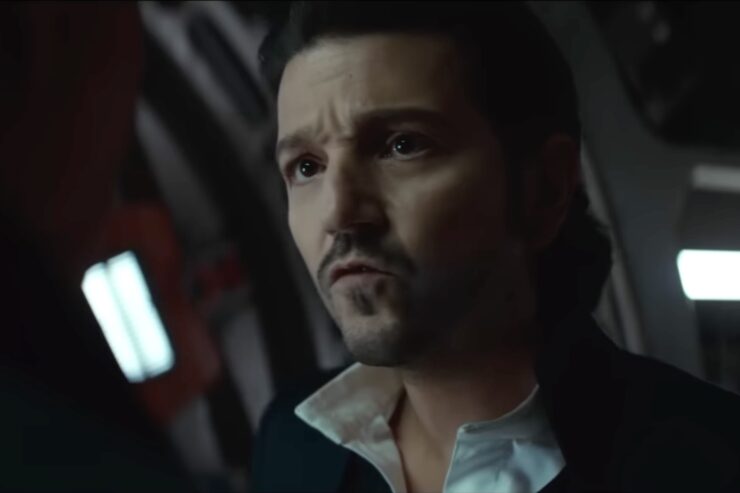
News Andor A New Andor Trailer Welcomes You to the Rebellion The monster is coming for us all. By Molly Templeton | Published on March 24, 2025 Screenshot: Lucasfilm Comment 0 Share New Share Screenshot: Lucasfilm At this point I don’t know what to say about the second and final season of Andor other than please give it to me now. This second trailer leans hard on that ominous alert-siren sound, which pulses behind just about every scene. And those scenes seem designed to remind us just how much everyone has to lose. There’s a wedding (presumably Mon Mothma’s strangely traditional child); there’s Bix (Adria Arjona), doing much better than when we last saw her. Bix thriving is an effective reminder that a lot of time is going to pass this season, which will bring Cassian Andor (Diego Luna) all the way up the events of Rogue One. The short summary offered by Star Wars says: While Season 1 followed Cassian’s reluctant journey from cynical nobody to revolutionary volunteer, the long-awaited conclusion in Andor Season 2 will see the characters and their relationships intensify as the horizon of war draws near and Cassian becomes a key player in the Rebel Alliance. Everyone will be tested and, as the stakes rise, the betrayals, sacrifices and conflicting agendas will become profound. This is a collection of gorgeous, striking moments, from Mon Mothma (Genevieve O’Reilly) pointing out, “The monster will come for us all!” to Saw Gerrera intoning, “You’re right here, and you’re ready to fight.” We get brief looks at Syril Karen (Kyle Soller), who seems to be taking the chaos as an opportunity, and Dedra Meero (Denise Gough), who looks even more stressed than before. Ben Mendelsohn smirks as Krennic; Stellan Skarsgard brings the seriousness as Luthen Rael. (Also, there’s a sort of space polar bear? He is not entirely Wookiee-like, but he might be Tojjevvuk.) Along with the trailer below, there’s a new behind-the-scenes look that offers a few more scenes and moments; it’s possibly even more intriguing than the actual trailer. Andor creator Tony Gilroy wrote the first three episodes of the second season; Beau Willimon wrote episodes four through six, Dan Gilroy episodes seven through nine, and episodes 10-12 come from Tom Bissell (the author of Extra Lives). The season’s all-new directors are Ariel Kleiman, Janus Metz, and Alonso Ruizpalacios. Andor premieres April 22nd on Disney+.[end-mark] The post A New <i>Andor</i> Trailer Welcomes You to the Rebellion appeared first on Reactor.
Like
Comment
Share
SciFi and Fantasy
SciFi and Fantasy  
1 y

Five SFF Stories About Underground Resistance Movements
Favicon 
reactormag.com

Five SFF Stories About Underground Resistance Movements

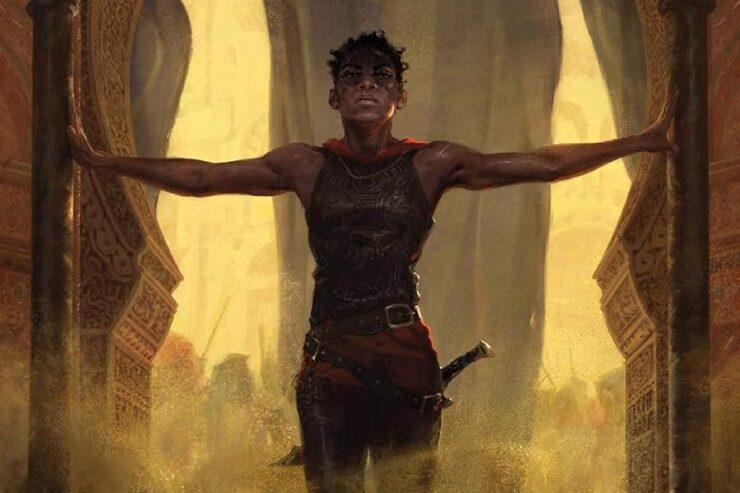
Books Five Books Five SFF Stories About Underground Resistance Movements Taking a stand, while facing overwhelming odds. By James Davis Nicoll | Published on March 24, 2025 The Unbroken cover art by Tommy Arnold Comment 0 Share New Share The Unbroken cover art by Tommy Arnold Everyone likes to cheer for the underdog, particularly in military conflicts. This presents a challenge for speculative fiction authors. On the one hand, writing about the little guy somehow overcoming tremendous odds is a crowd-pleaser. On the other hand, the underdog is an underdog for a reason. If overwhelming military force worked so well in places like Vietnam, Somalia, and Iraq, how could it fail in the author’s fictional universe? Here are five answers to that question. Sinister Barrier by Eric Frank Russell (1939) Americans in the unimaginably futuristic year of 2015 are doing a dismal job of resisting their overlords. This isn’t due to some inherent flaw in the American character. Rather, it’s because Americans in particular and humanity in general have no idea that they have overlords. Liaison officer Bill Graham is convinced that the recent wave of deaths amongst America’s top geniuses is being orchestrated by some unknown agency. Graham is astounded1 to discover that the culprit is no internal enemy nor foreign foe. The immaterial, invisible Vitons have long controlled humanity, the better to feed off humans. The scientists knew too much and had to die. Now Graham too must die, along with everyone with whom he has shared the secret of the Vitons. Which, thanks to mass media, is a lot of people. Sinister Barrier is an example of Fortean fiction, a subgenre that seems to have fallen out of favor. In particular, it’s an exploration of the proposition that humans are property, which seems like the sort of central concept that might find ready audiences these days. Be aware, however, that the novel is also an example of how badly certain elements of olden time SF can age. Spoiler: the resistance wins, but I’m not going to tell you how. The Word for World is Forest by Ursula Le Guin (1972) For overcrowded, resource-depleted Earth, New Tahiti is a godsend, a perfect world for Terran colonists like Captain Davidson to exploit. New Tahiti is an untouched paradise. Its forests cry out for clear-cutting. True, the natives aren’t good for much, not even slavery, but no doubt some Final Solution will present itself. From the Athshean perspective, matters are considerably grimmer. Aliens have invaded Athshe, renamed it New Tahiti, displaced and enslaved the Athsheans, and are seemingly intent on obliterating the forests. Diminutive, lacking the Terrans’ sophisticated mechanical arts, the Athsheans seem doomed. In fact, salvation is within the Athshean grasp… if they are willing to pay the price. The Athsheans have an asset they are poorly situated to fully appreciate. Athshe is twenty-seven light-years from Earth in a universe where crewed starflight is sublight. The vast, powerful military-industrial complex on which the thoroughly reprehensible Davidson depends is at the other end of a very long logistical chain. Red Dawn (1984), dir. by John Milius, written by Milius and Kevin Reynolds World War Three having developed not necessarily to the United States’ advantage2, Calumet, Colorado finds itself swarmed by Red Communists backed and armed by Soviet Russia. The heavily-armed invaders massacre anyone foolish enough to resist. Calumet is occupied territory. In the chaos of the invasion, a small group of high school students managed to elude the invaders. Poorly armed compared to the occupying army, the students lack suitable expertise to carry out a guerilla war. Nevertheless, the Wolverines are determined to make the invaders regret targeting Calumet. To be honest, the Wolverines don’t make a strong case that an assortment of poorly-armed American high school students would be an effective guerilla force. “WOLVERINES FUCK YEAH” loses to “reality ensues”3. But sometimes, winning isn’t the point. American Empire: The Victorious Opposition by Harry Turtledove (2003) Although the US lost the states comprising the Confederate States of America, the republic did manage to conquer Canada. Quebec was then spun off into its own republic, theoretically independent from but dependent on the US. The rest of Canada was occupied. Enter heroic Mary Pomeroy, whose family lost two members thanks to the US invasion. In general, the US has done a spectacularly awful job4 of integrating Anglo Canada into the US. In the case of Mary, nothing the US can do will ever compensate her for her loss. Thus, Mary’s mail-bomb campaign. Canadian national mythology has at its core thrilling tales of how we fended off previous US invasions, burned the White House5, and how the Geneva Convention was inspired in part by a desire to get Canadians to moderate their enthusiasm for war crimes6. Campaigns like Mary’s would seem to be an inevitable reaction to a US invasion and occupation in some quarters. Imagine the Iraq resistance, as conducted by people who can travel freely through the US while passing as Americans. The Unbroken by C.L. Clark (2021) Balladair has a simple formula for success: crush weaker nations, occupy them, and send those children who might otherwise form a resistance off to be indoctrinated as loyal (and very expendable) soldiers in service of Balladair. It is in all respects an infallible plan, except for the part where it does not work. Touraine and her fellow conscripts are dispatched to Touraine’s birth country Qazāl. Their mission? To suppress a rebellion. The actual outcome? To drive home to Touraine how little Balladair values the lives of Touraine and her fellow conscripts and how useful Touraine’s skills could be in the hands of Qazāl’s freedom fighters. Readers might wonder if it’s a bad idea to kidnap someone, provide them with military training, and then send them back to the very nation from which they were kidnapped. It is. It’s a tribute to Balladair’s self-confidence that its rulers think this little plan is going to work out the way they expect. Science fiction and fantasy love plucky resistance stories—the above are only a few of the many examples I could have selected. No doubt I missed some favorites. Feel free to remind us of them in comments below.[end-mark] But only because Sinister Barrier was published in 1939. Had it been published after October 1960, Graham would have been analoged. ︎More alarmingly from my perspective, British Columbia was also occupied (see the map reflecting the events of the movie), thus imperiling the national Nanaimo bar supply. ︎At least the Wolverines do better than the German teen soldiers in 1959’s Die Brücke, whose misguided efforts to needlessly defend a strategically unimportant bridge from well-equipped, skilled American soldiers goes extremely badly. On the plus side, the kids were Nazis (or at least fighting for the Nazis). ︎Even more astonishing, the US occupation of Utah is somehow even more ineptly managed than the occupation of Canada, with some Mormons turning to suicide bombing. Given that the US historically rebounded from their less-than-entirely successful Utah War to successfully integrate Utah into the US, this version of the US seems to have lost crucial administrative skills. ︎Which Canadians didn’t. That was the British. We did blow up our own fortifications to confound the Yanks. As the schoolyard joke goes, “What was the last thing that went through Zebulon Pike’s mind?” “The York armory.” ︎Many Canadians really do believe the Geneva Convention thing. I know this because three different Canadians have mentioned it to me since January 20th in positively gleeful tones. However, Canadian national mythology is not all self-aggrandizement and reveling in violence. Our mythology enshrines the idea that the return on investment of privateer-based American gold acquisition was grossly overstated, leaving investors wishing they were in Sherbrooke now. (I understand and accept that many American readers won’t get the reference or understand why a number of Canadians are conditioned to respond to it with a four-word vulgarity and I am OK with that.) ︎The post Five SFF Stories About Underground Resistance Movements appeared first on Reactor.
Like
Comment
Share
Reclaim The Net Feed
1 y

Who Owns Your DNA Now?
Favicon 
reclaimthenet.org

Who Owns Your DNA Now?

If you're tired of censorship and dystopian threats against civil liberties, subscribe to Reclaim The Net. Amid mounting challenges, 23andMe, a prominent US genetic testing firm, has sought bankruptcy protection to pave the way for a potential sale, a move that champions individual privacy in an era of escalating data concerns. Late Sunday, the company announced it had voluntarily entered Chapter 11 proceedings in the US Bankruptcy Court for the Eastern District of Missouri, aiming to “facilitate a sale process to maximize the value of its business.” This strategic shift coincides with the resignation of its co-founder and CEO, Anne Wojcicki, who stepped down to spearhead an independent bid to acquire the company after facing repeated rejections from its board. Wojcicki, who launched 23andMe in 2006 alongside Linda Avey and Paul Cusenza, has encountered significant hurdles in her vision to transform the company into a drug development powerhouse. Her ambition faltered as revenues plummeted, driven by a wave of customers — out of a total of 15 million — rushing to erase their DNA records from the company’s systems post-breach. 23andMe’s vast repository of user data, amassed through years of saliva-based ancestry testing, lies at the mercy of its own self-imposed guidelines rather than robust federal oversight. The company’s 2023 data breach, which exposed sensitive details like genetic predispositions and ancestry reports for nearly 7 million users, underscored the sheer volume of personal information it holds. For the millions who entrusted their DNA to 23andMe, the assumption might have been that such intimate data enjoys the ironclad protections of the Health Insurance Portability and Accountability Act (HIPAA), a law designed to shield sensitive health information from unauthorized disclosure. Yet, 23andMe operates outside HIPAA’s reach, leaving it tethered only to its own privacy policies — rules it can rewrite at will. This regulatory gap casts a long shadow over the company’s future, especially as it teeters on the brink of a sale following its bankruptcy filing. A patchwork of inconsistent state privacy laws, coupled with the absence of a cohesive federal framework, means that the genetic profiles of 15 million Americans could be up for grabs. According to 23andMe’s privacy policy, customers’ personal information “may be accessed, sold or transferred” in scenarios like bankruptcy, mergers, or acquisitions. While the company insists its data practices will remain unchanged post-sale — pledging never to share user information with insurance providers or law enforcement without a warrant — privacy advocates should remain skeptical. Notably, 23andMe’s transparency report highlights its defiance against US law enforcement requests for DNA data, a stance that has held firm thus far. Still, the prospect of new ownership raises alarm bells. Potential buyers might eye 23andMe’s treasure trove of genetic material as a lucrative asset to exploit in ways the current management has resisted. In theory, 23andMe needs user approval to transfer data during an acquisition, but users could withhold it. Over a dozen states, including Montana, have enacted genetic privacy laws requiring explicit consent — Montana’s 2023 law, for instance, mandates standalone consent naming the buyer. Comparable rules apply in states like Alabama, Arizona, California, and others, with Wyoming uniquely offering a private right of action for consumers to enforce their rights in court. With the company’s fate hanging in the balance, advocates are urging users to act swiftly to shield their data from an uncertain future. California Attorney General Rob Bonta has championed this cause, asserting in a statement after the bankruptcy announcement that state residents can legally demand the erasure of their genetic records. Deleting a 23andMe account is straightforward: users can log in, head to Settings, select Account Information, and choose Delete Your Account, confirming the irreversible step after a prompt. However, the process comes with a catch. The company’s privacy policy notes that deletion is “subject to retention requirements and certain exceptions,” meaning some data — like genetic profiles, birth dates, gender, and even email addresses tied to deletion requests — may linger for unspecified periods to meet compliance obligations. Likewise, for those who previously consented to research use of their data, retracting that permission is possible, but erasing the information entirely is not. If you're tired of censorship and dystopian threats against civil liberties, subscribe to Reclaim The Net. The post Who Owns Your DNA Now? appeared first on Reclaim The Net.
Like
Comment
Share
Reclaim The Net Feed
1 y

Netflix’s Adolescence is a Trojan Horse For Online Censorship and Surveillance Policy
Favicon 
reclaimthenet.org

Netflix’s Adolescence is a Trojan Horse For Online Censorship and Surveillance Policy

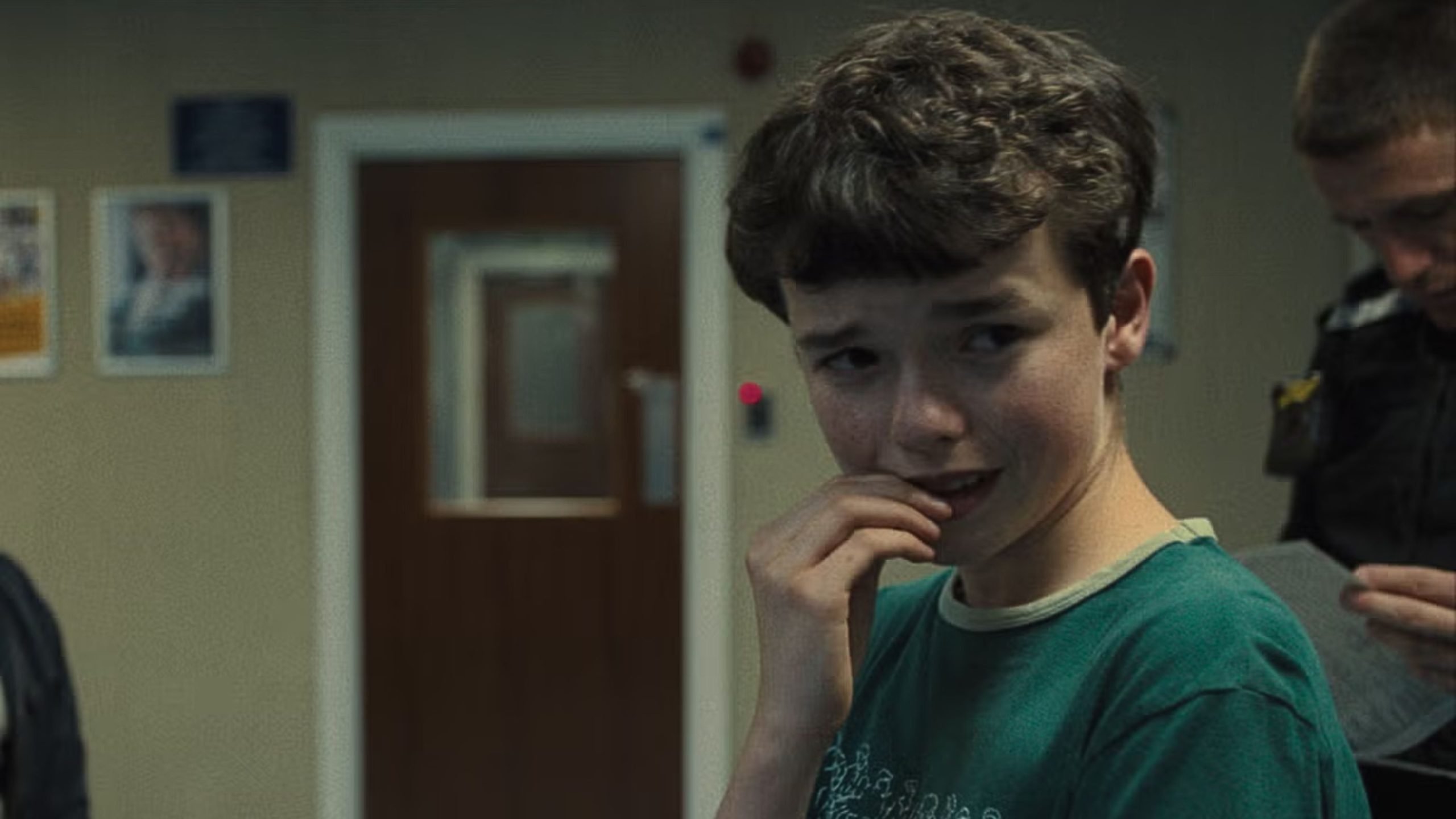
If you're tired of censorship and dystopian threats against civil liberties, subscribe to Reclaim The Net. Somewhere between Black Mirror and a parliamentary white paper, Netflix birthed Adolescence — a four-part drama so hyped it makes The Crown look like daytime TV. Critics have already crowned it “the most brilliant TV drama in years” and even “complete perfection.” Which, in TV review terms, is about one notch above canonizing it and placing a shrine on Rotten Tomatoes, where it currently sits at a smug 99%. But before you’re guilted into watching it by your friends, your family, UK Prime Minister Keir Starmer, or a “digital safety ambassador,” you might want to know what you’re in for. Because beneath the mournful soundtrack and teary-eyed monologues lies a playbook, not just a plot. A Knife, an Emoji, and a National Panic Adolescence follows Jamie, a supposedly normal 13-year-old who one day stabs a female classmate to death — triggered, we’re told, by an emoji implying he’s undateable. You’d think such a sensationalist plot might provoke some tough questions about plausibility. Instead, it inspired a collective swoon and a full-blown moral crusade. Apparently, the line between a TV drama and a legislative blueprint has all but disappeared. Writer Jack Thorne and actor Stephen Graham — who stars as Jamie’s heartbroken dad Eddie — aren’t merely promoting a show. They’re touring like policy consultants, meeting MPs, and calling for “serious change.” Or as Thorne put it, “We do believe perhaps the answer to this is in parliament and legislating – and taking kids away from their phones in school and taking kids away from social media altogether.” Which is great, if your dream of the future involves biometric logins for Minecraft. Actor and Adolescence co-creator Stephen Graham is promoting more than the streaming show; he’s advocating policy. When Drama Becomes Policy Proposal The show is more than a series about a disaffected teen gone rogue. It’s a calculated nudge that comes at the same time as a much bigger campaign — a 21st-century panic attack over children, tech, and the internet, that’s being used to promote censorship and surveillance. If the producers had their way, Adolescence would be shown in schools and parliament. Even Prime Minister Keir Starmer got in on the act, grandstanding at Prime Minister’s Questions about “violence carried out by young men, influenced by what they see online.” Nothing gets a politician’s pulse racing like the scent of bipartisan panic and a chance to legislate online speech and increase surveillance. Thorne, sensing his moment, threw Australia into the mix. The country has passed laws threatening platforms like TikTok and Instagram with $32 million fines if they allow under-16s to exist online. Which, of course, means the introduction of digital ID. Thorne, obviously never one to aim low, said: “I would extend it further… it is about gaming too, and it’s about getting inside all these different systems.” Jamie, the show’s mopey, hoodie-clad antihero, serves as the vessel for every contemporary anxiety about teenage boys. He’s alienated. He’s angry. He watches YouTube videos laced with “toxic masculinity.” Thorne describes him as someone who feels “isolated” and finds “the answer to his pain” in online content. You’d almost forget this is fiction. The creators aren’t interested in ambiguity. They’re here to evangelize — about influencers, incel culture, and the urgent need for supervision of the internet, preferably enforced by law. It’s convenient messaging. It just so happens to align perfectly with a growing movement toward digital ID which would tie everything you say to your real-world ID, content filtering, and the warm embrace of algorithmic babysitting. All in the name of “safety“, of course. Stephen Graham and Jack Thorne are now scheduled to appear before Parliament, invited by Labour MP Josh McAlister. Presumably, they’ll deliver heartfelt monologues about trauma, policy, and the perils of Instagram. The script practically writes itself. But let’s not pretend Adolescence is just entertainment. It’s media-as-message, a tearjerker-as-toolkit for ushering in broad digital reforms that will affect everyone, not just hormonal teenagers with too much screen time. Digital rights supporters should be sounding the alarm. Under the guise of online safety, what’s really coming is a regime of ID requirements, content policing, and mass data collection. But in a media landscape where feelings trump facts and fictional stabbings become case studies for policy, those warnings barely register. If you're tired of censorship and dystopian threats against civil liberties, subscribe to Reclaim The Net. The post Netflix’s Adolescence is a Trojan Horse For Online Censorship and Surveillance Policy appeared first on Reclaim The Net.
Like
Comment
Share
Reclaim The Net Feed
1 y

YouTube CEO Neal Mohan Defends COVID-Era Content Takedowns and Denies Bias in Christian Network Dispute
Favicon 
reclaimthenet.org

YouTube CEO Neal Mohan Defends COVID-Era Content Takedowns and Denies Bias in Christian Network Dispute

If you're tired of censorship and dystopian threats against civil liberties, subscribe to Reclaim The Net. Sitting down for a recent interview on Semafor’s Mixed Signals podcast, YouTube CEO Neal Mohan stood by the platform’s controversial suppression of COVID-era content it labeled “health misinformation,” offering no apologies and sidestepping questions about whether those decisions were ultimately misguided. He also declined to say whether videos of Robert F. Kennedy Jr. (now the Secretary of Health and Human Services) that had been taken down during the pandemic would be reinstated. Despite repeatedly and laughably positioning YouTube as a platform for free expression, Mohan continued to defend the imposition of broad speech restrictions. “YouTube is a place where you can go and share [your ideas] without somebody telling you that you don’t sound the right way… or you’re saying the wrong thing,” he said, while also justifying the takedown of large volumes of content that contradicted official narratives. At the height of the pandemic, YouTube aggressively enforced policies against what it classified as “misinformation.” Mohan cited the uncertainty of early 2020 as justification. “What was happening in the world in March of 2020 is very different than what’s happening in the world in March of 2025,” he said. When asked whether YouTube would consider restoring RFK Jr. videos that were removed under those policies, Mohan gave no commitment. “I can’t speak to the specific videos,” he said, though he noted that YouTube has now “deprecated” most of its COVID-19 moderation rules—effectively admitting they are no longer deemed necessary. Pressed further on whether the platform may have contributed to a backlash against public health efforts by suppressing open discussion, Mohan avoided a direct answer. “Context really mattered,” he said, attributing YouTube’s actions to the pace at which scientific knowledge was changing at the time. He stopped short of addressing the growing evidence that censorship may have damaged public trust or stifled legitimate dissent. Later in the interview, Mohan responded to a separate controversy involving faith-based programming. Christian media company Great American Media recently filed a complaint with the FCC, accusing YouTube TV of discriminating against its content by refusing to carry its cable networks. Mohan denied any ideological bias and said the dispute was being handled as a business matter. “We base those decisions… on business considerations in terms of audience and audience demand,” he said, describing ongoing talks with the network as “productive.” Although the broadcaster’s main YouTube channel has amassed more than 100,000 subscribers and millions of views, it remains excluded from YouTube TV’s lineup—raising further questions about how the company balances corporate discretion with its public claims of neutrality. Throughout the conversation, Mohan presented a version of YouTube that simultaneously promotes “freedom of expression” while justifying its long history of removing dissenting voices — an approach that continues to fuel skepticism among critics of online censorship. If you're tired of censorship and dystopian threats against civil liberties, subscribe to Reclaim The Net. The post YouTube CEO Neal Mohan Defends COVID-Era Content Takedowns and Denies Bias in Christian Network Dispute appeared first on Reclaim The Net.
Like
Comment
Share
Hot Air Feed
Hot Air Feed
1 y

Tampon Tim 'Totally' Teasing About Tanking Tesla Stock
Favicon 
hotair.com

Tampon Tim 'Totally' Teasing About Tanking Tesla Stock

Tampon Tim 'Totally' Teasing About Tanking Tesla Stock
Like
Comment
Share
Science Explorer
Science Explorer
1 y

Bats' Bullshit Detectors Mark First Time Hallmark Of Advanced Cognition Recognized In Bats
Favicon 
www.iflscience.com

Bats' Bullshit Detectors Mark First Time Hallmark Of Advanced Cognition Recognized In Bats

Crying when actually you’re doing just fine? Bats will see through your nonsense.
Like
Comment
Share
Science Explorer
Science Explorer
1 y

23andMe Goes Bankrupt: What’s Going To Happen To People’s DNA Data?
Favicon 
www.iflscience.com

23andMe Goes Bankrupt: What’s Going To Happen To People’s DNA Data?

There are surprisingly few protections for consumers.
Like
Comment
Share
Strange & Paranormal Files
1 y

What really happens after death?
Favicon 
anomalien.com

What really happens after death?

It is reasonable to assume that the mental process we call physical death ‘makes the unconscious more conscious,’ because it eliminates a source of obfuscation; namely, the egoic loop. After all, physical death is the partial image of the process of unraveling of the egoic loop. As such, it is reasonable to expect that it causes us to remember all that we already know but cannot recall. From the ego’s perspective, this may seem like receiving all kinds of new answers. But it won’t fundamentally add any original insight to mind. The sense of novelty here is merely the illusion of an ego going through dissolution. Once the ego is gone and all is remembered, the sense of novelty will disappear. One way to think of this is what happens when we suddenly awaken from an intense nightly dream: for a few seconds, we are astonished to remember who we really are and what is really going on (‘Oh, it is a dream! My real life is something else!’). While still half in the dream, we register this remembrance as novel knowledge about ourselves and about what is really going on. But the sense of novelty quickly wanes once we settle back into ordinary conscious states. After all, we simply continue to know what we already knew anyway, but had just forgotten while in the dream. The only true novelty was the experiences of the dream, not what was remembered upon awakening. As such, maybe life and death are entirely analogous to dreaming and waking up, respectively. The question, of course, is whether self-reflective awareness disappears completely upon physical death. This depends on the topographical and topological details of the human psychic structure, which are not known. If the ego is the only loop in the human psychic structure, then physical death indeed eliminates all self-reflectiveness. But it is conceivable that the psychic structure entails an underlying, partial, not-so-tightly-closed loop underneath the egoic loop. I say this because many Near-Death Experiences seem to suggest that a degree of self-reflectiveness and personal identity survive death. In this case, the ego would be a tight loop perched on top of another partial loop. Assuming that physical death entails the dissolution of only the egoic loop on top, then our awareness would ‘fall back’ onto the underlying partial loop, preserving a degree of self-reflectiveness. The result would be more access to the ‘unconscious’ – due to less obfuscation – but we would still maintain a sense of separate identity. This, of course, is highly speculative. Even if the ego is the only loop in our psychic structure, there is still another interesting avenue of speculation regarding the preservation of a form of identity in the after-death state. Carl Jung, towards the end of his life, compared the physical body to the visible part of a plant as it grows from the ground in the spring. He thought of the core of the individual as the root (rhizome), which remains invisible underground. Jung’s analogy can be mapped very straightforwardly onto the membrane metaphor: the root is the underlying protrusion that corresponds to the ‘personal unconscious.’ This protrusion, we can speculate, remains largely invisible in ordinary consensus reality because its vibratory ‘footprint’ on the broader membrane is largely filtered out by the ego. The physical body we see may correspond to just a small part of the protrusion, the majority of it remaining invisible. The ego is in the visible part of the plant, which rises in spring and dies in winter. Its partial image in ordinary consensus reality is closed-cycle neural processes in the brain. Physical death, as such, doesn’t necessarily entail the complete dissolution of the underlying protrusion, but perhaps only some peripheral parts of it, along with the egoic loop. Throughout life, egoic experiences could leak – through resonance – into the ‘personal unconscious’ and accumulate there. This way, our personal history – a key element of our identity as individuals – could largely survive death as well. If this is so, then physical death may bring us back to the world of the ‘personal unconscious’: the world of our memories and dreams. But it may eliminate self-reflective awareness, so we become immersed in the dream without being able to think critically about what is going on; without being able to ask questions like “What is happening? How did I end up here?” We may just re-live our memories and traverse our own dreamscape in a way that transcends time, space, and even logic. Amid all these speculations, I think only one thing can be stated with very high confidence: physical death does not entail the end of consciousness, for consciousness is the fabric of all existence. In addition, it is reasonable to expect that physical death reduces self-reflectiveness and, thereby, increases our access to the contents of the ‘unconscious’ due to less obfuscation. This last point is another clue to the usefulness of ordinary life: it provides us with a heightened ability to self-reflect about existence and our condition within it. This article is an excerpt from my book, Why Materialism Is Baloney. The post What really happens after death? appeared first on Anomalien.com.
Like
Comment
Share
NewsBusters Feed
NewsBusters Feed
1 y

CNN Liberals Roll Eyes at Pushing 'Abundance' As Democrat Party's Victory Path
Favicon 
www.newsbusters.org

CNN Liberals Roll Eyes at Pushing 'Abundance' As Democrat Party's Victory Path

Is "Abundance" Creflo Dollar's latest book? A follow-up to his volume on The Holy Spirit, Your Financial Advisor? Nope. The author isn't the televangelist, preaching a prosperity gospel. The writers are two libs: New York Times columnist Ezra Klein and Derek Thompson of The Atlantic.   The duo offers a simultaneous critique and path forward for Dems coming off their 2024 defeat. The notion is that over-regulation by liberal administrations has stifled growth and wealth, and that by reducing regulatory barriers, there'd be "abundance" ahead for all. There's only one little problem. The lefties hate anything pro-growth or pro-wealth. You might as well ask a vegan to go on an all-ribeye diet. Try convincing those folks that the path forward is to make life easier for . . . the oligarchs! On Monday's CNN This Morning, host Audie Cornish played skeptic from the get-go, joking to Ashley Allison: "Look at your face, the resignation about abundance discourse." CNN.com writer Stephen Collinson proclaimed it was no way to combat Trumpism:  COLLINSON: This is an intellectual exercise. The Democrats really looking for an intellectual exercise? Everything we're seeing is emotional.  CORNISH: Please cut to Ashley's face.  COLLINSON: No, it's emotional, not intellectual.  CORNISH: I know, and that's a good point, because when I think of, uh, who has the crowds right now, it's Bernie Sanders, AOC, actually drawing physical people, actual people, uh, not, uh, Substack readers.  Substack readers aren't "actual people"? That's a weird flex, like Cornish saying her old fans at NPR aren't "actual people."   Allison, an aide on the 2020 Biden-Harris campaign, claimed: "The thing that Donald Trump is so good at, is telling people There is only a certain amount of abundance. That's why you have to deport all these immigrants." Cornish chimed in: "It's a zero sum game." In fact, Trump is implementing the kind of change that Klein-Thompson recommend. A key goal of the DOGE initiative is not just to reduce the size and cost of government, but to reduce its regulatory overload on the economy, thereby helping all Americans. Never-Trumper CNN analyst Jonah Goldberg didn't want to insult Klein and Thompson -- although he called their approach "very utopian" -- but he cited two new books by Yoni Appelbaum and Marc Dunkelman that he felt were better vessels for this argument. "The Dunkelman and Appelbaum books are much more aimed at the simple fact that starting at the local level, but also at the national level, the progressives have screwed things up by gunking up the works with all sorts of red tape that makes it impossible to get things done."  CNN liberals don't see over-regulation as their problem. They believe an all-wise government can and must tightly regulate the economy, to prevent those greedy, unscrupulous capitalists from exploiting workers and ruining the environment. If we ease regulations, who will benefit? Those diabolical developers and their ilk! The very ones who need to be kept on a tight leash! Therefore, it's an illusion to imagine that letting the capitalist class make more money will benefit the proletariat! Collinson repeated his line that Democrats should try to beat Trump with personality: "What you most often see is parties change direction when you have a personality that leads the party in a certain direction, which is what happened with Trump." Here's the transcript. CNN This Morning  3/24/25 6:37 am EDT AUDIE CORNISH: I want to turn to domestic politics, because here Democrats are still struggling to find a new strategy.  There's a new book people are talking about called Abundance that argues that Democrats need to focus less on red tape, more on results.  And I want to bring it to the group chat because it has been all over the -- Look at your face, the resignation about abundance discourse.  Who can explain abundance? Ashley, can you? Oh, not you? Okay. Who can actually explain Abundance 101?  STEPHEN COLLINSON: It seems to be what it is all about. is this idea that Democrats have created so many regulations, they're stifling growth.  CORNISH: Your environmental reviews, your worker protections, your DEI. Yeah. COLLINSON: Zoning stuff for building new homes, et cetera. They're making it more difficult for people to afford homes. And this seems to be some attempt, and there's some other attempts too, to, like, shift the party a little bit towards the center, a bit like the DLC, the Democratic Leadership Council in the early 1990s.  The question I have is, you know, this is an intellectual exercise. The Democrats really looking for an intellectual exercise? Everything we're seeing is emotional.  CORNISH: Please cut to Ashley's face.  COLLINSON: No, it's emotional, not intellectual.  CORNISH: I know, and that's a good point, because when I think of, uh, who has the crowds right now, it's Bernie Sanders, AOC, actually drawing physical people, actual people, uh, not, uh, Substack readers.  . . .  ASHLEY ALLISON: The thing that Donald Trump is so good at, is telling people There is only a certain amount of abundance. That's why you have to deport all these immigrants.  CORNISH: It's a zero sum game.  ALLISON: Right. So I just, I'm not, I'm not, I'm going to take a different approach.  CORNISH: Jonah, have you had thoughts on this?  JONAH GOLDBERG: So Yoni Appelbaum of The Atlantic has a fantastic book called Stuck, which gets at a lot of this. Marc Dunkelman, professor at Brown, has a book called Why Nothing Works, which also gets at this.  I think those are better books and better arguments than the abundance argument.  CORNISH: Which is from Ezra Klein and Derek Thompson.  GOLDGERG: Which, I'm not trying to denigrate too much the Klein book, but my point is that the abundance argument is very utopian and it's very much aimed at really hardcore ideological progressives and say, hey, there's a better way. That's a useful argument to have.  The Dunkelman and Appelbaum books are much more aimed at the simple fact that starting at the local level, but also at the national level, the progressives have screwed things up by gunking up the works with all sorts of red tape that makes it impossible to get things done.  . . .  COLLINSON: I don't really think that a lot of these reviews and examinations after elections end up really contributing an awful lot. There was the Republican review after 2012.  CORNISH: That's still in a drawer somewhere.  GOLDBERG: The party went the opposite way of the autopsy, and Trump won.  COLLINSON: And I think parties go where their supporters want to go. And what you most often see is parties change direction when you have a personality that leads the party in a certain direction, which is what happened with Trump. 

Like
Comment
Share
Showing 60321 out of 126949
  • 60317
  • 60318
  • 60319
  • 60320
  • 60321
  • 60322
  • 60323
  • 60324
  • 60325
  • 60326
  • 60327
  • 60328
  • 60329
  • 60330
  • 60331
  • 60332
  • 60333
  • 60334
  • 60335
  • 60336
Advertisement
Stop Seeing These Ads

Edit Offer

Add tier


Select an image
Delete your tier
Are you sure you want to delete this tier?

Reviews

In order to sell your content and posts, start by creating a few packages. Monetization

Pay By Wallet

Payment Alert

You are about to purchase the items, do you want to proceed?

Request a Refund