
www.theamericanconservative.com
The New Tech Elite Needs New Historians
Politics
The New Tech Elite Needs New Historians
Reading sweeping grand-historical narratives is necessary as post-liberal, post-democratic politics come to the fore.
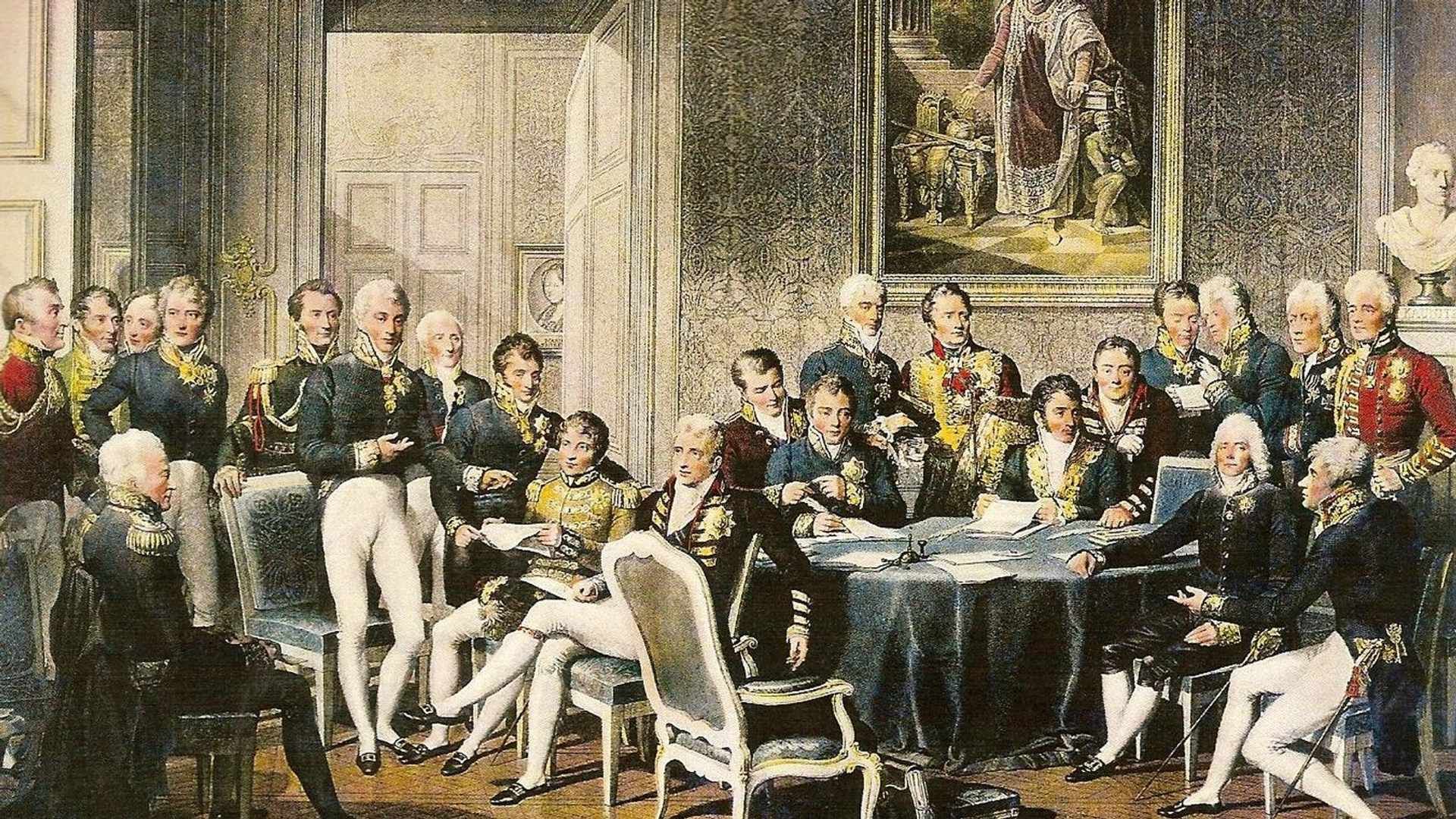
Prince Metternich—the “coachman of Europe,” the co-creator of the remarkably stable and conservative Concert of Europe system of great power peace, the founder of the modern secret police, and the subject of Henry Kissinger’s finest scholarship—was a thoroughly well-mannered man according to various sources, including that of Karl Nesselrode, his contemporary. Metternich lived in times similar to ours: increasing social radicalism, ethnocentric divisiveness and disorder, the rise of nationalism fueled by the French revolution, the return of total wars and decline of the right of conquest and subjecthood, and massive surplus elites. When asked the two most important qualities of any functioning or aspirational ruling nobility, he named “detachment” and “unfailing politeness,” even towards enemies.
A lesson perhaps, for a new year, which, if we go by ancient Chinese standards, is looking to be more interesting already than expected. One cannot expect politeness or propriety in our times; yet historical literacy, let alone profundity, was also absent, as richly evidenced in the national debate on what constitutes nationhood and a healthy, assimilated, and satiated polity. I don’t intend to write another essay on immigration debate—I won’t have kind words for either side of the spectrum, and it would jeopardize my own great peace—but tangentially it drove me to another important question. Who are the grand historians chronicling our times, and why is writing and reading sweeping historical narratives such a declining profession and pleasure?
The question is important and will be self-evident as to why. Writing grand-history is a calling, not for everyone. It is often the work of a lifetime. Edward Gibbon, and Theodor Mommsen’s treatises on Roman rise, decline, and fall are classic examples of the genre. But those are thematic assessments and exceptional in their own way; they often can only be done from the distance of centuries and with the support of hundreds of secondary sources. One can still write grand-historical narratives as a contemporary of events. William Morfil’s A History of Russia and Sir Edward Creasy’s translation and assessment of Joseph von Hammer-Purgstall’s History of the Ottoman Turks fit into this category. “His first act of sovereign authority showed that a different spirit to that of the generous Amurath would now wield the Ottoman power”, as Creasy wrote in describing Mehmed, was a sign of unmatched neutrality, sense of fair play, and even personal respect, towards a power considered historically adversarial. Both of them were ideologically detached enough to write a sweeping narrative of two empires, which were both contemporary and, as we know now, in their final stages.
A grand history can be of an epochal event; a classic American example is Shelby Foote’s Civil War trilogy, itself standing on the shoulders of giants such as Thucydides and Tacitus. Perhaps some of the most important ones—on English history prior to the First World War, the causes of the Second World War, and the final days of the Habsburgs—were written in the last century by A.J.P. Taylor, the last great master of the genre. “France and the Habsburg monarchy, the two traditional Great Powers of Europe, were both dwarfed by the chimneys of Ruhr,” is a sentence of immense depth and pellucidity; and a style of commanding historical writing that is now all but lost.
Grand historical writing, especially the style that peaked in the 19th century and then declined, was designed to provide understanding to rulers and aristocrats—a speculum principum of sorts, catered to modern sensitivities and style. Europe in the 19th century was an era closest to our own emerging multipolarity, in which modernity dissolved pure feudal localism, ideas of group affinity, and even (to a degree) borders; it also bore contradictory tendencies, the rise of revolutionary working-class solidarity, ethno-nationalism, and managerialism opposed to aristocracy and permanent loyalty. The era’s great chestnut: the tricky balance of satiating native-borns fearful of total cultural dilution, defending national and imperial borders against predatory adversaries, as well as managing globe-spanning multiethnic empires, all the while managing the era-defining technologies that kept making the world ever closer such as steam engines, telegraphs, newer printing technologies, textile tech, rapid firing machine guns, and railways.
At the risk of oversimplification (but in the interests of keeping this spiel short and readable enough), we can say our time is somewhat similar. Every industrial revolution—and we are in the midst of a new one, led by an emerging tech aristocracy—breeds new types of speech and social contract. This leads to disorder and theological conflict. That in turn leads to reactionary backlash against the agents of disorder from those who have the real financial and informational power, and, ultimately, it leads to a new social compact and a new, united elite formation with some negative equilibrium leading to peace, further innovation, and a satiated populace.
Consider a prediction: We are living in a multipolarity, which means that no single great power can do whatever it wishes to do. All powers labor under very real material constraints. Absent any hegemonic stability, predatory great powers and the practices of conquest and balancing will return. Unsatisfied surplus elites will push for new territorial expansion, either through conquest or coercion, purely for the sake of further expansion of frontiers and job opportunities. Given that most of these job opportunities will be fueled by the ongoing techno-industrial revolutions, it will entail some people and companies having enormous and unthinkable amounts of political and financial power—eventually more than many nation states and even continents.
With a center of gravity so lopsided, the momentum will push for further erosion of state power across the world, further imbalance in the international system, and the return of some newer form of colonialism and conquest. Finally, all that will result in further disorder within various entities that are empires in all but formal pomp and name. Quelling such disorders, both from the surging ethno-natitivist wings within and from rival great powers externally, will lead to many “concerts” and balances.
The interesting thing about history is that epochal change happens, whether we want it or not, and the visible patterns repeat. We are already seeing such changes around. The outright Russian conquest of Crimea, the partition of a Middle Eastern state between Turkey and Israel, and the American president-elect’s desire to reorder Greenland and Panama all form historical patterns that grand-historians would have written about. These changes stem from both material and strategic realities such as policing the Arctic or finding rare earth minerals in Greenland, but also are a mode of satiating an ever growing job market for surplus elites and left-over native-borns.
The combined financial and material influence, and informational power, of Elon Musk, Jeff Bezos, Mark Zuckerburg, et al are only ever going to increase, and they are, in some formative ways, the “great men” of our era. Most midrange nation-states now have lower GDP and output than those top 50 wealthy tech companies. Historically, such situations lead to major privatization of power, influence, and even rights to violence. The only difference between Wagner Group and the East India Company is a matter of capability, not will to conquer.
The postwar norms barely still exist. After all, if the combined wealth of a group of people is over trillions of dollars, they have the power and influence to employ thousands of people in various countries, and they have the greatest of technologies in their control, we are already living in a post-liberal and post-democratic age in all but name.
All the old patterns are visible, except one. We haven’t thus far seen the return of grand historical narratives and literature designed to guide and shape the new tech-revolution and the new quasi-aristocracy. History, as a profession, is stuck in a doom-loop of mediocrity and decline. But with a return to court politics, court history is inevitable and in some ways necessary. Like every aristocracy, our new tech-nobility needs a clergy class telling them not just grand stories, but showing them evidence from a civilizational lens. The focus of the discipline should move from minor to grand, measured in centuries.
It is time for the historians to shine. It is also somewhat of a duty of historians to not just educate, but reinterpret and warn. The real lesson for the new tech-right aristocracy is to figure out how they want to wield their power towards social equilibrium, both domestic and foreign, and avoid and deter anarchy, the real enemy of every civilization. As Metternich, himself a student of diplomacy and history, said at the start of the European ethno-nationalist revolutions, “without order as a foundation, the cry for freedom is nothing more than the attempt of some group or another to achieve its own ends. When actually carried out in practice, that cry for freedom will inevitably express itself in tyranny.”
Maybe Elon Musk and other tech-lords will go the full Gilded Age way, and promote the formation of elite, neutral and detached grand-historical studies, suitable for our times. Maybe Musk would learn statecraft from Metternich.
The post The New Tech Elite Needs New Historians appeared first on The American Conservative.









 New Posts (Home)
 ChatBox
 Popular Posts
  Game Zone
 Top PodCasts






![Strategist Blasts Obama for Alienating Working-Class Americans While Chasing Silicon Valley Money [WATCH]](https://www.lifezette.com/wp-content/uploads/2024/11/2024.11.04-03.17-lifezette-6728e57e8c53b.jpg)
![New Orleans Preps for Sugar Bowl with Super Bowl-Level Security After Terror Attack [WATCH]](https://www.lifezette.com/wp-content/uploads/2025/01/2025.01.01-08.44-lifezette-6775a93c72582.jpg)
![Vegas Sheriff Says Cybertruck Bomber Died Of A ‘Self Inflicted’ Gunshot Before the Blast [WATCH]](https://www.rvmnews.com/wp-content/uploads/2025/01/2025.01.02-08.22-rvmnews-6776f5a000210.jpg)