YubNub Social YubNub Social
    #astronomy #nightsky #biology #planet #blood #jupiter #brazil #mars #fossil #paleontology #redplanet #dinosaur #conjunction #dinosaurblood #aratasaurusmuseunacionali
    Advanced Search
  • Login
  • Register

  • Night mode
  • © 2026 YubNub Social
    About • Directory • Contact Us • Developers • Privacy Policy • Terms of Use • shareasale • FB Webview Detected • Android • Apple iOS • Get Our App

    Select Language

  • English
Community
New Posts (Home) ChatBox Popular Posts Reels Game Zone Top PodCasts
Explore
Explore
© 2026 YubNub Social
  • English
About • Directory • Contact Us • Developers • Privacy Policy • Terms of Use • shareasale • FB Webview Detected • Android • Apple iOS • Get Our App

Discover posts

Posts

Users

Pages

Blog

Market

Events

Games

Forum

Daily Caller Feed
Daily Caller Feed
2 yrs

‘Fascinating Case’: Jonathan Turley Says Catholic School Had ‘Good Day’ At SCOTUS Oral Arguments
Favicon 
dailycaller.com

‘Fascinating Case’: Jonathan Turley Says Catholic School Had ‘Good Day’ At SCOTUS Oral Arguments

'There are cases that seem to support the school'
Like
Comment
Share
Daily Caller Feed
Daily Caller Feed
2 yrs

Transgender Athlete In Girls’ High School Softball Exposed After Originally Concealing Sex From Teammates
Favicon 
dailycaller.com

Transgender Athlete In Girls’ High School Softball Exposed After Originally Concealing Sex From Teammates

Here we go again, ladies and gentlemen
Like
Comment
Share
Fun Facts And Interesting Bits
2 yrs

WIZARDS The Podcast Guide To Comics | Episode 107.5
Favicon 
theretronetwork.com

WIZARDS The Podcast Guide To Comics | Episode 107.5

William Bruce West returns to continue the conversation about Wizard 107, including an X-Men sequel Casting Call, X-Men movie trivia, Mort of the Month, comic … The post WIZARDS The Podcast Guide To Comics | Episode 107.5 appeared first on The Retro Network.
Like
Comment
Share
Reclaim The Net Feed
2 yrs

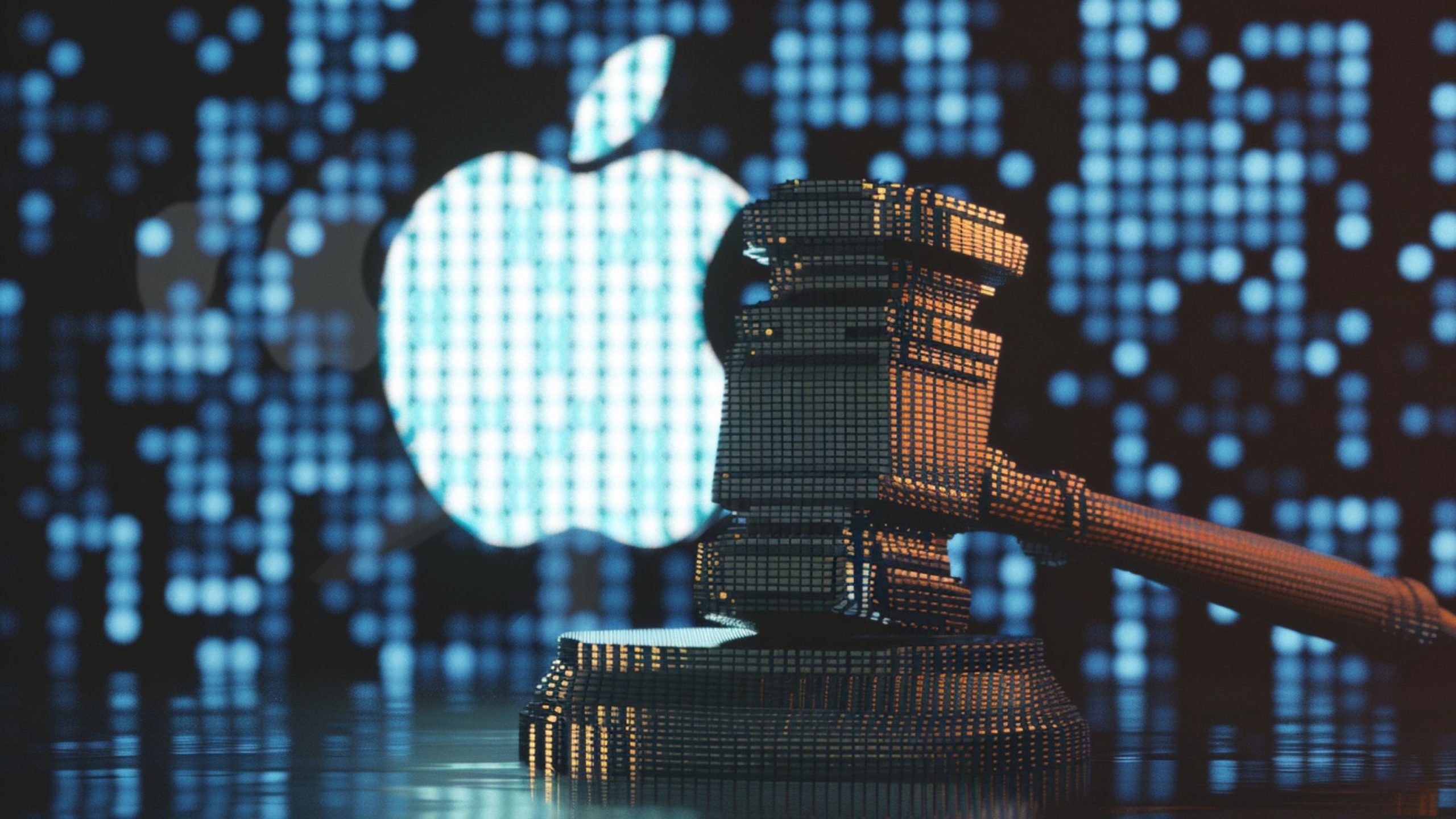
Judge Refers Apple for Contempt, Bars App Store Fees on External Purchases in Epic Games Case
Favicon 
reclaimthenet.org

Judge Refers Apple for Contempt, Bars App Store Fees on External Purchases in Epic Games Case

If you're tired of censorship and dystopian threats against civil liberties, subscribe to Reclaim The Net. A federal judge has handed down a significant decision in the ongoing legal battle between Epic Games and Apple, barring the tech giant from charging fees on purchases made outside its app ecosystem and from limiting how developers guide users toward external payment methods. Judge Yvonne Gonzalez Rogers, who has presided over the dispute since its inception, delivered a forceful opinion that found Apple had deliberately ignored a prior court order issued in 2021. “That [Apple] thought this Court would tolerate such insubordination was a gross miscalculation,” Rogers stated. She further escalated the matter by referring Apple to the US Attorney for potential criminal contempt proceedings. We obtained a copy of the order for you here. The court’s updated injunction spells out new boundaries for Apple’s conduct. The company is now explicitly prohibited from taking any commission on purchases made beyond its App Store. Additionally, it can no longer restrict developers from using specific design elements such as buttons, text, or other calls to action to guide users toward external purchasing platforms. Developers are also free to format and position such links as they see fit. Apple’s only permissible communication when a user leaves the app is a neutral message alerting them to the redirection. This legal development represents a notable triumph for Epic Games, which initiated the lawsuit in an effort to challenge Apple’s App Store policies. Following the judge’s decision, Epic CEO Tim Sweeney announced plans to relaunch Fortnite on the US App Store within the coming week. He also extended an offer for broader reconciliation: “If Apple extends the court’s friction-free, Apple-tax-free framework worldwide, we’ll return Fortnite to the App Store worldwide and drop current and future litigation on the topic.” The dispute originally gained traction after Rogers’ earlier ruling in 2021 required Apple to permit developers to steer users to other payment methods. However, Apple responded by implementing a 27 percent commission on those transactions, only marginally less than the standard 30 percent, drawing pushback from several developers, including Epic. Rogers took particular issue with that response, writing, “In the end, Apple sought to maintain a revenue stream worth billions in direct defiance of this Court’s Injunction.” She pointed to internal discussions at Apple, noting that App Store chief Phil Schiller advised compliance with the court’s order, but CEO Tim Cook chose a different path under the influence of CFO Luca Maestri, a decision she characterized as ill-advised. If you're tired of censorship and dystopian threats against civil liberties, subscribe to Reclaim The Net. The post Judge Refers Apple for Contempt, Bars App Store Fees on External Purchases in Epic Games Case appeared first on Reclaim The Net.
Like
Comment
Share
Reclaim The Net Feed
2 yrs

Mark Zuckerberg’s Expensive Fear of Competition
Favicon 
reclaimthenet.org

Mark Zuckerberg’s Expensive Fear of Competition

If you're tired of censorship and dystopian threats against civil liberties, subscribe to Reclaim The Net. This content is available exclusively to supporters of Reclaim The Net Subscribe for premier reporting on free speech, privacy, Big Tech, media gatekeepers and individual liberty online.   Subscribe   Already a supporter? Login here.                       If you're tired of censorship and dystopian threats against civil liberties, subscribe to Reclaim The Net. The post Mark Zuckerberg’s Expensive Fear of Competition appeared first on Reclaim The Net.
Like
Comment
Share
Reclaim The Net Feed
2 yrs

New York Is Quietly Rolling Out Precrime Surveillance Tech
Favicon 
reclaimthenet.org

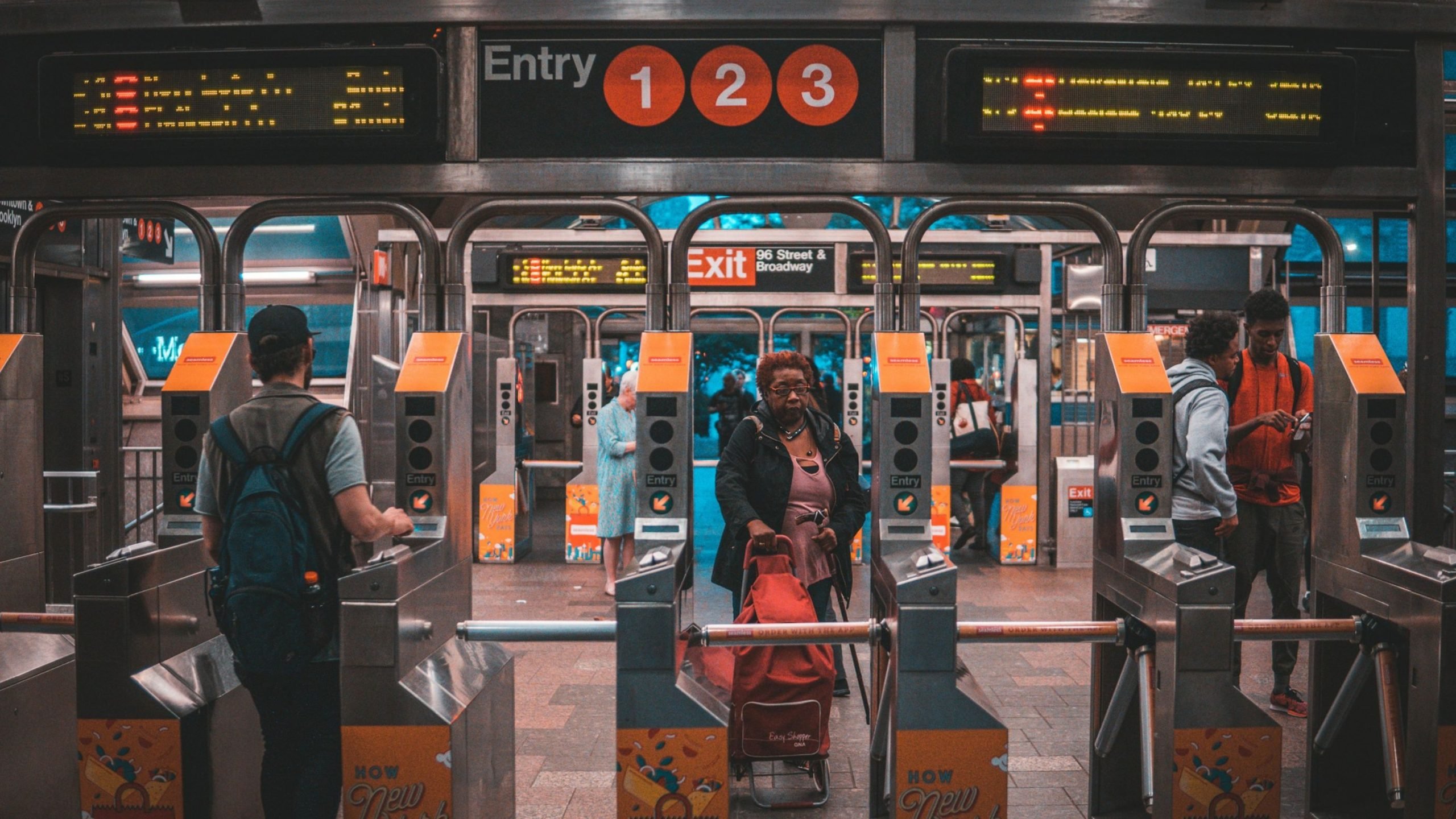
New York Is Quietly Rolling Out Precrime Surveillance Tech

If you're tired of censorship and dystopian threats against civil liberties, subscribe to Reclaim The Net. Picture this: it’s rush hour in New York City. A guy in a Mets cap mutters to himself on the F train platform, pacing in tight circles. Nearby, a woman checks her phone five times in ten seconds. Overhead, cameras are watching. Behind the cameras? A machine. And behind that machine? An army of bureaucrats who’ve convinced themselves that bad vibes are now a crime category. Welcome to the MTA’s shiny new plan for keeping you safe: an AI surveillance system designed to detect “irrational or concerning conduct” before anything happens. Not after a crime. Not even during. Before. The sort of thing that, in less tech-horny times, might’ve been called “having a bad day.” MTA Chief Security Officer Michael Kemper, the man standing between us and a future where talking to yourself means a visit from the NYPD, is calling it “predictive prevention.” “AI is the future,” Kemper assured the MTA’s safety committee. So far, the MTA insists this isn’t about watching you, per se. It’s watching your behavior. Aaron Donovan, MTA spokesperson and professional splitter of hairs, clarified: “The technology being explored by the MTA is designed to identify behaviors, not people.” And don’t worry about facial recognition, they say. That’s off the table. For now. Just ignore the dozens of vendors currently salivating over multimillion-dollar public contracts to install “emotion detection” software that’s about as accurate as your aunt’s horoscope app. The Governor’s Favorite Security Blanket This push didn’t hatch in a vacuum. It’s part of Governor Kathy Hochul’s continuing love affair with surveillance. Since taking office, she’s gone full Minority Report on the MTA, installing cameras on every platform and train car. Kemper reports about 40 percent of platform cams are monitored in real-time; an achievement if your goal is to recreate 1984 as a regional transit initiative. But that’s not enough. Now they’re coming for conductor cabs, too. Because apparently, the guy driving the train might be plotting something. The justification? Public safety, of course. That reliable blank check for every civil liberties withdrawal. The Algorithm Will See You Now There’s a strange and growing faith among modern bureaucrats that algorithms are inherently wiser than humans. That they’re immune to the same messy flaws that plague beat cops and dispatchers and mayors. But AI isn’t some omniscient subway psychic. It’s a mess of code and assumptions, trained on biased data and sold with slick PowerPoint slides by tech consultants who wouldn’t last five minutes in a crowded Bronx-bound 4 train. US Transportation Secretary Sean Duffy threatened to yank federal funding unless the agency coughed up a crime-fighting strategy. And when Washington says jump, the MTA asks if it should wear a bodycam while doing it. So the MTA submitted a plan; basically a warmed-over casserole of ideas they were already cooking. Only now with more jargon and AI glitter sprinkled on top. You’re the Suspect Now The whole thing slots nicely into a global trend where governments outsource paranoia to machines. From South Korea’s “Dejaview” to the UK’s facial recognition fails to China’s social credit panopticon, the race is on to see who can algorithmically spot thoughtcrime first. The problem? Machines are stupid. And worse, they learn from us. Which means whatever patterns these systems detect will reflect the same blind spots we already have; just faster, colder, and with a plausible deniability clause buried in a vendor contract. And while the MTA crows about safer commutes, the reality is that this is about control. About managing perception. About being able to say, “We did something,” even if that something is turning the world’s most famous public transit system into a failed sci-fi pilot. So go ahead. Pace nervously on the platform. Shift your weight too many times. Scratch your head while frowning. In the New York subway system of tomorrow, that might be all it takes to get flagged as a threat. If you're tired of censorship and dystopian threats against civil liberties, subscribe to Reclaim The Net. The post New York Is Quietly Rolling Out Precrime Surveillance Tech appeared first on Reclaim The Net.
Like
Comment
Share
Reclaim The Net Feed
2 yrs

Israel, Russia, Ukraine, and Others Clash Over Speech Control at UN “Disinformation” Talks
Favicon 
reclaimthenet.org

Israel, Russia, Ukraine, and Others Clash Over Speech Control at UN “Disinformation” Talks

If you're tired of censorship and dystopian threats against civil liberties, subscribe to Reclaim The Net. At the United Nations Committee on Information’s 47th session, now in progress through May 9, delegates delivered impassioned speeches condemning the spread of false information online. But while much of the discussion focused on the dangers of disinformation, a growing undercurrent of concern emerged over the potential use of these efforts as a pretext for censorship and control over speech. More: UN Advances Pro-Censorship Agenda by Targeting Gaming Platforms Over Alleged “Radicalization” Risks The Israeli delegation described the spread of online falsehoods and incitement as not merely a technical hurdle but a “moral obligation” to confront, stating that “the fight against disinformation is not only a technical challenge, but also a moral obligation.” This framing resonated with many states present, who endorsed the UNESCO Principles for the Governance of Digital Platforms; guidelines ostensibly designed to curb digital misinformation and “hate speech.” Yet, the widespread enthusiasm for these principles raises pressing questions about who defines disinformation, how enforcement is implemented, and what safeguards exist to prevent abuse. While member states described online manipulation campaigns as threats to national sovereignty and social stability, the solutions proposed risk handing greater power to centralized institutions to determine which voices are legitimate and which are not. Germany brought attention to the rising vulnerability of peacekeepers facing narrative manipulation in volatile regions, warning that “peacekeepers…are increasingly the target of mis- and disinformation campaigns.” Still, the remarks hinted at a broader problem: the blurring of lines between valid criticism and disinformation, which could lead to the stifling of uncomfortable truths. Geopolitical tensions surfaced as Ukraine accused Russia of a campaign of violence against journalists, citing over 100 deaths since the beginning of the war, including journalist Viktoriia Roshchyna. In response, Russia’s delegate portrayed its own media as under siege abroad, pointing to a “constantly updated section” on the foreign ministry website tracking repression against Russian journalists. He accused Ukrainian authorities of torturing and persecuting dissenting reporters and criticized the ongoing existence of the Myrotvorets website, known for publishing personal details of individuals labeled as enemies of Ukraine. The international community, he argued, has remained conspicuously silent. Rather than acknowledge any shared concern for media freedom, the United Kingdom struck back by accusing Moscow of orchestrating the Doppleganger network, operated by the Social Design Agency, to spread anti-Ukrainian propaganda across Europe. The UK delegate also charged Russia with hijacking the Security Council to disseminate falsehoods. But the call to “denounce and sanction” information networks again brought the debate full circle to an uncomfortable reality: the push to combat disinformation is increasingly entangled with efforts to suppress dissenting narratives, particularly in geopolitical conflicts. Calls for preserving the credibility of the United Nations came from several quarters. China’s representative insisted that the Department of Global Communications must share “accurate, neutral and credible” updates that include diverse member-state perspectives. But terms like “neutral” and “credible” remain subjective in the absence of a universally agreed-upon standard. The Iranian delegate directly challenged what she saw as selective outrage from the United States, particularly regarding free speech. She pointed to the US government’s track record on suppressing domestic protests and accused it of enabling human rights violations abroad. “The United States is certainly not well-positioned to present itself as a defender of human rights,” she said, urging it to respect differing opinions rather than suppress them. If you're tired of censorship and dystopian threats against civil liberties, subscribe to Reclaim The Net. The post Israel, Russia, Ukraine, and Others Clash Over Speech Control at UN “Disinformation” Talks appeared first on Reclaim The Net.
Like
Comment
Share
Reclaim The Net Feed
2 yrs

Prince Harry and Meghan Markle Push For Controversial Online “Safety” Legislation
Favicon 
reclaimthenet.org

Prince Harry and Meghan Markle Push For Controversial Online “Safety” Legislation

If you're tired of censorship and dystopian threats against civil liberties, subscribe to Reclaim The Net. Prince Harry and Meghan Markle are inserting themselves into the debate around online safety of minors, through a series of events and initiatives. While this is undoubtedly a worthy cause – when judged by the declared intent alone – things become controversial and complicated with legislative efforts lacking proper privacy and security safeguards. By either not dealing with the ramifications of age verification, and digital ID, or actively attacking end-to-end encryption, these efforts could serve as the building blocks of a future expansive censorship and surveillance infrastructure, exposing all internet users to it. Yet Meghan and Harry’s Archewell Foundation Parents’ Network is fully behind proposals like the TAKE IT DOWN Act. The bill is supposed to deal with real and AI-generated non-consensual intimate imagery (NCII) – but digital rights activists criticize it precisely for the lack of safeguards and the wider censorship potential. The Foundation is also working together with a number of child safety groups, including the UK’s 5Rights Foundation, which has endorsed the sweeping censorship law, the Online Safety Act, and is a long-time proponent of online age verification. Prince Harry and Meghan last week in New York unveiled a memorial consisting of installations in the shape of giant smartphones, whose “displays” feature images of minors who their parents believe lost their lives as a consequence of engaging with harmful online content. Supporters of badly formulated, too broad, or vague legislation – which courts in the US are more and more frequently finding incompatible with the Constitution – often turn to emotionally charged testimonies and cases as a means to advance their point of view. In New York, Harry took the opportunity to declare that “life is better off social media” and insinuate that children are currently being “lost to social media” – which requires “things to change.” He referred to the memorial as “a powerful call to action for urgent online safety reform.” Another event he took part in last week was a roundtable hosted by the Responsible Tech Youth Power Fund (RTYPF), which has received funding from the Archewell Foundation and Melinda French Gates’ Pivotal Ventures, among others. More regulation along the path laid out by the already existing and proposed new law was urged during this gathering as well. If you're tired of censorship and dystopian threats against civil liberties, subscribe to Reclaim The Net. The post Prince Harry and Meghan Markle Push For Controversial Online “Safety” Legislation appeared first on Reclaim The Net.
Like
Comment
Share
Reclaim The Net Feed
2 yrs

Brazilian Supreme Court Justice Luiz Edson Fachin Renews Push for Regulation of Online Speech and “Fake News” Amid Press “Freedom” Forum
Favicon 
reclaimthenet.org

Brazilian Supreme Court Justice Luiz Edson Fachin Renews Push for Regulation of Online Speech and “Fake News” Amid Press “Freedom” Forum

If you're tired of censorship and dystopian threats against civil liberties, subscribe to Reclaim The Net. Speaking at an event celebrating press freedom, Brazilian Supreme Federal Court Justice Luiz Edson Fachin renewed calls for Congress to craft mechanisms aimed at controlling so-called “fake news” online, a move that amplifies growing pressure for more regulation of digital speech in Brazil. Fachin argued that certain platforms and users have interpreted freedom of expression as an unchecked right, shielding even harmful behavior from accountability. “This line of thinking has no support in the Brazilian constitutional order, nor is it in accordance with the international human rights treaties that the Federative Republic of Brazil has signed, approved by the same National Congress that is now called upon to discuss the regulation of such platforms and, consequently, to create legitimate mechanisms for democratic containment of the harmful impacts of fake news,” he stated. The comments came during the opening of the “Freedom of Expression Forum – 150 years in defense of freedom and democracy“, an event hosted by Estadão as part of its 150th anniversary. Positioning freedom of expression as something that should be subject to “democratic limits,” Fachin claimed that digital actors exploit this right under the pretense of preserving liberty while actually threatening democratic institutions. “The aim is to spread, especially via social media, the notion that freedom of expression allows expression, including the annihilation of freedom. We do not believe that this should be the case: freedom must protect freedom, democracy must protect democracy,” he said. According to the minister, large technology companies are engaged in what he called a calculated political campaign, monetizing disorder as part of their operating model. He warned, “Authoritarian digital populism is developing, the tsunami of which is about to drown Western democracies and the classic achievements of freedoms.” More: Brazilian Supreme Court Justice Orders Arrest of US Citizen for Political Speech This push for greater oversight is also reflected in the court’s ongoing examination of Brazil’s Civil Rights Framework for the Internet. At the center of the debate is Article 19, a key provision that prevents platforms from removing content without a judicial order. The case paused in late 2024 at the request of Justice André Mendonça, is expected to resume this year. Chief Justice Luís Roberto Barroso, speaking in November 2024, addressed the Court’s decision to move forward with the review, citing legislative inertia. “The court waited for a reasonable period of time for legislation to be enacted by the Legislature and, as this did not happen, the time has come for us to decide this matter,” Barroso said. The increased push to police digital discourse in the name of democracy underscores a troubling trend: the growing alignment between state institutions and regulatory ambitions that often sidestep the public’s right to open expression. What remains uncertain is whether future measures will protect democratic integrity, or undermine the very freedoms they claim to preserve. If you're tired of censorship and dystopian threats against civil liberties, subscribe to Reclaim The Net. The post Brazilian Supreme Court Justice Luiz Edson Fachin Renews Push for Regulation of Online Speech and “Fake News” Amid Press “Freedom” Forum appeared first on Reclaim The Net.
Like
Comment
Share
Hot Air Feed
Hot Air Feed
2 yrs

Harvard Finally Releases Report on Antisemitism on Campus
Favicon 
hotair.com

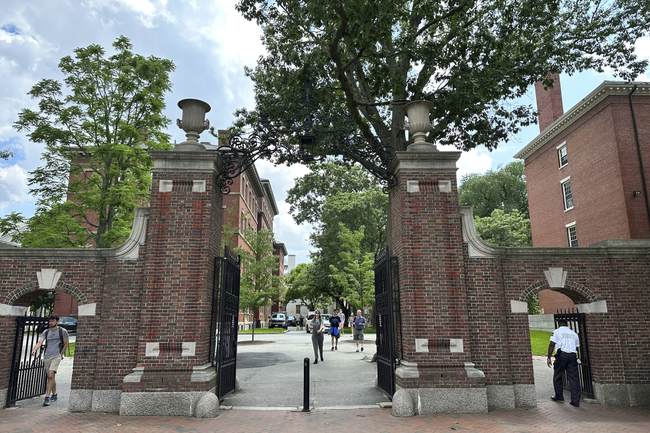
Harvard Finally Releases Report on Antisemitism on Campus

Harvard Finally Releases Report on Antisemitism on Campus
Like
Comment
Share
Showing 70779 out of 142999
  • 70775
  • 70776
  • 70777
  • 70778
  • 70779
  • 70780
  • 70781
  • 70782
  • 70783
  • 70784
  • 70785
  • 70786
  • 70787
  • 70788
  • 70789
  • 70790
  • 70791
  • 70792
  • 70793
  • 70794

Edit Offer

Add tier


Select an image
Delete your tier
Are you sure you want to delete this tier?

Reviews

In order to sell your content and posts, start by creating a few packages. Monetization

Pay By Wallet

Payment Alert

You are about to purchase the items, do you want to proceed?

Request a Refund