YubNub Social YubNub Social
    #satire #democrats #loonylibs #iran #comedy
    Advanced Search
  • Login
  • Register

  • Night mode
  • © 2026 YubNub Social
    About • Directory • Contact Us • Developers • Privacy Policy • Terms of Use • shareasale • FB Webview Detected • Android • Apple iOS • Get Our App

    Select Language

  • English
Night mode toggle
Featured Content
Community
New Posts (Home) ChatBox Popular Posts Reels Game Zone Top PodCasts
Explore
Explore
© 2026 YubNub Social
  • English
About • Directory • Contact Us • Developers • Privacy Policy • Terms of Use • shareasale • FB Webview Detected • Android • Apple iOS • Get Our App
Advertisement
Stop Seeing These Ads

Discover posts

Posts

Users

Pages

Blog

Market

Events

Games

Forum

Science Explorer
Science Explorer
2 yrs

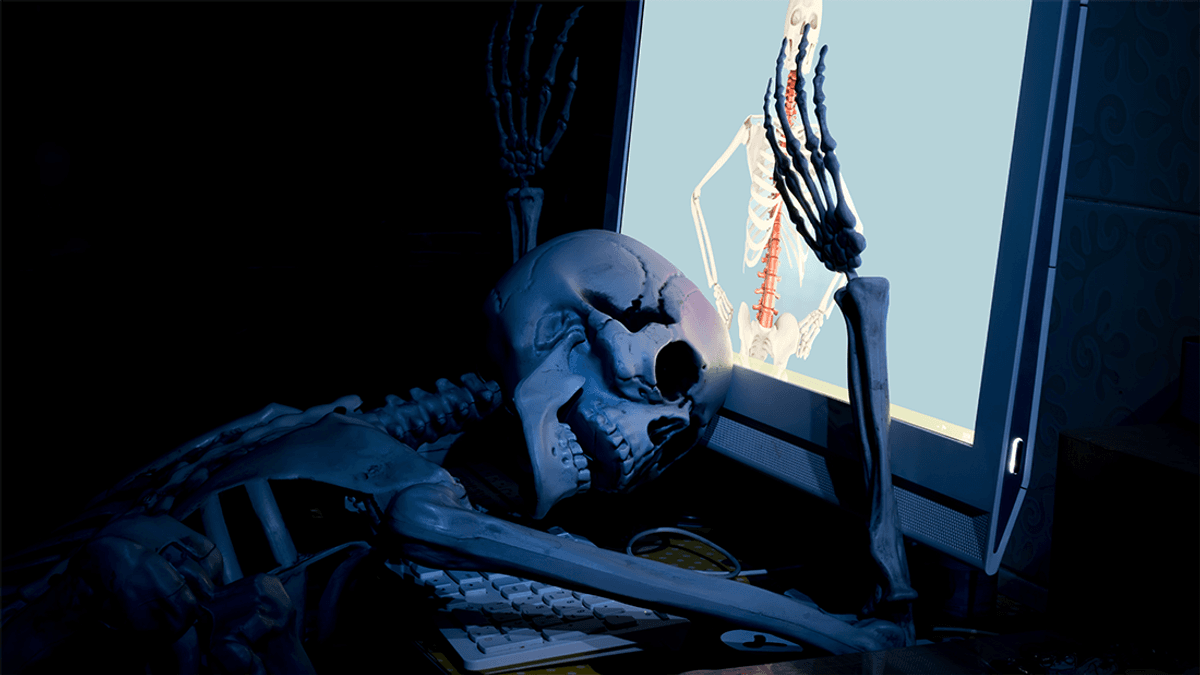
Dead Internet Theory: According To Conspiracy Theorists‚ The Internet Died In 2016
Favicon 
www.iflscience.com

Dead Internet Theory: According To Conspiracy Theorists‚ The Internet Died In 2016

There are plenty of conspiracy theories available on the internet. If you want to believe the world is flat and that if you walk off the edge you simply teleport your way to the other side like Pac-Man‚ you'd better believe that there's someone on the internet who will support you in your weirdly specific ignorance. But what if [leans in close and checks for nearby CIA operatives] the internet is all part of the conspiracy too? That is the basic launching point of the "Dead Internet Theory"‚ the conspiracy theory that claims that in 2016 or 2017‚ the internet became much worse‚ and you are now logging on to a graveyard absent of human activity.What is the dead internet theory?“The Internet feels empty and devoid of people. It is also devoid of content. Compared to the internet of say 2007 (and beyond) the Internet of today is entirely sterile. There is nowhere to go and nothing to do‚ see‚ read or experience anymore‚" one influential post on the topic reads. "Yes‚ the Internet may seem gigantic‚ but it’s like a hot air balloon with nothing inside.”A pretty dull idea‚ but of course the conspiracy theory gets wacky. It claims that the internet as we know it today is largely just artificial intelligence (AI) generated content‚ put there for nefarious purposes.   "There is a large-scale‚ deliberate effort to manipulate culture and discourse online and in wider culture by utilising a system of bots and paid employees whose job it is to produce content and respond to content online in order to further the agenda of those they are employed by‚” the aforementioned post claims.According to conspiracy theorists‚ these bots attempt to influence public perception on just about any political topic‚ or else keep you constantly distracted and buying products‚ to keep you from questioning the elites.Of course‚ there is a lot of bot activity on the internet. In fact‚ nearly half of all internet traffic (not internet content) came from bots in 2022. This includes activity like distributed denial-of-service (DDOS) attacks‚ where websites are maliciously overloaded with a barrage of automated requests. “Bots have evolved rapidly since 2013‚ but with the advent of generative artificial intelligence‚ the technology will evolve at an even greater‚ more concerning pace over the next 10 years‚” Karl Triebes‚ senior vice president at Imperva‚ the firm who carried out the research‚ said in a statement at the time.“Cyber criminals will increase their focus on attacking API endpoints and application business logic with sophisticated automation. As a result‚ the business disruption and financial impact associated with bad bots will become even more significant in the coming years.”These bots are probably already familiar to you from social media.                          IFLScience is not responsible for content shared from external sites.Bot-generated content is a problem for search engines‚ which is also only going to get worse. People have complained about Google's decline in the last few years‚ with studies backing up the idea that it is sending people to less useful content than before. Marissa Mayer‚ the 20th employee to join Google who went on to serve as CEO of Yahoo‚ believes that the problem is down to the internet itself becoming worse.“I do think the quality of the Internet has taken a hit‚" Mayer told Freakonomics. "When I started at Google‚ there were about 30 million web pages‚ so crawling them all and indexing them all was relatively straightforward. It sounds like a lot‚ but it’s small. Today‚ I think there was one point where Google had seen more than a trillion URLs.”Mayer added that it was natural for people to blame Google when they aren't getting the quality search results they used to‚ but she sees Google's results as more of a window into the web itself."The real question is‚ why is the web getting worse?"Though it can feel like the internet is getting worse‚ and that bot activity is on the increase due to their availability and ease of use‚ that doesn't mean that the internet is dead. The majority of content is still produced by humans‚ even if traffic is edging closer to an even split between AI and humans.Like all good conspiracy theories‚ the Dead Internet Theory takes a kernel of truth or agreed sentiment (that the internet is getting worse‚ and that bot activity is increasing) and twists it into something it isn't. Bot activity is on the increase‚ and that's far from a good thing for the internet‚ particularly as this is the content the next generation of AI chatbots will be trained on. But the majority of content you see online and people on social media are not bots‚ and the internet is far from dead. For now.
Like
Comment
Share
Science Explorer
Science Explorer
2 yrs

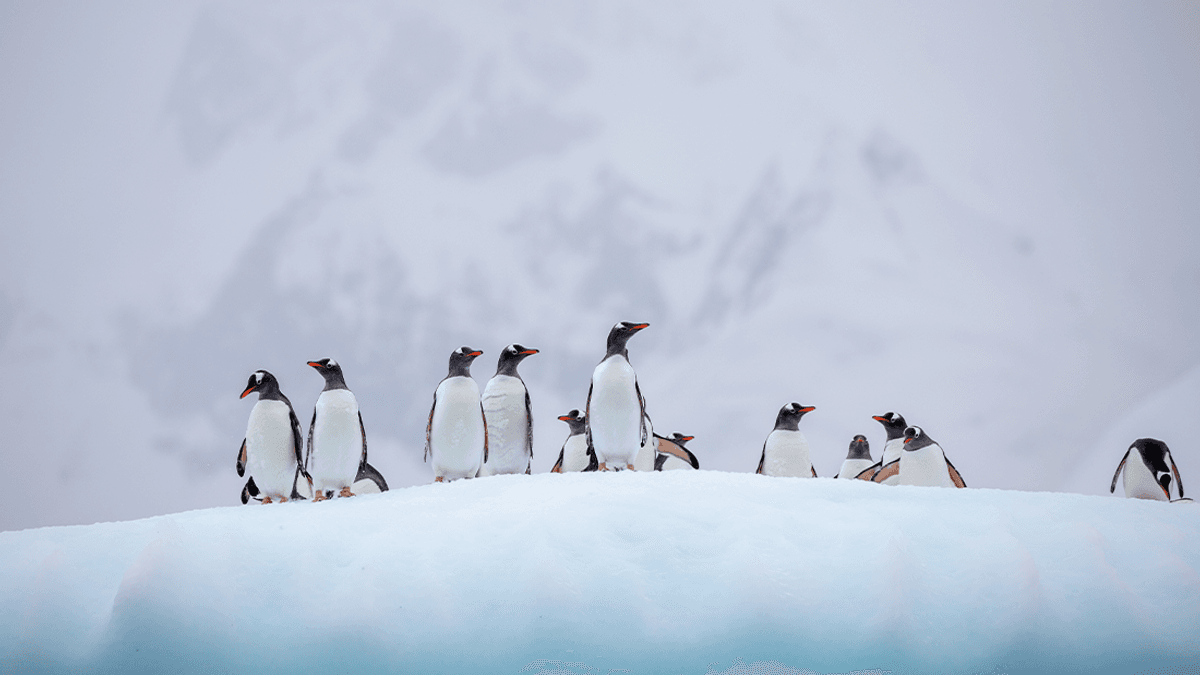
The First Penguins Have Died From Bird Flu As It Reaches Antarctica
Favicon 
www.iflscience.com

The First Penguins Have Died From Bird Flu As It Reaches Antarctica

Brace yourself folks this is not good news. King and gentoo penguins on islands between the Antarctic mainland and South America have been found dead from bird flu for the first time. Bird flu has been spreading across the globe‚ even causing the death of a polar bear in Alaska‚ and has now been reported to have reached the penguin colonies of the Falkland Islands in the South Atlantic with potentially devastating consequences.The disease reached the isolated bird populations of the Antarctic region for the first time in October 2023 causing the deaths of brown skua (Stercorarius antarcticus).  Now‚ new reports from the Scientific Committee on Antarctic Research (SCAR) show that the first penguin lives have been lost. At least one king penguin (Aptenodytes patagonicus) is suspected to have died in Fortuna Bay on the northeast coast of South Georgia and the South Sandwich Islands. On Sea Lion Island the disease has also been detected in two gentoo penguin chicks (Pygoscelis papua) that were tested after being found dead. Thirty-five further adults and chicks were also reported to be either symptomatic or dead according to the Falklands Islands Government website.SCAR reports that more than 500‚000 thousand seabirds have died of the disease in South America with the migratory birds from South America likely spreading the disease further south. "There are over 200 chicks dead alongside a handful of adults‚" government spokesperson Sally Heathman told Reuters. The Falkland Islands lie roughly 1‚300 kilometers (800 miles) from the top of the Antarctic mainland and penguins aren't believed to travel these distances. Bird flu has been found in species in the Falkland Islands and the uninhabited islands further south.Image Credit: Peter Hermes Furian/Shutterstock"The arrival of this H5N1 virus in the Antarctic towards the end of last year rang alarm bells because of the risk it posed to wildlife in this fragile ecosystem. And while it is very sad to hear reports of penguins dying … it is unfortunately not at all surprising‚” Ed Hutchinson‚ a molecular virologist at the MRC-University of Glasgow Centre for Virus Research told the Guardian.As it stands the disease has not yet reached the Antarctic mainland. A map on the SCAR website shows the hotspots where the disease has currently been found. It's possible that since these birds live in such a remote area the disease has already reached them and is yet to be discovered‚ in a similar manner to the discovery of the polar bear death in Alaska earlier this year. Since penguins cluster together for the breeding season‚ if the disease reaches the mainland it could have the potential to wipe out many more. 
Like
Comment
Share
Science Explorer
Science Explorer
2 yrs

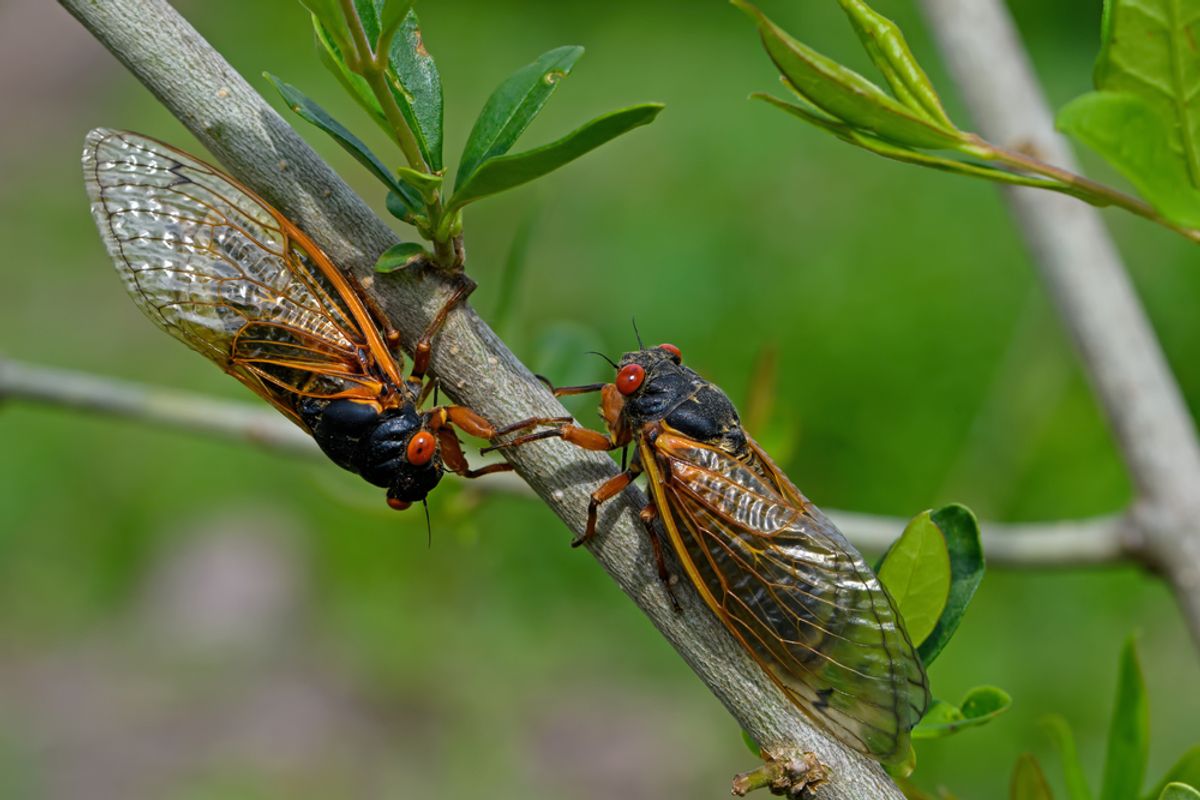
Millions Of Cicadas Emerge Simultaneously Every 13 Or 17 Years‚ But How Do They Know When To?
Favicon 
www.iflscience.com

Millions Of Cicadas Emerge Simultaneously Every 13 Or 17 Years‚ But How Do They Know When To?

Periodical cicadas don’t emerge often – only once every 13 or 17 years‚ to be precise – but when they do they arrive in their millions‚ and even billions. It’s now accepted that this pattern of emergence helps them avoid falling in sync with any predators‚ but how do they know to emerge all at the same time? Well‚ that’s remained something of a mystery.Brood cicada emergences are a phenomenon that’s been recorded by humans as far back as biblical times. Now‚ a group of researchers decided it was about damn time we take a closer look at what could be driving them. We know that the cicadas emerge in spring‚ but living in the ground means that it’s not going to be the same temperature for every cicada waiting to go topside. Some patches of earth may be cooler than others‚ so if it was simply a matter of temperature‚ we would expect to see more patchy patterns of emergence. Using a random-field Ising model (RFIM)‚ the team was able to simulate the cicada experience‚ taking into account the microclimates they are exposed to in the soil. RFIM is a good model because it can show how the decisions of cicadas (represented by the spin of magnets) can be influenced not just by interactions with each other‚ but also by other external factors. So‚ in the same way that microclimates might influence cicada emergence decisions‚ the magnets’ spinning could be altered by random fields.    By mimicking the environmental conditions we see in real life in their model‚ they saw similar mass swarms of decision-making in their magnets‚ mimicking the swarms of cicadas that we experience in real life. These swarms even mimicked the duration and frequency of cicada brood emergence‚ lasting for several weeks and being broken up with small gaps between them. The theoretical approach suggests that cicada nymphs are unlikely to be able to tell when environmental conditions have tipped the threshold of 18°C (65°F) it was thought was needed to motivate them to emerge. Instead‚ they appear to be relying on a swarm-mind approach to decision-making that’s similar to consensus-building communication networks with distinct properties.This is exciting because it means they’ve established a good model for studying emergence behavior‚ but it doesn’t yet solve the mystery. The authors suggest that the next step involves going out in the field to test if communication by cicada nymphs underground really is the key. This means taking acoustical samples to see what the cicadas a saying while they’re lurking underground‚ if anything.They also want to establish a better understanding of the spatial variation in microclimates and get a stronger idea of the dynamics of emerging swarms. Considering that 2024 is bringing something of a cicadapocalypse‚ it could make for a testing field work season.For the first time in 221 years‚ two broods have lined up so in such a way that they’ll be emerging at the same time. Brood XIII and Brood XIX last did this in 1803‚ and it’s going to be one hell of a noisy reunion.Fingers crossed the sexually-transmitted‚ brain-snatching fungus doesn’t catch wind of their orgy…The study is published in the journal Physical Review E.
Like
Comment
Share
Pet Life
Pet Life
2 yrs

Dad searches for missing dentures and loses it when he looks over at his dog
Favicon 
animalchannel.co

Dad searches for missing dentures and loses it when he looks over at his dog

Meet Maggie‚ a charming Shih-Tzu bursting with personality‚ who lives with her loving family on Long Island. Her human sister‚ Eunice‚ can’t help but gush about her‚ saying‚ “She is the cutest! She has quite a personality. She loves to cuddle but is also a yapper at times. She’s very mischievous!” This mischievous nature of... The post Dad searches for missing dentures and loses it when he looks over at his dog appeared first on Animal Channel.
Like
Comment
Share
The Blaze Media Feed
2 yrs

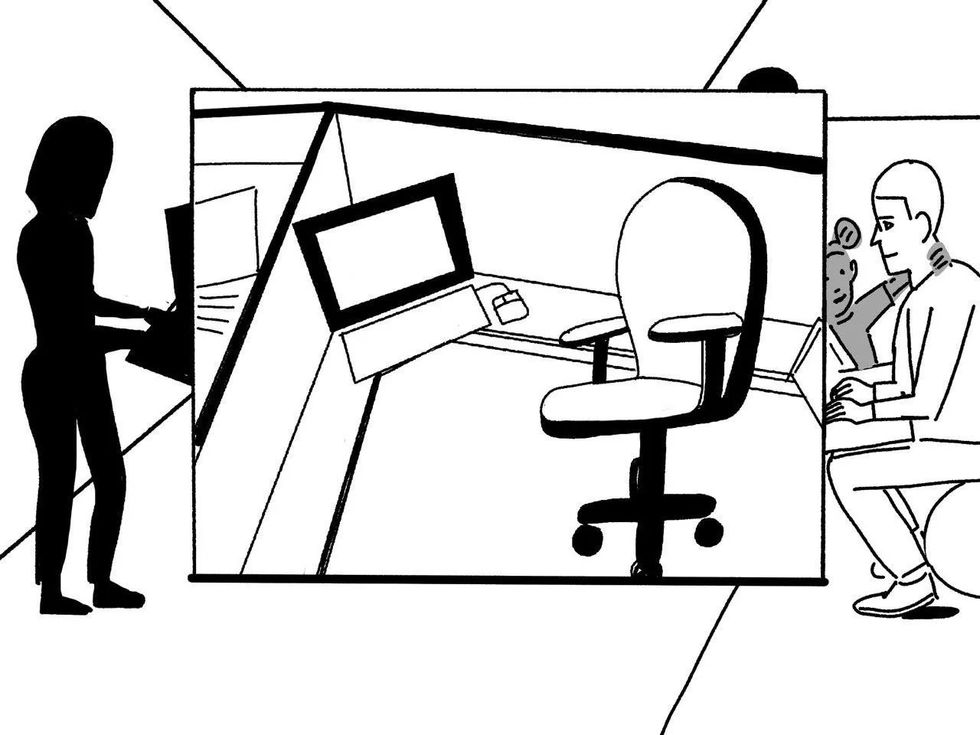
The demise of cubicles has caused work to invade our homes
Favicon 
www.theblaze.com

The demise of cubicles has caused work to invade our homes

It seems hard to remember Generation X as a media object unto itself like the Millennials were until recently‚ but Gen X tastes did leave their mark on history. Imagine Henry Rollins walking into a cubicle-sea office floor and shouting‚ “Open your eyes! The suits are just trying to control us and this is their rat maze‚ man! We’re just going about our days like drones in a hive!” This caricature isn’t far from the real ethos of the 1990s. “Generation X” was coined in the 1991 novel "Generation X: Tales for an Accelerated Culture" by Douglas Coupland. Here’s a passage from one chapter named “I Am Not a Target Market": At the slightest provocation I’d have been willing to apologize for my working life – how I work from eight till five in front of a sperm-dissolving VDT performing abstract tasks that indirectly enslave the Third World. But then‚ hey! Come five o’clock‚ I’d go nuts! I’d streak my hair and drink beer brewed in Kenya. I’d wear bow ties and listen to alternative rock and slum in the arty part of town. This international best-seller really did carry the voice of its generation‚ with detachment and a thirst for authenticity dripping from everything down to the chapter title. Another passage‚ with emphasis added‚ makes explicit the Gen X antipathy toward the cubicle: I begin at the point where he once told me how he was at work and suffering from a case of “Sick Building Syndrome‚” saying‚ “The windows in the office building where I worked didn’t open that morning‚ and I was sitting in my cubicle‚ affectionately named the veal-fattening pen. I was getting sicker and more headachy by the minute as the airborne stew of office toxins and viruses recirculated — around and around — in the fans. Such "Fight Club"-style rebellions against “wearing a tie” and other explicit symbolic conventions of hierarchy were discredited as soon as they won the cultural battle. Cubicles and neckties lost their cachet among the most cutting-edge Silicon Valley startups‚ which by necessity needed to make do with industrial lofts‚ which invited a seemingly egalitarian open-plan layout where executives would mingle with the rank and file. Nothing was exclusive or private — which‚ again‚ is downstream from the organizational reality of startups where every employee is performing the duties of several roles. The office reimagined T_A_P/getty It became clear that the anti-cubicle rebels had succeeded with their revolution in 2005‚ when Google redesigned its headquarters in the open-office format. This inspired a wave of cargo-cult imitators who wanted to at least appear to be as innovative as Google. The trend perhaps peaked in 2015 when Facebook built the world’s largest open-plan floor designed to fit 2‚800 employees. By that time‚ 70% of offices in the United States followed an open plan. The language of “collaboration” and “openness” underpinned ubiquitous philosophical reasoning behind open-plan offices‚ echoing Frank Lloyd Wright’s justification for his 1939 Johnson Wax Headquarters that averted “fascist and totalitarian” tendencies by virtue of its open layout. As soon as the open-plan office came to define a generation‚ the numbers started calling it into question‚ utopian justifications be damned. A 2013 study concluded that workers in open-office environments become frustrated by distractions that led to poorer work performance. Nearly half of the surveyed workers in open offices said the lack of sound privacy was a significant problem for them‚ and more than 30% complained about the lack of visual privacy. Meanwhile‚ the ease of interaction with coworkers was found not to be a problem in any type of office‚ and in fact‚ those with private offices were least likely to identify their ability to communicate with colleagues as a problem. A 2009 meta-analysis of literature on barrier-free office design found that such designs resulted in lower job satisfaction‚ higher blood pressure‚ increased turnover‚ and lower productivity. Cubicles‚ it turns out‚ were a way to fix these rather obvious problems in the first place‚ and their drawbacks seem to be aesthetic complaints about the conformity of being confined to identical boxes under fluorescent light rather than a substantive criticism of corporate hierarchy. A boss without a tie still has the power to order you around and fire you‚ and an open office can easily be a panopticon without space for reflection or autonomy. Tech giants take open offices a step farther by filling their campuses with utopian-seeming amenities — foosball tables‚ laundry services‚ swimming pools — that are actually designed to muddle the work-life distinction and prevent workers from leaving. By the mid-2010s‚ the open office had acquired the hated role that cubicles occupied in the 1990s‚ perhaps with a little more saccharine sugarcoating sprinkled on top. A 2014 article from the Washington Post criticizing the open office sums up that era’s exhaustion with the trend. But the piece makes an ominous endorsement of a new kind of white-collar utopia: On the other hand‚ companies could simply join another trend — allowing employees to work from home. That model has proven to boost productivity‚ with employees working more hours and taking fewer breaks. On top of that‚ there are fewer interruptions when employees work remotely. At home‚ my greatest distraction is the refrigerator. This reads like a naive horror-movie protagonist setting up the audience for a sequel. And it kind of is. Just like at the tech campuses where hundreds of thousands of workers escaped for the comforts of home‚ the work-life balance was blurred. Your place of leisure becomes a productivity tomb that you never escape by schedule but only by intention. For everyone else‚ the dream of remote work met its consummation in a compromise: You can live in the city of your choice‚ but one corner of your one-bedroom is your work life and the other corner is your life's work. Everyone who loves remote work is one of two types of person. The first are the nomads‚ who have the superhuman capacity to be productive while hunched over their laptops at a tiny table in any given cafe. The second are the outer suburbanites‚ who have the space needed for a home office and all the buffer space required to maintain the home as a place for family and leisure. In their very different ways‚ both are content to live their lives alone. For everyone else‚ the dream of remote work met its consummation in a compromise: You can live in the city of your choice‚ but one corner of your one-bedroom is your work life and the other corner is your life's work. There is no space‚ figurative or literal‚ between home as office and home as rest. One of the pieces of wisdom gleaned from the COVID era is that people actually like being around each other‚ including the people you share your productive life with. But only having colleagues embodied as video calls sucks‚ just like being alone in the same space all day sucks. And like many things that suck‚ a world where everyone works from an electronic cubicle was a utopia anticipated by visionaries. Management guru Peter Drucker said in 1993 that “commuting to office work is obsolete‚” an early declaration of the digital age’s dream of doing the job from a ski lodge or a Sicilian beach. But this is just a series of white-collar workers pining for something else.
Like
Comment
Share
National Review
National Review
2 yrs

Government Regulations Are Making the U.S. Lose the Future of Energy to China
Favicon 
www.nationalreview.com

Government Regulations Are Making the U.S. Lose the Future of Energy to China

While we’ve been focused on geopolitical competitors‚ the immediate challenge has always been our own red tape.
Like
Comment
Share
National Review
National Review
2 yrs

End the FACE Act Farce
Favicon 
www.nationalreview.com

End the FACE Act Farce

The DOJ’s prosecution of pro-lifers is disproportionate and unjust.
Like
Comment
Share
National Review
National Review
2 yrs

Why Attack Tobacco-Harm Reduction?
Favicon 
www.nationalreview.com

Why Attack Tobacco-Harm Reduction?

For centuries‚ people have associated nicotine with smoking without realizing that smoking — not nicotine itself — is unhealthy.
Like
Comment
Share
National Review
National Review
2 yrs

A Depression That Wasn’t
Favicon 
www.nationalreview.com

A Depression That Wasn’t

A new book about Henry A. Wallace throws light on some of the failed predictions of New Dealers.
Like
Comment
Share
National Review
National Review
2 yrs

Look Who’s Standing Up to Trump
Favicon 
www.nationalreview.com

Look Who’s Standing Up to Trump

It’s not the GOP men.
Like
Comment
Share
Showing 99305 out of 113210
  • 99301
  • 99302
  • 99303
  • 99304
  • 99305
  • 99306
  • 99307
  • 99308
  • 99309
  • 99310
  • 99311
  • 99312
  • 99313
  • 99314
  • 99315
  • 99316
  • 99317
  • 99318
  • 99319
  • 99320
Advertisement
Stop Seeing These Ads

Edit Offer

Add tier


Select an image
Delete your tier
Are you sure you want to delete this tier?

Reviews

In order to sell your content and posts, start by creating a few packages. Monetization

Pay By Wallet

Payment Alert

You are about to purchase the items, do you want to proceed?

Request a Refund