YubNub Social YubNub Social
    #freedom #americanhistory #amercia250
    Advanced Search
  • Login
  • Register

  • Night mode
  • © 2026 YubNub Social
    About • Directory • Contact Us • Developers • Privacy Policy • Terms of Use • shareasale • FB Webview Detected • Android • Apple iOS • Get Our App

    Select Language

  • English
Night mode toggle
Featured Content
Community
New Posts (Home) ChatBox Popular Posts Reels Game Zone Top PodCasts
Explore
Explore
© 2026 YubNub Social
  • English
About • Directory • Contact Us • Developers • Privacy Policy • Terms of Use • shareasale • FB Webview Detected • Android • Apple iOS • Get Our App
Advertisement
Stop Seeing These Ads

Discover posts

Posts

Users

Pages

Blog

Market

Events

Games

Forum

Jay Cruise
Jay Cruise  
2 yrs

https://holistichealth.one/top....-ten-new-years-resol Here's the top 10 New Year's Resolutions for 2024! Begin your new year by being a new you. Finally stop any chronic health conditions that are stopping your from fully enjoying your life. Clear your mind, body and spirit of negativity and look and feel better than you have ever before. New health discoveries can get you there, no matter what prognosis has been given to you, you can reap a greater quality and quantity of life now. #newyear #newyears #resolutions #newyearsresolutions #2024

Top Ten New Years Resolutions for 2024!
Favicon 
holistichealth.one

Top Ten New Years Resolutions for 2024!

Top Ten New Years Resolutions for 2024. What are the Best New Years Resolutions of all time? Make a fresh new start and increase your love, health & happiness.
Like
Comment
Share
Hot Air Feed
Hot Air Feed
2 yrs

'Jesus Was a Palestinian Jew' and Other Media Myths
Favicon 
hotair.com

'Jesus Was a Palestinian Jew' and Other Media Myths

'Jesus Was a Palestinian Jew' and Other Media Myths
Like
Comment
Share
Hot Air Feed
Hot Air Feed
2 yrs

Revealed: Biden Planned to Keep Chinese Spy Balloon Secret
Favicon 
hotair.com

Revealed: Biden Planned to Keep Chinese Spy Balloon Secret

Revealed: Biden Planned to Keep Chinese Spy Balloon Secret
Like
Comment
Share
Hot Air Feed
Hot Air Feed
2 yrs

You Won't Believe Who Biden Just Gave $50 Million to Promote 'Climate Justice'
Favicon 
hotair.com

You Won't Believe Who Biden Just Gave $50 Million to Promote 'Climate Justice'

You Won't Believe Who Biden Just Gave $50 Million to Promote 'Climate Justice'
Like
Comment
Share
Hot Air Feed
Hot Air Feed
2 yrs

Ukraine Destroys Another Russian Warship
Favicon 
hotair.com

Ukraine Destroys Another Russian Warship

Ukraine Destroys Another Russian Warship
Like
Comment
Share
Science Explorer
Science Explorer
2 yrs

Endangered‚ Near Threatened‚ Or Extinct? What's The Difference?
Favicon 
www.iflscience.com

Endangered‚ Near Threatened‚ Or Extinct? What's The Difference?

Many terms get mentioned when it comes to animal conservation‚ especially in regard to species that are under threat from habitat loss‚ pollution‚ the illegal wildlife trade‚ and even extinction. But what do all those terms really mean? We break down the scale from Near Threatened to Extinct.The International Union for Conservation of Nature (IUCN) is in charge of labeling each animal species on a sliding scale based on the threats to that species and how they affect the population dynamics. However‚ other countries and organizations have their own scales such as the Endangered Species Act in the USA. This means species can have multiple labels from different organizations that can reflect populations either globally‚ locally (such as within a state)‚ or nationally across a country. The IUCN scale starts with two categories‚ either Not Evaluated – meaning the species hasn’t been assessed at all – or Data Deficient‚ meaning there is not enough information on the species to make an accurate estimate on which category they should fall into.The categories are in order of the risk of extinction.Image Credit: By Aeroid via Wikimedia Commons (CC BY-SA 4.0)The remaining categories go from the least serious level of threats‚ the population called Least Concern‚ all the way to the most severe meaning that that animal is Extinct – there is no reasonable doubt that the last individual has died.  The assessments for which species are put into each category is an ongoing process that is constantly updated based on scientific literature and observations of the species in the wild. Each species on the list will have a justification for why they are in each category largely based on population size and the assessment of how serious the threats are to each species. The trend in the population is also looked at to work out if the threats will cause the populations to decrease over time. For a species in the category Least Concern‚ the threshold to be moved to the next‚ more serious category‚ which is Vulnerable‚ would be  “Extent of Occurrence <;20‚000 km2 [7‚700 square miles] combined with a declining or fluctuating range size‚ habitat extent/quality‚ or population size and a small number of locations or severe fragmentation" and a population size thought to be “<;10‚000 mature individuals with a continuing decline estimated to be >;10 percent in 10 years or three generations‚ or with a specified population structure”. These criteria are taken from the IUCN Red List page for a common woodpigeon (Columba palumbus) a species of Least Concern.Species can be “promoted” or “demoted” across the scale. In America this year‚ 21 species were taken off the Endangered Species list because they were already extinct. Meanwhile‚ in Chad‚ the scimitar-horned oryx that was extinct in the wild (being kept only in private collections and zoos) was moved to endangered as a population was restored in Chad. Extinct in the wild means that while individuals of the species still exist on Earth‚ there is no longer a population in the wild that can breed and increase the population of that species. This is also where the term functionally extinct is used to indicate that the remaining wild population is too far apart to breed or consists of only female animals of a species and thus more members of that population could not be created. 
Like
Comment
Share
Science Explorer
Science Explorer
2 yrs

Oh Great‚ Plastic Rocks Are Now A Thing
Favicon 
www.iflscience.com

Oh Great‚ Plastic Rocks Are Now A Thing

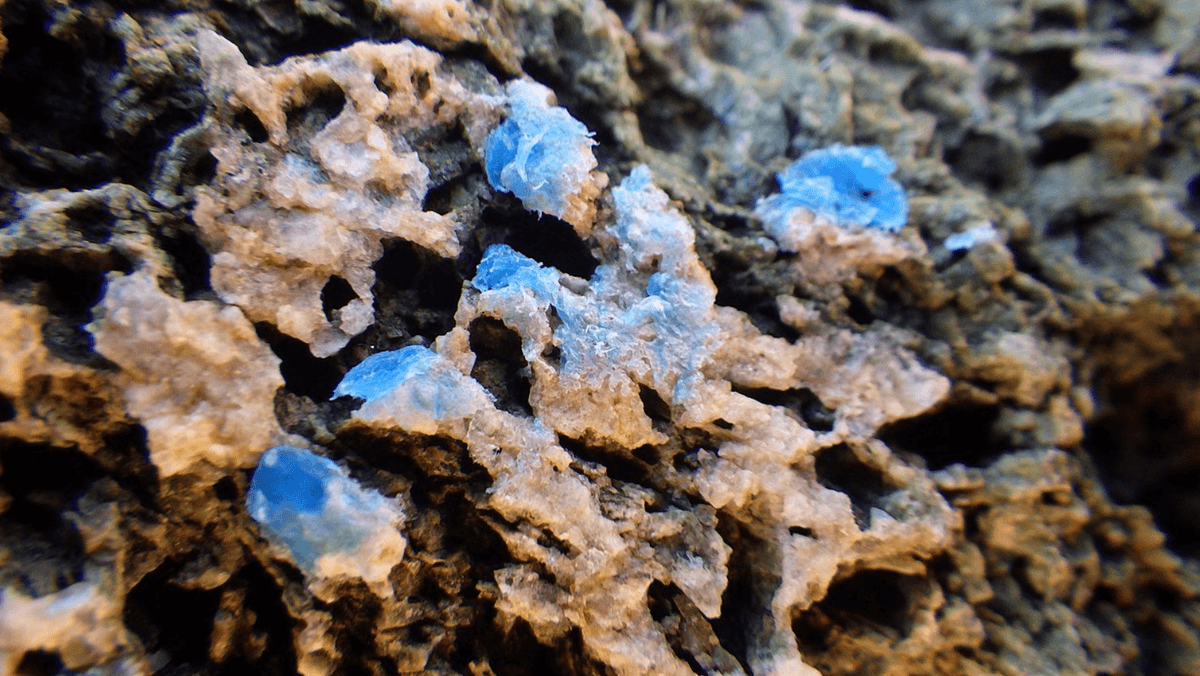
Scientists are becoming increasingly aware of plastic rocks that have been formed by trash-loaded waves crashing against rocky shores. Known as plasticrusts‚ the phenomenon was first reported in 2016 by Portuguese scientists who spotted unnaturally colored rocks on the idyllic island of Madeira off the northwest coast of Africa. In certain parts of the mid-intertidal shoreline‚ up to 10 percent of the rocks had become encrusted with flecks of polyethylene‚ the ubiquitous form of plastic used for soda bottles and food packaging.Since this initial discovery‚ plastic rocks have been seen in a variety of different coastal regions. Earlier this year‚ geologists reported the discovery of blue-green plastic rocks on a remote volcanic island off the Brazilian coast. Describing the find‚ Fernanda Avelar Santos‚ a geologist at the Federal University of Parana‚ told Reuters news agency: "This is new and terrifying at the same time‚ because pollution has reached geology."           IFLScience is not responsible for content shared from external sites.Plastic rocks can come in a few different forms. In some instances‚ the plastic has become physically integrated into the rocky sediment. However‚ it’s evident that rock and plastic can chemically fuse in some circumstances‚ tightly bonding the two materials at a molecular level.It’s not yet known whether plastic rocks have an impact on surrounding marine life‚ although researchers have pointed out that it’s likely to be affecting barnacles and other creatures that latch onto rocks.The Portuguese researchers in Madeira reported that tiny sea snails were seen grazing on top of the plasticrust. Experiments have shown that these animals struggle to tell the difference between algae‚ their natural food‚ and plastic‚ raising concerns that animals could be consuming the plastic. Given the known perils of consuming plastics‚ this highlights another new potential threat to the wider marine ecosystem. Whatever their impact‚ the presence of plastic rocks is a pretty damning indication of how prolific plastic pollution has become. It’s estimated that there are over 171 trillion pieces of plastic in the seas‚ which is a gob-smacking statistic when you appreciate that plastic has only been widely used for a century. Plasticrust is also a clear sign that human activity is starting to profoundly impact the geological record. When discussing how human activity is impacting the planet‚ scientists sometimes use the term Anthropocene‚ a proposed geological epoch that describes how humanity’s actions are changing the natural world. This includes everything from nuclear residue and greenhouse gas emissions to plastic pollution.Not everyone recognizes the term since geological timeframes usually work in colossal time scales‚ not mere centuries. However‚ the presence of plastic-infused rock provides very vivid evidence that human industrial activity is having some impact on the planet’s geology.
Like
Comment
Share
Science Explorer
Science Explorer
2 yrs

Lobster-Eyed Einstein Probe Will Capture The Whole X-Ray Sky
Favicon 
www.iflscience.com

Lobster-Eyed Einstein Probe Will Capture The Whole X-Ray Sky

Next month‚ all going well‚ a Long March rocket will launch a highly innovative X-ray telescope of a kind astronomers have been dreaming of for decades. The joint mission between the Chinese Academy of Sciences and the European Space Agency could overcome obstacles that have hindered X-ray astronomy. Yet the mission is so low-profile it has had almost no publicity‚ at least in English‚ until the last few days‚ and at time of writing there doesn’t even seem to be a Wikipedia article about it.The atmosphere absorbs high-energy photons‚ which is fortunate for life but has meant all X-ray astronomy needs to be done from satellites or rockets. That’s not the end of the challenges astronomers have faced in trying to explore this part of the spectrum either. X-ray sources are much more dynamic than those of visible light‚ or even radio waves. Consequently‚ it’s important to be looking in the right place at the right time.That requires either having a lot of telescopes pointing at a variety of objects‚ waiting for them to do something‚ or one instrument with a very wide-angle view of the sky. Inspired by the enormous field of view captured by lobsters’ eyes‚ physicists proposed a mechanism more than 30 years ago to scan enormous areas‚ which was swiftly welcomed‚ but has taken longer to implement.Co-inventor of the idea‚ Professor Keith Nugent‚ then of the University of Melbourne told The Age: “The reason it's got such a high profile is that other X-ray telescopes see a tiny‚ tiny part of the sky. Although normal telescopes see a small part of the sky‚ X-ray telescopes see an even smaller part.” Nugent’s idea was to use many cube corners‚ like the roadside reflectors that always bounce light back to the source‚ but to remove one face. In combination‚ these send light from vast areas of the sky onto a focal point. The image quality is poor‚ but sufficient to tell where something exciting is happening so other instruments know where to look.The first lobster-eye X-ray satellite was launched in 2020 but the Lobster-Eye X-ray Satellite was more of a proof-of-concept than an instrument capable of major research.Next year‚ however‚ should see a giant leap for lobsters‚ and those inspired by them. A dual X-ray telescope is to be launched. The Wide-field X-ray Telescope (WXT) component will use Nugent’s lobster eye to scan 3‚600 square degrees (10 percent of the sky) at a time‚ looking for anything dramatic. Over three 96-minute orbits‚ it will cover almost the entire sky. A more conventional Follow-up X-ray Telescope (FXT) with a 1-degree field of view will investigate whatever seems most promising at the time.Ground-based observatories will be kept constantly updated‚ so if the WXT finds anything that looks likely to be interesting at other wavelengths as well‚ they can join in.The project is being led by the Chinese Academy of Sciences (CAS)‚ who appear ambivalent about attention on their work outside China. On the one hand‚ they have named the mission the Einstein Probe. Associating the instrument with the famous physicist seems like a definite PR move. However‚ other forms of promotion are hard to find‚ other than one unpublished preprint describing the mission and a minimal-detail mention on the CAS website.In return for providing some of the hardware and some technical advice‚ the European Space Agency (ESA) has acquired access to 10 percent of the telescope’s data‚ and last week they decided to let the world know. Their media release not only reported the mission’s renaming‚ but revealed it is due to launch in January. Perhaps tactfully‚ in the light of the numerous delays to JWST and NASA’s own lobster-eye experiment‚ they didn’t mention this is only a few months behind schedule.“Thanks to its innovative design‚ Einstein Probe can monitor large swaths of the sky at a glance‚” said ESA’s Eric Kuulkers in the statement. “In this way we can discover many new sources while at the same time study the behavior of X-ray light coming from known celestial objects over long periods.”It is hoped the Einstein Probe will improve our knowledge of how common black holes are‚ and the way they feed on matter trapped by their gravity. By capturing X-rays released in the first moments of supernova explosions it may answer many questions about these events that not only produce stellar mass black holes‚ but seed the universe with elements.In combination with the LIGO detector network‚ the Einstein Probe could also help us learn about the events that produce gravitational waves‚ helping complete some of the most important work of the scientific giant after which it is named.
Like
Comment
Share
Science Explorer
Science Explorer
2 yrs

U Thant Island: Why Nobody Can Visit New York's Smallest Island
Favicon 
www.iflscience.com

U Thant Island: Why Nobody Can Visit New York's Smallest Island

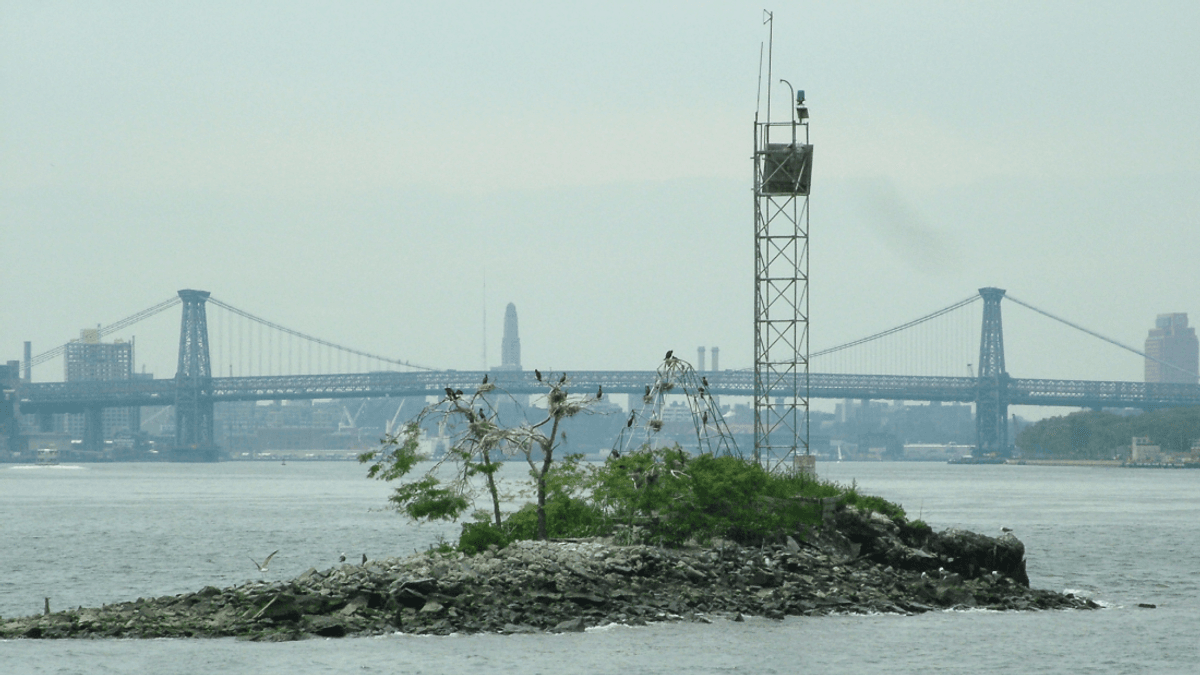
U Thant Island‚ officially known as Belmont Island‚ is a miniature spit of land that sits between New York’s Manhattan and Queens. It was heaved into existence when a piano manufacturer began construction on a tunnel beneath the East River‚ dumping the resulting materials until a half-acre island emerged from the water.The tunnel project was started by piano maker William Steinway in the 1890s and completed by August Belmont Junior‚ explains Atlas Obscura‚ which is why the resulting landfill became officially known as Belmont Island when it was finished in the early 1900s. However‚ come 1977‚ it was rented and renamed by the Buddhist group the "Peace Meditation At The United Nations” in honor of Secretary-General U Thant of the UN‚ three years after his death.The metal structures that can be seen sticking up from the small patch of greenery on U Thant Island include the “oneness arch‚” a lattice of steel tubing that stretches up to 9 meters (30 feet) above the ground. A vessel is buried underneath it containing some of U Thant’s statements about peace and spirituality‚ as well as his favorite tie clasp.A symbol of spirituality‚ the “living shrine” was visited periodically by the Peace Mediation At The UN group for ceremonies and maintenance. This continued until around the 1990s due to the island’s proximity to the United Nations building that was hiking up its security at this time.Secretary General U Thant's dedication on U Thant Island.Image credit: Photo Jeff via Flickr‚ CC BY-NC 2.0Google “U Thant Island” and you’ll see a lot of mention of the fact that nobody’s allowed to visit it‚ but it’s not just because of security. Despite its small size‚ U Thant Island is a vital habitat for some of New York’s protected birds. Its remote location and vegetation mean it’s a convenient spot for nesting and a safe place to rest for birds that have made a long journey to reach it.In a city as busy and urban as New York‚ even small sanctuaries like U Thant Island represent a vital habitat.Migrating birds that visit U Thant Island include cormorants‚ and the New York State Government’s efforts to conserve them have seen the population double from 2000 to 2011. The surrounding waters are a popular spot for fishers trying to catch deep-swimming striped bass and bluefish‚ but since the island is officially a Recognized Ecological Complex under the city's Waterfront Revitalization Program‚ it’s a no-go zone for human feet.The Hudson River is a spawning ground for striped bass‚ which are an anadromous fish‚ meaning they have to move between saltwater and freshwater to breed. Therefore‚ U Thant Island in the East River – that’s attached to the Hudson‚ and isn't technically a river – is probably a passing point for bass trying to get there. They’ll have to contend with the voracious appetites of predatory bluefish that use their sharp teeth and powerful jaws to munch on everything from fish to crustaceans and squid.So as you can see‚ U Thant Island's got a lot going on for a small spit of landfill.[H/T: Untapped New York]
Like
Comment
Share
Science Explorer
Science Explorer
2 yrs

This Peculiar Mammal Hibernates In A Self-Made Icy Bat Cave
Favicon 
www.iflscience.com

This Peculiar Mammal Hibernates In A Self-Made Icy Bat Cave

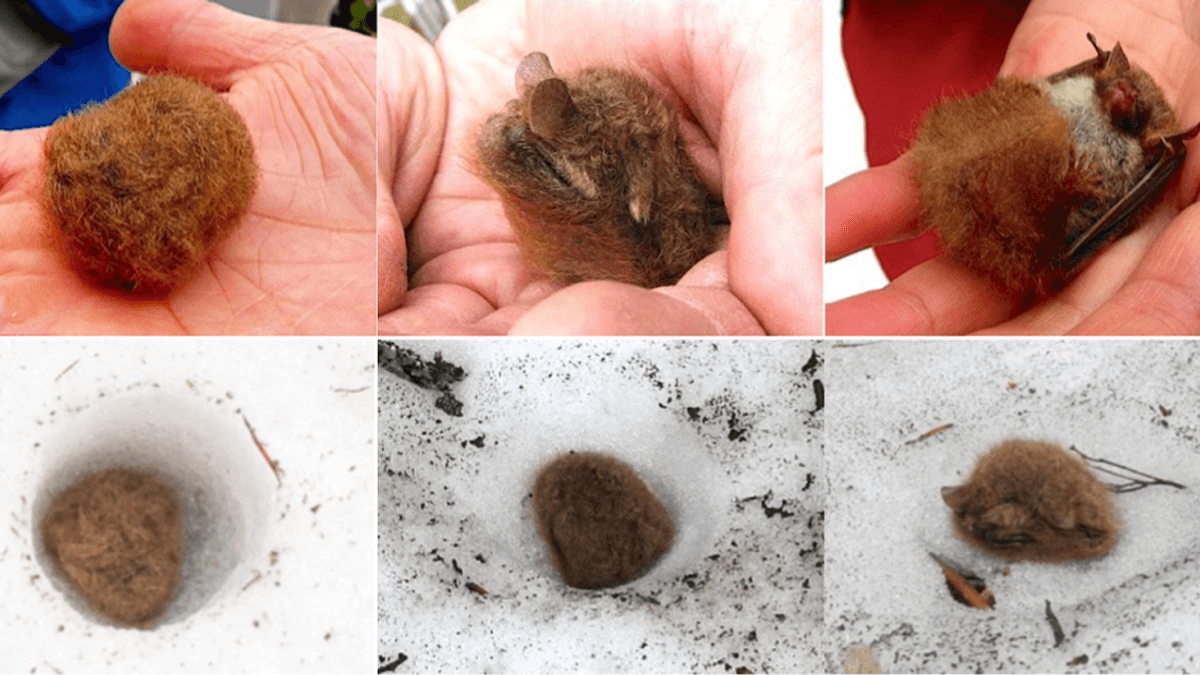
Bats are one of a handful of mammals known to hibernate in snow‚ with one species creating little icy bat caves for themselves when winter conditions make it tough to survive as a warm-blooded animal. When the behavior was confirmed in 2018‚ the Ussurian tube-nosed bat joined polar bears as the only two mammals known to hibernate in snow.Ussurian tube-nosed bats (Murina ussuriensis) are small vesper bats that weigh about as much as two sugar cubes. They hunt for insects in their native ranges across the Kurile Islands‚ Sakhalin‚ south-eastern Siberia‚ Korea‚ and Japan.The bats experience subfreezing temperatures during the winter months – but for a long time‚ nobody knew where they were waiting it out. Some assumed they must be hiding in trees or rock crevices‚ places they’re known to roost at other times of the year‚ but there had been reports of the bats being found resting on snowbanks.To investigate‚ researchers got in touch with people who had reported seeing the snow-snoozing bats‚ and also went out in search of bats themselves. They were able to collect 22 accounts and find 37 bats to study in situ. IFLScience is not responsible for content shared from external sites.The bats were curling up into a tight ball so that their heads were completely tucked under the tail membrane. The posture meant some people were picking the animals up not realizing they were bats.To address the possibility that the bats may have fallen onto the snow from an alternative hibernating position‚ the researchers estimated how long it would take to melt the kinds of holes the bats were being found in. Given some were as deep as 6 centimeters (2.36 inches)‚ they concluded that it would take too long for the sit-and-sink hypothesis to explain. Thermography also showed that the animals had low surface body temperatures and only warmed up shortly before taking off after dark.“Snow surfaces are softer and lighter at this time of the year15‚ so the bats easily make a small cavity in the snow‚” wrote the authors. “A bat’s duration of confinement would depend on how much snow further accumulates above the bat and how long the snow takes to melt. Thus‚ it may last only a few days‚ or continue for possibly longer than half a year.”As for why a bat might choose to snooze in snow banks‚ the researchers suggest key three benefits to denning like a polar bear:Water loss should be minimal as the animals are tucked into small snow cavities‚ and they haven’t got far to search if they wake up thirstyPredators are unlikely to search for prey in the snow because most animals avoid it‚ so looking would be energetically expensive and likely fail.The icy dens actually provide more thermal stability compared to tree cavities.“We collected the details of those accounts and used our own observations to conclude that these bats hibernate in snow‚” wrote the authors. “To our knowledge‚ this is the first evidence of hibernation in snow for bats‚ and second for mammals‚ following polar bears (Ursus maritimus) denning in snow.”Vesper bats are the winners of several unusual firsts for these flying animals. Just ask this well-endowed bat that's the only mammal known to sexually reproduce without penetration.The study is published in the journal Scientific Reports.
Like
Comment
Share
Showing 106204 out of 115777
  • 106200
  • 106201
  • 106202
  • 106203
  • 106204
  • 106205
  • 106206
  • 106207
  • 106208
  • 106209
  • 106210
  • 106211
  • 106212
  • 106213
  • 106214
  • 106215
  • 106216
  • 106217
  • 106218
  • 106219
Advertisement
Stop Seeing These Ads

Edit Offer

Add tier


Select an image
Delete your tier
Are you sure you want to delete this tier?

Reviews

In order to sell your content and posts, start by creating a few packages. Monetization

Pay By Wallet

Payment Alert

You are about to purchase the items, do you want to proceed?

Request a Refund