YubNub Social YubNub Social
    #music #tew #tuba #euphonium #tew2026 #militarymusic #armymusic #armyband #band #concertband #uk #tusab #orchestra #armyorchestra #quartet
    Advanced Search
  • Login
  • Register

  • Night mode
  • © 2026 YubNub Social
    About • Directory • Contact Us • Developers • Privacy Policy • Terms of Use • shareasale • FB Webview Detected • Android • Apple iOS • Get Our App

    Select Language

  • English
Night mode toggle
Featured Content
Community
New Posts (Home) ChatBox Popular Posts Reels Game Zone Top PodCasts
Explore
Explore
© 2026 YubNub Social
  • English
About • Directory • Contact Us • Developers • Privacy Policy • Terms of Use • shareasale • FB Webview Detected • Android • Apple iOS • Get Our App
Advertisement
Stop Seeing These Ads

Discover posts

Posts

Users

Pages

Blog

Market

Events

Games

Forum

Science Explorer
Science Explorer
2 yrs

Chimps Seen Snatching An Eagle's Food In A Very Rare Scavenging Encounter
Favicon 
www.iflscience.com

Chimps Seen Snatching An Eagle's Food In A Very Rare Scavenging Encounter

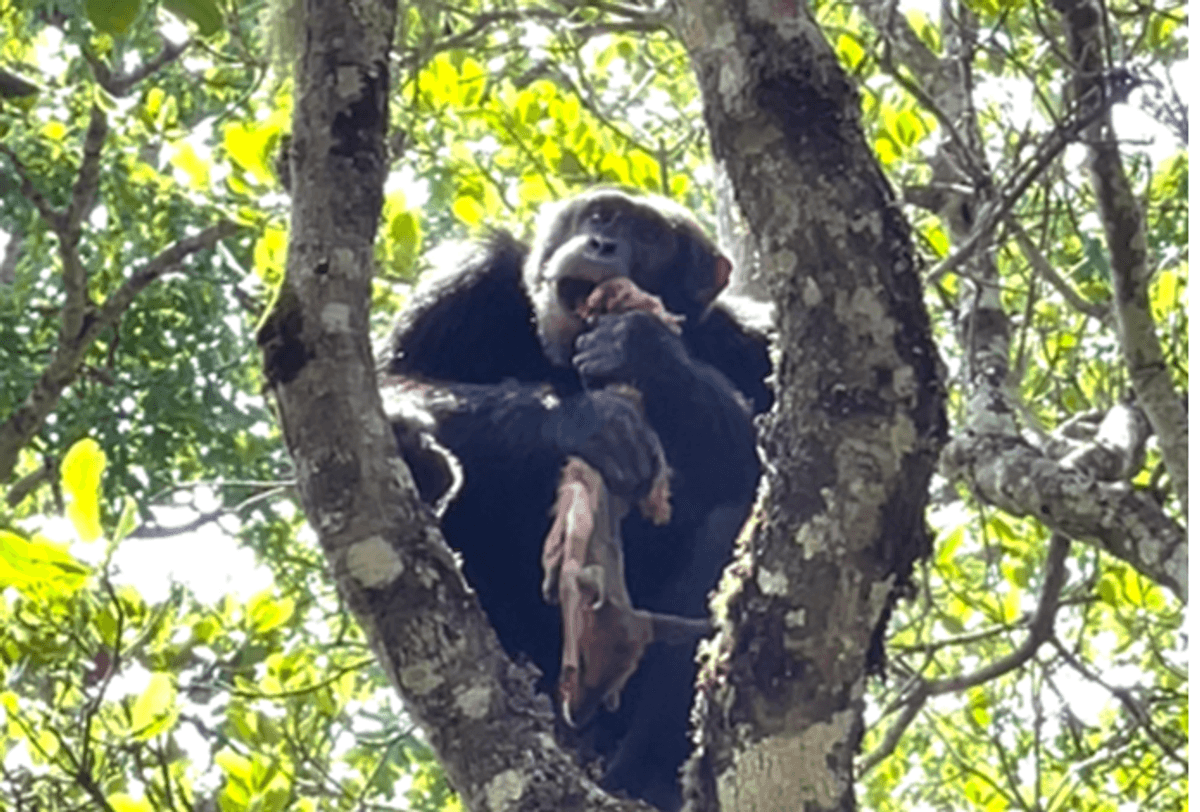
Chimpanzees have been spotted engaging in some extremely rare scavenging behavior in the wild. In Tanzania‚ researchers watched on as an alpha chimp appeared to snatch the body of a young antelope away from an eagle‚ before eating its meat with other chimps‚ stripping the body down to just a skull. The unusual observation was made in Issa Valley in western Tanzania. This is a rich habitat that’s home to eastern chimpanzees as well as many other species of mammals‚ including predators like lions‚ leopards‚ hyenas‚ and spotted wild dogs.Chimpanzees are primarily vegetarians‚ but they’re known to occasionally consume meat from animals they’ve hunted down themselves. Scavenging like this‚ however‚ is very rare. “East African chimpanzees are endangered and this type of subsistence is very rare. Only specific populations have been observed confrontationally scavenging‚” Sam Baker‚ lead study author and bioanthropologist and University College London‚ told IFLScience.The incident unfolded in the early afternoon of October 24‚ 2021‚ when Baker and his field assistant were following a party of nine chimpanzees. Suddenly‚ an alpha chimp called Imba ran out of the thick forest into an open patch of long grass‚ from which a crowned eagle (Stephanoaetus coronatus) was seen flying away. The researchers then saw Imba with the carcass of a juvenile bushbuck (Tragelaphus scriptus)‚ a species of antelope native to the area‚ in his mouth. The altercation was not directly observed‚ but the scientists believe the eagle must have just hunted the bushbuck and dropped the body as a result of Imba’s intimidating presence. Imba took his “prize” and climbed up a tree to enjoy the fruits of his labor. Aware of the commotion‚ the rest of the group followed him and he quickly lost possession of the carcass. Some tusselling broke out and other males vied for the meat‚ while others begged. At least four individuals were observed consuming the bushbuck.Eventually‚ Imba regained possession of the body and finished eating it. After a few hours‚ all that remained was the bushbuck’s skull. “The event resulted in the complete consumption of the carcass‚ supporting the existence of confrontational scavenging in Issa chimpanzees‚ the first recorded at Issa since habituation was completed in 2018. Crucially‚ if we acknowledge that chimpanzees are capable of confrontational scavenging‚ then previously published ‘hunts’ may have been scavenging unseen by human observers who arrived after the event‚” the study authors write.It’s possible this event was purely opportunistic. Alternatively‚ it might be part of a cultural trait that’s unique to the chimps of Issa. Either way‚ the fascinating behavior might shed some light on how and when early humans initially started getting their hands on meat‚ which may have been a key turning point in their evolution. As explained by the study authors‚ previous research “suggests confrontational scavenging provided a vital stepping-stone to hominin hunting − a transition that would propel humans from ‘marginal scavengers’‚ reliant on the ‘leftovers’ of carnivores‚ to successful hunter-scavengers proficient in aggressively securing fleshed carcasses from large predators.”The study is published in the journal Primates.

Like
Comment
Share
Strange & Paranormal Files
2 yrs

Leading biologist explains why do we feel when someone is looking at our back
Favicon 
anomalien.com

Leading biologist explains why do we feel when someone is looking at our back

Have you ever felt like you were being watched from somewhere? This has happened to almost everyone. This is actually a phenomenon that is universal for most people. More than 80% of women and almost three-quarters of men surveyed in the UK‚ US and Scandinavia said they had experienced this phenomenon and turned around to find that someone was actually staring at them. Numerous studies have proven that this sensation can be reproduced under strict laboratory conditions. And those people whose profession is observing someone – photographers‚ detectives and even snipers‚ said that they repeatedly noticed how their target felt their gaze on them‚ turned around and noticed their observation. This ability can improve with practice. Some martial arts teachers even specifically train their students to be more sensitive to back gazes and accurately determine where they are coming from. People have known about this phenomenon for a very long time. Children are taught from an early age that “staring” at others is impolite because it makes the people being stared feel uncomfortable. And most adults understand the truth of this and will avoid looking closely at someone for fear that they will sense it. Being caught staring at a stranger is awkward‚ a social mistake common in almost every culture. At the same time‚ official science usually rejects this as superstition or “belief in magic‚” classifying this phenomenon as “paranormal phenomena‚” ignoring or ridiculing it. Rupert Sheldrake However‚ British biologist‚ biochemist‚ and parapsychologist Rupert Sheldrake is confident that there is actually nothing magical about this phenomenon‚ we just don’t yet fully know how our brain and our body work‚ reports dailymail.co.uk. “I am a biologist. And I am convinced that this phenomenon is not only worthy of serious study‚ but that it might help us to unlock remarkable basic secrets about the way our brains work. “I’m far from being the only researcher investigating this. Since the late 1980s‚ numerous experiments have been carried out in ‘direct looking’. This usually involves people working in pairs‚ one blindfolded and sitting with their back to the other. “The subjects have to guess quickly‚ in less than 10 seconds‚ whether they are being looked at or not. The sequence of ‘looking’ and ‘not-looking’ trials is randomised‚ and a session involves 20 trials‚ over about 10 minutes. “It’s an ideal experiment for schools and it has been popularised by reports in New Scientist magazine‚ on the BBC and the Discovery channel. The results have also been published in scientific journals. “A pattern has emerged‚ over tens of thousands of trials. People are right about 55 per cent of the time — significantly better than chance guesswork. One experiment at an Amsterdam science centre has involved about 40‚000 participants.” The children were especially good at perceiving. According to Sheldrake‚ in one German school‚ 8-year-old and 9-year-old students showed a 90% guessing rate. The main question is: how? How do we know that we are being watched‚ what feeling warns us about this? Science doesn’t have a definitive answer‚ but after more than 20 years of experiments and case studies‚ Sheldrake is confident he has the answer. The feeling of being watched is “directed”. That is‚ when you sense that someone is looking at you‚ you also have a strong intuition about where they are—behind you‚ to the side‚ or above you. This means that staring is more like a sound: once you are aware of it‚ you are also aware of where it is coming from. We know that sound travels in waves through the air and is perceived by our brain through our ears. So what part of our body perceives the feeling of being watched? The first and most obvious version assumes that the sensor is our skin. But most of us are fully clothed in public‚ and many people have hair that completely covers the back of their heads. At the same time‚ for the sensation of looking at the back‚ it seems to make no difference whether you wear a scarf or have your collar turned up‚ whether your hands are open or you are wrapped in a coat and gloves. According to Sheldrake‚ it actually has something to do with the presence of a weak electromagnetic field around our bodies. “Our bodies‚ especially our brains‚ generate electricity. That’s how an ECG scan or electro-encephalograph works: electrodes on the skull pick up the electric field set up by activity in the brain. “My best theory‚ and this is still speculative‚ is that our own electromagnetic field registers a disturbance when people look at us. We’re not actively aware of it — the phenomenon occurs at a sub-conscious or unconscious level‚ but the ‘biofield’ picks it up. “And that raises another question: what is it‚ exactly‚ that the body is sensing? “The conventional theory of sight is that it’s something passive and dealt with internally. Light bounces off an object and into the pupil of the eyes‚ onto the retinas. “This signal is translated by the brain‚ which generates a picture that is actually locked inside our skulls‚ though we perceive it as being outside us and all around. “Neuroscientists can’t fully explain how our nerve cells cause this to happen‚ though the basic theory is widely accepted in science. It states that each one of us carries a constantly changing image of the world inside our heads‚ though this vanishes‚ of course‚ as soon as we close our eyes. ” This is the theory of ‘intromission’‚ the inward movement of light followed by the creation of ‘representations’‚ like virtual reality displays inside our heads. “Not only is the process incompletely understood‚ but it is counter-intuitive. The way our perception works is so vivid and concrete‚ it really does feel as though we’re experiencing the actual world around us‚ instead of reconstructing the visual reality in our brains.” Dr Rupert Sheldrake is a biologist and author of more than 100 technical papers in scientific journals and nine books. For more information‚ go to sheldrake.org. To share your own stories of being stared at‚ email Dr Sheldrake at sheldrake@sheldrake.org. He is particularly interested to hear about directional responses to being watched through CCTV or through mirrors. The post Leading biologist explains why do we feel when someone is looking at our back appeared first on Anomalien.com.
Like
Comment
Share
National Review
National Review
2 yrs

The Race War That Isn’t
Favicon 
www.nationalreview.com

The Race War That Isn’t

A brief look at the real crime data.
Like
Comment
Share
National Review
National Review
2 yrs

The Biden Administration’s Latest Assault on the Pro-Life Movement
Favicon 
www.nationalreview.com

The Biden Administration’s Latest Assault on the Pro-Life Movement

Depriving pregnancy resource centers of funds is unconstitutional‚ and of a piece with the administration’s broader post-Roe campaign against pro-lifers.
Like
Comment
Share
National Review
National Review
2 yrs

The Ongoing Campaign of Anti-Trump Subterfuge 
Favicon 
www.nationalreview.com

The Ongoing Campaign of Anti-Trump Subterfuge 

It’s Watergate-break-in level skullduggery. 
Like
Comment
Share
Twitchy Feed
Twitchy Feed
2 yrs

Monday Morning Meme Madness
Favicon 
twitchy.com

Monday Morning Meme Madness

Monday Morning Meme Madness
Like
Comment
Share
Trending Tech
Trending Tech
2 yrs

Using Beeper Mini means stealing iMessage from Apple – and you need to read this
Favicon 
bgr.com

Using Beeper Mini means stealing iMessage from Apple – and you need to read this

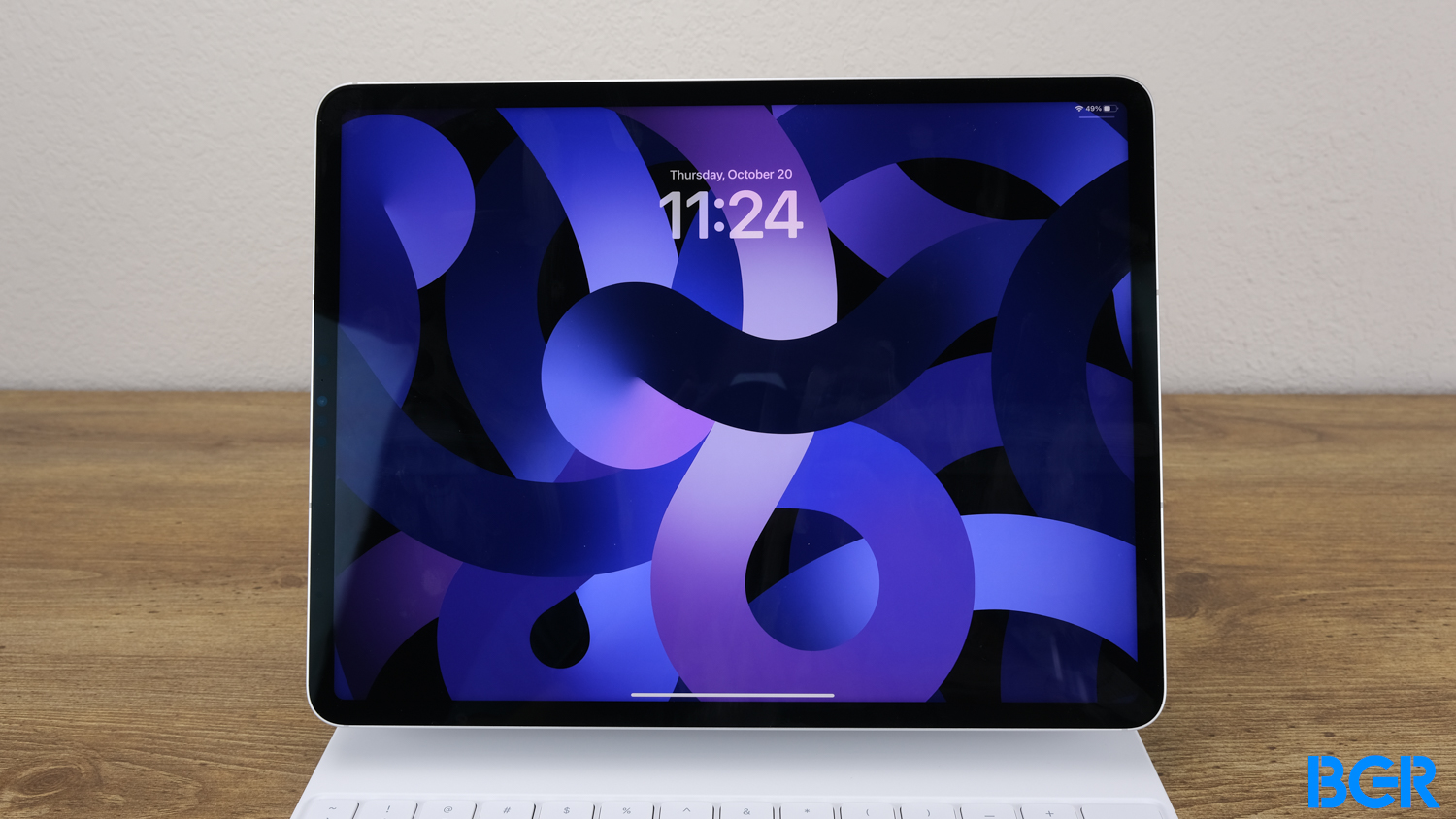
Beeper Mini was the app of the moment last week‚ the breakthrough cross-platform messaging app that brought secure iMessage support to Android. Beeper found a way to tap into Apple's iMessage system and wanted to have FaceTime working on Android next. I said that Beeper Mini's iMessage trick would continue to work until Apple put a stop to it on Friday‚ and that happened faster than I thought. Apple intervening means there's little hope of getting Beeper Mini to support iMessage again. Apple will only continue to block and patch loopholes that Beeper Mini would develop. It's about the security of the app and the users on iMessage‚ Apple said. This also made me realize that using Beeper Mini practically means you're stealing iMessage from Apple. I don't know who needs to hear this‚ but iMessage is not a standard of communication. You're not entitled to have iMessage on your devices unless you pay for it. And you pay for it by buying into Apple's ecosystem‚ starting with the iPhone. Not by buying a Beeper Mini subscription. Continue reading... The post Using Beeper Mini means stealing iMessage from Apple – and you need to read this appeared first on BGR. Trending Right Now: Netflix new releases: We say goodbye to The Crown‚ plus 5 other titles for your watch list 5 hidden iOS 17.2 features coming to your iPhone next week 3 new Microsoft Copilot features I can’t wait to try
Like
Comment
Share
Trending Tech
Trending Tech
2 yrs

Samsung Display is about to begin work on Apple’s first foldable screens
Favicon 
bgr.com

Samsung Display is about to begin work on Apple’s first foldable screens

It's been a few years since we first heard rumors about Apple's foldable strategy. While Samsung‚ Motorola‚ and other brands already sell foldable devices‚ Cupertino decided to take the long route and wait until this technology matures. This foldable Apple product could be an iPhone or an iPad/MacBook hybrid. But‚ so far‚ we only know that this release is at least a couple of years ahead of us‚ so nothing is concrete at the moment. That said‚ while a foldable Apple product might not be nearing its release‚ it doesn't mean Apple and its manufacturers aren't doing everything they can to ship this product as soon as possible. In the latest report by the Korean publication The Elec‚ Samsung is reorganizing its teams to focus on the capabilities to respond to Apple's foldable initiatives. According to the publication‚ the South Korean manufacturer wants a new source of income. Despite the leadership with OLED panels‚ Samsung aims to secure Apple orders for future foldable products since both Samsung and LG are working on projects for Apple foldable products‚ including 20.25-inch panels. A 20-inch product might be Apple's first foldable device Several DSCC‚ Bloomberg‚ and Omdia reports have corroborated this future device. They believe Apple is working on a hybrid foldable iPad/MacBook with a 20-inch display. The latter stated that this device could be released by 2026. In 2022‚ DSCC Ross Young shared that suppliers were in talks with Apple to create a 20-inch foldable of some kind. The idea would be to bring together the usefulness of a notebook with a singular display like you might see on the iPad. Young even went so far as to say that the foldable MacBook Hybrid could serve as a true dual-use product. It could act as a notebook with a full-size keyboard while also being viable as a standalone monitor when not folded or used with an external keyboard. Young also said the device could offer up to 4K resolution or higher. Then‚ in his Power On newsletter‚ Mark Gurman corroborated Young’s reports. He said Apple might very well go with a foldable 20-inch screen with a physical keyboard or a virtual keyboard on one side of the folding display as the company explored a dual-screen setup. We're still a few years away from Cupertino's first foldable product‚ but it's not more a question of if but when. Don't Miss: Huge Apple leak shows 42-inch OLED display‚ foldable iPad‚ and more in the works The post Samsung Display is about to begin work on Apple’s first foldable screens appeared first on BGR. Trending Right Now: Netflix new releases: We say goodbye to The Crown‚ plus 5 other titles for your watch list 5 hidden iOS 17.2 features coming to your iPhone next week 3 new Microsoft Copilot features I can’t wait to try
Like
Comment
Share
Science Explorer
Science Explorer
2 yrs

Tsunamis up to 90 feet high smash into New Zealand every 580 years‚ study finds
Favicon 
www.livescience.com

Tsunamis up to 90 feet high smash into New Zealand every 580 years‚ study finds

A new method of assessing tsunami risk in New Zealand finds that giant waves could hit the country's shores once every 500 years.
Like
Comment
Share
Science Explorer
Science Explorer
2 yrs

Hammerhead sharks are vanishing from their mountain homes in the Gulf of California‚ divers say
Favicon 
www.livescience.com

Hammerhead sharks are vanishing from their mountain homes in the Gulf of California‚ divers say

Scalloped hammerhead sharks used to seek refuge at two Mexican seamounts‚ but it appears fishing has killed them off.
Like
Comment
Share
Showing 106896 out of 114863
  • 106892
  • 106893
  • 106894
  • 106895
  • 106896
  • 106897
  • 106898
  • 106899
  • 106900
  • 106901
  • 106902
  • 106903
  • 106904
  • 106905
  • 106906
  • 106907
  • 106908
  • 106909
  • 106910
  • 106911
Advertisement
Stop Seeing These Ads

Edit Offer

Add tier


Select an image
Delete your tier
Are you sure you want to delete this tier?

Reviews

In order to sell your content and posts, start by creating a few packages. Monetization

Pay By Wallet

Payment Alert

You are about to purchase the items, do you want to proceed?

Request a Refund