YubNub Social YubNub Social
    #astronomy #jesuschrist #nightsky #moon #liberals #fullmoon #planet #christ #jesus #jupiter #americafirst #socialists #easter #resurrection #christisrisen
    Advanced Search
  • Login
  • Register

  • Day mode
  • © 2026 YubNub Social
    About • Directory • Contact Us • Developers • Privacy Policy • Terms of Use • shareasale • FB Webview Detected • Android • Apple iOS • Get Our App

    Select Language

  • English
Night mode toggle
Featured Content
Community
New Posts (Home) ChatBox Popular Posts Reels Game Zone Top PodCasts
Explore
Explore
© 2026 YubNub Social
  • English
About • Directory • Contact Us • Developers • Privacy Policy • Terms of Use • shareasale • FB Webview Detected • Android • Apple iOS • Get Our App
Advertisement
Stop Seeing These Ads

Discover posts

Posts

Users

Pages

Blog

Market

Events

Games

Forum

Pet Life
Pet Life
2 yrs

Potawatomi Zoo Welcomes 3 Endangered African Painted Dog Pups‚ Foster Golden Retriever Helps Raise Them
Favicon 
www.dogingtonpost.com

Potawatomi Zoo Welcomes 3 Endangered African Painted Dog Pups‚ Foster Golden Retriever Helps Raise Them

The Potawatomi Zoo in South Bend‚ Indiana welcomed and officially introduced three new African Painted Dog pups to their animal family on December 13‚ Wednesday.
Like
Comment
Share
Hot Air Feed
Hot Air Feed
2 yrs

Electricity Becoming Less Reliable
Favicon 
hotair.com

Electricity Becoming Less Reliable

Electricity Becoming Less Reliable
Like
Comment
Share
Science Explorer
Science Explorer
2 yrs

Hyperloop One‚ A Pipe Dream Of Elon Musk‚ Is Shutting Down
Favicon 
www.iflscience.com

Hyperloop One‚ A Pipe Dream Of Elon Musk‚ Is Shutting Down

Hyperloop One‚ the company behind a futuristic transportation system once touted by Elon Musk‚ is calling it quits. Hyperloop One merged with a shell company earlier this year‚ according to documents seen by Bloomberg. As part of the merger‚ the company will reportedly sell off its remaining assets‚ shut its offices‚ and sack its remaining employees by the end of 2023. Game over‚ it seems.Hyperloop One was a high-profile start-up that dreamt of blasting people from city to city through nearly airless tubes.Musk was one of the early advocates of the high-speed transport system‚ which seemed like something straight out of a sci-fi movie. In 2013‚ he started putting together concepts for the Hyperloop using teams of engineers from his other companies‚ SpaceX and Tesla. That same year‚ Musk and his team published the Hyperloop Alpha white paper‚ sparking a huge amount of interest in the technology. “Hyperloop is a new mode of transport that seeks to change this paradigm by being both fast and inexpensive for people and goods. Hyperloop is also unique in that it is an open design concept‚ similar to Linux. Feedback is desired from the community that can help advance the Hyperloop design and bring it from concept to reality‚” the paper reads.“Hyperloop consists of a low-pressure tube with capsules that are transported at both low and high speeds throughout the length of the tube. The capsules are supported on a cushion of air‚ featuring pressurized air and aerodynamic lift. The capsules are accelerated via a magnetic linear accelerator affixed at various stations on the low-pressure tube with rotors contained in each capsule‚” it continues.Riding off the hype generated by Musk‚ the company Hyperloop Technologies was established in 2014. It then changed its name to Hyperloop One in 2016 and then to Virgin Hyperloop One after being acquired by Richard Branson’s company. Millions of dollars were poured into the company and some half-decent progress was made‚ including crewed tests on their 500-meter (1‚640-foot) track back in 2020.However‚ the technology met several significant engineering hurdles. In 2022‚ the company announced a major rejig of strategy‚ saying it would focus on transporting cargo instead of human passengers. A series of job cuts followed and Branson sold Virgin's stake in the project‚ reverting the company name to Hyperloop One.Despite capturing the attention of the world’s biggest tech investors – not to mention nearly half a billion dollars in funding – it appears the pipe dream of Hyperloop One was too ahead of its time (or perhaps just an overly ambitious pipedream). 
Like
Comment
Share
Science Explorer
Science Explorer
2 yrs

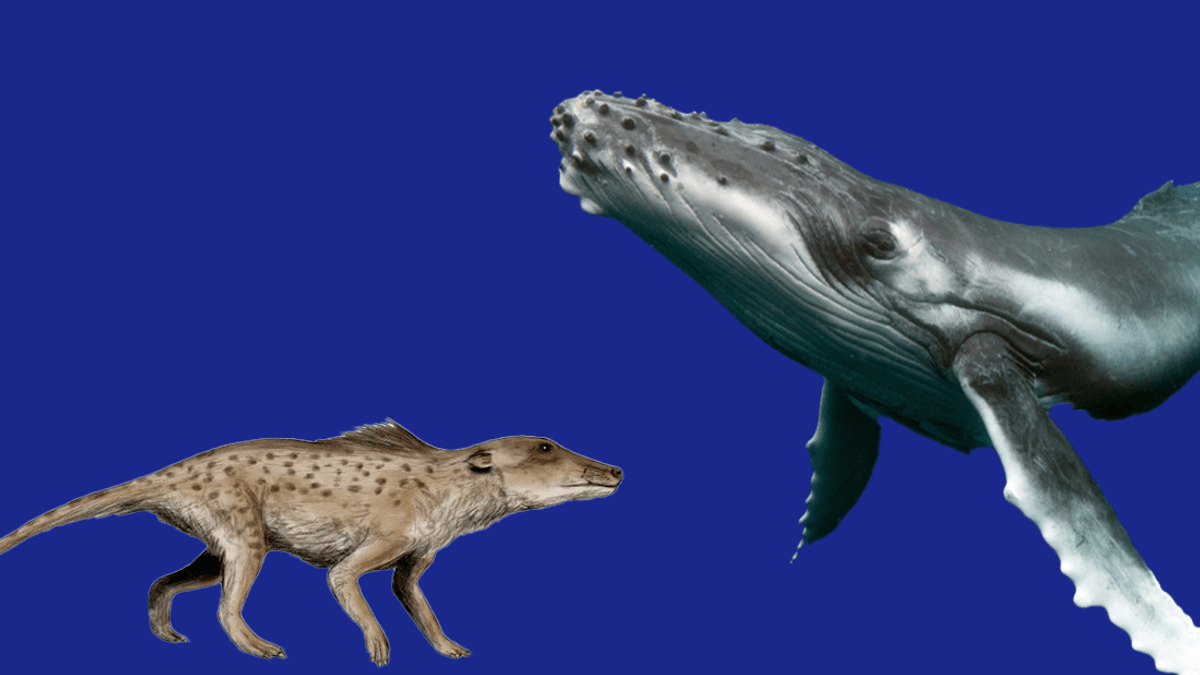
How And Why Did Cetaceans Move From Land To Water?
Favicon 
www.iflscience.com

How And Why Did Cetaceans Move From Land To Water?

Cetaceans are a group of animals containing whales‚ porpoises‚ and dolphins‚ including some of our planet’s most iconic aquatic mammals. However‚ despite living their lives in water‚ these creatures must breathe air to survive. This seems like a pretty inconvenient way of going about things – especially considering the fact that their ancient ancestors actually lived on land. So why did cetaceans make this evolutionary U-turn and decide to take a permanent dip?Meet the cetacean family treeThe earliest cetaceans are known from fossils found in Pakistan and India. The cetacean species Pakicetus lived about 50 million years ago and was a wolf-sized‚ four-legged land animal that lived near riverbanks and lakes. Wear on their teeth indicates that pakicetids hunted fish.Then‚ 49 million years ago came the arrival of Ambulocetus. These creatures had more flipper-like limbs and were 3.4 to 3.7 meters (11 to 12 feet) long.Next came Remingtonocetidae‚ with fossils dated 48-41 million years ago. They had a powerful tail‚ short legs‚ and a long snout.Protocetids lived in the middle Eocene‚ around 49-37 million years ago. One genus called Rodhocetus lived around 47 million years ago. Their nostrils were further back on their snouts and they used their tails for propulsion while swimming.Basilosaurids emerged around 41 million years ago and were the first to be completely aquatic. Their nostrils were pushed back‚ resembling a blowhole‚ and their tiny hind limbs would have been pretty useless on land. The genus Basilosaurus translates as “king lizard” – they were originally thought to be dinosaurs! Another genus‚ Dorudon‚ gave birth to their young underwater.Modern cetaceans emerged around 34-30 million years ago and are split into two categories‚ mysticetes (baleen whales) and odontocetes (toothed whales).Why switch from the land to the water?So why did cetaceans spurn a land-based lifestyle in the first place? As Dr Curt Stager told North Country Public Radio in 2016: “It actually makes perfect sense really to an evolutionary biologist.”“The really kind of the underlying principle here would be that whenever there’s an opportunity‚ based on your body design for mutations‚ if there’s an opportunity to make a living‚ something’s probably gonna move in there and do it‚” Stager explained. “And if there was a niche in the water‚ something that got adaptations that let it survive there‚ it will survive there.”One 2018 paper explored the question of why land animals began to live in the sea‚ finding 69 cases of this happening. The study suggests that this phenomenon is related to an abundance of food in the watery depths.   How cetaceans' bodies changed for life in the waterFirst of all: cetaceans are mammals‚ and mammals nurse their young on milk‚ so how on earth does this work underwater? Well‚ their nipples are hidden under folds of skin called mammary slits‚ inverted to make them more hydrodynamic. Although footage of breastfeeding is rare‚ sperm whale calves have been observed making their way into the mammary slit using their lower jaw to get at some thick‚ fatty nourishment.As alluded to before‚ cetacean nostrils gradually migrated from the snout to a location on top of the skull‚ becoming blowholes. Cetaceans also gradually lost the need for hind limbs over time‚ so did away with them‚ and their front limbs became the flippers that now propel them through the water.Toothed whales have evolved echolocation‚ which helps with navigation and finding prey in waters where visibility is low. They generate sounds in their heads‚ which bounce off things and are thus reflected back to the whale. This lets them piece together a picture of what’s going on around them.Baleen whales get their name from the comb-like filter-feeding apparatus inside their mouths that they have instead of teeth. This allows them to feed on teeny weeny prey such as krill and plankton‚ gulping down gigantic mouthfuls of water and then pushing it out again to trap their dinner in their mouth. Baleen is made of keratin‚ much like human hair and fingernails.How cetaceans’ genes changed during their aquatic metamorphosis was explored in a paper published in 2019. Researchers screened for genes that code for proteins that were lost somewhere along the evolutionary timeline‚ before toothed whales and baleen whales became distinct but after cetaceans split from Hippopotamidae – fun fact‚ whales and hippos are each other’s closest relatives alive today!The team found 85 inactivated genes‚ some of which could be related to aquatic adaptations. One of these was SLC4A9‚ which is involved in the secretion of saliva – food doesn’t really need much else to lubricate and wash it down when you’re gulping it down with a nice big mouthful of seawater. Blood coagulation-associated factors F12 and KLKB1 were also lost. This could be because diving induces blood vessels to narrow‚ and this happening frequently could increase the risk of blood clots.A timeline of cetacean evolution“Within eight million years‚ the ancestors of whales go from being fully terrestrial‚ such as the four-legged‚ furry Pakicetus which lived around the edge of the Tethys Sea‚ to fully aquatic‚” explained cetacean researcher Dr Ellen Coombs in a 2022 statement. “This is super quick in evolutionary terms.”Coombs is lead author of a paper on what cetacean skulls tell us about the story of their evolution. “We've gathered the most expansive cranial data set for whales which exists on the planet. Our data came from both specimens of living species and fossilized whales‚” Coombs said.This data spanned around 53 million years‚ cetaceans’ whole evolutionary history. This included 88 living species‚ representing about 95 percent of cetaceans alive today‚ and 113 fossil species.“Because the cranium captures many of the most extreme shifts in feeding‚ respiration‚ and sensory structures‚ it is ideal for understanding these rapid and radical changes‚ but no previous study has reconstructed the evolution of the cetacean cranium through the full breadth of their extinct and living diversity‚” added Coombs.Examining these cetacean noggins revealed that cetaceans evolved in three bursts: one 47.8-42 million years ago in the late Eocene‚ another around 39 million years ago in the mid to late Oligocene‚ and finally a lesser one around 18-10 million years ago in the mid Miocene.The first burst involved ancient cetacean ancestors called archaeocetes first dipping their toes into an aquatic lifestyle alongside walking about on land‚ doing things such as catching freshwater prey‚ and adapting accordingly. Their skulls and facial features evolved quickly‚ which the paper authors attribute either to high productivity prompting rapid change or having little competition.The second wave involved the origin of neocetes‚ which is a group that diverged into two sub-groups to suit different niches: mysticetes and odontocetes. The researchers suggest that this fast diversification could have been due to constraints that needed to be overcome via evolution. The skull features of mysticetes were observed to evolve slower than odontocetes. The third wave mostly involved the specialization and diversification of odontocetes.This incredible example of evolution has resulted in the emergence of many fascinating and beautiful creatures – including the critically endangered vaquita‚ the world’s rarest marine mammal. This group of animals also includes a contender for the heaviest animal ever‚ the extinct Perucetus colossus; and the biggest animal on our planet‚ the blue whale!
Like
Comment
Share
Science Explorer
Science Explorer
2 yrs

Why Do Some People Always Wake Up At 3am or 4am Every Night?
Favicon 
www.iflscience.com

Why Do Some People Always Wake Up At 3am or 4am Every Night?

The modern world is so marked by sharp political divides and rampant misinformation that it’s led to the creation of a new term to describe the phenomenon: the “reality gap.”But even if we can’t agree on things like whether the entire country is being run by a group of Satan-worshipping pedophiles or not‚ there are some things we all know are true. Vaccines don’t cause autism; Nessie is real; and 3 or 4 am is just the worst time to be awake.“As a cognitive therapist‚ I sometimes joke the only thing good about 3 am waking is that it gives us all a vivid example of catastrophizing‚” wrote Greg Murray‚ Director of the Centre for Mental Health at Swinburne University of Technology‚ Australia.“Waking and worrying at 3am is very understandable and very human‚” he continued in his 2021 article for The Conversation. “But in my opinion‚ not a great habit to get into.”But what’s behind this collective wee-hours waking? If you regularly find yourself staring at the ceiling at 3 or 4 am‚ you’re in good company: it’s a phenomenon reported by around one in three of us‚ and probably more since the pandemic started.That’s because‚ according to sleep experts‚ these early ruminations are related to stress – though not quite directly. Being stressed doesn’t make us wake up more in the night‚ Murray explained‚ but it does make us more aware of it happening.“We actually wake up many times each night‚ and light sleep is more common in the second half of the night‚” he wrote. “When sleep is going well for us‚ we are simply unaware of these awakenings. But add a bit of stress and there is a good chance that waking will become a fully self-aware state.”And stress isn’t the only factor that can jolt us awake at 3 am. Erratic schedules; doomscrolling; even a lack of fresh air can muddy our sleep hygiene enough to wake us up in the night.“Wake up at the same time every day‚ and don’t get in bed until you feel sleepy‚” advised Stephanie Romiszewski‚ a sleep physiologist and director of the Sleepyhead Clinic‚ in Metro.co.uk.“You’ll notice that if you’re waking up at the same time every day‚ that will start to become your regular time‚” she explained. “Try to keep up with exercise and [get] bright light exposure in the mornings. Make sure you have social time‚ too. We need … our brains to understand the only opportunity to sleep will be the usual nighttime.”So we know some reasons why we wake up in the night – but why does it seem to happen so specifically at 3 or 4 a.m.? Well‚ consider the following: most of us typically nod off between 11 pm and midnight‚ and wake up between seven and eight in the morning. What times sit slap-bang in the middle of those intervals?“Throughout the night‚ our sleep cycles between rapid-eye movement (REM) sleep and non-REM sleep. Each stage of sleep has a different threshold for how easy it is to be woken up‚” explained Aneesa Das‚ assistant director of the Sleep Medicine Program at the Ohio State Wexner Medical Center.“One likely explanation for waking up at the same time each night is that you go to sleep at the same time and then‚ at the same time each night‚ you reach a light stage of sleep and wake up‚” she wrote.You might think of the body’s sleep cycles as being just a repeating pattern‚ but in fact‚ we spend different lengths of time in each stage as the night goes on. Crucially‚ as the morning gets ever-closer‚ the amount of time we spend in REM sleep increases – meaning we’re spending more and more time in a comparatively light and dream-filled slumber.“Maybe it's possible that some of this [waking up in the early hours] reflects waking from anxiety dreams‚” Michael K. Scullin‚ associate professor of psychology and neuroscience at Baylor University in Texas‚ told Newsweek. That needn’t be from nightmares about beasts from the dungeon dimensions either: “Scientists have suspected for about a hundred years now that unfinished tasks rest at a heightened level of activation in the brain until they can be completed‚” he said.Luckily‚ this means that there’s a fairly simple fix: keep a to-do list.“Keeping a notepad by the bedside and writing out everything on your to-do list‚ as well as any other worries or stressors circulating in your mind‚ has been shown to help‚” Scullin said. He was the author of a 2018 paper which showed that spending five minutes before bed compiling a list of future tasks made a significant difference in how quickly study participants fell asleep – and‚ he told Newsweek‚ the same principle should apply to nighttime waking too.This would make sense‚ according to Colin Espie‚ a professor of sleep medicine at the Nuffield Department of Clinical Neurosciences at the University of Oxford‚ who advocates what he calls “putting the day to rest.” Simply put‚ this means taking some time before sleep to review the past day’s events and plan ahead to tomorrow’s.“When people wake up during the night the thing that comes to mind that may worry them is usually quite predictable‚” he told Newsweek. “That is‚ something that has been happening the previous day or something that's coming up the next day.”The practice of a to-do list could‚ therefore‚ “[assist] the brain” to process things without waking you up‚ he said.If that doesn’t work‚ though‚ it may be time to see a specialist – especially if the problem has been bothering you for more than a couple of months‚ advised Romiszewski.“If it’s been over three months‚ then absolutely [see a doctor]‚” she told Metro.co.uk.“After three months‚ any kind of sleep problem can become habitual‚ like a pattern for your brain. At that point‚ no amount of getting rid of the original trigger is going to get rid of the problem. You may get rid of the stress‚ for example‚ but the sleep [issue] can remain.”“That’s when you need insomnia treatment‚ such as Cognitive Behavioural Therapy (CBT)‚ to help change the behavior pattern‚” she said. “For [that] you’ll need to see your [doctor] or a sleep expert.”
Like
Comment
Share
Science Explorer
Science Explorer
2 yrs

What Is SAD And How Do You Know If You Have It?
Favicon 
www.iflscience.com

What Is SAD And How Do You Know If You Have It?

It’s quite normal to feel a little bummed out when the weather is miserable‚ but there’s a big difference between the rainy-day blues and seasonal affective disorder (SAD). Sometimes referred to as winter depression‚ SAD is a clinical condition that resembles major depressive disorder but comes and goes in a seasonal pattern.While SAD can sometimes strike in spring and summer‚ it’s much more common for people to experience symptoms in the darker‚ colder months of the year. The disorder tends to be associated with a severe drop in mood and energy levels that persists until winter is over.Other symptoms may include irritability‚ difficulty getting out of bed‚ a loss of interest in everyday activities‚ and craving foods that are high in calories and carbohydrates - often leading to weight gain. However‚ because these symptoms are commonly experienced by sufferers of other mental health conditions‚ accurately identifying SAD can be tricky and self-diagnosis is not advised.Individuals who suspect they may have SAD can download the Seasonal Pattern Assessment Questionnaire (SPAQ)‚ which was developed in 1984 and remains the most widely used tool to diagnose the disorder. The brief assessment asks patients to rate their changes in mood and appetite over the course of the year‚ but is not a definitive indicator of SAD.Rather‚ people who score unusually highly on the SPAQ are encouraged to contact a healthcare professional in order to discuss the possibility of a SAD diagnosis. Doctors will usually conduct their own analyses in order to confirm the condition and rule out other overlapping mental health disorders. This process may sometimes involve testing the blood for thyroid hormone levels as well as a complete blood count.Typically‚ a person needs to display clearly marked seasonal fluctuations in symptoms that follow the same pattern over multiple years before they are diagnosed with SAD. Those who are confirmed to be suffering from the condition will then be offered a range of treatments. This often begins with assistance in making positive lifestyle changes‚ such as getting regular exercise‚ eating healthily‚ and spending time outdoors. Light therapy is another common form of treatment for SAD‚ and involves spending time basking in the light emitted by a type of lamp known as a light box‚ which is designed to mimic sunlight. Talking therapies can also help lighten the load of SAD‚ and patients may even be offered antidepressant medications in some cases.At present‚ the exact causes of SAD aren’t fully understood‚ although it’s likely that a lack of sunlight interferes with key neurotransmitters such as serotonin and melatonin‚ which regulate mood and sleep respectively. Perhaps unsurprisingly‚ the condition is more common at higher latitudes‚ where winters are colder‚ darker and longer.However‚ SAD can affect anyone‚ no matter where they live‚ which is why any individual who experiences notable drops in mood as the seasons change is advised to contact a doctor.The content of this article is not intended to be a substitute for professional medical advice‚ diagnosis‚ or treatment. Always seek the advice of qualified health providers with questions you may have regarding medical conditions. All “explainer” articles are confirmed by fact checkers to be correct at time of publishing. Text‚ images‚ and links may be edited‚ removed‚ or added to at a later date to keep information current. 
Like
Comment
Share
Classic Rock Lovers
Classic Rock Lovers  
2 yrs ·Youtube

YouTube
Roxanne #shorts #viral #classicrock
Like
Comment
Share
History Traveler
History Traveler
2 yrs

Our Top Ten Stories of 2023
Favicon 
www.smithsonianmag.com

Our Top Ten Stories of 2023

From the world's oldest dog to the real history behind "Oppenheimer‚" these were the magazine's most-read articles of the year
Like
Comment
Share
National Review
National Review
2 yrs

The Hipster Folklore of <;i>;The Holdovers<;/i>;
Favicon 
www.nationalreview.com

The Hipster Folklore of <;i>;The Holdovers<;/i>;

Alexander Payne is the hipster’s Sinclair Lewis.
Like
Comment
Share
National Review
National Review
2 yrs

Once upon a time in America‚ &;c.
Favicon 
www.nationalreview.com

Once upon a time in America‚ &;c.

On U.S. Steel; crime in our cities; Trump and religion; the spectacular Simone Biles; and more.
Like
Comment
Share
Showing 107379 out of 117020
  • 107375
  • 107376
  • 107377
  • 107378
  • 107379
  • 107380
  • 107381
  • 107382
  • 107383
  • 107384
  • 107385
  • 107386
  • 107387
  • 107388
  • 107389
  • 107390
  • 107391
  • 107392
  • 107393
  • 107394
Advertisement
Stop Seeing These Ads

Edit Offer

Add tier


Select an image
Delete your tier
Are you sure you want to delete this tier?

Reviews

In order to sell your content and posts, start by creating a few packages. Monetization

Pay By Wallet

Payment Alert

You are about to purchase the items, do you want to proceed?

Request a Refund