YubNub Social YubNub Social
    Advanced Search
  • Login
  • Register

  • Night mode
  • © 2025 YubNub Social
    About • Directory • Contact Us • Developers • Privacy Policy • Terms of Use • shareasale • FB Webview Detected • Android • Apple iOS • Get Our App

    Select Language

  • English
Install our *FREE* WEB APP! (PWA)
Night mode toggle
Community
New Posts (Home) ChatBox Popular Posts Reels Game Zone Top PodCasts
Explore
Explore
© 2025 YubNub Social
  • English
About • Directory • Contact Us • Developers • Privacy Policy • Terms of Use • shareasale • FB Webview Detected • Android • Apple iOS • Get Our App
Advertisement
Stop Seeing These Ads

Discover posts

Posts

Users

Pages

Blog

Market

Events

Games

Forum

Conservative Voices
Conservative Voices
1 w

Favicon 
spectator.org

Rev. Phil Phaneuf’s ‘Transition’ Shows United Methodist Church in Turmoil

This Sunday, a biologically male pastor at a United Methodist Church in upstate New York announced that he no longer considers himself to be a man and that he is embracing a new identity as a woman. “The best way to put this,” the Rev. Phil Phaneuf told his North Chili United Methodist Church congregation, “is that I’m not becoming a woman. I’m giving up pretending to be a man.” Phaneuf clarified that he believes God supports his “transition,” as he has felt the Holy Spirit surrounding him during this process. “If you felt God’s Holy Spirit surrounding you in ways that you haven’t felt in years,” he said, “would you have a sense that that might be something that God’s okay with?” Phaneuf was met with joyful cheers from his congregation and with total acceptance from the U.S. leadership of the United Methodist Church. His bishop, Bishop Héctor A. Burgos-Núñez, put out a statement commending Phaneuf’s courage and affirming that Phaneuf’s identity as a woman is recognized by God. “I give thanks for Rev. Dr. Phil Phaneuf’s courage and honesty in embracing the fullness of who God created her to be,” said the bishop. “Her gifts in preaching, pastoral care, and service continue to enrich our connection. We stand together in love and prayer as she walks this path.” Only a few years ago, Phaneuf’s announcement may have been met with unofficial support from his own congregation, but his bishop probably would not have been able to hail his transgender identity as “the fullness of who God created her to be.” That is because it has only been in very recent years that the United Methodist Church has capitulated on its longstanding positions that homosexual relations are not acceptable in God’s eyes and that people who identify as transgender should not be pastors. (RELATED: Conservative Methodist Exit Nears End Point) In 2024, in a move delayed by COVID, delegates of the United Methodist Church voted to strike language in the denomination’s Book of Discipline that described homosexuality as “incompatible with Christian teaching.” In addition, the denomination removed the ban on the ordination of LGBTQ clergy. It also reformulated its definition of marriage to simply be a sacred covenant between “two adult persons of consenting age.” Ministers in the United States would be able to decide for themselves whether to perform same-sex marriage ceremonies, while United Methodist conferences outside of the United States — including in Africa, the Philippines, and Eastern Europe — would be free to continue not ordaining LGBTQ clergy or celebrating same-sex weddings. In anticipation of and immediately following this change, a quarter of United Methodist churches in the United States left the denomination. They were joined in leaving by many conferences of the global church. Many of these churches became members of the newfound, more conservative Global United Methodist Church. Among those who left were the Côte d’Ivoire Annual Conference, which is said to have just short of 700,000 members. Its members specifically objected to the United Methodist Church’s change in stance on homosexuality and its altered definition of marriage. They voted to leave the church last year. In speaking for the Côte d’Ivoire Conference on their decision, the Rev. Isaac Bodjé said, “The change of language related to sanctions in the 2016 Book of Discipline is a serious departure from the Wesleyan principle that bases the Methodist Church on two key pillars: doctrine on the one hand and discipline on the other.” The United Methodist Church’s continual insistence that the church in Côte d’Ivoire could continue to avoid ordaining LGBTQ clergy or celebrating same-sex wedding ceremonies was apparently not enough to overcome the conference’s discomfort with belonging to a church that now claimed that what it upheld to be sinful and contrary to God’s law was, in fact, a holy, covenantal marriage. The vote in Côte d’Ivoire was not even close. It was a unanimous vote to leave. Presumably, had the Côte d’Ivoire Conference stayed on, they would have been horrified to belong to a church in which a fellow bishop upheld a biologically male pastor’s “transition” as blessed by God. In his message affirming Phaneuf’s transgender identity, Bishop Burgos-Núñez noted that Methodists worldwide may exercise freedom of conscience when it comes to LGBTQ issues. “The reforms,” explained Burgos-Núñez, “preserve freedom of conscience: clergy retain the discretion to decide whether to officiate same-sex marriages, and congregations may discern how best to embody these changes considering their own context and convictions.” Evidently, however, for many former Methodists, leaving such matters up for individual conscience was not a compromise they were willing to accept. In fact, many United Methodists globally feared that the allowance for them to follow their conscience regionally was simply a step toward later forcing them to accept LGBTQ clergy and gay marriage. In fact, many United Methodists globally feared that the allowance for them to follow their conscience regionally was simply a step toward later forcing them to accept LGBTQ clergy and gay marriage. After all, it did seem as though United Methodists in the United States were motivated to accept homosexual relations as a matter of moral necessity. In fact, the welcome video on the United Methodist Church’s website puts this emphasis on acceptance of homosexuality front and center. It says, “We’ve begun to be vulnerable with our past, admit our shortcomings, tell whole stories, and repent for our past social sins of racism, sexism, colonialism, and homophobia — all so that we can be God’s grace shining in and through the world.” Many United Methodists outside of the United States would presumably read a declaration of repentance for homophobia as acceptance of homosexuality. At the same time, many United Methodists in the United States feared that the allowance for LGBTQ clergy and same-sex weddings that they had just obtained would soon be overturned because of the growth of the United Methodist Church globally and the shrinkage of the church in the United States. Those fears were only added to when large numbers of United Methodist churches in the U.S. split off from the denomination because of the change in teaching on marriage. Their numbers had been large enough to garner acceptance of homosexual relations, but they worried over whether that number would hold. The two sides, the United Methodist church in and outside of the United States, reached an agreement to resolve these fears last month when they voted for “worldwide regionalization,” meaning that the church in the United States is no longer in charge of the whole denomination. Instead, the denomination is made up of nine equal regions that can make their own decisions on critical matters. In this setup, the allowance of freedom of conscience on matters of homosexuality is no longer granted by the U.S. church but inherently flows from the divided structure of the church. Under the new structure, which radically changed the denomination’s constitution, the U.S. and the eight church regions in Africa, Europe, and the Philippines all have legislative authority and can adapt the Book of Discipline, publish books of worship, set their own standards of character, change requirements for ordination, develop practices for marriages, and change offenses under church law. Essentially, they can do almost everything but deny the Trinity and the most basic teachings of Christianity. Keeping the denomination united under such an extreme devolution of decision-making appears practically impossible. If the church in Africa and the church in the U.S., after all, can have different moral and practical standards on everything, in what sense are they a united church? What even is the point of proclaiming to be one? But many progressives in the United States have long supported this plan of regionalization under the explanation that they believe it brings about “decolonization.” The Reconciling Ministries Network, which calls for “the full inclusion of LGBTQ+ people in The United Methodist Church,” celebrated the regionalization vote in the first place because it “Decolonizes our polity and relationships across regions.” Presumably, the organization also supports the fact that the new structure ensures that United Methodists outside of the United States cannot compel the U.S. on LGBTQ issues. All of this division over LGBTQ issues has not left the United Methodist Church in a good place. Apart from bleeding members both internationally and in the American context, the denomination has been left in dire financial straits. Last month, the president of the United Methodist Church’s finance agency said, quite simply, “The church’s financial house is on fire.” The denomination’s budget for 2025–2028 was cut a full 40 percent, but already, cash flows are not high enough to meet even that goal. As of the end of October, the denomination had only collected 51.8 percent of needed funds from the United States and 40.7 percent of needed funds in Africa, Europe, and the Philippines. The denomination says the 40 percent budget cut is due to disaffiliations from the United Methodist Church, but the church is also facing the prospect of falling church membership even outside of those disaffiliations. In 2023 alone, the United Methodist Church lost 1.2 million members. And, between 1968 and 2022, the church’s population in the U.S. more than halved. Things don’t look good for the United Methodist Church. And the declaration by the Rev. Phil Phaneuf that he now wants to go by Phillippa — coupled with the bishop’s overwhelming support for his “transition” — is unlikely to reassure United Methodists who have for now been comforted with talk of respect for freedom of conscience. The United Methodist Church has chosen to go full woke, and, like the rest of the denominations that have decided to do so, it is facing the consequences: a falling population and a financial situation that is “on fire.” READ MORE from Ellie Gardey Holmes: Sacramento Power Brokers Rally Behind Dana Williamson Is Gretchen Whitmer Backing Down From 2028? Temple Shows DEI’s Ongoing Hold on Medical Schools
Like
Comment
Share
Conservative Voices
Conservative Voices
1 w

Favicon 
spectator.org

Washington’s Reverse Midas Touch

Imagine a doctor who treated low blood pressure with medication that lowered it further. When treating a patient with high blood pressure, they prescribed drugs that raised it. We would question whether this doctor understood basic medicine, and rightly so. Unfortunately, this is exactly how Washington approaches economic policy. Across decades and multiple administrations of both parties, the one constant is that Washington will push on exactly the wrong side of the market in sector after sector and then act surprised when the predictable results occur. In education, healthcare, and housing, Washington floods the market with demand-side subsidies while leaving supply artificially constrained. As a result, prices soar and affordability plummets. Meanwhile, in the war on drugs, policymakers have obsessed over supply-side interdictions while ignoring the demand side. As a result, prices rise, consumption barely budges, and drug cartels get richer. Policymakers could not do worse if they tried. (RELATED: The Forces Fueling America’s 45-Year Debt Addiction) Education: Subsidizing Demand While Restraining Supply With the passage of the Higher Education Act of 1965, the federal government began its campaign to make college “affordable” by putting taxpayer money into the pockets of students across the nation. The Congressional Budget Office projects that Pell Grants, authorized under this Act, will cost $38.1 billion, distributed to 7.4 million undergraduate students, for an average award of about $5,120 per student. According to the Congressional Research Service, federal student loan debt now exceeds $1.6 trillion. Despite the bluster of spending on higher education, Congress routinely finds ways to increase spending and expand access to subsidized loans or grants. (RELATED: End US Taxpayer Support for the Higher Education Gravy Train) The theory behind this is straightforward. When college is unaffordable, Congress can step in and give students more purchasing power, thus making college more “accessible.” But this ignores the reality of supply-side considerations. Higher education is an incredibly regulated industry in the United States. Accreditation requirements create serious barriers to entry, making it harder for new colleges to enter the market and absorb some of the increased spending. State licensing boards restrict who is allowed to offer degrees. Creating new facilities, in addition to being expensive, requires navigating a labyrinthian set of regulations and requirements. All of this, in economic terms, makes the supply of higher education in the U.S. highly inelastic, meaning that it does not expand much in response to increased demand. Any student who takes Econ 101 can tell you what happens when policy boosts demand and regulations restrict supply: the price will rise. According to the BLS, college tuition has almost tripled just since the turn of the century. In fact, tuition has grown faster than overall inflation in almost every single year going back to 1980. (RELATED: America’s Universities: A Multi-Generational Perspective) Education Secretary William Bennett noticed the effect of federal funding on education back in 1987, which eventually became known as the “Bennett Effect.” This effect has gone through rigorous testing, the most famous of which is a 2015 study by the Federal Reserve of New York, which finds that for every one-dollar increase in Pell Grant maximums leads to an average of a 37-cent increase in college tuition. Pell Grant recipients might, on net, come out ahead, but for students who do not qualify for these, college becomes less and less affordable. Healthcare: More of the Same but Higher Stakes The healthcare market exhibits exactly the same phenomenon. The only difference is that there are a lot more zeroes involved. On the demand side, Washington has steadily expanded access to insurance through Medicare, Medicaid, and various tax incentives for employer-sponsored health coverage. With the passage of the Affordable Care Act in 2010, Washington added another channel through which to boost demand for healthcare. Looking at BLS data, however, overall healthcare employment has grown at roughly the same rate (2-2.5 percent) each year both before and after the ACA’s passage. In fact, healthcare employment grew more slowly in the years immediately following the ACA’s passage than it did in the years before. While Washington boosts the demand for healthcare, it has stifled the supply, despite graduating more medical students than ever. (RELATED: Trump’s Pivot Could Make Health Care Affordable Again) The Balanced Budget Act of 1997 essentially froze residency programs funded by Medicare at their 1996 levels, creating what the American Association of Medical Colleges refers to as a “residency bottleneck.” According to their 2024 report, they project a shortage of 86,000 physicians by 2036 unless Congress acts to mitigate this. In June 2025, Congress introduced the Resident Physician Shortage Reduction Act of 2025, which would add approximately 2,000 residency slots per year from 2026 through 2032 if passed. Once again, the demand is outstripping supply, and quickly. As a result of all of this, and more, average family premiums for insurance have skyrocketed. According to the Kaiser Family Foundation’s annual reports, premiums have increased by 86 percent, from $13,770 in 2010 to $26,993 in 2025. If the government shutdown of 2025 has revealed anything, it’s that the Affordable Care Act relies on increasingly growing subsidies to maintain its “affordability.” Housing: Subsidizing Buyers Into Bidding Wars Artificially expanding purchasing power in a market with constrained supply simply bids up existing home prices, transferring wealth to current owners and exacerbating price volatility. Governments lean on demand-side interventions — 50-year mortgages, tax incentives, down-payment subsidies, credit-expansion programs, etc. —  to make housing appear more affordable, and in some cases to be more affordable for initial/short periods of time. Tools such as these are politically attractive because they deliver conspicuous, short-run benefits to buyers. In fact, though, they fail to confront the structural forces driving prices higher. Artificially expanding purchasing power in a market with constrained supply simply bids up existing home prices, transferring wealth to current owners and exacerbating price volatility. In effect, policymakers stimulate demand while leaving the underlying scarcity unchanged. (RELATED: A 50-Year Mortgage Is a Financial Narcotic) In contrast, the supply side of the housing market remains heavily restricted through zoning limits, environmental reviews, density caps, and construction-sector bottlenecks. Those constraints prevent builders from responding to higher prices with adequate construction: the very mechanism through which markets relieve shortages. When supply can’t expand, or expands at a relative crawl, even the most well-designed, well-intentioned demand side policies aggravate the imbalance, ensuring that “affordability” gains are swallowed up by higher prices. Sound (and basic) economics, therefore, points to a simple but regularly ignored truth: without generating a freer, faster, and more flexible means of supplying housing, no amount of financial engineering will deliver a sufficient supply of homes to assuage the current shortfall and consequent price increases. (RELATED: LA Is Destroying Its Housing Market) War on Drugs: Getting it Backwards Governments inevitably respond to widespread drug usage by attacking supply: criminalization, interdiction, border enforcement, even military and covert action abroad. Focusing on distribution networks is visible, politically rewarding, and signals action without confronting the deeper drivers (and even deeper economics) of the consumption of illicit substances. Constraining supply in the face of persistent demand simply raises prices, which means that the profit margins of illicit producers are increased and riskier forms of production and trafficking result. The result is that a more lucrative black market is produced, and with it an increasingly violent drug trafficking business; all without a meaningful reduction in drug use. What remains unaddressed in this case is the demand side: the social, psychological, cultural, and economic forces that sustain drug consumption. Reducing demand in this case requires asking exceedingly difficult questions about mental health, despair, social decay, medical overprescription, and the search for meaning or relief, all of which governments are ill-prepared to answer, let alone address. These are costly, complex issues for which no amount of supply suppression can ultimately succeed. Even if it could — and there would be tremendous costs to liberty and prosperity to do so — intoxicants are readily substitutable for individuals seeking an escape, whatever the ultimate reason for doing so. The Common Thread How can we explain Washington’s consistent pattern of getting this so wrong? The answer is remarkably simple once we understand the political incentives at work. Demand-side subsidies in education, healthcare, and housing create concentrated benefits and diffused costs. Students, patients, and homebuyers all get immediate benefits. The costs, which are higher prices for everyone, are diffused throughout all of society and only materialize gradually. Politicians in office can take credit for the benefits, avoid the blame, and stick future policymakers with the task of “fixing” the problems. Supply-side reforms in these industries create diffuse benefits in the form of lower prices for consumers while threatening concentrated benefits. Reducing barriers to creating new colleges and universities threatens existing colleges and universities. Expanding residency programs and allowing nonphysician caregivers to perform more medical care threatens existing physicians’ income. Loosening zoning regulations threatens homeowners’ property values. These concentrated interests can (and do) effectively lobby against reforms. The benefactors of these reforms, i.e., the consumers, lack organized advocates on their behalf. Politicians do not win votes by being effective; they win votes by appearing effective. In the war on drugs, supply-side enforcement is highly visible and dramatic. Coast Guard seizures, attacks on vessels allegedly carrying drugs, DEA raids, and drug busts at the border all garner high amounts of media coverage. Demand side reforms, such as addiction treatment programs and mental health services, are quiet, unglamorous, and easily portrayed as being “soft on crime.” Politicians do not win votes by being effective; they win votes by appearing effective. The pattern is consistent across decades, administrations, and party lines because the political incentives are consistent. Ultimately, the only path out of this cycle is to realign policy with basic economics: expand supply where shortages exist, and address demand where consumption drives harm. That requires political courage, insofar as it rewards long-run outcomes rather than short-run optics, and a willingness to confront entrenched interests that benefit from the status quo. Until the incentives change, Washington will continue treating economic symptoms while worsening the underlying conditions. READ MORE:

Like
Comment
Share
Intel Uncensored
Intel Uncensored
1 w

JUST IN – FBI arrests a man in investigation of pipe bombs placed in DC on eve of Jan 6 — AP
Favicon 
www.sgtreport.com

JUST IN – FBI arrests a man in investigation of pipe bombs placed in DC on eve of Jan 6 — AP

JUST IN – FBI arrests a man in investigation of pipe bombs placed in DC on eve of Jan 6 — AP — Disclose.tv (@disclosetv) December 4, 2025
Like
Comment
Share
Intel Uncensored
Intel Uncensored
1 w

This Is One Of The Primary Tools That The Elite Are Using To Force Fertility Rates Down All Over The Globe
Favicon 
www.sgtreport.com

This Is One Of The Primary Tools That The Elite Are Using To Force Fertility Rates Down All Over The Globe

by Michael Snyder, End Of The American Dream: Fertility rates have been rapidly declining all over the globe.  If this trend continues, the global population will fall dramatically in the years ahead even if we do not experience major wars, worldwide pandemics, nightmarish famines and historic natural disasters.  Of course this is exactly what many […]
Like
Comment
Share
Intel Uncensored
Intel Uncensored
1 w

Trump brazenly fabricates his own “Iraq WMD” casus belli for unlawfully waging an unprovoked war of naked aggression.
Favicon 
www.sgtreport.com

Trump brazenly fabricates his own “Iraq WMD” casus belli for unlawfully waging an unprovoked war of naked aggression.

from State Of The Nation: Warmonger-in-Chief Trump doesn’t even need the C.I.A. to do color revolutions…… …he just surrounds the country with the full force of the U.S. Military, and then issues an ultimatum to the democratically elected head of state of the formerly sovereign nation—WOW!!! TRUTH LIVES on at https://sgtreport.tv/ Submitted by A Veteran Intelligence Analyst […]
Like
Comment
Share
Conservative Voices
Conservative Voices
1 w ·Youtube Politics

YouTube
BREAKING: Alleged January 6 Pipe Bomber Arrested, and Trump on "Garbage" Somalia, w/ Michael Knowles
Like
Comment
Share
Conservative Voices
Conservative Voices
1 w ·Youtube Politics

YouTube
Hegseth "Double Tap" Second Strike Drug Boat Narrative Official Implodes, with Michael Knowles
Like
Comment
Share
Conservative Voices
Conservative Voices
1 w ·Youtube Politics

YouTube
Unraveling the J6 Pipe Bomb Mystery: A Deep Dive
Like
Comment
Share
100 Percent Fed Up Feed
1 w

White House Insider Buck Sexton: “Trump’s Next Move Will Shock the World”
Favicon 
100percentfedup.com

White House Insider Buck Sexton: “Trump’s Next Move Will Shock the World”

by Buck Sexton I just returned from a private interview at the Biltmore hotel… Where I shared a chilling prediction regarding a major plan currently developing inside the Trump administration. See, I have had direct access to top-level defense and national security officials… Pete Hegseth, Tulsi Gabbard, Marco Rubio and others… Which is why I was recently invited to a sit-down meeting with President Trump and Vice President Vance inside the West Wing of the White House. And what I learned gave me the chills… That’s why, today, I’ve decided to give a rare interview breaking down something I believe every American needs to hear – especially investors. It’s not about tariffs, crypto, or the Fed. Or anything else you’re hearing about ad nauseam from the mainstream press right now. It’s about a radical move I believe Trump is going to make – one that could shock the world. Because I believe it could single-handedly reshape the global order… dramatically increase U.S. power… and trigger a massive American market boom the likes of which we haven’t seen in 75 years. President Trump himself said this is all about one thing… Igniting what he calls “the most extraordinary boom the world has ever seen.” This is a rare opportunity, folks. And I’m bringing it to you on a silver platter… long before anyone else gets wind of it. Take it while you can. Because once this story and opportunity hits the mainstream, it could be too late to act. You deserve this… Get the details here now. (Note: Thank you for supporting businesses like the one presenting a sponsored message in this article and ordering through the included links, which benefits WLTReport. We appreciate your support!  MAKE AMERICA GREAT AGAIN!)
Like
Comment
Share
Classic Rock Lovers
Classic Rock Lovers  
1 w

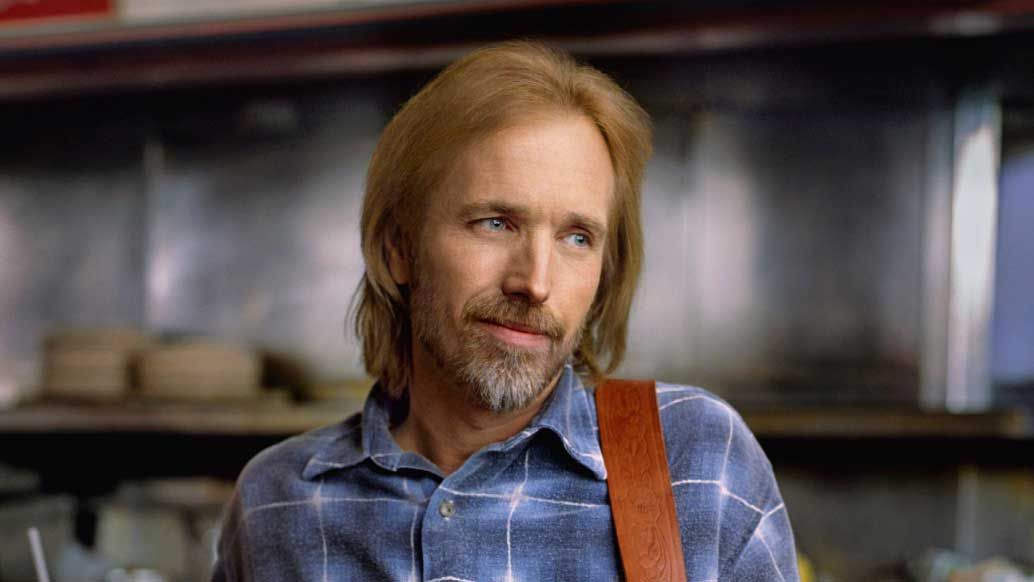
"Wildflowers scared him, because he's not really sure why it's as good as it is": As Tom Petty’s world fell apart, he took refuge in the studio and made his most deeply personal album
Favicon 
www.loudersound.com

"Wildflowers scared him, because he's not really sure why it's as good as it is": As Tom Petty’s world fell apart, he took refuge in the studio and made his most deeply personal album

The story of Tom Petty's classic Wildflowers, an album full of sadness, humour and hope
Like
Comment
Share
Showing 1796 out of 103184
  • 1792
  • 1793
  • 1794
  • 1795
  • 1796
  • 1797
  • 1798
  • 1799
  • 1800
  • 1801
  • 1802
  • 1803
  • 1804
  • 1805
  • 1806
  • 1807
  • 1808
  • 1809
  • 1810
  • 1811
Advertisement
Stop Seeing These Ads

Edit Offer

Add tier


Select an image
Delete your tier
Are you sure you want to delete this tier?

Reviews

In order to sell your content and posts, start by creating a few packages. Monetization

Pay By Wallet

Payment Alert

You are about to purchase the items, do you want to proceed?

Request a Refund