YubNub Social YubNub Social
    Advanced Search
  • Login
  • Register

  • Night mode
  • © 2025 YubNub Social
    About • Directory • Contact Us • Developers • Privacy Policy • Terms of Use • shareasale • FB Webview Detected • Android • Apple iOS • Get Our App

    Select Language

  • English
Install our *FREE* WEB APP! (PWA)
Night mode toggle
Community
New Posts (Home) ChatBox Popular Posts Reels Game Zone Top PodCasts
Explore
Explore
© 2025 YubNub Social
  • English
About • Directory • Contact Us • Developers • Privacy Policy • Terms of Use • shareasale • FB Webview Detected • Android • Apple iOS • Get Our App
Advertisement
Stop Seeing These Ads

Discover posts

Posts

Users

Pages

Blog

Market

Events

Games

Forum

Trending Tech
Trending Tech
3 w

Price Leak Suggests Samsung's Tri-Fold May Not Be As Expensive As Everyone Thought
Favicon 
www.bgr.com

Price Leak Suggests Samsung's Tri-Fold May Not Be As Expensive As Everyone Thought

While we all wait for Samsung's upcoming tri-fold smartphone, there's some good news for potential buyers -- it may not cost as much as early rumors suggested.
Like
Comment
Share
History Traveler
History Traveler
3 w

Lady with the inverted diadem found in Archaic cemetery
Favicon 
www.thehistoryblog.com

Lady with the inverted diadem found in Archaic cemetery

A excavation on the eastern slopes of the dried Lake Kopaida in central Greece has unearthed a rich Early Archaic-era burial of a noble woman wearing an upside-down bronze diadem. The burial dates to the second half of the 7th century B.C., a period when the power of ancestral hereditary kingship in Boeotia was waning while the nobility’s was on the rise. Her diadem was symbolic of the new power of the non-monarchical elites. Archaeologists with the Ephorate of Antiquities of Phthiotis and Evrytania have been carrying out a rescue excavation in advance of construction of a photovoltaic park. They have so far unearthed 40 graves from the Archaic and Classical periods. Different types of burials, including pit graves, burial pyres and graves with tile roofs, were found grouped in clusters. The lady with the diadem was found in a cluster of three pit graves. Analysis of her teeth identified her as an adult woman between 20 and 30 years of age. She was buried wearing a banded bronze diadem with a large rosette shaped like a radiant sun in the center of her forehead. The band of the diadem is embossed with pairs of male and female lions facing each other, symbols of royal authority. The crown was placed upside-down, so the lions are on their backs. This likely symbolized the fall of a monarch, in this case dethroned by death. She was buried with a multitude of other valuable objects, including two oversized bronze brooches of the Boeotian type, ornamented with stylized geometric horses, a necklace with a large central vase-shaped amulet, bone and ivory beads and bronze rosettes, copper earrings, a bracelet, and spiral rings on all of her fingers. This was a woman of immense wealth and status in the community, not a queen, but powerful enough to adopt the symbols of monarchy. One of the other pit burials in the cluster with her also contained the remains of a bronze diadem with rosettes. This one belonged to a young girl about four years of age, and in addition to the diadem on her head, she wore similar jewelry to the noblewoman, including a necklace with a vase-shaped amulet. The burial dates to the same period, so it’s possible the two were related in some way. Other notable finds from the cemetery include a Siana-type kylix (drinking cup) decorated with roosters and a trefoil-shaped oenochoe (wine pitcher) decorated with Hermes as psychopomp (guide of souls) and harpies discovered in a mid-6th-century B.C. grave, bronze flasks and black-figure and black-lettered pottery from the renown ceramic workshops of Akraiphia.
Like
Comment
Share
YubNub News
YubNub News
3 w

Holiday movies as modern traditions
Favicon 
yubnub.news

Holiday movies as modern traditions

[View Article at Source]The Human Equation with Joe Pangaro – In many ways, holiday movies serve as bridges between generations. Grandparents may prefer classics like Miracle on 34th Street, while younger…
Like
Comment
Share
YubNub News
YubNub News
3 w

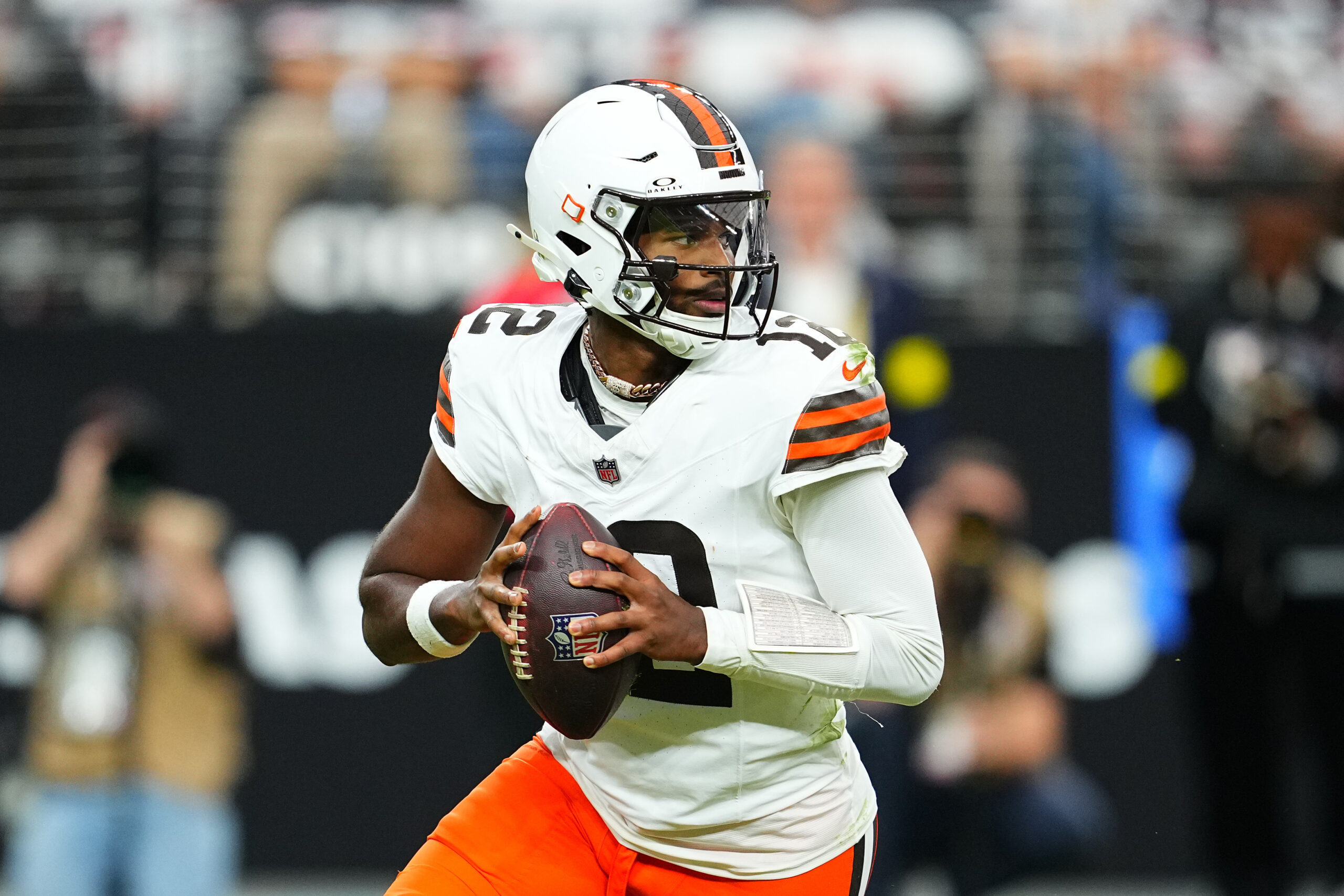
The Shedeur Sanders Show Gets Its Greenlight
Favicon 
yubnub.news

The Shedeur Sanders Show Gets Its Greenlight

[View Article at Source]After a rocky start to his NFL career, Deion Sanders’s son earns a chance to shine. The post The Shedeur Sanders Show Gets Its Greenlight appeared first on The American Conservative.…
Like
Comment
Share
YubNub News
YubNub News
3 w

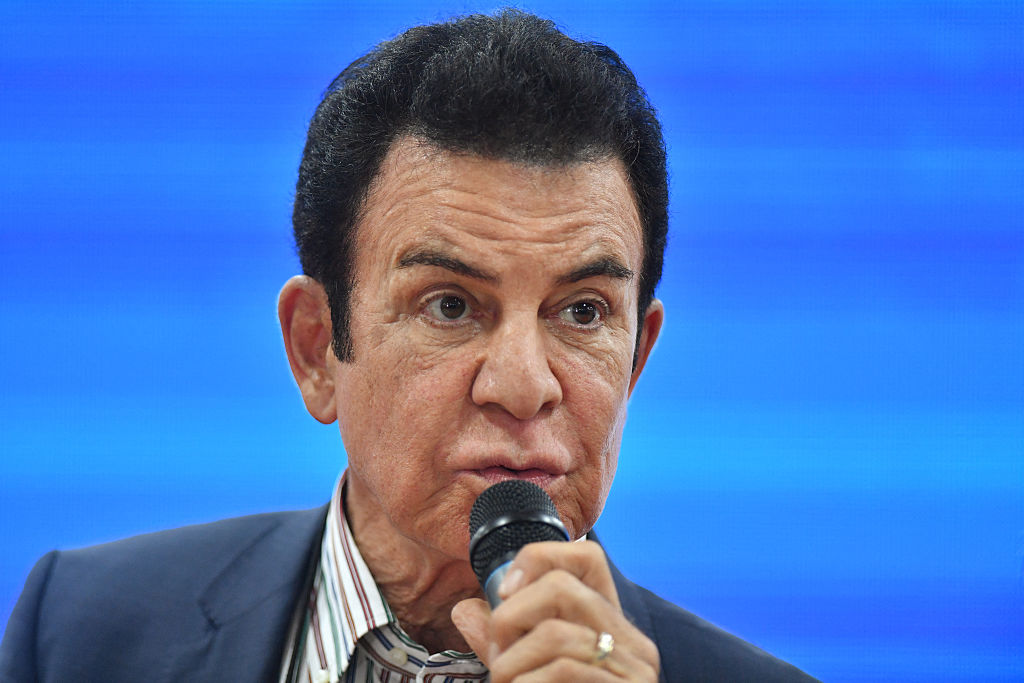
Trump Wades Into the Honduran Elections to Prop Up the Right
Favicon 
yubnub.news

Trump Wades Into the Honduran Elections to Prop Up the Right

[View Article at Source]The small Central American country goes to the polls Sunday. The post Trump Wades Into the Honduran Elections to Prop Up the Right appeared first on The American Conservative.
Like
Comment
Share
YubNub News
YubNub News
3 w

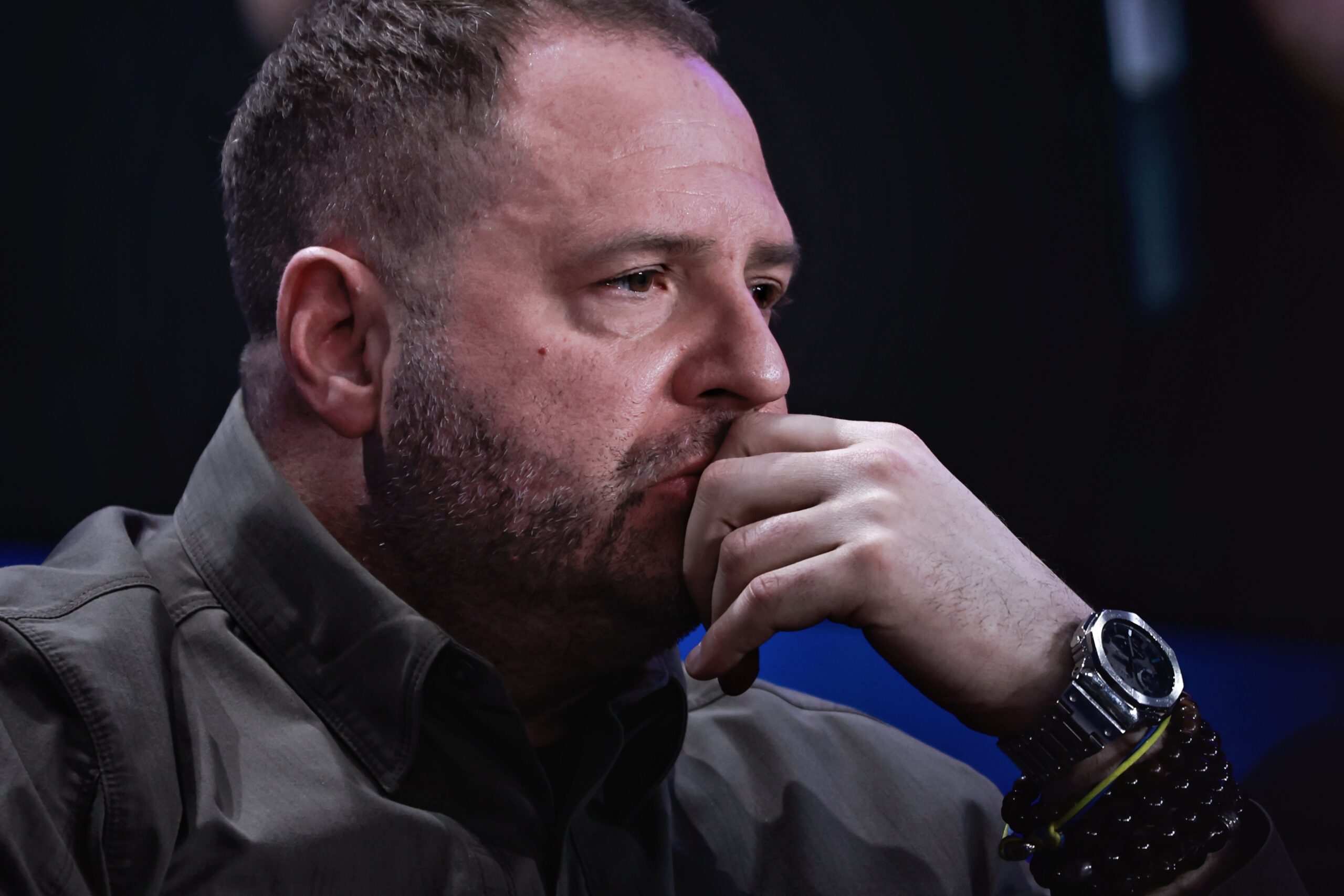
Zelensky’s Top Adviser Is Out. What’s Next?
Favicon 
yubnub.news

Zelensky’s Top Adviser Is Out. What’s Next?

[View Article at Source]This is a positive development for Ukraine. The post Zelensky’s Top Adviser Is Out. What’s Next? appeared first on The American Conservative.
Like
Comment
Share
Conservative Voices
Conservative Voices
3 w

The Shedeur Sanders Show Gets Its Greenlight
Favicon 
www.theamericanconservative.com

The Shedeur Sanders Show Gets Its Greenlight

Culture The Shedeur Sanders Show Gets Its Greenlight After a rocky start to his NFL career, Deion Sanders’s son earns a chance to shine. Sunday afternoon looks like it will be tough sledding for Cleveland Browns quarterback Shedeur Sanders. I suppose that statement is true for most any quarterback to have donned a Browns uniform in the 21st century, but especially for Sanders, who has the whole world watching and waiting for him to fall flat on his face. What’s worse, in only his second start, he’ll face the San Francisco 49ers, one of the league’s toughest squads, who are only days removed from clobbering the Carolina Panthers at home in California this past Monday.  Sanders is, of course, the son of Deion “Prime Time” Sanders, among the greatest cornerbacks and showmen to ever play the game of American football. His parentage cannot be removed from this story; it seems to have played an outsized role in the young Sanders’s tumultuous first season in the National Football League. It all began when he fell like a rock on Draft Night—and into the next day. Sanders dropped all the way into the fifth round, a space usually reserved for players deemed projects who might not even make the 53-man active roster. Sanders’s draft free-fall was one of the most controversial moments in the history of the NFL’s rookie selection process. Once considered first-round talent, Sanders sat and waited as teams in need of a quarterback passed on him. Analysts of all sorts weighed in on the moment. Some suggested Sanders was too “entitled” and would be tough to coach. Others cried racism. President Donald Trump even spoke out, calling NFL owners “STUPID” and predicting that the young Sanders was “all set for Greatness.”  Last Sunday, after Cleveland exhausted all other options, the legend’s son finally got his chance on the big stage. The lowly Browns sit at 2–8 and don’t have much left to play for this season. Head coach Kevin Stefanski made the call: Shedeur would start against the Las Vegas Raiders. Despite the fact that the Raiders are suffering through a terrible season of their own, the collective NFL was tuned in to the meeting of the League’s worst teams to see if Sanders would sink or swim. He swam.  Sanders completed 11 of 20 passes for 209 yards with one touchdown and an interception while leading the Browns to their first road win in a franchise record 13 tries. Though those numbers may sound pedestrian, Sanders showed why some analysts graded him so highly heading into the pros. In one particularly impressive moment against the Raiders, Sanders showed off his arm strength, throwing a 50-yard dart to wide receiver Isaiah Bond.  More impressive still was the way in which Sanders guided the team. Despite the questions about his maturity swirling in the press, Sanders looked the part. Most importantly, he was only sacked once against the Raiders. At the University of Colorado, holding on to the ball for too long was a major issue with his game. Oftentimes, when smarter quarterbacks would simply throw the ball away under pressure, Sanders would hold onto the pigskin in an attempt to make a play, only to be sacked. This would lead to Sanders and the Buffs consistently getting into poor field position and to long second- and third-down scenarios, where Sanders’s questionable decision-making would only compound.  But on Sunday against the Raiders, Shedeur got the ball out of his hand quickly and efficiently, throwing only one interception. The win snapped a franchise record for road losses and also earned Sanders the designation as the first Browns quarterback since Eric Zeier in 1995 to win his debut start in a Browns uniform. It all made for the sort of Hollywood story that helps make the NFL the most prized viewing experience in American sports. Everyone had a take, including the president, who couldn’t help but share his thoughts on Truth Social after the game. “Shedeur Sanders was GREAT,” Trump wrote. “Wins first game, career start, as a pro (for Cleveland). Great Genes. I TOLD YOU SO!” But it was only one game, and one game does not equal greatness. Sanders will now face the 49ers squad, which, despite starting quarterback Brock Purdy’s three interceptions, easily defeated the Panthers by two scores on Monday Night Football. The 49ers are powered by star running back Christian McCaffrey, the all-catching, all-running, endless motor of a man who touches the ball as much as any player in the NFL. The 49ers will hold the ball for much of the game, meaning Sanders will have to be at his best.  One thing Sanders will have going for him: The game will be played in Cleveland, in a stadium full of diehard fans who have been waiting the whole season to see if he can breathe life into the flailing franchise. For the Ohioans who have suffered greatly as fans of the Browns, Sunday holds the potential promise of a new era. Where other flashy quarterbacks such as Baker Mayfield and Johnny Manziel have failed before, perhaps Sanders can now succeed. It’ll be an uphill climb for Sanders and the young Browns offense who lean on fellow offensive rookie running back Quinshon Judkins for points.  One thing is for sure: Trump and millions of football fans will be wishing the best for a player who has endured great criticism in his brief career, some earned, some not. For those of us who enjoy a good show, Sunday will be a moment to see if Sanders has the ‘it’ factor that initially drove his star turn at lower levels. Good luck, Mr. Sanders.  The post The Shedeur Sanders Show Gets Its Greenlight appeared first on The American Conservative.
Like
Comment
Share
Conservative Voices
Conservative Voices
3 w

Trump Wades Into the Honduran Elections to Prop Up the Right
Favicon 
www.theamericanconservative.com

Trump Wades Into the Honduran Elections to Prop Up the Right

Foreign Affairs Trump Wades Into the Honduran Elections to Prop Up the Right The small Central American country goes to the polls Sunday. (Photo by Orlando SIERRA / AFP via Getty Images) President Donald Trump issued an endorsement Wednesday for the upcoming presidential elections in Honduras, promoting the right-wing candidate Nasry Asfura of the National Party and attacking his rivals Rixi Moncada of the Libre Party and Salvador Nasralla of the Liberal Party. “The man who is standing up for Democracy, and fighting against Maduro, is Tito Asfura, the Presidential Candidate of the National Party,” Trump posted on his Truth Social account, touting Asfura’s accomplishments as mayor of Tegucigalpa and calling him “the only real friend of freedom.”“Tito and I can work together to fight the Narcocommunists, and bring needed aid to the people of Honduras,” Trump added. Asfura, who is popular for his successful revitalization projects in the country’s capital and calls himself “papi a la Orden” (“Daddy at your service”), has promised a major crackdown on crime in the country, with a particular focus on the widespread extortion that plagues Honduran citizens. He is also a proponent of strengthening ties and trade with the U.S. The National Party, under whose banner Asfura is running, has cultivated ties with the Republican Party in the U.S.—but its reputation at home and abroad took a beating after a former president and party member, Juan Orlando Hernández, was arrested and extradited to the U.S. Hernández made millions by conspiring with infamous drug lord El Chapo to ship tons of cocaine into the U.S. American authorities sentenced Hernández to 45 years in prison. Moncada, the principal left-wing candidate, represents the Libre Party and the continuation of the policies of Honduras’s current president, Xiomara Castro. Castro—who is the wife of Manuel Zelaya, the former president of Honduras who was removed from office in a military coup in 2009—has governed since 2022, with Moncada serving first as her finance minister and then as secretary of defense. Moncada resigned her post earlier this year to run in the presidential election. Under Castro, Honduras has strengthened its relations with Cuba and Venezuela and grown much closer to China. In 2023, Honduras, a close ally of Taiwan and one of the few countries that still maintained official relations with it, cut ties with Taipei to establish formal relations with Beijing. Trump attacked Moncada as a communist who “says Fidel Castro is her idol.” “Normally, the smart people of Honduras, would reject her, and elect Tito Asfura,” Trump said,  “but the Communists are trying to trick the people by running a third Candidate, Salvador Nasralla.” Nasralla, the third major candidate in the race, is running on a centrist platform aimed at attacking corruption and increasing Honduras’s economic competitiveness. Nasralla, a former television presenter, founded the Anti-Corruption Party in 2013 and has run for president three times since, narrowly losing to the incumbent Hernández in 2017, an election year characterized by accusations of fraud and abuse. He joined Castro on the Libre Party ticket in 2021 and served as her vice president until 2024, when he resigned to begin his campaign for the 2025 presidential election. Trump dismissed Nasralla’s centrism as a leftist ploy to damage Asfura, calling Nasralla “a borderline Communist.” Nasralla “is now pretending to be an anti-Communist only for the purposes of splitting Asfura’s vote,” he wrote. Honduras, which will hold its national elections Sunday, is a fragile nation suffering from massive organized crime problems. One of the most violent countries in the world, it has been under a continuous state of emergency since the end of 2022. It is also a vital node in the transportation network for illicit drugs; every year, hundreds of tons of Colombian cocaine pass through the country to markets in the U.S., and even fentanyl has begun flowing through the country’s disordered ports and unguarded borders. Honduras’s role in the drug trade, its ties to China and regional left-wing powers appear to have put it directly in Trump’s sights. His administration has made asserting American influence in Latin America and tackling the flow of drugs and organized crime into the U.S. central to its foreign policy platform, inaugurating an era of American intervention in Latin America at a level not seen since the end of the Cold War.  Castro’s proximity to Venezuela and its strongman leader Nicolás Maduro seem to be a particular sore point: “Will Maduro and his Narcoterrorists take over another country like they have taken over Cuba, Nicaragua, and Venezuela?” Trump asked in his Truth Social post. The Trump administration has declared Maduro a narcoterrorist, has accused him of deliberately funneling drugs and criminals into the United States, and has placed a $50 million bounty on his head. The administration is currently deploying significant naval and air forces around Venezuela in an attempt to put pressure on his regime. Asfura’s election would eliminate one of Maduro’s few remaining allies in the region, isolating him yet further. The post Trump Wades Into the Honduran Elections to Prop Up the Right appeared first on The American Conservative.
Like
Comment
Share
Conservative Voices
Conservative Voices
3 w

Zelensky’s Top Adviser Is Out. What’s Next?
Favicon 
www.theamericanconservative.com

Zelensky’s Top Adviser Is Out. What’s Next?

Foreign Affairs Zelensky’s Top Adviser Is Out. What’s Next? This is a positive development for Ukraine. A political earthquake just hit Ukraine. Andriy Yermak—the chief of staff and right-hand man of Ukraine’s President Volodymyr Zelensky—resigned on Friday after anticorruption watchdogs raided his home and office. Such investigations have heated up in Ukraine the last few weeks but until now haven’t burned anyone nearly as prominent as Yermak, whose political power arguably rivaled that of the president himself. Assuming you’ve read my article on Yermak from October, you can probably guess that I consider this a salutary development. Depending on how Zelensky handles the crisis, Yermak’s ouster could signal a beginning of the end of the war with Russia and even herald a post-war Ukraine that is sovereign, free, and democratic. If that seems hyperbolic, consider the multifaceted and extremely damaging role that Yermak has played in Ukrainian politics since Russia’s 2022 invasion.  He has consolidated power to an outrageous extent, sidelining political opponents, appointing allies to top government positions, and controlling access to the president. Yermak is even reported to sleep near Zelensky in the presidential bunker, an indication of the strange codependence that has developed between the two men. When word broke recently about a $100 million embezzlement scandal in the energy sector, suspicions arose that Yermak was implicated. Long before this latest scandal, Ukrainians had worried that Yermak was using his immense power to revitalize the corrupt, post-Soviet oligarchic structures for which their country is sadly known. He’s done little to disabuse them of this notion. This summer, Yermak devised a crackdown on the very watchdogs that are now investigating him—a power grab that Zelensky reversed following street protests. “Yermak out!” the demonstrators yelled. “F— Yermak!” Yermak hasn’t always responded well to dissent. He’s even created lists of domestic political enemies for national security organs to sanction. This month, Zelensky, facing growing pressure to fire Yermak amid the corruption scandal, instead made him head of the Ukrainian team negotiating a new U.S. peace plan for Russia–Ukraine. This was a setback for the White House, which was plainly trying to use Zelensky’s weakened position as an opportunity to push a plan that makes concessions to Moscow. Yermak has long enforced a hardline bargaining position and opposed the kind of concessions that analysts say would be necessary to get a peace deal. This week he declared that Zelensky will never exchange land for peace, though the U.S. proposal had allowed that some Ukrainian territory be evacuated and turned into a demilitarized zone. Last year, Yermak coauthored a Foreign Affairs article that presented “victory” as the only path to peace for Ukraine—a pipe dream considering Russia’s military advantages.  Yermak’s departure from the negotiating team increases the chances that Kiev will take a more concessive approach to negotiations, closing the gap between the Ukrainian and Russian positions. Yermak hasn’t just hampered the peace process but also the war effort. He is widely believed to have engineered Valery Zaluzhny’s removal as commander-in-chief last year. In the war’s early years, Zaluzhny came to be regarded by Ukrainians as an almost mythic national hero—and by Yermak as a political threat. Back in America, the DC political class has found rare bipartisan agreement in deeming Yermak an irritant and political malefactor, and the Trump administration has certainly been no exception to that consensus. When Vice President JD Vance’s office phoned Zaluzhny in March to probe whether he’d be a worthy successor to Zelensky, whose term officially had ended one year prior, Yermak intervened, convincing him to reject the calls. Now that Yermak is out, the Trump team will find fewer obstacles to their geopolitical maneuvering around Ukraine. So, does Yermak’s resignation mean peace is at hand and Ukraine’s democracy will bloom? Not necessarily.  Announcing the resignation, Zelensky said that Yermak had represented well Ukraine’s negotiating position. Thus, a change in diplomatic strategy might not be forthcoming. And even if Ukraine becomes more concessive, President Vladimir Putin may still prove averse to making peace while Russia has the battlefield momentum. Nevertheless, Zelensky should seize this chance to reverse course and embrace the U.S. peace plan, which Yermak had worked to modify in ways unpalatable to Moscow. Of course, much hinges on who Zelensky chooses to replace Yermak as chief of staff. One rumor says that person will be Yuliia Svyrydenko, Ukraine’s prime minister and a strong ally of Yermak. This would be a serious mistake by Zelensky. To truly take Ukraine beyond the sordid Yermak era, he should choose a more credible successor, someone hailing from outside the orbit of the disgraced former chief of staff. Whatever happens next, the investigation and resignation of Yermak are good signs for Ukraine. Though he and Zelensky increasingly governed Ukraine as a wartime diarchy, the stunning spectacle of independent watchdogs searching Yermak’s office showed that the country’s liberal institutions remain strong. This is a fragile and uncertain moment for Ukraine, but also a hopeful and necessary one. The post Zelensky’s Top Adviser Is Out. What’s Next? appeared first on The American Conservative.
Like
Comment
Share
Conservative Voices
Conservative Voices
3 w

Make America Healthy Again: Restoring the Republic’s Vitality
Favicon 
spectator.org

Make America Healthy Again: Restoring the Republic’s Vitality

Health Secretary Robert F. Kennedy Jr. and President Donald Trump may not have been obvious allies — one hailing from perhaps the most recognizable Democratic dynasty, the other the populist herald of a new Republican coalition — but their partnership has presented one of the most dynamic elements of the Trump 2.0 agenda. Their joint movement to transform the health of the American people has already produced tangible results and carries the potential to address several of the nation’s monumental challenges. Subscribe to The American Spectator to receive our fall 2025 print magazine. During last year’s campaign season, Kennedy explained his decision to back Trump by pointing to three areas of core alignment: protecting free speech, ending the war in Ukraine, and, most strikingly, championing the health and well-being of America’s children. Since then, Kennedy’s Department of Health and Human Services has worked aggressively to combat pharmaceutical industry corruption, curtail ultra-processed foods and food dyes, and recalibrate the department to tackle the chronic disease epidemic. Trump himself, famously a McDonald’s aficionado, may not be the paradigm of a health enthusiast, but the very name Make America Healthy Again (MAHA) has now become inextricably linked to Trump’s legacy. For his part, the president has wholeheartedly embraced the movement. Addressing his administration’s MAHA Commission earlier this year, Trump declared: We’ve built an unstoppable coalition of moms and dads, doctors and young people, and citizens of all backgrounds who have come together to protect our children, very importantly, keep the dangerous chemicals out of our food supplies, get toxic substances out of our environment, and deliver the American people the facts.… Unlike other administrations, we will not be silenced or intimidated by the corporate lobbyists or special interests. Trump recognizes that the MAHA movement has the potential to expand his coalition, including among Trump’s notorious Achilles’ heel: white suburban women. However, the MAHA movement also augments the core of Trump’s agenda. Its mission to reinvigorate Americans’ health and vitality is an integral part of making the country great again. MAHA’s Early Wins When Kennedy joined Trump on the 2024 campaign trail, Trump pledged to let him “go wild on health.” Since taking office, Kennedy has set his sights on some of the most damaging forces driving America’s health crisis, such as ultra-processed foods, environmental exposures, sedentary lifestyles, and pharmaceutical corruption. Subscribe to The American Spectator to receive our latest print magazine. One of Kennedy’s boldest moves as health secretary so far was the complete replacement of the CDC’s Advisory Committee for Immunization Practices. Kennedy argued that the panel had long served as “little more than a rubber stamp for any vaccine” and highlighted that most of the committee’s members “have received substantial funding from pharmaceutical companies.” In other words, previous administrations have been routinely complicit in the corporate capture of the very government bodies meant to regulate those industries. While reconstituting an advisory panel may not seem groundbreaking, restoring public trust in public health must begin with aggressively rooting out such misconduct. Kennedy has also notched visible wins in reforming the nation’s food supply. Roughly 35 percent of the food industry has already committed to eliminating artificial dyes from their products, with more expected to follow. While artificial dyes are only one part of the ultraprocessed food problem (seed oils and high-fructose corn syrups are also prime targets), the willingness of major companies to change their products under MAHA’s pressure speaks to the strength of the movement. Ultimately, it’s the pressure from millions of Americans that compels companies to respond. State governments have also joined the MAHA train. Currently, twelve states have adopted SNAP waivers in order to restrict products like candy and sugary drinks from being purchased with the benefits. This wave of state-level action signals a growing appetite for nutrition-focused reform and reflects the absurdity of taxpayer dollars subsidizing junk foods. Summing up MAHA’s early reforms in August, Kennedy said, “Americans are tired of toxic food, failed science, and chronic disease becoming the norm. We’re turning the tide through bold federal action at HHS and state-driven reforms. The momentum is real, and we’re just getting started.” Realizing the Scope of the Problem As promising as Kennedy’s opening salvo has been, MAHA needs to provide more dramatic shifts if the movement is to meaningfully remedy the nation’s current and looming health catastrophes. Earlier this year, Kennedy testified that his goal at HHS is to transform the nation’s health system “from a sick care system into a health care system.” And a transformation is certainly necessary. The nation’s current health and food system has enriched Big Pharma and Big Food while sacrificing the well-being of millions of Americans. Despite spending trillions on healthcare, Americans are sicker than ever before.  By Bill Wilson for The American Spectator America faces an epidemic of chronic disease, and now over 70 percent of American adults and one-third of children are overweight or obese. Around 60 percent of Americans live with at least one chronic condition, while those with multiple chronic diseases account for 93 percent of Medicare spending. A staggering 90 percent of America’s annual $4.9 trillion health care expenditures are attributed to managing and treating chronic diseases and mental health conditions. Addressing the crisis is long overdue, not only because the chronic illness epidemic is causing monumental suffering for millions of citizens, but also because our spiraling public healthcare costs are one of the foremost drivers of the nation’s national debt. Health care costs are the largest category of federal spending, representing roughly one-third of the federal budget. Those costs are only expected to rise as younger generations of unhealthy Americans begin needing medical interventions that further burden the system. In the long run, alleviating the nation’s chronic health epidemic may be the only path to achieve fiscal solvency. Kennedy has frequently criticized the fact that America’s health institutions have worked valiantly to treat symptoms of chronic illnesses but have remained complacent when it comes to actually discovering the root causes of Americans’ disastrous health situation. Pointing to this lack of action, Kennedy has lamented, “NIH should be telling us: What are seed oils doing to our children? What is corn syrup doing to our children? What are food dyes doing to our children? What is the packaging and microplastics doing to our children? What are pesticides doing to our children?” The fact that these questions haven’t been satisfactorily addressed is a damning indictment of the nation’s previous health officials. In contrast, Kennedy’s HHS is confronting the nation’s most urgent health challenges. Its proposed fiscal year 2026 budget aims for its MAHA initiative to tackle “nutrition, physical activity, healthy lifestyles, over-reliance on medication and treatments, the effects of new technological habits, environmental impacts, and food and drug quality.”  These are not abstract issues. They touch the daily lives, longevity, and vitality of every American. Until these deeper problems are confronted, Americans will keep spending staggering sums on pharmaceutical interventions that treat symptoms rather than provide cures. Beyond Health: Renewing American Freedom Yet the stakes of MAHA extend even further. Beyond even all the tangible benefits of working toward a healthier America, the movement also carries profound implications for the vitality and freedom of the American people. Can a nation habituated to being overweight, sedentary, and unvirile really be expected to assert its freedom with firmness and valor? America’s Founders, who won their nation’s freedom in the fires of the Revolution, understood that liberty requires energy, vigilance, and resilience — qualities that wither when a nation’s health deteriorates. A population dulled by preventable disease, dependent on pharmaceuticals, and unaccustomed to physical exertion is ripe for tyranny. In this sense, MAHA is not merely about diet or exercise or environmental toxins. It also entails renewing the very strength of American republicanism. Only a people strong in body and spirit is truly capable of self-rule. Subscribe to The American Spectator to receive our fall 2025 print magazine.

Like
Comment
Share
Showing 2741 out of 103363
  • 2737
  • 2738
  • 2739
  • 2740
  • 2741
  • 2742
  • 2743
  • 2744
  • 2745
  • 2746
  • 2747
  • 2748
  • 2749
  • 2750
  • 2751
  • 2752
  • 2753
  • 2754
  • 2755
  • 2756
Advertisement
Stop Seeing These Ads

Edit Offer

Add tier


Select an image
Delete your tier
Are you sure you want to delete this tier?

Reviews

In order to sell your content and posts, start by creating a few packages. Monetization

Pay By Wallet

Payment Alert

You are about to purchase the items, do you want to proceed?

Request a Refund