YubNub Social YubNub Social
    #satire #democrats #loonylibs #iran #comedy
    Advanced Search
  • Login
  • Register

  • Night mode
  • © 2026 YubNub Social
    About • Directory • Contact Us • Developers • Privacy Policy • Terms of Use • shareasale • FB Webview Detected • Android • Apple iOS • Get Our App

    Select Language

  • English
Night mode toggle
Featured Content
Community
New Posts (Home) ChatBox Popular Posts Reels Game Zone Top PodCasts
Explore
Explore
© 2026 YubNub Social
  • English
About • Directory • Contact Us • Developers • Privacy Policy • Terms of Use • shareasale • FB Webview Detected • Android • Apple iOS • Get Our App
Advertisement
Stop Seeing These Ads

Discover posts

Posts

Users

Pages

Blog

Market

Events

Games

Forum

Intel Uncensored
Intel Uncensored
5 w

New Evidence Supports Witness Claim That Epstein Didn’t Kill Himself
Favicon 
www.sgtreport.com

New Evidence Supports Witness Claim That Epstein Didn’t Kill Himself

by Frank Bergman, Slay News: Newly released evidence has added significant weight to a long-dismissed eyewitness claim alleging that Jeffrey Epstein was removed alive from his New York City jail cell before a body was later found inside. The claim, first posted anonymously online in the early hours of August 10, 2019, came from an […]
Like
Comment
Share
Country Roundup
Country Roundup
5 w

WhistlinDiesel Arrested Again in Ongoing Tax Evasion Case
Favicon 
tasteofcountry.com

WhistlinDiesel Arrested Again in Ongoing Tax Evasion Case

The YouTuber has been arrested again, with prosecutors now pursuing new charges tied to a second vehicle. Continue reading…
Like
Comment
Share
Country Roundup
Country Roundup
5 w

Dog the Bounty Hunter’s Stepson Charged in Son's Shooting Death
Favicon 
tasteofcountry.com

Dog the Bounty Hunter’s Stepson Charged in Son's Shooting Death

Gregory Zecca has been charged in the fatal shooting of his 13-year-old son, Anthony. Continue reading…
Like
Comment
Share
Classic Rock Lovers
Classic Rock Lovers  
5 w

"When people hear my versions of pop songs, they're shocked. They never expect to hear Adele sound like that." Meet Solomon Hicks, the New York guitarist bringing the blues to a new audience
Favicon 
www.loudersound.com

"When people hear my versions of pop songs, they're shocked. They never expect to hear Adele sound like that." Meet Solomon Hicks, the New York guitarist bringing the blues to a new audience

Solomon Hicks just wants to make you feel good
Like
Comment
Share
BlabberBuzz Feed
BlabberBuzz Feed
5 w

Trump’s Ex-Israel Envoy Torches Tucker Carlson Over ‘Venal Lies’ About Gaza
Favicon 
www.blabber.buzz

Trump’s Ex-Israel Envoy Torches Tucker Carlson Over ‘Venal Lies’ About Gaza

Like
Comment
Share
BlabberBuzz Feed
BlabberBuzz Feed
5 w

Fraud Alert: Los Angeles County Accounts For 18% Of All U.S. Home Health Care Billing
Favicon 
www.blabber.buzz

Fraud Alert: Los Angeles County Accounts For 18% Of All U.S. Home Health Care Billing

Like
Comment
Share
Daily Caller Feed
Daily Caller Feed
5 w

TIM VAN HOOF And MIKE MILLER: Rising ACA Insurance Costs Drive Sharing Alternatives
Favicon 
dailycaller.com

TIM VAN HOOF And MIKE MILLER: Rising ACA Insurance Costs Drive Sharing Alternatives

spending and costs are up
Like
Comment
Share
Fun Facts And Interesting Bits
5 w

10 Beautiful Travel Destinations (That Will Kill You)
Favicon 
listverse.com

10 Beautiful Travel Destinations (That Will Kill You)

Traveling is often about going off the beaten path and discovering places most people have never seen or heard of. Sometimes, however, that approach can backfire. The world is full of visually stunning locations that are also profoundly dangerous, whether due to crime, extreme environments, political instability, or lingering human-made hazards. From deadly deserts littered […] The post 10 Beautiful Travel Destinations (That Will Kill You) appeared first on Listverse.
Like
Comment
Share
History Traveler
History Traveler
5 w

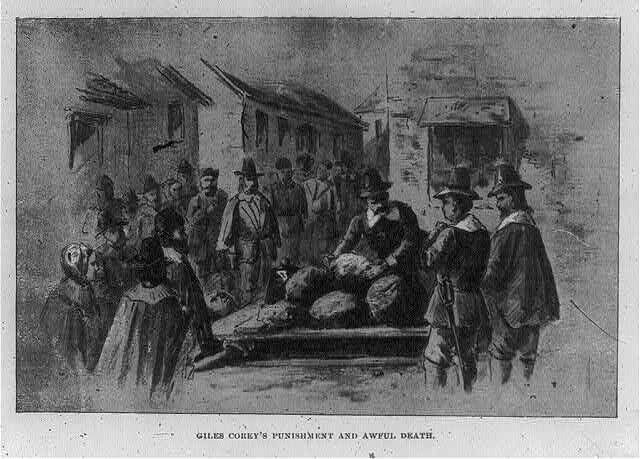
Why Being Pressed To Death Was One Of The Grisliest Execution Methods In History
Favicon 
allthatsinteresting.com

Why Being Pressed To Death Was One Of The Grisliest Execution Methods In History

Library of CongressAn illustration of Giles Corey being pressed to death during the Salem Witch Trials. If you were sentenced to death by crushing, or getting pressed to death, you were in for an excruciating demise. While strapped down, you would have intense weight placed upon you, bit by bit, until the weight literally crushed you to death. One of the earliest examples of the execution method was found over 4,000 years ago in Southeast Asia, where a well-trained elephant would crush a prisoner. If you were lucky, the elephant would squash you quickly. If you weren’t, the execution was slow and painful. But whether the weight was applied by a human or a pachyderm, the result was still the same. Pressing To Death Was Practiced In Almost Every Country While there was anecdotal evidence of people being pressed to death in such countries as Persia, Carthage (modern-day Tunisia), and ancient Rome, virtually every country in the world practiced crushing, or getting pressed to death, in some form or another. In South and Southeast Asia — especially throughout India — crushing was practiced by elephants. The last recorded use of the practice was in 1914. The Carthaginians and ancient Romans used the practice as well, with the latter remarking that elephants were preferred to lions and bears because they were more “intelligent” and easy to train. But in Britain, the practice was used as torture. Whereas their Southeast Asian and Carthaginian counterparts would use the practice for a convicted criminal, England preferred to impose the sentence on the accused who refused to plead guilty or not guilty. It was the court’s hope that with enough pressure — literally — they would enter a plea. After all, the process could be stopped with a simple cry of “not guilty.” But any refusal to do so would result in continuous weight being applied on the suspect’s chest — to the point that the victims would suffocate, have their bones snap inside their bodies, and even have bone shards pierce the skin. For many, though, surrender was not an option. Death was a preferable alternative to pleading to a crime that he or she didn’t commit. And there was no better example than the lone example of crushingused in the United States during the Salem Witch Trials. Giles Corey Is Pressed To Death In 1692, Giles Corey was a successful farmer in the town of Danvers, Massachusetts, about 30 minutes north of Boston. Unfortunately for Mr. Corey, he was swept up in the flurry of accusations made by local women of various bewitchings and specter visitations. Accusations were often made against people who weren’t well-liked in the community, and Corey — being a convicted criminal after having beaten an apple thief to death — fell into that category. All in all, about 200 people were accused of witchcraft, including Corey himself. A special court was convened to handle the influx of accusations, and Corey went on trial. At that point, he had two options: He could either enter a plea, standing a strong chance of being convicted in the kangaroo court, or not enter a plea at all and refuse to stand trial. Corey also knew that if he chose the latter, the court would order him to be pressed in hope that he would enter a plea. It didn’t matter to Corey — he chose the latter, and decided to stand strong and die with his dignity intact, while also allowing his living relatives to keep his land. The Massachusetts Historical Society has a gruesome description of what happened next: Giles was asked to strip naked and lay down, face-up, on the ground. A wooden board was then placed on top of him, and on top of the board, one by one, Sheriff George Corwin placed large rocks. After two days of this torture, through which Giles had remained silent, never crying out, he was asked to plead. Giles did not want his property to be taken, so he never plead either way. On the third day 19 September 1692 he died from being pressed to death. His last words were, “more weight.” Corey’s death by pressing ultimately helped change the way the Salem Witch Trials were viewed. England Finally Outlaws Pressing — With A Catch The “Enlightenment age” of England brought about a new view of the practice of crushing. While the practice was legal in the early part of the 18th century, it was finally outlawed in 1772. But even with the merciful end to the practice, there was a catch. In making pressing illegal, a prisoner who refused to enter a plea was automatically deemed guilty, equivalent to a conviction. Therefore, the accused’s property could no longer be kept “in the family.” In England, a convicted criminal was subjected to forfeiture — that is, the Crown could take any lands that the criminal owned, thus leaving their family destitute. But previously, if the accused had died during the horrific process of being crushed or pressed to death, the family was able to keep their property. Now that you’ve read all about the ghoulish reality of being pressed to death, read all about Ted Bundy’s death — including his last words, his last meal, and his method of execution. Then, take a look back at the disturbing practice of gibbetting. The post Why Being Pressed To Death Was One Of The Grisliest Execution Methods In History appeared first on All That's Interesting.

Like
Comment
Share
History Traveler
History Traveler
5 w

$40 estate sale find by early African-American silversmith sells for $24,000
Favicon 
www.thehistoryblog.com

$40 estate sale find by early African-American silversmith sells for $24,000

A unique silver pap boat made by pioneering American silversmith of African descent Peter Bentzon has been sold to an as-yet unnamed “prominent American institution” for $24,000 after being discovered at an estate sale in Minnesota in a $40 box labelled “silverplate.” The young buyer spotted Bentzon’s hallmark and realized he’d hit the estate sale jackpot. A pap boat is a shallow elongated bowl with a pouring rim on one side that was used to feed babies or sick people with a thin porridge (aka pap). The pap was highly digestible nourishment that could be given to someone who was too young or too ill to chew. The boat-like shape and pouring lip made holding the bowl and feeding easier. This one is less than five inches long and three inches wide. It weighs 69 grams. The flat bottom of the boat is stamped P. BENTZON in capital letters embedded in a rectangle. It dates to between 1810 and 1820. Peter Bentzon was the only silversmith of African descent working in early America whose silver pieces can be identified by his personal hallmark. He was born on the island of Saint Thomas to a mother of mixed Afro-Caribbean heritage and a white European father believed to have been Norwegian Jacob Bentzon, a lawyer and royal judge advocate on the island. Peter was just eight years old when he was sent to Philadelphia to become an apprentice to a silversmith. He worked there from 1799 to 1806, then moved back to the Caribbean where he opened his own shop in Christiansted, St. Croix. He worked there for 10 years, marrying Rachel de la Motta, a free woman of color from a prominent family and ultimately having seven children. Bentzon and his family moved back and forth between St. Croix and Philadelphia. He had an active trading business as well as the silversmith shop. He must have passed for white in Philadelphia as the 1820 census listed both him and his mixed wife as white. They last appear on the census in 1850, and there are no records of his death. Fewer than 30 pieces of Bentzon silver are known to survive today. Most of them are small flatware (teaspoons) or implements like a nutmeg grater that sold for $40,000 at Sotheby’s in 2021. His two largest and most famous pieces are a pair of identical teapots made for Rebecca Dawson, member of a prominent Philadelphia Quaker abolitionist family, in 1817. One of them is now in the Saint Louis Art Museum; the other in the National Museum of African American History and Culture in Washington, D.C. Even his teaspoons are in museums. The Philadelphia Art Museum has one, and another well-known piece: a footed cup he made in 1841 for Reverend Benjamin Lucock, a presentation gift from the superintendent and teachers of St. John’s Episcopal Church Sunday School in St. Croix.
Like
Comment
Share
Showing 4760 out of 113264
  • 4756
  • 4757
  • 4758
  • 4759
  • 4760
  • 4761
  • 4762
  • 4763
  • 4764
  • 4765
  • 4766
  • 4767
  • 4768
  • 4769
  • 4770
  • 4771
  • 4772
  • 4773
  • 4774
  • 4775
Advertisement
Stop Seeing These Ads

Edit Offer

Add tier


Select an image
Delete your tier
Are you sure you want to delete this tier?

Reviews

In order to sell your content and posts, start by creating a few packages. Monetization

Pay By Wallet

Payment Alert

You are about to purchase the items, do you want to proceed?

Request a Refund