YubNub Social YubNub Social
    #music #tew #tuba #militarymusic #armymusic #armyband #satire #democrats #loonylibs #iran #quintet #tew2026 #comedy #solocompetition #competition
    Advanced Search
  • Login
  • Register

  • Day mode
  • © 2026 YubNub Social
    About • Directory • Contact Us • Developers • Privacy Policy • Terms of Use • shareasale • FB Webview Detected • Android • Apple iOS • Get Our App

    Select Language

  • English
Night mode toggle
Featured Content
Community
New Posts (Home) ChatBox Popular Posts Reels Game Zone Top PodCasts
Explore
Explore
© 2026 YubNub Social
  • English
About • Directory • Contact Us • Developers • Privacy Policy • Terms of Use • shareasale • FB Webview Detected • Android • Apple iOS • Get Our App
Advertisement
Stop Seeing These Ads

Discover posts

Posts

Users

Pages

Blog

Market

Events

Games

Forum

BlabberBuzz Feed
BlabberBuzz Feed
3 d

This Is Real: "We Were Trying To Make The Maps More Gay"
Favicon 
www.blabber.buzz

This Is Real: "We Were Trying To Make The Maps More Gay"

Like
Comment
Share
BlabberBuzz Feed
BlabberBuzz Feed
3 d

Karoline Leavitt: “Trump Derangement Syndrome Is Melting Their Brains”
Favicon 
www.blabber.buzz

Karoline Leavitt: “Trump Derangement Syndrome Is Melting Their Brains”

Like
Comment
Share
Living In Faith
Living In Faith
3 d

A Prayer to Trust God's Provision When Resources Run Low - Your Daily Prayer - March 9
Favicon 
www.ibelieve.com

A Prayer to Trust God's Provision When Resources Run Low - Your Daily Prayer - March 9

When the money runs low, the opportunities dry up, and your strength is gone, it is easy to panic. Be reminded that God’s supply is not tied to your resources and His riches never run out.
Like
Comment
Share
Living In Faith
Living In Faith
3 d

3 Signs You Are Healing from Grief
Favicon 
www.ibelieve.com

3 Signs You Are Healing from Grief

Discover how a moment of profound grief and anger towards God transformed into a powerful spiritual awakening. Learn practical steps to release burdens, forgive perceived offenses, and deepen your relationship with the divine. This article reveals how confronting loss can lead to unexpected peace and profound spiritual growth.
Like
Comment
Share
Living In Faith
Living In Faith
3 d

3 Biblical Ways to Handle Conflict
Favicon 
www.ibelieve.com

3 Biblical Ways to Handle Conflict

Navigate the inevitable storms of conflict with grace and wisdom, learning practical strategies from a seasoned pastor's wife to foster understanding and achieve reconciliation. Discover how direct communication, identifying root issues, and seeking neutral counsel can transform disputes into opportunities for growth and unity.
Like
Comment
Share
Living In Faith
Living In Faith
3 d

How to Tune into God When the News is Heavy and Loud
Favicon 
www.ibelieve.com

How to Tune into God When the News is Heavy and Loud

In a world saturated with overwhelming information and rising anxieties, discover how to navigate the spiritual warfare and find solace in faith. This article offers practical steps to combat deception, anchor yourself in God's truth, and create a sanctuary of peace amidst chaos.
Like
Comment
Share
Living In Faith
Living In Faith
3 d

Welcome Back, Church Planting
Favicon 
www.thegospelcoalition.org

Welcome Back, Church Planting

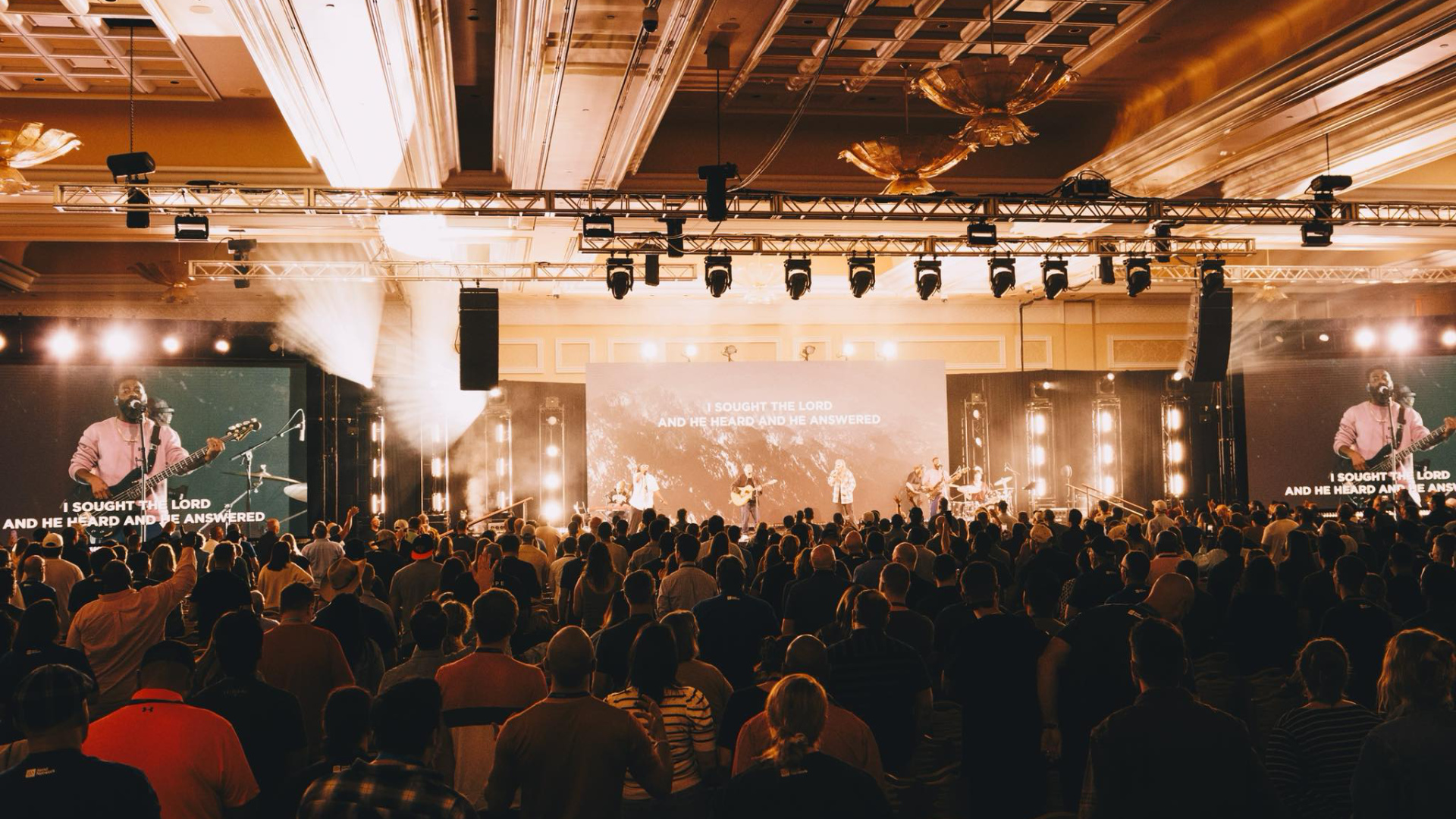
For a while, it looked like the church-planting party was over. Back in the 2000s and 2010s, everyone was there. In 2001, Tim Keller founded City to City. In 2005, Mark Driscoll took over Acts 29. In 2008, the Pillar Network was born; in 2010, the Southern Baptist Convention (SBC) officially cannonballed in with what would become the Send Network. Harbor Network followed in 2011. “The energy and enthusiasm about church planting in North America is at an unprecedented high,” missiologist Ed Stetzer and researcher Warren Bird wrote in 2008. Young men with beards and flannel shirts, inspired by the brashness of Driscoll and the brains of Keller, grabbed their Bibles and headed to the city centers—historically among the most difficult places to start a church. But within a decade or two, the hype faded. “A lot of great churches were planted, but a lot of people in that first wave also crashed and burned,” said Noah Oldham, executive director of Send Network. “Marriages fell apart, families fell apart, church planting teams had disasters.” At the same time, the pipeline of young men dried up. “Because it kind of happened out of nowhere, every college pastor, associate pastor, or student pastor that was hungry, ready, and gifted planted churches,” Oldham said. Once they were all sent out, “there was no backfill.” Indeed, interest in pastoring seemed to be waning across the board. In 2017, the number of MDiv degree-seekers at evangelical seminaries began to drop. “All this is coming together—an anxious generation, a higher degree of fragility, a lessening of resilience because of overprotection,” said Chris Vogel, church planting and vitality coordinator for the Presbyterian Church in America (PCA). “A lot of the shift was students moving from wanting to be the pastor of a church to wanting to be ordained to be a counselor.” It looked like the planting party was over. And then, around 2021, Send Network’s numbers began to creep back up. Pretty soon, Acts 29 was seeing the same thing. “Two years ago, we had 125 men in the planting pipeline,” Acts 29 vice president of church planting Adam Flynt said. “Today, that’s over 450 guys. In two years, it more than tripled.” The PCA wasn’t far behind. “In 2025, the PCA began 54 new works,” Vogel said. “That’s the highest number in 20 years.”These aren’t anomalies—church plants for all Protestant congregations rose significantly between 2019 and 2024. It’s another party—but this one looks less like a solo planter experimenting with Bible studies in a bar and more like well-supported teams reading books about best practices. The participants are older, moving slower, and more likely to appreciate assessment and accountability. That hasn’t been a bad thing. “We are seeing not only the number of plants go up, but the survivability rate has increased as well,” Oldham said. “I’m very encouraged,” Vogel said. “I think we’re at the precipice of a really good change.” Seeker Sensitive in the Suburbs “The last time we saw a significant number of new churches was after World War II,” Vogel said. That’s because the large number of returning men—and the enormous number of the children they were producing—led to a housing crisis. As houses went up in the newly created suburbs around American cities, churches soon followed. “During this period, the operative term was not so much ‘planting’ as it was ‘extension,’” Stetzer wrote. “Specific churches would partner with their denomination to extend new churches into a given area.” Chris Vogel planted Cornerstone Church in a Milwaukee suburb in 1992. / Courtesy of Chris Vogel But as American culture became more individualistic, so did church planting. Focus shifted from the church to the planter, Stetzer said. This entrepreneurial focus naturally bent toward pragmatism and professionalism. Church leaders talked about the homogenous unit principle (people like to become Christians without crossing racial, linguistic, or class barriers) and seeker sensitivity (church services “designed to appeal to the unchurched, non-Christian, in an attempt to draw them into the church community where they might receive the gospel and be converted”). Those ideas soon went too far, leading to therapeutic preaching, numbers-based definitions of success, and businesslike leadership development summits. The problems with running a church like a Fortune 500 company were so apparent that pushback arrived in multiple forms. One of them was the Reformed movement. Perfect Timing In the 2000s, young men with early internet connections began to discover the doctrines of grace, expositional preaching, and the Puritans. Soon, dynamic preachers such as Piper, Keller, and Driscoll began challenging young men to use that knowledge to plant churches. “Guys are getting this hunger: What if we could start churches like that?” Oldham said. “And the denominations and networks were saying, ‘You can.’ And the money began to come in. The timing was perfect.” Back then, potential planters were plentiful. “One reason was the maturing of youth ministry,” Flynt said. “Having a youth pastor was a relatively young endeavor in the church—that didn’t really occur until after the Jesus Movement in the late ’60s or early ’70s.” It turned out to be a great place for pastoral training. “After 10 or 20 years, you’ve done a lot of things that a senior pastor does, just on a smaller scale and with a new generation,” Flynt said. “You teach weekly, organize groups, go on trips, raise up leaders, manage budgets. The advent and maturing of youth ministry was almost like an incubator for that early push of church plantings.” Their childhood culture also helped. The youth and associate pastors of the 2000s and 2010s were the tail end of Gen X (the least-parented, latchkey cohort) and the front end of the millennials (the confident, eager to lead generation). “There was an independence, a ‘don’t tell me I can’t do that’ streak in that group,” Flynt said. There was also the zeal of the newly converted—Reformed blogger Tim Challies remembers that “it was like 1 million people were all in cage-stage Calvinism at the same time.” “There was a missional vigor that rose up,” Flynt said. “They wanted to do hard things.” Planting Hard One of the most difficult things you can do in ministry is to plant a church. If you want to make it even harder, try planting a church in the center of a city, where religious affiliation is low and violent crime rates are high. Not enough of a challenge for you? Try doing it alone, without a team. “The first 8 to 10 years were like the Wild West,” Oldham said. “There was no accountability, because there was no real oversight. Networks didn’t fully exist.” Noah Oldham launching August Gate Church in the St. Louis metro area in 2009 / Courtesy of Noah Oldham Even as they began to develop, networks didn’t necessarily offer comfort or security. “The night before I got assessed with my previous network, one of the guys sticks his finger in my chest and says, ‘Wear a cup,’” Oldham said. “And then he looks at my wife and says, ‘Bring tissues.’ So what he just told me was he was going to kick me in the crotch and make my wife cry—these godly men who are going to assess my calling to start a church.” Things started rough and got rougher. “I would come to church-planting events, and I’d almost always hear the same thing,” Oldham said. “They’d say, ‘Church planting is hard and difficult. It almost killed me. Don’t do it like me.’” But of course, the implicit—and sometimes explicit—message was: Do it exactly like him. Stay up late. Get up early. Work so hard you make yourself sick. If you can do it with almost no money or support, that’s even better. Surprisingly, none of this deterred the church planters of the early 2000s. In 11 years, Acts 29 went from 23 churches to 550. City to City funded and trained another 300. The PCA was planting about 50 churches a year; the SBC was adding around 1,000 annually. Others caught the party fever too—in 2000, several nondenominational pastors started the Association of Related Churches and were averaging around 50 plants a year by 2014. But on the whole, “it was a Reformed movement,” Oldham said. “Calvinism definitely poured fuel on the fire.” As a result, many of the 4,000 new churches in America in 2014 had good expositional preaching, a healthy plurality of elders, and solid gospel-centered theology. “As you exposit the text and you preach it, you see the church needs to align with it,” Oldham said. “Ecclesiology is now clear. So you’re planting churches that look like the Bible. There’s clarity. There’s structure. It was like a trellis, and the church-planting movement could grow on it.” Some of the slats in the trellis were books. “I have books from my seminary that predate the Young, Restless, Reformed movement, and I have books I’ve read after that, and they’re vastly different,” Oldham said. “The talk of church leadership went from being very church-centric—how to run a committee or how to build a church staff—to how to lead in a city, how to be a movement leader.” Dropoff And then the music stopped. By 2019, the SBC’s church-planting class was just 552—about half of what it’d been in 2014. The number of church planters in the PCA was down in the 20s. Acts 29 had dipped to just 125 planters globally. “A number of things were happening there,” Flynt said. “One was just the maturing of the church-planting movement. . . . People didn’t just hand a youth guy a Bible and say, ‘Go start a church’ anymore. They started to ask, ‘Are you biblically qualified? Have you been trained? Do you have a team?’” As the boomers aged, denominations were also beginning to lean into revitalization, Lifeway Research executive director Scott McConnell said. Restarting a church uses the same men who might otherwise have planted, but doesn’t code as a plant in church statistics. The drop was also a sign of the times, as the increasingly combative conversations about politics, race, and sexuality culminated in the chaos of 2020. Pastors trying to hold their congregations together didn’t have the bandwidth to start anything new. “We were dealing with internal hurt, not external multiplication,” Oldham said. Not only that, but the “woke” culture—especially in conjunction with the generally screen-based, overprotected childhoods of the younger millennials—didn’t encourage bold, risk-taking endeavors. Even leading an established church seemed less appealing. Overall, Americans planted 3,000 churches in 2019. Not only was this 75 percent of what they’d done in 2014, but it wasn’t enough to reach replacement level. About 4,500 churches closed that year. Reboot In 2021, signs of a new church-planting party began to appear. “There is something happening in our culture right now,” Oldham said. “Think about what happened in the first wave of church planting—Mark Driscoll attracted young men in their 20s and 30s who were frustrated with the culture around them and saying, ‘There’s gotta be a better way.’” Gen Z’s male frustration has been well documented. “What if we could harness that?” Oldham said. “Let’s grab young men. Let’s equip them with the gospel. Let’s teach them to avoid the pitfalls of generations ago, and let’s plant more churches.” It looks like that’s already happening. “We’re seeing the rise of faith in young men outpace women for the first time in about 100 years,” Flynt said. “We’re standing on the cusp of a tremendous opportunity right now in church planting.” Over the last two years, the number of planters in the Acts 29 pipeline more than tripled. City to City helped with 446 plants and revitalizations in 2025, up from 90 in 2020. Last year, the number of SBC church plants popped back up to 2016 levels. But this time around, the party feels less impromptu-bash-at-the-farm and more well-planned-dinner-party. “Our planters today don’t want the single big personality,” Flynt said. “They want serious biblical fidelity. They want to missionally engage. They want community, not just for the sake of community, but because there’s a shared mission that we’re on.” They also want a chaperone. Chris Vogel with a group of church planting assessors in January 2026 / Courtesy of Chris Vogel “I see a lot of young guys who are eager to be trained,” Flynt said. “They’re humbling and submitting themselves to that. And that’s an incredible thing. I’ll take humility over pride any day of the week.” At Acts 29, “there aren’t any more Lone Ranger church planters,” Flynt said. Everyone is placed in a coaching cohort, often geographically connected to one another. Planter assessment and training are also less crazy and more considered than before. Vogel is clear on the four core competencies—gospel, emotional, relational, and leadership—that the PCA is looking for. The denomination’s assessment—now called “ministry discovery”—is gentler. Denominations these days are less apt to pressure “every church to plant a church” and more likely to encourage several churches to plant together, Vogel said. They’re also more selective about who they’re financing, looking for close doctrinal alignment, Oldham said. And they’re more thoughtful about their support. “We know we have to care for these guys,” he said. “We have to create a safety net. And that’s gotten better along the way.” All of this means preparation for planting takes longer. The average age of an Acts 29 planter has “inched up over the years,” Flynt said. The Evangelical Council for Financial Accountability found the average age of an American church planter rose from 36 in 2007 to 42 in 2022. As you might expect, an older, better trained, more supported church planter is more likely to succeed. Nearly 90 percent of SBC plants now last longer than four years, Oldham said. And since 2021, “no church plants that launched—and stayed—with Acts 29 have closed,” Flynt said. Why Plant? “Virtually all of the great evangelistic challenges of the New Testament are basically calls to plant churches, not simply to share the faith,” Tim Keller wrote in 2002. “Why would this be? . . . Only a person who is being evangelized in the context of an ongoing worshiping and shepherding community can be sure of finally coming home into vital, saving faith. This is why a leading missiologist like C. Peter Wagner can say, ‘Planting new churches is the most effective evangelistic methodology known under heaven.’” Like so many of the Bible’s other commands, research backs it up. “Congregations founded since 2000 are the most likely to be growing, and the regions most likely to see growth in the past five years are the Northeast and the West—precisely where Southern Baptists have concentrated church-planting energy,” Oldham wrote. Plants are more likely to reach younger and more ethnically diverse populations, Lifeway found. They’re also more likely to reach non-Christians. “In the most recent year with available data, nearly a third—29 percent—of all reported baptisms in states outside the South came from churches started since 2010,” Oldham wrote. Those churches were started by guys wearing flannel shirts in their living rooms, young men who worked themselves sick and learned a hundred lessons along the way, and now by men leading church-planting teams to well-scouted locations. “There are seasons,” Vogel said. “You depend on God differently in different seasons, and those seasons are never wasted. We know that personally, and Romans 8:28 is clear about it. Those moments in our history—good and bad, exciting and mundane—the Lord uses all of those to move his mission forward in the world.”

Like
Comment
Share
Living In Faith
Living In Faith
3 d

Orthodox Yet Modern: Herman Bavinck as Cultural Apologist
Favicon 
www.thegospelcoalition.org

Orthodox Yet Modern: Herman Bavinck as Cultural Apologist

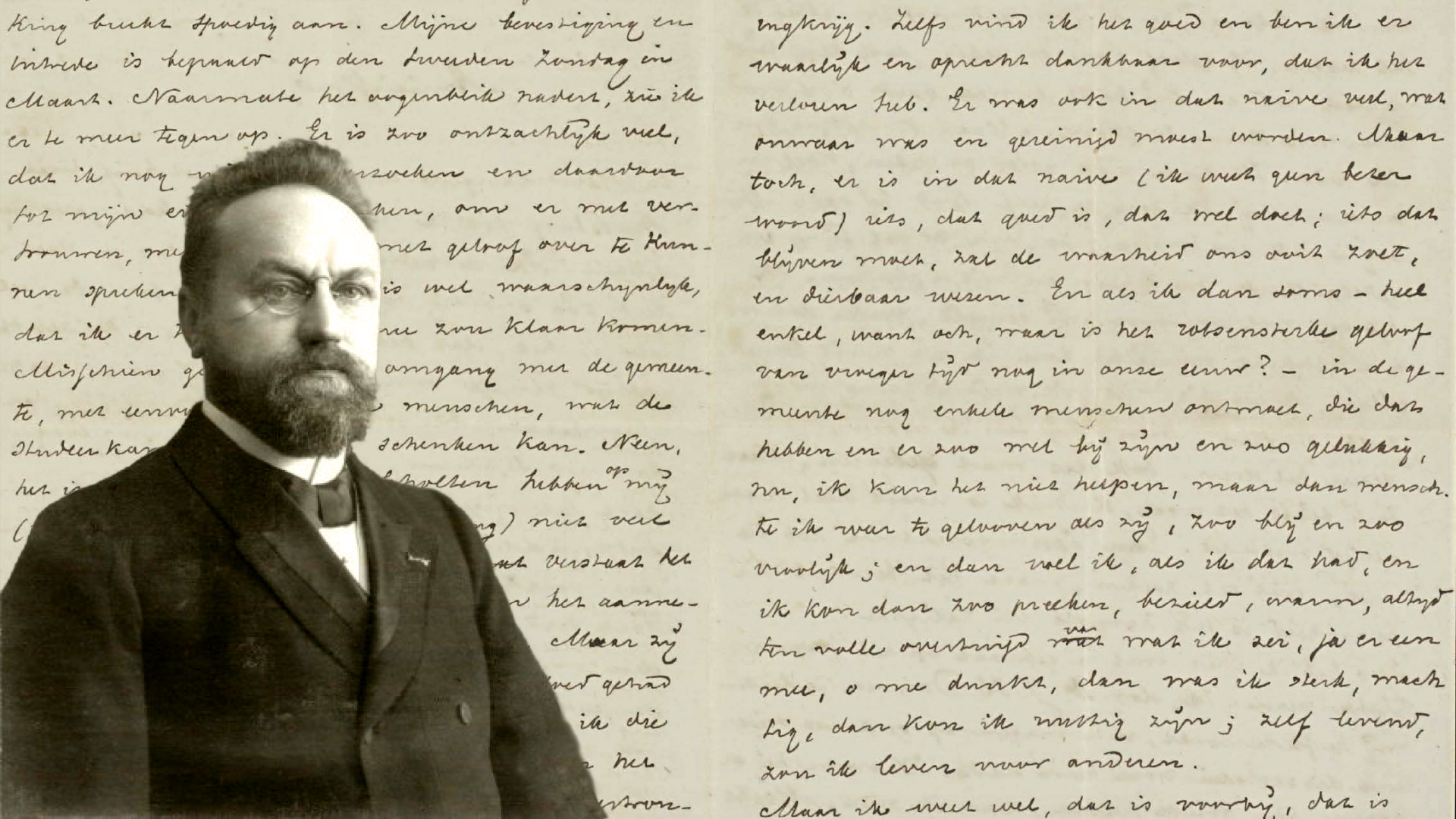
In How To Reach the West Again, Tim Keller called for Christians to cultivate a “Christian High Theory”: a method of contextualization whereby Christians don’t merely explain the gospel itself but also explain their own culture with the gospel. Late in his ministry, Keller turned to Herman Bavinck (1854–1921) for precisely this kind of project. In Bavinck, we find the ground zero for many of the ways Christians in the 21st century speak about how to analyze, critique, and evangelize the late-modern world. His writings are the primary sources for concepts that have been so taken for granted that they’re used without definitions: common grace, Christianity as a worldview, and subversive fulfillment. Oddly enough, however, Bavinck’s main works were untranslated until recently, with his four-volume Reformed Dogmatics translated in 2008 and other seminal texts like Christian Worldview and Christianity and Science as late as 2019 and 2023. Concepts like “worldview” and “common grace” have received a life of their own in Anglophone Christianity apart from the source that first articulated these notions. In Bavinck, we find the silent influence behind many of the most formative minds in American evangelicalism and Reformed theology—figures like Keller, Francis Schaeffer, and Louis Berkhof. This is why, in Gayle Doornbos’s and my forthcoming book, The Essential Herman Bavinck, we seek to reintroduce his core texts in one volume, and why The Keller Center is including a session on Bavinck in a cohort on major figures in cultural apologetics. In Bavinck, one finds the ground zero for many of the ways Christians in the 21st century speak about how to analyze, critique, and evangelize to the late-modern world. Let’s consider the answers to three questions: Who was Bavinck? What were his major writings? And how does his work inform cultural apologetics for today? Who Was Bavinck? Bavinck was one of the first-generation Dutch neo-Calvinists who, along with his colleague Abraham Kuyper (1837–1920), sought to convey confessional Reformed orthodoxy to late-modern society and its holistic implications to every area of life. A child of the Secession of 1834 (Afscheiding) that separated from the established Dutch Reformed Church (Nederlandse Hervormde Kerk), Bavinck grew up in the wake of the 1848 revolutions that granted religious freedom and toleration to the once-persecuted Seceders. He inherited his family’s ambition to integrate into modern life and education from an early age. Bavinck received his education at Leiden University, which hosted a leading modernist theological faculty in Holland. He studied under the likes of Johannes Scholten (1811–85) and Abraham Kuenen (1828–91). After finishing his doctoral work on the ethics of Huldrych Zwingli, Bavinck went on to work a brief pastorate at Franeker, before taking up a post at the Theological School at Kampen. He taught there from 1883 to 1902, during which he published the first edition of his four-volume Dogmatics. He then accepted a position at Kuyper’s recently established Free University of Amsterdam in 1902, where he focused more attention on showing Christianity’s relevance for the other academic disciplines and public issues. Bavinck was also elected as a parliamentarian in the First Chamber in 1911, representing Kuyper’s Anti-Revolutionary Party, and remained productive until his death on July 29, 1921. He was married to Johanna Adriana Schippers, and their daughter, Johanna Geziena Bavinck, was born in 1894. Major Writings: From Kampen to Amsterdam Bavinck’s writings fit into two major categories: those writings leading up to and during his tenure at the Theological School at Kampen (1883–1902), and then those in his Amsterdam years at the Free University (1902–21). This brief survey of his writings can only pick out a selection of the significant texts. These works highlight Bavinck’s distinct contributions in the story of modern theology: the desire to be orthodox yet modern, the attempt to showcase the holistic implications of Christian faith, and the organic character of a Christian world-and-life view. His works in the earlier period consisted of shorter treatises on various theological topics, culminating in the first edition of the Dogmatics. One of his first major publications was a new edition of the Synopsis purioris theologiae (Synopsis of a Purer Theology), establishing Bavinck’s connection to the earlier orthodoxy of 17th-century Dutch Reformed scholasticism while signaling his desire for further constructive work as noted in his Latin preface. His inaugural lecture at Kampen, “The Science of Holy Theology” (1883), focused on the distinctness of theology’s grounds, character, and end. His “Catholicity of Christianity and the Church” (1888), another address delivered at the theological school, argued that catholicity extends not merely to the universality of the church’s theology  but also to the way in which Christian faith can organically transform other spheres of human life: culture, family, science, and art. Two important essays from 1894 are worth mentioning. “Common Grace,” his rectorial address at Kampen, attributed the restraint of sin and humanity’s access to creational norms to the working of God’s general operations, which allows for the work of special grace to take place within history. Nature is thus not profane or insignificant but preserved for the redemption of special grace. “The Future of Calvinism”––an essay that extended a lecture delivered two years prior––distinguished between Reformed theology as an ecclesial theological confession and Calvinism, which Bavinck considered a more holistic world-and-life view. While Bavinck would later emphasize that this holism is the product of Christianity in general (and not merely Calvinism in particular), in these earlier writings one already begins to see his lifelong commitment to display the leavening power of Christian faith and his desire to communicate orthodoxy well to shifting modern intellectual sensibilities concerned about immanent realities. In the subsequent years, Bavinck continued working on his Dogmatics and Reformed Ethics, though only the former was completed and published. The first edition of Dogmatics appeared between 1895 and 1901, covering the various traditional theological loci, from prolegomena to eschatological consummation. His approach on each topic consists in moving broadly in three steps: (1) expositing the relevant biblical material on the doctrine, (2) tracing out the way in which ancient, medieval, Reformed, Lutheran, Roman Catholic, and modern theologians or philosophers have developed and articulated the material, and (3) Bavinck’s own constructive articulation of the doctrine that draws from steps #1 and #2. Readers of the Dogmatics would thus learn much from Bavinck’s evaluative comments on the history of each doctrine, but would do well to consider each chapter as a whole and his constructive comments at the end to perceive Bavinck’s voice. Because of Bavinck’s irenic posture and the way he sympathetically described views with which he disagreed, many commentators note that locating Bavinck’s own position on a subject can be a challenging task. While the Dogmatics was certainly his magnum opus, Bavinck constantly reconsidered and revised his stated positions on various issues. In this regard, his enlarged second edition was released between 1906 and 1911, adding, for example, sections on psychology and the science of religion. Bavinck continued to wrestle with his ideas, planning further revisions and expansions to the text (that never came to light) before his death. During Bavinck’s Amsterdam years, he wrote three books which today stand out as a collective whole. In 1904, he published Christian Worldview and Christianity and Science. While the former work was a macrotreatise that argued for a distinct Christian treatment of the classical divisions of philosophy––epistemology, metaphysics, and ethics––the latter work tried to show how Christianity contributes to the formation of a university and its various academic disciplines. Both works argued for the organic character of a Christian world-and-life-view––that Christianity isn’t confined to a single category of human existence (i.e., “religion”) but permeates all of life. These two works anticipated Bavinck’s 1908 Stone Lectures delivered at Princeton Theological Seminary, published as the Philosophy of Revelation (10 years after Kuyper’s own Stone lectures, published as the Lectures on Calvinism). These lectures explored the inescapability of revelation in the disciplines of higher study, treating the disciplines of philosophy, the natural sciences, religion, culture, history, and Christianity. The next few years continued this focus on the public implications of theology, as Bavinck wrote shorter works on issues like the problem of war, pedagogy, classical education, religious psychology, unconscious life, aesthetics, and evolution. These treatments often signaled Bavinck’s ongoing wrestling with the newer questions of the 20th century. This brief survey of Bavinck’s prolific academic output highlights his academic powers, rendering comprehensible his nomination to the literary division of the Royal Academy of Science in 1908 (his promising talents had already resulted in a nomination to the Society of Dutch Literature in 1883). Yet this shouldn’t eclipse his many ecclesial writings throughout his career. Two of his more accessible works are worth mentioning: his 1901 Sacrifice of Praise and his 1909 Wonderful Works of God (originally Magnalia Dei). The former work was often given to a catechumen before his or her first partaking of the Lord’s Supper, for it emphasized the historical roots and importance of the public confession of faith. The latter work, a single-volume Dogmatics, was written for the modern layperson, without the copious documentation and historical surveys of the Dogmatics. Bavinck’s foreword to Wonderful Works particularly emphasized the need to engage readers afresh, for he deemed that the older works “do not speak to the younger generation” (xxxii). Readers wanting a sense of Bavinck’s mature theological views would do well to dip into Wonderful Works as a starting point into his wider oeuvre. Contributions to Cultural Apologetics What might we learn from Bavinck’s work for the sake of cultural apologetics? Two applications come to mind: (1) we should desire to convey classical Reformed orthodox theology into a modern intellectual milieu and (2) Christianity is holistic. First, Bavinck’s theology conveyed that the heritage of classical Reformed orthodoxy can engage fruitfully with the insights of modern theology and philosophy. Along with Kuyper, Bavinck often conceived his neo-Calvinist position as that between “conservatism” and “modernism.” While conservatism decried the present in a nostalgic call for the past, Bavinck argued that the present age remains a remarkable opportunity to recommunicate the Christian faith in fresh ways. One example comes to mind: his argument for the separation of church and state. Bavinck was part of a committee that argued for the removal of the clause from Belgic Confession (article 36) in which the government is called to “[upholding] the sacred ministry, with a view to removing and destroying all idolatry and false worship of the Antichrist.” Bavinck (and Kuyper) continued to believe that the Bible should inform our view of the state’s responsibility but that the state should also recognize that in this present—post-fall and pre-glory—period of history, God wants the believer and unbeliever to coexist (Matt. 13:24–30). Thus, the state, as an institution of common grace, should recognize that it isn’t yet the period of God’s judgment and provide for the conditions for believers and unbelievers to engage in civil and public life together with relative peace. This isn’t a neutral view of the state but a biblically grounded one. For Bavinck, Christianity provides the theological resources that civil life needs: the virtues of toleration and of taking religion seriously beyond what the secular worldview can provide. Christianity provides the theological resources that civil life needs: the virtues of toleration and of taking religion seriously beyond what the secular worldview can provide. Instead of shying away from the modern debates and arguing that orthodox theology should bypass the academic discussions of the day, Bavinck often sought to incorporate as much of these contemporary insights as possible within the boundaries of orthodox Calvinism. James Eglinton rightly notes that Bavinck often “fought modern with modern.” These inclinations led the neo-Calvinists to be critiqued by modernists and conservative thinkers alike––modernists argued that Bavinck and Kuyper were merely redressing fundamentalism in modern idiom, while conservatives often accused them of capitulating to the allure of the modern age. Bavinck’s 1911 oration “Modernism and Orthodoxy” addressed these charges directly. Though modernism as a secular worldview is contradictory to the gospel, modernity and orthodoxy may exist fruitfully together, simply because God’s Word addresses and fulfills the desires of every human heart in every age. Second, Bavinck argued for the holistic and leavening implications of the Christian faith. Aware of the totalizing nontheistic ideals of the 1789 French Revolution and later of Nietzsche’s thoroughgoing nihilism, Bavinck, like Kuyper, saw it was necessary to present Christianity as a full-orbed alternative. It was no longer viable to assume that Christianity was relevant for public life in those modern conditions, which increasingly argued that faith belonged within the ecclesial and private spheres alone. This realization led Bavinck and Kuyper to argue for theology to awaken to self-consciousness and to justify its existence not merely in the church but for every area of life. However, while Kuyper argued for this in a deductive and perhaps inflated way, Bavinck’s method was more reserved and inductive. He argued that Christianity remained the inescapable conclusion if one patiently sifted through the data and contemporary arguments presented. He provides us with an example of patient investigation coupled with confidence in God’s Word. In this way, Bavinck is a model for cultural apologetics: Christianity can engage any culture, any philosophy, and any time period because the gospel subverts and fulfills the desires of the human heart.
Like
Comment
Share
Daily Caller Feed
Daily Caller Feed
3 d

PATRICK DUGAN: The Government Can’t Have Terminator Robots
Favicon 
dailycaller.com

PATRICK DUGAN: The Government Can’t Have Terminator Robots

You can't court-martial an algorithm
Like
Comment
Share
History Traveler
History Traveler
3 d

Inside The Tragic Suicide Of Jeremy Wade Delle — And How His Death Became The Subject Of A Pearl Jam Song
Favicon 
allthatsinteresting.com

Inside The Tragic Suicide Of Jeremy Wade Delle — And How His Death Became The Subject Of A Pearl Jam Song

In the spring of 1991, the lead singer of Pearl Jam, Eddie Vedder, was reading his morning newspaper when he came across a shocking headline about a teenage suicide. A 15-year-old boy named Jeremy Wade Delle had inexplicably shot himself in front of his classmates and teacher at Richardson High School in Richardson, Texas. Vedder was struck by the story and immediately felt the need to honor the boy in some way. And thus, the song “Jeremy” was born, inspired by the short life and tragic death of Jeremy Delle. Jeremy Wade Delle’s school photo. But according to friends and family members who knew Jeremy, the song does not follow his actual life very closely, and some have expressed concern that the song eclipses the true story of Jeremy Delle. The Events That Inspired Pearl Jam’s “Jeremy” On January 8, 1991, 15-year-old Jeremy Wade Delle arrived late to his second period English class at Richardson High School. His teacher told him to go down to the office and get an attendance slip. But instead, Jeremy returned with a Smith & Wesson .357 revolver. Just before he fatally shot himself in front of his classmates, he turned to his teacher. “Miss, I got what I really went for,” he said. Brian Jackson, a fellow Richardson High School student, had been out in the hall near his locker when he heard a loud bang. He said it sounded “like someone had slammed a book on a desk.” “I thought they were doing a play or something,” he recalled. “But then, I heard a scream and a blonde girl came running out of the classroom and she was crying.” When he peeked in the door, Brian saw Jeremy bleeding on the floor and immediately realized what had happened. “The teacher was standing against the wall crying and shaking,” Brian said. “Some people were standing around her holding her as if to keep her from falling.” Another student, Howard Perre Felman, who was in a different classroom when he heard the shot, recalled laughing about the noise with fellow students, thinking, like Brian, that it was some kind of play or joke. “But then we heard a girl running down the hall screaming,” Howard said. “It was a scream from the heart.” Who Was Jeremy Wade Delle? While the way that Jeremy Wade Delle died by suicide was public and well-known, the reason why was less so. Later, Jeremy’s classmates would remember him as “shy” and “sad,” though they all expressed their shock at his sudden death, saying that he didn’t seem like the kind of person who would shoot himself. As far as his classmates were concerned, there was nothing unusual or out of the ordinary in the way of Jeremy Delle. One of his classmates, however, noted that the way he acted in the days leading up to his suicide were a bit different. Lisa Moore, who knew Jeremy from the in-school suspension program, used to pass notes with Jeremy throughout the day. According to Lisa, he always signed his notes a certain way. But just before he died, she said that he deviated from the norm. “He and I would pass notes back and forth and he would talk about life and stuff,” she said. “He signed all of his notes, ‘Write back.’ But on Monday [January 7] he wrote, ‘Later days.’ I didn’t know what to make of it. But I never thought this would happen.” According to Richardson Police Sgt. Ray Pennington, Jeremy Wade Delle must have put some thought into his actions, as the revolver was likely stashed in his locker for a while and he had left a suicide note. The content of the note — or notes, according to some sources who claimed he’d written individual notes to friends — was not widely released. YouTubeThe band Pearl Jam, pictured in 1990. Pennington also said in a statement that after Jeremy’s father had been called down to the school to discuss Jeremy’s attendance problems before his death, the boy and his father had enrolled in counseling. But Pearl Jam’s song describes a different child entirely, one who wasn’t paid any attention to at home and one whose parents all but ignored several cries for help. Close friends and family members of Jeremy’s claim that depiction couldn’t have been further from the truth. Jeremy’s classmate Brittany King spoke out against the song when it was released, saying that it didn’t paint an accurate picture. “I was angry at them for writing that song,” she said. “I thought, ‘You don’t know, you weren’t there.’ That story’s not accurate.” The Controversial Legacy Of “Jeremy” While the song “Jeremy” pushed Pearl Jam and Ten to the top of the charts, the family of the real Jeremy Wade Delle was dealing with their horrifying reality. Jeremy’s parents, Joseph Delle and Wanda Crane, had been divorced, and the boy was living with his father at the time of his death. Neither of his parents had been contacted about the song ahead of time, and it seemed that both of them had their issues with it — mostly that it whittled their son down to nothing but his heartbreaking death. Joseph Delle issued a statement on the subject, referring to the fact that “fans” of Jeremy’s were leaving notes on his grave, as the band seemingly capitalized on his father’s grief: “Always, always they are lured in by the song and speak to their adoration of Eddie Vedder. My anguish is just as deep with each call, note, or email… People who never met him or knew him chose to write a song, produced a video, and wrote many articles about that day. People who never [had] a personal relationship with him condensed his life to one day. There was so much more to Jeremy’s life than that fateful day.” RedditA newspaper article that was published about Jeremy Wade Delle’s suicide. Eddie Vedder claimed that he considered reaching out to Jeremy’s family prior to writing the song, but he “felt like [he] was intruding” if he did that. He also admitted that he deduced that Jeremy had been ignored by his parents without ever actually speaking with them. Jeremy’s mother, Wanda, has been more vocal in recent years on the subject of her son’s death and the ongoing grief she deals with. “That day that he died did not define his life,” Wanda Crane said in an interview in 2018. “He was a son, a brother, a nephew, a cousin, a friend. He was talented.” She described him as a talented artist: “He won best of shows, and this was all before he was 12 years old.” She added that as she watches the news and hears stories of the numerous school shootings in recent times, she feels a kinship with the students’ families. “I think of the mothers, I think of the sisters, I think what it’ll be said or what opinions will be thought about the student,” she said. “It’s the mothers and the sisters that I want to wrap my arms around and tell them that someday it’ll be better.” After this look at the real Jeremy Delle, read about Brenda Spencer, the school shooter who inspired the song “I Don’t Like Mondays.” Then, read about Aokigahara, Japan’s terrifying suicide forest. The post Inside The Tragic Suicide Of Jeremy Wade Delle — And How His Death Became The Subject Of A Pearl Jam Song appeared first on All That's Interesting.
Like
Comment
Share
Showing 503 out of 113572
  • 499
  • 500
  • 501
  • 502
  • 503
  • 504
  • 505
  • 506
  • 507
  • 508
  • 509
  • 510
  • 511
  • 512
  • 513
  • 514
  • 515
  • 516
  • 517
  • 518
Advertisement
Stop Seeing These Ads

Edit Offer

Add tier


Select an image
Delete your tier
Are you sure you want to delete this tier?

Reviews

In order to sell your content and posts, start by creating a few packages. Monetization

Pay By Wallet

Payment Alert

You are about to purchase the items, do you want to proceed?

Request a Refund