YubNub Social YubNub Social
    #trump #democrats #loonylibs #americafirst #sotu #k #culture #fuckdiversity #exodermin
    Advanced Search
  • Login
  • Register

  • Night mode
  • © 2026 YubNub Social
    About • Directory • Contact Us • Developers • Privacy Policy • Terms of Use • shareasale • FB Webview Detected • Android • Apple iOS • Get Our App

    Select Language

  • English
Night mode toggle
Featured Content
Community
New Posts (Home) ChatBox Popular Posts Reels Game Zone Top PodCasts
Explore
Explore
© 2026 YubNub Social
  • English
About • Directory • Contact Us • Developers • Privacy Policy • Terms of Use • shareasale • FB Webview Detected • Android • Apple iOS • Get Our App
Advertisement
Stop Seeing These Ads

Discover posts

Posts

Users

Pages

Blog

Market

Events

Games

Forum

Daily Caller Feed
Daily Caller Feed
6 w

Jacob Frey Criticizes Rioters — But Not For Reason You May Think
Favicon 
dailycaller.com

Jacob Frey Criticizes Rioters — But Not For Reason You May Think

'You’re not helping the undocumented immigrants in our city'
Like
Comment
Share
The Lighter Side
The Lighter Side
6 w

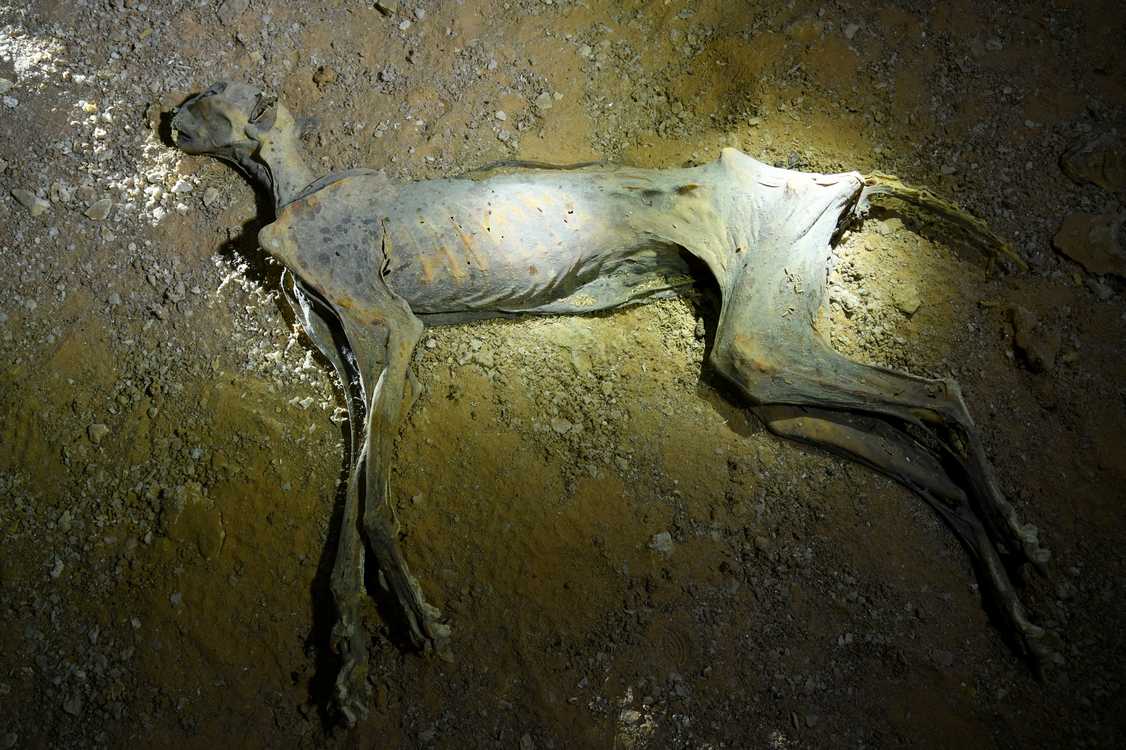
Mummified Cheetahs Discovered in Saudi Arabia Show How the Country Could Bring The Cats Back
Favicon 
www.goodnewsnetwork.org

Mummified Cheetahs Discovered in Saudi Arabia Show How the Country Could Bring The Cats Back

Between 2022 and 2023, scientists in Saudi Arabia began a survey of over 1,000 caves, hoping to find preserved remains of ancient animals to infer modern rewilding strategies. Whatever modest results they might have allowed themselves to hope for, they almost certainly would not have expected to find 7 naturally mummified cheetah skeletons. They had […] The post Mummified Cheetahs Discovered in Saudi Arabia Show How the Country Could Bring The Cats Back appeared first on Good News Network.
Like
Comment
Share
SciFi and Fantasy
SciFi and Fantasy  
6 w

“Do not kill your instructor on day one” — Star Trek: Starfleet Academy’s “Kids These Days”
Favicon 
reactormag.com

“Do not kill your instructor on day one” — Star Trek: Starfleet Academy’s “Kids These Days”

Movies & TV Star Trek: Starfleet Academy “Do not kill your instructor on day one” — Star Trek: Starfleet Academy’s “Kids These Days” Welcome aboard the U.S.S. Athena… By Keith R.A. DeCandido | Published on January 15, 2026 Comment 0 Share New Share The notion of portraying life in Starfleet Academy has been around the Star Trek universe for ages. It was first pitched as a movie back in the late 1980s and was seriously considered for the sixth movie following the lukewarm reception to The Final Frontier in 1989, going so far as to have a script by Harve Bennett and David Loughery, before deciding to do a last hurrah with Shatner, Nimoy, and the gang. Both Marvel (an ongoing series from 1996-1998 contemporary with DS9 and Voyager and using DS9’s Nog as a main character) and IDW (a 2015 miniseries telling stories set during the events of the 2009 Star Trek) have done Starfleet Academy comic book series. Simon & Schuster has done two sets of YA books focusing on the Academy, including a series from 1993-1998 that showed Academy tenures for characters from the original series, TNG, and Voyager, and another from 2010 that focused on the Bad Robot films. In 1997, there was a Starfleet Academy CD-ROM game (remember those?), which also had a novelization by Diane Carey, and the following year was Susan Wright’s Academy-focused novel The Best and the Brightest. The TV shows have done the occasional spotlight on the Academy, from TNG’s “The First Duty” to Discovery’s “All is Possible.” With the diversification of Trek on TV that we’ve seen since Secret Hideout took over producing Trek stuff for Paramount+, an Academy series was almost a given to happen at some point. Additionally, they’re having it spin off of Discovery’s final three seasons, which was a masterstroke. The thirty-second century is ripe for further exploration—Discovery barely scratched the surface—plus, it’s explicitly a Federation that is finally back on its feet after being isolationist and devastated because of the Burn. Now the Burn is over and there’s a new set of cadets coming in. It’s a great era to set an Academy series in, as you’ve got lots of different species coming together, many of them leaving their home star systems for the first time. Scripter/creator Gaia Violo has come up with a way of still doing shipboard adventures while doing an Academy series: the show primarily takes place on the U.S.S. Athena, a starship that is specifically designed to be a flying Academy. They will learn on the job, as it were, taking class and doing supervised shipboard functions on an actual ship. (And presumably also sometimes have unexpected adventures, as they do in this episode.) When on Earth, the ship docks at the Academy grounds in San Francisco, continuing to be the main campus building. Two of the main characters are functionally immortal, so they actually remember when the Federation was at its height. One is our lead, Holly Hunter’s Captain Nahla Ake, who is part Lanthanite (the same species as Carol Kane’s Pelia on SNW), and is several hundred years old. Hunter plays her with a similar relaxed, seen-it-all attitude to Kane on the sister show, but she’s very much her own person, and much less eccentric than Pelia. (Which is good, as that level of goofiness works in a supporting character, less so in your lead.) Ake is a good teacher, a compassionate authority figure, and a canny leader, and Hunter inhabits the character magnificently. Credit: Paramount+ The other immortal is one of two legacy characters in this pilot: Robert Picardo as the Voyager’s EMH, who still, centuries later, just goes by “Doctor.” He also added an aging subroutine five hundred years previous—the Watsonian reason is to placate organics, with the Doylist reason being that Picardo is very obviously three decades older than he was when Voyager was on the air. (Picardo also joins the swelling ranks of actors who have played the same character on three or more Trek television series.1) The EMH is, as ever, a total delight. Age has just made him even snarkier, and Picardo remains a treasure. The other legacy character is Oded Fehr’s Admiral Vance, and he retains his cool demeanor and charisma from his appearances on Discovery. Fehr was listed with the main characters, not as a guest star, which means we’ll hopefully see lots of him, which is always welcome. (Mary Wiseman and Tig Notaro are also supposed to be recurring regulars, coming over from Discovery as, respectively, Tilly and Reno, but neither is in the premiere episode.) The other characters are a bit hit-and-miss. I will give credit to director Alex Kurtzman (yes, Kurtzman himself directed this one) and the actors playing the various members of the bridge crew that they give each character a distinctive style of speaking and body language and personality. It’s not much, and I suspect that, as with Discovery, the bridge crew will only be occasional supporting characters rather than main characters, but “Kids These Days” gives me hope that they will stand out as individuals more than Discovery’s bridge crew did. However, the remaining adult we see is magnificent: Gina Yashere as Lura Thok, who is half-Klingon, half-Jem’Hadar. Yashere plays the role with gusto, modulating hilariously from deferential when dealing with Ake and the other adults to drill-sergeant bluster when interacting with the cadets. While Lura is first officer of the Athena—Ake even calls her “Number One,” as we’ve seen Pike and Picard do with their first officers—her actual title is “Cadet Master,” as she’s more directly in charge of the cadets. As for our gaggle of cadets, they’re a mixed bag. I think my favorite is Series Acclimation Mil, who comes from Kasq, a planet populated entirely by sentient holograms, and who goes by SAM, “in the interest of not being mocked mercilessly by my fellow cadets.” Kerrice Brooks plays her as delightfully nerdy, and I just want to hug her. She also wants the EMH as her mentor, a job the EMH pretty much runs screaming from. SAM was specifically created to be a teenager who interacts with organics to build a post-Burn bridge between Kasq and the rest of the Federation. Credit: Paramount+ My least favorite—by far—is sadly the one being set up as the main character among the cadets, Caleb Mir, played by Sandro Rosta. We spend the entire teaser with him and Ake, and I was pretty much sick to death of him before the opening credits even rolled. He’s introduced to us as a six-year-old (played by Luciano Fernandez) whose single mother (played with her usual brilliance by an underused Tatiana Maslany) is arrested as an accessory to a pirate, Nus Braka (played with scenery stuck in his teeth by the always-brilliant Paul Giamatti), who has killed several Starfleet officers. Ake is the captain in charge of sentencing both Braka and Caleb’s mother, and she hates that she has to separate a mother from her child. Then Caleb manages to escape. We cut ahead fifteen years. Ake is a teacher on Bajor, having quit Starfleet after being put in a position to separate mother and child, and having failed to track down Caleb at all in those fifteen years. As for the now-twenty-one-year-old kid, we see him on the way to prison, but he manages to hijack the prison ship in an attempt to use the ship’s computer to locate his mother. Prior to his breakout, they list his criminal record, and it pretty much starts the nanosecond he escaped from Ake’s custody. So he’s been living the life of either a prisoner or a fugitive for most of the fifteen years since he was six years old, yet he managed to become a wiz at piloting and making covert communications and astrophysics and operating systems on a starship, er, somehow. That sound you hear is my disbelief gasping on the side of the road. If Caleb wasn’t human, I might be willing to buy it, but unless we later find out he had some kind of mentor to teach him at least some of this stuff—a Fagin to his Oliver Twist, a Lob to his Modesty Blaise, an Achmed El Gibár to his Storm—I might like him better, but probably not. He’s the whiny rebel who thinks he’s too cool for the Academy, and he’s only going along with it because the alternative was a brutal prison sentence (the cutting off of fingers and hands is mentioned) and because Ake has promised to help him try to find his mother. (Hey look, a seasonal through-line!) The rest of the cadets we meet are all similar types, some more clichéd than others (though none as clichéd as Caleb). Bella Shepard’s Genesis Lythe is the pretty genius, daughter of an admiral, smart as a whip, clever with wordplay, and just generally annoyingly perfect, but charming enough so you don’t hate her. Intellectually I want to dislike her, but Shepard is so charming I’m willing to forgive it. (This is an acting trick that Rosta does not manage.) Credit: Paramount+ George Hawkins’ Darem Reymi is the asshole child of privilege, the first Khionian in Starfleet. He’s an arrogant snot, complete with an entourage of sycophants. On the one hand, there’s (at least) one of these in every classroom. On the other hand, I’m already bored with his shit. We’ll see how this goes. And then we have my second favorite of the cadets, Jay-Den Kraag, a Klingon who wants to pursue the sciences and loves bird-watching. I’ve been dying to learn the status of the Klingon Empire in the thirty-second century (Discovery avoided even mentioning the Klingons once they bounced forward in time), and I’ve similarly been dying to see a Klingon who isn’t cut from the warrior cloth for a change. Not seen in this episode is one other main character, Zoë Steiner’s Tarima Sadal, a Betazoid. The Athena only just arrives at Earth at the episode’s end, so presumably she’s waiting for them there (along with Reno and Tilly). The story itself does all the things a premiere episode is supposed to do. We meet the characters, we get the setting, and we get an unexpected conflict, as Nus Braka shows up to steal the Athena’s warp drive. The ship is damaged, it needs to be fixed, and the cadets need to bring their special skills to bear. And I have no trouble believing that these particular cadets come with existing skills and useful traits, as up until a year or two ago, they were more isolated and self-sufficient. These people didn’t expect to have the option of the Academy until Discovery showed up and reversed the Burn. It all works nicely and we get enough to make me very interested in what happens next to most of these people. (I say “most” because I could give a damn about Caleb. I mean, we know what’s going to happen, he’s gonna try to find his mother and he may find her, he may not, but it’s not going to end the way he wants and snore.) Hunter plays Ake much differently than any of the other Trek captains, as you can tell that she’s, on the one hand, seen it all, and on the other, is still excited about the possibilities ahead of her and her cadets. She has the joy of learning that most of the best Trek characters (and best teachers) have, but she also has the accumulated wisdom of the centuries that we’ve previously seen in a few characters (Guinan, particularly; Pelia, occasionally), and it makes her nicely stand out from her fellow captains. I just hope they don’t overuse the search-for-Mom plot with Caleb, and I especially hope they don’t overuse Nus Braka. The setting doesn’t really lend itself to a recurring antagonist, and besides, Giamatti’s OTT act works best in small doses.[end-mark] [Editor’s Note: Keith will be back to cover episode 2, “Beta Test,” in a later post.] Picardo has played the Voyager EMH on Voyager, Prodigy, and now Academy. The others include Michael Ansara as Kang (original series, DS9, Voyager), LeVar Burton as Geordi La Forge (TNG, Voyager, Picard), John deLancie as Q (TNG, DS9, Voyager, LD, Picard), Michael Dorn as Worf (TNG, DS9, Picard), Jonathan Frakes as William T. Riker (TNG, DS9, Voyager, Enterprise, LD, Picard), Alice Krige as the Borg Queen (Voyager, LD, Picard), Gates McFadden as Beverly Crusher (TNG, Prodigy, Picard), Richard Poe as Evek (TNG, DS9, Voyager), Tim Russ as Tuvok (Voyager, DS9, Picard), Armin Shimerman as Quark (DS9, TNG, Voyager, LD), Alexander Siddig as Julian Bashir (DS9, TNG, LD), Marina Sirtis as Deanna Troi (TNG, Voyager, Enterprise, LD, Picard), Brent Spiner as Data (TNG, Enterprise, Picard, LD), Sir Patrick Stewart as Jean-Luc Picard (TNG, DS9, Picard), George Takei as Hikaru Sulu (original series, Voyager, LD), and Wil Wheaton as Wes Crusher (TNG, Picard, LD, Prodigy). ︎The post “Do not kill your instructor on day one” — <i>Star Trek: Starfleet Academy</i>’s “Kids These Days” appeared first on Reactor.

Like
Comment
Share
SciFi and Fantasy
SciFi and Fantasy  
6 w

From King Arthur to Corpsicles: The Evolution of the Cryosleep Trope
Favicon 
reactormag.com

From King Arthur to Corpsicles: The Evolution of the Cryosleep Trope

Featured Essays cryogenics From King Arthur to Corpsicles: The Evolution of the Cryosleep Trope The history of cryosleep shows that there can be so much power in the right kind of nap By Matthew Byrd | Published on January 15, 2026 Credit: 20th Century Fox Comment 0 Share New Share Credit: 20th Century Fox In the depths of winter, it sometimes feels like your best option is to surrender and embrace hibernation. It’s around this time of year that I feel the urge to put on slippers and walk the path blazed by my idol: the bear on the Sleepytime Tea box. And before you say that there is no more boring notion in the wide, wide worlds of fantasy and sci-fi than napping through the winter, I ask you to consider one of SFF’s oldest, most versatile, and increasingly relevant tropes: cryosleep. For some time, the cryosleep concept has enabled storytellers to make seemingly impossible ideas (such as time travel and deep space exploration) seem remarkably plausible. Variations of the trope include everything from suspended animation to magic, but the basics haven’t changed much. When you need to knock a character out long enough for them to wake up in the glorious age of plot developments, you turn to cryosleep. And yet, for as common as cryosleep has become as a storytelling device, tracing the evolution of this trope reveals that the proliferation of cryosleep in fiction is very much based on our fascination with cryosleep in real life. It’s a relationship that will continue as we enter a bold, promising, and potentially terrifying new age for deep sleep as salvation. King Arthur, Rip Van Winkle, and the Origins of Cryosleep Rip Van Winkle illustrated by Albert Hahn (1907) Trying to identify the origins of cryosleep is a tricky proposition that requires you to think beyond the strict definition of the term. If you’re talking about instances of a character entering an induced, prolonged state of sleep, you have to acknowledge the King asleep in the mountain trope that has influenced the legends of real and folk figures like King Arthur and Charlemagne. In many of those stories, a royal figure is sent to an isolated location (typically a mountain) to rest until they can fulfill a specific purpose. In most early examples of this concept, magic is used to induce sleep for malicious or virtuous purposes. In early variations of Sleeping Beauty, the princess is put to sleep by dark magic. King Arthur travelled to Avalon to sleep until his kingdom needed him most. Medicine (poison, specifically) gradually became a popular alternative for magic, but the deliberateness of the process remained. That is part of the reason why Washington Irving’s 1819 short story Rip Van Winkle is a crucial turning point on the road to cryosleep. That story sees its titular character accidentally enter a long sleep following an encounter with mountain spirits. He wakes up 20 years later to find that much of the world he knew has changed or simply gone. The intentions of the spirits are ambiguous, and their mythical methods are familiar. But Rip Van Winkle is an unwilling subject who suddenly finds himself in a much different time and place (relatively speaking) following a deep sleep. Washington doesn’t refer to that experience as time travel (that term wouldn’t become popular until the late 1800s with help from H.G. Wells’ The Time Machine and Mark Twain’s A Connecticut Yankee in King Arthur’s Court), but the hallmarks of that narrative device are there. A long sleep allows an unwilling subject to, in his own mind, instantaneously arrive in the future. Though Rip Van Winkle is a surprisingly good sport about the whole thing, this story still deals with the trials and tribulations of such processes that would become increasingly important in subsequent years as our emotional understanding of cryosleep evolved with the trope itself. That story perhaps also inspired Roger Dodsworth, who, in 1826, claimed to have been buried under an avalanche sometime in the 1600s only to awaken in the modern world. Papers across the world ran with the story, which, spoiler alert, proved to be a hoax. More importantly, that hoax encouraged Mary Shelley to write the short story “Roger Dodsworth: The Reanimated Englishman.” Essentially a fictionalized recounting of Dodsworth’s remarkable journey, it featured what would become key features of the core cryosleep idea: extreme cold prompting a prolonged slumber that allows a person to see far beyond their place and time. Perhaps appropriately, Shelley’s story entered its own prolonged slumber. It was written in 1826 but wouldn’t be published until 1863. Despite the delay, Shelley’s story (like many of Shelley’s other works) was ahead of its time. The theory of extreme cold allowing someone to survive death and see beyond their time became especially popular in the 1900s, thanks to the origins of characters like Buck Rogers, the 1922 Houdini film The Man from Beyond (perhaps the first portrayal of basic cryonics on film), and sci-fi novels that include 1938’s Who Goes There?, which features an alien frozen safely in the ice until it is awakened by explorers. You may know it better as the narrative basis for The Thing. Those works, and more, share a couple of traits that both distinguish them from what came before and pave the way for what comes next. The first is the use of extreme cold as a sleeping agent: a significant step forward on the road to proper cryosleep. The second is the often accidental nature of the freezing itself. By focusing on subjects who unwillingly traveled to far different times and places via cold-induced slumbers, these stories both thoroughly explore the challenges that arise from such occurrences and plant the seed of the idea that such things could both happen and perhaps happen to you. Those are minor, but crucial, distinctions if you’re trying to understand how we got to deliberate, technology-fuelled cryosleep and how we arrived in the era of the corpsicle. Long Live Professor Jameson Illustration for H.G. Wells’ When the Sleeper Wakes (art by Henri Lanos, 1907) The late 1800s saw the release of two stories that would have a significant impact on the evolution of cryosleep. Though both utilize similar ideas, one is distinctly dystopian while the other is somewhat unusually utopian. The utopian story, Edward Bellamy’s 1888 novel Looking Backward, follows a young American who wakes up in the year 2000 after undergoing hypnosis. He wakes up to find that the United States has improved the lives of millions largely through the implementation of socialist policies. It’s more of a collection of political philosophies and hypotheses than a roaring sci-fi adventure, but the thought of falling asleep for an unnaturally long time and waking up in a substantially better world was both unique for its time and somewhat unusual now. But the conceit of such induced slumbers being part of humanity’s advancements would become part of the growing cryosleep fantasy of the twentieth century. Along with his considerable aforementioned contributions to time travel in science fiction, H.G. Wells made another significant, if indirect, contribution to the development of cryosleep as a literary device with his 1899 dystopian sci-fi novel When the Sleeper Wakes. In that story, a man named Graham falls into a coma only to wake up roughly 200 years into the future. There, he finds that he has amassed a vast sum of wealth that has since been used by generations of interested parties for various purposes. Said parties are not eager to surrender the wealth to its rightful owner and go to extreme lengths to maintain their power. When The Sleeper Wakes is one of the earliest and most significant examinations of the potentially tremendous effects of the passage of time on a hibernating traveler. It equally explores the intimate effects of such a process on the traveler (such as naturally acquiring wealth), the grand changes that would naturally occur over such time, and the relationship between those things when the sleeper is finally awakened. It is, in many respects, a modern cryosleep story minus the actual cryo element. Those general themes and the more unique qualities of cryostasis would finally join forces in Neil R. Jones’ 1931 short story “The Jameson Satellite.” In that story, Professor Jameson uses the cold of space to freeze his body in a satellite and prolong his life. He ends up waking up 40 million years later to find that Earth has been taken over by cyborgs who transfer Jameson’s consciousness into a machine body. Again, a familiar enough story these days, but it represents the culmination of thoughts that were fragmented or only hinted at before. “The Jameson Satellite” features someone using a technologically driven state of extreme cold to deliberately travel into the future, only to find a world they were not entirely prepared for. The idea of someone intentionally freezing themselves using advanced technology to see beyond their years or stave off death ignited imaginations everywhere. Historically, the most significant of those imaginations belonged to Robert Ettinger. Ettinger read “The Jameson Satellite” at a young age and became so infatuated with it that he launched some of the earliest substantial research into the science of cryonics and later founded the Cryonics Institute in 1976. The works and writings of Ettinger (who would eventually become known as the Father of Cryonics) and his colleagues gradually helped cryosleep go from science fiction to science. In fact, in 1967, James Bedford became the first person to have his corpse cryogenically frozen. His frozen body is still being preserved and studied to this day. Around that same time, cryosleep quickly went from a tool that lived on the margins of genre works to a full-on trope. The Corpsicle Era Credit: 20th Century Fox The ‘60s and ‘70s were an especially prolific time for cryosleep and its sometimes unspecified alternatives in terms of deep space exploration. Foundational sci-fi stories like Planet of the Apes (above), 2001: A Space Odyssey, Lost in Space, The Twilight Zone, and more all utilized variations of cryosleep to explore the possibilities and perils that emerge when astronauts effectively freeze themselves to survive long journeys. Even NASA expanded its research into the viability of cryonics for deep-space exploration around this time. Cryosleep wasn’t born during the space race age, but it perfectly fit into a world that was suddenly dreaming of flying cars, vacations on the moon, and the general implementation of the seemingly impossible into everyday life. It wasn’t just astronauts, though. That era saw a surge in When the Sleeper Wakes story variants involving someone traveling from their past to our present or our present to the future with the help of cryostasis. Demolition Man, 1973’s Sleeper, and even Captain America’s retconned origin story all utilized versions of that idea. By the time we got to Austin Powers: International Man of Mystery, the retrofuture animation of Futurama (pictured above), and, of course, the 1992 Pauly Shore/Brendan Fraser sci-fi comedy Encino Man, a previously complex sci-fi notion had become fodder for parody. Trying to cite all the uses of cryosleep during this time may be a fool’s errand. What’s more important is how quickly it was widely embraced. Cryosleep became the simple, accepted shorthand for far more advanced topics like time travel and deep space exploration. It’s the engine that enables some of our most fantastical narrative mechanisms, and it’s remarkable to consider that its rise as a plot device has been inspired as much by works of fiction as real-life events. It’s even more remarkable to think about real-life’s role in the rise of cryosleep when you consider that the actual science behind cryosleep is shaky, at best. Perhaps unsurprisingly, the biggest issue with cryosleep in real life isn’t the going to sleep part but rather the pesky waking up bit. Our bodies are filled with water, and freezing that water causes incredible (often fatal or irreversible) damage. There have been attempts to circumvent that significant problem (like filling our bodies with a kind of antifreeze fluid that could prevent or minimize cell damage), but test after test only verifies the extent of that seemingly simple issue. That’s to say nothing of the cost of storing frozen specimens for prolonged testing. It’s tragically appropriate that the term “corpsicle” came to define the cryosleep trope during this era. Just as it sounds, that crude, though appropriate, phrase refers to the body at the center of a block of ice that you’re probably picturing from one work or another as you read this. Even in tales where the frozen person is revived or resuscitated, the often morbid and increasingly comical visual of a human popsicle seemingly speaks to the ways we gradually accepted the routine absurdity of that plot device despite its prevalence. Mind you, the basics of cryosleep are not entirely without real-world merit. In 2016, researchers successfully revived microscopic Tardigrades that were frozen in Antarctica for over 30 years. Last year, scientists extracted RNA from the surprisingly well-preserved corpse of a woolly mammoth. Yet, the true power of this trope during its rise to cultural prominence lies in the feeling that it should be possible. The simplicity of freezing yourself to travel through time and space is both a big part of the reason why the cryofreezing concept will seemingly never work and why it remains such a popular idea in fiction. The scientific gap between all that and cryosleep as it is often portrayed in sci-fi works is significant, but the logic gap is much smaller. Indeed, in recent years, we’ve seen a shift towards more realistic (or simply complex) forms of cryosleep in sci-fi, even as a comically menacing group of figures hold on to the dream of cryosleep with their cold, dead hands. From Suspended Disbelief to Suspended Animation Credit: Amazon MGM Studios In 2014, SpaceWorks Enterprises published a report detailing their research into a Torpor-Inducing Transfer Habitat that may allow astronauts to enter a state of suspended animation and survive the long, grueling journey to Mars. In nature, torpor refers to a state of decreased physical and physiological activity in an animal. Sometimes described as a lighter form of hibernation, it’s a process that many animals undergo to conserve energy during a prolonged period. Their basic functions (such as heart rate, metabolism, and body temperature) are lowered, which allows them to survive with minimal traditional resources. Perhaps you see the appeal of torpor when it comes to interstellar travel. If scientists could find a way to induce a form of torpor in humans, they could, in theory, make it far easier for them to endure the physical and mental challenges of outer space voyages. The idea isn’t to “freeze” astronauts in the classic sense (though lowered temperatures would be part of the method) or even knock them out. Instead, by allowing them to enter a kind of induced form of physical and mental decompression, torpor could save resources, preserve astronauts’ mental facilities, and do all of that without damaging their pesky vital organs. It’s not just scientists pursuing a more realistic form of cryosleep. In recent years, we’ve seen an influx of notable sci-fi narratives that abandon the more popular corpsicle imagery in favor of something slightly subtler. For instance, Andy Weir’s Project Hail Mary (and its upcoming film adaptation, pictured above) utilizes an intentionally crude form of suspended animation to explain how its crew can survive the trip to Tau Ceti. It doesn’t go according to plan, but that’s part of the charm. Rather than rely on the almost magical idea of classic cryosleep, the story examines the slightly more grounded and messy possibilities of the torpor concept. You’ll find something similar in The Three Body Problem. While that story utilizes a slightly more traditional version of cryosleep, it crucially notes that the body is deprived of much of its water before it is frozen. It’s a minor, also messy, but crucial detail that acknowledges our modern understanding of the inherent flaws of the classic approaches to portraying cryosleep. It effectively updates the science and fiction of the classic cryosleep concept while retaining its ability to enable fantastical, otherwise impossible journeys. In fiction, little of this is strictly new. Hibernation, stasis, and similar approaches have long been part of the cryosleep family. Even some of the aforementioned sci-fi adventures of the ‘60s and ‘70s portrayed sometimes unspecified versions of those variations that were often welcomed under the cryosleep umbrella with the casual wave of a hand. Yet, the increasingly common pivot to the portrayal of more complicated cryosleep methods is crucial to the creative growth of both this trope and our understanding of the science behind it. The classic versions of cryosleep aren’t going anywhere, but they will be joined by more nuanced portrayals that better reflect our understanding of what that may actually look like. Before our eyes, cryosleep in life and fiction is evolving from suspended disbelief to suspended animation. Just don’t tell that to the real-world billionaires who are unfathomably committed to becoming corpsicles. Whose Immortality is it Anyway? In the last few years, billionaires like Sam Altman, Jeff Bezos, and Larry Ellison have donated millions of dollars to various cryonics research efforts. Their donations are just part of a larger trend in the billionaire community: the pursuit of what essentially amounts to immortality. Like blood transfers and other extreme anti-aging treatments, these ultra-wealthy men hope that cryonics can help them effectively live forever. If they can’t simply freeze themselves to live beyond their years, then perhaps cryonics could be used to defeat the disease that might otherwise kill them. They are so serious about this possibility that some have even started drafting special trusts and wills that will allow them to keep their wealth if they can be successfully frozen and thawed. Strangely, we haven’t seen many portrayals of this modern cryonics movement in media. Movies like 2021’s Don’t Look Up suggest that the elite may ruin the Earth and then abandon it in the hopes of eventually finding a habitable new world, and you’ll find jokes about the rich freezing themselves in everything from episodes of The Simpsons to the urban legends about Walt Disney’s frozen body. By and large, though, portrayals of the people who are investing most in cryosleep and the reasons why they are interested in it haven’t changed much since the affluent Professor Jameson froze himself to reach what was portrayed as a fairly utopian future despite its literal lack of humanity. It’s sobering to realize how those with the most power to influence the coming centuries of cryonics see that technology being used. For decades, cryosleep has been a vital part of our space exploration fantasies. Yet, it seems that the ruling class would just as soon send robots into space and pursue immortality for themselves rather than the kind that is earned by achieving something for the betterment of all mankind. All of this despite the fact that we can cite centuries of stories that warn us about the hubris of such things. These ultra-wealthy future popsicles believe that funding their immortality rather than a better society will result in a society that will not only achieve such breakthrough medical advances but will be worth waking up in hundreds of years later. Then again, media literacy has never been the strength of billionaire tech bros. Not all hope is lost, though. “Hope,” in fact, is part of the enduring appeal of the cryosleep trope. For centuries, the principal appeal of the cryosleep trope and its many variations has been the idea that it will allow us to achieve the seemingly impossible. Travel through time, explore the deepest reaches of space, and even defeat death itself. It’s a simple device that is just grounded and realistic enough to allow us to suspend our disbelief and truly believe in something fantastical. Great science fiction has always shaped the world by challenging us to think beyond what is in the pursuit of what could be. The history of cryosleep shows that any idea, no matter how incredible, can make an impact so long as it sparks our imaginations. After all these years, storytellers, researchers, audiences, and even billionaires still hold onto the belief that we may one day take the longest winter nap and wake up in a different, perhaps even better, world. To cryosleep, perchance to dream.[end-mark] The post From King Arthur to Corpsicles: The Evolution of the Cryosleep Trope appeared first on Reactor.
Like
Comment
Share
Daily Signal Feed
Daily Signal Feed
6 w

Trump Threatens to Invoke Insurrection Act in Minnesota
Favicon 
www.dailysignal.com

Trump Threatens to Invoke Insurrection Act in Minnesota

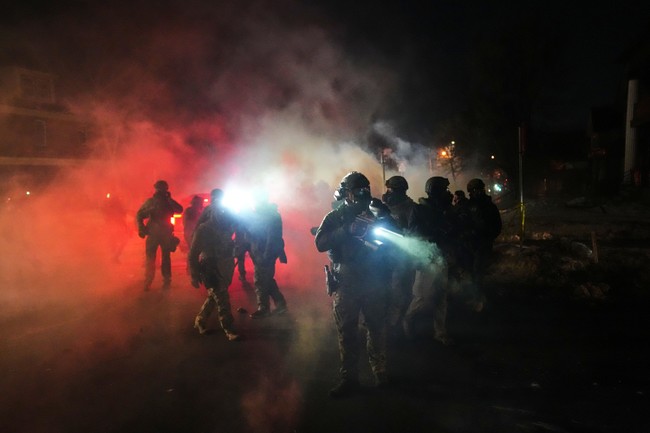
President Donald Trump threatened to deploy the U.S. military in Minnesota following attacks on Immigration and Customs Enforcement officers in the state. “If the corrupt politicians of Minnesota don’t obey the law and stop the professional agitators and insurrectionists from attacking the Patriots of I.C.E., who are only trying to do their job, I will institute the INSURRECTION ACT, which many Presidents have done before me, and quickly put an end to the travesty that is taking place in that once great State,” Trump wrote on TruthSocial Thursday morning. The Insurrection Act allows the president to deploy the military to states in certain cases of unrest or to enforce federal law. Republican lawmakers had previously called on Trump to invoke the law and arrest Minnesota Gov. Tim Walz, a Democrat. Invoke the Insurrection Act.Arrest Tim Walz. https://t.co/r7i7MnlWrT— Rep. Mary Miller (@RepMaryMiller) January 8, 2026 Protests over a second ICE-involved shooting in Minneapolis erupted on Wednesday evening, with protesters throwing rocks and ice and shooting fireworks at law enforcement, who in turn deployed tear gas, Reuters reported. Protests first broke out last week after the shooting of Renee Good, 37, by an ICE agent on Jan. 7. Following the shooting of Good, Walz threatened to deploy the Minnesota National Guard to protect Minnesotans, including from “rogue” ICE agents. In a Wednesday video address, he appeared to praise resistance to federal immigration operations in the state. “All across Minnesota, people are learning about opportunities not just to resist, but to help people who are in danger, Walz said. “Thousands upon thousands of our fellow Minnesotans are going to be relying on mutual aid in the days and weeks to come and they need our support.”   Trump floated the Insurrection Act Wednesday shortly after the second ICE-involved shooting in the city in a week. According to the Department of Homeland Security account of the shooting, the federal officer was making a traffic stop when the subject, a Venezuelan man who was an illegal immigrant, fled the stop in his vehicle. When he crashed, he fled the scene on foot and then violently resisted arrest. The agent making the arrest was then attacked by two other individuals who emerged from a nearby residence, and the Venezuelan subject assailed the agent with a snow shovel or broom handle, the agency said. The agent fired his gun in self-defense, striking the Venezuelan man in the leg. The subject and two alleged assailants fled and barricaded themselves inside a residence, where they were ultimately arrested. The post Trump Threatens to Invoke Insurrection Act in Minnesota appeared first on The Daily Signal.
Like
Comment
Share
Daily Signal Feed
Daily Signal Feed
6 w

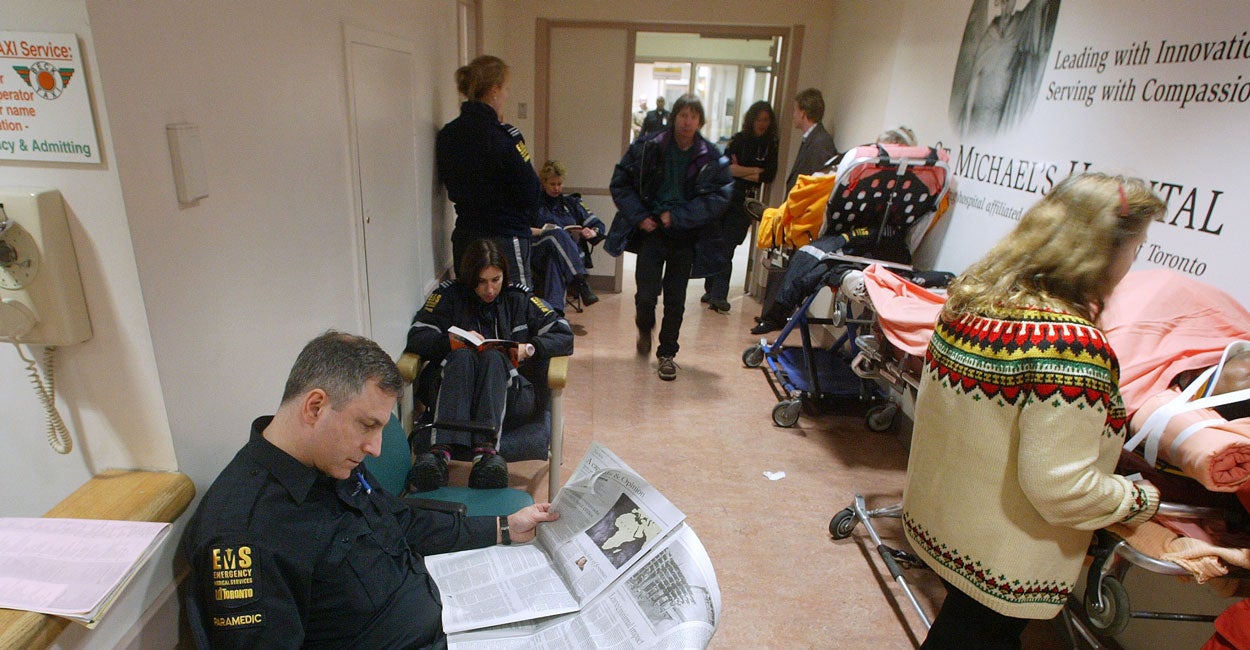
I’m Terminally Ill. I Don’t Have Time for Government Health Care
Favicon 
www.dailysignal.com

I’m Terminally Ill. I Don’t Have Time for Government Health Care

Democrats like to say, for a lack of a better term, that Republicans hate sick people. I have cystic ?brosis: a chronic, life-threatening genetic disease, and I’m sick and tired of Democrats lying and fear mongering to people who are already sick and tired. The A?ordable Care Act was fundamentally ?awed from the start, and was never designed to function without massive, unsustainable subsidies. It ultimately was doomed to fail. The ACA drove up costs, narrowed provider networks, and reduced access to care. In fact, the ACA is one of the main reasons I kept working even when my doctors told me I was too sick to do so. I had to maintain my private insurance. Without it, I would have lost my doctors, faced longer wait times, lost the ?exibility to complete treatments outside the hospital, and been cut o? from the quality care I needed, not just to stay alive, but to remain a functioning member of society. And somehow, Democrats are now pushing something even worse than the A?ordable Care Act: universal health care. On paper, universal health care sounds great. Everyone has access. It’s “free.” But I’m a ?rst-generation American from Cuba, and I know exactly what happens when the government takes over essential systems. When bureaucrats are inserted into systems best managed by the private sector, quality inevitably declines. Health care is no exception. Here’s what happens with universal health care. You can once again forget about keeping or choosing your doctor. That choice is critical for anyone with a pre-existing, life-threatening condition, and it’s a right every American should have, whether sick or healthy. A doctor is a doctor, right? It’s not that simple. For complex conditions like cystic ?brosis, you don’t just need a doctor, you need a team that’s willing to work with both your treatment schedule and your life. Maintaining quality of life matters. Many physicians aren’t willing to do that and will see you as just another name on a chart. Choice allows you to ?nd a doctor or care team that values your quality of life as much as you do. That choice is what truly allows patients to not just survive with a chronic illness, but to fully live with it. You can forget about that choice with universal health care. Taxes go up because nothing is free. Someone always pays. Hospitals, physicians, nurses, medical sta?, equipment, and supplies are already ?nite resources. When the government takes control, those limited resources are stretched even thinner. Universal health care also means longer wait times. Not days or weeks, but months or even years. Patients are placed on waitlists for specialists and, in many cases, even primary care. For someone like me with cystic ?brosis, those delays can be fatal. These waitlists extend to life-or-death care, including organ transplants. In countries like Canada, where universal health care exists, transplant wait times can stretch for years, and many patients don’t survive long enough to receive one. That’s why so many Canadians come to the United States for transplants and advanced care. Yet, Democrats continue to push for these policies under the false claim that they “save lives,” while lying to and fear mongering sick people into believing Republicans want to take their care away. I’ve seen it happen countless times. That narrative is ?at out false and morally wrong. Scaring chronically and terminally ill patients for political gain is evil. The truth is the opposite. Republicans understand the lasting damage the ACA has already done, and the far greater harm universal health care would bring. These systems don’t save lives; they delay care, ration treatment, and drive up costs by inserting government bureaucrats between patients and survival. It’s time someone with real skin in the game calls out Democrats for their bogus healthcare policies. It’s time Democrats stop politicizing people’s lives. It’s time for Republicans to take the lead on health care by advancing serious, sustainable policies that prioritize patient choice, access to care, long-term system stability, a?ordability, and address the fundamental shortcomings of government-driven systems. Patients deserve truth, choice, and timely care. Not fear-driven government control where life depends on it. The post I’m Terminally Ill. I Don’t Have Time for Government Health Care appeared first on The Daily Signal.
Like
Comment
Share
Reclaim The Net Feed
6 w

Lucy Connolly Warned Over Joke on X
Favicon 
reclaimthenet.org

Lucy Connolly Warned Over Joke on X

If you're tired of censorship and dystopian threats against civil liberties, subscribe to Reclaim The Net. Lucy Connolly, a 42-year-old former childcarer who served more than a year in prison for a social media post, says she has been warned she could be sent back to jail over her recent online activity. She revealed on the Dan Wootton Outspoken show that probation officials have issued her a “warning letter” accusing her of “not good behavior” for posts they considered inappropriate under the terms of her release. “I generally don’t know what is okay by their standards to say and what is not,” Connolly said. “I’ve been pulled up for several things last week with a warning letter, which is telling me that [the posts] are not of good behavior. And none of which I’m in agreeance with.” The incident centers on a reposted comment on X that jokingly referred to President Donald Trump “taking” UK Prime Minister Keir Starmer in the same way the United States targeted Venezuela’s Nicolás Maduro. Connolly said the remark was clearly “tongue-in-cheek” but that someone reported it to probation as “inciting violence.” The free speech martyr explained that she now feels she must second-guess everything she says online. “I don’t think you’ll find anything on my Twitter since I’ve made a return to Twitter since I’ve been to prison, that you would deem offensive or incitement,” she said. Connolly later sought to clarify claims that she was facing an imminent return to prison. In a post on X, she said she had not been recalled to custody and had attended a probation meeting, stressing that “all is well.” While confirming she had received a reprimand, she said she maintains a “positive relationship” with probation and is aware of her license conditions. Connolly was released in August after serving 380 days of a 31-month sentence. Her release was on license, a system that imposes behavioral restrictions until the sentence period ends. Such licenses are usually used for people convicted of terrorism or sexual offenses and allow the government to recall a person to custody if they are judged to have breached the rules, even without a new criminal charge. Connolly said she had also been warned about posts relating to her daughter’s school application and about activist Alaa Abd el-Fattah. Abd el-Fattah, a dual Egyptian-British national, has been at the centre of controversy after messages emerged online calling for violence against Zionists and police. He has since apologized and said that some of his words were “completely twisted out of their meaning.” According to reports, the letter sent to Connolly warned that further comments of a similar nature could be deemed a breach of license and lead to her being recalled to prison. Connolly’s case has become emblematic of a wider change in how speech is controlled. The government’s growing use of probationary powers and license conditions means individuals can face ongoing restrictions long after their formal punishment has ended. While the state insists these measures protect the public from harm, they have become a tool for policing expression without due process. Connolly’s arrest and imprisonment for online speech have drawn international scrutiny, with foreign media and political figures questioning how a democratic government could impose such a lengthy prison term over a single social media post. Officials in the United States have reportedly raised the issue through diplomatic channels, expressing concern that the case reflects a growing intolerance toward free expression in the United Kingdom. If you're tired of censorship and dystopian threats against civil liberties, subscribe to Reclaim The Net. The post Lucy Connolly Warned Over Joke on X appeared first on Reclaim The Net.
Like
Comment
Share
History Traveler
History Traveler
6 w

Divine Deadlock: The Dark Origin of Spring and the Secrets of Eleusis
Favicon 
www.historyhit.com

Divine Deadlock: The Dark Origin of Spring and the Secrets of Eleusis

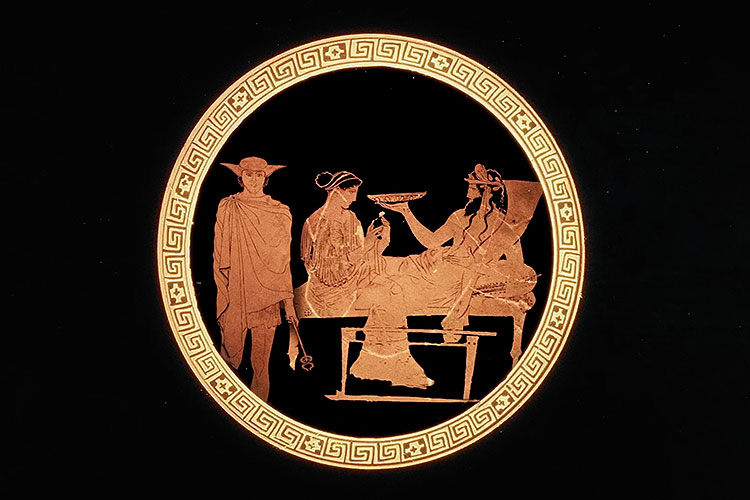
In the concluding episode of Divine Fury: Demeter and Persephone – The Mystery, classicist Natalie Haynes explores the dark compromise that ended the myth of Demeter and Persephone. This narrative provided the ancient Greeks a vital framework for understanding the cycle of the seasons – a bitter bargain marking the transition from the vibrant bloom of spring to the barren, unforgiving hardship of winter. Join Natalie as she reveals how this myth gave birth to the ancient world’s most profound and secretive religious tradition: the Eleusinian Mysteries. Tracing the path of ancient initiates from Athens to Eleusis, Natalie examines rare fragments like the ‘Great Eleusinian Relief’ and the ‘Ninnion Tablet’ to uncover the only surviving visual clues to these top-secret rituals. She explores why thousands of pilgrims flocked to Eleusis for centuries, and how this visceral tale of maternal fury and restorative love has inspired two and a half millennia of art.  Sign up to watch A mother’s strike Greece has always been a land of harsh agricultural reality. In the ancient world, if the land failed, death followed swiftly. When Demeter, the goddess of the harvest, abandoned Mount Olympus in grief over her daughter’s abduction, the world withered. Natalie explains that Demeter’s fury was a cosmic strike, refusing to let the earth be fertile until Persephone was returned. This forced the hand of Zeus, who intervened not out of compassion, but because the mortals had stopped sending sacrifices – there were simply no crops to offer the gods. The pomegranate trap In the myth, Zeus sent Hermes to the Underworld to retrieve Persephone, but Hades, the possessive and cunning King of the Dead, was prepared – freedom would come at a price. He offered Persephone a parting gift: a handful of pomegranate seeds. In the ancient logic of the Underworld, eating the food of the dead binds you to that realm forever. This was no romantic gesture; in the oldest versions of the Homeric Hymn, Persephone is trapped by a “trap wrapped in sweetness.”  Persephone was returned to her mother in an ecstatic homecoming. Interestingly, Natalie points out how although the Homeric Hymn was written in patriarchal times, the poet still knew the depth and value of the female bond between mother and daughter. However, their joy was cut short when Demeter realised Persephone had eaten while in the Underworld.  Zeus, keen to restore the flow of mortal offerings, brokered a dodgy deal: Persephone would spend one-third of the year with Hades and two-thirds of each year above ground with her mother. This “dark compromise” created the seasons: the winter of Demeter’s mourning and the spring of her daughter’s return. Interestingly, Natalie explains how “this is one of the few times in all of Greek mythology that a god or goddess stands their ground against Zeus, king of the gods, and wins – at least a partial victory”. Hermes delivers the message to Persephone and HadesImage Credit: History Hit The Eleusinian Mysteries The myth explains how in gratitude to the people of Eleusis who sheltered her during her grief, Demeter gifted them sacred rites. These became the Eleusinian Mysteries, a phenomenon that lasted for over a millennium, promising immense spiritual wealth. The story of Demeter’s gift grew into a phenomenon of the ancient world, with evidence as far back as the 7th century BC of people gathering in Athens to process to Eleusis. Thousands flocked to Eleusis each year. Anyone – regardless of class, age or gender – could take part, provided they hadn’t committed murder – from common servants to philosophers such as Plato, orators like Cicero, and even Roman Emperors like Hadrian and Augustus.  The appeal was simple but revolutionary: the Mysteries offered hope. While most Greeks viewed the afterlife as a dreary existence as a powerless “shade,” initiates were promised a better fate. Tantalising clues: the archaeology of a secret Because the rites were protected by a vow of silence – punishable by execution – nothing was ever written down. Natalie visits the National Archaeological Museum in Athens to speak with Dr Tulsi Parikh, an expert on the archaeology of Ancient Greek religion, and piece together the rituals from “tiny, tiny fragments” of evidence that have survived – noting how remarkable it is “how much we can still uncover from so little”. The Great Eleusinian Relief: A 5th-century marble masterpiece showing Demeter handing sheaves of wheat to Triptolemus, teaching humankind the art of agriculture. He is also pictured with a winged, serpent-entwined chariot,  gifted so he could spread agricultural knowledge across the globe. The Ninnion Tablet: The only known visual representation of the rituals. It depicts initiates with lit torches and wreaths walking toward the goddesses, suggesting the ceremony’s climax took place in the dead of night. Dr Tulsi Parikh and Natalie Haynes standing by The Great Eleusinian ReliefImage Credit: History Hit Ritual purification and hallucinogens? Natalie follows the 13-mile ‘Sacred Way’ from the Acropolis to Eleusis for the 9 day celebration. Archaeologist Professor Rebecca Sweetman explains the visceral nature of the purification: initiates would carry animals (usually piglets) into the sea to wash them before a massive sacrifice. After reaching the sanctuary at Eleusis (surrounded by symbols and performances to remind them of the myth), the climax occurred in the Telesterion, the “holiest of holies.” Inside this auditorium, the deepest secrets were revealed. Rebecca shares a fascinating theory: given the massive grain silos nearby, initiates may have been given kykeon – a grain-based drink that potentially contained ergot (mouldy grain). This would have provided a potent hallucinogenic effect, ensuring the “mind-blowing” spiritual experience that kept pilgrims returning for centuries. Sanctuary of Demeter at EleusisImage Credit: History Hit A legacy of maternal fury The power of this myth lies in its rare focus on female emotion in what was a patriarchal Greece. Natalie examines how this “maternal fury” has inspired two and a half millennia of art, from 4th-century BC frescos to the modern musical Hadestown. In the Broadway hit, Persephone is reimagined as a darker queen, a modern woman yearning for the surface, while Hades remains the manipulative schemer of the ancient sources. The unbreakable bond Finally, Natalie views the ‘Demeter of Knidos’, a breathtaking statue capturing the goddess’s patient, serene expression – a reminder that Demeter is a goddess who will wait as long as it takes to get what she wants. Natalie concludes by reflecting how “The ultimate victory of the myth is that maternal devotion proved to be the single unbreakable force in the Greek cosmos”. The bond between mother and daughter was a source of both destructive fury and creative, restorative love – a power that forced even the King of the Gods to compromise. Watch the series conclusion of Divine Fury: Demeter and Persephone – The Mystery on History Hit to see Natalie Haynes delves into the dark compromise that resolved the myth of Demeter and Persephone. Sign up to watch
Like
Comment
Share
Hot Air Feed
Hot Air Feed
6 w

Iran Protests: Money - and the Lack of It - Can Change Everything
Favicon 
hotair.com

Iran Protests: Money - and the Lack of It - Can Change Everything

Iran Protests: Money - and the Lack of It - Can Change Everything
Like
Comment
Share
Hot Air Feed
Hot Air Feed
6 w

MN Democrats WANT Trump to Invoke Insurrection Act
Favicon 
hotair.com

MN Democrats WANT Trump to Invoke Insurrection Act

MN Democrats WANT Trump to Invoke Insurrection Act
Like
Comment
Share
Showing 5706 out of 112078
  • 5702
  • 5703
  • 5704
  • 5705
  • 5706
  • 5707
  • 5708
  • 5709
  • 5710
  • 5711
  • 5712
  • 5713
  • 5714
  • 5715
  • 5716
  • 5717
  • 5718
  • 5719
  • 5720
  • 5721
Advertisement
Stop Seeing These Ads

Edit Offer

Add tier


Select an image
Delete your tier
Are you sure you want to delete this tier?

Reviews

In order to sell your content and posts, start by creating a few packages. Monetization

Pay By Wallet

Payment Alert

You are about to purchase the items, do you want to proceed?

Request a Refund