YubNub Social YubNub Social
    #music #tew #tuba #euphonium #militarymusic #armymusic #armyband #satire #tew2026 #jazz #quartet #history #warmup #bigband #armyblues
    Advanced Search
  • Login
  • Register

  • Night mode
  • © 2026 YubNub Social
    About • Directory • Contact Us • Developers • Privacy Policy • Terms of Use • shareasale • FB Webview Detected • Android • Apple iOS • Get Our App

    Select Language

  • English
Night mode toggle
Featured Content
Community
New Posts (Home) ChatBox Popular Posts Reels Game Zone Top PodCasts
Explore
Explore
© 2026 YubNub Social
  • English
About • Directory • Contact Us • Developers • Privacy Policy • Terms of Use • shareasale • FB Webview Detected • Android • Apple iOS • Get Our App
Advertisement
Stop Seeing These Ads

Discover posts

Posts

Users

Pages

Blog

Market

Events

Games

Forum

Science Explorer
Science Explorer
6 w

A world-first mouse that makes gene activity visible
Favicon 
phys.org

A world-first mouse that makes gene activity visible

DNA can be thought of as a vast library that stores all genetic information. Cells do not use this information all at once. Instead, they copy only the necessary parts into RNA, which is then used to produce proteins—the essential building blocks of life. This copying process is called transcription, and it is carried out by a molecule known as RNA polymerase II.
Like
Comment
Share
Science Explorer
Science Explorer
6 w

New 3D map of the sun's magnetic interior could improve predictions of disruptive solar flares
Favicon 
phys.org

New 3D map of the sun's magnetic interior could improve predictions of disruptive solar flares

For the first time, scientists have used satellite data to create a 3D map of the sun's interior magnetic field, the fundamental driver of solar activity. The research, published in The Astrophysical Journal Letters, should enable more accurate predictions of solar cycles and space weather that affects satellites and power grids.
Like
Comment
Share
Science Explorer
Science Explorer
6 w

Fossil hunters uncover 132-million-year-old dinosaur footprints on South Africa's coast
Favicon 
phys.org

Fossil hunters uncover 132-million-year-old dinosaur footprints on South Africa's coast

Southern Africa is world renowned for its fossil record of creatures that lived in the very distant past, including dinosaurs. But, about 182 million years ago, a huge eruption of lava covered much of the landscape (the inland Karoo Basin) where most of the dinosaurs roamed. After that, the dinosaur fossil record in the region goes abruptly quiet for the Jurassic Period (which lasted from 201 million to 145 million years ago).
Like
Comment
Share
Science Explorer
Science Explorer
6 w

New species of ladybird beetle discovered on university campus in Japan
Favicon 
phys.org

New species of ladybird beetle discovered on university campus in Japan

University campuses are often places of learning and discovery, but rarely do researchers find a new species living right on their doorstep. However, that is exactly what happened when a research team from Kyushu University discovered a new species of ladybird beetle, Parastethorus pinicola, on a pine tree at Kyushu University's Hakozaki Satellite.
Like
Comment
Share
Science Explorer
Science Explorer
6 w

Signs of Sir Terry Pratchett's dementia may have been hidden in his books
Favicon 
phys.org

Signs of Sir Terry Pratchett's dementia may have been hidden in his books

Signs of Sir Terry Pratchett's dementia may have been present in his writing a decade before his official diagnosis, new research has found. Researchers have examined the lexical diversity—a measure of how varied an author's word choices are—of 33 books from Pratchett's Discworld series, focusing specifically on his use of nouns and adjectives.
Like
Comment
Share
Science Explorer
Science Explorer
6 w

Optical atomic clocks poised to redefine how the world measures seconds
Favicon 
phys.org

Optical atomic clocks poised to redefine how the world measures seconds

Time is almost up on the way we track each second of the day, with optical atomic clocks set to redefine the way the world measures one second in the near future. Researchers from Adelaide University worked with the National Institute of Standards and Technology (NIST) in the United States and the National Physical Laboratory (NPL) in the United Kingdom to review the future of the next generation of timekeeping.
Like
Comment
Share
Science Explorer
Science Explorer
6 w

Sprint or marathon? Aging muscle stem cells shift from rapid repair to long-term survival
Favicon 
phys.org

Sprint or marathon? Aging muscle stem cells shift from rapid repair to long-term survival

Aging muscles heal more slowly after injury—a frustrating reality familiar to many older adults. A UCLA study conducted in mice reveals an unexpected cause: Stem cells in aged muscle accumulate higher levels of a protein that slows their ability to activate and repair tissue, but helps the cells survive longer in the harsh environment of aging tissue.
Like
Comment
Share
History Traveler
History Traveler
6 w

The Kellogg Brothers: Health and Wellness Pioneers?
Favicon 
www.historyisnowmagazine.com

The Kellogg Brothers: Health and Wellness Pioneers?

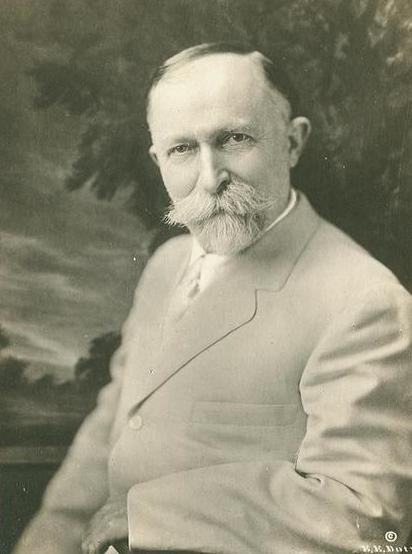
The Kellogg Brothers founded a powerful and impactful cereal company in 1906. They were also innovators in the health and wellness fields and were members of organizations that were ahead of their time - and fought against what was then considered a healthy lifestyle. The Kellogg Brothers left a lasting positive legacy on the health and wellness industry.Daniel Boustead explains. John Harvey Kellogg. William Keith Kellogg.The Kellogg brothers’ longest-lasting contribution to the Health industry is their product, Kellogg’s Cornflakes.  Dr. John Harvey Kellogg’s (1852-1943) trek towards Kellogg’s Cornflakes began as a search for a breakfast substitute to help treat his patients at the Battle Creek Sanitarium who were suffering from stomach problems.[1]  This was a consistent complaint of his patients. A disabled gastrointestinal system caused the patient’s stomach problems. Dr. Kellogg discovered that the half-baked breakfast mush he had previously been serving patients was causing dyspepsia. He also felt that the replacement should also be “pre-cooked”. The creation of Kellogg’s Corn Flakes involves conflicting accounts, in which, in the end, Dr. Kellogg, his wife, Ella, and Dr. Kellogg’s brother, Will (1860-1951), should receive some credit for its creation.[2]Dr. John Harvey Kellogg applied to the U.S. Patent Office for his patent on “Flaked Cereal and Process for Preparing the Same”(No.558,399) on May 31st, 1895.[3] The U.S. Patent Office granted Dr. Kellogg this patent on April 14th, 1896.  In the patent itself, Dr. Kellogg included flakes made of oats, corn, barley, and other grains in addition to wheat flakes to protect his patent.In the summer of 1895, Will and Dr. Kellogg introduced the Corn Flakes at the General Conference of the Seventh-Day Adventists at the Battle Creek Sanitarium.[4] The dish became a hit with conference attendees, who would add milk, cream, or yogurt to it.  Company formedIn 1906, Will Kellogg founded the Battle Creek Toasted Corn Flake Company.[5] In 1907, he changed the company’s name to the Kellogg Toasted Corn Flake Company.[6] In the late summer to early fall of 1907, Kellogg’s Cornflakes made its official debut to the American public.[7] It was under Will Kellogg’s leadership that, during the Great Depression in 1933, the Kellogg company made a gross profit of $6 million (about $110 million in today’s money).[8] This was at a time when many companies were going bankrupt or struggling to maintain a profit.  In 1939, Will Kellogg retired as the company's head. Dr. Kellogg was also a trailblazer in other ways in the field of health and wellness. The Battle Creek Sanitarium began in 1866 as the Health Reform Institute.[9] “Sister” White presented her ideas about Christian biblical healthy living at the Seventh-day Adventist General Conference on May 20th, 1866. The  General Conference approved the creation of an institute for health reform.[10] It was the governing body of the Seventh-day Adventist Church. The organization opened its doors for business as The Western Health Reform Institution on September 5th, 1867.[11] On October 1st, 1876, Dr. Kellogg became the medical director of the Western Health Reform Institute.[12] The Western Health Reform Institute became the Battle Creek Sanatorium on September 15th, 1910.[13] On the same date, Dr. Kellogg told this audience how the new institution should be called Sanitarium or San, because he felt it better suited the mission. From 1876 to 1943, Dr. Kellogg was at the head of the Western Health Reform Institute, later known as the Battle Creek Sanitarium.[14] Several years before his death, Dr. Kellogg estimated that his work at the Sanitarium brought him into contact with approximately 250,000 persons.[15]At the Battle Creek Sanitarium, if a patient were suffering from the “blues,” they would be placed under an electric light cabinet to help them get sunlight. There was not much natural sunlight in southeastern Michigan during the Fall.[16] In this field, Dr. Kellogg was years ahead of his time in terms of medical treatment for seasonal affective disorder or SAD.  In 1916, at the Battle Creek Sanitarium, patient meals were also served with a card attached that specified the proper ratio of calories, proteins, carbohydrates, and fats to be consumed at the meal.[17] An example of this document is dated from May 19th, 1916. This was unheard of in the field of dieting and nutrition at the time.Also at the Battle Creek Sanitarium, Dr. Kellogg would lead aerobics and calisthenics with the patients, backed by a brass band.[18] This was so popular that, in 1923, the Columbia Gramophone Company released 10 78-RPM shellac discs of Dr. Kellogg’s class, complete with a booklet. The album was entitled “John Harvey Kellogg’s HEALTH LADDER”.  In the booklet, there were exercises for the back, abdomen, legs, and arms that Dr. Kellogg recommended for his patients at the Battle Creek Sanitarium. This was decades ahead of the exercise craze led by Jack Lalanne, Richard Simmons, and other such international figures. Although Dr. Kellogg never received credit for this, he encouraged his patients at the Battle Creek Sanitarium,  after surgery, to get up, move, and perform graded, deep-breathing exercises. [19] This was in stark contrast to the standard procedure of the day, which was to have patients confined to hospital beds for several days to weeks at a time. In the present day, medical procedures, early ambulation, and breathing exercises are the backbone of most recovery protocols after surgery. Patents & PioneersIn 1934, Dr. Kellogg received a patent for his “Soy Acidophilus Milk”.[20]  Dr. Kellogg devised this concoction to deal with babies who couldn’t deal with cow’s milk-based formulae, as well as his patients at the San who were suffering colitis, duodenal or gastric ulcers, babies who rejected their mom’s breast milk, constipation, and excessive flatulence. This was a step forward in addressing digestive and gastric health compared to the treatments of the day. By 1935, patients at the Battle Creek Sanitarium were consuming over 200 gallons a week of  Dr.Kellogg’s “Soy Acidophilus Milk”. The Battle Creek Sanitarium’s patients’ favorite way to enjoy Dr. Kellogg’s “Soy Acidophilus Milk” was with ripe bananas and a side of soy milk.  This predated the soy milk craze that you see today all over the world. Dr. Kellogg and Will Kellogg were pioneers in the fight against tobacco and its harmful effects. Dr. Kellogg had discovered through increasing medical evidence that tobacco smoke caused heart disease, lung disease, digestive disorders, infections, and neurological problems.[21] In 1922, Dr. Kellogg published a successful book entitled Tobaccoism, or How Tobacco Kills. Along with Henry Ford’s book, The White Slaver, these books became a cornerstone of the progressive movement’s failed anti-smoking campaign.  Will Kellogg considered smoking to be so dangerous that he demanded that his workers at his factory either quit or he would fire them. He thought tobacco was more dangerous than drinking alcohol.[22]Dr. Kellogg also thought that tobacco products interfered with proper muscular and growth development, caused gastric ulcers, unduly taxed the liver and kidney systems, injured the brain and nervous systems, and also impaired judgment and moral sensibility.[23] All of Dr. Kellogg’s claims have subsequently been supported by medical science, medical doctors, and research studies, except for the moral sensibility claim. In the aftermath of World War I, Dr. Kellogg was the president of the Michigan Anti-Cigarette Society and the Committee of Fifty to Study the Tobacco Problem.[24]  Henry Ford was also a prominent member of the Committee of Fifty to Study the Tobacco Problem. Dr. Kellogg, with the help of this group, also produced the very first motion picture to address the dangers of tobacco smoking. He and his brother Will were pioneers in their opposition to tobacco products at a time when the tobacco companies were powerful and used their influence to suppress knowledge about the dangers of their products. In the USA, the dangers of tobacco products did not reach the Federal level until January 11th, 1964, when the Surgeon General issued the 1964 Report on Smoking and Health.[25] In this report, it linked smoking to the cause of emphysema, chronic bronchitis, coronary heart disease, and increased statistical risk of lung cancer. The effects of this report were featured in television and radio reports in the USA and in foreign countries. The Kellogg Brothers knew about the dangers of smoking long before the US government did. ConclusionIn conclusion, the Kellogg Brothers founded an important cereal company that shaped  America’s idea of breakfast. They were also innovators in medical science and wellness. Dr. Kellogg and his brother Will’s opposition to tobacco products was well ahead of its time. The Kellogg Brothers' beliefs also went against the American and foreign understanding of tobacco and its adverse effects. This was a time when the tobacco Industry held a stranglehold on the public consciousness in America and elsewhere. The Kellogg Brothers’ courage in publicizing their findings left a legacy on health and wellness concepts that are still felt today. Did you find that piece interesting? If so, join us for free by clicking here.  Works Cited PageMarkel, Howard. The Kelloggs: The Battling Brothers of Battle Creek. New York: New York. Vintage Books. 2017.National Library of Medicine: Profiles in Science, Reports of the Surgeon General, The 1964 Report on Smoking and Health. Accessed on November 26th, 2025, https://profiles.nlm.nih.gov/spotlight/nn/feature/smoking.Schwartz, Richard W. John Harvey Kellogg: Pioneering Health Reformer. Hagerstown: Maryland. Review and Hearld Publishing Association.2006.Wilson, Brian C. Dr. John Harvey Kellogg: And the Religion of Biologic Living. Bloomington & Indianapolis. Indiana University Press. 2014. [1] Markel, Howard. The Kelloggs: The Battling Brothers of Battle Creek. New York: New York. Vintage Books. 2017.  20 and 112.[2] Markel, Howard. The Kelloggs: The Battling Brothers of Battle Creek. New York: New York. Vintage Books. 2017.  20 and 129 to 133. [3] Markel, Howard. The Kelloggs: The Battling Brothers of Battle Creek. New York: New York. Vintage Books. 2017. 133. [4] Markel, Howard. The Kelloggs: The Battling Brothers of Battle Creek. New York: New York. Vintage Books. 2017. 134.[5] Markel, Howard. The Kelloggs: The Battling Brothers of Battle Creek. New York: New York. Vintage Books. 2017.XIV.[6] Markel, Howard. The Kelloggs: The Battling Brothers of Battle Creek. New York: New York. Vintage Books. 2017.279. [7] Markel, Howard. The Kelloggs: The Battling Brothers of Battle Creek. New York: New York. Vintage Books. 2017. 280. [8] Markel, Howard. The Kelloggs: The Battling Brothers of Battle Creek. New York: New York. Vintage Books. 2017. 264. [9] Schwartz, Richard W. John Harvey Kellogg: Pioneering Health Reformer. Hagerstown: Maryland. Review and Hearld Publishing Association.2006.62. [10] Markel, Howard. The Kelloggs: The Battling Brothers of Battle Creek. New York: New York. Vintage Books. 2017. 89. [11] Markel, Howard. The Kelloggs: The Battling Brothers of Battle Creek. New York: New York. Vintage Books. 2017. 90. [12] Markel, Howard. The Kelloggs: The Battling Brothers of Battle Creek. New York: New York. Vintage Books. 2017. 92. [13] Markel, Howard. The Kelloggs: The Battling Brothers of Battle Creek. New York: New York. Vintage Books. 2017. 95.[14] Markel, Howard. The Kelloggs: The Battling Brothers of Battle Creek. New York: New York. Vintage Books. 2017. 95; Wilson, Brian C. Dr. John Harvey Kellogg: And the Religion of Biologic Living. Bloomington & Indianapolis. Indiana University Press. 2014. XI. [15] Schwartz, Richard W. John Harvey Kellogg: Pioneering Health Reformer. Hagerstown: Maryland. Review and Hearld Publishing Association.2006.62.[16] Markel, Howard. The Kelloggs: The Battling Brothers of Battle Creek. New York: New York. Vintage Books. 2017. 187. [17] Markel, Howard. The Kelloggs: The Battling Brothers of Battle Creek. New York: New York. Vintage Books. 2017. 187 to 188. [18] Markel, Howard. The Kelloggs: The Battling Brothers of Battle Creek. New York: New York. Vintage Books. 2017.  190 to 191. [19] Markel, Howard. The Kelloggs: The Battling Brothers of Battle Creek. New York: New York. Vintage Books. 2017. 195 and 200.[20] Markel, Howard. The Kelloggs: The Battling Brothers of Battle Creek. New York: New York. Vintage Books. 2017.   330 to 331. [21] Markel, Howard. The Kelloggs: The Battling Brothers of Battle Creek. New York: New York. Vintage Books. 2017. 224.[22] Markel, Howard. The Kelloggs: The Battling Brothers of Battle Creek. New York: New York. Vintage Books. 2017. 224 to 225.[23] Schwartz, Richard W. John Harvey Kellogg: Pioneering Health Reformer. Hagerstown: Maryland. Review and Hearld Publishing Association.2006. 59. [24] Schwartz, Richard W. John Harvey Kellogg: Pioneering Health Reformer. Hagerstown: Maryland. Review and Hearld Publishing Association.2006. 107.[25] National Library of Medicine: Profiles in Science, Reports of the Surgeon General, The 1964 Report on Smoking and Health. Accessed on November 26th, 2025, https://profiles.nlm.nih.gov/spotlight/nn/feature/smoking.

Like
Comment
Share
History Traveler
History Traveler
6 w

Northernmost Land Action of the American Civil War: The Confederate Raid on St. Albans, Vermont
Favicon 
www.historyisnowmagazine.com

Northernmost Land Action of the American Civil War: The Confederate Raid on St. Albans, Vermont

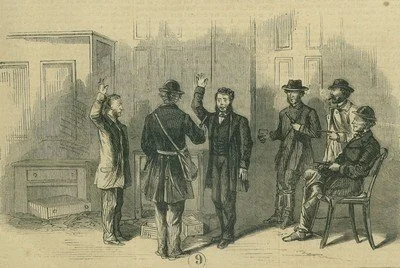
The northernmost land action of the American Civil War did not occur during the Confederacy’s twice ill-fated invasions of the north but rather happened in the small city of St. Albans, Vermont, less than twenty miles from the Canadian border. Perpetrated by a small band of Confederate raiders, this was more reminiscent of a wild west style attack than a tactical cavalry raid. Brian Hughes explains. A woodcut illustration of the St. Albans Raid. In the image, at the bank, the raiders forced those present to take an oath to the Confederacy. IntroductionAs 1864 was coming to an end the outlook for the Confederacy appeared bleak. The south was under relentless Union pressure from east and west, on land and at sea. In Georgia, General Sherman was leaving a path of destruction in his wake and had captured Atlanta, the second most important city in the South. Simultaneously in Virginia, General Robert E. Lee was endlessly preoccupied with attempting to stymie Ulysses S. Grant during the Peninsula Campaign, inflicting heavy casualties in cataclysmic battles but unable to effectively achieve any substantial strategic objective. Union forces were also devastating the Shenandoah Valley and tightening the noose around the south with their naval blockade. The increasing demoralization of southern troops and populace manifested itself politically. Becoming increasingly distressed, certain figures began to think outside the box for solutions, even if they were only short term. Twenty one year old Kentuckian and Confederate soldier Bennet H. Young came forth with an unorthodox yet bold proposal. Having taken part in several battles in and around the Midwest, Young had fled a Union prison camp where reaching Canada and returning home via a Confederate blockade runner operating out of Halifax. Young believed he could mount a series of forays into the meagerly defended northern New England states from Canada. Despite the small scale nature of the raids, any amount of fiscal gains would be sufficient to assist the cash strapped Confederate government and act as a sort of monetary life support, extending the conflict just long enough until a more ideal political outcome could be agreed upon for the Confederacy. Similarly, Confederate operations in the far north could potentially divert Union troops away from more active fronts, relieving pressure on the hard pressed farms and plantations necessary to sustain the southern war effort.  CanadaAlthough officially neutral in the conflict, Canada, then still a disunited British colony, harbored great sympathy for the Confederate cause. Heavily reliant on southern cotton and historic enmity with neighboring states (mainly New England) contributed to these sentiments. A multitude of Confederate agents, spies, and fundraisers would operate out of cities such as Montreal and St. Johns some of which were aware of the tactical potential Canada offered geographically. Young made extensive use of these contacts which he garnered throughout his time there. Why St. AlbansSt. Albans was selected for a variety of reasons. Located a mere fifteen miles from the border with Canada, St. Albans was home to several banks. The city was easily accessible with several roads leading in and out of the downtown area, being just close enough to Vermont’s largest city, Burlington. In addition, the town was meagerly defended with no substantial military force in and around the region.  Raid, October 19th, 1864The original date of the operation was scheduled for the 18th of October, but the Franklin County Farmers Market thwarted these plans with the increase in population and presence of authorities. Delaying the attack by a day or two would similarly ensure the banks were more laden with money following market day. Young had about twenty men at his disposal, which he split up in subunits of five or six each tasked with striking one of three banks. The raiders dressed in plain civilian clothes and initially disguised their southern accents upon making entry into the city for the purpose of reconnaissance. At around three pm, Young stood on the steps of local hotel unsheathed his pistol and with great braggadocio exclaimed “This city is now in the possession of the Confederate States of America!” This was the signal for the attack as the Confederate operatives sprung forth and furiously rode through the streets toward their objectives. Their three targets were the St. Albans Bank, The Franklin County Bank, and First National Bank were all situated within a block and a half of one another. The rebels took the locals by complete surprise and quickly rampaged through the three banks, robbing them and forcing civilians with their arms raised to “solemnly swear to obey and respect the Constitution of the Confederate States of America.” Treasury notes and bonds were taken in addition to cash, but the banks were intentionally not thoroughly looted the banks of all their contents given the necessity of the rebels to flee the city swiftly.Some of the southern raiders took advantage of the ensuing pandemonium to steal horses to better facilitate their escape. The raid was over in less than half an hour but not before the southerners shot one local civilian, Elinus Morrison, mortally wounding him. Morrison attempted to confront the raiders who then shot him in the abdomen. One Southern raider had been wounded during the flight as the Confederates unsuccessfully tried to set fire to the town.  PursuitThe perpetrators set off with stolen horses in addition to their loot from the banks, this incumbered them slightly. A Union army veteran and St. Albans resident Captain George Conger rapidly organized a posse and gave chase. The Confederates again attempted to light fire to several bridges to better ensure their escape but once again the flames were quickly doused by the pursuers. Eventually the marauders parted in to separate groups and continued, northward, Vermont authorities alerted their counter parts in Canada hoping they would apprehend the intruders. The Canadian authorities decided to cooperate with the Vermonters, capturing a handful of the raiders once across the border, they quickly confiscating their weapons and cash, and called on the militia to further patrol the border. The Canadians confiscated eighty seven thousand dollars in money, roughly equivalent to two million in today’s currency. By wars end in April 1865 the banks of St. Albans had been reimbursed and the remaining captives released. The St. Albans raid was a revealing act of Confederate desperation in the war’s final months. Though militarily insignificant, it displayed how far the southern operatives were willing to go-violating borders and testing neutrality. The raid temporarily shocked the north and exposed geographical vulnerabilities. In the end the raid failed to divert significant resources, thus ensuring the Confederacy’s inevitable collapse. The site has been offering a wide variety of high-quality, free history content since 2012. If you’d like to say ‘thank you’ and help us with site running costs, please consider donating here.
Like
Comment
Share
History Traveler
History Traveler
6 w

Sealed bronze medieval reliquary found in Turkey
Favicon 
www.thehistoryblog.com

Sealed bronze medieval reliquary found in Turkey

A rare sealed reliquary cross has been unearthed at the site of ancient Lystra in modern-day Konya, central Turkey. The artifact was found unopened, and is being cleaned and conserved in its original condition to avoid causing irreparable damage to it. The excavation in the area of the church uncovered graves with metal crosses and jewelry. Several reliquaries were among the finds, and they were all broken, opened, or with only half of it surviving save for one. The intact bronze reliquary cross dates to between the 9th and the 11th centuries. It consists of two covers riveted together permanently. There is no hinge or mechanism to open and close it like a locket. The exterior is decorated with circumpunct (circled dot) and parallel line designs. Reliquaries held the remains of saints or other sacred artifacts (a piece of the True Cross, a fragment of the veil of Veronica, etc.) and were worn or carried as devotional objects. This one has a suspension mount at the top that suggests it was worn as a necklace. When archaeologists peered inside through a gap, they saw a small piece of a shroud-like textile on top. That fabric could be the relic or it could be covering something else. Lystra has a very ancient connection to Christianity. In Acts of the Apostles 14:6-18 , Paul and Barnabas heal a paralyzed man and are hailed as Hermes and Zeus incarnate. The crowd is about to sacrifice a bull to them when the two tear off the clothes and insist they are but men come to preach about the One God. Paul visits Lystra again on his second missionary journey, this time with Silas, and meets up with the apostle Timothy before moving on to Macedonia. It had its own homegrown saints too. It became the seat of a bishopric in the 4th century with Saint Amphilochius of Iconium as its first bishop.  Last year, archaeologists unearthed the remains of a 100-foot-long basilica from late antiquity that was in continuous use until the early Middle Ages. It was richly decorated with gilded mosaics on the ceilings and ornamented walls. Archaeologists believe this was the main church of the city, a basilica of grandeur befitting its status as a bishop’s seat and one of the centers of early Christianity in central Anatolia. The reliquary cross was discovered in the continuing excavation of this church.
Like
Comment
Share
Showing 5817 out of 113723
  • 5813
  • 5814
  • 5815
  • 5816
  • 5817
  • 5818
  • 5819
  • 5820
  • 5821
  • 5822
  • 5823
  • 5824
  • 5825
  • 5826
  • 5827
  • 5828
  • 5829
  • 5830
  • 5831
  • 5832
Advertisement
Stop Seeing These Ads

Edit Offer

Add tier


Select an image
Delete your tier
Are you sure you want to delete this tier?

Reviews

In order to sell your content and posts, start by creating a few packages. Monetization

Pay By Wallet

Payment Alert

You are about to purchase the items, do you want to proceed?

Request a Refund