YubNub Social YubNub Social
    #police #law #racism #civilrights #ai #funny #fourthamendment #utah #cops #privacy #lawenforcement #warrant #environmentalscience #eff #block
    Advanced Search
  • Login
  • Register

  • Night mode
  • © 2026 YubNub Social
    About • Directory • Contact Us • Developers • Privacy Policy • Terms of Use • shareasale • FB Webview Detected • Android • Apple iOS • Get Our App

    Select Language

  • English
Community
New Posts (Home) ChatBox Popular Posts Reels Game Zone Top PodCasts
Explore
Explore
© 2026 YubNub Social
  • English
About • Directory • Contact Us • Developers • Privacy Policy • Terms of Use • shareasale • FB Webview Detected • Android • Apple iOS • Get Our App
Advertisement
Stop Seeing These Ads

Discover posts

Posts

Users

Pages

Blog

Market

Events

Games

Forum

NewsBusters Feed
NewsBusters Feed
1 y

New York Times Claims Trump Wants Maoist ‘Cultural Revolution’
Favicon 
www.newsbusters.org

New York Times Claims Trump Wants Maoist ‘Cultural Revolution’

Is the second Trump Administration turning America into Maoist China? That was the New York Times’ assessment in "Many Chinese See a Cultural Revolution in America," to judge from a piece by Li Yuan that appeared in the paper’s March 10 edition. Yuan made the very serious, if content-free, assertion that the President Donald Trump shares many parallels with China’s Communist revolutionary dictator Mao Zedong, who killed tens of millions of his own people. Apparently, she failed to notice, if that were the case, what a limb she would have been going out on to even write such an article in the regime of such a despot. Yuan claimed that “As the United States grapples with the upheaval unleashed by the Trump administration, many Chinese people are finding they can relate to what many Americans are going through. They are saying it feels something like the Cultural Revolution, the period known as “the decade of turmoil.”  She stated that many Chinese had long looked to America as a role model they wished their country would more closely follow, but vaguely claimed “Now for some Chinese, the United States is looking more and more like China.” She then quoted a cherry-picked selection of Chinese social media comments, accusing Trump of “the pursuit of power,” and being a “president who calls himself a king,” eulogizing America as “beacon of democracy, 1776-2025,” and commenting “you’d think [official Chinese Communist Party Newspaper] People’s Daily had moved into the U.S. Consulate,” as though these random people’s unsubstantiated assertions somehow demonstrated her point.  She went on to quote a Chinese law professor who accused Trump of trying to spark his own “cultural revolution,” but offered no explanation of how anything Trump did was in any way parallel to Mao’s Cultural Revolution, in which millions perished while Western music, literature, and other art was banned in the name of preserving the purity of Chinese socialism. She also vaguely stated that many Chinese were alarmed by Trump’s “cult of personality,” as though that, too, was a distinctive parallel. She also made much of another Chinese social media user who commented on Trump receiving a standing ovation from his cabinet, “I think we underestimated the dark side of human nature,” to which someone else had responded, “The rhythm of this applause feels so familiar,” whatever that was supposed to mean. As though this were the clincher, Yuan then quoted a comment on her own podcast: a parody of Trump laying out his agenda, styled as a Chinese Communist propaganda piece. Yuan did graciously make a hasty admission that the parallels were not exact, quoting Ian Johnson, an American journalist stationed in China, who had pointed out that “China is a one-party state lacking in three pillars of the American system: liberty, democracy and the rule of law. Millions of Chinese died during the Cultural Revolution, and tens of millions were persecuted. What’s happening in the United States is far from that.”  In fact, more precisely, Mao had killed an estimated total of sixty to eighty million of his own people, which would almost certainly have made him numerically the greatest mass-murderer the world has ever seen. So, one was arguably the most bloodthirsty tyrant the world had ever seen, while the other had just got a standing ovation from his cabinet and garnered some negative social media comments from people who didn’t like him, So, again, not a 100 percent perfect parallel, But, hey, whatever, close enough for the New York Times.

Like
Comment
Share
The Blaze Media Feed
1 y

Congress can’t legislate away unintended consequences
Favicon 
www.theblaze.com

Congress can’t legislate away unintended consequences

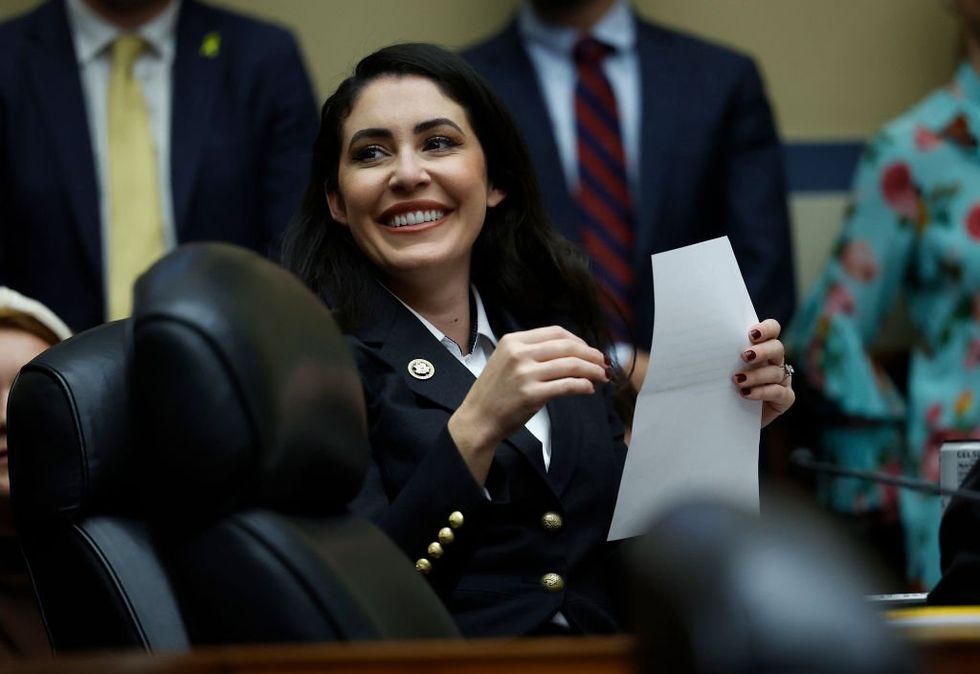
Sometimes, bipartisanship is a great meeting of the minds. Other times, it’s a meeting of minds that don’t understand economics. The latter is the case with recently proposed legislation to cap credit card interest rates, introduced by Rep. Anna Paulina Luna (R-Fla.) and her reliably misguided counterpart, Alexandria Ocasio-Cortez (D-N.Y.).Let’s start with common ground. Most people agree that credit card interest rates, which now average well above 20%, are excessive. No one should pay 20% or 30% interest annually unless facing a true emergency, and even then, that debt should be paid off as quickly as possible.Policies that sound good in theory often fail in practice, and capping credit card interest rates is one of them.Pricing serves as a signal, providing consumers with critical information. A high interest rate should send a clear message: Avoid carrying a credit card balance. Paying off the full amount each month prevents the burden of excessive interest charges.However, in typical fashion, lawmakers who put political appeal over economic literacy ignore the unintended consequences of their policies. Proposing a cap on interest rates disrupts this pricing signal and creates a cascade of negative effects.The most immediate consequence is reduced access to credit. High credit card interest rates exist largely because lenders assume the risk of defaults, including the possibility that borrowers may discharge their debt through bankruptcy. To compensate for this risk, lenders adjust costs accordingly.Capping credit card interest rates while maintaining the bankruptcy “out” forces lenders to adjust their underwriting process. As a result, many borrowers — including those with poor credit and even some with decent credit — will lose or be denied access to credit from traditional sources. To compensate for lost revenue, lenders will likely introduce additional fees, making borrowing more expensive in other ways.Predictably, lawmakers like Luna and Ocasio-Cortez will then complain about financial discrimination against low-income borrowers who suddenly find themselves locked out of the credit system.Without access to traditional credit, many of these individuals will turn to riskier, more expensive alternatives, such as payday lenders or even black-market sources, further exacerbating the problem policymakers claim to be solving.Ultimately, Congress cannot legislate away unintended consequences. In fact, Congress is typically a source of unintended consequences.Some may argue that restricting credit access is beneficial for certain individuals, but denying access doesn’t mean people won’t seek credit elsewhere — often from riskier, more expensive sources.More importantly, what gives the government the authority to regulate financial responsibility? Should Congress also prevent people from buying cars they can’t afford, placing sports bets, purchasing designer clothes, or enjoying steak dinners?Financial responsibility cannot be legislated, especially in a country with minimal financial literacy education.And let’s not forget that Congress itself has accumulated $36.5 trillion in national debt. Hardly a role model for fiscal responsibility.Policies that sound good in theory often fail in practice, and capping credit card interest rates is one of them. Instead of creating more financial hurdles, Congress should focus on fixing its own fiscal mismanagement and addressing affordability issues. People shouldn’t feel forced to borrow at insane rates just to make ends meet.
Like
Comment
Share
The Blaze Media Feed
1 y

This Yale professor warns of Elon Musk’s ‘fascism’ — and misses the real threat
Favicon 
www.theblaze.com

This Yale professor warns of Elon Musk’s ‘fascism’ — and misses the real threat

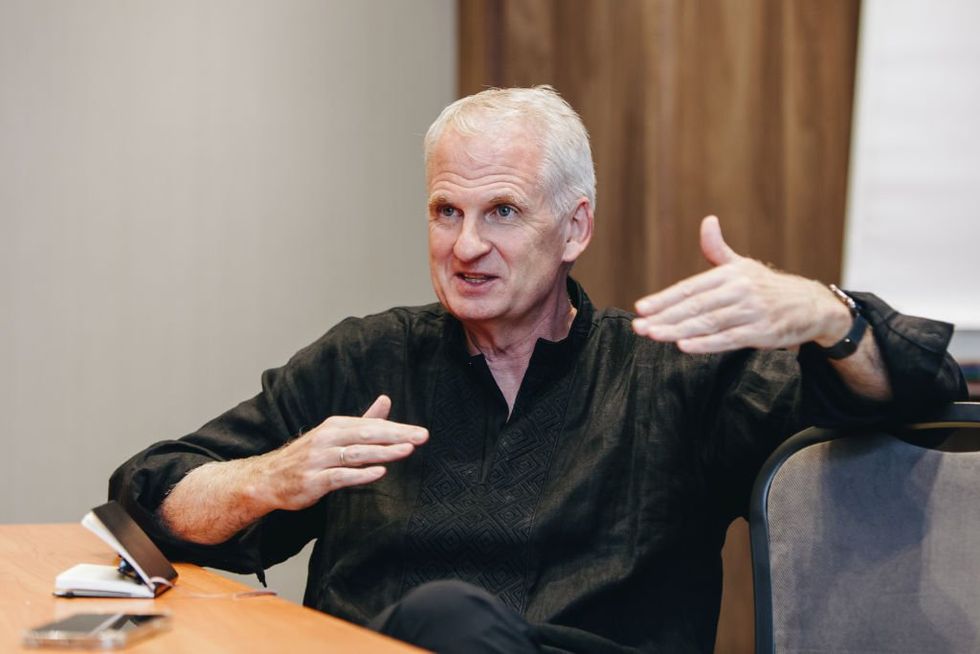
Timothy Snyder may not be well known in American conservative circles, but his European influence is substantial. I hadn’t heard of the Yale historian until I moved to Vienna, Austria, where he enjoys a kind of celebrity status. European leaders frequently refer to his ideas, whether they are criticizing Elon Musk’s Department of Government Efficiency or comparing JD Vance’s criticism of censorship at the Munich Security Conference last month to the Holocaust. These talking points have crossed the Atlantic, reaching U.S. media through figures like CBS News moderator Margaret Brennan. Snyder’s influence among the American left continues to grow. I recently attended Snyder’s “Making Sense of an Unsettling World” lecture at Vienna’s Institute for Human Sciences. His casual demeanor, paired with a Zelenskyy-style quarter-zip — a nod to the Ukrainian leader he has met and advised — reinforces his “rebel professor” image. This blend of defiance and intellect captivates and galvanizes college students, making Snyder both a compelling and polarizing figure. Snyder’s call to 'defend institutions' fails to recognize that institutions can be corrupt, bloated, and unaccountable. After the predictable barrage of ad hominem attacks on Trump — of which there were many — Snyder shifted his focus to the most controversial figure in the administration: Elon Musk. As Snyder spoke, I couldn’t help but notice the vast ideological divide between the left and the right. This gap felt particularly sobering, not just because of its seemingly unbridgeable nature but also because Snyder's perspective undermines the very foundation necessary to bridge such divides: dissent and dialogue enabled by free speech. Snyder accuses Musk of building a privatized, fascistic government by dismantling America's institutions. According to Snyder, we common folk are mere pawns in Musk’s algorithmic “system,” which he claims is designed to predict and manipulate human behavior. The goal, Snyder argues, is clear: to destroy institutions, privatize government functions, and siphon taxpayer dollars into Musk’s pockets. Negative vs. positive freedom Snyder’s argument centers on a critique of the conservative notion of “negative freedom” — the idea that freedom is best preserved by minimizing external restraints on the individual. He dismisses this concept as “freedom against,” portraying it as a tool ripe for exploitation by figures like Elon Musk. In Snyder's view, Musk uses this version of freedom to turn the masses “against” institutions, only to privatize them for personal gain later. In contrast, Snyder champions the left-leaning principle of “positive freedom,” or “freedom for.” This approach suggests that freedom is only legitimate when exercised in service of ideals codified and enforced through institutions. According to Snyder's 2016 manifesto, which evolved into his New York Times best-selling pamphlet "On Tyranny," institutions “preserve human decency” and serve as the greatest barriers to tyranny. In this framework, Musk emerges as Snyder’s villain, a modern-day figure following in the footsteps of 20th-century fascists who dismantled institutions to consolidate power. Institutions need accountability Snyder’s alarmism about Musk exposes the deep divide between the left and right on the nature of freedom and the role of institutions. While critiques of corporate and political power are valid, Snyder’s perspective assumes that institutions should be defended without question, a stance that conflicts with conservatives’ healthy skepticism of concentrated power — a skepticism the left once shared. Positive freedom, as Snyder envisions it, relies on the belief that government can act as a benevolent force. This assumption contradicts James Madison’s warning that “if angels were to govern men, neither external nor internal controls on government would be necessary.” But angels don’t govern us. Washington bureaucrats are subject to the same ills and vices that make government over the masses necessary. Defending institutional authority without scrutiny undermines the conservative commitment to negative freedom — the principle that individual liberties should be checks against excessive power. Snyder’s solution, then, is not just to oppose authoritarian figures but to resist decentralization itself. He cites Aristotle and Plato to argue that inequality leads to instability and that demagogues exploit free speech to seize power. In Snyder’s world, speech is only “free” when it supports institutional interests rather than challenges them. Yet his call to “defend institutions” fails to recognize that institutions can be corrupt, bloated, and unaccountable. Snyder assumes institutions are inherently legitimate, ignoring the need for them to be accountable to the people they serve. Where Snyder falls short Snyder’s argument falls apart here. The left's crusade against so-called oligarchs like Musk isn’t about returning power to the people — it’s about re-centralizing it under authorities leftists consider ideologically acceptable. Negative freedom is dangerous to them because it allows individuals to dissent, challenge state-sanctioned narratives, and question institutional orthodoxy. Yet it is precisely this freedom that has protected human decency from the imposition of top-down tyranny. Snyder is right that institutions should be defended when they uphold the people's dignity, rights, and liberties. But just as institutions act as a check on the whims of the populace, the dissent of the people serves as a vital check on the inherent corruptibility of institutions. As Madison argued, both safeguards are essential. When Snyder and his growing following on the global left seek to suppress dissent for the sake of institutional authority, they don’t prevent tyranny — they empower it.
Like
Comment
Share
History Traveler
History Traveler
1 y

Inside The True Story Of Uhtred Of Bebbanburg That ‘The Last Kingdom’ Didn’t Tell
Favicon 
allthatsinteresting.com

Inside The True Story Of Uhtred Of Bebbanburg That ‘The Last Kingdom’ Didn’t Tell

Uhtred the Bold, the real historical figure who inspired The Last Kingdom, wasn't raised by Vikings like his onscreen counterpart, but he did fight against the Danes, unite Northumbria, and spark a blood feud that lasted for generations. The post Inside The True Story Of Uhtred Of Bebbanburg That ‘The Last Kingdom’ Didn’t Tell appeared first on All That's Interesting.
Like
Comment
Share
Twitchy Feed
Twitchy Feed
1 y

DOGE Protester Expresses How Frightening It Is to Get an Email From Your Boss
Favicon 
twitchy.com

DOGE Protester Expresses How Frightening It Is to Get an Email From Your Boss

DOGE Protester Expresses How Frightening It Is to Get an Email From Your Boss
Like
Comment
Share
Twitchy Feed
Twitchy Feed
1 y

CBS News Does a Puff Piece on 'Dylan Mulvaney's Journey,' Makes Trump the Villain
Favicon 
twitchy.com

CBS News Does a Puff Piece on 'Dylan Mulvaney's Journey,' Makes Trump the Villain

CBS News Does a Puff Piece on 'Dylan Mulvaney's Journey,' Makes Trump the Villain
Like
Comment
Share
RedState Feed
RedState Feed
1 y

Finding Out: Trump Admin Yanks Funding to Blue-State University That Allows Men in Women's Sports
Favicon 
redstate.com

Finding Out: Trump Admin Yanks Funding to Blue-State University That Allows Men in Women's Sports

Finding Out: Trump Admin Yanks Funding to Blue-State University That Allows Men in Women's Sports
Like
Comment
Share
RedState Feed
RedState Feed
1 y

Hearing Ends in Chaos, Lawmaker Loses It After Chairman Refers to Dem Rep Sarah McBride As ‘Mister’
Favicon 
redstate.com

Hearing Ends in Chaos, Lawmaker Loses It After Chairman Refers to Dem Rep Sarah McBride As ‘Mister’

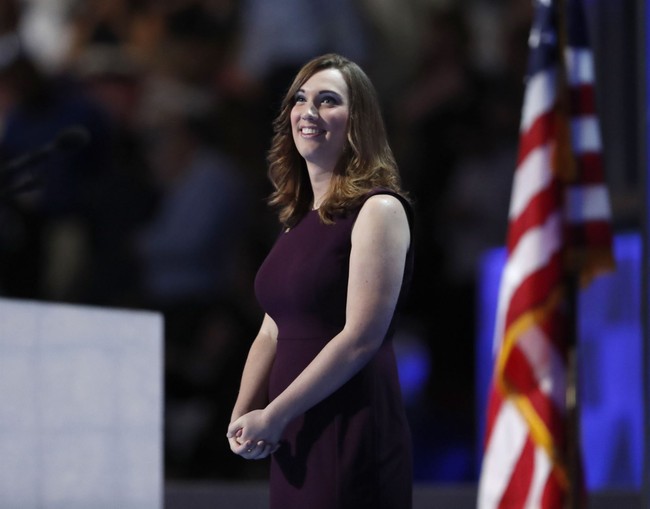
Hearing Ends in Chaos, Lawmaker Loses It After Chairman Refers to Dem Rep Sarah McBride As ‘Mister’
Like
Comment
Share
Trending Tech
Trending Tech
1 y

Frontier AI like o3-mini can cheat to achieve goals and then lie about it
Favicon 
bgr.com

Frontier AI like o3-mini can cheat to achieve goals and then lie about it

To get to AGI (advanced general intelligence) and superintelligence, we'll need to ensure the AI serving us is, well, serving us. That's why we keep talking about AI alignment, or safe AI that is aligned to human interests. There's very good reason to focus on that safety. It has nothing to do with localized ideology, like Western values compared to totalitarian regimes (though that will be an aspect), but more with ensuring the survival of the human species. Misaligned AI might always lead to human extinction events, or that's what some people fear. Those fears aren't entirely unwarranted. We saw experiments that showed AI, like ChatGPT, can cheat when prompted to win a chess game against a tougher opponent. Other experiments showed the AI would lie, and would try to save itself when it thought it was facing deletion. Then, we had experiments that proved AI can clone itself, though the AI didn't do it on its own. The latest AI safety experiments showing that frontier ChatGPT models can misbehave come directly from OpenAI. The company conducted experiments that showed reasoning AI models like o1 and o3-mini would cheat their way into solving a task that would have been too difficult otherwise. OpenAI also found a way to monitor these advanced AIs from cheating. They simply put a dumber AI (GPT-4o) in charge of reading the Chain-of-Thought (CoT), where a frontier AI would manifest intentions of cheating or hacking. This method would allow developers to prevent or reduce the AI from reward hacking. But guess what? These advanced AIs learned to obfuscate their intention to cheat when monitored this way. Continue reading... The post Frontier AI like o3-mini can cheat to achieve goals and then lie about it appeared first on BGR. Today's Top Deals Today’s deals: AirTags at new all-time low, 40% off Sony BRAVIA 7 TV, $350 Dyson V8 vacuum, more Today’s deals: $3.50 Anker USB-C cables, $50 wireless CarPlay adapter, Bose headphones, Beats earbuds, more Today’s deals: $269 iPad 10, $15 Amazon credit, 20% off Shark NeverChange Air Purifier, $375 HP laptop, more Best Apple deals for March 2025
Like
Comment
Share
NEWSMAX Feed
NEWSMAX Feed
1 y

IRS Says $1.1B in 2021 Tax Refunds Remain Unclaimed
Favicon 
www.newsmax.com

IRS Says $1.1B in 2021 Tax Refunds Remain Unclaimed

The IRS said Tuesday that more than $1 billion in tax refunds remain unclaimed by approximately 1.1 million people who have not filed a 1040 form for the 2021 tax year, and if they don't claim the refunds by April 15, the money becomes property of the U.S. Treasury.
Like
Comment
Share
Showing 61237 out of 126252
  • 61233
  • 61234
  • 61235
  • 61236
  • 61237
  • 61238
  • 61239
  • 61240
  • 61241
  • 61242
  • 61243
  • 61244
  • 61245
  • 61246
  • 61247
  • 61248
  • 61249
  • 61250
  • 61251
  • 61252
Advertisement
Stop Seeing These Ads

Edit Offer

Add tier


Select an image
Delete your tier
Are you sure you want to delete this tier?

Reviews

In order to sell your content and posts, start by creating a few packages. Monetization

Pay By Wallet

Payment Alert

You are about to purchase the items, do you want to proceed?

Request a Refund