YubNub Social YubNub Social
    #freedom #privacy #surveillancestate #police\ #alpr #flock
    Advanced Search
  • Login
  • Register

  • Night mode
  • © 2026 YubNub Social
    About • Directory • Contact Us • Developers • Privacy Policy • Terms of Use • shareasale • FB Webview Detected • Android • Apple iOS • Get Our App

    Select Language

  • English
Community
New Posts (Home) ChatBox Popular Posts Reels Game Zone Top PodCasts
Explore
Explore
© 2026 YubNub Social
  • English
About • Directory • Contact Us • Developers • Privacy Policy • Terms of Use • shareasale • FB Webview Detected • Android • Apple iOS • Get Our App
Advertisement
Stop Seeing These Ads

Discover posts

Posts

Users

Pages

Blog

Market

Events

Games

Forum

YubNub News
YubNub News
1 y

Liberal Celebs Push “Economic Blackout” to Tank Economy
Favicon 
yubnub.news

Liberal Celebs Push “Economic Blackout” to Tank Economy

The “we love this country so much we want to destroy it” crowd is back at it. An effort to encourage U.S. consumers to participate in a day of protest by not spending money Friday has picked up momentum…
Like
Comment
Share
Intel Uncensored
Intel Uncensored
1 y News & Oppinion

rumbleOdysee
The Highwire with Del Bigtree - Episode 413 - The Truth About Measles (27 Feb 2025)
Like
Comment
Share
Conservative Voices
Conservative Voices
1 y

This world leader is aligning with the 'Trump doctrine'
Favicon 
www.brighteon.com

This world leader is aligning with the 'Trump doctrine'

Follow NewsClips channel at Brighteon.com for more updatesSubscribe to Brighteon newsletter to get the latest news and more featured videos: https://support.brighteon.com/Subscribe.html
Like
Comment
Share
Conservative Voices
Conservative Voices
1 y

Judge Jeanine has advice for liberals who keep calling Trump a dictator
Favicon 
www.brighteon.com

Judge Jeanine has advice for liberals who keep calling Trump a dictator

Follow NewsClips channel at Brighteon.com for more updatesSubscribe to Brighteon newsletter to get the latest news and more featured videos: https://support.brighteon.com/Subscribe.html
Like
Comment
Share
Conservative Voices
Conservative Voices
1 y

Getting Over Germanophobia
Favicon 
www.theamericanconservative.com

Getting Over Germanophobia

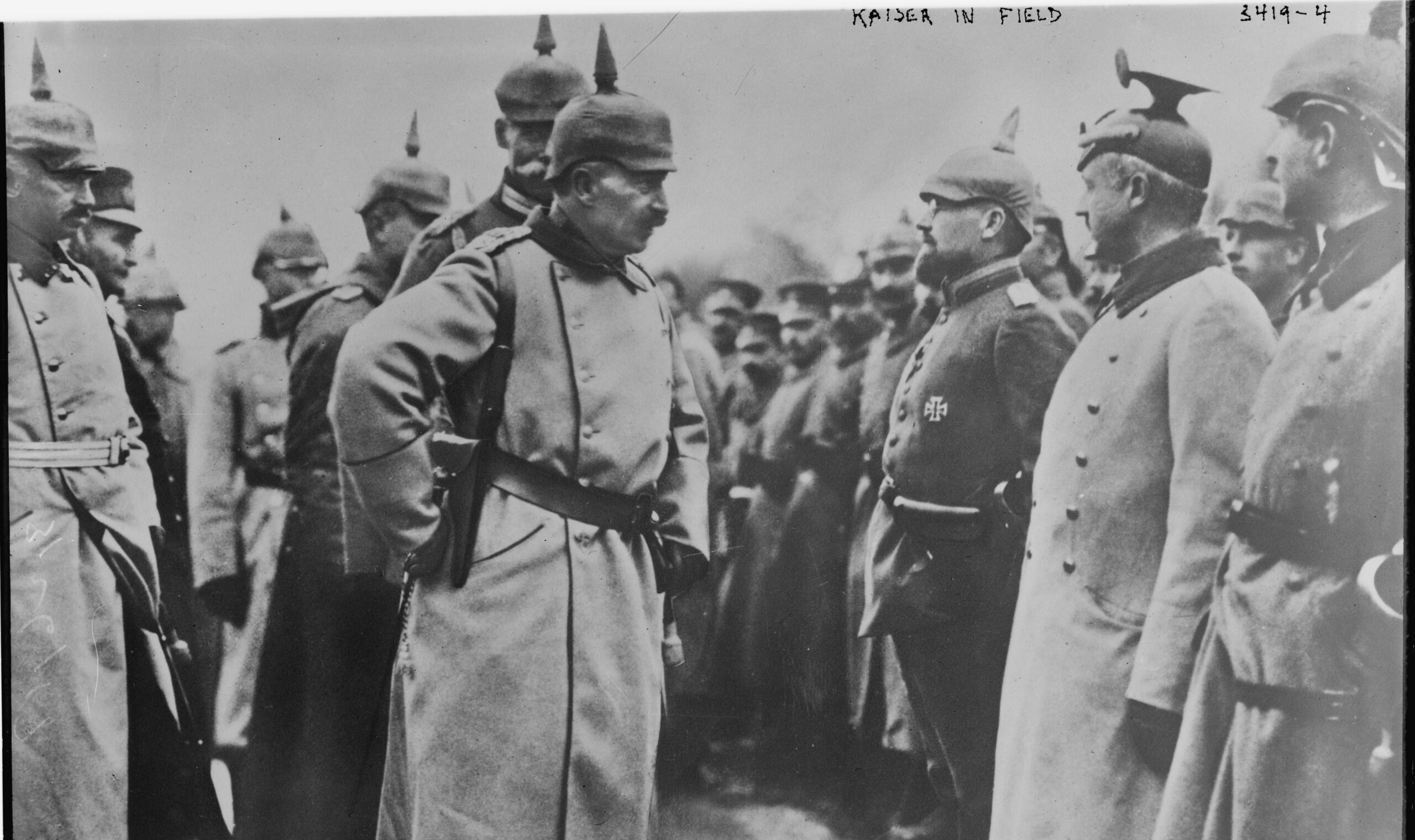
Foreign Affairs Getting Over Germanophobia Hand-wringing over the emergence of nationalist tones in German politics is based on shoddy history. I know I’ve been on this topic for more than 40 years and have published screeds on it in both English and German. Unfortunately, neoconservatives are not likely to let go of this obsession; and I therefore go on expatiating on it. By now Germanophobia may be in the neocon DNA. Yes, I fully understand why the Nazi dictatorship in Germany would upset neoconservative publicists; and as someone whose family suffered under that regime, I can sympathize with their concern that something like the Third Reich should never return to Central Europe.  But what this idée fixe has produced is a distorted or overgeneralized view of the German past that seems to have infected the American right, or at least that part of the right that enjoys a widespread media presence and social respectability. There also seems to be a special fixation among neocons and their dependents on the evils of Imperial Germany. Apparently Nazi tyranny was only a replay of the horrors of the German monarchy. Having made a far from exhaustive collection of some of the expressions of anti-German rage syndrome coming from recognizably neoconservative sources over the last two decades, allow me to list some of them. (I avoid mentioning the misinformed by name lest I cause unnecessary offense.) American populism was sidetracked by “philo-German” representatives like H.L. Mencken and Robert LaFollette, who recklessly opposed American entry into World War One to fight German military autocracy. Mencken, by opposing American intervention in the two World Wars, exhibited his hatred of democracy and his Nietzschean fascist inclinations. This journalist’s particularly obstinate reaction to Wilson’s crusade for democracy is hard to justify considering that Imperial Germany had drawn up plans to invade the U.S. If the U.S. had not preemptively declared war on Germany in 1917, a German invasion of the U.S. might have been imminent. The Germans were entirely responsible for the outbreak of the Great War, which was launched by German autocrats to achieve world domination. While countries like Britain should be encouraged to express national sentiments, we should prevent the Germans from doing so. Although the present German government has suppressed free speech, this is entirely understandable given “Germany’s horrific history.” The deeds of Hamas are attributable to German influence in launching pan-Arab movements in the late nineteenth century. Apparently, the Second German Empire was an early, energetic sponsor of Arab terrorist movements. Allow me to note, in stating my position, that I have never claimed that the Germans and Austrians deserve no blame for the outbreak of the Great War. But like Christopher Clark, Niall Ferguson, Sean McMeekin, Rainer Schmidt, Thomas Nipperdey, and a host of other respectable historians, I have argued (I think quite reasonably) that the blame for the catastrophe that erupted in the summer of 1914 was fairly well distributed between the two sides. Moreover, the U.S., which enjoyed an enormous industrial and demographic advantage over England and Germany, would have emerged the hegemonic power no matter which side had won in Europe. By the 1870s, the U.S. had become the world’s premier industrial power. During the First World War, it surpassed England as the world’s financial capital. Two books about ending the war that I highly recommend are Georges-Henri Soutou’s La Grande Illusion and Burton Yale Pines’s The Greatest Blunder. Both of these well-researched tomes show how the belligerents would have reached mutually acceptable peace terms by the end of 1917 if the U.S. had not entered the war. The American presence encouraged the French to demand much harsher peace terms and unnecessarily prolonged the war. The assertion that the Germans planned to invade the U.S. is utter nonsense. What some Germanophobic neocons have discovered is that the German high command kept war contingency plans in case their country became embroiled with some other power. This was a common practice in both alliance camps before 1914. Further, there is no good reason to condemn opponents of America’s entry into the First World War as bad people who hated democracy. The U.S. should have stayed genuinely neutral in that war, which our government never really was. And the passionate Anglophile government of Woodrow Wilson should have worked as an honest peacemaker between the two sides. And, oh yes, the Lusitania, which a German U-boat sank in 1915, was falsely registered as a passenger ship: It was really a warship loaded with arms earmarked for the Allied side.  More generally, the neoconservative charge that the Germans sabotaged American arms producers during the First World War, which should have been a reason to declare war on Germany, overlooks the indisputable fact that all American arms were going to Britain to be used against German soldiers: The arms manufacturers were overwhelmingly pro-British, and there was no way that American arms could have reached German customers because of the British blockade. I’m also not sure how Imperial Germany created the Arab nationalist movement. In this matter I lean heavily toward the evidence provided by the Iraqi Sephardic historian Elie Kedourie that the Royal Institute of International Affairs and various English missionaries in the 19th century carried nationalist ideas to the Middle East. The Turkish nationalist movement identified with Mustafa Kemal Ataturk did reflect German ideas about military organization, but its model for a secular republic came from revolutionary France, not Berlin. A reference to the “horrific history” of the Germans in explaining their present antifascist globalist managerial government seems woefully inadequate without noting the forced “reeducation” of Germany. This was a mental reconstruction process launched by the post–Second World War American military government which continued throughout its occupation. The occupying powers drove home the message that until the total defeat of the Third Reich Germany had pursued an aberrant nationalist course (Sonderweg); and nothing less than a total reeducation, assisted by the indigenous and American  antifascist left, would enable future generations of Germans to abjure their national identity and become “world citizens.”  Several of my books deal extensively with what the Bavarian critic Caspar von Schrenk-Notzing, who has written a detailed study of this process, bluntly describes as “pure brainwashing.” Bourgeois civil liberties of the kind the Germans and their government now scorn were in no way prioritized in their forced reeducation. In 1951 the American occupiers reestablished the Frankfurt School at the University of Frankfurt to assist in the reconstructing of German minds. In 1949 the Germans were required to sign a secret agreement with the American occupying power that no German politician would be allowed to become chancellor without the American government’s approval.  This practice, we know, continued for decades, and this Kanzlerakte (Chancellor’s File) may still be in effect. Certainly, there is no indication that it has ended. What we are seeing is by no means a continuation of Germany’s supposedly uninterruptedly evil history. It is, at least partly, the predictable consequence of arrogant imperialism. It was not enough to get rid of the Nazi government, which was necessary for the safety of the Western world. American globalist crusaders also sought to replace German identity with a therapeutically engineered form of antifascism. The anti-freedom politics and irresponsible immigration policies practiced by Germany’s leftist government cannot be fully contextualized without noting the American attempt to reeducate a conquered people. The post Getting Over Germanophobia appeared first on The American Conservative.
Like
Comment
Share
Conservative Voices
Conservative Voices
1 y

Is Trump More Reagan Than Reagan?
Favicon 
www.theamericanconservative.com

Is Trump More Reagan Than Reagan?

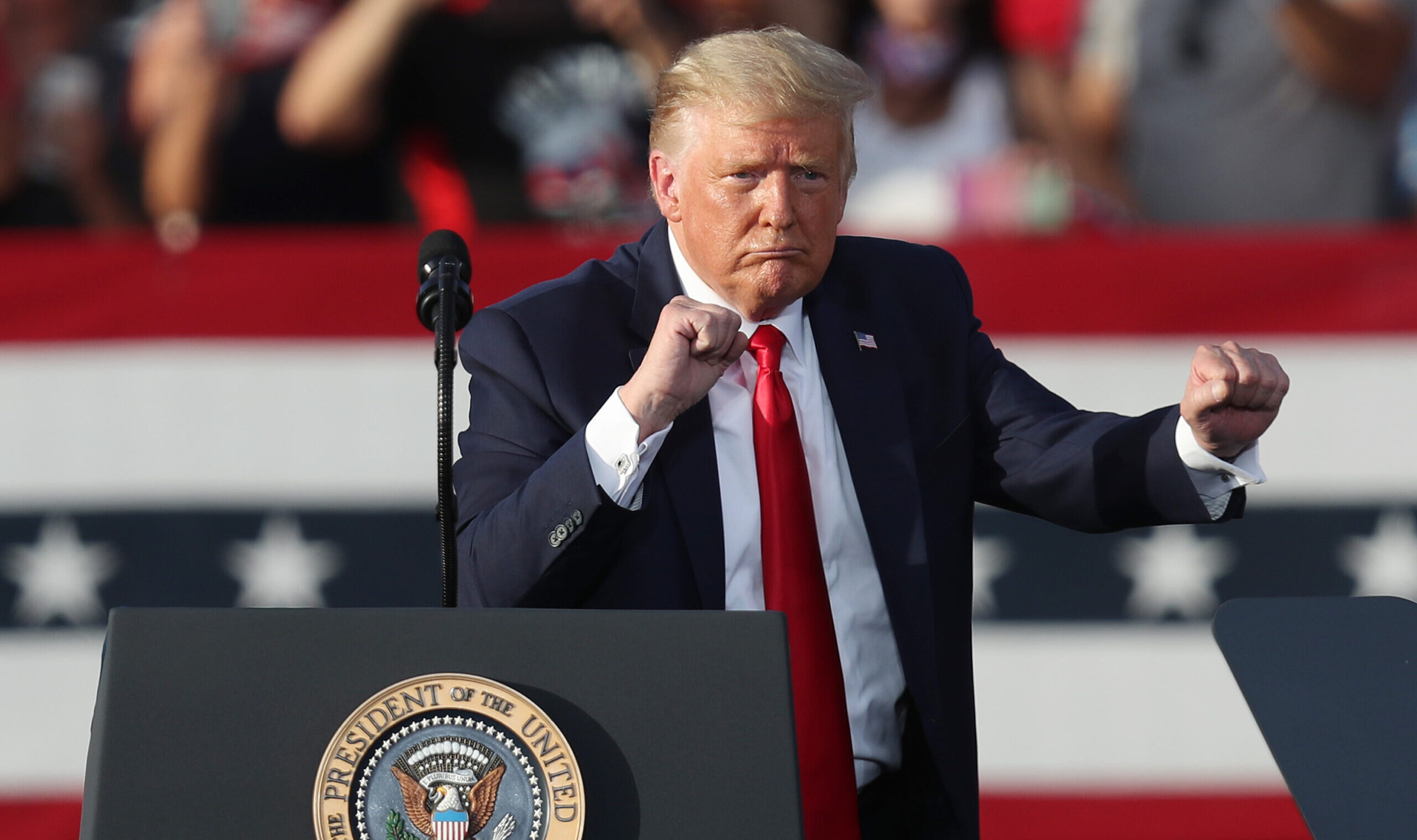
Politics Is Trump More Reagan Than Reagan? MAGA might be finally doing what the conservative movement has promised for most of its existence. (Joe Raedle/Getty Images) From Barry Goldwater in 1964, to Ronald Reagan in 1980, through the congressional Republican Revolution of 1994, the Tea Party movement of 2010, and to this day: Most Republicans throughout the modern era have presented their party as the one of fiscal conservatism and smaller government. During this time, the federal government has grown significantly under presidents and Congresses of both parties, and especially under Republicans. Reagan, a self-described “libertarian,” was the most explicit small-government conservative to actually be elected president. In the beginning, he accomplished a lot in the way of cutting government size and spending. Some even compare Reagan’s efforts to DOGE. But by the end of his second term, federal spending went up more under Reagan than it would later under President Barack Obama. In 1987, Republican Congressman Ron Paul was not happy with Reagan. When Paul left the GOP that year to run for president as a Libertarian, he wrote in his resignation letter, “Ronald Reagan and the Republican Party have given us skyrocketing deficits, and astoundingly, a doubled national debt. How is it that the party of balanced budgets, with control of the White House and Senate, accumulated red ink greater than all previous administrations put together?” He added, “There is no credibility left for the Republican Party as a force to reduce the size of government. That is the message of the Reagan years.” In the first month of President Donald Trump’s second term, his Department of Government Efficiency led by Elon Musk has been finding, cutting and canceling wasteful spending and fraud in the federal government at breakneck speed. On Tuesday, DOGE claimed to have saved $65 billion to date, with the savings coming from a “combination of fraud detection/deletion, contract/lease cancellations, contract/lease renegotiations, asset sales, grant cancellations, workforce reductions, programmatic changes, and regulatory savings.” Ron Paul has been happy about this. On February 7, he wrote glowingly, “DOGE is ripping through the federal government like a tornado. This morning it has been reported that DOGE sent out firing notices to 9,400 USAID employees, leaving only 611.” “Democratic politicians are furious, of course. But we hope that when it’s all said and done, ALL politicians, Democrat AND Republican, are furious with DOGE,” he added. “Then we will know that it was a job well done for the American people.” Some Republicans are already mad at Musk and the spending cuts, and DOGE hasn’t really even delved into Pentagon spending quite yet. Critics of DOGE have said Congress must vote to cut spending, not merely cancel contracts, stop payments or other agency activity that could be more stopgap than permanent. It’s a fair argument. Constitutionally, it is Congress that controls the power of the purse (constitutionally, so many of the agencies DOGE now targets shouldn’t even exist). That said, last week Sen. Rand Paul introduced legislation that would cut $1.5 trillion. In the Republican-led Senate, it failed. This week, the Republican budget proposal being voted on would add billions to the deficit. Actual fiscal conservatives are hoping it doesn’t pass. Any way you slice it, Trump and his new DOGE agency are doing what so many Republicans have long promised and failed. Since Trump was first elected in 2016, various people on the right warned about the pitfalls of Zombie Reaganism, in which the conservative movement would continue to bog itself down, supposedly, in the tired old playbook of free markets, small government, and fiscal responsibility. Some of these critics thought it better to use the existing federal apparatus for conservative ends. Some even wanted to expand the federal government for ostensibly conservative ends. As Trump’s second term unfolds perhaps they will get their chance. Most of these self-described National Conservatives would also happily agree with libertarians that it has been delightful to watch the forever-war neoconservatives, who dominated the right for most of this century, become so diminished in the Trump-era GOP. But far from constructing a right-wing New Deal, DOGE is doing the exact opposite, only a month in. This administration is carrying out the stuff of Reagan and Ron Paul’s revolutionary pipe dreams, the likes of which the Tea Party once envisioned, that so many conservatives spanning decades wanted to see in their lifetimes, and never did. “Government is not the solution to our problem; government is the problem,” Ronald Reagan famously said. No doubt he believed it. Donald Trump is doing something about it. The post Is Trump More Reagan Than Reagan? appeared first on The American Conservative.
Like
Comment
Share
Conservative Voices
Conservative Voices
1 y

Ukraine Can Unite the Global North
Favicon 
www.theamericanconservative.com

Ukraine Can Unite the Global North

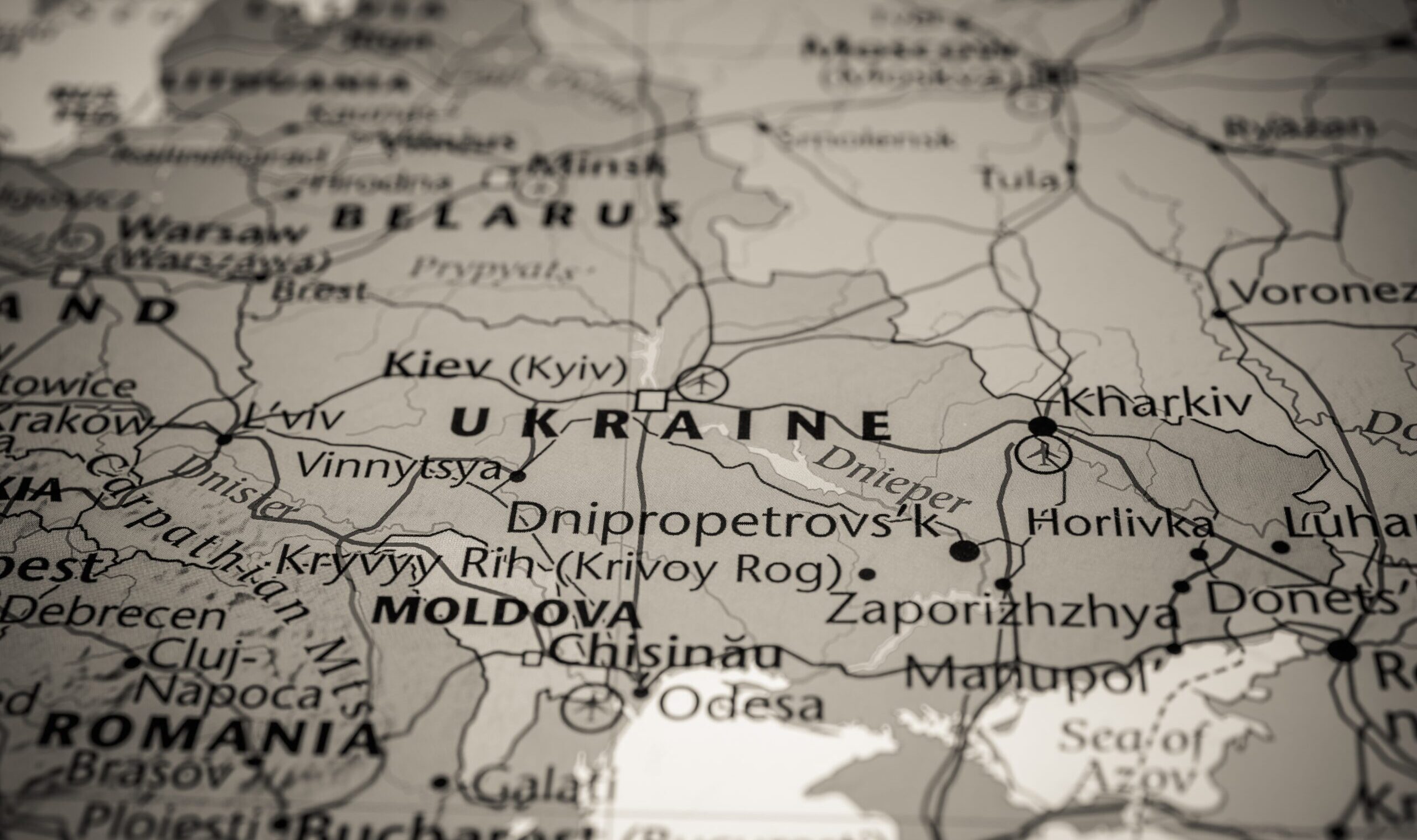
Foreign Affairs Ukraine Can Unite the Global North The country will serve as a buffer, bridge, or perpetual battleground between Russia and the West.  Credit: Alexander Lukatskiy President Donald Trump seeks to end the Russia–Ukraine War, which entered its fourth year this week. The stakes of diplomacy are high. Any agreement that resolves the conflict will also shape the future of the entire Global North, stretching from North America through Europe to Russia. Leaders of both the United States and Russia seem aware that negotiations to end the war carry this wider significance. When the two countries’ top diplomats met last week in Riyadh, they discussed Ukraine but focused primarily on restoring “the entire complex of Russian–American relations,” as Kremlin spokesman Dmitry Peskov put it. Meanwhile, European leaders understand that settling the war will entail establishing a security architecture for their continent. French President Emmanuel Macron, in a joint White House press conference with Trump, said this week that achieving a durable peace for Ukraine would bolster security across Europe. “For us Europeans, this is an existential issue,” Macron said, insisting that any peace agreement must include robust security guarantees for Ukraine to prevent future Russian aggression. The issue of security guarantees is difficult but unavoidable, since Kiev, before signing a peace deal, understandably demands assurances that war will not recur. How world leaders handle the issue will determine the relationship between Russia and the West for years if not generations to come. There are three broad possibilities: 1) Ukraine becomes a neutral state and buffer zone separating Russia and the West. 2) It becomes a bridge linking them. 3) It remains a continual source of Russian–Western tensions and potential conflict. Ukraine’s President Volodymyr Zelensky has advocated a fourth option: a fully Westernized Ukraine. Under this scenario, Kiev would join NATO to mount a show of force against Moscow. This prospect is both unlikely and undesirable. Several NATO nations, including the U.S., oppose bringing Ukraine into the alliance as part of a peace deal, and Russia would prolong the war to prevent that outcome.  Kiev, however, could get a diluted version of the “neutral buffer state” scenario in which Ukraine remains formally non-aligned but European nations station forces on its territory. There are significant problems with this scheme: 1) European peacekeepers, to deter Russia, would require American logistical and weapons support, which Trump may not want to provide. 2) Moscow would regard troops from NATO countries not as peacekeepers but as threats to its own security. 3) If deterrence failed and war broke out, Russia–NATO conflict could follow. Because of these problems, many analysts favor a purer version of the “neutral buffer state” option. In Foreign Affairs, Emma Ashford of the Stimson Center recently made the case for “armed neutrality,” in which Western nations would help rebuild the Ukrainian military so that going forward it could deter Russia without relying on outside help. This approach, Ashford says, would address a root cause of the invasion: the Kremlin’s concerns that the West was pulling Ukraine into its orbit. Armed neutrality would allow Ukraine to become a true buffer state once again, easing Russian–Western tensions. While such an arrangement would benefit the Global North broadly, no country would gain more than Ukraine. Historically, European nations committed to neutrality—including Finland, Austria, and Switzerland—have tended to prosper, as Anatol Lieven of the Quincy Institute has pointed out. Some analysts have offered a proposal more ambitious than turning the country into a buffer state between Russia and the West: turning it into a bridge between them. In 2014, the legendary statesman Henry Kissinger outlined a version of this idea in the Washington Post. Ukraine, Kissinger emphasized, is internally divided between its Western-facing and Russian-identified factions, and both Moscow and the West should help mend that division rather than push for one faction to dominate the other.  The “bridge” option differs from the “buffer” one in that neutrality wouldn’t merely forestall conflict in Ukraine, but also serve as a platform for Russian–Western integration. Kissinger’s article treated such integration as not only desirable but achievable, and perhaps at that time it was. But following Russia’s 2022 invasion and the dramatic downturn in relations between Moscow and Western capitals, meaningful integration is unlikely so long as Russian President Vladimir Putin is in power. Still, Trump is right to reestablish diplomatic ties with Russia, a leading nuclear superpower. He should, however, avoid alienating European leaders, who are growing worried that Washington is aligning with Moscow against them. If that worry persists, they might try to obstruct U.S. diplomacy, for example, by urging Kiev not to sign a peace agreement they deem unfavorable. The White House can and should convince European leaders that U.S.–Russia diplomacy won’t come at their nations’ expense. Kaja Kallas, the EU foreign policy chief, has publicly undermined Trump’s diplomatic efforts, saying that they amount to appeasement, but this week she said that Europe and America can work out their differences. Also this week, Macron, in a notable rhetorical shift, defended Trump’s efforts to reengage Russia, even as he maintained that Putin shouldn’t be trusted.  Macron was once among Europe’s most Putin-friendly leaders, and the degeneration of relations between the two presidents epitomizes broader geopolitical trends. These days Macron depicts Russia as an implacable nemesis, but during a 2018 meeting with Putin in St. Petersburg, he quoted Charles de Gaulle’s statement that Europe stretches “from the Atlantic to the Urals.” Putin did Macron one better, affirming that it spans from “Lisbon to Vladivostok,” a city in Russia’s far east. The following year they met in Paris, and Macron not only repeated Putin’s stronger formulation but declared that “Russia is a very deeply European country.” Putin may, at one point, have had an even grander vision—a Global North stretching from Los Angeles to Vladivostok. During talks with then-Vice President Biden in 2011, Putin mentioned that he was negotiating a visa-free regime with Europe and proposed doing the same with the United States. “Good idea,” Biden replied. In the early 2000s, Putin even suggested that Russia join NATO, and last year he claimed that outgoing President Bill Clinton had initially been receptive to the idea. The gulf in sentiments between then and now is a testament to how severely Russian-Western relations have worsened the last few years. But it also points to the plausibility of integration after tensions abate and Putin exits the world stage. A harmonious Global North is possible, and world leaders should negotiate an end to the Ukraine war with that ultimate aim in mind.  In the short term, the U.S.-led West should work with Russia to turn Ukraine into a buffer state capable of defending itself. In the medium term, Russia and the West should use the extra breathing space to repair broken ties. If such diplomacy succeeds, historians may one day marvel at how Ukraine—a nation that comprises within itself both sides of Europe’s civilizational split—became a bridge connecting the once bitterly divided Global North. The post Ukraine Can Unite the Global North appeared first on The American Conservative.

Like
Comment
Share
Intel Uncensored
Intel Uncensored
1 y

Official Testimony Exposes 'Transgender' Brigitte as Emmanuel Macron's Biological Father
Favicon 
api.bitchute.com

Official Testimony Exposes 'Transgender' Brigitte as Emmanuel Macron's Biological Father

Visit https://colonialmetalsgroup.com/tpv Or call 888 351 2043 for your FREE Gold Guide on how to bulletproof your IRA and 401(k) with gold tax-free. Watch the full video by subscribing to The People's Voice Locals community: https://peoplesvoice.locals.com Meet the Macrons. The most powerful political family in France, whose depravity runs deeper than anything you could imagine - even worse than the horrors of the Fritzl family in Austria. And they were getting away with it until whistleblowers, including a former high school classmate of Emmanuel Macron, began coming forward with shocking claims. If the content of this video doesn’t turn your stomach - if it doesn’t expose the sheer depravity of the globalist elite and their agenda to dismantle our culture, our religion, our norms, and everything we hold dear - then I truly worry for you. Full video available to subscribers here: https://peoplesvoice.locals.com
Like
Comment
Share
Classic Rock Lovers
Classic Rock Lovers  
1 y

‘Shit On The Floor’: Madonna’s long-forgotten punk demo
Favicon 
faroutmagazine.co.uk

‘Shit On The Floor’: Madonna’s long-forgotten punk demo

A far cry from 'Vogue'...
Like
Comment
Share
Classic Rock Lovers
Classic Rock Lovers  
1 y

The novelty act that stopped Oasis and Pulp from reaching number one
Favicon 
faroutmagazine.co.uk

The novelty act that stopped Oasis and Pulp from reaching number one

That's got to hurt.
Like
Comment
Share
Showing 63534 out of 127017
  • 63530
  • 63531
  • 63532
  • 63533
  • 63534
  • 63535
  • 63536
  • 63537
  • 63538
  • 63539
  • 63540
  • 63541
  • 63542
  • 63543
  • 63544
  • 63545
  • 63546
  • 63547
  • 63548
  • 63549
Advertisement
Stop Seeing These Ads

Edit Offer

Add tier


Select an image
Delete your tier
Are you sure you want to delete this tier?

Reviews

In order to sell your content and posts, start by creating a few packages. Monetization

Pay By Wallet

Payment Alert

You are about to purchase the items, do you want to proceed?

Request a Refund