YubNub Social YubNub Social
    #music #tew #tuba #euphonium #militarymusic #armymusic #armyband #satire #tew2026 #jazz #quartet #history #warmup #bigband #armyblues
    Advanced Search
  • Login
  • Register

  • Day mode
  • © 2026 YubNub Social
    About • Directory • Contact Us • Developers • Privacy Policy • Terms of Use • shareasale • FB Webview Detected • Android • Apple iOS • Get Our App

    Select Language

  • English
Night mode toggle
Featured Content
Community
New Posts (Home) ChatBox Popular Posts Reels Game Zone Top PodCasts
Explore
Explore
© 2026 YubNub Social
  • English
About • Directory • Contact Us • Developers • Privacy Policy • Terms of Use • shareasale • FB Webview Detected • Android • Apple iOS • Get Our App
Advertisement
Stop Seeing These Ads

Discover posts

Posts

Users

Pages

Blog

Market

Events

Games

Forum

History Traveler
History Traveler
4 d

Inside The Tragic Suicide Of Jeremy Wade Delle — And How His Death Became The Subject Of A Pearl Jam Song
Favicon 
allthatsinteresting.com

Inside The Tragic Suicide Of Jeremy Wade Delle — And How His Death Became The Subject Of A Pearl Jam Song

In the spring of 1991, the lead singer of Pearl Jam, Eddie Vedder, was reading his morning newspaper when he came across a shocking headline about a teenage suicide. A 15-year-old boy named Jeremy Wade Delle had inexplicably shot himself in front of his classmates and teacher at Richardson High School in Richardson, Texas. Vedder was struck by the story and immediately felt the need to honor the boy in some way. And thus, the song “Jeremy” was born, inspired by the short life and tragic death of Jeremy Delle. Jeremy Wade Delle’s school photo. But according to friends and family members who knew Jeremy, the song does not follow his actual life very closely, and some have expressed concern that the song eclipses the true story of Jeremy Delle. The Events That Inspired Pearl Jam’s “Jeremy” On January 8, 1991, 15-year-old Jeremy Wade Delle arrived late to his second period English class at Richardson High School. His teacher told him to go down to the office and get an attendance slip. But instead, Jeremy returned with a Smith & Wesson .357 revolver. Just before he fatally shot himself in front of his classmates, he turned to his teacher. “Miss, I got what I really went for,” he said. Brian Jackson, a fellow Richardson High School student, had been out in the hall near his locker when he heard a loud bang. He said it sounded “like someone had slammed a book on a desk.” “I thought they were doing a play or something,” he recalled. “But then, I heard a scream and a blonde girl came running out of the classroom and she was crying.” When he peeked in the door, Brian saw Jeremy bleeding on the floor and immediately realized what had happened. “The teacher was standing against the wall crying and shaking,” Brian said. “Some people were standing around her holding her as if to keep her from falling.” Another student, Howard Perre Felman, who was in a different classroom when he heard the shot, recalled laughing about the noise with fellow students, thinking, like Brian, that it was some kind of play or joke. “But then we heard a girl running down the hall screaming,” Howard said. “It was a scream from the heart.” Who Was Jeremy Wade Delle? While the way that Jeremy Wade Delle died by suicide was public and well-known, the reason why was less so. Later, Jeremy’s classmates would remember him as “shy” and “sad,” though they all expressed their shock at his sudden death, saying that he didn’t seem like the kind of person who would shoot himself. As far as his classmates were concerned, there was nothing unusual or out of the ordinary in the way of Jeremy Delle. One of his classmates, however, noted that the way he acted in the days leading up to his suicide were a bit different. Lisa Moore, who knew Jeremy from the in-school suspension program, used to pass notes with Jeremy throughout the day. According to Lisa, he always signed his notes a certain way. But just before he died, she said that he deviated from the norm. “He and I would pass notes back and forth and he would talk about life and stuff,” she said. “He signed all of his notes, ‘Write back.’ But on Monday [January 7] he wrote, ‘Later days.’ I didn’t know what to make of it. But I never thought this would happen.” According to Richardson Police Sgt. Ray Pennington, Jeremy Wade Delle must have put some thought into his actions, as the revolver was likely stashed in his locker for a while and he had left a suicide note. The content of the note — or notes, according to some sources who claimed he’d written individual notes to friends — was not widely released. YouTubeThe band Pearl Jam, pictured in 1990. Pennington also said in a statement that after Jeremy’s father had been called down to the school to discuss Jeremy’s attendance problems before his death, the boy and his father had enrolled in counseling. But Pearl Jam’s song describes a different child entirely, one who wasn’t paid any attention to at home and one whose parents all but ignored several cries for help. Close friends and family members of Jeremy’s claim that depiction couldn’t have been further from the truth. Jeremy’s classmate Brittany King spoke out against the song when it was released, saying that it didn’t paint an accurate picture. “I was angry at them for writing that song,” she said. “I thought, ‘You don’t know, you weren’t there.’ That story’s not accurate.” The Controversial Legacy Of “Jeremy” While the song “Jeremy” pushed Pearl Jam and Ten to the top of the charts, the family of the real Jeremy Wade Delle was dealing with their horrifying reality. Jeremy’s parents, Joseph Delle and Wanda Crane, had been divorced, and the boy was living with his father at the time of his death. Neither of his parents had been contacted about the song ahead of time, and it seemed that both of them had their issues with it — mostly that it whittled their son down to nothing but his heartbreaking death. Joseph Delle issued a statement on the subject, referring to the fact that “fans” of Jeremy’s were leaving notes on his grave, as the band seemingly capitalized on his father’s grief: “Always, always they are lured in by the song and speak to their adoration of Eddie Vedder. My anguish is just as deep with each call, note, or email… People who never met him or knew him chose to write a song, produced a video, and wrote many articles about that day. People who never [had] a personal relationship with him condensed his life to one day. There was so much more to Jeremy’s life than that fateful day.” RedditA newspaper article that was published about Jeremy Wade Delle’s suicide. Eddie Vedder claimed that he considered reaching out to Jeremy’s family prior to writing the song, but he “felt like [he] was intruding” if he did that. He also admitted that he deduced that Jeremy had been ignored by his parents without ever actually speaking with them. Jeremy’s mother, Wanda, has been more vocal in recent years on the subject of her son’s death and the ongoing grief she deals with. “That day that he died did not define his life,” Wanda Crane said in an interview in 2018. “He was a son, a brother, a nephew, a cousin, a friend. He was talented.” She described him as a talented artist: “He won best of shows, and this was all before he was 12 years old.” She added that as she watches the news and hears stories of the numerous school shootings in recent times, she feels a kinship with the students’ families. “I think of the mothers, I think of the sisters, I think what it’ll be said or what opinions will be thought about the student,” she said. “It’s the mothers and the sisters that I want to wrap my arms around and tell them that someday it’ll be better.” After this look at the real Jeremy Delle, read about Brenda Spencer, the school shooter who inspired the song “I Don’t Like Mondays.” Then, read about Aokigahara, Japan’s terrifying suicide forest. The post Inside The Tragic Suicide Of Jeremy Wade Delle — And How His Death Became The Subject Of A Pearl Jam Song appeared first on All That's Interesting.
Like
Comment
Share
History Traveler
History Traveler
4 d

The Heartbreaking Story Of David Kirby And His Deathbed Photo That Transformed How The World Viewed AIDS Patients
Favicon 
allthatsinteresting.com

The Heartbreaking Story Of David Kirby And His Deathbed Photo That Transformed How The World Viewed AIDS Patients

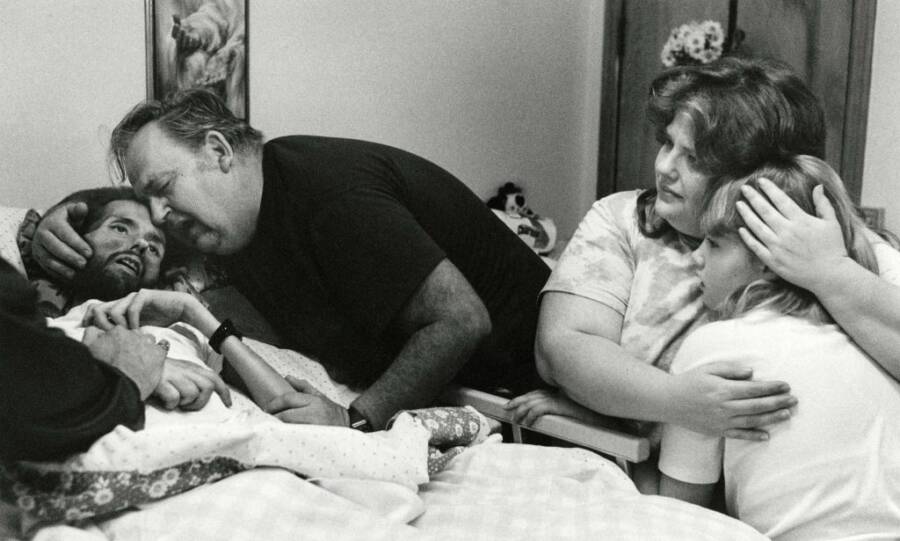
Therese FrareDavid Kirby, near death, lies in bed with his family by his side. May 5, 1990. In November 1990, a gaunt, dying man appeared in the pages of LIFE magazine. His name was David Kirby. Kirby had been a fierce AIDS activist in the 1980s — and then he was diagnosed with HIV. He was in the final stages of the disease in the spring of 1990 when journalism student Therese Frare began photographing his battle with AIDS. That May, Frare captured a photo of Kirby on his deathbed surrounded by his loved ones. He died shortly after it was taken, and his family’s grief was palpable through the haunting black-and-white snapshot. And when LIFE published the photo in November, the image — and the tragic tale behind it — revealed the true devastation of the AIDS epidemic. This is the story of David Kirby, the man in the “picture that changed the face of AIDS.” The Short But Impactful Life Of AIDS Activist David Kirby David Kirby was born in 1957 and raised in a small town in Ohio. As a gay teenager in the 1970s, he found life in the Midwest difficult. Kirby’s family reacted negatively after he revealed his orientation to them. With his personal relationships strained and no obvious way forward for him in Ohio, Kirby set off for the West Coast at 18 and settled into life in the gay scene of Los Angeles. He fit in well there, and he soon became an activist for the queer community, attending rallies and protests to support gay rights. Unfortunately for David Kirby, and for millions of others, Los Angeles’ gay scene was an epicenter of the burgeoning HIV/AIDS epidemic. The first scientific description of what we now call AIDS was published as a series of case studies of Los Angeles residents who were treated at the UCLA Medical Center. Therese FrareDavid Kirby’s mother holds a picture of him from about 10 years before his death, when he was a healthy young man. Kirby arrived in town just as the disease was taking off — but before anybody knew what was happening. It’s unclear when exactly Kirby was infected, but by the early 1980s, clusters of unusual cancers and respiratory illnesses were cropping up among gay men in every major city in America. By the late 1980s, Kirby had been diagnosed with HIV. Without effective treatments or even a clear idea of how the virus was killing its victims, the disease was a death sentence — and a swift one, at that. Most patients passed away within a few years of the onset of symptoms. Kirby decided that he wanted to die at home, and he reached out to his family to ask if he could come back to Ohio. His loved ones greeted him with open arms — but not everyone did. Unraveling The AIDS Myth Upon his return to the Midwest, David Kirby underwent treatment at a local hospital. However, healthcare workers in his small town were terrified of him. Medics burned everything in the ambulance that transported him to the hospital, and staff members who brought food menus around to admitted patients wouldn’t let Kirby touch the paper, instead reading him his choices from the doorway. Therese FrareDavid Kirby in hospice care shortly before his death. “It was humiliating and degrading,” Kirby’s mother, Kay Kirby, told The Seattle Times in 1992, “like he was a leper and nobody wanted to be near him. We just tried to let him know we were here for him.” AIDS was widely misunderstood at the time. People thought they could contract the disease simply by touching a patient, and the general lack of knowledge sparked panic in the general public. For instance, around the time of Kirby’s diagnosis, an Indiana middle school student named Ryan White was expelled from school after a blood transfusion left him HIV-positive. Perhaps as a result of this stigma, funding was shamefully deficient in the early stages of the epidemic, and activists worked both to dispel the myths and fears surrounding HIV/AIDS and to encourage more support for research. They also tried to fight absurd “public health” measures, such as barring children from school and, in at least one case (presented in all seriousness in a 1986 New York Times editorial by William F. Buckley), tattooing a warning onto the buttocks of known AIDS patients. Therese FrareDavid Kirby on his deathbed surrounded by his caregiver Peta, father Bill, and sister Susan. In this atmosphere of fear and borderline superstition, Kirby and other AIDS activists gave lectures, wrote articles, and appeared on television to reach as many people as they could in their attempts to demystify the illness and encourage empathy for the people suffering from it. But it was a deathbed photo of David Kirby that did more for the cause he was so passionate about than any of his actions during his lifetime. ‘The Picture That Changed The Face Of AIDS’ By 1989, Kirby’s condition had worsened to the point that his family could no longer care for him at home. He checked into the Pater Noster House, a hospice facility for AIDS patients in Columbus, Ohio. One of the caregivers there was an HIV-positive volunteer named Peta. The two became close friends, with Peta often visiting Kirby even when not on duty. Then, in the spring of 1990, journalism student Therese Frare started shadowing Peta. With the permission of Kirby and his family, Frare began documenting Kirby’s rapid decline. Therese FrarePeta caring for David Kirby at Pater Noster House. From the beginning, Kirby gave his enthusiastic consent to the photos. As an activist, he believed that an accurate photographic record of his death would humanize the AIDS crisis and help people who’d never seen the disease to empathize with patients. His only condition was that Frare not personally profit from the photos. Over the weeks that she visited the hospice facility, Frare shot several rolls of film that captured David’s end-of-life health struggles, his family’s grief, and the tender care he received from Peta. On May 5, 1990, Peta and Frare were with other patients when they received word that 32-year-old Kirby was dying. His family had gathered by his side, and they invited Frare in to document David Kirby’s final moments. Frare took up a discreet spot in the corner of the room and began snapping photos. One of her final shots captured an emaciated Kirby staring off into space as his father cradled his head, crying in anguish, and his sister and niece held each other nearby. Frare submitted the photo to LIFE, and it was published in the magazine’s November 1990 issue. The image gained international fame, particularly after it was featured in an advertising campaign for the clothing company United Colors of Benetton in 1992. Therese Frare/BenettonThe United Colors of Benetton ad featuring David Kirby’s deathbed photo. Many AIDS activists criticized Kirby’s family for allowing the ad, but Kay Kirby told The Seattle Times, “It’s what David would have wanted. You can see the family anguish, and people need to know this is reality.” Barb Cordle, another volunteer at Pater Noster House, agreed. “David wanted to put a face on AIDS,” she said. “The picture has done more to soften people’s hearts on the AIDS issue than any other I have ever seen. You can’t look at that picture and hate a person with AIDS. You just can’t.” After reading about David Kirby and the “picture that changed the face of AIDS,” discover the true story of the woman behind Dorothea Lange’s famed “Migrant Mother” photograph. Then, learn how photojournalism cost Kevin Carter his life. The post The Heartbreaking Story Of David Kirby And His Deathbed Photo That Transformed How The World Viewed AIDS Patients appeared first on All That's Interesting.
Like
Comment
Share
YubNub News
YubNub News
4 d

ISIS and Al Qaeda Paid ‘Close Attention’ to Bondi Terror Attacks: NZ Spy Chief
Favicon 
yubnub.news

ISIS and Al Qaeda Paid ‘Close Attention’ to Bondi Terror Attacks: NZ Spy Chief

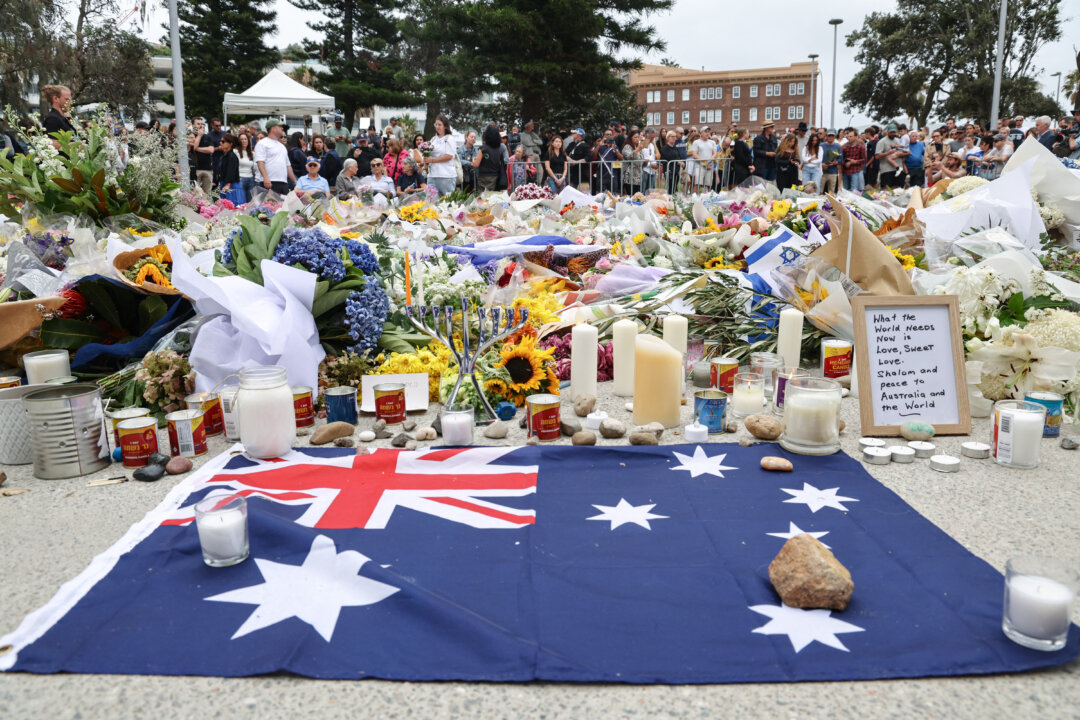
Australia's flag is seen next to floral tributes outside Bondi Pavilion in Sydney, Australia on Dec. 16, 2025. David Gray/AFP via Getty ImagesThe head of New Zealand’s Security Intelligence Service…
Like
Comment
Share
Conservative Voices
Conservative Voices
4 d

‘Different priorities in Iran': Israel wants regime change, Trump focused on nuclear threat
Favicon 
www.brighteon.com

‘Different priorities in Iran': Israel wants regime change, Trump focused on nuclear threat

Follow NewsClips channel at Brighteon.com for more updatesSubscribe to Brighteon newsletter to get the latest news and more featured videos: https://support.brighteon.com/Subscribe.html
Like
Comment
Share
Conservative Voices
Conservative Voices
4 d

Unhinged extremists throw failed explosive at protest near Mamdani mansion
Favicon 
www.brighteon.com

Unhinged extremists throw failed explosive at protest near Mamdani mansion

Follow NewsClips channel at Brighteon.com for more updatesSubscribe to Brighteon newsletter to get the latest news and more featured videos: https://support.brighteon.com/Subscribe.html
Like
Comment
Share
Conservative Voices
Conservative Voices
4 d

So Much for the Anti-War Left!
Favicon 
www.theamericanconservative.com

So Much for the Anti-War Left!

Politics So Much for the Anti-War Left! How AOC shows why the future of the antiwar movement must be on the right. Rep. Alexandria Ocasio-Cortez (D-NY), America’s foremost socialist, raised eyebrows during her recent appearance at the Munich Security Conference with surprisingly hawkish, internationalist statements. The antiwar left heavily criticized AOC for her speech, viewing it as an endorsement of the foreign policy of the Democratic establishment. “AOC sounds almost identical to Hillary Clinton or Madeleine Albright in her defense of NATO, except less articulate and confident,” the journalist Max Blumenthal tweeted, expressing the position of many people on the subject.  On one panel, AOC criticized the Trump administration for not being sufficiently active on the world stage. She charged, They are looking to withdraw the United States from the entire world so that we can turn into an age of authoritarianisms… where Donald Trump can command the Western Hemisphere and Latin America as his personal sandbox, where Putin can saber-rattle across Europe and try to bully our allies there, and where authoritarians essentially control their own geographic domains. Of course, there are factual issues with this analysis: Despite the dovish platform that carried Trump back to the White House, the United States has become more aggressive abroad, continuing to provide escalatory assistance to Ukraine in its war with Russia and striking Iran last June (and now, of course, launching a war against Iran last weekend). Notwithstanding this, AOC seems to think that the antidote to America’s ailments is but more foreign entanglements in the service of combating “authoritarianism” and in the name of a “class-based internationalist perspective” (a term she used in a subsequent appearance in Berlin). While AOC’s support for foreign policy internationalism may be disappointing to our friends on the antiwar left, she is in many ways just following in the footsteps of earlier progressives. While the American republic was founded, nurtured, and thrived under the principles of geopolitical nonintervention, it was America’s progressives who abandoned this principle and went abroad to search for monsters to destroy. The first of these progressive interventions took place against Spain in 1898. William McKinley, remembering the brutality of the Civil War, favored a peaceful resolution to the Cuba crisis. Following the sinking of the USS Maine in Havana Harbor by an internal explosion, the progressives got their war. Progressives sold the war to Americans as an ideological crusade against reactionary Spain, and in a pattern that would be repeated by progressives to the present, portrayed it as a war to liberate various peoples in the name of “democracy.” A decade and a half later, the American people wanted no part of World War I, but a combination of America’s then-Anglophile elite, American business interests tied to the Entente, and pro-British propaganda, aided by the German blunders of unrestricted submarine warfare (although itself no more a violation of neutral rights than Britain’s blockade), and the intercepted Zimmermann telegram in which Germany’s government proposed military ties with Mexico led the United States into the world’s most destructive conflict to date. Once at war, progressives, from Woodrow Wilson on down, rhetorically turned the war into a crusade to “make the world safe for democracy” (never mind that Germany and Austria had extended the suffrage wider than even Britain), and Wilson promoted his “League of Nations” as a utopian solution to Europe’s problems. “Regime change” in Berlin made things worse; toppling a stable constitutional monarchy led ultimately to the anarchy of Weimar and the totalitarianism of the Nazis.  Witnessing its bitter fruits in the trenches of the Western Front, Americans turned away from progressivism. They realized that they had been duped into fighting a war on England’s behalf and noninterventionist Republicans were swept into power in electoral landslides in 1920, 1924, and 1928. By the time that Democrats retook the Oval Office in 1932, they too had rhetorically embraced noninterventionism. However, during the Second World War, progressives again worked to involve America in a European war. U.S. opposition to the conflict was fierce (most notably from the bipartisan America First Committee), forcing the Anglophile administration of Franklin Roosevelt to lie when he ran for re-election in 1940 and claimed to keep American troops out of foreign wars. While Roosevelt attempted to enter the war through things such as aid to Britain and France or escorting allied shipping with “Neutrality Patrols” (named with an Orwellian flair), it was Roosevelt’s oil blockade on Japan (and Japan’s attack on Pearl Harbor) that would ultimately enable him to bring about his desired outcome. Once at war, Roosevelt foreclosed the possibility of a negotiated peace (the only way to have alleviated the suffering of peoples under German and Japanese occupation sooner) through his demands of “unconditional surrender.” While justly decrying the totalitarianism of the axis powers, Roosevelt aided Stalin’s Soviet Union, oftentimes at the expense of American interests, and gave half of Europe to Stalin at Yalta. Rather than benefiting the U.S. or American ideals, it only aided the totalitarian systems that Americans opposed. As TAC’s co-founder, Patrick J. Buchanan, wrote: In 1917 Wilson had gone to war to make the world safe for democracy, and had made the world safe for Lenin, Mussolini, and Hitler. In 1941 Roosevelt had gone to war to make Europe and Asia safe for democracy, and had made Europe safe for Stalinism and Asia safe for Maoism. Harry S. Truman deepened U.S. involvement in the affairs of Europe. While many Americans viewed the best counter to communism as allowing Europe to rebuild and rearm, so as it could defend itself, (with even Robert Taft backing the Marshall Plan for this reason), Truman created NATO instead, which though intended to be temporary, has transformed into a permanent vehicle involving America in the petty grievances of the European continent. While FDR could at least have been credited for going to Congress to get approval for Lend-Lease, his successor, Harry S. Truman did no such thing in Korea, claiming that American involvement there was merely a “police action.” The progressive streak of military adventurism was reprised in the Vietnam War. Embodying the managerial spirit of American progressivism at the time, Lyndon Johnson believed that our government could transform Vietnam through a technocratic approach to war, just as he was attempting to transform America. The cost of this folly was 58,000 American lives and a significant blow to American prestige. The backlash against the Vietnam War caused many of the more hawkish of the Great Society liberals to move towards the right, and by the 1980s, this group had entered the GOP, where they began to purge non-interventionist Republicans. By the time of the second Bush administration, these Wilsonian “neoconservatives” were the dominant force in Republican foreign policy.  These neocons used 9/11 as an excuse to attempt wars of nation-building during the Global War on Terror. With these wars came massive growth in the security state and the creation of new programs of government surveillance that would have shocked earlier generations of Americans. During the Obama years, these policies were continued, as was the commitment to regime change. Obama’s administration played a major role in the overthrow of Gaddafi in Libya, leading to anarchy, terrorism, and slavery, and in the Syrian Civil War, where the Obama administration made common cause with Al Qaeda terrorists against Syria’s secular Assad government. Seen in this light, AOC’s Munich appearance, rather than representing a breach with the antiwar left, in many ways represents a continuation of over a century-and-a-quarter of American progressive hawkishness. But why do leftists (including former leftists like the neocons) trend towards supporting wars abroad? While conservatives, since Louis de Bonald, have recognized that “all politics is local” (and only religion is universal), leftism blurs these lines, universalizing politics, and viewing political goods and rights as applying to humanity as a whole, rather than within specific contexts.  An example of this can be seen in the difference between the American and French Revolutions. While the Jacobins (as leftists) saw themselves as fighting primarily for universal “Rights of Man” and were in open hostility to their inherited traditions, America’s patriots saw themselves as going to war to defend and conserve their inherited rights as Englishmen. Indeed, Americans traditionally saw that intervention abroad poses a threat to our patrimony and way of life. George Washington understood this, warning Americans to avoid “permanent alliances,” as they would “entangle our peace and prosperity in the toils of European ambition, rivalship, interest, humor or caprice.” John Quincy Adams admonished Americans against going abroad “in search of monsters to destroy,” as it would doom our free government and render America “the dictatress of the world” rather than “the ruler of her own spirit.” The later writers of America’s “Old Right,” such as Garet Garrett and Albert J. Nock made similar arguments against foreign entanglements and in defense of American identity. Thus, conservatism is complementary to noninterventionism in a way that leftism is not. While our friends on the antiwar left may be earnest and good allies, ultimately these reasons point to the future of the antiwar movement being on the right. Relatedly, if American conservatism fails to be noninterventionist and antiwar, it ceases to be conservative. This has happened before. During the George W. Bush years, the right’s foreign adventurism led to the abandonment of fiscal conservatism (with massive increases in federal spending), while the incorporation of neoconservatives into the Republican Party empowered a new conservative elite less committed to social conservatism. This may very well happen again.  It is accordingly in the interests of both American conservatives and the antiwar movement to work together to create a strongly noninterventionist conservative faction. This is entirely doable—indeed it has been done before—and presents the best chance of both conserving the American tradition and keeping the United States out of destructive wars. The post So Much for the Anti-War Left! appeared first on The American Conservative.
Like
Comment
Share
Conservative Voices
Conservative Voices
4 d

Close Foreign Consulates in U.S. Sanctuary Cities
Favicon 
www.theamericanconservative.com

Close Foreign Consulates in U.S. Sanctuary Cities

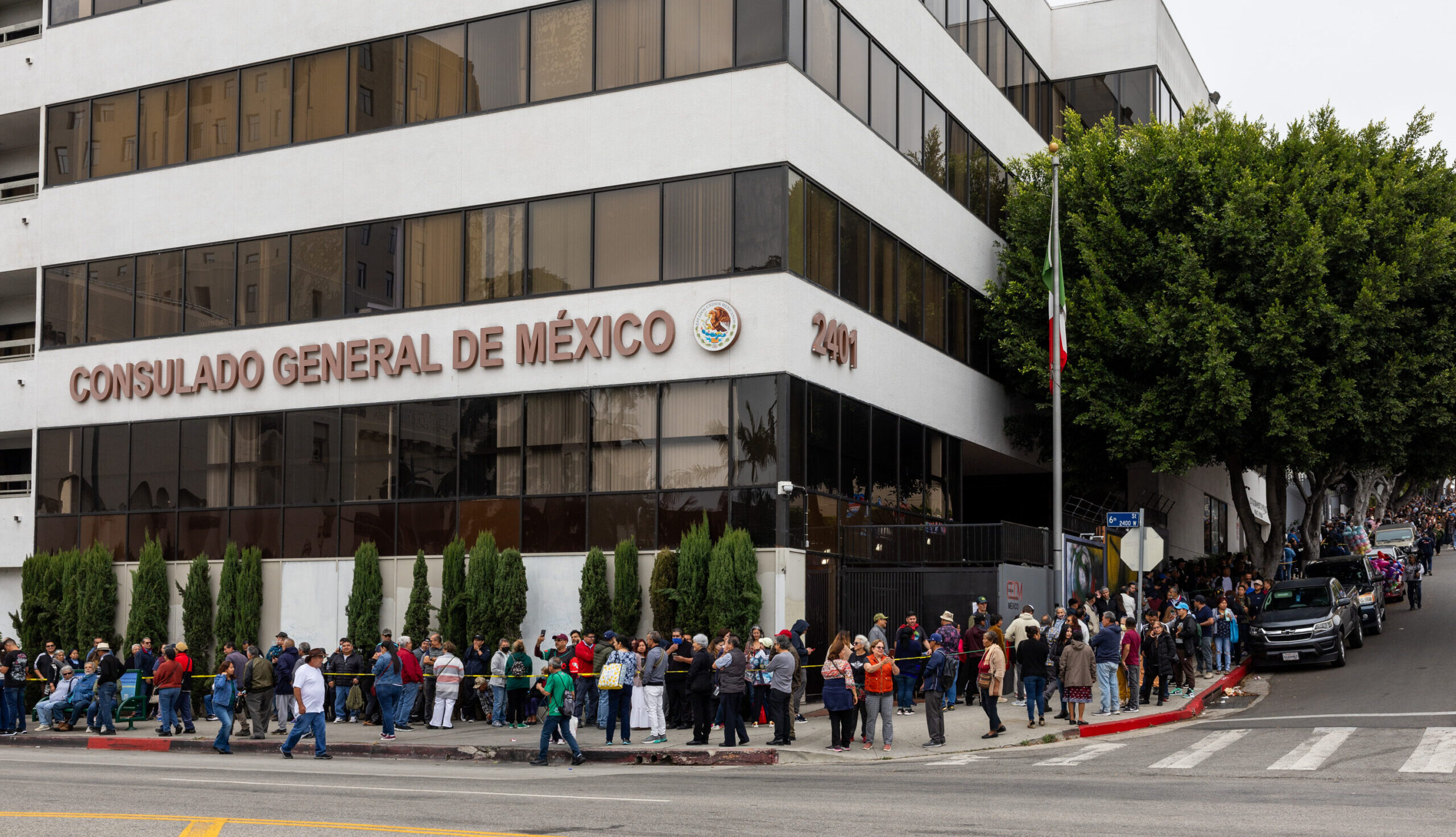
Politics Close Foreign Consulates in U.S. Sanctuary Cities Diplomats in consulates from migrant-sending countries like Mexico are conspiring to undermine immigration law enforcement. All major countries, such as Germany, Japan, and Australia, have a network of consulates across the United States. These consulates engage in many legitimate diplomatic activities, such as trade promotion and cultural outreach, as well as serving as platforms to assist their citizens. Los Angeles is home to over 90 consulates, while Chicago has over 80 The largest consulate networks are maintained by migrant-sending countries, such as Mexico, Honduras, Guatemala, El Salvador, and others, all with massive national diasporas in the United States. For these governments, their activities in support of their citizens in the U.S. dwarf all their other diplomatic activities. Mexico, with some 40 million persons in El Norte, around 5 million illegally present, has the largest network with an unprecedented 52 consulates scattered across the American interior.  El Salvador has 22 consulates attending to the needs of its huge migratory population. Some 25 percent of all Salvadorans live in the U.S.; over 1 million are illegal migrants. Honduras has 15 consulates, supporting 1 million illegal migrants; Ecuador, 13 consulates and over half a million illegals; the Dominican Republic, 11 consulates and 200,000 illegals; and Colombia, 13 consulates, 400,000 illegals. It is a long list that goes beyond the Western hemisphere and includes other countries like India and the Philippines.  Although poorly understood by Americans who have virtually no contact with them, these consulates contribute in subtle (and sometimes not subtle) ways to America’s ongoing immigration chaos and lawlessness. All diplomats dedicated to this support work—known in the trade as consular officers—have a legitimate right to assist their citizens, including even those unlawfully present. But the problem is that many of these consulates have openly joined forces with America’s domestic sanctuary resistance movement. Consulates are off the reservation when their diplomats are conspiring against and resisting Trump administration policies to detain and remove illegal migrants.  Almost all migrant-sending countries consider the Trump administration’s goals to carry out large-scale repatriation of their citizens against their national interest. Mexico, El Salvador, and others want to maintain their vast populations, including the illegals, anchored in the United States—working, receiving benefits, and serving as conduits for more future migration. Massive repatriations would cut the vast remittances foreign nationals send home (which provide, for example, Mexico some $65 billion annually and make up a staggering 25 percent of El Salvador’s economy). Moreover, the massive return of migrants threatens the fragile status quo in all these sending countries. It is no surprise that these foreign consular networks are natural allies with radical American sanctuary activists, journalists, NGOs and local officials. A typical example is Los Angeles Mayor Karen Bass, who traveled to the inauguration of Mexico’s President Claudia Sheinbaum to trumpet their common values. The mayor and president cheered Los Angeles as the world’s second-largest “Mexican city” and committed to a strong ideological alliance on migration issues. LA authorities and the city’s large Mexican consulate are implementing that partnership by thwarting federal ICE agents. Bass is the face while Mexican diplomats operate behind the scenes. Most sanctuary cities are following the same strategy: forbid federal agents from using city property or resources and create so-called ICE-free zones, as Mayor Brandon Johnson proclaimed in Chicago. Working with foreign consular officials, city authorities also “document” illegal migrants (issue them “identity” cards), as Denver has done, so the foreigners have “lawful status.” All these sanctuaries encourage spies to monitor, observe, and share intelligence on ICE agents, their movement, and locations. This latter kind of information, of course, was provided to radical activists like Alex Pretti who was killed in Minneapolis as he harassed ICE agents.  Foreign consular officers are particularly valuable to the resistance apparatus because of their exceptional communication and feedback lines into migrant communities. In Chicago and other cities, Mexico runs its so-called “consulates on wheels” (mobile consular staff) that move through migrant neighborhoods, under diplomatic status, to collect information and warn its nationals about ICE enforcement raids. In addition, consular officers are allowed to meet with arrested migrants, making it possible for diplomats to go inside federal holding facilities and collect even more information.  Foreign consulates not only work with sanctuary city officials, but also with a wide network of migrant NGOs, church groups, Democratic politicians, and anti-ICE American activists. One particularly effective part of these nullifiers consists of legal advocacy groups like the Coalition for Humane Immigrant Rights (CHIRLA), the National Immigrant Justice Center (NIJC), and others. These groups use gathered information to go to federal court to litigate before like-minded judges. Interestingly, the Mexican government actually provides resources or funding to CHIRLA and other NGOs, which helps them to sue the Trump administration. Many American observers might believe that foreign governments should not be bankrolling NGOs to thwart U.S. federal law.  The existence of these consulate networks demonstrates how Washington’s domestic immigration law enforcement, like it or not, is also front-line U.S. foreign policy. It is the U.S. State Department—specifically, the Office of Foreign Missions—that has the first responsibility to monitor and determine whether foreign officials are engaging in conduct inconsistent with their diplomatic privileges or consular status. It is State that has legal authority to accept or reject the requests of foreign governments to open consulates outside of their embassies in Washington.  In all of this, State is guided by the rules set down in the obscure Vienna Convention of Consular Relations, an international treaty that governs the activities of consular officers in foreign countries. The Vienna Convention authorizes diplomats to work on behalf of their citizens through recognized consular activities, e.g., providing legal assistance in individual cases, emergency financial loans, and needed documentation. But diplomats are supposed to stay very clear of open public advocacy in the host country. Going to social media to denounce federal law enforcement, conspiring with sanctuary city officials, and funding lawsuits through NGOs should be considered activities inconsistent with the Vienna Convention. Such conduct should result in diplomats being declared persona non grata and the closure of consulates.  In managing this panoply of foreign consulates, the State Department has regrettably lost the thread of U.S. national security interests. For example, State authorized consulates for Honduras, El Salvador and Guatemala in obscure border cities such as McAllen, Texas, because those governments wanted their diplomats to assist their nationals after illegally crossing the southern border. Moreover, illegal populations are rewarded, because their numbers are used in the calculus to determine how many consulates a foreign government should be permitted. Similarly, the State Department has been heedless of the fact that illegal diasporas over decades have flocked to sanctuary cities and states, particularly in California, Illinois, New York, and Massachusetts. Secretary Marco Rubio’s new leadership team in Foggy Bottom needs to remake the mistaken mindset prevalent among too many State officials that the department has no role in domestic enforcement of U.S. visa laws and unlawful presence statutes.  State must no longer ignore the fact that many foreign consulates have gravitated from passive activities against the implementation of U.S. immigration law to, as in the Mexican example, active resistance to Washington’s policies. Mexico’s 52- consulate network in the United States is the largest of any foreign government in another single country, by far, in the world. Exercising dubious judgment, the State Department authorized Mexico to open 21 consulates general and 31 consulates. (A “consulate general” is a larger facility with more staff than a consulate; in a few cases, a consulate general may even be bigger than the parent embassy in Washington. While there are slight legal differences, for all practical purposes, these buildings and their staff enjoy the same immunities and privileges that accompany an embassy.) All the Mexican consulates are staffed by career diplomats; none of these 52 is an “honorary consulate,” which is typically run by one unpaid, part-time staffer working out of a home or private office.  Peter Schweizer’s new book Invisible Coup documents that the Mexican consular network in the United States is doing much more than issuing passports. These consulates, in fact, are the backbone of a fifth-column strategy to maintain control of the Mexican diaspora in the U.S. with the goal of resisting assimilation, holding on to the second generation, and exercising political influence in Gringolandia. The former Mexican President Andrés Manuel López Obrador, known as “AMLO,” built out this network and bluntly mobilized it to engage in partisan activities such as resisting the election of Donald Trump and undermining U.S. border security measures. Typical of this was AMLO’s smear campaign against Florida’s law criminalizing human smuggling (AMLO predictably called it “racist”) in which the Mexican president had his consular envoys denounce Florida’s Governor Ron DeSantis.  When President Joe Biden was in the White House, he never once rebuked his Mexican counterpart’s political meddling, nor instructed the State Department to expel any Mexican diplomats. Now, with Trump back in the saddle, President Sheinbaum is much more cautious than AMLO, but her diplomats have still crossed the line into unacceptable activities, as Schweizer’s book clearly documents.  The State Department should start by reducing the number of accredited foreign consulates from countries with large numbers of unlawfully present nationals. Those consulates ripe for closing are the ones conspiring with the most defiant sanctuary cities; certainly, Los Angeles and Chicago should be on the target list. The howl of disapproval will be vociferous, but none of these sanctuary cities has any authority, beyond State Department’s permission, to host a Mexican or any other foreign consulate. The State Department can act quickly in these matters, when it wants, as it showed in shuttering the Chinese consulate in Houston in 2020 over spying concerns. Like the affected sanctuary cities, foreign governments will vehemently protest and threaten tit for tat retaliation, but those will be empty threats. Despite the possible diplomatic contretemps, the U.S. objective is not to start an unnecessary squabble with Mexico (although Trump would certainly win such a brouhaha), but to signal to Sheinbaum and to her successors that bilateral migration issues are now fundamentally different. Just as the Trump administration has secured the southern border, Washington will no longer tolerate the Mexican government’s turning its diplomats into policy advocates on U.S. territory.  Now is the time to act. Mexican and other consulate activism is part of America’s deep immigration chaos. The State Department must address this problem. The post Close Foreign Consulates in U.S. Sanctuary Cities appeared first on The American Conservative.

Like
Comment
Share
Intel Uncensored
Intel Uncensored
4 d News & Oppinion

rumbleBitchute
Heaviest Day of bombing yet as Trump warns there shall be no deal with Iran!
Like
Comment
Share
Classic Rock Lovers
Classic Rock Lovers  
4 d

Detroit, Michigan: The town that defines and connects Patti Smith and Frida Kahlo
Favicon 
faroutmagazine.co.uk

Detroit, Michigan: The town that defines and connects Patti Smith and Frida Kahlo

Two icons, tethered by geography and grief. The post Detroit, Michigan: The town that defines and connects Patti Smith and Frida Kahlo first appeared on Far Out Magazine.
Like
Comment
Share
Conservative Voices
Conservative Voices
4 d

Stop the Harmful Time-Changing Ritual
Favicon 
townhall.com

Stop the Harmful Time-Changing Ritual

Stop the Harmful Time-Changing Ritual
Like
Comment
Share
Showing 664 out of 113732
  • 660
  • 661
  • 662
  • 663
  • 664
  • 665
  • 666
  • 667
  • 668
  • 669
  • 670
  • 671
  • 672
  • 673
  • 674
  • 675
  • 676
  • 677
  • 678
  • 679
Advertisement
Stop Seeing These Ads

Edit Offer

Add tier


Select an image
Delete your tier
Are you sure you want to delete this tier?

Reviews

In order to sell your content and posts, start by creating a few packages. Monetization

Pay By Wallet

Payment Alert

You are about to purchase the items, do you want to proceed?

Request a Refund