YubNub Social YubNub Social
    #astronomy #newyork #physics #astrophysics #privacy #blackhole #keckobservatory #surveillance #facialrecognition #accretion #at2024wpp #lowresolutionimagingspectrometer #lris #nearinfraredechellettespectrograph #nires
    Advanced Search
  • Login
  • Register

  • Night mode
  • © 2026 YubNub Social
    About • Directory • Contact Us • Developers • Privacy Policy • Terms of Use • shareasale • FB Webview Detected • Android • Apple iOS • Get Our App

    Select Language

  • English
Install our *FREE* WEB APP! (PWA)
Night mode toggle
Community
New Posts (Home) ChatBox Popular Posts Reels Game Zone Top PodCasts
Explore
Explore
© 2026 YubNub Social
  • English
About • Directory • Contact Us • Developers • Privacy Policy • Terms of Use • shareasale • FB Webview Detected • Android • Apple iOS • Get Our App
Advertisement
Stop Seeing These Ads

Discover posts

Posts

Users

Pages

Blog

Market

Events

Games

Forum

Science Explorer
Science Explorer
1 y

Can Doomscrolling Lead To Existential Anxiety And A Dislike For Humanity?
Favicon 
www.iflscience.com

Can Doomscrolling Lead To Existential Anxiety And A Dislike For Humanity?

Researchers have shown for the first time that doomscrolling – the habit of checking up on disturbing stories on social media – can prompt existential issues, such as impacting your view of humanity and the meaning of life.In recent years, news reporting has becoming increasingly negative. The media’s wholehearted embrace of the adage “if it bleeds, it leads”, has led to the global dominance of negative news stories that focus on corruption, fraud, shootings, terrorism, and war. At the same time, there is now a blind spot for good news, which is often disregarded as unimportant.But this is not necessarily a top-down development led by the media itself. In fact, research has shown that consumers prefer and actively seek out cynical and negative news. Together, these circumstances have contributed to a biased focus on negative news and media content.Of course, this is not new. Humans have a propensity to seek out bad news as it keeps us alert. Previous research has shown that this negative bias – the tendency to find negative information more valuable than positive information – manifests at various stages in human development, even in infancy. This suggests it has deep evolutionary roots.With the rise of this focus on negative content, a new consumer behavior has emerged that is referred to as “doomscrolling”. In essence, this is the act of seeking out saddening or negative social media content or news stories to read and scroll through. The behavior is usually compulsive and discriminant, to the point of being addictive.Now, a new study has shown that doomscrolling makes people more likely to feel suspicious of other people while also contributing to the sense that life has no meaning.“Doomscrolling can have some dire consequences on our mental health and wellbeing leaving us feeling stress, anxiety, despair and questioning the meaning of life,” lead author Reza Shabahang, from Flinders University, Australia, said in a statement.“Viewing negative news on social media has become a source of vicarious trauma, where someone has a negative psychological impact even though they did not experience the trauma themselves.”When exposed to images and information about traumatic events, people have even developed symptoms similar to post-traumatic stress disorder (PTSD), which include anxiety and despair.In their study, Shabahang and colleagues surveyed 800 university students from two distinctly diverse cultures – students from the US, a Western individualistic culture, and students from Iran, an Eastern collective culture. The aim was to explore how the consumption of excessively negative news and social media content can impact a person’s thoughts and feelings regarding existence.Participants were asked questions related to how anxious they felt towards their existence, whether they believed the world was a fair place, how they felt about humanity, and, most importantly, how often they doomscrolled.“We wanted to see if there were any connections between doomscrolling and subsequent thoughts and feelings about humankind and the importance of life,” Shabahang added.The team found that doomscrolling was associated with higher existential anxiety in both American and Iranian samples. They also found that, for the Iranian sample, doomscrolling was a significant predictor of misanthropy – the dislike of people.“When we’re constantly exposed to negative news and information online, it can threaten our beliefs when it comes to our own mortality and the control we have over our own lives,” Shabahang explained. “Moreover, doomscrolling can negatively affect how we view the people and world around us.”The study shows that we must be careful when we use social media. Exposing ourselves to the constant stream of negative information can have an impact on our minds. It is important to take breaks and to be mindful of our user habits.“We suggest that people pay attention to how much time they are spending on social media and to be aware of the impact it is having on their emotions, thoughts and feelings, especially when it comes to negative news and events,” Shabahang says.“It’s a good idea to keep track of how much time you spend doomscrolling and start making changes to reduce that time if it’s problematic. By becoming more aware of our online habits, such as doomscrolling, and taking small steps to address them, it could help with improving our overall mental wellbeing.”The study is published in Computers in Human Behavior Reports.
Like
Comment
Share
Science Explorer
Science Explorer
1 y

These Are The US Cities Most Vulnerable To Space Weather
Favicon 
www.iflscience.com

These Are The US Cities Most Vulnerable To Space Weather

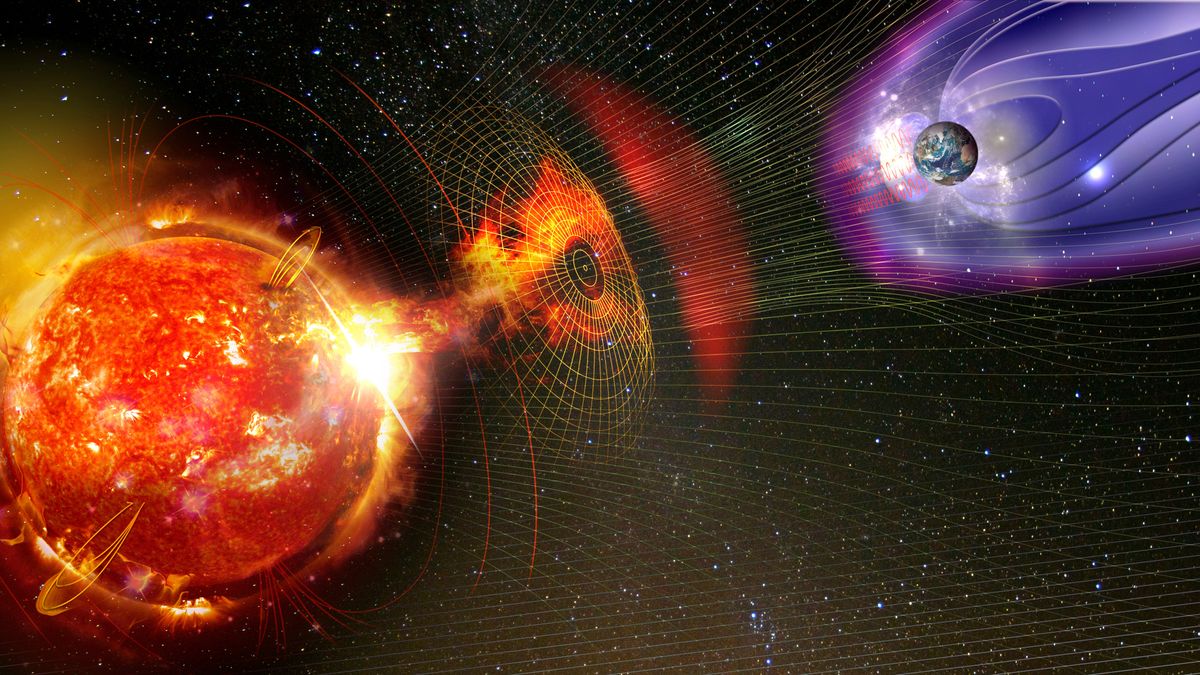
There are plenty of local issues with the United States' power grid. Texas, for example, continues to have weather-related outages. But there is another threat that should be considered – and it comes from beyond Earth. The effects of space weather, of a geomagnetic storm, could be disastrous. Researchers have found two particularly vulnerable cities: Washington DC and Milwaukee. Researchers have found two particularly vulnerable cities: Washington DC and Milwaukee. The work was done by Dr Lauren Orr, from the University of Warwick, in collaboration with Professor Sandra Chapman, of the University of Warwick, and Dr Ryan McGranaghan, of NASA’s Jet Propulsion Laboratory in California.There is actually a plan in place in New Zealand that if there's a big storm, such as the one that we had in May, they turn off certain transformers that they thought were most vulnerable.Dr Lauren OrrGeomagnetic storms like the one we saw in May are not extremely common, but they are also not rare: solar events of that magnitude happen often enough to be a concern. Their damaging power is similar to that of flooding or extreme temperatures. In particular, the geomagnetically induced currents (GICs) that can form during such an event can damage both transformers and power lines. These currents can overload transformers. In the famous Carrington Event of 1859, telegraph stations in the United States were disrupted, an operator got an electric shock, and systems caught fire. That was the biggest solar storm in recent history, but we know that GIC can harm transformers and cause blackouts. During the May storm, there were power grid irregularities reported.                   The team used network science to work out the resilience of the power grid. A network can be between computers or people, with the elements being nodes, but it can also apply to transformers. Using data from monitoring stations, the researchers were able to find supernodes that are at risk, such as Washington DC and Milwaukee.Estimating resilience is important as there are still gaps in our knowledge. Even predicting solar storms has its limits, although recent research could give us an edge, by allowing prediction before a solar storm begins. Still, once the space weather hits, the damage can be extensive.There is a lot of concerning data, but the team admits that there is less data than they would like. The team provides multiple physical explanations for why certain areas are at risk, but without more granular data it is difficult to establish. Without such data, the network analysis they constructed might weigh more in certain spots compared to others. “It could be that the transformers are old. It could be that they're single-phase instead of triple-phase. Or it could be reasons like the Earth is really conductive in those areas or the aurora tends to sit over them,” Dr Orr told IFLScience. “What we would like to do is further study to see why this would be the case. It could have to do with our network construction.”                   The main advice to power grid operators is to provide more monitors. The United Kingdom has only four. The US has a couple of hundred, but there are thousands of transformers across the States. And data has to be requested after every single space weather event. Monitoring can help plan strategies to keep the grid safe and the power flowing.“One thing we're trying to do in the UK is persuade them to install more monitors so that we can actually see what's going on and which areas are appearing as the most vulnerable,” Dr Orr told IFLScience.“New Zealand has done quite a lot of work. They've worked with their power grid to make mitigation plans. There is actually a plan in place in New Zealand that if there's a big storm, such as the one that we had in May, they turn off certain transformers that they thought were most vulnerable. The energy would channel through different connections and different lines. So that those transformers were not taking all the load.”Dr Lauren Orr presented her findings at this week’s National Astronomy Meeting at the University of Hull.
Like
Comment
Share
Science Explorer
Science Explorer
1 y

Gnatalie, The World’s Only Green-Boned Dinosaur, To Go On Display In LA
Favicon 
www.iflscience.com

Gnatalie, The World’s Only Green-Boned Dinosaur, To Go On Display In LA

The only green-boned dinosaur fossil ever discovered is set to take center stage this fall at the Natural History Museum in Los Angeles. "Gnatalie" (pronounced Natalie) will grace the Museum’s new wing and community hub, where her verdant remains will be on display for all to see.As well as being the only green-colored fossil specimen on the planet, Gnatalie – all 23 meters (75 feet) of her – is the most complete sauropod skeletal mount on the US West Coast.Her unusual coloring is thanks to infilling by the green mineral celadonite during the fossilization process. Celadonite forms in volcanic or hydrothermal conditions that normally destroy buried bones, which means it’s very rarely found in fossils. However, in Gnatalie’s case, it is thought the mineral entered the fossils around 50 million to 80 million years ago when volcanic activity created conditions hot enough for it to replace a previous mineral – and just like that, this viridescent oddity was born. Turns out it really isn’t easy being green, at least not for dinosaurs (or mammals).Discovered in the Badlands of Utah in 2007, she is actually a composite mount of around 350 fossils from six animals, all belonging to the same species. The specimens were long-necked, long-tailed herbivorous dinosaurs – similar to Diplodocus but a new species – that roamed the planet 150 million years ago in the late Jurassic Era.Named earlier this year after a public vote as an ode to the relentless bugs that plagued the dig site during the excavation, Gnatalie will be the biggest dinosaur at LA’s Natural History Museum."Dinosaurs are a great vehicle for teaching our visitors about the nature of science," said Dr Luis M. Chiappe of the museum's Dinosaur Institute in a statement, "and what better than a green, almost 80-foot-long [24-meter] dinosaur to engage them in the process of scientific discovery and make them reflect on the wonders of the world we live in!"The discovery will be documented in a scientific paper to be published next year – but until then, fans of Gnatalie can enjoy her emerald-hued weirdness in all its glory at the Natural History Museum this fall.And there’s always Eric the opalized plesiosaur, whose remains turned into literal gems, if you’re in need of a weird dino bone fix in the meantime.
Like
Comment
Share
Science Explorer
Science Explorer
1 y

The New Universal Flu Vaccine Scientists Say Could Be Ready In “Five Years Or Less”
Favicon 
www.iflscience.com

The New Universal Flu Vaccine Scientists Say Could Be Ready In “Five Years Or Less”

A vaccine platform that promises a one-shot solution to the flu has just been tested on a potential pandemic strain, and the scientists behind it say their results are very promising indeed.“I think it means within five to 10 years, a one-and-done shot for influenza is realistic,” said corresponding author Jonah Sacha of Oregon Health & Science University in a statement.A flu vaccine that could negate the need for annual booster shots – and absolve scientists of the task of predicting which strains are going to dominate each season – has always been up there with the biggest research goals of modern medicine. Lots of different approaches are in development, from a vaccine mixed from 80,000 proteins, to ones that leverage the mRNA technology that saw such success against COVID-19.This time, the scientists have reworked a vaccine platform that they’re also using to try and target tuberculosis and HIV, with the HIV candidate already in clinical trials. The platform uses a vector – another virus that doesn’t cause serious disease in humans, but can be used as a carrier for the pathogen that you want to vaccinate against.In this case, that carrier is cytomegalovirus (CMV). Most of us will be infected with it in our lifetimes, with few to no symptoms. The scientists engineered the virus to contain small pieces of an infamous influenza strain – the one responsible for the 1918 pandemic, often (incorrectly) nicknamed the “Spanish flu”.Purple cytomegalovirus particles, captured in this microscope image inside an infected macrophage (a type of white blood cell).Image credit: NIAID via Flickr (CC BY 2.0)The team vaccinated 11 Mauritian cynomolgus macaque monkeys, before exposing them to a strain of flu that’s much more up to date: avian H5N1, which is currently circulating in US dairy cows as well as hitting other mammal species around the world.Six of the 11 monkeys survived the exposure to H5N1, a notoriously deadly flu strain. That’s despite the fact that the strain the vaccine was actually based on predates it by almost a century.“It worked because the interior protein of the virus was so well preserved,” Sacha explained. “So much so, that even after almost 100 years of evolution, the virus can’t change those critically important parts of itself.”This is the crux of why this study is potentially so exciting. It holds the promise of a vaccine targeting the parts of the flu virus that remain conserved over long periods of time, even while it’s rearranging and mutating itself so efficiently that we can never quite know when a strain with pandemic potential will come along.Experts have been warning of the potential consequences of bird flu making a sustained jump into the human population. Quite apart from the fact that we’re not even done with the last pandemic we had to face, an H5N1 strain adapted to spread between people could cause devastating disease outbreaks if not controlled.“Inhalation of aerosolized H5N1 influenza virus causes a cascade of events that can trigger respiratory failure,” said co-author Dr Simon Barratt-Boyes of the University of Pittsburgh. “The immunity induced by the vaccine was sufficient to limit virus infection and lung damage, protecting the monkeys from this very serious infection.”Hopefully, an updated CMV-based vaccine for humans could do the same for us.More research and clinical trials will clearly be required before any such vaccine can be marketed, but the scientists are optimistic that the timelines involved might be shorter than you would think. Rather than decades, Sacha believes we could be looking at “five years or less” – and not only for the flu.“For viruses of pandemic potential, it’s critical to have something like this. We set out to test influenza, but we don’t know what’s going to come next,” he said, adding, “It’s a very viable approach.”No more yearly flu shots? A potential defence against the next pandemic? Can we dare to hope that we’re finally reaching these goals? Maybe.“It’s a massive sea change within our lifetimes,” Sacha concluded. “There is no question we are on the cusp of the next generation of how we address infectious disease.”The study is published in Nature Communications.
Like
Comment
Share
Science Explorer
Science Explorer
1 y

$44 Million Stegosaurus, Air Butter, And Life On Venus?
Favicon 
www.iflscience.com

$44 Million Stegosaurus, Air Butter, And Life On Venus?

This week on Break It Down: why Venus just got very exciting as a potential site of extra-terrestrial life, how you make butter out of thin air, a Stegosaurus on sale for $44 million, the discovery of the first Moon cave, why Earth just landed itself a new microcontinent, and pseudoscience Vs anti-science – what the differences are and how to tackle them. Available on all your favorite podcast apps: Apple Podcasts, Spotify, Podbean, Amazon Music, and more.So sit back, relax, and let’s Break it Down…LinksPhosphine on VenusAir butter$44 million StegosaurusMoon cavesMicrocontinentPseudoscience vs. anti-scienceInterview with Prof Jim Al-KhaliliThe Big QuestionsDinosaur casts
Like
Comment
Share
Science Explorer
Science Explorer
1 y

The Fastest Human-Made Object Ever Could Cross The US In 22 Seconds
Favicon 
www.iflscience.com

The Fastest Human-Made Object Ever Could Cross The US In 22 Seconds

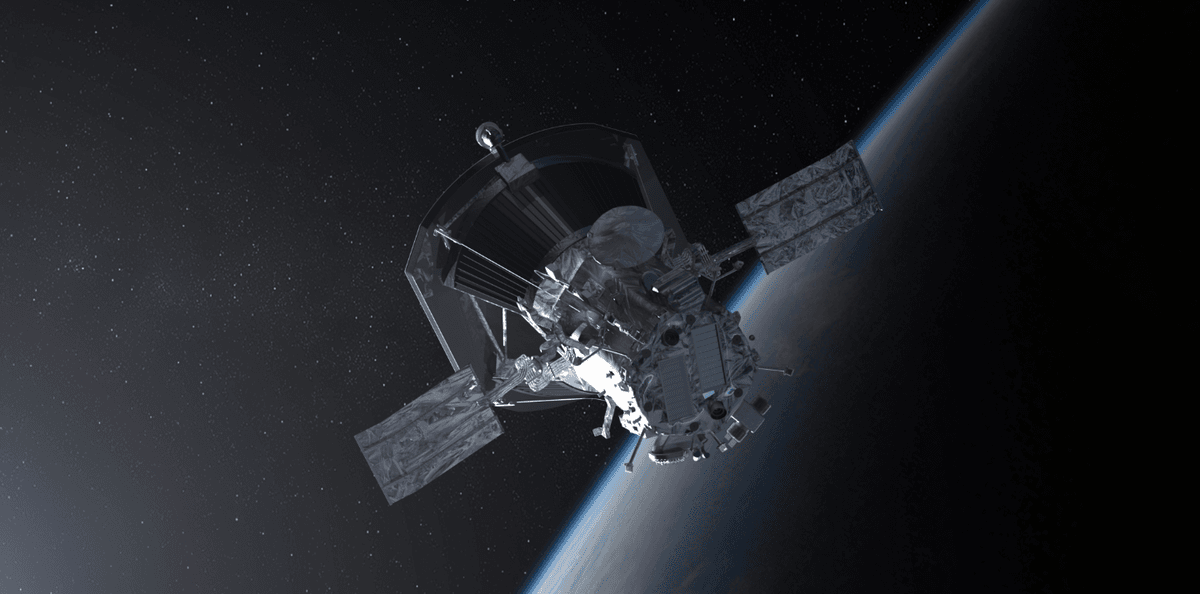
The fastest object ever made by humankind is NASA's Parker Solar Probe, a spacecraft that cruised through the corona, the Sun’s upper atmosphere, a mere 6.5 million kilometers (4 million miles) from its surface.It first completed this historic flyby of the Sun in 2021, but achieved its top speeds during its 17th close passage around our star in 2023, clocking 635,266 kilometers (394,736 miles) per hour.For context, it would take under four minutes to travel to the distance of Earth’s equator at that speed. You’d be able to travel from the Earth to the Moon in just over 36 minutes, or from New York City to Los Angeles in just over 22 seconds.The Parker Solar Probe reaches these blistering speeds using both engineering technology and the gravitational forces at play in our universe. The spacecraft was launched in August 2018 using the Delta IV Heavy rocket, an extremely powerful launch system that provides the necessary thrust to escape Earth's gravity and set the probe on its trajectory toward the Sun.Once in space, it uses a solar-powered propulsion system to fine-tune its orbit. However, much of its speed is acquired by the Sun's huge gravity, which effectively pulls the probe into its orbit.Venus, a next-door neighbor of Earth, also plays a role. As the orbits of the Parker Solar Probe and the planet converge, the spacecraft is maneuvered in front of the planet. Venus's gravity, though modest by celestial standards, then alters the probe's trajectory and speed. This gravity assist maneuver reduces Parker's speed relative to the Sun by 10 percent and brings it closer to the Sun.               “No one believed using Venus gravity assists would be possible, because the gravity assist a planetary body can provide is proportional to the body’s mass, and Venus’ mass is so much smaller — only 0.3 percent of Jupiter’s,” Yanping Guo, mission design and navigation manager for the Parker Solar Probe mission at the Johns Hopkins University Applied Physics Lab, said in a 2018 statement.”You compare the gravity assist Venus can provide to what Jupiter can provide, and you have to do repeated flybys to achieve the same change. Then you’re getting a very long mission duration,” she added.As Icarus learned the hard way, flying close to the Sun is no easy feat. Despite its proximity to the Sun’s surface, the Parker Solar Probe isn’t exposed to as much heat as you might think because high temperatures do not always translate to actually heating another object.Temperature measures how fast a particle is, while heat measures energy transfer. The Sun's corona is less dense than the visible Sun's surface, so even at high temperatures, little heat is transferred. If you're struggling to understand how this might work, imagine how you can stick your hand in a hot oven, but not in a pan of boiling water. As such, while the probe travels through million-degree temperatures, its heat shield only heats to about 1,400°C (2,500°F).While making these flybys, the probe has several scientific objectives, such as understanding the flow of energy that heats and accelerates the solar corona and solar wind, as well as the dynamics of the plasma and magnetic fields.You may have heard an urban legend that the fastest human-made object was, at one point, a manhole cover that was blasted into space by a nuclear bomb test in 1957. This would also make it the oldest human-made object in space. It’s a great tale, but largely unfounded and full of glaring plot holes.
Like
Comment
Share
Science Explorer
Science Explorer
1 y

People May Have Exported Marsupials From Australia 42,000 Years Ago
Favicon 
www.iflscience.com

People May Have Exported Marsupials From Australia 42,000 Years Ago

The very first inhabitants of the paleocontinent known as Sahul may have exported some of the region’s most iconic mammals to islands hundreds of kilometers away, new research suggests. Consisting of Australia, Tasmania, New Guinea and other nearby isles, Sahul is famous for its cast of marsupial characters, some of which appear to have been relocated to Indonesia 42,000 years ago.Seeking to establish how and when humans first went Down Under, the study authors examined a rock shelter in the Tanimbar Islands, which sit among the group of isles known collectively as Wallacea. Forming a chain of stepping stones between the southeast Asian continental shelf – known as Sunda – and Sahul, Wallacea facilitated the colonization of Australia some 50,000 years ago, although exactly which route these early travelers took through the region remains the subject of much debate.Known as Elivavan, the rock shelter threw up a number of surprises, with evidence for human occupation in a layer of sediment dated to 42,000 years ago. While the peopling of other islands in Wallacea is known to have occurred during this period, the remote location of the Tanimbar Islands had previously led to uncertainty over whether or not humans had the capacity to reach this Indonesian province during the Pleistocene.According to the study authors, ancient voyagers could have spread through much of Wallacea using “simple maritime technology”, since many of the region’s islands are separated narrow seas of less than 50 kilometers (31 miles) across. Tanimbar, however, is more than 100 kilometers (62 miles) from the nearest neighboring island, and could therefore only be reached with “advanced maritime technology”.Even more surprising than the presence of humans at Elivavan, however, was the discovery of marsupial – or macropod – bones. According to the researchers, there is no known record of these animals in the Tanimbar Islands, leading them to suspect that they may have been brought over from Sahul in the distant past before being hunted to extinction before the arrival of the first Europeans in the seventeenth century.“The presence of these macropods raises questions about how they arrived on the island – either through natural or anthropogenic means – and what caused their later disappearance,” write the researchers. Given that the Tanimbar Islands are about 250 kilometers (155 miles) from the ancient coastline of Sahul, the implication is that the same advanced sailing vessels that brought humans to the area may also have enabled the exportation of mammals from Oceania to Wallacea.“Currently, the oldest known evidence of animal translocation by humans is the cuscus (Phalanger orientalis) recovered from Matenbek, New Ireland, which was translocated from Sahul and dated to [24,000 years ago]”, explain the study authors. And while there’s not enough evidence to make any solid conclusion about how marsupials ended up in Tanimbar 42,000 years ago, they do go on to say, “If the macropods recovered from Elivavan were introduced through anthropogenic means, this would represent the earliest evidence of animal translocation by humans.”The study is published in the journal Quaternary Science Reviews.
Like
Comment
Share
NewsBusters Feed
NewsBusters Feed
1 y

TEMP NOT LOWERED: MSNBC 'Historian' Claims Trump Win Will Lead to ‘Dictatorship’
Favicon 
www.newsbusters.org

TEMP NOT LOWERED: MSNBC 'Historian' Claims Trump Win Will Lead to ‘Dictatorship’

When viewing MSNBC’s coverage of the Republican National Convention, one is led to wonder why leadership would sideline Morning Joe, albeit briefly, but not the insane asylum airing on prime-time. “Historian” Michael Beschloss’s assessment of President Trump’s acceptance speech only serves to intensify that wonderment.  This is how MSNBC closed its A-block coverage of the RNC: with comparisons of Donald Trump to Fidel Castro, Nikita Kruschev, and with an intensified version of Beschloss’ usual hysterics click "expand" to view transcript): MSNBC REPUBLICAN NATIONAL CONVENTION COVERAGE 7/19/24 12:26 AM RACHEL MADDOW: I want to bring in our friend Michael Beschloss, because, by the rules of this broadcast, once you’ve been invoked we have to- we have to find you. Michael Beschloss, we have invoked your name in terms of talking about, I mean, one very simple metric of this speech which is that it is by far, by a mile, the longest convention speech ever given in the modern era. You suggested that that might itself tell us a little bit of something about the function of Donald Trump's candidacy vis-a-vis his party right now.  MICHAEL BESCHLOSS: It sure does. And the records for second-longest and third longest were: Donald Trump in 2016 and 2020. But this one really beat all. And, you know, to get away from the jokes, which are obvious with a speech like that, which mentioned everything went on much too long, the reason why Castro and Kruschev spoke for four hours or five hours at a time, and they really did and they mentioned everything that came into their brain, that’s what it sounded like tonight, is because they were dictators. And the people who worked with them were terrified to tell them they should make a shorter speech. And that’s what happens when you’ve got a cult. May I suggest what the most important thing about tonight is, Rachel? MADDOW: Please. BESCHLOSS: This historical moment is the one thing he did not mention. You know, he said on Day One, he’s going to start drilling for oil, and he’s going to close the borders. That’s not what he’s been promising for the last number of months. He’s been promising on Day One to be dictator for a day. And all I am saying is that historically, the most important thing about tonight, a subject he either intentionally or otherwise avoided, is how he will he change this country. Is he going to use a complicit Supreme Court with this new immunity ruling to become the most powerful president we have ever had? Making arbitrary decisions, some of them perhaps unlawful as long as they are called “official acts”, and make radical changes like, you know, pull America out of NATO, conceivably, until Russia, in his own words, under certain circumstances, “do whatever the hell you want.” This is the most decisive moment in American history I have ever seen in a presidential election. And I think we can’t be dissuaded. 15 weeks from now, we will know if this night led to renewed democracy, rebirth of freedom, as Lincoln wanted us to have, or whether it led to dictatorship and the strongest president in history doing all sorts of things we can’t imagine. MADDOW: NBC News presidential historian Michael Beschloss, putting a cap on it for us tonight. Michael, thank you. Absolutely priceless. By no means was this the first reference to dictators on MSNBC's post-Trump speech commentary. Here's how Rachel Maddow and Nicolle Wallace kicked off their wrap-up (click "expand"): MSNBC REPUBLICAN NATIONAL CONVENTION COVERAGE: 7/19/2024 12:08:03 AM 2 minutes 25 seconds RACHEL MADDOW: We knew this was going to be a long speech when we got first the excerpts and then the full text of it scripted at probably about an hour. But this came in over an hour and a half long. This was a Fidel Castro kind of experience. The former president did get to most of the words on the teleprompter, but added a whole lot more. NICOLLE WALLACE: Yeah. There was a lot of extra cereal in the box, if you will. MADDOW: Yes. Nicole Wallace what did you think? WALLACE: Well so interestingly, it was pointed out to me that Fox News had stopped carrying his speeches about a month ago and I thought that was curious. And it was when there was a lot in them about electrocution and sharks. I think when you watch what is arguably his biggest opportunity to speak before the most Americans, you see a little bit of where that -- where some of that thinking might be right? This was very extemporaneous. It was I think about half and half right? Half of it was the scripted speech, and there was about 50% extra added. In the room, it was messianic. People were crying, and they definitely loved it. Trump who -- MADDOW: At the beginning they loved it and were crying. By the end The New York Times actually reported – we’re trying to chase this down – but that actually by the end the upper level seats people were emptying. WALLACE: And The Times had a great sort of bottom line on this in the beginning, he said he changed by the end it was pretty clear he hadn’t- or hadn’t very much. I think if you are wondering what impact this has on a viewing audience, you have to wonder how much of it the viewing audience stayed through. It was very – it was longer than current modern baseball games with the new pitching clock. I don’t even know that all baseball games last that long. It was very lengthy, it was very meandering. I hope that the bigger message anyone in the pro-democracy side got tonight, is that the pro-democracy candidate, the democratic person, can beat him and by a lot, and decisively, rendering the story that you cover which- on Rutenberg, meaningless if that should happen. The other thing is if you are looking in here for kernels of substance describing what happened to them on Saturday night, saying this is the one and only time he'll do that, we'll see, right? It seemed like a story that once he got into it, he was very connecting over it and sharing. This certainly isn’t new material for Beschloss. A few short months ago, ahead of the State of the Union address, Beschloss plied the same hysterical schtick- as captured by our colleague Alex Christy: Beschloss declared that “this is a real historical moment” and warned, “We could be a dictatorship next year if Donald Trump is elected and carries through on his threats and carries through on his threats to suspend the Constitution. That's what's at stake.” In fairness, it wasn’t just Beschloss: most of the prime-time panel took turns comparing Trump’s speech to those of Fidel Castro or Nikita Kruschev. But it was Beschloss who ramped the hysterics to 11. There were calls for a lowering of the rhetorical temperature in the wake of the attempted assassination of former President Trump. Those pleas went unheeded at MSNBC.  Instead, America’s TeleSur gleefully went the other way. Reasonable people may determine that this was done, precisely, in order to stimulate the impulses of the hext homicidal nutjob that feels compelled to take Democracy™ into their own hands.  In hindsight, César Conde should’ve pulled the plug on prime-time. MRC intern Sarah Butler contributed to the preparation of this item.  
Like
Comment
Share
NewsBusters Feed
NewsBusters Feed
1 y

Faux CNN Conservative Gushes Over Harris, Dems' 'Democracy in Action'
Favicon 
www.newsbusters.org

Faux CNN Conservative Gushes Over Harris, Dems' 'Democracy in Action'

On Thursday, CNN Newsroom’s Jim Acosta hosted former advisor to Vice President Mike Pence, Olivia Troye. Troye, a faux conservative, praised the Democratic Party while describing Trump as a “used car salesman.” Acosta began by mentioning that Troye has recently been on the campaign trail with Vice President Kamala Harris and is openly “supporting the Democratic ticket.” He asked her what she made “of this hand wringing that’s going on inside the Democratic Party” regarding Democratic members calling on Biden to step down.     Troye absurdly responded, “Yeah, look, obviously I'm a Republican, and so I'm just kind of watching this play out on the Democratic side.” She then claimed to be “impressed at democracy in action with the Democratic Party” because “this would never be allowed in the Republican Party” due to Trump's “bullying” and “threatening.” Democrats had a chance to put “democracy in action” during their primary, but they declined. Now, they are simply scared Biden might lose. Acosta also asked Troye what her thoughts were on Biden wanting to be on the top of the ticket. Her response, unsurprisingly, did not seem to be very Republican: “I think President Biden truly cares about the country and the direction that we're going in. I think, you know, I've watched him govern. I think he's done an amazing job in his presidency.” Further, Troye declared, “I don't agree with everything that he's done because, obviously, I have, you know, conservative views on different things. But I'll say that he's had an effective presidency.” After attempting to portray herself as a Republican, she went on to praise Harris, “I was with the vice president yesterday. She was incredible on stage. She's incredible when she connects with people, and I think it was amazing that she extended a hand to me and other Republicans to come forward with her and talk about health care rights, women's rights.” Acosta asked her if she thought Harris could beat Trump and she responded, “I do. I really do, actually.” She continued to commend the vice president for being “incredibly smart” and “incredibly thoughtful,” not forgetting to mention that she is “impactful on policies.” Turning to the RNC, Acosta wanted to know if Troye thought Trump could become a “unifying leader” or if that is even “in his character.” Troye answered quickly, “Yeah, look, I think Donald Trump is sort of the used car salesman, right? I mean, he will say whatever is convenient at the time, and then he'll flip the switch on it.” Troye also warned that Project 2025 is what Trump “is going to push – so he can sit here and say he’s a changed man, but he said a lot of things where he’s actually flipped off on it.” She concluded by bashing Trump one last time, noting, “I think he's painting himself as a Messiah right now. And I think that's absolutely ridiculous with the lack of morals that he has.” Click "Expand" to view the transcript: CNN Newsroom 7/18/2024 10:04:11 – 10:09:30 JIM ACOSTA: I want to bring in Olivia Troye. She's a former advisor to Vice President Mike Pence. Olivia, you're a lifelong Republican. You're staunchly opposed to Donald Trump. I know you're out on the campaign trail with Vice President Kamala Harris yesterday. You're supporting the Democratic ticket. What do you make of some of this hand wringing that's going on inside the Democratic Party right now? There you are on stage in Michigan yesterday. But what do you make of some of this hand wringing going on inside the Democratic Party, I know you're not inside the Democratic Party, but about whether the president should stay on top of the ticket? OLIVIA TROYE (FORMER ADVISER TO V.P. MIKE PENCE): Yeah, look, obviously I'm a Republican and so I'm just kind of watching this play out on the Democratic side. I will say that I'm impressed at democracy in action with the Democratic Party, because this would never be allowed in the Republican Party. I think Trump would definitely be out there bullying, threatening people in a very serious way, and so would his allies. But I'll say this. I really – I think it's challenging right now, when you're really focused on defeating Trump and the danger that he is to have this discussion continue to play out repeatedly for this long. So, I'm in the camp of whatever decision is going to be made, I hope that it gets done immediately, as soon as possible, so that we can go on and start rowing together so we can defeat what this movement is on the right. ACOSTA: Yeah, and what Priscilla Alvarez was just talking about a few moments ago, apparently Nancy Pelosi, that former House Speaker, who is beloved among progressives inside the Democratic Party, apparently also showing the president polls that indicate he is going to lose in November to Donald Trump. Apparently, Biden was defensive about it, shrugged her off. Apparently, he's not as defiant though. He is listening. I was talking to a source close to the president last night who said that the president is listening to all of this. Do you think there should be some scenario where he steps aside and Kamala Harris becomes the top of the ticket? What are your thoughts on that? TROYE: You know, I think -- look I think President Biden truly cares about the country and the direction that we're going in. I think I've watched him govern. I think he's done an amazing job in his presidency. I don't agree with everything that he's done because, obviously, I have, you know, conservative views on different things. But I'll say that he's had an effective presidency. And so I hope that he, when he's looking forward, weighs the decision on what is the best move to make for the greater good of the country right now. I'll tell you this. I was with the vice president yesterday. She was incredible on stage. She's incredible when she connects with people, and I think it was amazing that she extended a hand to me and other Republicans to come forward with her and talk about health care rights, women's rights. And I saw a lot of Republican women in the audience who were open to that conversation, and I think she's leading the way in setting that example. So, I think -- yes ACOSTA: Do you think she could be Donald Trump? TROYE: I do. I really do, actually. She is incredibly smart. I think that she is incredibly thoughtful and impactful on policies. And I think the more that people are watching her, the more that she's out on the campaign trail, I think she's connecting with the voters. And I think, you know, bringing conservatives in the fold, traveling to conservative states to really talk about what's at stake, I think, is important, I'm glad that she's doing it. And I think she would be an excellent candidate. But right now, as far as I know, the candidate is the Biden-Harris ticket, so that's what I'm going to support. ACOSTA: Right. And I do want to ask you about the RNC, because, typically, in this time of year, you would be in Milwaukee supporting the Republican ticket. You're not doing that anymore. You work for Mike Pence. There's a new vice presidential running mate. It's JD Vance. But at the separate event in Milwaukee last night, I guess Trump told a crowd that God was with him during the assassination attempt last week weekend. Let's listen to some of that, if we can. (BEGIN VIDEO CLIP) DONALD TRUMP: But I got lucky. God was with me, I tell you. In many ways, it changes your attitude, your viewpoint toward life. And I think honestly, I think you appreciate God even more. I really do because something happened that -- something happened, not that it was pleasant. It wasn't like it was a complete miss. (END VIDEO CLIP) ACOSTA: Yeah, I -- Olivia, what do you think of -- I mean, a couple of things. One is how the party has really rallied around Donald Trump at this convention, how it's been a pretty unified convention, also, I mean, what Trump has been saying lately, that he's changed and so on. I mean, do you, you know, Donald Trump, you worked in his administration. Do you think he can rise above this and be a different kind of unifying leader? Is that in his character do you think? TROYE: Yeah look, I think Donald Trump is sort of the used car salesman, right? I mean, he will say whatever is convenient at the time, and then he'll flip the switch on it. I don't expect him to stay the course on this. I think, you know, they're not behaving in a unity ticket for the country. They may be unified as a Republican Party right now, under the candidate that they want to win, regardless of their – you know the sacrificing of their own integrity and morals, and I'm talking about people like Nikki Haley. But, look, his policies are his policies. Project 2025, those are his policies. Those are the things that he is going to push so he can sit here and say he's a changed man, but he said a lot of things where he's actually flipped off on it. So, until he – you know -- we get to the polls and we get this man out of here, he'll be continuing to spin this and he'll use it to his benefit. And he’ll – you know -- I think he's painting himself as a Messiah right now. And I think that's absolutely ridiculous with the lack of morals that he has. ACOSTA: All right. Olivia Troye, great to see you. Thanks so much. I really appreciate it.

Like
Comment
Share
The Blaze Media Feed
1 y

Bill Maher: What Republicans get WRONG about Biden
Favicon 
www.theblaze.com

Bill Maher: What Republicans get WRONG about Biden

If there’s one liberal who can make sense of what’s going on in the world today, it’s Bill Maher — and he has a message regarding the current president. “Let’s be clear about Biden,” Maher says to Dave Rubin of “The Rubin Report.” “Should he run for president? No. As we were saying, I was saying a long time ago, he shouldn’t. Is he the best choice? No. Is he completely out of his mind? No, he’s not lost his marbles.” “You talk yourself into the extremes,” he adds. “I don’t know that that’s extreme,” Rubin counters. “I don’t have any sense that he has the wherewithal, if they woke him up at 7:30, 11:30, or 3:30, that he would know where he is or what he’s doing.” “Then you’re just a hater,” Maher argues. “He’s terrible in public, he’s terrible when you put him under pressure with his stuttering and with his age, yes, to try to do a debate, it’d be like asking him to run a marathon at 81.” “Being pointlessly, purposely, stupidly extreme about it, not being objective, you just hate that side so you can’t come to the actual true place where this is, and that’s where this is,” he adds. While Maher doesn’t believe that Biden is crazy, he does believe that “he just shouldn’t be president.” “In public, he’s not a crazy person. He’s just an awful speaker. He’s terrible under pressure at 8:00 at night,” Maher explains. “The bar has been set low, I guess is what you’re saying,” Rubin responds. Want more from Dave Rubin?To enjoy more honest conversations, free speech, and big ideas with Dave Rubin, subscribe to BlazeTV — the largest multi-platform network of voices who love America, defend the Constitution, and live the American dream.
Like
Comment
Share
Showing 71030 out of 105845
  • 71026
  • 71027
  • 71028
  • 71029
  • 71030
  • 71031
  • 71032
  • 71033
  • 71034
  • 71035
  • 71036
  • 71037
  • 71038
  • 71039
  • 71040
  • 71041
  • 71042
  • 71043
  • 71044
  • 71045
Advertisement
Stop Seeing These Ads

Edit Offer

Add tier


Select an image
Delete your tier
Are you sure you want to delete this tier?

Reviews

In order to sell your content and posts, start by creating a few packages. Monetization

Pay By Wallet

Payment Alert

You are about to purchase the items, do you want to proceed?

Request a Refund