YubNub Social YubNub Social
    #freedom #libtards #patriots #privacy #americafirst #loonyleft #surveillancestate #police\ #alpr #flock
    Advanced Search
  • Login
  • Register

  • Night mode
  • © 2026 YubNub Social
    About • Directory • Contact Us • Developers • Privacy Policy • Terms of Use • shareasale • FB Webview Detected • Android • Apple iOS • Get Our App

    Select Language

  • English
Community
New Posts (Home) ChatBox Popular Posts Reels Game Zone Top PodCasts
Explore
Explore
© 2026 YubNub Social
  • English
About • Directory • Contact Us • Developers • Privacy Policy • Terms of Use • shareasale • FB Webview Detected • Android • Apple iOS • Get Our App
Advertisement
Stop Seeing These Ads

Discover posts

Posts

Users

Pages

Blog

Market

Events

Games

Forum

Intel Uncensored
Intel Uncensored
1 y

Did You Have ‘CIA Docs Say There Was Life on Mars’ on Your Bingo Card?
Favicon 
www.sgtreport.com

Did You Have ‘CIA Docs Say There Was Life on Mars’ on Your Bingo Card?

by Matt Margolis, PJ Media: The possibility of water, whether frozen or liquid, on Mars is often hailed as groundbreaking — but it might be overshadowed by a far more astonishing claim from the CIA. According to a declassified document, the agency believed that giant beings once inhabited the red planet. The report, titled “Mars […]
Like
Comment
Share
History Traveler
History Traveler
1 y

10 Must-Visit Historic Ski Towns in the US
Favicon 
www.thecollector.com

10 Must-Visit Historic Ski Towns in the US

  Looking to plan your next ski trip? Sorting through options can be overwhelming, especially when you’re trying to balance great skiing with memorable experiences off the slopes. With nearly 500 ski areas in the US, the choices are vast, and the stories behind some destinations make them stand out even more. For those who crave a mix of incredible terrain and rich history, America’s historic ski towns offer something extra. These are the places where skiing took root, where Victorian buildings meet world-class powder, and where each turn down the mountain feels like stepping into the past. Curious about which of these storied locales to visit? Here’s a guide to ten must-visit historic ski towns that combine skiing with a touch of history.   1. Aspen, Colorado Snow-covered mountains in Aspen, Colorado. Source: Pexels   Aspen, one of the most beautiful historic towns in Colorado, was founded in 1879 during the silver mining boom. It transformed from a bustling mining hub into a premier ski destination. Following the silver market collapse in 1893, Aspen faced economic decline until the mid-20th century, when visionaries like Walter Paepcke revitalized the town by promoting it as a cultural and recreational haven.   The establishment of the Aspen Skiing Company and the development of ski lifts in the 1940s marked the town’s rebirth as a ski resort. Today, Aspen boasts historic sites such as the Wheeler Opera House and the Hotel Jerome, both reflecting its rich heritage. Visitors are drawn to Aspen not only for its world-class skiing but also for its vibrant arts scene, historic charm, and year-round outdoor activities.   2. Park City, Utah Eagle Race arena at Park City Mountain Resort, Utah. Source: Wikimedia Commons   In the 1860s, silver discoveries attracted prospectors, leading to the Park City’s incorporation in 1884. However, by the mid-20th century, declining silver prices had reduced Park City to a near ghost town. Seeking economic revival, local leaders turned to skiing, opening Treasure Mountain Resort (now Park City Mountain Resort) in 1963 on former mining land.   Park City’s historic Main Street features over 60 Victorian buildings listed on the National Register of Historic Places. You can explore the Park City Museum to delve deeper into the town’s past. Park City’s transformation from mining to skiing is also evident in its vibrant après-ski scene, with establishments like the High West Saloon, the world’s only ski-in whiskey distillery, offering a unique blend of history and modern leisure.   Beyond skiing, Park City offers year-round activities, including hiking, mountain biking, and cultural events like the Sundance Film Festival.   3. Steamboat Springs, Colorado Steamboat Springs ski resort, Colorado. Source: Wikimedia Commons   Steamboat Springs, Colorado, is a town rich in history and unique characteristics that set it apart from other ski destinations. Its name originates from French trappers in the early 19th century who mistook the chugging sound of natural mineral springs for a steamboat, leading to the name “Steamboat Springs.”   The area was originally inhabited by the Yampatika band of the Ute tribe, who hunted in the valley during the summer.   In 1875, James Harvey Crawford, known as the “Father of Steamboat Springs,” settled in the area, establishing a community that would grow around the abundant natural resources and the healing hot springs.   The town’s skiing heritage began with Norwegian Carl Howelsen, who introduced ski jumping in the early 20th century. Howelsen Hill, established in 1915, is now the oldest continuously operating ski area in North America and has produced numerous Olympians, earning Steamboat the nickname “Ski Town, U.S.A.”   Steamboat Springs is also notable for its lower elevation compared to other Colorado ski towns, sitting at about 6,700 feet above sea level. This lower altitude offers a gentler adaptation for visitors, reducing the likelihood of altitude sickness.   Visitors can explore the Tread of Pioneers Museum to delve deeper into the area’s rich history, including its Native American heritage, pioneer roots, and skiing legacy.   4. Telluride, Colorado Telluride Ski Resort, Colorado. Source: Wikimedia Commons   Nestled in a box canyon within the San Juan Mountains, Telluride boasts a rich history that has shaped its unique character. Founded in 1878 as a mining town, it quickly became a hub for gold and silver extraction. The town’s name is believed to derive from “tellurium,” a nonmetallic element associated with rich mineral deposits.   In 1961, Telluride’s core area was designated a National Historic Landmark District, recognizing its significant role in the American West’s mining era. This designation has preserved numerous Victorian-era buildings, allowing visitors to step back in time as they stroll through the historic downtown.   Transitioning from mining to recreation, Telluride is now renowned for its world-class skiing and vibrant cultural scene. The Telluride Ski Resort offers diverse terrain for all skill levels, while the town hosts annual events like the Telluride Film Festival and Telluride Bluegrass Festival, attracting visitors worldwide.   Historic sites such as the Sheridan Opera House and the Telluride Historical Museum provide insights into the town’s storied past. Additionally, the free gondola connecting Telluride to Mountain Village offers panoramic views of the surrounding peaks, making it a must-visit attraction.   5. Breckenridge, Colorado Snow mountains on Breckenridge, Colorado. Source: Wikimedia Commons   Breckenridge, Colorado, established in 1859 during the Pike’s Peak Gold Rush, has a rich history that extends beyond its mining origins. The town was named after then-Vice President John C. Breckinridge, hoping to gain favor and secure a post office. However, during the Civil War, when Breckinridge sided with the Confederacy, the town altered the spelling to “Breckenridge” to distance itself from him.   A unique aspect of Breckenridge’s history is its designation as the “Kingdom of Breckenridge.” Due to a clerical error, the town was omitted from US maps in the mid-20th century, leading locals to playfully refer to it as a separate kingdom. This was rectified in 1936, but the spirit of independence remains, celebrated annually during “Kingdom Days.”   Breckenridge is also home to one of the largest historic districts in Colorado, encompassing over 200 structures on the National Register of Historic Places. This preservation allows visitors to experience Victorian-era architecture and delve into the town’s storied past.   In 1961, Breckenridge Ski Resort opened on Peak 8, marking the town’s transformation into a premier skiing destination. Notably, in 1984, it became Colorado’s first major resort to allow snowboarding, showcasing its progressive embrace of winter sports.   6. Jackson, Wyoming Jackson, Wyoming. Source: Flickr   Established in 1914, this town is rich in history and unique milestones. In 1920, it garnered national attention by electing the first all-female town council in the United States, a testament to Wyoming’s progressive stance on women’s rights; notably, Wyoming was the first state to grant women the right to vote in 1869.   The town’s name honors David Edward “Davey” Jackson, a mountain man and trapper who frequented the area in the early 19th century. The surrounding valley, known as Jackson Hole, reflects this heritage.   Jackson’s Town Square is renowned for its distinctive arches made from elk antlers collected from the nearby National Elk Refuge. These arches have become iconic symbols of the town, attracting visitors from around the world.   The town also boasts the longest-running shootout in the world, a testament to its Wild West roots. This theatrical reenactment has been a staple of Jackson’s town square since 1957, entertaining visitors with a glimpse into the town’s storied past.   Today, Jackson serves as a gateway to Grand Teton and Yellowstone National Parks. Its vibrant arts scene, outdoor recreational opportunities, and commitment to preserving its unique heritage make Jackson a compelling destination for travelers seeking both adventure and a connection to the past.   7. Sun Valley, Idaho Sun Valley, Idaho. Source: Wikimedia Commons   Sun Valley, Idaho, holds a distinguished place in American skiing history as the nation’s first destination ski resort. Conceived in 1936 by W. Averell Harriman, chairman of the Union Pacific Railroad, the resort was developed to boost train travel by offering a luxurious alpine experience comparable to European resorts.   A groundbreaking innovation at Sun Valley was the installation of the world’s first chairlifts on Dollar and Proctor Mountains, revolutionizing ski lift technology and enhancing the skiing experience.   The resort’s appeal attracted numerous celebrities, including Ernest Hemingway, known for his notable novels, where completed “For Whom the Bell Tolls” while staying at the Sun Valley Lodge. The Lodge itself remains a testament to the resort’s rich heritage, offering luxury accommodations and a glimpse into its storied past.   Today, Sun Valley Resort encompasses two main ski areas: Bald Mountain, known for its consistent pitch and varied terrain, and Dollar Mountain, ideal for beginners.   8. Taos, New Mexico Taos Ski Valley, New Mexico. Source: Wikimedia Commons   Taos’ name derives from the indigenous Tiwa language, meaning “place of red willows.” The area has been inhabited for centuries, with Taos Pueblo, a must-visit ancient site in New Mexico, being one of the oldest continuously inhabited communities in the United States.   In 1955, Swiss-German ski pioneer Ernie Blake founded Taos Ski Valley, envisioning a European-style resort in the rugged Sangre de Cristo Mountains. The resort became known for its challenging terrain and unique blend of Native American, Spanish, and Anglo cultures.   Taos Ski Valley was one of the last major ski resorts in the United States to permit snowboarding, lifting its ban on March 19, 2008.   9. Stowe, Vermont Stowe, Vermont in winter. Source: Flickr   Chartered in 1763, Stowe’s early economy was rooted in agriculture and lumber. By the mid-19th century, the town had gained recognition as a summer resort, attracting visitors to its picturesque landscapes.   The advent of skiing in the 20th century transformed Stowe into a premier winter destination. In 1933, the Civilian Conservation Corps (CCC) cut the Bruce Trail on Mount Mansfield, marking the beginning of organized skiing in the area. The subsequent development of ski infrastructure, including the construction of the first single chairlift in 1940, solidified Stowe’s reputation as the “Ski Capital of the East.”   When visiting Stowe, you can see several historic sites that reflect its rich heritage. The Vermont Ski and Snowboard Museum, housed in the 1818 Old Town Hall, showcases the evolution of winter sports in the region.   The Stowe Village Historic District, listed on the National Register of Historic Places, features well-preserved 19th-century architecture, including the Akeley Memorial Building and the Stowe Community Church.   Beyond its historic charm, Stowe offers a variety of attractions. The Stowe Recreation Path, a 5.3-mile multi-use trail, provides scenic views of the countryside, making it popular for walking, biking, and cross-country skiing. Additionally, the town’s proximity to Mount Mansfield, Vermont’s highest peak, offers opportunities for hiking and skiing, catering to outdoor enthusiasts year-round.   10. Silverton, Colorado Silverton, Colorado in winter. Source: Flickr   Silverton, Colorado, established in 1874, is a historic mining town nestled in the heart of the San Juan Mountains. Its rich heritage is evident in the well-preserved Victorian-era architecture and the entire town’s designation as a National Historic Landmark District.   A notable attraction is the Durango & Silverton Narrow Gauge Railroad, a historic steam-powered train that has been in operation since 1882, offering scenic journeys through the rugged mountain terrain.   For winter sports enthusiasts, Silverton Mountain Ski Area provides some of the most challenging terrains in North America, catering to advanced and expert skiers seeking adventure.   Additionally, the Kendall Mountain Ski Area offers family-friendly skiing and snowboarding options right in town, making it accessible for visitors of all skill levels.   Exploring the Animas Forks Ghost Town, accessible via the Alpine Loop Scenic Byway, offers a glimpse into the area’s mining past, with well-preserved structures set against stunning mountain scenery.
Like
Comment
Share
History Traveler
History Traveler
1 y

How Did the Islamic Golden Age Shape Knowledge and Discovery?
Favicon 
www.thecollector.com

How Did the Islamic Golden Age Shape Knowledge and Discovery?

  The Islamic Golden Age spanned the mid-7th to the 13th century; during this fruitful period of history, Islamic leaders established one of the largest empires in the world. Islamic forces conquered vast regions that included North Africa, parts of the Middle East, and Western Europe, and significant breakthroughs in science and the arts were made.   Which Factors Contributed to the Rise of the Islamic Golden Age? Coins from the Early Abbasid Era. Source: numisbids.com   The scientific revolution in the Islamic Empire began after the establishment of the Abbasid dynasty in the 8th century. The emergence of the dynasty allowed the empire to settle down politically. The socio-economic and political stability that prevailed following its establishment created an environment that supported scholarly pursuits and an intellectual renaissance. As a result, the Islamic world produced brilliant minds during the Islamic Golden Age era including renowned engineers, artists, scholars, traders, and philosophers. Many of them were celebrated for their grand contributions to fields such as agriculture, law, and technology.    Baghdad became the capital of the empire in 762 CE. Situated on the Tigris River, it lay at the crossroads of the East and West, and was a major inter-cultural center due to its strategic position.    What Factors Contributed to the Search for Knowledge in The Islamic Golden Age? The death of Hypatia. Source: Medium   The Islamic Golden Age is a period marked by significant interest in science and discovery. Some historians attribute the growing interest in science in the Muslim world to influences from Greek culture. This is because after Greek science reached its apex in the 2nd century CE, a spate of anti-intellectual persecutions forced Greek scientists and philosophers to flee en masse to the East. A sizable number of the remaining philosophers including Hypatia of Alexandria lost their lives to Christian fanatics during this period.   Fortunately for scientists who sought refuge in Islamic territories, they were embraced and encouraged to share their knowledge on scientific subjects. This is because the Abbasid caliphs who ruled the Islamic dynasty valued knowledge. The caliphs are credited for setting up the House of Wisdom in Baghdad. The institution became the intellectual powerhouse of the Muslim world. The facility was set up to enable scholars to put together and translate important texts from conquered regions such as Ancient Rome, ancient Mesopotamia, India, China, Ancient Egypt, North Africa, Persia, Ancient Greece, and the Byzantine into Arabic. It also housed scientific manuscripts in the Sanskrit and Greek languages.   Important publications that were translated into Arabic at the House of Wisdom included Aristotle’s books related to poetry and metaphysics, Plato’s The Republic, and Euclid’s Elements. Classic works of antiquity were also translated at the academy into the Arabic language. As the Islamic Golden Age progressed, other intellectual hubs emerged in cities such as Cordoba and Cairo.    What Are Some of the Notable Inventions of the Islamic Golden Age? Traditional paper-making tools and products. Source: Mary Milelzcik/Hawaii Tribune Herald   Paper emerged as one of the more notable inventions of the Islamic Golden Age. Originally a secret kept by the Chinese, its production methods were obtained from prisoners captured during the Battle of Talas that occurred in 751 CE. The art of paper-making soon spread to the Islamic cities of Baghdad and Samarkand. With time, the Arabs improved on their paper-making technology, and by 900 CE, shops in Baghdad were employing scribes to write books. Other notable inventions of the Islamic Golden Age include distilled alcohol, soap, shampoo, and toothpaste.   Who Are Some of the Celebrated Scholars in the Islamic Golden Age? Modern statue of al-Khwarizmi at Khiva, in Uzbekistan. Source: muslimheritage.com   A sizable number of distinguished Arab scholars emerged during the Islamic Golden Age period. One of the more notable luminaries was Abu Ja’far Mohammed ibn Musa Al-Khwarizmi. The 9th century scholar became one of the most celebrated mathematicians and astronomers of the era due to his outstanding breakthroughs.   Al-Khwarizmi wrote numerous books including one that outlined how to compute numbers using the place-value decimal system. The system is widely used today. Another of Al- Khwarizmi’s creations was the Kitab al jabr w’al-muqabala. The book was an algebraic text that contributed immensely to Arabic mathematics.   Other notable figures that emerged during the Islamic Golden Age include Avicenna, often referred to as the father of modern medicine, Jabir ibn Hayyan, who is hailed as the father of modern chemistry, and Ibn al-Nafis, a scholar who is celebrated for being the first to describe the pulmonary blood circulation system.    How Did the Islamic Golden Age Influence Intellectual Progress in the West? “Preparing Medicine from Honey,” an Arabic Translation of De Materia Medica of Dioscorides, 1224. Source: The Metropolitan Museum of Art, New York   Some historians argue that the translation of Arabic texts into Western languages contributed in bringing the Western world out of the Dark Ages, by adding to the knowledge upon which the European Scientific Revolution was built. Concepts such as experimentation, mathematical formulas, and medical procedures were shared widely between the Islamic world and Europe just before Europe’s Scientific Revolution. This phenomenon occurred in regions such as Spain where there was continuous interaction between the Western and Muslim cultures.
Like
Comment
Share
History Traveler
History Traveler
1 y

10 Can’t-Miss South American Films
Favicon 
www.thecollector.com

10 Can’t-Miss South American Films

  Despite its relative obscurity compared to other cinema powerhouses like France, Germany, and Japan, the South American film industry has a storied history all its own. Though Brazil and Argentina claim the top spots for film production on the continent, other countries, including Chile and Colombia, are starting to make inroads in the industry as well. The ten South American films highlighted here explore complex themes, including redemption, grief, and marginalization, while showcasing the region’s culture, landscapes, music, and visual arts—and its tumultuous political history.   1. Black Orpheus (Brazil, 1959) Orpheus (Breno Mello) and Eurydice (Marpessa Dawn) as portrayed in Black Orpheus, 1959. Source: The Times   Frenchman Marcel Camus’s take on the Greek myth of Orpheus and Eurydice, Black Orpheus, made history. For starters, it was the first of only four films to win both the Cannes Film Festival’s Palme d’Or and Best Foreign Film in the Academy Awards. It was also the first internationally acclaimed movie filmed entirely within a favela, as well as the first to feature an almost entirely Afro-Brazilian cast.   Black Orpheus features tram conductor Orfeu dancing his way through the Brazilian festival Carnival with Eurydice, a country girl on the run from a man in a skeleton costume. It’s an incredible feast for the senses, full of technicolor visuals, intricate costuming, and expressive, spirited dance routines. It also has a wildly catchy samba soundtrack composed by world-renowned bossa nova pioneers Luiz Bonfá and Antonio Carlos Jobim.   The film’s portrayal of Afro-Brazilian life has been celebrated by some and criticized by others. It makes more of an attempt at anthropological realism—for example, by including a Candomblé ritual in the climactic scene—than the 1956 play it is based on. But critics argue that Black Orpheus still paints an overly romantic picture of favela life. Viewers should make up their own minds, though—because regardless of which side wins out, Black Orpheus is certainly worth the watch.   2. City of God (Brazil, 2003) The Tender Trio, a juvenile gang in the favelas of Rio de Janeiro, robs a gasoline delivery truck at gunpoint, 2003. Source: IMDB   For a more cynical—and perhaps more realistic—take on Rio’s favelas, check out City of God. An adaptation of Paulo Lins’s semi-autobiographical novel of the same name, City of God tells the story of Rocket, a young boy fighting to escape from the slums. His way out? A camera. But in a Sontag-esque twist, Rocket’s search for the perfect shot, to win fame and freedom, draws him deeper and deeper into the endemic violence of the favela.   There’s a rich and fascinating historical context to City of God. Set in Cidade de Deus, a 1960s-era housing development/resettlement project intended to relocate Rio’s slums from the city center to its outskirts, City of God probes the social factors that feed crime and poverty in Brazil. An unflinching portrayal of violence and extreme social marginalization, it forces viewers to face the collective rage, resentment, and cynicism bred by Rio’s built-in class divide.   More than that, though, City of God features inventive editing, sharp humor, and stellar acting from a non-professional cast hired straight out of the favelas. It’s no wonder the fast-paced gang thriller was a box office hit around the world—and an award-season favorite, too. It received a Golden Globe Award for Best Foreign Language Film and was nominated for four Academy Awards.   3. Liverpool (Argentina, 2008) A hungover Farrell (Juan Fernández de Alarcón) wakes in an abandoned bus after spending his first night at port in a strip club, 2008. Source: Le Monde   There’s very little dialogue or drama in Liverpool.   This fact may seem surprising, considering the plot of the film—a seaman has returned home to remote Tierra del Fuego following twenty years away to visit his mother, who may or may not still be alive. The premise seems loaded with potential for emotional outbursts.   Instead, Lisandro Alonso takes a minimalist angle, quietly following sailor Farrell’s journey home and his attempts to reconnect with his family. Instead of fights or fanfare, Farrell finds himself isolated and half-forgotten—a feeling that proves far heavier than hatred.   It’s not for everyone or every mood. But for those who revel in barebones, contemplative storytelling, Alonso’s ability to craft an intimate psychological portrait through the use of action, environment, and physicality is on full display in Liverpool.   4. Jauja (Argentina, 2014) Ingeborg (Viibjork Agger Mailing) rests her head on the shoulder of her father, Captain Dinesen (Viggo Mortensen), 2014. Source: Le Monde   Another Lisandro Alonso feature, Jauja takes a turn from the personal to a much grander scope: human history, mythology, desert, and sea.   The film, set in the 1880s, follows Captain Dinesen, a Danish engineer traveling through Patagonia with his teenage daughter, Ingeborg, and a company of soldiers. Their task, set by the Argentine government, is to exterminate the local indigenous people.   However, when Ingeborg elopes with one of the soldiers, Dinesen’s relentless search for her leads him into the barren desert—and a surreal, mind-bending journey through the depths of human history and mythology.   The title of the film is an allusion to La Tierra de Jauja, a mythological land of plenty (much like El Dorado). However, as the film’s epigraph proclaims, European settlers’ search for Jauja was doomed from the start: “The only thing that is known for certain is that all who tried to find this earthly paradise got lost on the way.”   Alonso’s Jauja is about loss—lost daughters, lost cultures, lost paradises. But more than that, it’s an exploration of Argentina’s roots, from the mythic and psychological to the material and historical.   5. Nostalgia for the Light (Chile, 2010) Volunteers search the Atacama Desert for the remains of those killed by the brutal Pinochet regime, 2010. Source: Little White Lies   For a less expressionistic dive into Latin American history, check out Nostalgia for the Light—a documentary focused on Chile’s Atacama Desert. The expanse of the Atacama ties together three separate threads of history. Thousands of years ago, Chile’s indigenous people created artworks that are still remarkably well preserved due to the Atacama’s dry climate. More recently, the Augusto Pinochet regime constructed concentration camps for political prisoners—and buried the dead in shallow graves in the Atacama’s sands. Today, astronomers take advantage of the desert’s altitude and cloudless skies—and, as the documentary suggests, astronomy is also a kind of history.   Nostalgia for the Light parallels the physical landscape of the desert—and the traces of human history left behind—with the expanse of the night sky. Interviewees range from astronomers searching for extraterrestrial life to volunteers, mostly women, who have spent years scouring the desert for the remains of their loved ones. It all points toward something very essentially human: the desire for meaning, continuity, and connection.   6. No (Chile, 2012) Advertising consultant René Saavedra (Gael García Bernal) campaigns for an end to the Chilean military dictatorship, 2012. Source: Beyond the Marquee   Another take on the Pinochet regime, No tells the mostly-true story of an advertising campaign to vote the dictator out of power.   In 1988, finding himself under growing international pressure—and confident in the support of Chile’s middle and upper class—Pinochet permitted a referendum on whether he should be allowed another eight years in office. The protagonist of No, marketing consultant René Saavedra, finds himself tasked with creating 15-minute nightly TV spots to convince Chileans to vote “no” on Pinochet.   Initially, leftist campaigners (including René’s estranged wife) had focused their advertising on the human rights abuses of the Pinochet regime. However, politically ambivalent René convinces them to take a different angle: saccharine platitudes, rainbows, unicorns, and dancing children—all pointing toward a brighter, happier future.   On its face, No is an inspirational film about replacing fear with hope—and helplessness with action. But beneath the surface, there are some much more cynical implications: what does it mean to advertise the choice between dictatorship and democracy in the same way corporations might advertise the choice between Coke and Pepsi?   And, more darkly, No’s anticlimactic conclusion reminds us that winning the vote wasn’t the same as winning Chile’s freedom or escaping its past. As director Pablo Larrain explained in an interview with IndieWire, “It’s still an open wound. We never had justice. The people who actually were the killers, we have a few in jail, but most of them are walking free in the street. Pinochet died free, a millionaire.”   7. La Ciénaga (Argentina, 2001) Mecha (Graciela Borges) and Gregorio (Martín Adjemián) indulge in their vices, 2001. Source: MoMA   La Ciénaga is the story of two Argentine women: Mecha, a bourgeois mother who vacations with her family each year at their summer house in the jungle, and Tali, her working-class friend who lives in the nearby town of La Ciénaga.   Both have absentee husbands: Mecha’s is an alcoholic, and Tali’s works constant overtime. Both feel trapped in their lifestyles, forced to mirror those of their respective husbands. While Tali works herself to death, Mecha drinks her life away—and the summer house crumbles, slowly being reclaimed by the swamps that surround it.   La Ciénaga can be difficult to follow at times. There are many plotlines, many characters, and many relationships. But it all reinforces the film’s theme of wasted time and unproductive pursuits. Getting too attached to any one thread is like getting stuck in a swamp: a struggle against the inevitable.   Despite the lack of clear direction, though, director Lucrecia Martel’s brilliant use of color, sound, and small, physical details makes La Ciénaga a brilliant adventure through the jungles of decadence and desire.   8. The Club (Chile, 2015) Disgraced clergymen, their caretaker, and a clerical counselor share wine, terse conversation, and irreverent prayer over dinner, 2015. Source: New York Times   On the outskirts of a Chilean beach town, four former Catholic priests—each guilty of his own sins, from baby-snatching to whistleblowing—live in isolation under the close supervision of a retired nun. However, they find their search for penance interrupted when a new member joins their quiet community: a pedophile.   Following the arrival of Sandokan, one of his now-adult victims, the priest commits suicide. Not long after, Padre García, a counselor intent on shutting down church-sponsored sanctuaries like the one featured in The Club, arrives to assess the situation. Sandokan and Padre García alike prove to be subversive additions to the community, challenging the members of “the club” to reconsider their understanding of their own crimes—and of their penance.   The Club interrogates the clemency granted to disgraced priests by the Catholic church. Director Pablo Larraín asks what it means to live in tranquility and whether exclusion is truly the path to redemption. Perhaps, he suggests, it would be better to find a way forward through plurality.   9. The Official Story (Argentina, 1985) A promotional poster for The Official Story featuring star Alicia (Norma Aleandro) with her adoptive daughter Gaby (Analia Castro), 1985. Source: Deadline   Historical drama The Official Story marked the re-emergence of Argentina’s film industry after the collapse of the 1976-1983 dictatorship and a series of military governments that prevented the flourishing of a vibrant arts scene.   The film centers around Alicia, a history teacher and member of the Argentine political class, who has begun to question the origins of her adopted daughter, Gaby. As its title might suggest, The Official Story is based on a real, devastating history. Following the 1976 coup, children of leftists were routinely taken from their parents and given to childless and well-connected supporters of the military regime. Gaby is one such child.   In addition to exploring the brutal history of neoliberal policy in Argentina, The Official Story presents a complex but beautiful portrait of motherhood. Despite her reluctance to confront the facts of Gaby’s adoption (and her own infertility), Alicia’s love for her daughter drives her to greater and greater lengths to uncover the truth.   The Official Story does such an impeccable job of intertwining the personal with the political that it is, perhaps, no wonder that it was so well received on the domestic and international stage.   10. Embrace of the Serpent (Colombia, 2015) Theo (Jan Bijvoet), a German ethnographer, journeys down the Amazon River along with his local guides, the former rubber plantation slave Manduca (Miguel Dionisio Ramos) and indigenous shaman Karamakate (Nilbio Torres), 2015. Source: Cineaste   Last, but certainly not least, is Embrace of the Serpent, a multigenerational epic centered around Karamakate, an indigenous Amazonian shaman and the sole survivor of his tribe.   The first act of the story takes place in 1909, when a young and impassioned Karamakate meets German anthropologist Theo von Martius and agrees to guide him up the Amazon River. Both Karamakate and Theo have their own selfish motives: Karamakate wants to search for other members of his rapidly vanishing tribe in unfamiliar lands, and Theo wants to find yakruna, a sacred plant that he believes will cure his fatal illness.   But before Theo and Karamakate’s journey is finished, Embrace of the Serpent jumps 30 years into the future, to Karamakate’s meeting with a new outsider: American botanist Evan, dispatched by the US government to locate a source of healthy rubber trees.   Karamakate has become a chullachaqui—an empty shell, out of touch with the ways of his people. But he agrees to help Evan search for yakruna once again, so that they might heal the spiritual sickness of modernity.   Director Ciro Guerra conducted meticulous research for the film. He read the expedition diaries of European ethnologists and biologists, spoke with Amazonian indigenous peoples, and even learned their languages. Thanks to this rich historical context, Embrace of the Serpent is able to portray the pillaging of the Amazonian landscape—and the degradation of indigenous practice, belief, and humanity—by European explorers with a truly unique level of sensitivity and complexity.   Still from Cirro Guerra’s Embrace of the Serpent, 2016. Source: Variety   Guerra’s words on the film—and the value of Latin American cinema—said it best:   “Young people, when they see this film, think maybe their culture is important after all… And it is, I think. Not only for them, but for us. Especially for a country like Colombia. This culture and what it can give to the world is our biggest asset as a country, more than mining our natural resources.”

Like
Comment
Share
History Traveler
History Traveler
1 y

8 Things You Didn’t Know About Eva Perón
Favicon 
www.thecollector.com

8 Things You Didn’t Know About Eva Perón

  Beloved by millions and detested by the elites, Argentine President Juan Perón’s second wife, Eva Perón, better known as Evita, won the hearts of Argentina’s working class and became known worldwide for her rags-to-riches story and untimely death. But government secrecy, memoirs of dubious origins, and stories melding fact and fiction have shrouded many of the details of her life in mystery. Here are eight true facts about Evita’s life, both before and after her death.   1. Eva’s Family Was Her Father’s Secret Second Family  Evita as a child. Source: Diario Jornada   Born in 1919 in Los Toldos, Evita, as she would come to be known, was the illegitimate daughter of Juan Duarte. Evita herself went to some lengths to obscure some of the circumstances around her birth and childhood, allegedly forging her birth certificate to read “María Eva Duarte,” in contrast with her baptismal certificate, which listed her name as Eva María Ibarguren. Nonetheless, she could not conceal that at that time, Duarte was a wealthy—and married—landowner who already had a wife and children in Chivilcoy. Evita and the other four children he had with Evita’s mother, Juana Ibarguren, who worked on one of his estates as a cook, were a second family, part of his double life.   After his death in a car accident a few years later, Evita’s family fell into poverty. Though Duarte had legally recognized his children, they received no further financial support from his estate—and caused something of a scandal when they showed up at his funeral. They subsisted on the meager income Evita’s mother took in from sewing and that the girls could earn serving on local estancias (farms) and were largely ostracized due to the children’s illegitimacy, a resentment that plagued Evita throughout her life.   2. Her Hair Was Naturally Black Photo of a young Evita by Siwul Wilenski, 1939. Source: Archivo General de la Nacion, Argentina   While Evita was famous for her golden, nearly white locks, she wasn’t a natural blonde, and her signature hair color and style were part of a makeover she undertook after her career trajectory changed.   Childhood photos show Evita with dark hair, and photos of her as a young actress in Buenos Aires feature a brunette sporting glamorous 1940s Hollywood hairstyles. After she became involved with Perón and his political ambitions, her style began to shift, starting with the adoption of her signature bright blonde hair color. She moved away from the flashy dresses of her acting days, adopting a more reserved—but still high-end—wardrobe marked by furs and Christian Dior gowns, and abandoned the complicated victory rolls for a classic chignon. Though some would question her decision to adopt luxury while laboring for Argentina’s less fortunate, she famously commented, “The poor like to see me beautiful: they don’t want to be protected by a badly dressed old hag.”   3. She Was a Star of the Airwaves Eva Perón in the never-released movie La Prodiga, 1945. Source: Vanity Fair Español   At age 15, Evita moved to Buenos Aires to pursue an acting career. While she had limited success on stage and screen, she ultimately made quite a splash on the radio. In an era when televisions still hadn’t made it into every home, radio soap operas were quite popular. In 1942, she was hired for a daily role on a radio drama broadcast on the country’s largest radio station. She went on to sign a five-year contract with Radio Belgrano and played several parts in its popular drama Great Women of History. By 1943, she was one of the country’s highest-paid radio actresses.   Her profile was high enough that, after a 1944 earthquake in San Juan, she was invited with other entertainers to raise money for victims through a festival organized by then-Labor Minister Juan Perón. The festival culminated in a gala, where Evita and Perón first met. He claims she reportedly told him, “Thank you for existing.” The rest, as they say, is history.   4. She Wasn’t a Feminist Evita waving from the presidential palace. Source: Al Jazeera   While she has long been associated with early victories for women’s empowerment in Argentina, Evita did not consider herself a feminist—and spoke disparagingly about the country’s feminist movement.   In her own words, “Everything I knew about feminism seemed to me ridiculous. For, not led by women but by those who aspired to be men, it ceased to be womanly and was nothing: feminism had taken the step from the sublime to the ridiculous.”   Despite her obvious distaste for the concept of feminism as it took shape in Argentina at that time, she did support some causes that are generally considered feminist, namely women’s suffrage. Whether she truly believed in women’s right to vote or was simply spearheading a drive that would ultimately garner more votes for her husband is a matter of debate, but she campaigned extensively for the cause. Once suffrage was achieved, Evita then organized the newly enfranchised women of Argentina into the Women’s Peronist Party.   5. She Was Almost Vice President Portrait of General Juan Domingo Perón and his wife María Eva Duarte, Numa Ayrinhac, 1948. Source: Museo del Bicentenario, Casa Rosada, Argentina via Wikimedia Commons   As First Lady, Evita labored tirelessly for Argentina’s descamisados (shirtless ones), the working poor. She earned their devotion—so much so that when her husband’s second term as president was approaching, Perón considered her a candidate for the vice presidency. People turned out in droves, begging her to become his running mate officially, but she ultimately gave a tearful speech renouncing her candidacy—and the true reason is lost to history.   Some scholars argue that Perón was jealous of her popularity and didn’t want a running mate who would outshine him; others suggest the military’s disapproval, appalled at the idea of Evita becoming president should Perón die, turned the president against her.   Another group of researchers believes that her health was already failing—that she was in far worse shape than the public knew—and this prevented her from accepting the role. Whatever the reason, when Perón was reelected in 1951, she had no official position in his government, and by the time he was inaugurated, she could no longer stand on her own. The highest “office” she attained was Spiritual Leader of the Nation, announced in May 1952 as her health was declining rapidly.   6. She Was Lobotomized An emaciated Evita standing with Juan Perón, June 1952. Source: El País   As Evita was dying of cervical cancer, ironically the same illness that had killed Perón’s first wife, her diagnosis was kept secret from the public—as well as from Evita herself. Though she knew she was sick, her exact diagnosis was never revealed to her. In the course of her treatment, she underwent a radical hysterectomy and chemotherapy, as well as a more controversial procedure: a lobotomy.   When evidence of the lobotomy first came to light, the explanation was that it was performed to ease pain. More recent scholarship, however, suggests it was actually done in the hopes of managing Evita’s increasingly erratic and aggressive behavior. As her health failed, she became obsessed with her and Perón’s perceived enemies, going so far as to order arms and ammunition to equip trade unions and militias secretly being trained by loyalists.   Did Perón hope to prevent a civil war by using the controversial procedure to tame his outspoken wife? With all parties long dead, the truth may never be known, but whatever the justification, the surgery was performed—without her consent—in a makeshift operating room in the palace in June 1952. It only hastened her decline; after the procedure, she stopped eating. Evita died on July 26, 1952.   7. Her Body Was Stolen  Evita’s funeral procession in 1952. Source: Al Jazeera   The death of the nation’s spiritual leader plunged Argentina into a period of mourning. Great care was taken to embalm her body, which, after fourteen days of funeral celebrations that reportedly left Argentina completely devoid of flowers, was transported to the headquarters of the country’s largest trade union, its planned final resting place.   Three years later, Perón was ousted in a military coup. Great pains were taken to try to erase Peronism from the country—including Evita, who by this time was viewed by many as a martyr for the people. Evita’s body disappeared. It was stolen from the union headquarters in the middle of the night, and its whereabouts were unknown for decades.   Complicating matters, author and scholar Tomás Eloy Martinez wrote a fictional account of the adventures of Evita’s embalmed corpse, Santa Evita (Saint Evita), published in 1995, and in the years since, fact and fiction have intermingled in the public sphere. For example, it is often claimed that candles and flowers appeared wherever the Argentine military tried to hide Evita’s body—is this true, or simply a bit of fiction that has been misremembered in the public imagination?   Visitors leaving flowers at Evita’s final resting place, the family mausoleum in La Recoleta cemetery. Source: El País   While her exact whereabouts were uncertain for several years after her disappearance—angering her millions of adoring fans and turning her into a symbol of the resistance—by 1957, evidence indicates that the Vatican assisted the new Argentine government in transporting Evita’s body to Italy and burying it under a false name. It remained there until the 1970s, when it was finally returned to Perón himself, living in exile in Spain. After Perón and his third wife returned to Argentina, ruling briefly as president and vice president, Evita’s body was brought back to the country and ultimately buried in her family’s crypt—after yet another military coup in 1976.   8. There’s a Campaign for Her Sainthood Union activists with posters promoting Evita’s sainthood, 2019. Source: Clarín   Santa Evita may be a work of fiction, but there is a very real campaign to have Evita recognized as a saint by the Catholic Church.   Even before her passing, the Vatican was receiving letters calling for her canonization. Shortly after her death, Argentina’s Union of Newspaper Sellers sent the first request to the Holy See to open a sainthood cause for Evita, but it was swiftly rejected. More recently, in 2019, Argentina’s General Confederation of Labor submitted a similar request: “Saints show us paths to reach Christ and intercede before God for us. In our homeland, one generation after another continues to be converted by the humanist and Christian message of the standard bearer of the humble.”   While the Church is exceptionally unlikely to consider such a request, Evita was and is already regarded as a saint by many. Her ministry to the poor and the sick, as well as her self-sacrifice, continuing her social justice work as she was dying of cancer, led many to call her “Santa Evita” even before her death.   Eloy Martinez attests to seeing altars honoring Evita set up in homes, prayed to like the traditional saints. A poster of Evita titled “Eva Santa del Pueblo” (Eva, Saint of the People) hangs in an Argentine labor union’s headquarters. No formal title is necessary for millions of Argentines who saw and still see Eva Perón as their guardian angel.
Like
Comment
Share
Twitchy Feed
Twitchy Feed
1 y

No Regrets: Scott Jennings Doesn’t Hold Back on the Final Days of Biden’s Disastrous Presidency
Favicon 
twitchy.com

No Regrets: Scott Jennings Doesn’t Hold Back on the Final Days of Biden’s Disastrous Presidency

No Regrets: Scott Jennings Doesn’t Hold Back on the Final Days of Biden’s Disastrous Presidency
Like
Comment
Share
Twitchy Feed
Twitchy Feed
1 y

No Lies: Sharyl Attkisson Refuses to Censor the Truth for NewsGuard’s ‘Fact-Checker’
Favicon 
twitchy.com

No Lies: Sharyl Attkisson Refuses to Censor the Truth for NewsGuard’s ‘Fact-Checker’

No Lies: Sharyl Attkisson Refuses to Censor the Truth for NewsGuard’s ‘Fact-Checker’
Like
Comment
Share
YubNub News
YubNub News
1 y

Light My Fire: Landmark Famously Featured on The Doors ‘Morrison Hotel’ Album Goes up in Flames
Favicon 
yubnub.news

Light My Fire: Landmark Famously Featured on The Doors ‘Morrison Hotel’ Album Goes up in Flames

A historic building with a rock music connection went up in flames in Los Angeles today. More than 100 firefighters fought a blaze that engulfed the landmark Morrison Hotel. The LAFD has not released…
Like
Comment
Share
YubNub News
YubNub News
1 y

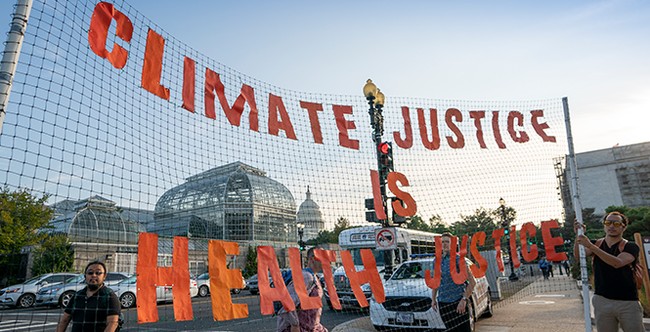
Unscientific American: Magazine Preaches Feminist and Transgender Approach to ‘Climate Change’
Favicon 
yubnub.news

Unscientific American: Magazine Preaches Feminist and Transgender Approach to ‘Climate Change’

Scientific American has many saying the magazine has abandoned actual science for political ideology. Recently, the mag was touting approaching so-called ‘climate change’ from a feminist perspective…
Like
Comment
Share
YubNub News
YubNub News
1 y

Winter Winds Bring Deadly Surf and Tornadoes Across the U.S. Over Holidays
Favicon 
yubnub.news

Winter Winds Bring Deadly Surf and Tornadoes Across the U.S. Over Holidays

By Blessing Nweke Severe weather has wreaked havoc across the United States during the holiday season, with powerful winter winds causing deadly surf conditions on the West Coast and tornado sightings…
Like
Comment
Share
Showing 71883 out of 127085
  • 71879
  • 71880
  • 71881
  • 71882
  • 71883
  • 71884
  • 71885
  • 71886
  • 71887
  • 71888
  • 71889
  • 71890
  • 71891
  • 71892
  • 71893
  • 71894
  • 71895
  • 71896
  • 71897
  • 71898
Advertisement
Stop Seeing These Ads

Edit Offer

Add tier


Select an image
Delete your tier
Are you sure you want to delete this tier?

Reviews

In order to sell your content and posts, start by creating a few packages. Monetization

Pay By Wallet

Payment Alert

You are about to purchase the items, do you want to proceed?

Request a Refund