YubNub Social YubNub Social
    #racism #elections #conservatives #gerrymandering
    Advanced Search
  • Login
  • Register

  • Night mode
  • © 2026 YubNub Social
    About • Directory • Contact Us • Developers • Privacy Policy • Terms of Use • shareasale • FB Webview Detected • Android • Apple iOS • Get Our App

    Select Language

  • English
Night mode toggle
Featured Content
Community
New Posts (Home) ChatBox Popular Posts Reels Game Zone Top PodCasts
Explore
Explore
© 2026 YubNub Social
  • English
About • Directory • Contact Us • Developers • Privacy Policy • Terms of Use • shareasale • FB Webview Detected • Android • Apple iOS • Get Our App
Advertisement
Stop Seeing These Ads

Discover posts

Posts

Users

Pages

Blog

Market

Events

Games

Forum

YubNub News
YubNub News
8 w

CNN Spinning Like Mad Over Its Terrorism Apologia
Favicon 
yubnub.news

CNN Spinning Like Mad Over Its Terrorism Apologia

Earlier today, I wrote about CNN's appalling bit of propaganda that almost romanticized the terrorist attack in New York City by two Islamists, who were radicalized by ISIS.  Advertisement It is…
Like
Comment
Share
YubNub News
YubNub News
8 w

DC Bar Files Disciplinary Charges Against DOJ Official Ed Martin – DOJ Responds
Favicon 
yubnub.news

DC Bar Files Disciplinary Charges Against DOJ Official Ed Martin – DOJ Responds

Justice Department official Ed Martin is facing ethics charges after he sent a letter to Georgetown University Law Center related to its DEI policies. Ed Martin sent the letter last year while he was…
Like
Comment
Share
YubNub News
YubNub News
8 w

JUST IN: U.S. Navy Dismantles Iranian Blockade, Reopens Vital Oil Pathway
Favicon 
yubnub.news

JUST IN: U.S. Navy Dismantles Iranian Blockade, Reopens Vital Oil Pathway

The U.S. military is ramping up operations aimed at restoring shipping through the Strait of Hormuz after Iranian threats and attacks brought traffic in the critical oil corridor close to a standstill,…
Like
Comment
Share
YubNub News
YubNub News
8 w

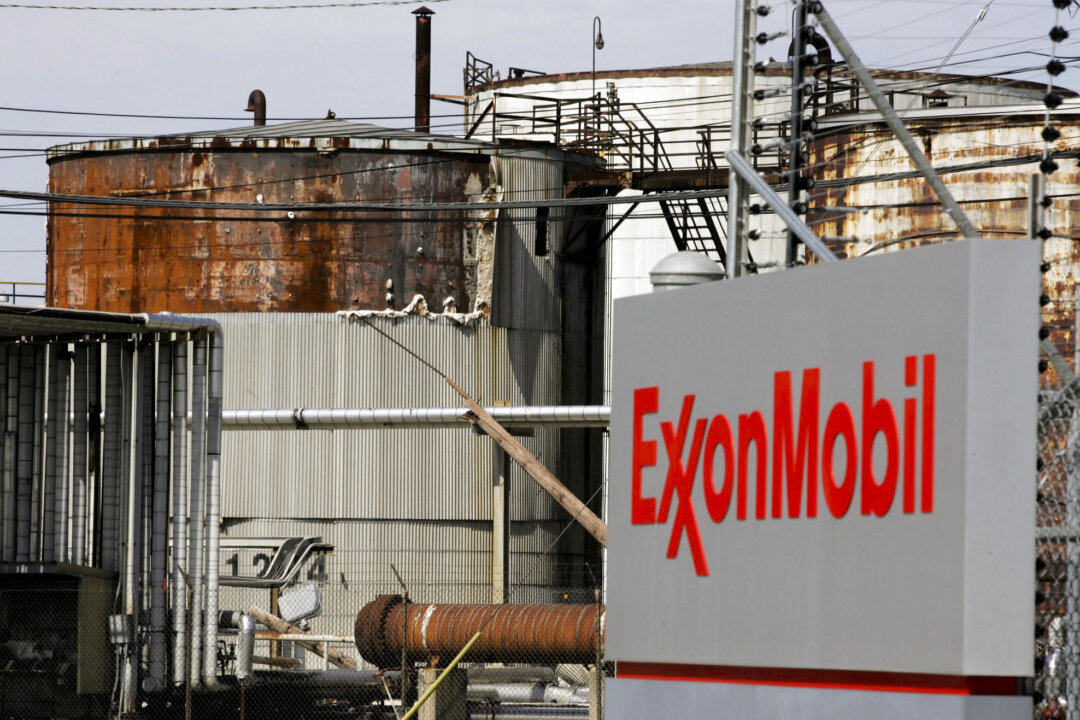
ExxonMobil Seeks to Move Legal Home to Texas After 144 Years in New Jersey
Favicon 
yubnub.news

ExxonMobil Seeks to Move Legal Home to Texas After 144 Years in New Jersey

A view of the Exxon Mobil refinery in Baytown, Texas, in this file photo. Jessica Rinaldi/ReutersExxonMobil has announced plans to move its legal home from New Jersey to Texas, joining a growing number…
Like
Comment
Share
YubNub News
YubNub News
8 w

Penning America’s Hymn: ‘America the Beautiful’
Favicon 
yubnub.news

Penning America’s Hymn: ‘America the Beautiful’

(L) Samuel A. Ward composed the music for “America the Beautiful” and (R) Katherine Lee Bates, composed the lyrics from her poem. Public DomainOh, say, can you hear the strained voices and mumbled…
Like
Comment
Share
YubNub News
YubNub News
8 w

UK Lords Back Facial Recognition Overreach, Protest Crackdown Powers
Favicon 
yubnub.news

UK Lords Back Facial Recognition Overreach, Protest Crackdown Powers

The UK Lords spent March 9 dismantling what little legal cover existed for anonymous protest and privacy, and building new tools to suppress it entirely. Start with what they refused to protect. Peers…
Like
Comment
Share
YubNub News
YubNub News
8 w

Oil Prices Surge Then Plunge Amid Optimism Over U.S.-Israel War With Iran Nearing End
Favicon 
yubnub.news

Oil Prices Surge Then Plunge Amid Optimism Over U.S.-Israel War With Iran Nearing End

Oil prices surged to their highest levels since 2022 on Monday before a dramatic reversal, briefly spiking above $119 per barrel amid wild swings but pulling back sharply on growing optimism from President…
Like
Comment
Share
YubNub News
YubNub News
8 w

IndyCar Freedom 250 Grand Prix Course Unveiled
Favicon 
yubnub.news

IndyCar Freedom 250 Grand Prix Course Unveiled

Officials behind the IndyCar Freedom 250 Grand Prix race to celebrate America 250 have shared details on the development in alignment with President Trump executive order on the subject. The race,…
Like
Comment
Share
Survival Prepper
Survival Prepper  
8 w

The Grid Gets Dangerously Fragile In 2026
Favicon 
prepping.com

The Grid Gets Dangerously Fragile In 2026

<span style="display: inline-block; width: 0px; overflow: hidden; line-height: 0;" data-mce-type="bookmark" class="mce_SELRES_start"></span> AI Power Hunger, $150 Oil, and the Case for Local Backup Power For most of the past century, Americans treated electricity like running water. You flipped a switch, and the lights came on. The grid hummed quietly in the background, invisible and dependable. But lately, the ground beneath that assumption has started to shift. Now several powerful forces are colliding at once: a massive surge in electricity demand from artificial intelligence, rising global energy prices, and a growing list of physical and cyber threats aimed squarely at power infrastructure. Put together, those pressures are turning the electric grid into a far more vulnerable system than most people realize. And for families paying attention, one conclusion is becoming hard to ignore: local backup power is no longer just a convenience. It’s becoming a practical layer of protection. The AI Gold Rush Is Quietly Hijacking the Grid Shadow Over Our Substations: As AI demand surges and tensions rise, America’s aging grid faces a new twin threat—quiet saboteurs on the fence line and hackers in the dark. First, consider the hidden energy appetite of artificial intelligence. Despite the popular phrase “the cloud,” AI doesn’t float in the sky. It lives inside enormous data centers packed with servers that run nonstop, day and night. Those buildings are essentially giant electricity-eating machines. In fact, a single hyperscale data center designed for AI workloads can consume as much electricity as a small city. Some of the largest projects now under construction are expected to demand many times that amount. And that’s where the numbers start to get eye-opening. Researchers at Lawrence Berkeley National Laboratory estimate that U.S. data center electricity demand could climb from about 176 terawatt-hours in 2023—roughly 4.4 percent of all U.S. electricity use—to somewhere between 325 and 580 terawatt-hours by 2028. In other words, data centers alone could consume 7 to 12 percent of the nation’s power within just a few years. Other forecasts suggest global AI infrastructure could push data-center electricity consumption into the 300–400 terawatt-hour range annually by 2030, putting it on par with the total electricity use of some industrialized countries. For a power grid that experienced relatively flat demand growth for decades, that shift is enormous. The U.S. Energy Information Administration is already projecting record-high electricity consumption in 2026, largely driven by AI computing clusters and new data centers being built across the country. Suddenly, utilities are being asked to supply vast new blocks of electricity—sometimes hundreds of megawatts at a time—in regions where transmission lines and substations were never designed for that kind of load. When Surging Demand Collides With $150 Oil Now add another pressure point: energy prices. If oil pushes toward $150 per barrel, the ripple effects spread across the entire energy system. First, data centers create constant demand. Unlike factories or office buildings that power down at night, AI servers run continuously. That means utilities must keep more power plants running around the clock just to maintain baseline supply. As that baseline climbs, more hours of the day shift into higher-cost electricity generation. Utilities then scramble to expand infrastructure—building new transmission lines, substations, and generating capacity. None of that comes cheap. Those investments show up in the one place consumers always notice: their monthly electric bill. Meanwhile, expensive oil pushes up costs across the economy. Materials, transportation, construction equipment, and maintenance expenses all become more costly. Even power systems that rely mostly on natural gas, nuclear, or renewable energy still feel the inflationary pressure when it comes to building and maintaining infrastructure. In other words, the math behind your electric bill is changing. Where electricity prices were once mostly driven by fuel costs, they are increasingly driven by the cost of expanding and protecting the grid itself. High oil prices simply pour gasoline on that fire. A Grid Facing Growing Physical and Cyber Threats While demand and costs climb, another problem is quietly getting worse: threats to the grid itself. Security experts have been warning for years that critical infrastructure—including electricity networks—is a prime target for both cyber warfare and physical sabotage. Nation-state actors such as China, Russia, Iran, and North Korea have already demonstrated the ability to infiltrate and disrupt energy systems through cyber-attacks. U.S. officials openly acknowledge that capability. At the same time, physical attacks on grid infrastructure are increasing. Substations—those fenced yards full of transformers you see along highways—are especially vulnerable. They are difficult to replace quickly, and a well-placed attack can knock out power to large areas. Federal reports show that physical incidents involving the energy grid surged dramatically in recent years, including vandalism, theft, and deliberate attacks. Several real-world cases have already caused major outages. Gunfire attacks on substations in states like North Carolina, Oregon, and Washington have left tens of thousands of people without power. Security analysts now rank both foreign cyber actors and domestic extremists among the top threats facing the U.S. electrical system. Why Waiting on the Utility Is a Risky Bet Taken together, these trends paint a sobering picture. The grid is being asked to do more than ever before—power AI data centers, support electric vehicles, integrate renewable energy, and handle rising demand during extreme weather. At the same time, it must defend against cyber intrusions, physical sabotage, aging infrastructure, and volatile energy markets. Meanwhile, many Americans are already seeing the effects firsthand. Longer outages. More frequent blackouts. And steadily rising power bills. A grid designed decades ago for predictable demand and one-direction power flow is now trying to juggle rooftop solar, AI computing clusters, electrified transportation, and geopolitical instability—all at once. When your home depends entirely on that system, you are relying on every link in a very long and increasingly fragile chain. Solar-Plus-Battery: Backup Power for a New Era That’s why small-scale solar-plus-battery systems are gaining attention as a practical layer of household resilience. Even if you’re not planning to live fully off-grid, a modest setup can make a real difference when the lights go out. Modern home battery systems allow you to store excess solar energy during the day and use it later when the grid fails—or when electricity prices spike during peak hours. During an outage, a properly designed system can keep essential loads running: lights, refrigerators, freezers, internet equipment, and medical devices. Unlike gasoline generators, solar-plus-battery systems run silently and don’t depend on fuel deliveries. Just as important, they reduce strain on the grid during peak periods. Studies show that homes with battery storage can cut their peak electricity demand dramatically—sometimes by as much as 65 percent. Multiply that effect across thousands of homes, and distributed batteries begin acting like a safety valve for the grid itself, helping flatten demand spikes and reduce the risk of cascading failures. Building Your Own Layer of Energy Resilience Fortunately, you don’t need a massive system to gain meaningful protection. A modest solar array paired with a battery bank sized to power essential loads—refrigeration, well pumps, lighting circuits, communications equipment, and perhaps a small heating or cooling system—can cover many short-term outages. Many modern systems are also designed to operate intelligently. Under normal conditions, they cycle the battery daily to reduce electricity bills. When the grid goes down, they automatically switch to “island mode,” powering only the most important circuits. For homeowners who already have solar panels, adding a battery can transform daytime generation into a true backup power source. And for those starting from scratch, modular systems now allow families to begin small and expand over time as budgets allow. In a world where AI is pushing electricity demand to new heights, oil prices are climbing, and centralized infrastructure faces growing threats, putting a quiet, sun-powered backup system on your own roof may be one of the most practical preparedness steps available. Because when the grid becomes more fragile, off-grid resilience starts at home.

Like
Comment
Share
Survival Prepper
Survival Prepper  
8 w

The Masks Are Back… And Why The “Mask Myths” Won’t Die
Favicon 
prepping.com

The Masks Are Back… And Why The “Mask Myths” Won’t Die

<span style="display: inline-block; width: 0px; overflow: hidden; line-height: 0;" data-mce-type="bookmark" class="mce_SELRES_start"></span> What the Studies Actually Say I was sitting in a hospital waiting room a few days ago, waiting for a routine checkup. Guess what? Masks were everywhere. Yep… Not just one or two people. Almost everyone. And I’ll be honest — after everything we lived through during the COVID years, I thought we’d at least have a clearer understanding by now of what masks can and cannot do. Instead, it feels like we’re replaying the same nonsense. So let’s strip away the politics, the slogans, and the moral grandstanding for a moment. Let’s talk about the science — calmly, clearly, and without pretending it’s simpler than it is. Because the truth needs to be examined. What We Knew Before 2020 Discarded in the gutter, just like the narrative that sold it. Long before masking became a cultural dividing line, infection-control researchers had already studied the question. Multiple pre-pandemic studies looking at influenza transmission found almost no results for community masking. In many cases, even surgical masks showed limited or statistically uncertain benefit. In 2023, the Cochrane Collaboration — widely respected for systematic reviews — published an updated analysis led by Tom Jefferson examining randomized trials on masks and respiratory viruses. Their summary line drew headlines: masks in community settings “little or no difference” in preventing influenza-like or COVID-like illness. That conclusion was based on randomized controlled trials — the gold standard in clinical research — and it echoed what earlier influenza studies had suggested: real-world effects from surgical masks appeared modest at best. But here’s where things get complicated. Not All Masks Are Created Equal The public conversation often lumps every face covering into one category. In reality, there’s some, slight nuanced difference between: Cloth masks Loose surgical masks Tight-fitting respirators like N95s Cloth masks vary wildly in filtration and fit. Many offer limited protection unless your bailing hay and want to keep the dust particles out of your lungs. Surgical masks were originally designed for droplet protection in operating rooms — primarily to protect patients from the surgeon’s respiratory emissions, not necessarily to shield the wearer from airborne viruses. Respirators might be a little different. Properly fitted N95 respirators are laboratory-tested to filter at least 95% of particles down to 0.3 microns — and often even smaller particles through electrostatic capture mechanisms. In controlled environments, they do reduce some particle exposure, but no proven reduction for COVID or influenza. That’s because most viral particles themselves are much smaller than .03 microns. That distinction technically matters. It still allows the medical community some wiggle room. So they can still say “some particle reduction” and get away with it. Here’s why: It is true that if a viral particle is attached to a large droplet or dust particle, the N95 might be helpful. But, even then, the research is sketchy at best. So sketchy in fact that they have to defer to “fit.” And here that’s true too. Obviously true. So the claim is that mask studies examined loose surgical masks, not professionally fitted respirators. Compliance varied. Fit varied. Usage was inconsistent. That weakens measurable outcomes. On and on. Look, when a study says “little or no difference,” it reflects all the real-world limitations — not absolute proof that filtration physics work or don’t work. In my view, it’s simply big medicine’s desperation to make the recommendations look good, as well as an attempt to cover their tracks after the COVID debacle. Influenza Isn’t COVID Another factor they say is that influenza and SARS-CoV-2 don’t behave identically. Influenza transmission includes a significant droplet component. SARS-CoV-2 has demonstrated different aerosol transmission characteristics. That difference affects how protective measures perform. Some influenza trials showing almost no impact of masks were later generalized widely during COVID debates. But viruses differ in transmission dynamics, infectious dose, and environmental stability, again, so they say. The Cochrane Clarification After media coverage of the 2023 Cochrane review exploded, the organization later clarified that the findings did not mean masks are statistically “useless.” Rather, the available randomized trials — especially for community masking — were limited and often underpowered. That’s not the same as proving effectiveness. It means the measurable population-level benefit was zilch or impossible to detect in those study designs. Where Trust Fractured Now let’s address the elephant in the room. During COVID, public health messaging often shifted from cautious language to absolute certainty. “Follow the science” became a mantra — but science is rarely absolute in real time. When government agencies and media talking heads speak in slogans instead of probabilities, credibility becomes a disaster. When dissenting views are labeled crazy or even immoral instead of debated on evidence, skepticism grows. Many Americans felt lied to. Questions were treated as defiance. And that left a lot of scars. What the Evidence Actually Supports Here’s a more balanced summary of what decades of research suggest: Cloth masks: Highly variable, often almost no help, unless you’re working in a haymow. Loose surgical masks in community settings: Likely a negligible effect at best. Well-fitted respirators (N95/FFP2): laboratory evidence of some particle filtration, perhaps just dust or droplet particles, I’m not sure. That said, the official narrative is that “effectiveness depends heavily on fit and compliance.” Well, okay. That’s hardly “it’s time to put the masks back on.” The studies say otherwise. And truth, not slogans, is what this debate has needed all along.
Like
Comment
Share
Showing 7430 out of 120738
  • 7426
  • 7427
  • 7428
  • 7429
  • 7430
  • 7431
  • 7432
  • 7433
  • 7434
  • 7435
  • 7436
  • 7437
  • 7438
  • 7439
  • 7440
  • 7441
  • 7442
  • 7443
  • 7444
  • 7445
Advertisement
Stop Seeing These Ads

Edit Offer

Add tier


Select an image
Delete your tier
Are you sure you want to delete this tier?

Reviews

In order to sell your content and posts, start by creating a few packages. Monetization

Pay By Wallet

Payment Alert

You are about to purchase the items, do you want to proceed?

Request a Refund