YubNub Social YubNub Social
    #racism #elections #conservatives #gerrymandering
    Advanced Search
  • Login
  • Register

  • Night mode
  • © 2026 YubNub Social
    About • Directory • Contact Us • Developers • Privacy Policy • Terms of Use • shareasale • FB Webview Detected • Android • Apple iOS • Get Our App

    Select Language

  • English
Night mode toggle
Featured Content
Community
New Posts (Home) ChatBox Popular Posts Reels Game Zone Top PodCasts
Explore
Explore
© 2026 YubNub Social
  • English
About • Directory • Contact Us • Developers • Privacy Policy • Terms of Use • shareasale • FB Webview Detected • Android • Apple iOS • Get Our App
Advertisement
Stop Seeing These Ads

Discover posts

Posts

Users

Pages

Blog

Market

Events

Games

Forum

Conservative Voices
Conservative Voices
8 w

‘We are crushing the enemy’: Trump breaks down ‘technical skill’ of Operation Epic Fury
Favicon 
www.brighteon.com

‘We are crushing the enemy’: Trump breaks down ‘technical skill’ of Operation Epic Fury

Follow NewsClips channel at Brighteon.com for more updatesSubscribe to Brighteon newsletter to get the latest news and more featured videos: https://support.brighteon.com/Subscribe.html
Like
Comment
Share
Conservative Voices
Conservative Voices
8 w

'Unclear' if military requests were made in Trump’s phone call to Albanese
Favicon 
www.brighteon.com

'Unclear' if military requests were made in Trump’s phone call to Albanese

Follow NewsClips channel at Brighteon.com for more updatesSubscribe to Brighteon newsletter to get the latest news and more featured videos: https://support.brighteon.com/Subscribe.html
Like
Comment
Share
Conservative Voices
Conservative Voices
8 w

‘Death to America’: Protesters gather in Tehran to chant anti-US and anti-Israel slogans
Favicon 
www.brighteon.com

‘Death to America’: Protesters gather in Tehran to chant anti-US and anti-Israel slogans

Follow NewsClips channel at Brighteon.com for more updatesSubscribe to Brighteon newsletter to get the latest news and more featured videos: https://support.brighteon.com/Subscribe.html
Like
Comment
Share
Conservative Voices
Conservative Voices
8 w

The End of the War-Hero Writer
Favicon 
www.theamericanconservative.com

The End of the War-Hero Writer

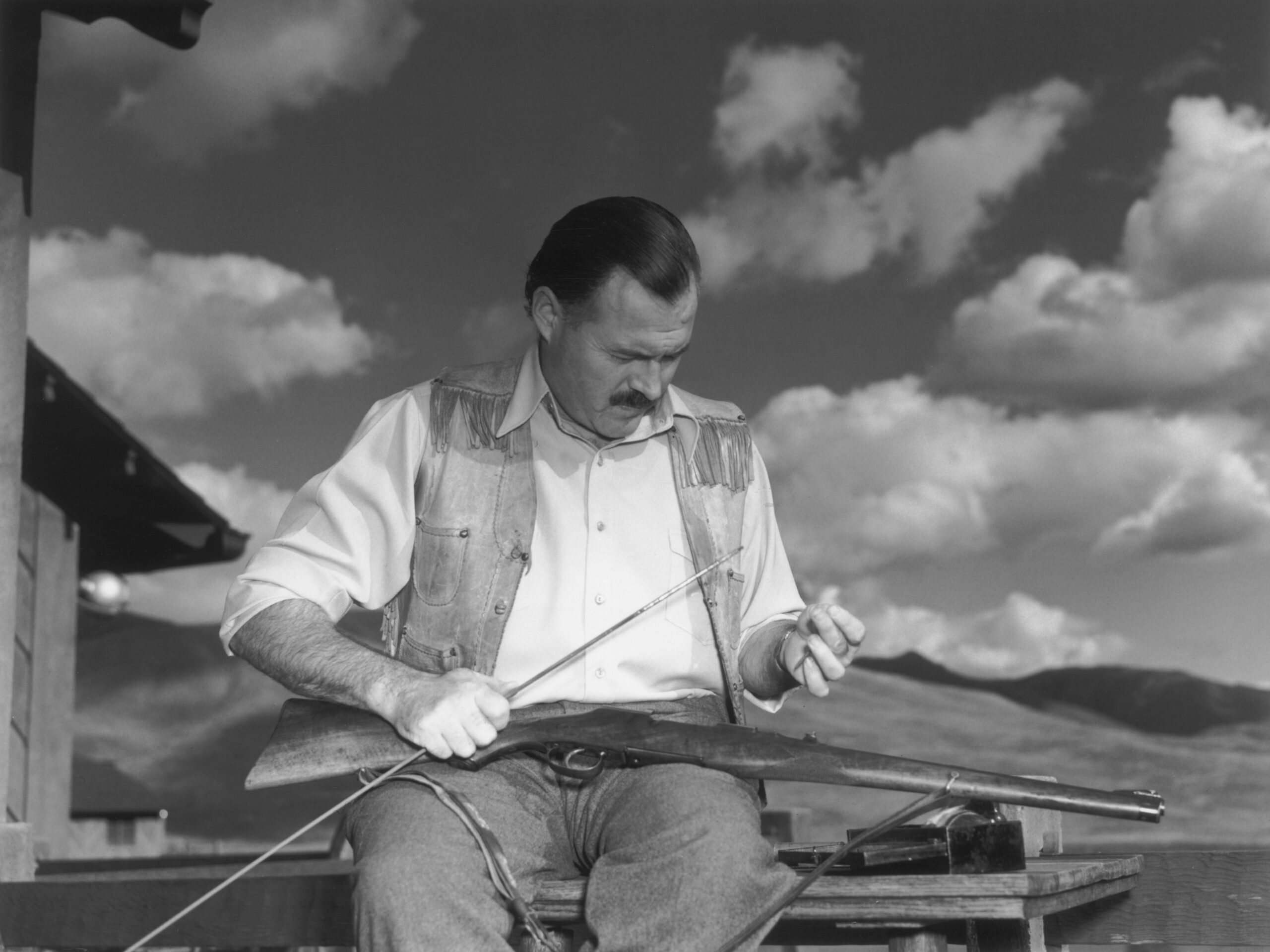
Culture The End of the War-Hero Writer Expect no great man of letters to emerge from the bloodied fields of Iran. Modern warfare does not a good movie make. Nor a good book, I suspect. Drones zipping about like flies and being chased by other drones and interceptors are not the same as John Wayne charging with his Marines onto the beach at Iwo Jima, not to mention Gary Cooper as Sergeant York picking off the Germans on the Western Front. Old-style warfare tended to get the creative juices flowing throughout history. Papa Hemingway and Scott Fitzgerald became stars following the First World War, with their war-background books, as did Norman Mailer, Irwin Shaw, and James Jones following the Second World War.  It is no longer fashionable among my friends to disparage or praise writers because no one reads any more. It used to be different. As the last century unfolded, writers became famous, publicized like movie stars, with lifestyles to match. They had license to drink more, make love to more women, and engage in public arguments galore. Overnight writers had become super stars, and I for one was drawn to them like the proverbial moth to you know what.  I was lucky to meet the three great postwar writers, Mailer, Shaw, and Jones (all three had seen combat), the latter only once when I spent a whole day interviewing him in Paris. Norman and Irwin became friends of mine, and I remember Norman telling Irwin Shaw, “Irwin—you, physical courage. Me—moral courage.” The Young Lions, The Naked and the Dead, and From Here to Eternity were three great novels that captured the American fighting man. A German, Erich Maria Remarque, had captured the public’s attention with his magnificent All Quiet On The Western Front following the First World War. The young German soldier Paul had feelings and doubts and aspirations and was like most of those on the opposite trenches for four long years. Irwin’s young German in Lions, Christian Diestl, also had dreams and decent feelings, and Shaw was criticized and insulted for showing a German to be normal—needless to say, from those back home who had never experienced combat or been in a war, that is. The French and Italians did not produce any earth-shaking volume about the war for obvious reasons. Nor did the Brits, funny enough, except for the “Sword of Honor” trilogy of Evelyn Waugh.  I have read all or most of Evelyn Waugh’s novels, and greatly enjoyed them. I never met the man who died 60 years ago this Easter. But I’ve known many of his acquaintances, including Auberon Waugh, his first born, who was a fellow columnist at the Spectator with me for many years until his death 15 years or so ago. Bron, as we all called him, was as mischievous as his father, but was not a hater of humanity, unlike his old man. Waugh junior disliked Americans to a degree that he would write columns describing some obese young American tourist and her oversized shoes. Bron himself was no beauty. Overweight, bald, with tufts of hair jutting over his ears, he wore tiny glasses on the tip of his nose. While doing his military service, he managed to shoot himself with his jammed Brent gun, and suffered from his wounds for the rest of his life. I once reminded him it was a Brit who had shot him, not a Yank, but it was no use. Professor Emeritus of Psychiatry Taki diagnosed his anti-Americanism as pathological envy. His father Evelyn was far worse as a person. Separating the writer from the writing is important. As a person he was a grumpy, drunken, social climber, a practicing homosexual who had seven children by his second wife, a brave soldier and a vicious gossiper, who wrote the most exquisite pared-down prose. Go figure, as they say. The nice man theory of literary merit is nonexistent. In our emotional era of cancelling and shouting down anyone that offends us, Waugh would have been a goner, along with his work. Waugh senior’s books were a delight. Brideshead Revisited, Vile Bodies, A Handful of Dust, Decline and Fall, Black Mischief, Scoop and others were full of characters shown with clarity and elegance in all their absurdities. Yet Waugh’s predilection for grotesque rudeness and condescension to anyone below his social status, especially any foreigner, was what betrayed Waugh’s insecurity of having been born not of the upper classes. He was the most awful of men and the most delightful of writers.  I’ve gone on too long about Waugh because compared to him, my three American novelists, Mailer, Shaw and Jones, were angels of compassion and understanding. Shaw and Mailer were terrific womanizers, chasing the fairer sex non-stop, whether they were married or not. Jones was more of a homebody and loved his wife Gloria dearly. As did Shaw love Marian, but just couldn’t stop going after every woman he came across. No wonder I wanted to become a writer.  Now if anyone is reading this with literary ambitions, don’t waste your time going to the Middle East. Only machines are doing the fighting and pilots you cannot see or meet. Drones are rather hard to capture on paper and endear them to your readers. Give it up and become an influencer instead. The post The End of the War-Hero Writer appeared first on The American Conservative.
Like
Comment
Share
Conservative Voices
Conservative Voices
8 w

Wars Abroad Lead to Suppression at Home
Favicon 
www.theamericanconservative.com

Wars Abroad Lead to Suppression at Home

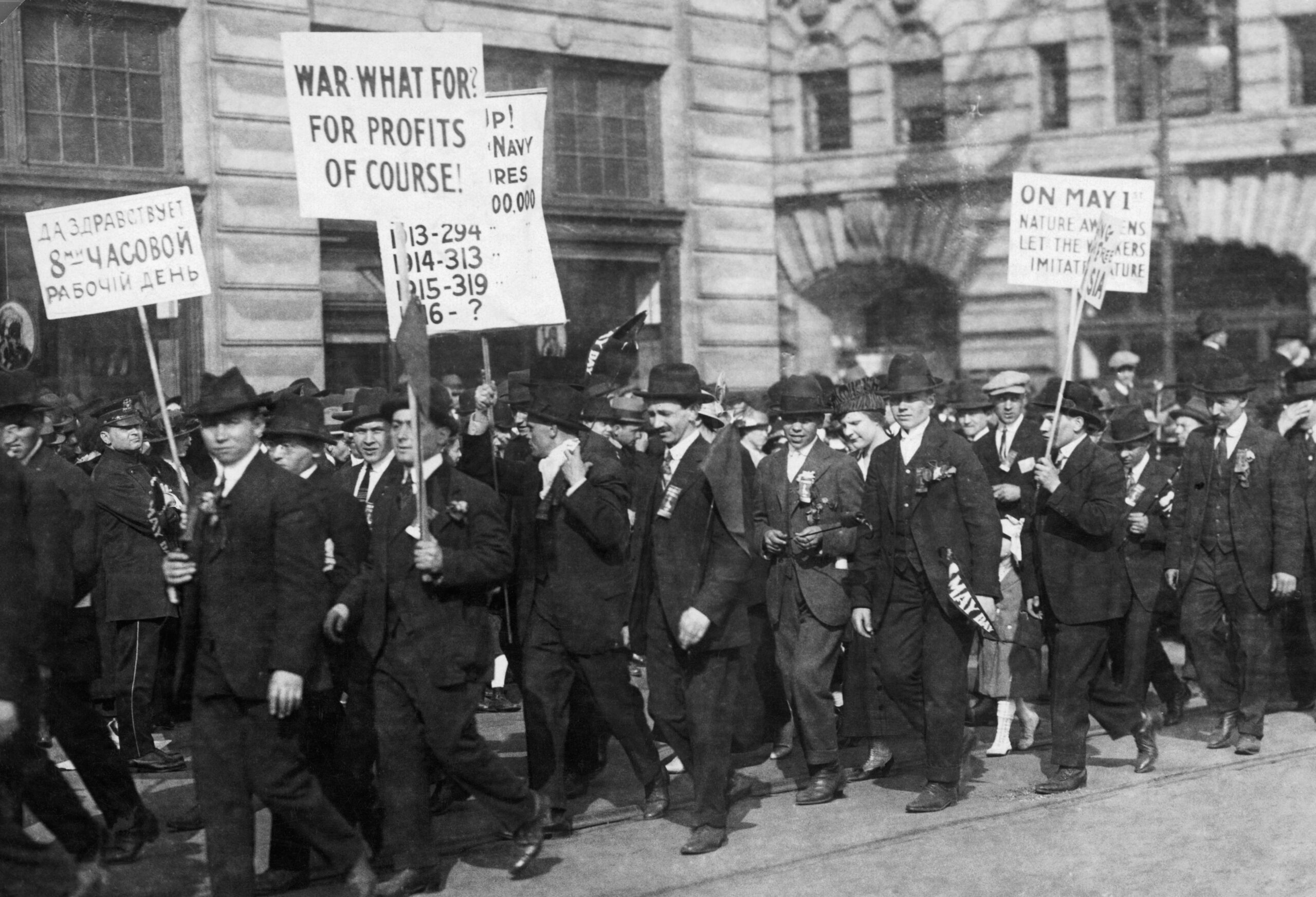
Foreign Affairs Wars Abroad Lead to Suppression at Home Supporters of the assault on Iran were quick to smear critics as traitors. President George Washington’s often-read but rarely heeded Farewell Address includes a passage that has remained perennially relevant in American life. Reflecting on the domestic costs of entangling alliances, Washington warned  Excessive partiality for one foreign nation and excessive dislike of another cause those whom they actuate to see danger only on one side, and serve to veil and even second [reinforce] the arts of influence on the other. Real patriots, who may resist the intrigues of the favorite, are liable to become suspected and odious, while its tools and dupes usurp the applause and confidence of the people to surrender their interests. Washington’s warning proved prophetic in the mid-20th Century as the United States shirked its traditional nonaligned foreign policy, and supporters of overseas crusades have consistently used these campaigns abroad to manufacture enemies at home. This conflation of foreign enemies with their alleged American supporters has come at a high cost to liberty and civility, essential components for a republic of self-governing individuals. This conflation is occurring again today, as supporters of President Donald Trump’s war on Iran have taken to accusing opponents of siding with the enemy. Setting the tone for this new wave of slander, Fox News pundit Laura Ingraham waved away substantive concerns about the war and declared, “The real conflict here is between those who believe America is good and those who believe fundamentally that it is corrupt and evil.”  Ingraham, of course, is not alone. In the months leading up to the war, another Fox News host, Mark Levin, used his platform to viciously condemn noninterventionists, comparing them to enemy sympathizers and modern-day Nazis. Finally, even less incendiary supporters of the war have set up a false binary where a preference for caution is tantamount to aiding America’s enemies. House Speaker Mike Johnson (R-LA), in a complete abdication of his Constitutional duties, voiced opposition to an upcoming War Powers Resolution vote, saying, “It plays right into the hands of the enemy.” Johnson’s intervention worked, and last week Congress failed to reassert its authority to declare war.  Given the fraught history of accusations that war skeptics aid the enemy—and the ramifications of such accusations on domestic life—it would behoove Americans to be on guard against the presence and persistence of this phenomenon.  Such false binaries and baseless accusations have a long and shameful history within the United States, one that has shaped policy and led to the suppression of dissent. During the nadir of modern American civil rights that accompanied World War I, the specter of enemies within led to egregious legal curtailments of basic liberties and inspired waves of vigilante violence. Before American entry into World War II, interventionists cultivated an environment of fear and paranoia that buttressed illegal wiretapping and domestic espionage against Americans whose only crime was wanting to keep out of the war. Even when such accusations and slander do not manifest in civil rights violations by the government, they nevertheless artificially circumscribe public opinion on foreign policy to the detriment of American society. As the U.S. entered World War II after Pearl Harbor, a wave of prominent newspapers throughout the country fired noninterventionist writers and editors, thereby constricting the reach of formerly mainstream opinions on war and peace.  Throughout the Cold War, the fear of communism and similar false binaries greased the skids for the formation of a permanent warfare state. During Vietnam, supporters of the war used the spectacle of a largely left-wing anti-war movement to negatively polarize grassroots conservatives into supporting it. And throughout the Global War on Terror, the logic of “you’re either with us or against us” permeated American politics. Washington’s acquisition of security dependents throughout the Cold War has resulted in an outdated alliance structure depicted as a league of democracies who fight against autocracies—more binary thinking that corrodes public discourse. We do not know how the current war will end. We do not know whether the slander against war critics will manifest in violations of civil rights as it has in the past, although, given President Trump’s recent track record, there is ample reason for alarm. Regardless of how things shake out, if you oppose this war, do not be intimidated by this slander. If you are one of those Americans who are unsure what to make of the war, do not allow this slander to sway your mind. Finally, if you support this intervention, do not forget the unseen costs that come with overheated pro-war rhetoric. Our republic cannot survive if every foreign adventure becomes a domestic purge. The post Wars Abroad Lead to Suppression at Home appeared first on The American Conservative.
Like
Comment
Share
Conservative Voices
Conservative Voices
8 w

Is an Off-Ramp With Iran Possible?
Favicon 
www.theamericanconservative.com

Is an Off-Ramp With Iran Possible?

Foreign Affairs Is an Off-Ramp With Iran Possible? It’s not too late for a diplomatic resolution. (Wikimedia Commons) Militarily speaking, the United States has a lot to be proud of. The war in Iran, now over a week old, has blown up plenty of buildings, killed a whole crop of senior Iranian officials—most notably the Iranian Supreme Leader, Ali Khamenei—and destroyed a significant chunk of the Islamic Republic’s military capacity. Defense Secretary Pete Hegseth and Chairman of the Joint Chiefs Gen. Dan Caine have provided several updates at the Pentagon lauding the Trump administration’s brilliance, marveling at the U.S. military’s technological superiority, and bragging about Iran’s inability to control its own airspace. Senior Israeli military officials are just as bombastic; on March 5, Israel Defense Forces Chief of Staff Eyal Zamir claimed that 80 percent of Iran’s air defenses were destroyed and 60 percent of its missile launchers were taken out of action. But the Iranians aren’t going down without a fight. Although Iran is unquestionably the weaker party in this war, the country’s leadership is treating it as an existential conflict that requires a total-war strategy. To date, Tehran has calculated that expanding the conflict into other states, chief among them Saudi Arabia, the UAE and Qatar, is not only appropriate as a method of retaliation but also the best way to compel Trump to eventually sue for peace. The idea is to press the Gulf States, all of whom want to get back to business as usual, into lobbying the Trump administration for a ceasefire. Whether or not the gambit works, the Iranians risk ruining the very detente they established with the Gulf over the last several years by sending missiles into hotels, oil fields, gas terminals, and ships transiting the Strait of Hormuz. Right now, it’s difficult to envision an off-ramp to the war. Based strictly on public remarks, the Trump administration doesn’t appear all that interested in sitting down with the Iranians, either directly or indirectly, to find a way out. Trump is talking about a full-blown Iranian capitulation, or, in his words, “unconditional surrender,” which could either be a negotiating ploy on his end or a genuine statement of intent. If it’s the latter, then the war will go on for weeks, if not months, because the Iranian regime is not going to simply throw up its hands and give up, no matter how lopsided the military balance is. Nor has the regime, or what’s left of it, decided to grant Trump his wish to pick its next supreme leader, which made about as much sense as giving the Iranians veto power over who wins the 2028 U.S. presidential election.  Even so, it’s far too early to eliminate diplomacy from the picture. Trump is fickle, unpredictable, and malleable, and he doesn’t like to take any of his options off the table. Although he may be sounding  more like George W. Bush with every passing day, nobody can say with absolute certainty that “dealmaking Don” won’t make an appearance. Depending on the regime’s ability to sustain retaliation across the Gulf, its ability to stay unified internally, and the U.S. military’s capacity to keep its air defense interceptors stocked, diplomacy could switch from unlikely today to at least plausible in the future. Add in fluctuating price increases in world energy markets, and it’s possible that Trump could begin to see an exit ramp in a more favorable light. At the time of writing, Brent crude prices have increased by nearly 25 percent since the war began, cracking over $100 a barrel for the first time in nearly two years. Natural gas futures have nearly doubled in the same timeframe. None of this is particularly great for Trump, whose party could possibly lose one (or both) houses of Congress in the midterm elections this year.   The economic pain is only going to get worse. Kuwait, which produces about 2.5 million barrels of oil a day, is now reducing oil production due to a lack of storage capacity. Meanwhile, Qatar’s energy minister has said that crude prices could rise to an astounding $150 a barrel, which will be felt by Americans when they’re filling up their tanks. For the Iranians, this is precisely what the strategy entails—make Americans feel the economic consequences of their government’s actions, drive a wedge between Washington and its Gulf Arab partners, and send the message that all of these consequences will compound even further as long as the war continues. Trump, who obsesses about gas prices, could very well take the bait.  Of course, all of this is purely hypothetical right now. It could also be a waste of ink if Trump insists on changing the Iranian regime from the inside out. Over the last 48 hours, Trump has given a slew of interviews pontificating about who Khamenei’s replacement might be and demanding that he personally sign off on the next candidate. (In the end, the Iranians did not consult him and installed Khamenei’s son, Mojtaba.) If this feels like the very regime change he lambasted during his previous presidential campaigns, that’s because it is. What Trump seems to be after is not merely degrading Iran’s ballistic missile stockpile, preventing Iran from acquiring a nuclear weapon, or wiping out Tehran’s ability to project power against its neighbors, but a wholesale transformation of the Iranian government and a complete 180-degree shift in Iranian foreign policy. To think the regime would cater to these demands even as it’s under military pressure is delusional. The first, second, and third priority of the regime is to keep itself in power, and bowing to Trump’s diktats would bring the exact opposite result.  The question, then, becomes what a potential negotiated deal could look like. Some of the Trump administration’s demands—Iran can never have a nuclear weapon—are reasonable and in keeping with longstanding U.S. policy. Others, like Iran being essentially gutted of its defense capabilities, cutting all ties with its proxy networks in the Middle East and agreeing to become the Persian Gulf’s version of post-Maduro Venezuela are obviously desirable but unrealistic given Tehran’s own objectives.  We also need to ask whether Tehran would be responsive to more diplomacy with Trump. Casual observers who see Iranian military bases, government buildings, and mobile missile launchers getting blown up on the news may scoff at this question. But we need to remember that Iran has been burned by Trump at least three times before. The first time was in May 2018, when Trump withdrew Washington from the 2015 nuclear deal. The second was last June, when Trump permitted Israel to begin a 12-day bombing campaign against Iran despite having scheduled the sixth round of nuclear negotiations with Iranian officials days later. The third was last week, when the Trump administration chose to unleash a second, more comprehensive air campaign only days after U.S. and Iranian negotiators met in Oman for talks, which Iran’s Foreign Minister, Abbas Araghchi, called serious. Given this track record, the regime will view any outreach by the White House as suspect. Last June, Trump essentially made Israel swallow a ceasefire. The U.S. objectives back then were straightforward and easily explained to the American public: destroy, or at least heavily damage, Iran’s three major nuclear facilities. Once that goal was met, Trump declared victory, patted himself on the back for a job well done, and pressured Israel’s Prime Minister Benjamin Netanyahu to stop his own airstrikes. Today, the situation is markedly different. U.S. objectives are wishy-washy and change by the hour; rumors of U.S. ground troops deploying into Iran are beginning to percolate; and Trump appears to want to end the Iranian problem once and for all. If this is the case, then there’s no off-ramp to consider. The post Is an Off-Ramp With Iran Possible? appeared first on The American Conservative.

Like
Comment
Share
Intel Uncensored
Intel Uncensored
8 w News & Oppinion

rumbleBitchute
British Journalist UNCOVERS SHOCKING Iran War COVER-UP Double Down News 3-9-2026
Like
Comment
Share
Classic Rock Lovers
Classic Rock Lovers  
8 w

Soundgarden’s Top 10
Favicon 
rockintown.com

Soundgarden’s Top 10

“I think, and this is now with some distance in listening to the records, but on the outside looking in with all earnestness I think Soundgarden made the best records out of that scene,” band vocalist Chris Cornell offered in an ’07 interview. “I think we were the most daring and experimental and genre-pushing… and I’m really proud of it. “We started getting (comparisons to Led Zeppelin) a lot: ‘Zeppelin, Zeppelin, Zeppelin,’ and we were like, OK, let’s check some of this out,” Soundgarden guitarist Kim Thayil explained “We were all very acquainted with it individually, but collectively we weren’t sitting around the table listening them. So initially we would deny that influence. Ultimately, we started to re-embrace Zeppelin, Beatles, (Black) Sabbath and Pink Floyd. I think they were always there. It’s a weird story, but it may explain why, for a few years, we denied the Zeppelin/Sabbath influence.” #10. Pretty Noose (Down On The Upside, 1996) “Pretty Noose” was written by frontman Chris Cornell. “That song for me was kind of interesting, because we were at the phase where we were just going to demo tunes,” offered drummer Matt Cameron, “I’d walked to the studio (in Seattle) and my legs were really tired. But to make a long story short, I was trying to get a walking feel on the drum part. So it probably has a little weird shuffle to it probably from that walk that I took to the studio that day.” #9. The Day I Tried To Live (Superunknown, 1994) “It’s about trying to step out of being patterned and closed off and reclusive, which I’ve always had a problem with,” explained Cornell. “It’s about attempting to be normal and just go out and be around other people and hang out. I have a tendency to sometimes be pretty closed off and not see people for long periods of time and not call anyone.” #8. Rusty Cage (Badmotorfinger, 1991) “The tuning on that song was pretty nutty. It’s recorded with a wah wah in the low position used as a filter,” stated guitarist Kim Thayil. “That was the first time we did anything like that. It was Chris’s idea; he wanted to get that weird tone that you can’t really dial in on an amp. But if you use the wah wah as a filter, it gets an incredibly weird sound. And if you listen to that riff, especially if you’ve heard the original demos of it, it almost sounds backward.” #7. 4th Of July (Superunknown, 1994) “One time I was on acid, and there were voices ten feet behind my head,” Cornell told RIP magazine. “The whole time I’d be walking, they’d be talking behind me. It actually made me feel good, because I felt like I was with some people. At one point I was looking back, and I saw that one person was wearing a black shirt and jeans, and the other person was wearing a red shirt. They were always there. It was kinda like a dream, though, where I’d wake up and look and focus once in a while and realize there was no one there.” #6. Spoonman (Superunknown, 1994) The song was originally written for the “Singles” soundtrack with the title inspired by Artis The Spoonman, a street performer from Santa Cruz, CA, and later Seattle, who played a set of spoons. “It’s more about the paradox of who (Artis) is and what people perceive him as,” Corbell commented. “He’s a street musician, but when he’s playing on the street, he is given a value and judged completely wrong by someone else. They think he’s a street person, or he’s doing this because he can’t hold down a regular job. They put him a few pegs down on the social ladder because of how they perceive someone who dresses differently.” #5. Blow Up The Outside World (Down On The Upside, 1996) “”People said there was a Beatles-ish element,” said Thayil. “I suppose there is a bit of Paul McCartney and a little bit of (John) Lennon in the flavor of the song. Everyone in the band grew up with the Beatles and we had a certain degree of respect and admiration for them that’s not uncommon.” #4. Jesus Christ Pose (Badmotorfinger, 1991) “(It) was definitely a jam at rehearsal,” noted Thayil explaining the song’s origin. “I think Ben (Shepherd) was just jamming up this loud and blurry, detuned bass line flopping around there. And Matt (Cameron) starts making it precise and coherent; Matt’s drum part is insane – it’s so fast and coordinated. And I picked up my guitar, thinking, “What the hell are they doing?” It took me a while to figure out what’s going on rhythmically and where to punctuate the one, so what I start hearing is that swirling, kamikaze bat (guitar) sound at the beginning. And that was a groove.” #3. Outshined (Badmotorfinger, 1991) “I don’t know how everyone else feels … but I definitely go through periods of extreme self-confidence, feeling like I can do anything,” offered Cornell. “But then someone will say something, however insignificant, or I’ll get something in my head and, all of a sudden, I’m plummeting in the opposite direction. That’s where “Outshined” comes from. #2. Fell On Black Days (Superunknown, 1994) “Fell on Black Days” was like this ongoing fear I’ve had for years,” noted Cornell. “It’s a feeling that everyone gets. You’re happy with your life, everything’s going well, things are exciting—when all of a sudden you realize you’re unhappy in the extreme, to the point of being really, really scared.” #1. Black Hole Sun (Superunknown, 1994) “I wrote the song thinking the band wouldn’t like it—then it became the biggest hit of the summer,” remembered Cornell. The song topped the Billboard Mainstream Rock chart and cracked the Top 10 on the Billboard Hot 100. “No one seems to get this, but ‘Black Hole Sun’ is sad,” added Cornell. “But because the melody is really pretty, everyone thinks it’s almost chipper, which is ridiculous.” ### Soundgarden: Chris Cornell: Lead Vocals/Rhythm Guitar/Drums Kim Thayil: Lead Guitar Ben Shepherd: Bass Matt Cameron: Drums Former Members: Hiro Yamamoto: Bass/Backing Vocals (1984 – 1989) Scott Sunquist: Drums (1985 – 1986) Jason Everman: Bass (1989 – 1990 ### The post Soundgarden’s Top 10 appeared first on RockinTown.
Like
Comment
Share
History Traveler
History Traveler
8 w

15 Shocking Moments in History That Literally Made The Whole World Stop
Favicon 
historycollection.com

15 Shocking Moments in History That Literally Made The Whole World Stop

Throughout history, certain events have occurred that were so unexpected and impactful that they halted the world in its tracks. These pivotal moments not only captured global attention but also disrupted daily life and significantly influenced the course of humanity. From unforeseen disasters to groundbreaking discoveries, these events have the power to unite or divide, ... The post 15 Shocking Moments in History That Literally Made The Whole World Stop appeared first on History Collection.
Like
Comment
Share
Intel Uncensored
Intel Uncensored
8 w

FBI Expands Election Investigation, Secretly Seizes Maricopa County Voting Records Through Grand Jury Subpoena
Favicon 
www.sgtreport.com

FBI Expands Election Investigation, Secretly Seizes Maricopa County Voting Records Through Grand Jury Subpoena

from Your News: Federal investigators have obtained large volumes of election data from Arizona’s largest county as part of a widening probe into potential voting irregularities connected to the 2020 and 2024 elections. By yourNEWS Media Newsroom The FBI has expanded its investigation into potential election irregularities by secretly obtaining a large collection of voting […]
Like
Comment
Share
Showing 7433 out of 120657
  • 7429
  • 7430
  • 7431
  • 7432
  • 7433
  • 7434
  • 7435
  • 7436
  • 7437
  • 7438
  • 7439
  • 7440
  • 7441
  • 7442
  • 7443
  • 7444
  • 7445
  • 7446
  • 7447
  • 7448
Advertisement
Stop Seeing These Ads

Edit Offer

Add tier


Select an image
Delete your tier
Are you sure you want to delete this tier?

Reviews

In order to sell your content and posts, start by creating a few packages. Monetization

Pay By Wallet

Payment Alert

You are about to purchase the items, do you want to proceed?

Request a Refund