YubNub Social YubNub Social
    #satire #democrats #loonylibs #iran #comedy
    Advanced Search
  • Login
  • Register

  • Day mode
  • © 2026 YubNub Social
    About • Directory • Contact Us • Developers • Privacy Policy • Terms of Use • shareasale • FB Webview Detected • Android • Apple iOS • Get Our App

    Select Language

  • English
Night mode toggle
Featured Content
Community
New Posts (Home) ChatBox Popular Posts Reels Game Zone Top PodCasts
Explore
Explore
© 2026 YubNub Social
  • English
About • Directory • Contact Us • Developers • Privacy Policy • Terms of Use • shareasale • FB Webview Detected • Android • Apple iOS • Get Our App
Advertisement
Stop Seeing These Ads

Discover posts

Posts

Users

Pages

Blog

Market

Events

Games

Forum

Survival Prepper
Survival Prepper  
6 d ·Youtube Prepping & Survival

YouTube
Enemy's Blueprint: Infiltrate, Corrupt, Destroy America! EP708
Like
Comment
Share
Classic Rock Lovers
Classic Rock Lovers  
6 d

The music legend Johnny Cash wanted to portray on film
Favicon 
faroutmagazine.co.uk

The music legend Johnny Cash wanted to portray on film

He was pitching the idea in the early 1960s. The post The music legend Johnny Cash wanted to portray on film first appeared on Far Out Magazine.
Like
Comment
Share
Classic Rock Lovers
Classic Rock Lovers  
6 d

The poem that inspired Sufjan Stevens’ classic ‘Chicago’
Favicon 
faroutmagazine.co.uk

The poem that inspired Sufjan Stevens’ classic ‘Chicago’

"All things grow..." The post The poem that inspired Sufjan Stevens’ classic ‘Chicago’ first appeared on Far Out Magazine.
Like
Comment
Share
Conservative Voices
Conservative Voices
6 d

Favicon 
spectator.org

The Democrats’ Epic Fury Over Iran Strikes

It was hardly necessary to consult Nostradamus to predict that the Democrats, who profess to abhor oppressive authoritarian theocracies, would denounce President Trump’s decision to topple the government of Iran — the very definition of such a regime. Nor was it a surprise that they downplay or simply ignore the obvious elation with which the Iranians themselves greeted the long overdue demise of Ayatollah Ali Khamenei. It is striking, however, that the Democrats fail to see that their reflexive attacks on Trump for taking action against such a dangerous regime and indifference to the response of the Iranian people reinforces the public perception that their party is weak and out of touch. The last two Democrat Presidents have already damaged their party’s credibility where Iran is concerned by coddling the Khamenei regime with financial, diplomatic, and political concessions. Yet a key architect of the Obama administration’s disastrous 2015 Iran nuclear deal (JCPOA), Ben Rhodes, had the unmitigated  audacity to post the following on social media: “Trump lied about being against forever wars, he broke the most basic promise he made to his own supporters.” Rhodes’ comments were not well received. Former acting Director of National Intelligence Richard Grenell responded, “You were part of the team who gave billions of dollars to the Iranian Regime … Once again, President Trump is cleaning up your mess.” In the end, both history and precedent suggest that President Trump adhered to the War Powers Act when he ordered the Iran operation. Meanwhile, prominent Democrats are once again claiming that the President has somehow violated the Constitution. Sen. Ed Markey (D-Mass.), for example, called Trump’s actions “illegal and unconstitutional.” This is nonsense, of course, as the only sane Democrat Senator pointed out to Dana Bash on CNN Sunday morning. Sen. John Fetterman (D-Pa.) “Have people ever read the War Powers Act? You know, what’s required of the president is to provide 48 hours of notification, and then he or she has 60 days, up to 90 days, to withdraw those troops, you know, before Congress approves that.” Constitutional scholar Jonathan Turley expands on Fetterman’s explanation by providing some useful historical background: Past presidents, including Democratic presidents such as Barack Obama and Joe Biden, have asserted the unilateral power to attack other nations when they believe that combat is warranted by national security. The War Powers Act was the response of Congress to try to curtail such unilateral authority. Overriding the veto of President Richard Nixon, Congress mandated that presidents must consult with them and cease all combat operations within 60 days if Congress has not approved the use of force. Presidents, and some academics, have long argued that the WPA is unconstitutional. Nonetheless, the Democrats have continued to issue irresponsible statements. Sen. Tammy Duckworth (D-Ill.) claimed, “Donald Trump chose to put American lives and national security at risk while threatening to draw us into yet another expensive, taxpayer-funded forever war without Constitutionally-required authorization, a defined end-state or a real plan to prevent the instability that could come next.” Likewise, Illinois Gov. JB Pritzker (D) felt compelled to parade his ignorance on BlueSky: “Donald Trump is once again sidestepping the Constitution and once again failing to explain why he’s taking us into another war. Americans asked for affordable housing and health care, not another potentially endless conflict.” Predictably, we heard from New York City’s socialist Mayor, Zohran Mamdani. Despite his widely-publicized inability to assure that the trash will be collected in the Big Apple, he is evidently a foreign policy expert: “Today’s military strikes on Iran – carried out by the United States and Israel – mark a catastrophic escalation in an illegal war of aggression. Bombing cities. Killing civilians. Opening a new theater of war. Americans do not want this. They do not want another war in pursuit of regime change. They want relief from the affordability crisis. They want peace.” And no Trump action would be complete without a denunciation from that widely-respected foreign policy authority, Rep. Alexandria Ocasio-Cortez (D-N.Y.): This war is unlawful. It is unnecessary And it will be catastrophic … We learned this lesson in Iraq. We learned this lesson in Afghanistan. And we are about to learn it again in Iran. Bombs have yet to create enduring democracies in the region and this will be no different. In moments of war, our Constitution is unambiguous: Congress authorizes war. The President does not. I will do my part to uphold our Constitution by voting YES on Representatives Ro Khanna and Thomas Massie’s War Powers Resolution. Every member of Congress must join us in rejecting this aimless war. You will note that AOC plans to vote with Rep. Thomas Massie (R-Ky.) who has made it his mission in life to be a thorn in Trump’s side on virtually every issue, and insists he will work to ensure a Congressional vote on further conflict in Iran. He posted the following on social media: “I am opposed to this War … When Congress reconvenes, I will work with @RepRoKhanna to force a Congressional vote on war with Iran. The Constitution requires a vote, and your Representative needs to be on record as opposing or supporting this war.” They will be joined in opposing President Trump’s Iran operation by Sen. Rand Paul (R-Ky.), an interesting ménage à trois that confirms the venerable adage that politics makes strange bedfellows. In the end, both history and precedent suggest that President Trump adhered to the War Powers Act when he ordered the Iran operation. But the Democrats, and the odd Republican publicity hound, have little interest in the law and less in the Iranian people. The former have their eyes on the midterm prize, and the latter are focused on the headlines. They don’t object to regime change in Iran based on genuine principles. It’s all about money and power. READ MORE from David Catron: Who Cares If Democrats Boycott Trump’s SOTU? Redistricting Betrayal in Virginia The SAVE Act: Why Are Senate Republicans Dithering?

Like
Comment
Share
Conservative Voices
Conservative Voices
6 d

Favicon 
spectator.org

Reagan’s Shadow, Trump’s Moment

Of all people, the mercurial Geraldo Rivera had the clearest take on the Trump-ordered U.S. strike on Iran last weekend. “Trump is unleashed,” Rivera tweeted. “In a blink he has destroyed the leadership of Iran. The headquarters of the Ayatollah are ash. Our half century old humiliation 1979-81 America Held Hostage is avenged.” Rivera’s reference rang a bell with many folks over 60 like myself, whose political awakening began on November 8, 1979, along with the ABC News show, Nightline, subtitled America Held Hostage — Day 4. I’ve written here how the Iran Hostage Crisis changed me from an apolitical college student to a hardcore conservative. How every night I’d come home to my off-campus apartment and turn on the TV to a bunch of Third World fanatics outside the U.S. Embassy in Tehran threatening to kill the 66 captive Americans inside. How I kept waiting for a regiment of Marines to march up the street and dispatch these turbaned creeps a la John Milius’s stirring The Wind and the Lion (I was a film minor). How all I saw was a cretinous President with a Mayberry drawl blithering about patience and resolve, only to be mocked by the Iranian hostage keepers. How this President’s wife endorsed the unmanly response of showing yellow ribbons to support the hostages, inspired by the pleasant Tony Orlando hit song from six years earlier, Tie a Yellow Ribbon Round the Old Oak Tree. How the leading Republican candidate for president appeared on the screen like one of the Western heroes he’d played — and perfectly echoed the national sentiment, and mine. “In Iran, 50 innocent Americans are still being held hostage as a result of an act of war on our embassy. I cannot doubt that our failure to act decisively at the time that this happened provided the Russians with the courage to invade Afghanistan.” How the intimidated Mayberry President at last ordered a military raid on Tehran, which ended in eight servicemen dead, a helicopter burning in the desert, and Iranian guardsmen celebrating by the wreckage. Of course, Ronald Reagan trounced the then worst President of my lifetime. I was there at Republican Election Headquarters on my first career job for a local news show and felt the electricity as the U.S. map lit up red like a Christmas tree. I learned about the hostages being released minutes after Reagan was worn in. And I saw greatness on display after four years of weakness and incompetence. But the war continues, with all its dangers…. It may yet be the greatest U.S. geopolitical triumph since the fall of the Soviet Union. Reagan didn’t punish Iran for their offense. He had a bigger target in sight, the Soviet Union, which he destroyed. In so doing, he became the greatest President of my lifetime. And the little men who followed him, starting with his feeble vice president, didn’t even come close. But the worst of them before Biden did attend to Iran. Obama gave them close to two billion dollars and a pathway to a nuclear bomb. I also recall an incident from his presidency of American sailors captured by the Islamic Revolutionary Guard Corps (IRGC) Navy and forced to kneel with their hands bound behind them. Trump reversed much of Obama’s Iran sycophancy in his first term. He recognized the anti-American undercurrent of his predecessor. He withdrew America from the suicidal Iran nuclear deal and reimposed sanctions. He weakened the terror-spreading Islamic state, and took out General Qasem Soleimani, commander of the Islamic Revolutionary Guard Corps’ Quds Force. But he couldn’t ward off the hostile forces arrayed against him. He lost the election, officially, to the worst President of my lifetime — and had come nowhere near the best. And after him came the Worst President of my Lifetime, beating even Jimmy Carter for the title. I never thought it was possible, until the decrepit, corrupt, malevolent Joe Biden took office, and everything went wrong. A disastrous withdrawal from Afghanistan that left 13 service members dead and billion-dollar weaponry in the hands of the Taliban, and encouraged two wars by anti-American forces. An open border through which millions of illegals poured into the country. And Chinese spy balloons floating over U.S. military bases like the Goodyear blimp. The crap ended quickly in Trump’s second term. He closed the border in record time. Reagan hadn’t done that. In fact, he’d made the worst mistake of his presidency in that area — the Immigration Reform and Control Act of 1986, also known as the “Reagan amnesty” bill. Thus, Trump began to catch up with Reagan in the Greatest President of My Lifetime contest. Ironically, it would be Iran that put them neck and neck. First, with Operation Midnight Hammer — the incredible precise bombing mission that set back Iran’s nuclear program for months, and gave the Mullahs a chance to abandon it. They foolishly chose not to. Which brought us to last weekend. And the combined American and Israeli decapitation attack on Iran. The first strike — in broad daylight — killed the Supreme Leader, Ayatollah  Khamenei, and 40 other officials, and crippled Iran’s retaliatory capability. But the war continues, with all its dangers — such as the death of three American heroes from an Iranian missile attack. It may yet be the greatest U.S. geopolitical triumph since the fall of the Soviet Union. And that would make Donald Trump the greatest President of my lifetime. READ MORE from Lou Aguilar: When Hollywood Made Great Epic Films When the Legends Die: Robert Duvall Munich and the Fate of the West
Like
Comment
Share
Conservative Voices
Conservative Voices
6 d

Favicon 
spectator.org

What To Watch for in Operation Epic Fury

Before retiring from a teaching position at George Washington University last year, I ended each semester with a war game in which Iranian factions competed with each other to craft a response to an Israeli attack on the Iranian nuclear program and an American proposal  to end the crisis. The three decision making elites consisted of the Supreme Leader and his Guardian Council, the Iranian Revolutionary Guard Corps (IRGC), and the executive branch (President, Foreign Ministry, regular security forces, and the rest of the professional bureaucracy). Over the course of 15 years, there were a number of outcomes, but there was one common thread; survival of each elite group rather than the nuclear program was the primary concern of the players. The graduate students had spent much of the semester researching the motivation and cultures of their assigned group and I think their reactions were well informed. When I retired last spring I knew that I would probably have had to change the scenario if I stuck around for another year. President Trump had made it clear that he intended to disrupt the status quo. Now that Trump has made it clear that the desired end state its regime change, I think it is appropriate to look at how the regime and its factions react to developments. There are several things to look for. I will outline the key elements that will drive events. The first and most obvious will be whether or not the Iranian street rises up to seriously attempt to overthrow the  regime. Almost certainly. the U.S. and Israeli attacks will attempt to disrupt the ability of the IRGC to control the streets in an attempt to protect the Supreme Leader and the ruling mullahs. The extent to which the IRGC can remain the nation’s primary security force will determine whether or not the regime survives. There is always the chance that if things appear to be getting out of control that the IRGC will throw the ayatollahs under the bus and attempt to seize power on their own. The U.S. did not expect the chaos in Iraq and Afghanistan…. Both Washington and Jerusalem are probably counting on it in Iran today. A second development to watch will be how the regular armed forces and police react. For nearly five decades they have been overshadowed by the IRGC. In the 1979 revolution that brought the mullahs to power, the police and army largely stayed on the sidelines. If the Ayatollah and Guardian Council are overthrown or flee, the career bureaucrats in the executive branch will almost certainly try to form a transition government. The extent to which they succeed will be dependent on whether the regular security forces support them and whether they can stand up to what is left of the IRGC. Peaceful transition has worked so far in Venezuela, but Iran is an entirely different culture. If the regime does fail, there will almost certainly be a period of civil strife. Certainly, elements of the IRGC and theocracy will go underground and begin an insurgency. Also near certain will be an attempt by non-Persian minority groups in the outer provinces to gain a degree of autonomy if not outright succession. The Communists and Socialists have been suppressed for decades, but will undoubtedly try for a comeback. Unless the regime and IRGC can hold on to power, the nation is almost certain to be in turmoil for months if not years. All of this would be in the best interests of the U.S. and Israel. If Iran is trying to sort itself out, it will not be developing nuclear weapons or able to use proxies to stir up trouble in the region. The U.S. did not expect the chaos in Iraq and Afghanistan two decades ago when it undertook regime change. Both Washington and Jerusalem are probably counting on it in Iran today. I’ve been putting together this article for months fully expecting that President Trump would bring things to a head eventually. It is not meant to be predictive; all conflicts contain unanticipated events. It is meant to give readers unfamiliar with the region something to watch for. READ MORE from Gary Anderson: American Muslims Must Acknowledge the Supremacy of the Constitution Over Sharia Law ICE Should Adopt a Counterinsurgency Strategy If We Want to Help the Iranians, We Should Disrupt the IRGC Gary Anderson retired last year from lecturing on Alternative Analysis (Red Teaming at the George Washington University’s Elliott School of International Affairs and played on the Iranian side in a number of government sponsored war Games.
Like
Comment
Share
Conservative Voices
Conservative Voices
6 d

Favicon 
spectator.org

War With Iran: Justified Strike, Uncertain Horizon

President Trump has taken us to war with Iran, an entirely justified move considering Iran has been murdering Americans since 1983. With our Israeli allies, we have reportedly struck Iran with a wide variety of weapons, including bombs, Tomahawk cruise missiles, and a host of others. Before we start hanging “FAFO” celebrations around, we should try to control the speculation about the war because speculation leads to confusion and wrong conclusions. For example, I saw a video on Saturday morning claiming that about 21 Tomahawk cruise missiles headed toward Tehran. I didn’t count the missiles but the fact is they were apparently flying over a nondescript piece of land that could have been anywhere and they could have been targeted anywhere in the world. I don’t think that the cruise missiles weren’t going to Tehran but until a second source verifies the target, I won’t be convinced. The Israelis have confirmed that “supreme leader” Ayatollah Ali Khamenei is dead and Iranian president Masoud Pezeshkian was targeted in the Saturday strikes. So were another 20 or 30 of the top Iranian officials in a meeting that was interrupted by Israeli bombs. President Trump has reportedly been shown a photograph of Khamenei’s body. The outcome of this war is certainly in doubt despite the overwhelming force we and the Israelis have brought to bear. Until Pezeshkian is confirmed among the dead, it’s pointless — and possibly wrong — to say that he was killed. Iran’s defense minister and the head of the Iranian Revolutionary Guard Corps are among the reported dead. Cutting off the head of the snake is part of our strategy. It’s important to wait 24 to 48 hours — or at least for second-source confirmation — to make any conclusions about who was killed and how many casualties both the U.S. and Israel have suffered. Meanwhile, the Iranians have copied the media strategy of one of their terrorist proxies, Hamas, in claiming that 40 school-age children were killed in the initial strikes. That’s pure putrid propaganda but it will take until the end of the war to prove or disprove (if it can ever be done). What we do know is that Iran has tried immediately to ignite a regional conflict and so far without effect. Israel has been hit with dozens of Iranian missiles as have our bases in Qatar (the huge Al Udeid airbase), Bahrain (Fifth Fleet headquarters and the naval forces headquarters attached to Central Command) and the UAE (Al Dhafra airbase and Fujairah naval base). Bahraini, Qatari, and UAE forces may have also been targets but we don’t know if any of the Iranian missiles hit their targets. Other U.S. bases in Kuwait and Jordan have reportedly also been hit. It is a prime responsibility of reporters and columnists to get the facts straight. In war, this is almost impossible to do with any speed so the urge to get a scoop that beats the competition is a recipe for getting the facts wrong. We have to assume that the air strikes — which may not be accompanied by landing forces in Iran — will go on for days, weeks and, possibly, months. Mr. Trump and his administration have also to be prepared for other hotspots — such as Taiwan — which could erupt in days or weeks because other nations will want to take advantage of our preoccupation with Iran. If a war breaks out over Taiwan, it’s highly questionable whether we can cope with that while operations are going on in Iran. Russian President Putin will be tempted to try to push his luck in Ukraine. Chinese intervention is also possible if we bomb Iran’s principal oil export facility at Kharg Island. If we hit Kharg Island quickly, we could cripple both Iran’s and China’s economies. It would be entirely worthwhile to do so but there are risks. Mr. Trump has indicated that regime change in Iran is his — and our Israeli allies’ — goal. That will take more than air strikes to accomplish. Who will govern Iran after the ayatollahs’ regime falls? It could be the son of the late Shah, Reza Pahlavi. The National Council of Resistance of Iran — Maryam Rajavi’s group — has little following in Iran but, because they are dedicated to democracy, it might be wise for Mr. Pahlavi to include them in his government, if there is one. Both China and Russia — and the remnants of the ayatollahs’ regime — will want to have influence over that question. It may or may not be up to us to choose who governs Iran after the ayatollahs. One nation or another may want to offer the ayatollahs and their regime sanctuary in the hope they can regain power. Again, it’s useless to speculate at this point. The outcome of this war is certainly in doubt despite the overwhelming force we and the Israelis have brought to bear. Speculation, as I said, is useless now. All it can lead to is confusion. READ MORE from Jed Babbin: The Board of Peace and the Illusion of Gaza   The Decline of Trust in the News Two Regimes, One Reality      
Like
Comment
Share
Conservative Voices
Conservative Voices
6 d

Favicon 
spectator.org

Cartel War, American Consequences

On Tuesday night, President Trump told Congress that immigration is a national security issue. Critics argued over tone. But hours earlier, Mexico was in open cartel war. Mexican forces had killed CJNG boss Nemesio “El Mencho” Oseguera Cervantes in a major operation that Mexican President Claudia Sheinbaum later confirmed involved U.S. intelligence assistance. What followed wasn’t minor unrest. It was retaliation on a national scale. Mexican officials reported 25 National Guard members killed and more than 250 roadblocks across 20 states as cartel factions reacted to the killing. This is what happens when a cartel empire fractures. CJNG is not a fringe group. Alongside the Sinaloa Cartel, it sits at the center of the synthetic drug pipeline feeding the United States. The DEA’s National Drug Threat Assessment identifies those organizations as primary drivers of the fentanyl trade. Washington can debate immigration language. But the overdose toll, the prosecution numbers, and the seizure data tell a different story. The consequences are measurable. In 2022, more than 107,000 Americans died from drug overdoses, and roughly 70 percent were linked to synthetic opioids such as fentanyl. That supply chain is cartel-linked, and it is not confined to Mexico. In January 2026, the U.S. Justice Department confirmed that 37 Mexican nationals wanted for serious crimes were transferred into U.S. custody, including alleged cartel members tied to CJNG and Sinaloa. Mexican officials have said that three such transfers in less than a year brought the total to 92 cartel suspects moved into U.S. custody. Those are not rumors. They are court cases. Meanwhile, immigration enforcement has intensified. The Associated Press reported that ICE arrests rose sharply through 2025 compared with late 2024 levels.  Enforcement pressure is real, but criminal networks under pressure adapt. A Government Accountability Office report shows that the number of fentanyl seizure incidents along the northern border increased approximately 746 percent from fiscal year 2019 to fiscal year 2024. Trafficking routes shift. They don’t disappear. Now add fragmentation. When a cartel leader falls, factions compete. Revenue streams must be secured. Drug corridors are fought over. Smuggling pipelines are pushed harder to maintain control. Volatility rises. Mexico is now in a power struggle between heavily armed criminal factions controlling billions in narcotics revenue. The United States is not watching from a safe distance. DEA assessments describe cartel-linked networks operating nationwide. Federal indictments over recent years have documented CJNG and Sinaloa-linked cells in multiple U.S. states. And the 92 suspects transferred into U.S. custody underscore how closely intertwined the systems already are. The threat isn’t a theatrical invasion. It’s escalation inside an already embedded system. Destabilized networks take more risks. They test enforcement boundaries and increase tempo. When cartel warfare intensifies just south of the border, pressure moves north — through trafficking corridors, through smuggling infrastructure, through networks already present. Washington can debate immigration language. But the overdose toll, the prosecution numbers, and the seizure data tell a different story. Cartel bloodshed in Mexico is not a distant spectacle. It is a warning. And fractured criminal empires are rarely at their most restrained. READ MORE from Kevin Cohen: Spain’s Demographic Suicide: A Generational Error Europe Will Not Undo Why ICE Exists Drug Gangs, Child Gunmen and Antisemitic Abuse — Welcome to Marseille  
Like
Comment
Share
Conservative Voices
Conservative Voices
6 d

Favicon 
spectator.org

Trump SOTU Recounts When the State Replaced a Mother

On Tuesday, President Donald Trump honored two individuals whose names I’ve known for three years. While speaking about protecting children against social and physical “gender transition,” the President called attention to a pair of women in the audience, Michele and Sage Blair. I first heard Sage’s story three years ago as a reporter. At the time, her story wasn’t getting the traction I thought it deserved, but many outlets, activists, and reporters were trying to highlight her experience. It was so refreshing to hear her name spoken by the President himself, meaning her story still hasn’t died out years later. Nor should it. Sage’s story is gruesome and traumatic, but worth telling and retelling. Teenage Sage began expressing a desire to transition to a boy at school at first, a fact which was deliberately kept from her mother, Michele. The school’s secretiveness didn’t just violate Michele’s parental rights, it also put Sage herself in danger. While using the men’s bathrooms and locker rooms, Sage was touched and assaulted by the boys in the school. Michele only found out about her daughter’s suffering when she came home from school one day sobbing. The publicity around Sage’s case even years later will, hopefully, deter future cases of abuse. “The transparency ended in August 2021 when Sage started high school,” Michele said during moving testimony before the Virginia legislature in January 2023. “She started a public high school and she told me that all the girls there were bi, trans, lesbian, emo, and she wanted to wear boys clothes and be emo. Because I saw it as just a phase it was fine with me. But at school she told them something different, she was now a boy named Draco with male pronouns. Sage asked the school not to tell me and they did not tell me.” “No one told me but boys followed her, touched her, threatened violence and rape. Something happened in the boy’s bathroom but for two days the school told me nothing. They kept meeting with Sage alone, and she became so distraught they called me to pick her up.” The troubled Sage ran away from home and was victimized by child sex traffickers. Yet when the state found her they kept her from her parents. In her battle to regain custody of her child, Michele discovered just how far the state would go to “affirm” Sage’s trans identity. During the grueling custody battle, Sage was raped in the boy’s children’s home. While running away from the loving family which the state assured her was the problem, Sage was further traumatized. The story has as happy an ending as there can be. Sage and her mother are reunited, and according to the President, Sage is headed to Liberty University for a college education in the fall. Michele was labeled a child abuser. The state’s insistence that her “misgendering” her daughter was child abuse put Sage into terrible situations of physical, mental, and sexual abuse. She and her mother learned the hard way how far things can deteriorate when a parent’s love is supplanted by the state’s pursuit of radical social programs. The reason Sage’s story is so important is because it showcases exactly how the public school to child gender transition pipeline occurs. While some parents of transgender children are themselves “affirming” of their child’s stated identity, many parents understand that no child can make such drastic and irreversible decisions regarding their body so young. Yet in a strange twist of linguistics, these parents are labeled the child abusers. Indeed, debates over the definition of “child abuse” are at the heart of the fight over parental rights and childhood innocence. The failed Virginia Bill named after Sage — Sage’s Law — had purposed to clarify that the definition of child abuse does not include so-called “misgendering.” This ridiculously broad definition of child abuse gave the judge in Sage’s custody case license to keep Sage in a terrible situation away from her mother. The publicity around Sage’s case even years later will, hopefully, deter future cases of abuse. Three years ago, judges and taxpayer-funded schools felt they had the right to make major decisions about children’s identity for the parents. Today, the President himself is calling them out on it. READ MORE: Let’s Just Say It: Transgenderism Is a Mental Illness How Identity Politics Fails to Address the George Floyd Fallout Is This the End of Transgender Hysteria? Sarah Wilder is a visiting fellow at Independent Women and contributor for IW Features.  
Like
Comment
Share
Let's Get Cooking
Let's Get Cooking
6 d

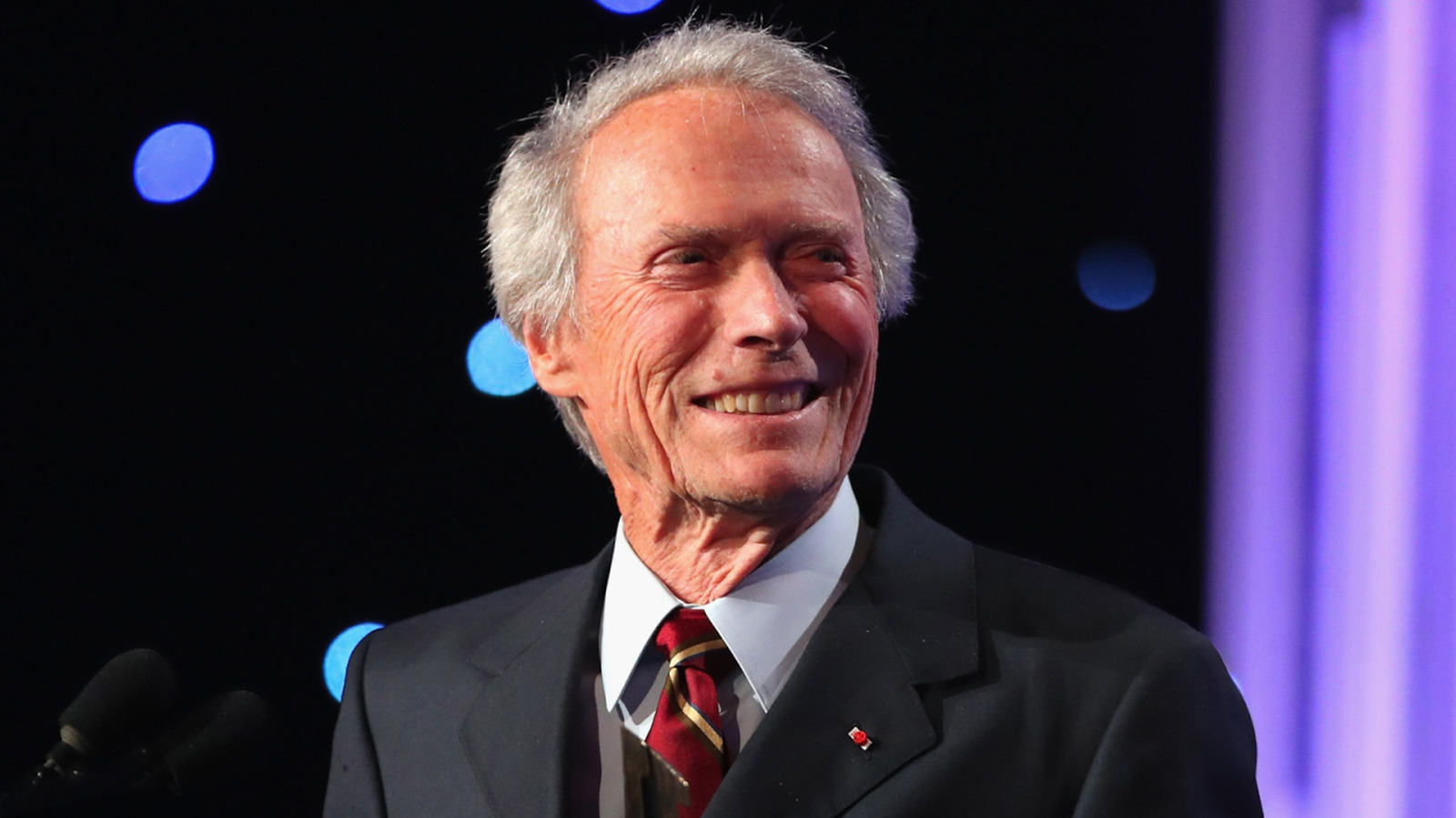
The Unique Breakfast Clint Eastwood Eats Every Day
Favicon 
www.mashed.com

The Unique Breakfast Clint Eastwood Eats Every Day

Clint Eastwood is known for living a healthy lifestyle, and his breakfast reflects that, prioritizing clean ingredients and balanced nutrition.
Like
Comment
Share
Showing 901 out of 112981
  • 897
  • 898
  • 899
  • 900
  • 901
  • 902
  • 903
  • 904
  • 905
  • 906
  • 907
  • 908
  • 909
  • 910
  • 911
  • 912
  • 913
  • 914
  • 915
  • 916
Advertisement
Stop Seeing These Ads

Edit Offer

Add tier


Select an image
Delete your tier
Are you sure you want to delete this tier?

Reviews

In order to sell your content and posts, start by creating a few packages. Monetization

Pay By Wallet

Payment Alert

You are about to purchase the items, do you want to proceed?

Request a Refund