YubNub Social YubNub Social
    #music #tew #tuba #euphonium #militarymusic #armymusic #armyband #tew2026 #satire #jazz #quartet #history #warmup #bigband #armyblues
    Advanced Search
  • Login
  • Register

  • Night mode
  • © 2026 YubNub Social
    About • Directory • Contact Us • Developers • Privacy Policy • Terms of Use • shareasale • FB Webview Detected • Android • Apple iOS • Get Our App

    Select Language

  • English
Night mode toggle
Featured Content
Community
New Posts (Home) ChatBox Popular Posts Reels Game Zone Top PodCasts
Explore
Explore
© 2026 YubNub Social
  • English
About • Directory • Contact Us • Developers • Privacy Policy • Terms of Use • shareasale • FB Webview Detected • Android • Apple iOS • Get Our App
Advertisement
Stop Seeing These Ads

Discover posts

Posts

Users

Pages

Blog

Market

Events

Games

Forum

Pet Life
Pet Life
2 yrs

Pooch Gets Rescued After Being Stuck In A Car Engine For Chasing A Cat
Favicon 
www.dogingtonpost.com

Pooch Gets Rescued After Being Stuck In A Car Engine For Chasing A Cat

A two-year-old dog was rescued by the Arizona Humane Society after finding herself in a tight spot for chasing a cat.
Like
Comment
Share
Hot Air Feed
Hot Air Feed
2 yrs

The 'Safety' Dodge
Favicon 
hotair.com

The 'Safety' Dodge

The 'Safety' Dodge
Like
Comment
Share
Science Explorer
Science Explorer
2 yrs

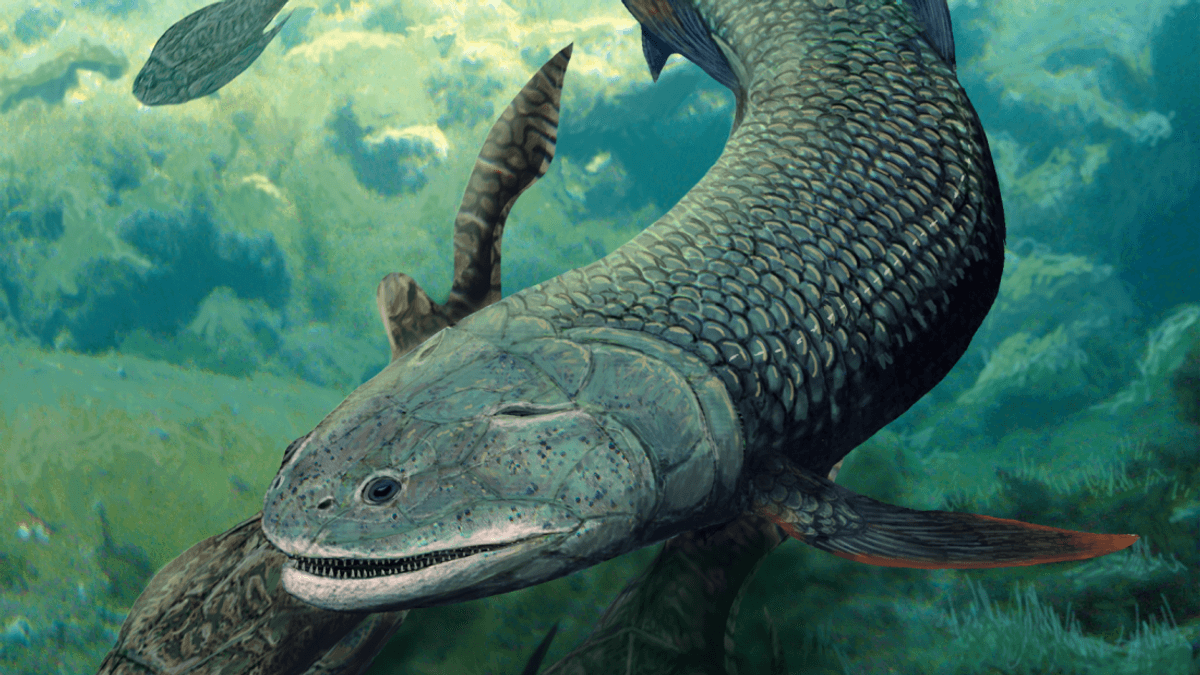
380-Million-Year-Old Fanged Fish Found In One Of The World’s Oldest Lakes
Favicon 
www.iflscience.com

380-Million-Year-Old Fanged Fish Found In One Of The World’s Oldest Lakes

One of the most remote fossil sites in all of Australia has just delivered a whopper of a new species: a predatory lobe-finned fish that was armed with large fangs and bony scales. It lived 380 million years ago at a time when the mid-Devonian had plunged the planet into a period of decreased atmospheric oxygen‚ which might also explain why this curious fish could breathe air as well as using gill respiration.The new-to-science species was found in Alice Spring’s Finke River (Larapinta)‚ which is considered to be one of the oldest rivers in the world. While being one of the trickier fossil sites to access on the continent‚ it’s already proven to have once been home to a host of bizarre ancient animals‚ and now another just joined the team.Named Harajicadectes zhumini‚ the predatory fish has been described by an international team of researchers led by Flinders University palaeontologist Dr Brian Choo. The genus name is derived from the site where the crucial fossils were found in the Harajica Sandstone Member‚ and the ancient Greek dkts (biter) as a hat tip to the ancient predator’s intimidating dental anatomy. An almost-complete specimen of Harajicadectes as found in the field in 2016.Image credit: Dr Brian Choo‚ Flinders University“We found this new form of lobe-finned fish in one of the most remote fossil sites in all of Australia‚ the Harajica Sandstone Member in the Northern Territory‚ almost 200 km [124 miles] west of Alice Springs‚ dating from the Middle-Late Devonian roughly 380 million years old‚” explained study co-author and Flinders Professor John Long‚ a leading Australian expert of fossil fish‚ in a statement.Its species name is in honor of Professor Min Zhu of the Chinese Academy of Sciences‚ Beijing‚ who is credited by the institution for having “made unique and outstanding contributions to the studies on the morphology‚ histology‚ phylogeny‚ biogeography‚ and evolutionary history of many early vertebrate groups”.Beyond its fearsome fangs and armored scales‚ Harajicadectes is notable for its unusual combination of breathing apparatus. Not content with the gill respiration we more typically associate with fish‚ it was also revealed to have large openings on the top of its skull that would’ve made it an airbreather‚ too.The spiracle anatomy of Harajicadectes.Image credit: Dr Brian Choo‚ Flinders University“These spiracular structures are thought to facilitate surface air-breathing‚ with modern-day African bichir fish having similar structures for taking in air at the water's surface‚” explained Choo. “This feature appears in multiple Tetrapomodorph lineages at about the same time during the Middle-Late Devonian. “In addition to Harajicadectes from central Australia‚ large spiracles also appeared in Gogonasus from Western Australia and elpistostegalians like Tiktaalik (the closest relatives to limbed tetrapods). Plus it also appears in the unrelated Pickeringius‚ a ray-finned fish from Western Australia‚ first described in 2018.”It’s thought that a dip in atmospheric oxygen during the mid-Devonian could explain why some fish evolved to supplement gill respiration with air-breathing. That several fish from widely separate branches of tetrapodomorph fish exhibit this dual-breathing trait is‚ therefore‚ an example of convergent evolution‚ in which distantly related species independently evolve the same adaptations. It makes it difficult to pinpoint exactly where this new species sits in the ichthyological Tree Of Life‚ but one hell of a find nonetheless.The study is published in the Journal of Vertebrate Paleontology.
Like
Comment
Share
Science Explorer
Science Explorer
2 yrs

Solar System's First Quasi-Moon Officially Named
Favicon 
www.iflscience.com

Solar System's First Quasi-Moon Officially Named "Zoozve" After Error On Child's Poster

Twenty years after its discovery‚ asteroid and quasi-moon 2002 VE 68 has been officially renamed "Zoozve" after a strange label on his 2-year-old child's poster of the Solar System led Radiolab host Latif Nasser to investigate further.In a widely-shared X (Twitter) thread‚ Nasser explained that he found a mystery moon on his child's astronomy poster labeled "Zoozve" near Venus. This is odd‚ as Venus has no moons‚ prompting Nasser to investigate.      IFLScience is not responsible for content shared from external sites.Google found no references to any "Zoozve"‚ and a friend at NASA had no idea what it was referring to either. Nasser called the poster's illustrator‚ who swore that he took the name from a list of moons of the Solar System. To cut a long (but enjoyable!) story short‚ Nasser's NASA friend Liz Landau realized what had happened. The moon was not "Zoozve"‚ but object 2002 VE 68. When space objects are first seen‚ they are given a provisional name based on when they were discovered. The first number part‚ as you might have guessed‚ relates to the year‚ while the letters relate to when it was discovered in the year.The quasi-satellite is a lot more interesting than your standard space rocks‚ being as it was the first of its kind ever discovered‚ due to its unusual orbit."Like all asteroids‚ its orbit takes it around the Sun‚ with asteroids closer to the Sun circling more rapidly and completing a 'year' in a shorter time. The 'year' for VE68 is shorter than the Earth year‚ clocking in at a little under 225 days‚" Zoozve's discoverers‚ led by Seppo Mikkala of Tuorla Observatory‚ explained back in 2004."This is almost exactly the same as the 'year' of the planet Venus – and it turns out that like synchronised divers in the Olympic Games‚ both VE68 and Venus are travelling around the Sun nearly in lock-step."Tracking the orbit of 2002 VE‚ the team discovered the first quasi-moon‚ or quasi-satellites‚ in the Solar System. Quasi-moons‚ as the name suggests‚ are not quite moons. They orbit the Sun but are also influenced by the planets along their path.   Following the Radiolab investigation‚ the first quasi-moon in the Solar System around a major planet has officially been renamed Zoozve."This object is the first-identified quasi-satellite of a major planet (Venus)‚" the Working Group of the International Astronomical Union (WGSBN) announced in a bulletin. "When artist Alex Foster drew this object on a Solar System poster for children‚ he mistook the initial characters of the provisional designation as letters‚ thus coining an odd and memorable moniker."2002 VE has been orbiting the Sun and encountering Venus for quite a while‚ but the team who first described its orbit thinks it may have come from elsewhere."Our computations show that it has been in its present orbital state for about seven millennia and will stay there for five more centuries to come‚" the team wrote in their 2004 paper. "Very close approaches with Venus and Mercury are excluded within the interval of time of reliable numerical computation of the orbit‚ but repeated encounters with the Earth do occur. From the evolution of the orbit of this object‚ we conclude that it may have been a near-Earth asteroid‚ which‚ some 7‚000 yr ago‚ was injected into its present orbit by the action of the Earth."[H/T: Radiolab]
Like
Comment
Share
Science Explorer
Science Explorer
2 yrs

People Are Asking If A Really Strong Magnet Could Affect Your Blood
Favicon 
www.iflscience.com

People Are Asking If A Really Strong Magnet Could Affect Your Blood

In a famous scene in X2 (of the first cinematic X-Men films)‚ Magneto uses his magnetic powers to rip the iron out of somebody's body‚ before going on a rampage using the iron like a bullet.Of course‚ the movie goes to great pains to show that the reason Magneto is able to do this is because the security guard had been injected with iron beforehand. Nevertheless – as people have been asking on Reddit – is it possible for a really strong magnet to affect your blood?First off‚ while we know blood contains iron‚ we also know that magnets can't rip the iron from your blood. If it could‚ that would happen every time somebody stepped into an MRI machine‚ and they probably wouldn't still be in use. But that doesn't mean that strong magnets don't affect your blood. In fact‚ a technique used for measuring brain activity inside MRI machines relies on the fact that they do.Your blood is not ferromagnetic‚ or magnetic in the same way that people usually understand magnetism. However‚ it does have very weak magnetic properties.         Oxyhemoglobin is weakly diamagnetic‚ meaning it is slightly repelled by a magnetic field‚ while deoxyhemoglobin is paramagnetic‚ or slightly attracted to a magnetic field. It is this that allows us to measure brain activity using MRI machines."The reason fMRI is able to detect [changes in the brain] is due to a fundamental difference in the paramagnetic properties of oxyHb and deoxyHb‚" Radiopaedia explains."Deoxygenated haemoglobin is paramagnetic whereas oxygenated haemoglobin is not‚ and therefore the former will cause local dephasing of protons‚ and thus reduce the returned signal from the tissues in the immediate vicinity."As suggested on Reddit‚ if you scaled up the magnet say to that of magnetars‚ "you're going to have a bad time". Everything is a little magnetic‚ including the tissues in your body‚ and will respond to a magnetic field if it's strong enough. But your body will levitate like a frog in the 90s long before the doctor is forced to issue a death certificate listing the cause of death as "blood shot at a big magnet".All “explainer” articles are confirmed by fact checkers to be correct at time of publishing. Text‚ images‚ and links may be edited‚ removed‚ or added to at a later date to keep information current.
Like
Comment
Share
Science Explorer
Science Explorer
2 yrs

Favicon 
www.iflscience.com

"Speckles" The Rare Piebald Bottlenose Dolphin Is A First For Australia

A rare‚ unusually-colored bottlenose dolphin has caught the eye of Australian researchers. Its unique skin pattern has been attributed to piebaldism‚ earning the marine mammal the nickname “Speckles”. Researchers say that Speckles is the first piebald dolphin ever seen in Australian waters.Speckles was spotted near a research vessel in Hervey Bay‚ Queensland‚ on the afternoon of September 25‚ 2022. “It was swimming with a group of five other dolphins about 16 [kilometers] [9.9 miles] off Hervey Bay’s Scarness Beach and we noticed it straight away as it had such strange coloration compared to the others‚” said doctoral student Georgina Hume of the University of the Sunshine Coast‚ lead author of a paper documenting Speckles‚ in a statement. The group was seen to be foraging during the 40-minute period they were observed.The researchers weren’t actually seeking out funky-patterned cetaceans – they were there to study how dolphins in the area are connected when they happened to come across this unusual creature.“Speckles leapt out of the water three times in an upright‚ vertical position‚ while the rest of the group travelled in a ‘porpoising’ movement‚” Hume continued. Porpoising is associated with fast swimming‚ where cetaceans leap out of the water while speeding along. “This allowed us to get a very clear look at its underside which had many white areas‚ along with white stripes across its dorsal and lateral sides.”Speckles sure looks unique!Image Credit: Georgina Hume“Piebaldism is similar to albinism and leucism‚ where the animals typically have white skin‚ feathers or fur‚ whereas piebaldism is a partial-loss of pigmentation so the individuals show this patchy coloration‚” explained study co-supervisor‚ behavioral ecologist Dr Alexis Levengood.Piebaldism occurs due to a lack of cells that produce the pigment melanin in certain areas of the skin. The researchers note that it’s rare to find atypical coloration like this in marine mammals – only 24 individuals have been documented in literature‚ and just six have been caught on camera. It can come with a whole host of downsides‚ such as being more easily spotted by both predators and prey‚ as well as the lack of melanin potentially increasing susceptibility to sun damage and decreasing heat absorption when the water gets chilly.Luckily‚ Speckles was observed to be a healthy size – the fact it surfaced multiple times close to the research vessel allowed researchers to estimate its length to be around 3 meters (9.8 feet) – with a healed shark bite on the right side of its peduncle. Speckles' sex could not be determined. “The clear identification of near-symmetrical white patches and the overall ‘healthy’ appearance of Speckles helped eliminate the possibility that these patches are due to potential disease or stranding-related sunburn‚” explained Hume.“It’s an exciting discovery‚ as to date‚ there are no documented sightings of any atypically coloured dolphins in Australian waters‚” Levengood said. “There have however been a few sightings of atypical whales. One of these is a well-known albino humpback whale called ‘Migaloo‚’ first observed in Byron Bay in the early 1990s and whose all-white status was confirmed from a sighting in Hervey Bay one year later."Unfortunately‚ Speckles was not sighted by researchers again in 2022 after that chance encounter‚ despite them attempting to find it again the next day. Levengood recommended “genetic sampling of both common bottlenose dolphins and Indo-Pacific bottlenose dolphins in and surrounding Hervey Bay‚ to assess the population genetics and relatedness of individuals that might be influencing atypical cetacean skin pigmentation.”The study is published in the journal Aquatic Mammals.
Like
Comment
Share
Science Explorer
Science Explorer
2 yrs

The Milky Way's Magnetism Is Messier Than We Thought‚ Detailed Spiral Arm Mapping Reveals
Favicon 
www.iflscience.com

The Milky Way's Magnetism Is Messier Than We Thought‚ Detailed Spiral Arm Mapping Reveals

Our galaxy has a weak – but immense – magnetic field that stretches across most of it. Although we know its broadest outline‚ the fine-scale detail is a mystery. Now‚ the magnetism or a small portion of has been revealed at finer resolution‚ revealing there is a lot more jumble to it than smooth models previously suggested.The galactic magnetic field is not strong enough that you could use it to stick something to your fridge‚ let alone generate electricity from a turbine. Nevertheless‚ it shapes the way stars and planets form by causing the raw material to clump more than gravity would on its own. The field polarizes light passing through it‚ which is how we have detected and measured it.Unfortunately‚ when we look through the galaxy‚ we see a combined effect of all the fields in our line of sight‚ rather than a three-dimensional map. “Until now‚ all observations of magnetic fields within the Milky Way led to a very limited model that was uniform all over and largely matched the disc shape of the galaxy itself‚” said study author Dr Yasuo Doi of the University of Tokyo in a statement. The fact stars and planets can produce local fields that are much stronger (and usually in other directions) than the galactic field is known‚ and the field around some stars has been measured. There’s been a gap‚ however‚ between detecting specific local fields and the large-scale shape‚ with little idea of what the field looked like on scales of tens or hundreds of light years.Doi and colleagues combined data from the Gaia satellite and Earth-based measurements of polarized light to find signs of magnetism at finer scales. To do so over the whole galaxy would be an epic task – so the team focused on a portion of the Sagittarius Arm‚ one of the four great spiral arms of the galaxy. The Sun and Earth are located in the smaller Orion-Cygnus spur‚ possibly an offshoot of the major Perseus Arm‚ but it’s much harder to map something you’re inside compared to mapping a neighbor.The team measured the polarization of hundreds of stars within their chosen field and used Gaia to locate these stars precisely. This allowed them to identify the contributions made by five vast clouds of magnetized gas within the field.Each cloud has a field that is smooth on scales of 15-30 light years and greater‚ but is often orientated quite differently from the galaxy as a whole.The white lines show the polarization‚ which correlates with the orientation of local magnetic field lines. It reveals the galactic field is far from homogenous and combined‚ this information builds a detailed map of the magnetic field in the Sagittarius arm of the galaxy.Image Credit: Doi et al/The Astrophysical Journal CC-By-NDThree clouds within the Sagittarius arm have fields with broadly similar alignments to each other (40°-58° away from Galactic north)‚ but another cloud is at roughly right angles to these three. A fifth cloud‚ that lies between us and the Sagittarius arm‚ has an angle similar to the outlier among the Sagittarius clouds. That puts the clouds up to 60° out of alignment with the galactic plane‚ with which the galactic magnetic field is thought to align. Their direction probably reflects the effects of some major past event‚ such as an ancient supernova explosion that left a magnetic legacy.“I am personally intrigued by the foundational process of star formation‚ pivotal to the creation of life‚ including ourselves‚ and I aim to grasp this phenomenon in its entirety with time‚” Doi said. For that‚ he thinks it is necessary to understand galactic magnetic field lines better‚ and hopes to do more mapping of the way they cause gas to accumulate prior to the birth of stars.The study is published open access in The Astrophysical Journal.
Like
Comment
Share
Science Explorer
Science Explorer
2 yrs

These Siberian Horses Rapidly Evolved To Thrive At −70°C
Favicon 
www.iflscience.com

These Siberian Horses Rapidly Evolved To Thrive At −70°C

The Yakut region in Northern Siberia is one of the coldest places on Earth‚ and yet some hardy horses can survive‚ even thrive‚ there. With their thick winter coats‚ squat bodies‚ and stubby limbs‚ native Yakutian horses are adorably well adapted to their frosty climes – but they also have another handy trick up their sleeve.To cope with the often sub-zero conditions – the Siberian Far East can reach lows of -70°C (-94°F) in the winter – they have evolved the ability to reduce their metabolic rate and lower their core body temperature‚ as some hibernating animals such as arctic ground squirrels are known to do. The difference is that hibernating animals are inactive during this period of torpor‚ whereas Yakutian horses continue going about their business‚ leading researchers to call it “standing hibernation”. No other horses are known to do this.Equally as impressive is the speed at which the horses developed their metabolic‚ anatomical‚ and physiological adaptations: It “represent[s] one of the fastest cases of adaptation to the extreme temperatures of the Arctic‚” write the authors of a 2015 study describing the horses’ rapid evolution. They analyzed the genomes of present-day Yakutian horses‚ plus specimens dating to the early 19th century and around 5‚200 years ago‚ before comparing them with the genomes of Late Pleistocene and modern Przewalski’s horses. Their findings suggest that “contemporary Yakutian horses do not descend from the native horses that populated the region until the mid-Holocene.” Instead‚ they “were most likely introduced following the migration of the Yakut people a few centuries ago.” A group of Turkic-speaking horse-riders migrated to the region‚ alongside their horses‚ between the 13th and 15th centuries‚ which means these adaptations arose in just a few hundred years – a very short amount of time‚ evolutionarily speaking.The researchers also found evidence of convergent evolution among Yakutian horses‚ native human populations‚ and woolly mammoths – which is when species occupying similar ecological niches adapt in similar ways in response to their environment. This‚ the researchers add‚ suggests “that only a few evolutionary strategies are compatible with survival in extremely cold environments”.Basically‚ Yakutian horses have smashed it. According to a recent study on the genetic diversity of native horse breeds in Russia‚ they are the “most cold-resistant indigenous breed”. Thanks to their hair‚ stature‚ and squirrel-esque metabolism‚ they stay toasty as temperatures around them plummet.The 2015 study is published in the journal PNAS.
Like
Comment
Share
Strange & Paranormal Files
2 yrs

Lightning during volcanic eruptions could have given rise to life on Earth
Favicon 
anomalien.com

Lightning during volcanic eruptions could have given rise to life on Earth

Analysis of the volcanic rocks revealed large amounts of nitrogen compounds that were almost certainly produced by volcanic lightning. This process could provide the nitrogen needed for early life forms to develop and thrive. Nitrogen is a key component of amino acids‚ which form the proteins on which all life depends. Although nitrogen gas is abundant‚ plants cannot convert it into a usable form the way carbon dioxide can. Instead‚ plants get most of their nitrogen from bacteria‚ which are able to “fix” the gas‚ converting it into nitrogen compounds such as nitrate. However‚ nitrogen-fixing bacteria did not exist when life began‚ says Slimane Becky of the Sorbonne University in Paris‚ so a non-biological source must have existed early on. Lightning from a thunderstorm is one possible source. This produces relatively little nitrate today‚ but it may have been important early in Earth’s history. The famous Miller-Urey experiment in the 1950s demonstrated that lightning in Earth’s early atmosphere could produce nitrogen compounds‚ including amino acids. Now Becky and his colleagues have shown that another source could be lightning that occurs in ash clouds during some volcanic eruptions. When they collected volcanic sediments from Peru‚ Turkey and Italy‚ the researchers were initially surprised to find large amounts of nitrate in some layers. Isotopic analysis of these nitrates showed that they are of atmospheric origin and are not emitted by volcanoes. But Becky says the amounts were too large to have been produced by lightning during a thunderstorm. “The amount was really amazing‚” he says. “It’s really huge.” This means that the nitrates were likely formed by volcanic lightning. “If you look at the different options‚ the most likely would be volcanic lightning‚” says Becky . “We know that during a large volcanic eruption there is a lot of lightning.” Tamsin Mather of Oxford University says the team’s findings make sense. “We expect volcanic eruptions like those studied in the paper to generate significant lightning‚ so it is possible that volcanic lightning could be responsible for this signal.” It has been suggested that life first arose around volcanoes‚ and the team’s findings suggest that nitrogen compounds may have been abundant in these environments‚ Becky says. It’s worth noting that the idea that volcanic lightning played a key role in the emergence of life is not new. Jeffrey Bada of the Scripps Institution of Oceanography in California previously showed that volcanic lightning passing through volcanic gases can produce molecules such as amino acids. The post Lightning during volcanic eruptions could have given rise to life on Earth appeared first on Anomalien.com.
Like
Comment
Share
Strange & Paranormal Files
2 yrs

Scientists want to build a larger collider and they believe it’s safe
Favicon 
anomalien.com

Scientists want to build a larger collider and they believe it’s safe

Scientists at the Large Hadron Collider are advocating for the construction of a new‚ even larger and more powerful super accelerator to aid in the quest for unraveling the mysteries of the Universe. The proposed monster‚ named the Future Circular Collider (FCC)‚ boasts a ring three times larger than its predecessor‚ spanning 91 km and buried deeper underground to prevent the escape of powerful radiation. The estimated initial cost of the FCC project stands at 12 billion pounds‚ with funding expected to come from member countries of the European Organization for Nuclear Research (CERN). Detractors criticize the astronomical spending as “reckless.” If the physicists’ ambitions come to fruition‚ the megacollider is projected to be operational by the mid-2040s‚ with super-powerful magnets installed in the 2070s to accelerate particles to unprecedented energies. The ultimate goal is to provide evidence for the existence of dark matter‚ which‚ according to prevailing theoretical concepts‚ constitutes 95% of the Universe. CERN Director General Professor Fabiola Gianotti lauds the future supercollider as a “wonderful machine” that could propel physicists toward a breakthrough in understanding the fundamental structure of our world. She emphasizes its potential to facilitate significant advancements in humanity’s comprehension of the universe. However‚ concerns linger about the potential risks associated with experiments‚ including the formation of a mini-black hole. While the possibility is deemed very microscopic‚ it is not entirely dismissed. There remains a cautious acknowledgment that‚ in the pursuit of knowledge‚ there is a minute but nonzero risk of destructive consequences. The LHC 2.0‚ or Future Circular Collider (FCC)‚ will revolutionise the world of physics when it is up and running‚ and build on the work of its predecessor. It will produce the power of 10 MILLION lightning strikes – enough energy to create a devastating black hole‚ reports express.co.uk. Researchers have discovered that it actually takes 2.4 times less energy to create a black hole‚ and with a more powerful particle collider‚ some fear that one could be accidentally made in the lab. The study published in the journal Physical Review Letters reads: “We find that the threshold for black hole formation is lower (by a factor of a few) than simple hoop conjecture estimates‚ and‚ moreover‚ near this threshold two distinct apparent horizons first form postcollision and then merge.“ However‚ thanks to a process known as Hawking Radiation‚ experts say that Earth is in no danger of being swallowed by a man-made black hole. Frans Pretorius‚ a theoretical physicist at Princeton University‚ told LiveScience: “The one common misconception about the small black holes that may form at the Large Hadron Collider is that they would swallow the Earth. “With about as much confidence as we can say anything in science‚ this is completely impossible.” We hope that this will be the case‚ and that scientists are right in their theories. The post Scientists want to build a larger collider and they believe it’s safe appeared first on Anomalien.com.
Like
Comment
Share
Showing 99336 out of 113869
  • 99332
  • 99333
  • 99334
  • 99335
  • 99336
  • 99337
  • 99338
  • 99339
  • 99340
  • 99341
  • 99342
  • 99343
  • 99344
  • 99345
  • 99346
  • 99347
  • 99348
  • 99349
  • 99350
  • 99351
Advertisement
Stop Seeing These Ads

Edit Offer

Add tier


Select an image
Delete your tier
Are you sure you want to delete this tier?

Reviews

In order to sell your content and posts, start by creating a few packages. Monetization

Pay By Wallet

Payment Alert

You are about to purchase the items, do you want to proceed?

Request a Refund