YubNub Social YubNub Social
    #freedom #americanhistory #amercia250
    Advanced Search
  • Login
  • Register

  • Night mode
  • © 2026 YubNub Social
    About • Directory • Contact Us • Developers • Privacy Policy • Terms of Use • shareasale • FB Webview Detected • Android • Apple iOS • Get Our App

    Select Language

  • English
Night mode toggle
Featured Content
Community
New Posts (Home) ChatBox Popular Posts Reels Game Zone Top PodCasts
Explore
Explore
© 2026 YubNub Social
  • English
About • Directory • Contact Us • Developers • Privacy Policy • Terms of Use • shareasale • FB Webview Detected • Android • Apple iOS • Get Our App
Advertisement
Stop Seeing These Ads

Discover posts

Posts

Users

Pages

Blog

Market

Events

Games

Forum

History Traveler
History Traveler
2 yrs

This Excelsior Brigade Soldier Became an Accidental Journalist
Favicon 
www.historynet.com

This Excelsior Brigade Soldier Became an Accidental Journalist

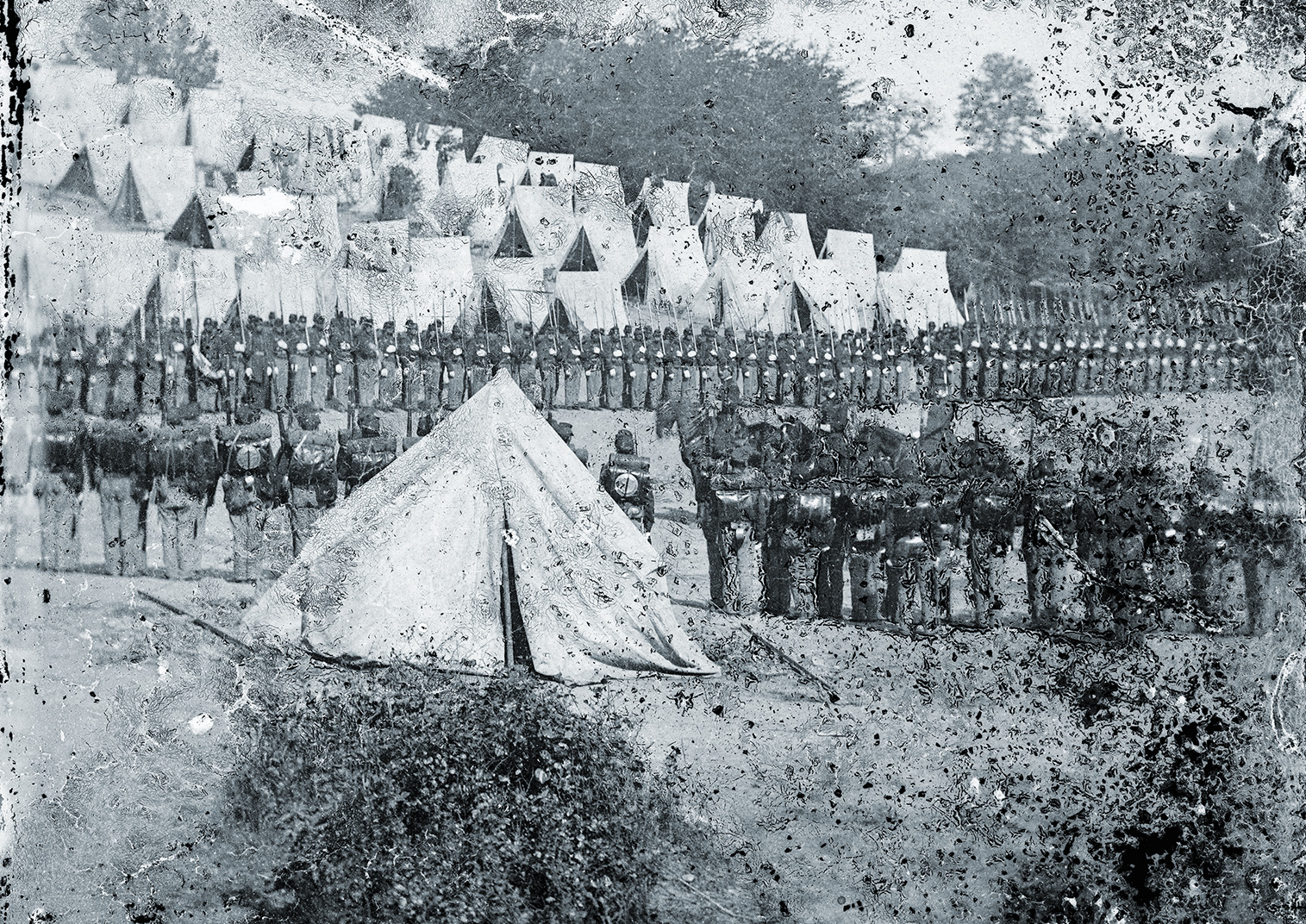
When 21-year-old Arthur McKinstry left Chautauqua County‚ N.Y.‚ in early June 1861 to join the Excelsior Brigade being raised by then-Colonel Daniel Sickles‚ he was better prepared to write than fight. Upon reaching the unit’s camp of instruction on Staten Island‚ Arthur wrote to his mother revealing that his Uncle Willard had given him “a portable ink stand and all sorts of stationery and writing materials‚” to take along‚ “in order…I might keep him posted as to our movements.” His uncle had an ulterior motive‚ however. Willard‚ and Arthur’s uncle Winthrop‚ owned and operated the Fredonia Censor‚ a local weekly newspaper. They intended to publish Arthur’s letters. What better way to enlighten and attract new readers? Rick Barram‚ a retired history teacher‚ brings Arthur’s Censor letters—preserved at the Darwin R. Barker Historical Museum in Fredonia‚ N.Y.—“into the light‚” and also includes a second collection of letters—from Mississippi State University—that Arthur wrote to his mother and other relatives. Dear Uncles presents these letters “in their entirety…‚” Barram notes‚ “to understand the full scope of Arthur’s experiences.” Arthur’s letters became a staple of the Censor’s war coverage‚ appearing in a column headed Dear Uncles. Nearly six dozen additional “letters‚ reports‚ and letters not written by Arthur” also appear in Dear Uncles. They pop up as sidebars throughout the book. Barram titles these supplements “Other Voices‚” intended “to provide context and otherwise illuminate Arthur’s writings and experiences.” Arthur was uniquely prepared for his role as correspondent. “Articulate and well read‚” at age 15 he entered the U.S. Naval Academy in the fall of 1854. He quickly squandered his time there‚ however. Amassing demerits for misconduct‚ and ranking near the bottom of his class academically‚ Arthur was judged “unfit” and dismissed. Perhaps as atonement for his failures at Annapolis‚ Arthur was early to answer the call to arms when Civil War flared. Mustered into the 3rd Regiment of the Excelsior Brigade‚ later designated the 72nd New York Infantry‚ the regiment patrolled the Lower Potomac River by the fall of 1861. Arthur’s letters mirror the youngster’s experiences in the first flush of soldiering. He frequently recounts the relentless grind of drilling and picket duty. He often comments on the weather‚ and more often about the food. “[T]he average of our men do not get enough to satisfy hunger…‚” he writes facetiously. “On the whole‚ we do not fare quite as well as State prison convicts…” Arthur occasionally spices his writing with his opinions about camp mates and officers. “Our regiment is a choice one‚” he claims‚ “but over on the right of camp are the ‘roughs’ from the city. They are a rascally set and we keep a constant guard which effectually prevents thefts.” Even Dan Sickles‚ now a brigadier‚ fails to escape a double-edged assessment. He “displayed great energy and patriotism in the raising and equipment of the brigade‚” writes Arthur. “He has governed it however in a civilian manner…evidently incompetent to personally maneuver the brigade.” Arthur grew to relish his journalist role. “I find that it is a very nice thing to be the correspondent of the Censor for I notice that the officers had rather have a good word there rather than a bad one‚” he wrote. “Take it all together I am about as well off as a private can be.” His writing would benefit his comrades from time to time. At their urging “to state the facts‚” Arthur exposed a sutler who “practices a system of extortion upon the soldiers of the Brigade.” Little more than a month later‚ Arthur was able to report‚ “We have a new sutler here and he is more reasonable than the old.” Arthur was a keen observer. Little escaped his notice. He could be prescient‚ writing in December 1861: “I really think‚ from the present appearance of things‚ that this war will eventually prove the death blow of Slavery.” He also wrote with prescience to the Censor on May 4‚ 1862‚ beginning his letter‚ “My time is extremely short…” Hours later‚ Arthur’s pen was stilled forever when he was killed at the Battle of Williamsburg‚ “shot through the leg and groin.”   Arthur was pleased when an officer called him a “writing man.” But even Arthur cautioned his readers‚ “It would be tedious to tell of all the shifts we soldiers make…” This can be a cautionary tale for readers of Dear Uncles. There is much here that will appeal to readers; at times perhaps too much. For example‚ by alternating between verbatim letters Arthur wrote to his uncles‚ with letters he wrote to his mother and others‚ typically at or near the same time‚ his comments are often repeated and duplicated. To this mix Barram embeds two categories of notes throughout the text. These are meant to define or explain “foreign words” and other references that Arthur is prone to use. Such notes appear repeatedly‚ and impart a choppiness to the flow of narrative. In the final chapter‚ and a concise epilogue‚ Barram provides a brief history of the Excelsior Brigade with interesting information about “the fate of Arthur’s mates.” Numerous photographs‚ maps‚ and illustrations further enhance the text. Dear Uncles offers a bounty of information particularly to students of the Excelsior Brigade. The book also provides a unique glimpse of the often-overlooked actions along the Lower Potomac River early in the war. “[R]eaders of the Fredonia Censor‚” writes Barram‚ “were able to follow the adventures of their Chautauqua County boys thanks to Arthur McKinstry and his uncles.” Readers of Dear Uncles are now able to follow Arthur McKinstry’s tales thanks to the efforts of Rick Barram. Dear Uncles The Civil War Letters of Arthur McKinstry‚ A Soldier in the Excelsior Brigade Edited by Rick Barram‚ Excelsior‚ 2023 get it on amazon If you buy something through our site‚ we might earn a commission.

Like
Comment
Share
Hot Air Feed
Hot Air Feed
2 yrs

Special Counsel Hur Didn't Ask When Beau Biden Died - Biden Brought it Up
Favicon 
hotair.com

Special Counsel Hur Didn't Ask When Beau Biden Died - Biden Brought it Up

Special Counsel Hur Didn't Ask When Beau Biden Died - Biden Brought it Up
Like
Comment
Share
Science Explorer
Science Explorer
2 yrs

A Suspected Alternative Form Of Magnetism Could Make For More Powerful Memory Devices
Favicon 
www.iflscience.com

A Suspected Alternative Form Of Magnetism Could Make For More Powerful Memory Devices

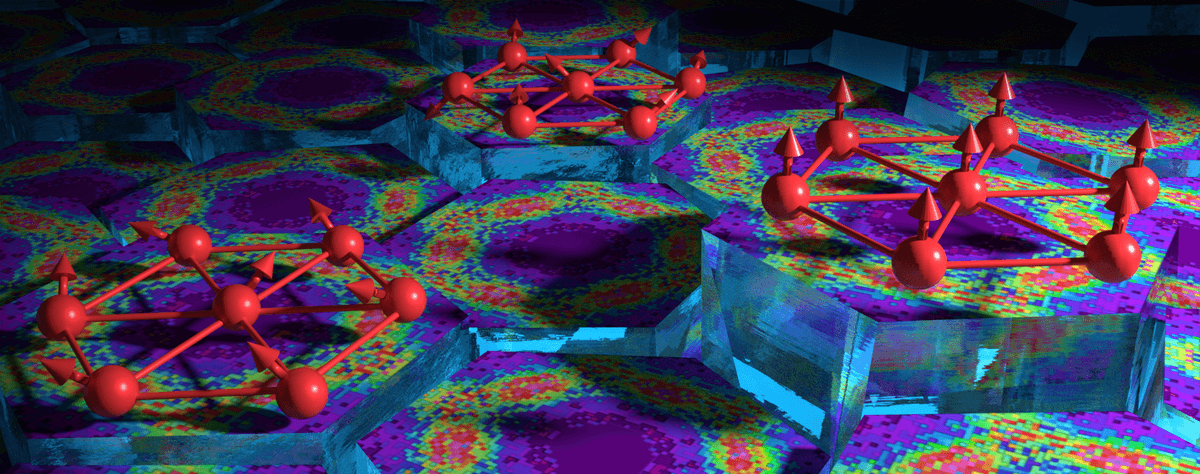
There are three types of magnetism‚ not two‚ new research reveals‚ and the new one could be much in demand.To the first users of compasses‚ magnets must have seemed a form of magic. Just when we started to think we had got a grasp on the traditional form‚ known as ferromagnetism‚ a new one‚ antiferromagnetism‚ was discovered. Now it seems our descriptions of that too are inadequate with the proof of a third type‚ altermagnetism. When asked‚ “Magnets‚ how do they work?” scientists have not been lying‚ but their answers have been incomplete.Magnetism‚ when not caused by large-scale electric currents or changing fields‚ is an outcome of electron spins. Spin here does not literally mean electrons are rotating like planets‚ but refers to subatomic behavior given the same name. Orbiting electrons have magnetic moments caused by their spins‚ but these are usually arranged randomly. With unimaginably vast numbers of electrons in even a small item‚ everything cancels out‚ or gets so close that it doesn’t matter.However‚ in rare cases magnetic moments align sufficiently to produce a large-scale magnetic field. This is only possible in a few elements‚ most famously iron‚ but when it happens it allows the familiar attraction of the lodestone to the (magnetic) north pole or the magnet to the fridge.Antiferromagnets‚ discovered in 1933‚ usually require low temperatures and involve patterns where atoms have magnetic spins opposite to their neighbors. Without an external magnetic field antiferromagnets behave like any other material. When exposed to one‚ however‚ the atoms’ magnetic moments align in the opposite direction to their neighbors‚ instead of either randomly‚ or in a common direction like ferromagnets. This doesn’t lead to a net contribution to the field from the material‚ but it can lead to sharp changes in conductivity under varying circumstances‚ which can have applications.If materials can march in step to magnetic fields’ commands‚ reject them by alternating direction or ignore them entirely‚ what else does that leave?Surprisingly altermagnets provide an answer. On first sight altermagnets appear to be just another form of antiferromagnets. Their internal spins also take the opposite direction to neighbors‚ giving no net effect. The patterns repeat through rotational symmetry rather than translational symmetry‚ which means that instead of neighboring atoms canceling each other they create a spin polarization that can lead to alternating bands.The resulting properties can provide a middle ground between the two previously known type of magnets‚ and may prove very useful for making magnetic memory recorders far more powerful than those that exist. This would occur through what is known as spintronics – using electrons’ spin states‚ as well as their charges‚ to carry information. Spintronics have been worked on‚ and sometimes hyped‚ for years‚ using ferromagnets. However‚ the bulk magnetism that ferromagnets provide makes it hard to scale up spintronic devices‚ since the bulk magnetic field interferes with its own components spin‚ and those of any neighbors. Antiferromagnets avoid this‚ but their lack of spin-dependent effects prevents some of the behavior being sought. Theories proposing altermagnets led physicists to wonder if they might represent spintronics’ Goldilocks zone‚ and to seek confirmation they do exist.Now that confirmation has been found‚ some are excited enough to use a different M word. “That’s the magic about altermagnets‚” Professor Tomáš Jungwirth of the Czech Academy of Sciences said in a statement. “Something that people believed was impossible until recent theoretical predictions is in fact possible.”In 2019 Jungwirth helped identify a class of magnetic materials that didn’t fit the existing categories‚ carrying internal electric currents without an external magnetic field. Three years later he was part of a team that revealed more than 200 candidates for altermagnetism across diverse classes of materials. Nevertheless‚ there is a large gap from suspicion to proof‚ and at the time confirmation of altermagnetism was lacking.However‚ after bathing crystals of manganese telluride‚ previously considered an antiferromagnet‚ in X-rays‚ Jungwirth and coauthors have announced it consists of electronic bands with alternating spin states‚ the key characteristic of an altermagnet. Technically‚ the X-rays revealed that manganese telluride displays "Lifted Kramers Spin Degeneracy" by the magnetic order. Despite sounding like the levitation ritual of a pseudo-Medieval cult‚ this is actually a heavily studied characteristic of ferromagnets that was anticipated in altermagnets‚ but does not occur in antiferromagnets. Comparison of ferromagnetism‚ antiferromagnetism‚ and altermagnetism‚ and when each's nature was explained. The difference between translational and rotational symmetry might seem abstract‚ but it produces a fundamental difference between antiferromagnetism and altermagnetism.Image Credit: Libor Å mejkalBeyond advancing our understanding of magnetism and the potential applications it could yield‚ Jungwirth and colleagues think their work could provide new insights into superconductivity. "Altermagnetism is actually not something hugely complicated. It is something entirely fundamental that was in front of our eyes for decades without noticing it‚” says Jungwirth. “And it is not something that exists only in a few obscure materials. It exists in many crystals that people simply had in their drawers. In that sense‚ now that we have brought it to light‚ many people around the world will be able to work on it‚ giving the potential for a broad impact.”The study is published open access in Nature.
Like
Comment
Share
Strange & Paranormal Files
2 yrs

The story of the Lake Conser monster and the Flying Saucer
Favicon 
anomalien.com

The story of the Lake Conser monster and the Flying Saucer

The Monster of Conser Lake is a press name for a crypto-hominid or “ghostly” entity reported to have been active in the area of Conser Lake in Linn County‚ Oregon‚ near Millersburg and north of Albany during the summer of 1960. “A seven-foot-tall‚ white creature illuminated in the moonlight came “squishing down the lane making a noise‚” said one boy‚ “as though he had water in his overshoes.” The two boys ran screaming to alert their friends‚ the monster right behind them…” The stories surrounding the Conser Lake Monster are as brief as they are Bizarre‚ including tales of UFOs… This premium content is for PLUS+ members only. Visit the site and log in/register to read. The post The story of the Lake Conser monster and the Flying Saucer appeared first on Anomalien.com.
Like
Comment
Share
Classic Rock Lovers
Classic Rock Lovers  
2 yrs ·Youtube Music

YouTube
Best Of Hard Rock 70s 80s 90s - Top Hard Rock Songs Collection 70s 80s 90s
Like
Comment
Share
NewsBusters Feed
NewsBusters Feed
2 yrs

NPR's Asma Khalid Touts Kamala's Trip to Germany to Reassure NATO‚ No GOP Rebuttals
Favicon 
www.newsbusters.org

NPR's Asma Khalid Touts Kamala's Trip to Germany to Reassure NATO‚ No GOP Rebuttals

National Public Radio sounded like State-Run Radio on the Valentine’s Day Morning Edition. Reporter Asma Khalid touted that Vice President Kamala Harris was headed to Germany to reassure European allies after Donald Trump said he’d encourage Russia to “do whatever the hell they want” to allies who won’t spend enough on defense to be a NATO member in good standing. The talking heads in the story? President Biden denouncing Trump‚ Munich Security Council president Wolfgang Ischinger taking exception to Trump‚ and former Democrat congressman and Obama Defense Secretary Leon Panetta. NPR isn't known for running soundbites where Biden mumbles and bumbles. They feature the Trump denunciations:  "For God's sake‚ it's dumb. It's shameful. It's dangerous. It's un-American." No Republicans were featured in the story. They were only treated as a menace and unreliable ally. LEILA FADEL‚ ANCHOR: So how does the vice president reassure them? KHALID: Well‚ you know‚ she can defend the administration's track record. But to step back‚ the White House is in a tough place right now. They want more aid money for Ukraine. But Republican leaders in the House are blocking that‚ and it is not clear when and even if Congress will agree to more funding. This White House promised that the Trump era was over - you know‚ that America was back. So I will say there is a lot at stake‚ both for the Biden administration's reputation and the United States' credibility as a world leader. Here's former Defense Secretary Leon Panetta. LEON PANETTA: The primary responsibility of the vice president is to make clear that‚ despite these challenges‚ America's word is still strong and that it can be depended upon. KHALID: But the reality is‚ it is going to be difficult for Harris to stand up and say‚ have faith in the U.S. when even a Democratic president‚ we are seeing‚ cannot guarantee additional money for Ukraine because of partisan fights in Congress. The former German ambassador‚ Ischinger‚ flatly told me that Europeans are increasingly thinking about a Plan B - how to defend themselves if there is indeed a future in which they cannot depend on the U.S. On Thursday‚ NPR.org posted a print version of Asma Khalid's press release. Once again‚ there were no Republicans quoted‚ but plenty of Democrats‚  including Panetta‚ Biden National Security Adviser Jake Sullivan‚ recently departed Biden aide Amanda Sloat‚ and former Obama diplomat Stephen Flanagan.  Khalid‚ who NPR announced is traveling to Germany to cover this trip‚ awarded Kamala with a puffball holiday interview in 2022.
Like
Comment
Share
Trending Tech
Trending Tech
2 yrs

Apple Vision Pro crushes competition in the most sophisticated tests yet
Favicon 
bgr.com

Apple Vision Pro crushes competition in the most sophisticated tests yet

Apple Vision Pro is the holy grail of mixed reality headsets‚ although Apple's spatial computing needs at least four generations to show its true potential. Still‚ while Meta's CEO‚ Mark Zuckerberg‚ might call Meta Quest 3 better than Vision Pro‚ this is really not the case. In the latest benchmark comparison with the OptoFidelity Buddy test system‚ OptoFidelity discovered what most of us might have assumed: Apple Vision Pro crushes the competition in latency‚ photon-to-photon test. Image source: Apple Inc. How does this sophisticated test work? And why it's such a big deal for Apple Vision Pro One of the biggest challenges with mixed reality devices is the see-through latency‚ which makes seeing the world through lenses almost perfect or like a nightmare of dizziness. With Apple Vision Pro now available‚ the company compared it with HTC VIVE XR Elite‚ Meta Quest 3‚ and Meta Quest Pro. As explained in a blog post‚ photon-to-photon latency describes "the time it takes for the image to be transferred through the headset to the user’s vision." In this testing‚ OptoFidelity measured the latency by calculating the time difference between the lit of the light and the sense of that light on the location of the perceiver. The company says the BUDDY 6 backlight sensor has a high enough frequency to capture the relevant changes that might interfere with the testing‚ such as the frequency of the blinking target‚ the frequency of the Device Under Test (DUT) see-through camera‚ the DUT display frequency‚ and the frequency of the sensor. OptoFidelity also chose to show latency values with the lowest latency the DUT generates when its cameras and displays run on their individual frequencies. Image source: OptoFidelity With that‚ Apple Vision Pro had a ridiculously low latency compared to the other mixed reality headsets. Apple claims the see-through latency is 12ms‚ but this test showed ~ 11ms. The competitor's results are in the range of 35-40ms‚ previously considered a good standard level. That said‚ while these devices are usable‚ once you try Apple Vision Pro‚ you might likely feel dizzy with these other headsets‚ as latency is pretty much like you were seeing the world without lenses at all. Wrap up Apple Vision Pro is undoubtedly one of the nicest pieces of hardware in recent years. Still‚ if you have bought one and are planning to return‚ you might have to do it soon. If you're on the verge of purchasing a Vision Pro or keeping it‚ BGR review might help you decide. Don't Miss: Apple Vision Pro review: The future is now here‚ but do we actually want it? The post Apple Vision Pro crushes competition in the most sophisticated tests yet appeared first on BGR. Today's Top Deals This $16 clip-on lens kit fits the iPhone or any Android phone‚ and it’s awesome Amazon deal offers a 7-inch Android tablet for under $43 Save 61% on a 6-port USB rapid charger on Amazon Save 75% on a Canon black and white multifunction laser printer on Amazon
Like
Comment
Share
Trending Tech
Trending Tech
2 yrs

Oladance releases new open-ear headphones that are perfect for sports
Favicon 
bgr.com

Oladance releases new open-ear headphones that are perfect for sports

Today‚ Oladance announced new open-ear headphones with Open Wearable Stereo (OWS) technology that makes them ideal for sports. According to the company‚ it provides a "natural‚ open‚ and safe connection between consumers and their environment." OWS uses air conduction technology as the medium of sound transmission‚ which offers a 3D sound effect. They're said to be much more comfortable to wear compared to bone-conduction earphones. To avoid discomfort‚ irritation‚ or hearing damage‚ these open-ear headphones rest on top of the ear rather than inside the ear canal. While the company already offers OWS 2 and OWS Pro‚ Oladance expands the lineup with OWS Sports‚ which is made for fitness activities "from running and biking to yoga‚ rock climbing‚ and more." Image source: Oladance This device is made of smooth‚ soft liquid silicone rubber‚ which the company says provides a comfortable open-wearing experience‚ eliminating common issues associated with bone conduction earphones‚ such as pressure to the face and ears and unwanted vibrations." It also features a soft wire neck strap that keeps earphones securely in place‚ in addition to an integrated physical control button to adjust the sound with on/off‚ volume up and down‚ and other options. OWS Sports also gives users an IP68 waterproof rating and a Qualcomm aptX chip for improved sound quality; it offers wind noise reduction and up to 15 hours of battery life. Image source: Oladance According to the company‚ OWS Sports open-ear headphones deliver "crystal-clear‚ 360° home theater quality sound to keep active users immersed and motivated." With the Oladance app‚ users can fine-tune their ideal sound profile with four sound modes and control sound balance‚ gestures‚ and function selection. Oladance's OWS Sports is available in Endorphin Silver‚ Hormone Yellow‚ Epinephrine Gray‚ and Dopamine Pink at its website‚ Amazon‚ and Best Buy for $179.99. Soon‚ BGR will share a hands-on review of these open-ear headphones. Don't Miss: Apple AirPods Pro 2 review: Improved in almost every way The post Oladance releases new open-ear headphones that are perfect for sports appeared first on BGR. Today's Top Deals This $16 clip-on lens kit fits the iPhone or any Android phone‚ and it’s awesome Amazon deal offers a 7-inch Android tablet for under $43 Save 61% on a 6-port USB rapid charger on Amazon Save 75% on a Canon black and white multifunction laser printer on Amazon
Like
Comment
Share
NEWSMAX Feed
NEWSMAX Feed
2 yrs

Schumer Hails 'Gift': 'Border Is No Longer the Province of' Republicans
Favicon 
www.newsmax.com

Schumer Hails 'Gift': 'Border Is No Longer the Province of' Republicans

Senate Majority Leader Chuck Schumer‚ D-N.Y.‚ called the rejection of the Senate's border legislation "a gift" for Democrats and said they plan to "constantly over the next year" remind voters it was Republicans who torpedoed the deal.
Like
Comment
Share
NEWSMAX Feed
NEWSMAX Feed
2 yrs

North Dakota Takes Federal Govt to Trial Over Costs to Police Pipeline Protests
Favicon 
www.newsmax.com

North Dakota Takes Federal Govt to Trial Over Costs to Police Pipeline Protests

North Dakota is set to take the federal government to trial Thursday for the costs of responding to the Dakota Access Pipeline protests‚ the culmination of an unusual and drawn-out court fight.
Like
Comment
Share
Showing 100118 out of 115890
  • 100114
  • 100115
  • 100116
  • 100117
  • 100118
  • 100119
  • 100120
  • 100121
  • 100122
  • 100123
  • 100124
  • 100125
  • 100126
  • 100127
  • 100128
  • 100129
  • 100130
  • 100131
  • 100132
  • 100133
Advertisement
Stop Seeing These Ads

Edit Offer

Add tier


Select an image
Delete your tier
Are you sure you want to delete this tier?

Reviews

In order to sell your content and posts, start by creating a few packages. Monetization

Pay By Wallet

Payment Alert

You are about to purchase the items, do you want to proceed?

Request a Refund