YubNub Social YubNub Social
    #music #trombone #atw #armymusic #militarymusic #atw2026 #armyband #band #concertband #tusab #jazz #trombonechoir #jazztrombone #quartet #warmup
    Advanced Search
  • Login
  • Register

  • Night mode
  • © 2026 YubNub Social
    About • Directory • Contact Us • Developers • Privacy Policy • Terms of Use • shareasale • FB Webview Detected • Android • Apple iOS • Get Our App

    Select Language

  • English
Night mode toggle
Featured Content
Community
New Posts (Home) ChatBox Popular Posts Reels Game Zone Top PodCasts
Explore
Explore
© 2026 YubNub Social
  • English
About • Directory • Contact Us • Developers • Privacy Policy • Terms of Use • shareasale • FB Webview Detected • Android • Apple iOS • Get Our App
Advertisement
Stop Seeing These Ads

Discover posts

Posts

Users

Pages

Blog

Market

Events

Games

Forum

Hot Air Feed
Hot Air Feed
2 yrs

Bitter Harvest: The True Roots of Rural 'Rage'
Favicon 
hotair.com

Bitter Harvest: The True Roots of Rural 'Rage'

Bitter Harvest: The True Roots of Rural 'Rage'
Like
Comment
Share
Hot Air Feed
Hot Air Feed
2 yrs

#Bidenomics Update: The $22 San Fran Burrito
Favicon 
hotair.com

#Bidenomics Update: The $22 San Fran Burrito

#Bidenomics Update: The $22 San Fran Burrito
Like
Comment
Share
Hot Air Feed
Hot Air Feed
2 yrs

Putin Rattles Nuclear Sabers Again
Favicon 
hotair.com

Putin Rattles Nuclear Sabers Again

Putin Rattles Nuclear Sabers Again
Like
Comment
Share
Science Explorer
Science Explorer
2 yrs

Fossil Tracks Reveal Dinosaurs Stomping Around Alaska 100 Million Years Ago
Favicon 
www.iflscience.com

Fossil Tracks Reveal Dinosaurs Stomping Around Alaska 100 Million Years Ago

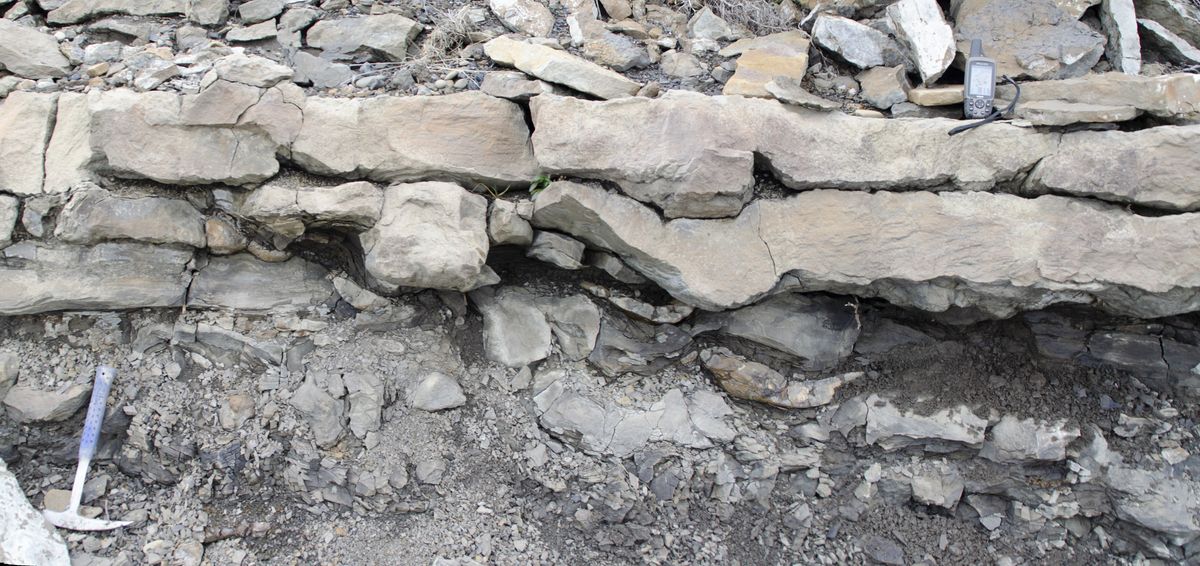
A huge hoard of dinosaur footprints‚ which could be up to 100 million years old‚ has been unearthed in northwestern Alaska. The tracks were discovered in the Coke Basin of Alaska’s Nanushuk Formation‚ which dates back roughly 94 million to 113 million years. Approximately 75 track sites were found there‚ alongside fossilized plants‚ tree stumps‚ and other evidence of dinosaurs‚ during 2015-2017 excavations.“This place was just crazy rich with dinosaur footprints‚” lead author Anthony Fiorillo said in a statement‚ including one 365-meter (1‚200-foot) stretch of ancient forest‚ with upright trees‚ leaves on the ground‚ and fossilized feces.“It was just like we were walking through the woods of millions of years ago.”Theropod tracks.Image courtesy of Fiorillo et al.‚ Geosciences 2024.So well preserved were the footprints that the team were even able to work out what types of dinosaurs they belonged to. Interestingly‚ the majority (59 percent) were created by bipedal plant-eaters‚ followed by four-legged plant-eaters at 17 percent. Birds accounted for 15 percent of the tracks and non-avian‚ mostly carnivorous‚ bipedal dinosaurs made 9 percent.Besides learning about the dinosaurs stomping about Alaska in the mid-Cretaceous‚ the findings at the Nanushuk Formation could help answer a few questions surrounding animal migration some 100 million years ago."What interested us about looking at rocks of this age is this is roughly the time that people think of as the beginning of the Bering Land Bridge – the connection between Asia and North America‚” Fiorillo explained. “We want to know who was using it‚ how they were using it and what the conditions were like."Avian theropod tracks.Image courtesy of Fiorillo et al.‚ Geosciences 2024.They could also help shed some light on the climate of the mid-Cretaceous period‚ which could be beneficial as we deal with a climate crisis in the present day.“The mid-Cretaceous was the hottest point in the Cretaceous‚” co-author Professor Paul McCarthy added. “The Nanushuk Formation gives us a snapshot of what a high-latitude ecosystem looks like on a warmer Earth.” Carbon isotope analysis of some of the wood samples revealed the region would have been much wetter during the mid-Cretaceous‚ receiving on average 178 centimeters (70 inches) of rain a year. This increased precipitation is consistent with the global pattern associated with the Cretaceous Thermal Maximum – when average global temperatures were significantly higher than they are today.“The samples we analyzed indicate it was roughly equivalent to modern-day Miami‚” said Fiorillo of the warmer and rainier Alaskan climate. “That’s pretty substantial.”The site was also around 10 to 15 degrees latitude farther north in the mid-Cretaceous than it is today.This isn’t the only dino track discovery in Alaska of late. Just last year‚ a vertical lasagne of footprints was unearthed in Denali National Park‚ which researchers dubbed a “dinosaur coliseum”.The study is published in Geosciences.

Like
Comment
Share
Science Explorer
Science Explorer
2 yrs

1755 Lisbon Earthquake: The First Modern Natural Disaster?
Favicon 
www.iflscience.com

1755 Lisbon Earthquake: The First Modern Natural Disaster?

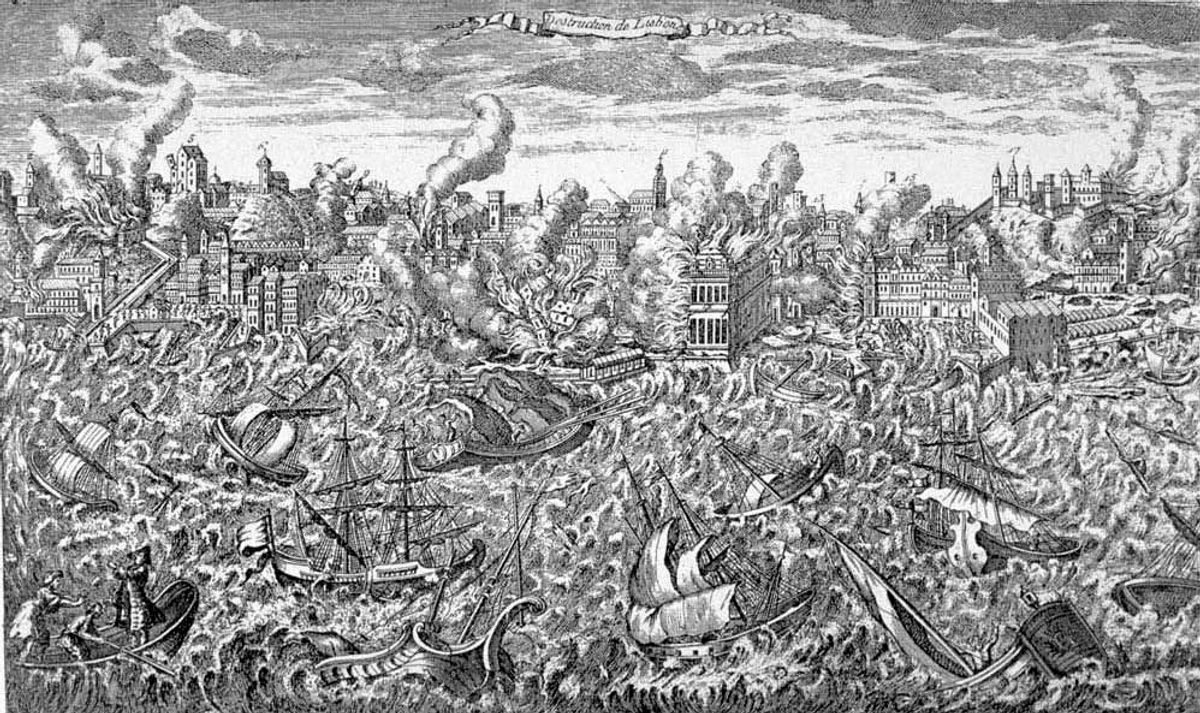
Imagine you’re in Lisbon‚ Portugal‚ on Saturday November 1‚ 1755. It’s early morning on All Saint’s Day‚ a feast day that celebrates all the saints of the Catholic Church. The day should have been one of solemn commemoration with church services and visits to cemeteries to offer flowers; a blend of older traditions with standard Christian practices. The people should have been prepared for a holy day – but the events to come were far from sacred.At around 9:40 in the morning‚ everything began to shake as three sets of tremors struck the city over a period of 3-6 minutes. People on the streets fled in various directions as panic set in. Some fled to the docks‚ while others took shelter in their homes. However‚ as it was a feast day‚ many people were already packed into the churches to attend mass. These old medieval buildings were not designed to withstand the shock‚ and so many collapsed‚ killing or seriously injuring the congregations.At the same time‚ fires broke out across the city as flames used for cooking and in lanterns or candles (especially in the churches) fell over or ignited fallen debris. As the flames rose‚ they were quickly spread to other buildings by the wind.According to an eye-witness account by Reverend Charles Davy‚ who was in the city at the time‚ the quake shrouded the city in a dust cloud that darkened the sky while the air was filled with the voices of people screaming “Misericordia meu Dios!” (Mercy‚ my God!).By the time the quakes ended‚ the city was already in chaos and many lives had been lost. But worse was to come.Around 40-45 minutes after the earthquake ended‚ those who huddled at the docks for safety would have witnessed something unsettling. The tide was receding – and people‚ so Davy claims‚ started shouting “The sea is coming in‚ we shall be all lost”.A 20-foot (6-meter) tsunami then engulfed the shore as it rushed up the Tagua River‚ which claimed hundreds of lives.The impact of what is now referred to as the Great Lisbon earthquake was devastating. As many as 50‚000 (though some estimate much lower figures) people may have been killed by the event and the ensuing tsunami. Thousands of people fled the city in the aftermath‚ especially as so many buildings and homes had been leveled. Even the royal palace was destroyed‚ along with vast quantities of historical and cultural materials in the form of art‚ literature‚ and architecture.According to modern research‚ the earthquake occurred somewhere out at sea along a fault on the tectonic plate boundaries of the mid-Atlantic‚ though the exact location is still debated. The tsunami that ravaged Lisbon also traveled westward across the Atlantic where‚ 10 hours later‚ a 13-foot (4-meter) wave struck the island of Martinique in the Caribbean Sea.The worst of the three quakes is estimated to have had a magnitude of 8.5 to 9.0‚ but of course‚ this is only a rough idea given that modern seismology did not exist at the time.Although Lisbon’s story is well known‚ it was not the only place to suffer as a consequence of the earthquake. Other areas of the southern part of the Iberian Peninsula were also hit by the quake‚ as were parts of North Africa‚ such as Morocco and Algeria. In fact‚ the devastation may have killed another 10‚000 people in Morocco.According to some researchers‚ the Great Lisbon Earthquake is now regarded as the first modern natural disaster‚ whereby contemporaries recognized its causes as lying in the natural world rather than the supernatural. It remains one of the worst natural disasters to hit Europe in the last 500 years.
Like
Comment
Share
Science Explorer
Science Explorer
2 yrs

This Year Could Be A Once In A Lifetime Opportunity To See A Nova
Favicon 
www.iflscience.com

This Year Could Be A Once In A Lifetime Opportunity To See A Nova

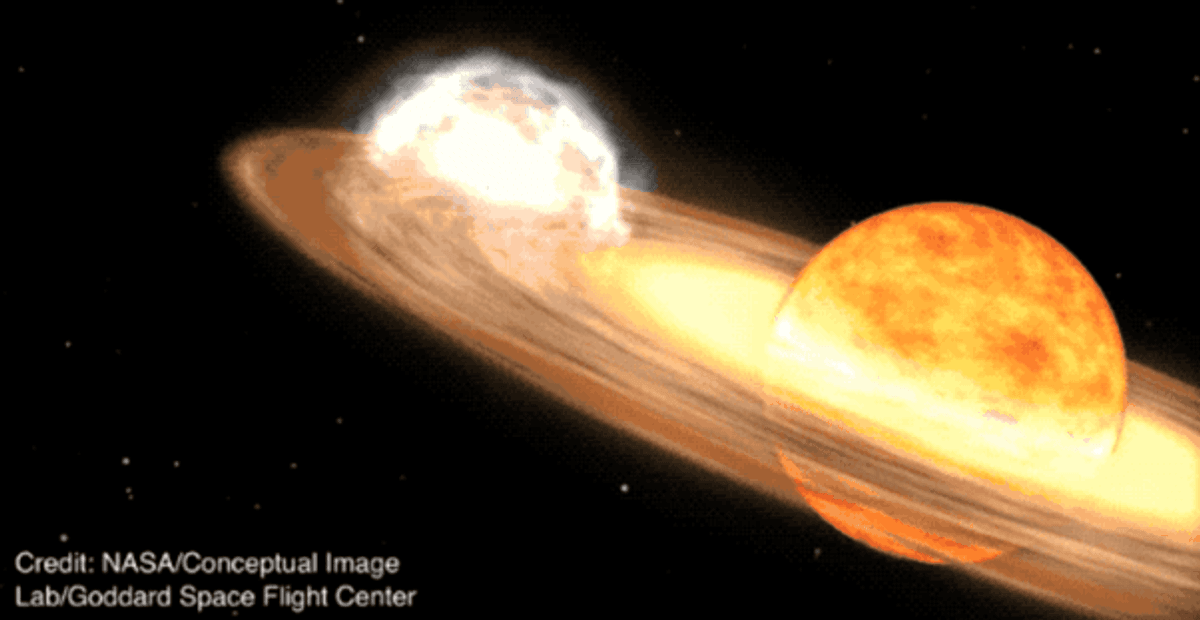
Astronomers are running regular checks on a star system that currently requires a telescope to see because they expect it will soon be bright enough to view with the naked eye. According to one prediction‚ this could happen any time from now until September‚ although there’s reason to think we might need to wait another year.One of the wonders of astronomy is the way‚ very occasionally‚ stars suddenly brighten spectacularly. When the star in question was previously too faint to see it can seem as if a new star has appeared‚ and before the invention of the telescope these became known as novae from “De nova stella”‚ Latin for new star.Two and a half thousand light-years away in the direction of the constellation Coronae Borealis‚ such a brightening is anticipated.The event will occur because what is known as T Coronae Borealis (T CrB) is not one star‚ but two. Although binaries are the most common star arrangement‚ this pair are a dangerous combination of red giant and white dwarf‚ both modestly more massive than the Sun. Over time the white dwarf’s intense gravity is pulling material off the red giant‚ creating an accretion disk a little like one circling a black hole.When some of this material gets close enough to the white dwarf it becomes heated to the point where fusion ignites‚ leading to a surge in brightness. Most such brightenings are like those of an ordinary variable star. For example‚ in 2016‚ the T CrB system roughly tripled in brightness. However‚ since it was still barely visible in binoculars‚ few people cared.In 1866 and 1946‚ on the other hand‚ the surge was something quite different‚ increasing several thousand-fold so that it was easily visible with the naked eye. It’s an event like this that astronomers are eagerly awaiting.Some white dwarfs that are pulling material off their companions do so erratically‚ brightening only once in our observations. Others‚ known as recurrent novae‚ keep to a regular schedule. You may not have heard of them‚ because most recurrent novae are so far away that even when they brighten we can’t see them unaided‚ which makes T CrB is almost unique. At its peak in 1866 and 1946 it was almost as bright as Polaris‚ exceeding all but a few hundred stars. Only one other recurrent nova is visible with the naked eye at its brightest‚ and that one barely so.The gap between T CrB’s two well-studied events was a little under 80 years. If that were to be repeated precisely‚ we’d expect the next event in late 2025. You can’t set your watch by a recurrent nova‚ unfortunately‚ so a few years either side would not be surprising.Last year however‚ Professor Bradley Schaefer of Louisiana State University noted that prior to the 1946 event T CrB underwent some notable dimming‚ and has now done something very similar. Based on the timing from dip to peak‚ Schaefer predicted we should expect a show between February and September this year. Schaefer also did some impressive sleuthing to find evidence of what appear to be previous sightings in 1787 and 1217.Although either previous report could be of something else that happened to be in the same part of the sky‚ Schaefer makes a strong case that these were most likely previous eruptions of T CrB‚ in which case we can be more confident to expect it soon.Full sequence of how T Coronae Borealis might look as it goes from the system's light being dominated by the red giant to the white dwarf's explosion.Image credit: NASA/Conceptual Image Lab/Goddard Space Flight CenterNevertheless‚ Schaefer’s predictions on timing came with a dose of uncertainty‚ which seems to have been lost in some recent reports announcing we should be spotting the next peak by September.  T CrB is at a declination of 25 north‚ which means its visible for most of the year from Europe and North America. The exception is around September-November‚ when the Sun is annoyingly close to it in the sky‚ so we’d really rather it didn’t time its explosion then. Southern hemisphere observers have a considerably narrower viewing window.When the explosion comes‚ NASA predicts T CrB should be visible to the naked eye for a few days‚ followed by a week or so where binoculars should still be sufficient. To find it‚ look between the very bright stars Vega and Arcturus‚ a little closer to the latter‚ and about seven degrees from Alphecca‚ which should be of similar or slightly greater brightness.
Like
Comment
Share
Science Explorer
Science Explorer
2 yrs

How The Avoidable Flint Water Crisis Hugely Impacted Kids’ Educational Achievement
Favicon 
www.iflscience.com

How The Avoidable Flint Water Crisis Hugely Impacted Kids’ Educational Achievement

A decade ago‚ in April 2014‚ the source of the water for the town of Flint in Michigan was switched from Lake Huron and the Detroit River to the Flint River. The move by local and state administration was made to save $5-7 million‚ but ended up exposing 100‚000 people – including up to 12‚000 children – to lead in their water. A new study has shown how this affected the educational outcome of school-age children for years to come.Lead poisoning is very dangerous‚ and children are particularly impacted by it. It can be fatal‚ and can also lead to damage to the brain‚ intellectual disabilities‚ memory and behavioral problems‚ and lower cognitive functioning when they get older.Scientists looked at how the crisis impacted school children grades 3 to 8‚ and discovered that math achievement was massively reduced and the rate of special needs classification increased – especially among boys – following the Flint Water Crisis. The reduction in math achievement was particularly prevalent among the younger students and those of low socioeconomic status – and in Flint‚ 9 in 10 students qualify as economically disadvantaged.Lead Piping Corrosion And Its Impact Authorities in Michigan did not consider that the switching of water to the Flint River might affect the lead piping in the system. Officials did not use corrosion inhibitors for the more acidic water of the river‚ which led to lead leaching from the pipes into the water supply. Residents reported the change in color‚ taste‚ and smell of their water. Despite issuing some warnings‚ officials refused to face the unfolding crisis – even going as far as showing Flint Mayor Dayne Walling drinking Flint tap water on local television to show it was "safe".Two months later‚ a research team led by pediatrician Dr Mona Hanna-Attisha showed that the number of children with elevated levels of lead had doubled after the city switched its water source. A few weeks later‚ three schools tested positive for dangerous levels of lead in the water.In this new study‚ the team used the type of pipes of children’s homes as a proxy for possible lead exposure. They found that children from homes with both safer copper pipes and more dangerous lead ones experienced those drawbacks. The crisis certainly affected children – but this finding doesn’t allow a direct connection to lead exposure.Children consume water outside the house‚ so they might be getting exposed there. There might be other lead fixtures in the system even when copper pipes are in place‚ thus still leaching lead into the water. Plus‚ there could be some psychosocial effects of the crisis that have affected the kids beyond exposure to lead alone.The Piling Costs Of The Flint Water CrisisIn November 2021‚ a $626 million settlement for the victims of the crisis was announced – although this has been subject to delays‚ with residents still not being paid into 2024 –  and there was $400 million in state and federal spending to make sure Flint had clean water and copper pipes. Those numbers do not include the health cost on the population or the social costs of how such a crisis affected the younger population of Flint and their families.“Existing estimates of the health effects of the crisis‚ ranging from 50 to 400 million dollars‚ use only the lead effects‚” the authors write. “This study ought to draw attention to the large potential costs of these water crises and motivate preventative measures‚ which by comparison are cheap‚” the authors wrote.The paper is published in the journal Science Advances.
Like
Comment
Share
Pet Life
Pet Life
2 yrs

Lonely cow who spent 17 years locked up ‘tastes freedom’ for very first time
Favicon 
animalchannel.co

Lonely cow who spent 17 years locked up ‘tastes freedom’ for very first time

In the heart of a sanctuary‚ where compassion knows no bounds‚ the story of Margaret‚ an elderly blind cow tasting freedom for the first time in 17 years‚ unfolds. This touching narrative begins with Margaret’s rescue from a life of unending servitude on a dairy farm‚ where her value was measured solely in the offspring... The post Lonely cow who spent 17 years locked up ‘tastes freedom’ for very first time appeared first on Animal Channel.
Like
Comment
Share
YubNub News
YubNub News
2 yrs

Marijuana-munching rats infiltrate police HQ in beloved party city‚ chief warns: ‘They’re all high'
Favicon 
yubnub.news

Marijuana-munching rats infiltrate police HQ in beloved party city‚ chief warns: ‘They’re all high'

Join Fox News for access to this content Plus special access to select articles and other premium content with your account - free of charge. Please enter a valid email address. By entering your email…
Like
Comment
Share
YubNub News
YubNub News
2 yrs

Trump says he’ll get revenge on Biden through ‘common sense’ conservative policies
Favicon 
yubnub.news

Trump says he’ll get revenge on Biden through ‘common sense’ conservative policies

Wed Mar 13‚ 2024 - 11:52 am EDT (LifeSiteNews) — Former U.S. President Donald Trump on Monday promised to “turn our country around” if re-elected to the White House in November‚ touting “common…
Like
Comment
Share
Showing 100533 out of 119747
  • 100529
  • 100530
  • 100531
  • 100532
  • 100533
  • 100534
  • 100535
  • 100536
  • 100537
  • 100538
  • 100539
  • 100540
  • 100541
  • 100542
  • 100543
  • 100544
  • 100545
  • 100546
  • 100547
  • 100548
Advertisement
Stop Seeing These Ads

Edit Offer

Add tier


Select an image
Delete your tier
Are you sure you want to delete this tier?

Reviews

In order to sell your content and posts, start by creating a few packages. Monetization

Pay By Wallet

Payment Alert

You are about to purchase the items, do you want to proceed?

Request a Refund