YubNub Social YubNub Social
    #music #tew #tuba #euphonium #tew2026 #militarymusic #armymusic #armyband #band #freedom #concertband #tusab #orchestra #armyorchestra #warmup
    Advanced Search
  • Login
  • Register

  • Night mode
  • © 2026 YubNub Social
    About • Directory • Contact Us • Developers • Privacy Policy • Terms of Use • shareasale • FB Webview Detected • Android • Apple iOS • Get Our App

    Select Language

  • English
Night mode toggle
Featured Content
Community
New Posts (Home) ChatBox Popular Posts Reels Game Zone Top PodCasts
Explore
Explore
© 2026 YubNub Social
  • English
About • Directory • Contact Us • Developers • Privacy Policy • Terms of Use • shareasale • FB Webview Detected • Android • Apple iOS • Get Our App
Advertisement
Stop Seeing These Ads

Discover posts

Posts

Users

Pages

Blog

Market

Events

Games

Forum

History Traveler
History Traveler
2 yrs

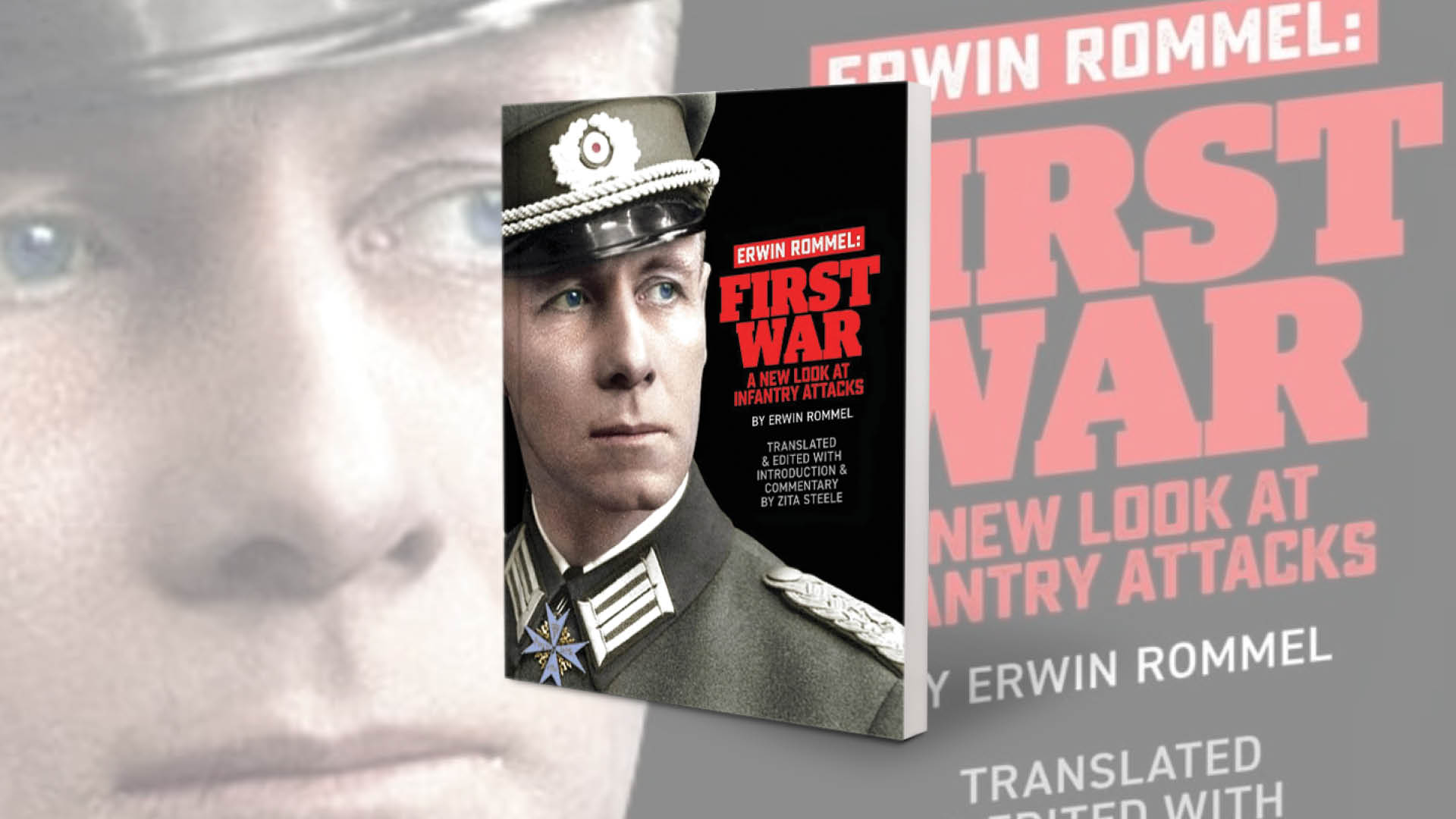
Book Review: Showing A New Side to Rommel At War
Favicon 
www.historynet.com

Book Review: Showing A New Side to Rommel At War

“Rommel‚ you magnificent bastard! I read your book!” shouts a triumphant U.S. Lt. Gen. George S. Patton‚ Jr. (as played by Best Actor Oscar winner‚ George C. Scott in 1970’s Best Picture‚ Patton) while watching the March-April 1943 Battle of El Guettar in Tunisia‚ North Africa. This “gotcha!” exclamation implies the American general gained the key to victory over the German-Italian Axis forces he mistakenly thought were then commanded by Rommel from reading Rommel’s own impressive account of his development as a daring‚ tactically-innovative troop commander fighting French‚ Romanian‚ Russian and Italian units in World War I. An avid reader of all things military history—his extensive‚ personally-annotated military history library was donated to the West Point Library—the real Patton probably did read Infanterie greift an‚ published by then-Lt. Col. Erwin Rommel in Germany in 1937‚ two years before World War II began and four years before Rommel earned his nickname‚ “The Desert Fox”. But the first English language edition—heavily abridged and edited by (understandably) anti-German wartime military censors only initially appeared in 1943. What is certain‚ however‚ is that Patton never read this excellent‚ insightful‚ and revealing new English translation—which is much truer and exceedingly more faithful to Rommel’s highly nuanced‚ original German account than the extremely poor‚ indifferently translated wartime 1943 and 1944 English editions. Comparing Zita Steele’s (pen name of award-winning writer-historian-editor‚ Zita Ballinger Fletcher) brilliant new translation of Rommel’s classic book is akin to comparing Shakespeare’s Hamlet to a fourth-grade “Dick and Jane” grammar book. Steele’s deft translation finally does justice to Rommel’s original German text. Bringing the Original Text To Life Rommel’s original text comes vividly alive through Steele’s superb German-to-English translation and his account of how he reacted to and developed his innovative small-unit tactics to consistently defeat the forces arrayed against his own unit is exceptionally well-revealed in her new book. Usually outnumbered and outgunned‚ German mountain ranger assault troops under the young Rommel‚ time and time again overcame their enemies’ superior numbers and greater firepower to achieve their often daunting objectives. Steele consistently‚ and much more correctly‚ translates “German alpine troops” as “mountain rangers‚” thereby better capturing the true nature of these‚ in effect‚ early versions of what would eventually be known as “special operations forces”. this article first appeared in military history quarterly See more stories subscribe now!   Rommel describes how and why he developed the tactics he used to prevail in each engagement‚ revealing his constant development as an innovative troop leader. This excellent new translation traces the gradual but proceeding development during combat in France and in the mountains of the Eastern Front of the young Rommel whose later operational genius would suddenly burst forth upon the Belgian‚ French and North African battlefields of World War II. This translation demonstrates the roots of Rommel’s operational genius‚ showing “how Rommel became Rommel.”  Rommel As A Person Steele also reveals Erwin Rommel as a person‚ with the all-too-human flaws he possessed. Although the enduring image of Rommel was that of a homebody “family” man‚ a devoted‚ doting husband to his wife Lucie (they married in 1916)‚ his relationship with another woman produced an illegitimate daughter‚ Gertrud‚ in 1913‚ whom he manfully acknowledged and for whom he provided financial support. Additionally‚ Steele presents a convincing argument—based on Rommel’s admitted life-long insomnia and recurrent nightmares—that he suffered from PTSD‚ post traumatic stress disorder. Given his WWI wounds‚ the nightmarish combat he endured in that war‚ and the loss of many close friends‚ that diagnosis seems completely credible. Coincidentally‚ Patton’s best biographer‚ Carlo D’Este‚ concludes—very convincingly—that Patton also suffered from PTSD. This reviewer strongly concurs with both authors’ “diagnoses.” Was Rommel A Nazi? Steele also delves into THE question involving Rommel: Was he or was he not a “Nazi?” Although it is a historical fact that Erwin Rommel was never a member of the Nazi Party‚ his promotions by Adolf Hitler always beg the question of was Rommel a “secret” Nazi‚ whether an official member of the Party or not? Steele concludes—correctly in this reviewer’s opinion—that Rommel was definitely not a Nazi. Clearly‚ Rommel personally benefited from Hitler’s support and indulgences‚ but so did other non-Nazis if they served Hitler’s interests when that service was beneficial to the Nazi dictator. Rommel was enough of a non-Nazi that he paid the ultimate price—Hitler’s toadies forced the field marshal to commit suicide on Oct. 14‚ 1944 in the wake of the July 20‚ 1944 plot to assassinate Hitler of which Rommel knew but of which he was not an integral part. Zita Steele’s new book which is based on her new‚ insightful‚ nuanced and authoritative English translation of Erwin Rommel’s classic of military history 1937 book‚ Infantry Attacks‚ is a hands’-down‚ “must-have” book in any military history enthusiast’s library. It not only makes earlier English translations of Rommel’s book obsolete‚ it’s a “classic” account of World War I combat. Above all‚ it’s an insightful preview of one of the most famous commanders of World War II—and how he learned his trade! Buy it! Read it! Enjoy it! ERwin Rommel: First War A New Look At Infantry AttacksBy Zita Steele get it on amazon This post contains affiliate links. If you buy something through our site‚ we might earn a commission.

Like
Comment
Share
History Traveler
History Traveler
2 yrs

His Father was Kidnapped By Communists. He Went To America’s Aid in the Vietnam War
Favicon 
www.historynet.com

His Father was Kidnapped By Communists. He Went To America’s Aid in the Vietnam War

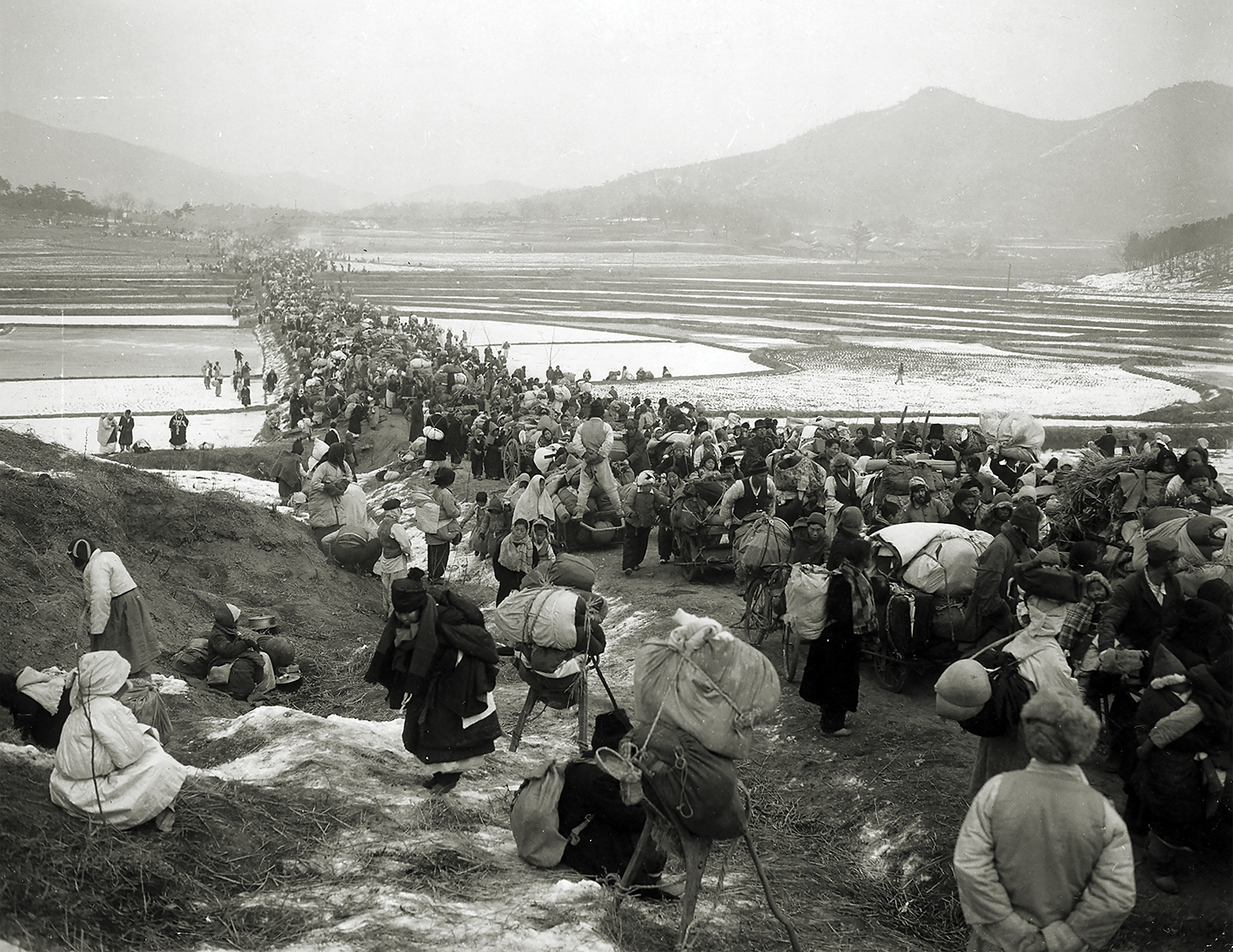
In 1964‚ the Republic of Korea (ROK) dispatched soldiers to assist the Republic of Vietnam (RVN) in its fight against communism. Recovering from its own terrifying and bloody brush with communist aggression just a decade prior‚ ROK President Park Chung-Hee offered to help his ally‚ the United States‚ prevent another Asian country from turning “Red.” That first brigade of engineers‚ doctors‚ and military police grew to two Army infantry divisions and a Marine brigade within two years‚ fighting in some of the nastiest campaigns of the war.   By the time ROK forces withdrew from Vietnam in 1973‚ over 320‚000 Korean troops had rotated through the war zone—the second largest foreign contingent in the war after the U.S. Korean troops in Vietnam left behind over 5‚000 dead‚ 11‚000 wounded‚ and a hard-earned reputation as ferocious and stubborn fighters that continues to characterize the ROK armed forces today. Although born in the crucible of the Korean War‚ the ROK Army and Marine Corps were forged by their experiences in Vietnam into a modern and effective fighting force.   South Korean Support For America It is always the case that a long trail of logistics and support personnel makes it possible for brave men at the front to do brave things. This was no less true in Vietnam and proved just as necessary for the ROK during its first-ever combat deployment overseas. Without a global base structure of its own‚ the ROK relied on allies and partners to assist with the logistical support necessary to keep two infantry divisions and a Marine brigade in the fight. Clark Field in the Philippines and Ching Chuan Kang Air Base in Taiwan provided such assistance to South Korea and were integral to the 1972-73 Vietnam experiences of now retired ROK Air Force Col. Han Jin-Hwan.   Col. Han Jin-Hwan. Han Jin-Hwan joined the ROK Air Force in 1959 and volunteered to go to Vietnam in 1972. Col. Han joined the ROK Air Force in 1959 after graduating from Chung-ang University in Seoul. Trained as a weapons controller‚ his stellar service record and exceptional proficiency with the English language led to his selection to attend the Defense Language Institute at Lackland Air Force Base in Texas from 1964-65. Then he went to Weapons Controller School at Tyndall Air Force Base and the Air-Ground Operations School at Hurlburt Field—both in Florida—through 1966. Col. Han retired from the military in 1983 after a distinguished career and remains a civic leader in his community today.   In autumn 2023‚ he agreed to sit down for an interview with Vietnam magazine—the first interview of its kind this magazine has featured—to share his experiences with readers in the United States.     Col. Han‚ where are you from in Korea? I was born and raised in Seoul‚ the capital of the Republic of Korea.   What did your parents do and what was it like growing up? My father [Han Sang-Jik] was a high-ranking official in the Ministry of Public Affairs. In 1950‚ when North Korea invaded‚ we couldn’t evacuate to the south and so were forced into hiding. A friend of my father’s talked him into coming out into the open where he was then captured by the North Koreans. That “friend” turned out to be a communist sympathizer.   My father was taken North with many other public officials and we never saw him again. I was 12 years old at the time.   I always remembered three things my father taught me: “If you start something‚ never give up until the very end‚” “Always be diligent‚” and‚ “Always be a good person.”   Han Sang-Jik. During the war‚ Col. Han’s father Han Sang-Jik was taken prisoner by communist forces. Were you drafted or did you volunteer to go to Vietnam? I volunteered‚ though not in the way you Americans did. I’d joined the ROK Air Force in 1959‚ and so in 1972 I was a major working directly for the Chief of Staff of the ROK Air Force. He asked me at the time where I wanted to serve next and I told him Vietnam.   It was hard for Air Force officers to go there at the time as there were few of our personnel in Vietnam‚ so competition for the few slots was high. Since I asked the Chief of Staff directly‚ he agreed and made the arrangements.   U.S. Marines pass through a village during the Korean War. What inspired you to volunteer? I felt strongly ever since 1950‚ when the United States came to our aid and helped our country beat back the communist North‚ that Korea owed a debt to the U.S. We were poor then with few modern weapons and little ammunition.   A lot of equipment was shared with us and many U.S. soldiers died on our behalf. President Park decided the ROK would dispatch troops to Vietnam and I wanted to do my part to help repay that national debt.   Did you receive any special training before deploying to Vietnam? Due to the nature of my mission the only training I received took place at the Ministry of National Defense in Seoul.   What unit did you serve in? I served in the Air Force Support Group‚ with its headquarters located at Tan Son Nhut Air Base near Saigon. As it turned out‚ I only stayed there for three months before being dispatched to Clark Field in the Philippines as ROK Liaison Officer.   When did you first arrive in country and what was it like? Late May 1972‚ on a ROKAF C-54.Saigon wasn’t exactly the frontier. We stayed at a small hotel. The soldiers and airmen stationed at Tan Son Nhut didn’t really feel the war like the men did out in the jungle. Our infantry were at the front and fighting‚ but would come back to Saigon for rest and recovery. My wartime duty station was a recovery site for others!   What was your mission there? I handled all coordination for ROK personnel—military and civilian—moving between Korea and Vietnam. I managed a small village full of trailers for our people to overnight in when necessary. My NCO and I also provided escort duty to the medevac flights taking our wounded and dead from Vietnam back to Korea. These missions were all-day flights for us‚ on ROKAF C-54 and C-9 aircraft specially adapted to transport litter and ambulatory patients. The medevac flights routed from Vietnam to Taiwan and then on to Daegu‚ Gimpo‚ or Gwangju Air Bases in Korea.   During the layover in Taiwan I arranged for meals—regular or soft food—and handled all financial transactions required as well as making whatever arrangements were necessary with the nursing staff. After landing in Korea and unloading both our wounded and deceased members‚ we had four hours before the return flight to Clark. Those missions took all day starting with a 3 a.m. briefing at Clark and not returning till late at night.   My duties required me to have dealings with the U.S. military hospital at Clark. That facility was very large and a lot of wounded and deceased U.S. soldiers came through there. I remember seeing so many coffins.   Did anything surprise you about Vietnam? You couldn’t tell friend from foe. You couldn’t look at someone and see whether or not they were communists. Because of this‚ the Support Group commander‚ Lt. Gen. Lee‚ instituted a curfew and so we weren’t allowed into the city at night.   An ROK Marine (right) takes two Viet Cong insurgents prisoner as they emerge from an underground hiding place. The Republic of Korea had the second largest troop presence in Vietnam after the U.S.‚ with 320‚000 troops passing through the war zone. Did you interact with local Vietnamese and‚ if so‚ what did you think about them? We used to visit “Chollum” [sic] market. At the time I bought a set of 10 ceramic plates decorated in a French style for my wife. I still have three or four. People in the market smiled at us and treated us nicely but we always wondered if they weren’t really communist at heart. That said‚ unit regulations prevented us from any significant interaction with the locals.   How hard was it to do your mission‚ and how long did it last? At times it was very difficult—especially the medevac flights—but I felt then that it was a job worth doing and I was honored to do it. I was very patriotic at that age and since I couldn’t go to the forward areas and fight‚ I really wanted to help those who’d been wounded doing so. There was a lot of job satisfaction for me there. Still‚ it was very hard for me to see our soldiers that way.   It was a one-year tour for me‚ 1972 to 1973. Three months at Tan Son Nhut and then nine more at Clark.   Do you recall any particularly memorable experiences while performing that mission? So many. Some of our wounded had been blinded or lost limbs. It was pitiful to see them so badly injured. They were all so young‚ so full of life‚ but dedicated to the mission there and ready to sacrifice. I felt…it was just very pitiful to see them that way.   Did you work with American troops in Vietnam? If so‚ what was your experience with them? I didn’t really work with Americans in Vietnam‚ but of course I worked with so many stationed at Clark Field. I thought they were generally very good soldiers and very patriotic.   How many trips did you make to Vietnam? The medevac flights took place roughly once every three weeks or so. My NCO and I took turns escorting the medevac flights and so I made three or four trips back into Vietnam. He was a medical Technical Sergeant.   Besides soldiers‚ what kind of people passed through Clark from Korea? Lots of entertainers‚ assemblymen‚ even Miss Korea‚ but not many so late in the war.   Col. Han’s wife‚ daughter‚ and son are shown in a photo taken circa 1974. Han’s daughter—born in 1973‚ halfway through his Vietnam deployment—could well be wearing baby clothes that Han bought for his family at Clark Field. Was your family concerned for your welfare? They were concerned‚ but I received combat pay while deployed to Vietnam and so that was good news. It was a lot of money for us back then and my wife saved up the excess pay to buy an apartment in Seoul. I remember my daughter was born halfway through my tour of duty‚ in 1973. Because I had access to the U.S. Air Force Base Exchange on Clark‚ I bought a bunch of baby clothes and sent them home to my wife. These things helped them and took their minds off the fact that I might be in a dangerous situation. How did you feel when the U.S. withdrew from Vietnam? It all kind of felt like a waste of time‚ and I hated the thought that the communists had won after all. It made me think that no matter how much help might be given‚ we could never change peoples’ ideology. It was the same with North Korea. The experience left me‚ if anything‚ even more anti-communist‚ more dedicated to protecting our freedoms than before.   When you returned to Korea from your deployment‚ did you face any negativity because of your experience in Vietnam? No‚ none at all. The government thanked us for our service in Vietnam and gifted us our first color television and a new refrigerator. You laugh‚ but there weren’t many color TVs in Korea in 1973‚ so we felt special. The military handed us coupons upon our return and we just went into a store and walked away with the new appliances. Our going to the war really wasn’t a political or social issue back then‚ though you must remember we had a military government at the time so protests were difficult.   Still‚ our participation in the Vietnam War didn’t become an issue at all until later‚ when left-leaning politicians used it for political gain. At the time‚ we were welcomed back home and those who returned with me just felt lucky to be alive.   Have you been back to Vietnam since the war ended? No…and don’t really have any desire to do so. That was a long time ago.   ROK Marines travel to the combat zone on a U.S. resupply transport in late 1967. South Korea sustained over 5‚000 dead and 11‚000 wounded during the Vietnam War. Col. Han escorted medevac flights transporting wounded and deceased ROK soldiers from Vietnam back to Korea. Is there anything you would like to say to Vietnam veterans in the U.S. reading this story? The U.S. veterans of that war were heroes for standing up to the spread of communism overseas. I think it was a very difficult experience for them and I appreciate it so much.   What would you like young people to know about the Vietnam War? War is a very cruel and difficult thing. My generation knew war and poverty‚ precisely because of communist aggression from North Korea and later North Vietnam. Our young must be thankful to their elders for all our sacrifices‚ but they know nothing of war or difficulty.   They can’t understand enduring poverty‚ death‚ and destruction because of the communists up north. It’s all ancient history to them—almost like a fairy tale. This is why they lean toward leftist ideas. They just don’t understand what happened the last time those ideas marched south.   Is there anything you would like to add? It seems rich countries always feel the need to help poorer countries.   And yet the ROK was quite a poor country when it decided to help South Vietnam. Yes‚ and in a strange way‚ it ended up being our nation’s pathway to material success and the prosperity you see in Korea today. Our sacrifice served our nation well. This interview appeared in the 2024 Winter issue of Vietnam magazine. this article first appeared in vietnam magazine See more stories SubscriBE NOW!  
Like
Comment
Share
History Traveler
History Traveler
2 yrs

Napoleon’s Imperial Guard Tells of His Fight For The Emperor
Favicon 
www.historynet.com

Napoleon’s Imperial Guard Tells of His Fight For The Emperor

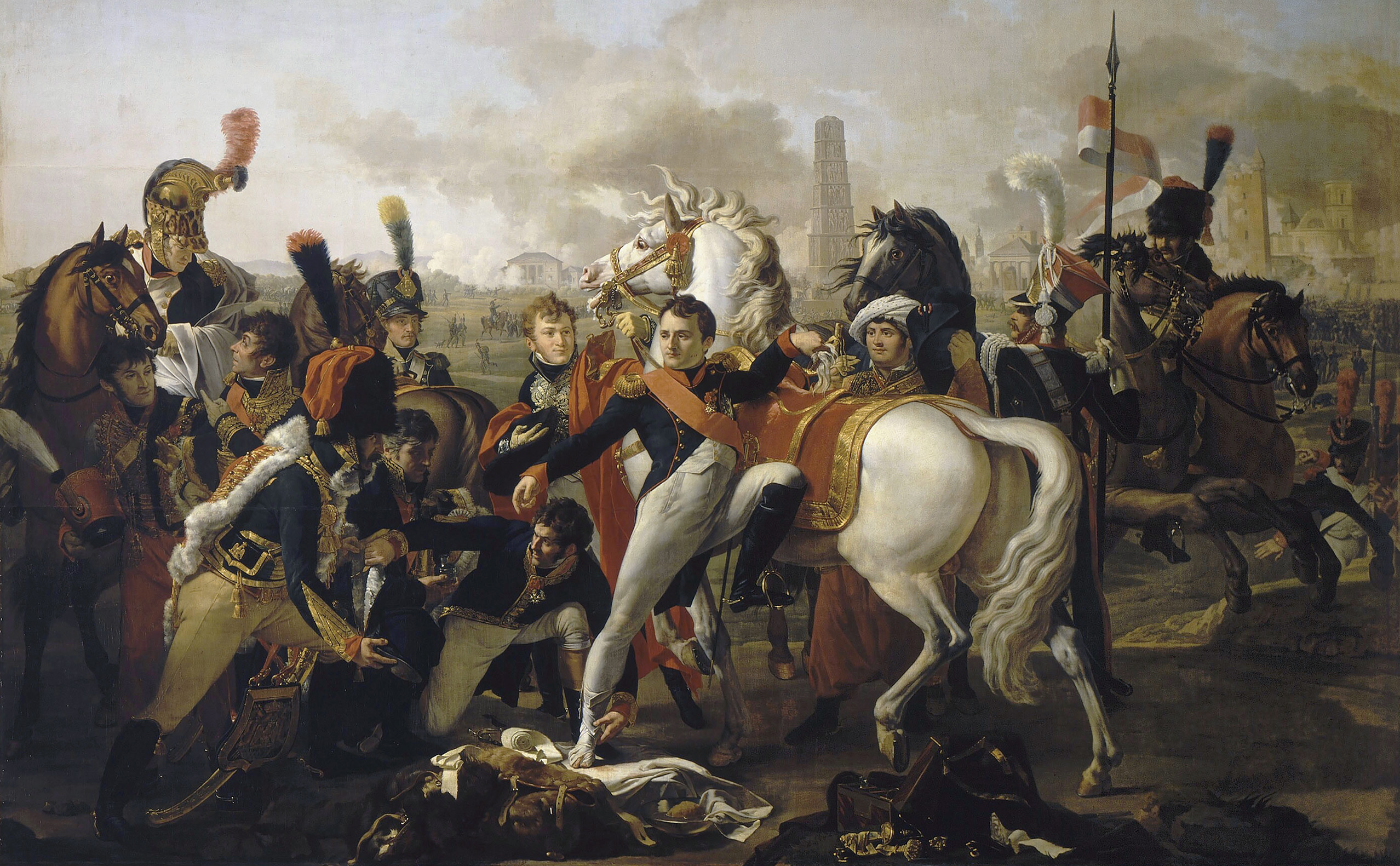
One of the finest‚ most revealing and genuinely authentic accounts of the French Army of Napoleon Bonaparte (from May 18‚ 1804‚ Emperor Napoleon I) are the memoirs written by an officer who served in it as an infantry captain through numerous campaigns. Entering the French Army as a velite (elite infantryman named after those of ancient Rome) in Napoleon’s Imperial Guard‚ Blaze gained an officer’s commission and then served mainly as a line infantry captain. He participated in the French Emperor’s series of wars waged upon France by a succession of coalitions formed by Europe’s kings and princes who were determined to stamp out the forces of change and reform unleashed by the 1789 French Revolution and spread by Napoleon’s conquests that threatened their regimes.  Blaze participated in numerous campaigns‚ from those in Poland (1807) through Napoleon’s defeat in March 1814 in the War of the Sixth Coalition leading to the Emperor’s first exile (to Elba). Particularly revealing to Napoleonic War scholars are Blaze’s recollections in his memoir of the Peninsular War (1807-1814)‚ the brutal struggle fought on the Iberian Peninsula that pitted the occupying power‚ France‚ against Spain‚ Portugal and Britain in fierce combat featuring both conventional and guerrilla warfare (the name itself of the unconventional warfare by which the latter is known originating in the Peninsular War).  A keen observer with the literary skill to capture his observations in captivating prose‚ Blaze’s descriptions of bloody combat and its inevitably grim aftereffects seem generations ahead of his time. This excerpt from Blaze’s memoir pulls no punches.  Marching With Napoleon People‚ after having read history‚ generally think that a battle is like a review at the Champ de Mars‚ and that one hundred thousand men placed opposite one hundred thousand men amuse themselves in shooting down each other at their ease to the accompaniment of cannon to produce the effect of the double-bass in an orchestra. I am going to explain to them how a battle is fought. Our army is on the march preceded by its advance guard‚ composed of light troops. The hussars go like very devils; they trot‚ they gallop‚ the enemy flees before them; but soon they stop‚ our hussars stop also. A village defended by a few hundred men is in front of us‚ it is ordered attacked by sharpshooters. At the moment that our men enter the gardens‚ a battalion of the enemy appears which makes them lose ground. We send a regiment to support them‚ the others send two; we order forward ten‚ the enemy shows us twenty; each side makes the artillery advance‚ the cannon growl‚ soon everyone takes part in the merry-making‚ fighting goes on‚ they slaughter one another; one cries for his leg‚ another for his nose‚ others cry for nothing‚ and there is food for the crows and for the makers of official reports. The Science of A General The science of a general-in-chief amounts to this: to have on a set day‚ at a given point‚ as many men as possible. Napoleon said it‚ and Napoleon was a judge. A general must know which point of the map will be most seriously disputed. It is there that the battle will be fought‚ it is consequently there that he must bring all his troops by twenty different roads. An order badly given‚ badly understood‚ often causes the failure of the finest strategic combinations‚ to-wit: [Marshal Emmanuel de] Grouchy’s corps which did not reach Waterloo [leading to Napoleon’s final defeat‚ June 18‚ 1815]. The First Consul‚ before leaving Paris‚ had marked with a pin on the map the plain of Marengo for the scene of a new triumph; the result justified his prevision. The science of a general consists also in knowing the strength of the enemy at such a point‚ his weakness at such another. To succeed in this‚ the service of spies is indispensable. Good ones must be had and they must be well paid. Napoleon gave gold by the handfuls; it was a good investment. We have had generals put to rout because they haggled on the subject of secret funds. Napoleon’s troops are shown fighting at the Nov. 30‚ 1808 battle of Somosierra. Blaze claims he could “write ten volumes simply on the truly fabulous acts of bravery of our warriors‚” reflecting that glory kept troops motivated. When one approaches a battlefield where the fighting is on‚ nothing is so discouraging for the young soldiers as the remarks of the wounded who are going back. “Do not go so fast‚ do not hurry‚” they say‚ to be killed‚ it is not necessary to run so quickly.’ “The enemy is ten times more numerous than we.”…In vain are they told to be silent; an arm in a sling‚ a gash across the face guarantee impunity‚ give the right of insolence‚ and the jeremiads continue so long as they find someone to listen to them. Pleasure and Pain One of these poor devils was passing before us with his head split open and his arm broken. Everyone was moved to pity at sight of him. “How sad!” the men said: “two wounds! what a long road to go to be bandaged!” “You are all fools‚” exclaimed the wounded man: “you’ll have more than that presently: I know my fate‚ but you do not know yours.” You should have seen the faces of the recruits on hearing these remarks‚ and specially on seeing the first bodies they came across. They went twenty feet out of their way for fear of touching them‚ soon they came nearer‚ later they marched over them without ceremony. Man becomes accustomed to everything‚ to pleasure and to pain. How often have you experienced that a great grief‚ a great joy‚ after two weeks becomes dull sensation‚ a very ordinary thing? Remember this at your next sorrow‚ and say: “This will pass as other sorrows have passed.” To prove the truth of my reasoning‚ I am going to tell you a little story. You know that after the siege of Toulon [August-December 1793]‚ the Republic caused all those who at that time were opposed to it to be shot down. After the guns had thrown down entire lines‚ a voice called out: “Let all those who are not dead rise! The Republic pardons them!” A few wretched wounded‚ others whom the grape-shot had spared‚ deluded by this promise‚ raised their heads: at that moment‚ a squadron of butchers (history says a squadron of dragoons; history must be mistaken) rushes on them‚ sword in hand‚ completing what the guns had commenced; soon the sun set over this atrocious slaughter.  On a beautiful night‚ one of these wretches awakes in the middle of this ocean of bodies; he is wounded in ten places‚ in the head‚ in the legs‚ in the arms‚ in the chest‚ everywhere. He rolls over‚ he drags himself along. “Who goes there?” cries the sentry…”Finish me‚ you will do me a service; you will perform an act of humanity.’ “I am not an executioner‚ I tell you.” “Finish me‚ I beg of you‚ all my members are broken‚ my head is split open‚ it is impossible for me to recover; you will spare me horrible suffering‚ finish me.” Fear and Honor The sentry drew near‚ verified the condition of the wounded man; believing in the impossibility of a cure‚ compassion determined him; had he fired his gun‚ the post would have taken up arms‚ he thought it best to use his bayonet‚ which he thrust into the body of the wretched man. Would you believe it? This man did not die. The next day‚ while burying all these corpses‚ a grave-digger saw that he was still alive; he carried him to his home‚ nursed him‚ and life returned. All the wounds were cured. That man was M. de Launoy‚ a naval officer under Louis XVI; he might well have spared himself that last bayonet thrust… It must not be believed that in the army everyone is brave; I have seen some who could never become accustomed to the sound of the cannon. At Wagram [1809]‚ a soldier of my company had a violent attack of epilepsy which was ended by the whizzing of the first shot. An officer of my regiment‚ with thirty years of service‚ had never been on the fighting line; the sight of a sword made him pale‚ and he confessed it frankly. “I should very much like to go on the battlefield‚ but it is not possible‚ I should fall back at the first gunshot‚ and it would be a very bad example.” He was usually left behind at the garrison where‚ however‚ he made himself very useful by drilling the recruits.   If everyone was not brave in the army‚ there were some to be found whose courage was not to be compared to anything; and this in all ranks‚ in all degrees‚ from King [Joachim‚ King of Naples‚ French Marshal] Murat to the common fusilier‚ from General [Jean-Marie] Dorsenne to the drummer. I could write ten volumes simply on the truly fabulous acts of bravery of our warriors. I shall mention but one which the entire third army corps witnessed in Spain. General [later Marshal‚ Louis-Gabriel] Suchet had just taken Mount Olivo [May 1811] in spite of the predictions of the Spaniards. “The trenches of Mount Olivo‚” they said‚ “will bury all the troops of Suchet‚ and the trenches of Tarragona all the troops of Bonaparte.” He meets a wounded soldier whom his comrades were carrying to the ambulance: “Victory‚ victory‚ Mount Olivo is taken!” “Are you gravely wounded?” “No‚ general‚ but unfortunately wounded seriously enough to be obliged to leave the ranks.”                   “Well answered‚ friend. What do you wish as a reward for your services?” “To be allowed to lead the attack when you take Tarragona.…You promise me this?”   “Yes.” On the 30th of June‚ 1811‚ that is to say one month after‚ the general-in-chief was about to storm the place. The troops were forming their columns of attack when a footsoldier in dress uniform‚ as resplendent as on a parade day‚ approached Suchet. “I came to remind you of your promise: I wish to lead the attack.” “Ah! it’s you‚ my brave fellow‚ very good; but soldiers of your kind are too rare that I should be wasteful of their blood. Remain in your company; by imparting your noble courage to all‚ you will render greater service than by having yourself killed alone.”… “General‚ I have your word‚ and I wish to be the first to attack.” “So much the worse‚ my brave fellow‚ so much the worse for us‚ do as you please.” The columns start and my foot soldier passes them by twenty paces; he rushes forward in the midst of the grape shot‚ he is the first to climb the breach‚ and there‚ falls riddled with bullets. Picked up by order of Suchet‚ this brave soldier was carried to the hospital: a breath of life permitted him to see on that same day the entire corps of officers‚ with the general at their head‚ who came to visit him. Suchet took off his cross to decorate the breast of the footsoldier who died admired by the whole army. That hero’s name was Bianchelli. [Politician‚ diplomat‚ historian François-René] Chateaubriand has said: “Glory must be something very real‚ since it causes the heart of the one who is only its witness to beat.” this article first appeared in military history quarterly See more stories subscribe now!  
Like
Comment
Share
History Traveler
History Traveler
2 yrs

First Medal of Honor Recipient from Vietnam War Dies at 89
Favicon 
www.historynet.com

First Medal of Honor Recipient from Vietnam War Dies at 89

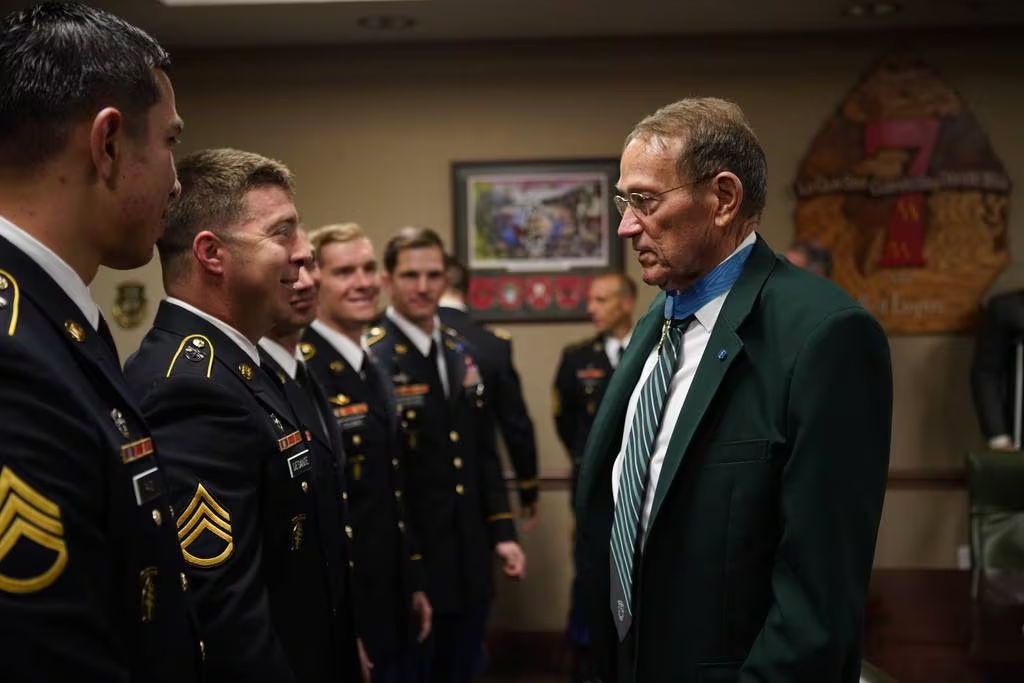
Roger Donlon‚ the first American to receive a Medal of Honor for heroism during the Vietnam War‚ died Thursday in Leavenworth‚ Kansas‚ according to the Congressional Medal of Honor Society. He was 89. Donlon’s bravery in Vietnam during the summer of 1964 earned him the decoration‚ which President Lyndon B. Johnson presented him at the White House in December of that year. The Special Forces soldier’s passing followed a 12-year battle with Parkinson’s disease‚ according to an obituary shared online. Donlon was just five days short of his 90th birthday. President Lyndon B. Johnson presented Roger Donlon with the Medal of Honor in the East Room of the White House on Dec. 5‚ 1964‚ for his actions in Vietnam on July 6‚ 1964. “In my situation and every other situation that leads to the Medal of Honor‚ there is absolutely no input from the recipient. It’s all done by observers‚” Donlon previously shared‚ according to the announcement of his passing. “Heroism is a product of what other people see.” On July 6‚ 1964‚ then-Capt. Donlon was serving as the commanding officer of the Army Special Forces Detachment A-726 at Camp Nam Dong‚ Vietnam‚ about 15 miles from the border with Laos‚ when a Viet Cong battalion launched an early morning ambush that led to his distinguishing actions. In a five-hour fight‚ Donlon directed defense operations against the assault‚ exposing himself to mortar shells‚ grenades and heavy gunfire‚ according to his citation. He endured multiple injuries while leading the valiant response‚ administering first aid and encouragement to his fellow troops‚ which ended with the successful defense of the camp. Born in Saugerties‚ New York‚ Donlon enlisted in the Air Force and served from December 1953 to July 1955‚ according to the Congressional Medal of Honor Society. He then attended the U.S. Military Academy at West Point‚ but left in 1957 to enlist in the Army the next year. Donlon commissioned as a second lieutenant after graduating from Officer Candidate School at then-Fort Benning‚ Georgia‚ and later went on to earn the “Green Beret” by completing the U.S. Army Special Warfare School at then-Fort Bragg‚ North Carolina. Rest in peace‚ Soldier.We are saddened to hear of the passing of retired Army Col. Roger H. C. Donlon. He was the first recipient of the Medal of Honor in the Vietnam War. We send our deepest condolences to his family‚ friends‚ and the Special Forces community. pic.twitter.com/xLqCTUtBMG— U.S. Army (@USArmy) January 25‚ 2024 The Special Forces officer retired at the rank of colonel in 1988. He donated his Medal of Honor to the 7th Special Forces Group (Airborne) during a ceremony in 2018. There are currently 64 Medal of Honor Recipients alive today‚ according to the Congressional Medal of Honor Society. Originally published by Military Times‚ our sister publication.
Like
Comment
Share
Hot Air Feed
Hot Air Feed
2 yrs

The Detention of Evan Gershkovich is Extended by a Russian Court... Again
Favicon 
hotair.com

The Detention of Evan Gershkovich is Extended by a Russian Court... Again

The Detention of Evan Gershkovich is Extended by a Russian Court... Again
Like
Comment
Share
Hot Air Feed
Hot Air Feed
2 yrs

In Pathetic POTATUS Pander‚ WH Pulls LNG Football Just Before Winning Kick
Favicon 
hotair.com

In Pathetic POTATUS Pander‚ WH Pulls LNG Football Just Before Winning Kick

In Pathetic POTATUS Pander‚ WH Pulls LNG Football Just Before Winning Kick
Like
Comment
Share
NewsBusters Feed
NewsBusters Feed
2 yrs

Lia Thomas Is Fighting the Rules So HE Can Compete Against Women
Favicon 
www.newsbusters.org

Lia Thomas Is Fighting the Rules So HE Can Compete Against Women

Despite basically the whole world telling transgender swimmer Lia Thomas that he has no place in women’s sports‚ he’s been fighting a legal battle for months in an attempt to change the rules for men who believe they're women‚ with goals set on the 2024 Paris Olympics‚ The Telegraph reported. Seriously‚ when is this dude going to stop? For those who don’t know‚ Lia - whose birth name is William - Thomas swam and “won” a Division 1 title at the National Collegiate Athletic Association (NCAA) swim meet in March of 2022‚ where he competed against biological women. Later that year‚ World Aquatics decided that due to the fact that Thomas had a clear physical advantage over actual women (you know‚ since “she’s” a dude) that he was barred from competing as a woman. World Aquatics bans trans women from competing as women if they’ve undergone “any part of male puberty” and now has an “open” category for swimmers like Thomas who like to live in a delusional sense of identity. Now‚ nearly two years later‚ Thomas is still trying to push the idea that he’s just like every other girl and should get to compete as such. He hired Tyr‚ a Canadian law firm‚ to get the Court of Arbitration for Sports in Switzerland to overturn the World Aquatics rules. The Telegraph noted that this specific law group tends to keep cases “heard behind closed doors” and “not publicized.” Thomas’ lawyer‚ Carlos Sayao‚ insisted that the World Aquatics’ rules are “discriminatory” and cause “profound harm to trans women.”  “Lia has now had the door closed to her in terms of her future ability to practice her sport and compete at the highest level‚” Sayao added. “She’s bringing the case for herself and other trans women to ensure that any rules for trans women’s participation in sport are fair‚ proportionate and grounded in human rights and in science.” Related: Riley Gaines Launches Center to Protect Women’s Sports He couldn’t be further from the truth.  Trans women‚ aka men‚ have obvious physical advantages over biological women. Hence why Thomas was ranked 65th when he was competing as a man‚ but then "won" a championship title shortly after switching to compete against women.  Sharron Davies‚ a former Olympic swimmer‚ agreed. She told The Telegraph that Thomas had a “ridiculous‚ massive advantage” over real women and said‚ “The scientific evidence does not‚ in any shape or form‚ show us that it’s fair for Lia Thomas to compete against females.” I doubt this case will reach a verdict before the summer olympics but maybe by the 2028 games in Los Angeles. Hopefully by then the world‚ and Thomas‚ will recognize that he has absolutely no place competing in women’s sports and he never will. Follow us on Twitter/X: Woke of The Weak: Drag Queen Mocks Jesus's Birth &; More Leftist Degeneracy How disturbed do you have to be as a person where you see this filth and go‚ "Yeah‚ this looks normal to me." pic.twitter.com/nzTbj6HMsn — MRCTV (@mrctv) January 23‚ 2024
Like
Comment
Share
NewsBusters Feed
NewsBusters Feed
2 yrs

PBS: Press Must Tell Voters Biden ‘Brings Huge Amount of Wisdom’ to His Job
Favicon 
www.newsbusters.org

PBS: Press Must Tell Voters Biden ‘Brings Huge Amount of Wisdom’ to His Job

Amanpour &; Co. host Christiane Amanpour examined the possible 2024 Biden-Trump presidential election rematch with New York Times’ London bureau chief Mark Landler‚ who reveres the left-wing BBC‚ and Emily Maitlis‚ a former BBC anchor. Takeaways from their Wednesday appearance on the PBS show were that the media should highlight Biden’s essential competence and Trump’s election denial‚ while host Amanpour couldn't quite believe that Biden's age was worthy of coverage. After opening with talk about Israel and Amanpour's claim of being told by Israeli reporters “that the Israeli people are not seeing the extent of the human suffering in Gaza‚” they turned to the United States and actually brought up a concern about Joe Biden’s advanced age and lack of vitality as the election approaches. Amanpour was angling to dismiss the matter‚ but her guests reluctantly conceded it was a genuine concern among voters. Amanpour: I want to bring it back to the U.S. election. The idea of Biden's age‚ is that a media construct? Is that a real thing? Is that something that because we have been hammering it every single time‚ there's a story? After Maitlis reluctantly admitted Democrats were worried about Biden’s age‚ Amanpour tried the same tack with Landler of the Times. Amanpour: I keep trying to figure this out‚ Mark‚ because I've also listened to podcasts and other things‚ which actually show that a lot of this idea is being ramped up on TikTok and stuff. I mean‚ generations of people who've never seen FDR‚ I don't know‚ in a wheelchair or whatever it is‚ are being told that this is a real problem. So‚ I'm just -- how do you see it? Amanpour surely knows the media cooperated with Frankin Delano Roosevelt by not publishing photographs of Roosevelt in his wheelchair (Roosevelt had been stricken by a paralytic disease in his late 30s and as president had to be lifted in and out of cars). And FDR’s inability to walk didn’t affect his mental acuity -- age can. Landler: Well‚ look‚ we live‚ whether we like it or not‚ in a visual age‚ in a television age‚ in a TikTok age. And so‚ what Emily says is right. It doesn't much matter if Joe Biden's age impedes his ability to do his job well‚ which I think it probably doesn't. He's surrounded by terrific advisers. He's forgotten more about American foreign policy than most people ever learned. He brings a huge amount of wisdom. And by all accounts‚ and talking to my colleagues‚ I don't have the sense that he is not on his game on making important decisions. And if you look at his record‚ it actually stands up well to the last few presidents‚ some of whom were decades younger than him at the time…. Now‚ where I think we can play a role‚ as the press‚ and particularly people who cover President Biden day-to-day‚ is to write about this intelligently‚ unscrupulously [sic]‚ and thoughtfully. In other words‚ if there's evidence that Joe Biden's age actually is a performance issue for him‚ then we should point that out‚ right? And there have been a couple of places where he's made gaps. He's had to be cleaned up the next day by aides on some important-enough issues. But by the same token‚ there's also a lot of evidence that he's conducted the business of the president very competently. So‚ our job is to do that…. Meanwhile‚ Maitlis insisted all Trump coverage be filtered through the “election denier” prism. The British journalist offered some unsolicited election coverage advice to American reporters. Maitlis:….So‚ I think all the reporting that we do should come actually from that prism‚ that he is an election denier‚ that he has managed to convince people of the lies that he's been telling for the last three-and-a-half years‚ that he's using his 91 indictments as a fundraising tool. And I don't think that any of us can be covering your election‚ the American elections without actually starting from that place. If that is not a sort of a black cloud across your forehead of everything that you're saying on air‚ of everything that you're writing and thinking about‚ then we're not doing our jobs properly. Which is exactly what they’re doing already‚ no transatlantic help required. A transcript is available‚ click “Expand.” PBS Amanpour &; Co. 1/25/23 1:59:50 p.m. (ET) AMANPOUR: I want to bring it back to the U.S. election. The idea of Biden's age‚ is that a media construct? Is that a real thing? Is that something that because we have been hammering it every single time‚ there's a story? MAITLIS: Yes‚ I was in Georgia just before Christmas‚ and we were talking to some young guys who were college educated‚ OK? They had jobs. One was a pilot. And they were all talking about their support for Donald Trump. And the word they used was‚ he's a strong leader. If you're going to go to war‚ you want a strong man behind you. And it was really interesting‚ because if you look at how Trump has handled the campaigning‚ you know‚ the campaign stump speeches so far‚ what he does is he carries on talking about Biden's weakness‚ or sort of frivolity and his own strength. Now‚ the idea that there's only four years or so between these two guys‚ right‚ is something that we should all‚ again‚ keep in the front of our minds. Biden is always softly spoken. I mean‚ I do think he has a slight problem with his voice. He doesn't actually project enough because of the stuff that he sort of mumbles a lot. There's quite a lot of words that are swallowed and Trump performs‚ right? He goes out‚ he's bombastic‚ he does this‚ but that is the message that he wants to carry. I mean‚ quite frankly‚ if the Republicans were really on to something‚ they would put Nikki Haley in that position. Because that is the way you contrast‚ you know‚ Biden's age and her age. You know‚ her sort of nimbleness and his‚ because Donald Trump is not a young man‚ whichever way you look at it. Has it been overplayed by the media? I started thinking that at the beginning‚ but I've talked to a lot of Democrats around Biden who are very worried‚ whether it's about his age or whether it's about the -- AMANPOUR: They're worried‚ for sure. MAITLIS: -- perception of his age‚ they are worried. AMANPOUR: I mean‚ I keep trying to figure this out‚ Mark‚ because I've also listened to podcasts and other things‚ which actually show that a lot of this idea is being ramped up on TikTok and stuff. I mean‚ generations of people who've never seen FDR‚ I don't know‚ in a wheelchair or whatever it is‚ are being told that this is a real problem. So‚ I'm just -- how do you see it? LANDLER: Well‚ look‚ we live‚ whether we like it or not‚ in a visual age‚ in a television age‚ in a TikTok age. And so‚ what Emily says is right. It doesn't much matter if Joe Biden's age impedes his ability to do his job well‚ which I think it probably doesn't. He's surrounded by terrific advisers. He's forgotten more about American foreign policy than most people ever learned. He brings a huge amount of wisdom. And by all accounts‚ and talking to my colleagues‚ I don't have the sense that he is not on his game on making important decisions. And if you look at his record‚ it actually stands up well to the last few presidents‚ some of whom were decades younger than him at the time. None of that actually matters as a political question‚ because if people think‚ because he's old‚ he's weak‚ and Donald Trump is stronger‚ then that's the ballgame. So‚ I sort of feel like that debate -- you can have that debate‚ but it doesn't matter what I think‚ or what people think about his competence‚ it matters what the voters think. So‚ if they think he's too old -- now‚ where I think we can play a role‚ as the press‚ and particularly people who cover President Biden day-to-day is to write about this intelligently‚ unscrupulously and thoughtfully. In other words‚ if there's evidence that Joe Biden's age actually is a performance issue for him‚ then we should point that out‚ right? And there have been a couple of places where he's made gaps. He's had to be cleaned up the next day by aides on some important enough issues. But by the same token‚ there's also a lot of evidence that he's conducted the business of the president very competently. So‚ our job is to do that. There are some things that are simply going to be up to the voters to decide and -- MAITLIS: Yes‚ I'd also say if you look at who Trump idolizes‚ it's the strong men of Europe‚ it's Erdogan in Turkey‚ it's Orban in Hungary‚ it's Putin in Russia. And when he says strong man‚ or when he thinks of these strong men‚ it's not a physical thing‚ it's about authoritarianism‚ right? AMANPOUR: And I wonder whether the voters who say they want a strong man know that‚ because this is about democracy and authoritarianism. MAITLIS: But it becomes very easy to ally two things‚ doesn't it? To be talking about authoritarianism‚ and then to sort of point to a man who's slightly stooped and go‚ you won't get strength from him. The number here that people are actually looking at‚ that is leaving people jaw dropped is the 66 percent of Iowan voters who believe Donald Trump's lie‚ that they have been convinced that Donald Trump is the right president of this time and that his questioning of the legitimacy of Joe Biden is something that he's taken to Iowa. So‚ I think all the reporting that we do should come actually from that prism‚ that he is an election denier‚ that he has managed to convince people of the lies that he's been telling for the last three and a half years‚ that he's using his 91 indictments as a fundraising tool. And I don't think that any of us can be covering your election‚ the American elections without actually starting from that place. If that is not a sort of a black cloud across your thread of everything that you're saying on air‚ of everything that you're writing and thinking about‚ then we're not doing our jobs properly.
Like
Comment
Share
NewsBusters Feed
NewsBusters Feed
2 yrs

CNN Falsely Implies SCOTUS Banned Texas From Installing Razor Wire
Favicon 
www.newsbusters.org

CNN Falsely Implies SCOTUS Banned Texas From Installing Razor Wire

CNN’s Dana Bash solemnly lamented on Friday’s Inside Politics that Texas Gov. Greg Abbott is in defiance of a recent Supreme Court ruling regarding razor wire at the border there was just one problem: the Court never said the wire was illegal. What the Court did was remove an injunction that prohibited federal authorities from removing the wire while the underlying case is litigated. Theoretically‚ the feds could remove the wire‚ do whatever it is they need to do‚ leave‚ and Texas could put the wire right back‚ but Bash warned‚ “Texas is ignoring the highest court in the land. This week the Supreme Court ruled that the Biden Administration has the legal authority to remove razor wire along the Southern border‚ but the Lone Star State governor doesn't care and is blocking federal agents from accessing it.”     Bash added‚ “CNN even saw more wire after being -- after the ruling came down. Rosa Flores was there‚ was part of the reporting team talking about this‚ looking at this extensively. Rosa‚ tell our viewers exactly what you saw.” The question of access was not addressed by the Court‚ only the wire. The Biden Administration has sent some strongly worded letters to Texas officials on the need for access to Shelby Park‚ but has not yet formally sued.  Nevertheless‚ Flores concurred with Bash‚ “Well‚ what we're seeing is that the state of Texas is in defiance. They are deploying more razor wire and more anti-climbing fence‚ but‚ Dana‚ really it is migrants who are caught in the migrant of this border battle between Texas and federal authorities.” Later‚ Bash was discussing the matter with her panel and after playing a series of clips of Republican governors supporting Abbott again solemnly declared‚ “So this is the U.S. Supreme Court‚ including one of the three justices who Donald Trump appointed‚ Amy Coney Barrett‚ siding with a majority that said‚ you can't do this. All of these Republican governors starting with Greg Abbott are saying‚ well‚ we're going to do it anyway.” Legal and national security analyst Carrier Cordero agreed‚ “It creates this incredible difficult situation in real life‚ but as a matter of the law what is interesting here‚ Dana‚ there's over 150 years worth of law that exists that really establishes the primacy of the federal government when it comes to border -- it's authorities and immigration authorities. This is actually an area of law that has been pretty well settled for a really long time that the federal government has the stronger authorities here.” CNN was making it seem as if the Court’s ruling was the end of the controversy‚ but in reality it was just the beginning. CNN should be more accurate in its reporting.  Here is a transcript for the January 26 show: CNN Inside Politics with Dana Bash 1/26/2024 12:42 PM ET DANA BASH: Texas is ignoring the highest court in the land. This week the Supreme Court ruled that the Biden Administration has the legal authority to remove razor wire along the Southern border‚ but the Lone Star State governor doesn't care and is blocking federal agents from accessing it. CNN even saw more wire after being -- after the ruling came down. Rosa Flores was there‚ was part of the reporting team talking about this‚ looking at this extensively. Rosa‚ tell our viewers exactly what you saw.  ROSA FLORES: Well‚ what we're seeing is that the state of Texas is in defiance. They are deploying more razor wire and more anti-climbing fence‚ but‚ Dana‚ really it is migrants who are caught in the migrant of this border battle between Texas and federal authorities.    … BASH: So this is the U.S. Supreme Court‚ including one of the three justices who Donald Trump appointed‚ Amy Coney Barrett‚ siding with a majority that said‚ you can't do this. All of these Republican governors starting with Greg Abbott are saying‚ well‚ we're going to do it anyway.  CARRIE CORDERO: It creates this incredible difficult situation in real life‚ but as a matter of the law what is interesting here‚ Dana‚ there's over 150 years worth of law that exists that really establishes the primacy of the federal government when it comes to border -- it's authorities and immigration authorities. This is actually an area of law that has been pretty well settled for a really long time that the federal government has the stronger authorities here. 
Like
Comment
Share
NewsBusters Feed
NewsBusters Feed
2 yrs

The View Admits D.A. Fani Willis Slept With Prosecutor Targeting Trump
Favicon 
www.newsbusters.org

The View Admits D.A. Fani Willis Slept With Prosecutor Targeting Trump

On Friday‚ the liberal ladies of ABC’s The View were “pissed off” that Georgia District Attorney Fani Willis may have jeopardized the case against former President Trump over allegations she had an unethical sexual relationship with the special counsel she assigned to prosecute the case. And despite doing her best to downplay Willis’s refusal to deny the allegations and defend her hiring practices‚ even staunchly racist and anti-Semitic co-host Sunny Hostin had to admit the allegations could be true (at least under her breath). “I don't think the allegations are going to compromise the case against him‚” Hostin proclaimed near the top of the segment. She boasted about the resolve the prosecutor’s office had to pursue their case against Trump: “So‚ even if she resigns and even if he resigns there’s just going to be two perhaps even better prosecutors to take their place. So‚ that's not the issue.” But when asked why Trump was calling for her resignation‚ Hostin accidentally dropped the skeptical language and admitted Willis had slept with Special Counsel Nathan Wade‚ before catching herself and trying to walk it back in a panic while waving her hand in front of her to deny the claims (pictured above): HOSTIN: Well‚ I think the issue is‚ there is an appearance of inappropriate if you are sleeping as the district attorney – if you are‚ allegedly! BEHAR: She doesn't admit to that. HOSTIN: She’s not admitting to that! If you are sleeping with your special counsel that you appointed to a job and that person makes money doing that. Right? So‚ that's a problem. Hostin bizarrely went on to help distance Willis by arguing that she had asked two more qualified lawyers (who she personally knew) to prosecute the case before settling on Wade‚ who “doesn't have that much experience prosecuting RICO cases and prosecuting this kind of case.”     Co-host and frequent Hostin-fact-checker Sara Haines immediately found the flaw in Hostin’s argument in terms of her next-man-up boasting vs Willis settling on Wade. “If prosecutors are like roaches‚ you can't end at three asks! So‚ if you’re saying they asked two really qualified and one who's never taken on this level and it might be the career of her lifetime‚ keep asking because there's more there‚” she said. “There may be a reason why‚” Hostin mumbled under her breath‚ possibly hinting at the allegations being true. The most “pissed off” by Willis’s alleged actions were the Never Trump Republicans Ana Navarro and Alyssa Farah Griffin‚ who wanted to ignore using the skeptical language and talk about it as fact; much to Hostin’s chagrin (Click “expand”): NAVARRO: Look‚ if you are sleeping with a prosecutor and paying him $650‚000. HOSTIN: If‚ if‚ allegedly. NAVARRO: If? Okay‚ if. It doesn't matter if you're black‚ white‚ green‚ purple‚ brown‚ it is wrong – HOSTIN: Yes. NAVARRO: -- and it is unethical and I think it's against the rules of professional regulation. Farah Griffin was “pissed off about this” because one of her “best friends‚ Cassidy Hutchinson spent months in Atlanta protected by U.S. Marshals to testify for this case. And now it may all fall apart because these allegations of impropriety.” “I'm very pissed off too‚” Navarro announced‚ “because when you are a woman of color in such a high-profile position‚ you know that the scrutiny that is going to befall you is greater than on anybody else. And she needed to have kept her house clean.” Hostin repeatedly tried to defend Willis‚ calling them just “allegations” and read a “legal note” about Willis neither confirming nor denying them‚ along with Wade not saying anything. Haines argued that if she really was innocent‚ then Willis would be out there denying it. Moderator Joy Behar concluded the segment by whining about Trump’s legal team exposing Willis’s alleged misconduct. “You know‚ this is the Trump playbook: postpone everything. Postpone the border. Postpone the economy. Postpone everything. And postpone this case‚” she exclaimed. The transcript is below. Click "expand" to read: ABC’s The View January 26‚ 2024 11:17:48 a.m. Eastern (…) JOY BEHAR: So‚ could these allegations compromise the case against him? Is stepping down the best move here? SUNNY HOSTIN: I don't think the allegations are going to compromise the case against him. BEHAR: Against Trump. HOSTIN: He is clearly a criminal in my view. And prosecutors – We used to say prosecutors were like roaches. Like‚ you get rid of two and like ten more show up. So‚ even if she resigns and even if he resigns there’s just going to be two perhaps even better prosecutors to take their place. So‚ that's not the issue. BEHAR: So‚ why does Trump keep saying she should resign? HOSTIN: Well‚ I think the issue is‚ there is an appearance of inappropriate if you are sleeping as the district attorney – if you are‚ allegedly. BEHAR: She doesn't admit to that. HOSTIN: She’s not admitting to that. If you are sleeping with your special counsel that you appointed to a job and that person makes money doing that. Right? So‚ that's a problem. But the other thing we need to remember is this is probably one of the strongest cases against Trump‚ and she asked two other much more qualified lawyers to take it on and they did not want to. I would not want to take this job on. You know what it's like to cross Trump. You get death threats. Your family gets death threats. What lawyer wants to do that? She went – actually to a lawyer that I know who is a former federal prosecutor‚ his name is Gabe -- what's his last name? [Checks her notes] Gabe Banks. He’s turned it down. She went to Roy Barnes who was a former governor of Georgia‚ one of the state's premier lawyers‚ who I know. He turned it down. And then she settled on this other guy. He doesn't have that much experience prosecuting RICO cases and prosecuting this kind of case. This is the best she got. ANA NAVARRO: Look‚ if you are sleeping with a prosecutor and paying him $650‚000. HOSTIN: If‚ if‚ allegedly. NAVARRO: If? Okay‚ if. It doesn't matter if you're black‚ white‚ green‚ purple‚ brown‚ it is wrong – HOSTIN: Yes. NAVARRO: -- and it is unethical and I think it's against the rules of professional regulation. HOSTIN: It is. NAVARRO: -- of the legal – And it does affect the case. There's many cases that have fallen apart because an attorney is sleeping with a client or people in the prosecutor's office are having phone sex with a witness. I mean‚ I'm not making it up. Go look at Griselda. You know‚ the one that’s on Netflix. She like killed everybody and the second case against her fell apart because two employees at the prosecutor's office were having phone sex with a witness. HOSTIN: With a witness‚ yes. But this is different. ALYSSA FARAH GRIFFIN: At a minimum this is going to delay the case. HOSTIN: That’s true. FARAH GRIFFIN: And it very likely will until after election day. The Trump folks and -- they do have the right to‚ to try to use every delay tactic in the book. And I just personally am pissed off about this. This is the case of her lifetime. It’s a sweeping RICO case. It’s a tough one. I think she actually has what she needs to prove the case. One of my best friends‚ Cassidy Hutchinson spent months in Atlanta protected by U.S. Marshals to testify for this case. BEHAR: She’s a brave girl. FARAH GRIFFIN: And now it may all fall apart because these allegations of impropriety. BEHAR: But according to Sunny‚ it’s not going to fall apart. FARAH GRIFFIN: No‚ but it could be delayed till after the election. [Crosstalk] HOSTIN: The case is not going away‚ but I do agree it could be delayed because they would have to get new prosecutors. SARA HAINES: If prosecutors are like roaches you can't end at three asks! So‚ if you’re saying they asked two really qualified and one who's never taken on this level and it might be the career of her lifetime‚ keep asking because there's more there. HOSTIN: There may be a reason why. NAVARRO: I'm very pissed off too because when you are a woman of color in such a high-profile position‚ you know that the scrutiny that is going to befall you is greater than on anybody else. HOSTIN: Your stuff cannot stink. NAVARRO: And she needed to have kept her house clean. HOSTIN: I will say there are still allegations but I feel that way. BEHAR: You have a legal note‚ Sunny. [Crosstalk] HAINES: Real quickly. If there's nothing going on‚ because she has not confirmed or denied‚ which is another criticism she's getting. If someone was making a false accusation you come out and say‚ “this is wrong. You don't understand.” FARAH GRIFFIN: There's a big paper trail is the problem. HAINES: Because that’s delaying a big part of this. Until they reassign this case she has a stop on it. And she knows better. NAVARRO: I agree with you. You don't go to a black church. You have a press conference and you deny it if you’re not doing it. HOSTIN: But they’re still allegations. And that's why I have a legal note. District Attorney Fani Willis has neither confirmed nor denied a relationship with Nathan Wade and has denied claims she acted improperly in hiring him. Wade has not responded to the allegations. BEHAR: You know‚ this is the Trump playbook: postpone everything. Postpone the border. Postpone the economy. Postpone everything. And postpone this case. He figures‚ “Oh‚ maybe I'll be in office and won't have to go to jail.” That is his whole M.O. We'll be right back.
Like
Comment
Share
Showing 101851 out of 115041
  • 101847
  • 101848
  • 101849
  • 101850
  • 101851
  • 101852
  • 101853
  • 101854
  • 101855
  • 101856
  • 101857
  • 101858
  • 101859
  • 101860
  • 101861
  • 101862
  • 101863
  • 101864
  • 101865
  • 101866
Advertisement
Stop Seeing These Ads

Edit Offer

Add tier


Select an image
Delete your tier
Are you sure you want to delete this tier?

Reviews

In order to sell your content and posts, start by creating a few packages. Monetization

Pay By Wallet

Payment Alert

You are about to purchase the items, do you want to proceed?

Request a Refund