YubNub Social YubNub Social
    #music #tew #tuba #euphonium #militarymusic #armymusic #armyband #satire #tew2026 #jazz #quartet #history #warmup #bigband #armyblues
    Advanced Search
  • Login
  • Register

  • Night mode
  • © 2026 YubNub Social
    About • Directory • Contact Us • Developers • Privacy Policy • Terms of Use • shareasale • FB Webview Detected • Android • Apple iOS • Get Our App

    Select Language

  • English
Night mode toggle
Featured Content
Community
New Posts (Home) ChatBox Popular Posts Reels Game Zone Top PodCasts
Explore
Explore
© 2026 YubNub Social
  • English
About • Directory • Contact Us • Developers • Privacy Policy • Terms of Use • shareasale • FB Webview Detected • Android • Apple iOS • Get Our App
Advertisement
Stop Seeing These Ads

Discover posts

Posts

Users

Pages

Blog

Market

Events

Games

Forum

Daily Signal Feed
Daily Signal Feed
2 yrs

Number of Children Living With 2 Parents Increasing‚ Data Shows
Favicon 
www.dailysignal.com

Number of Children Living With 2 Parents Increasing‚ Data Shows

Newly published data from the U.S. Census Bureau indicates that the proportion of American children living in two-parent families increased to 71.1% in 2023‚ continuing a slight upward trajectory since 2015. The numbers appear to contradict a popular narrative in the mainstream media that American society no longer aspires to establish households with a mother and father to parent children. As noted by Nicholas Zill‚ a research psychologist and a senior fellow of the Institute for Family Studies‚ the Census Bureau data “includes children living with a birth parent and stepparent and couples who are cohabiting without being married.” Zill goes on to observe that the proportion of children who live with two parents has been inching upward for some time. After increasing from 67.3% to 69.4% between 2005 and 2010‚ the number has steadily crept upward from 69.2% in 2015 to 71.1% by the end of last year. The numbers appear to contradict widely accepted narratives offered by writers at legacy media outlets like The Atlantic‚ The New York Times‚ and a number of others about the supposedly inevitable decline in two-parent family structures. As Zill observes‚ “The trends reviewed here show us that those who predicted a relentless increase in family instability or single parenthood were simply wrong. There seem to be growing numbers of young adults in all racial and ethnic groups who realize the economic‚ educational‚ and emotional benefits of marriage for themselves and their future children.” Zill further points out two recent trends that he argues could “extend the resurgence of the traditional family—the older ages at which adults embark on parenthood nowadays and the increased numbers of recent immigrants in the U.S. population. Women and men who begin having children in their 30s and 40s are more likely to marry beforehand and stay married. Likewise‚ recent immigrants have shown a propensity to marry before having kids and then to remain married.” Experts are also noting how the increasing number of children living with two parents is an indication of how the stable presence of a mother and father in the home strengthens a culture of life that leads to fewer abortions. “The [Centers for Disease Control and Prevention] data on the number of children killed through an abortion shows things have gotten worse over the past few years with one exception‚” Mary Szoch‚ director of the Center for Human Dignity at the Family Research Council‚ told The Washington Stand. “Women who are married have had fewer abortions each year since 2018. The 2021 data shows that only 12.7% of women who underwent abortions were married. We know that the very best environment for a child to be raised in is one where there is a loving mother and father‚” Szoch said. “Clearly‚ the positive impact of growing up in a two-parent household begins long before birth‚ and in many instances‚ it is the difference between life and death for a child.” Originally published at WashingtonStand.com Have an opinion about this article? To sound off‚ please email letters@DailySignal.com‚ and we’ll consider publishing your edited remarks in our regular “We Hear You” feature. Remember to include the URL or headline of the article plus your name and town and/or state. The post Number of Children Living With 2 Parents Increasing‚ Data Shows appeared first on The Daily Signal.

Like
Comment
Share
Daily Signal Feed
Daily Signal Feed
2 yrs

Security Guard Tackles Protester at DeSantis Event in Iowa
Favicon 
www.dailysignal.com

Security Guard Tackles Protester at DeSantis Event in Iowa

Security tackled a protester who jumped on stage Thursday at an event for Florida Gov. Ron DeSantis‚ a Republican presidential candidate‚ video of the incident shows. DeSantis was in Ames‚ Iowa‚ for a campaign stop with Never Back Down PAC. The Florida governor was discussing a ban on China’s buying land in Florida when a protester with a flag reading “DeSantis: Climate Criminal” jumped on stage‚ according to a video posted on X‚ formerly Twitter‚ by CBS News reporter Aaron Navarro. The man started shouting “Ron DeSantis is a climate criminal” before quickly being tackled by a security guard. The man continued to yell‚ “How much money do you take from oil companies?” as he was led away by security‚ the video shows. A protestor at this DeSantis event in Ames‚ IA hopped on stage w/a banner reading "DeSantis: Climate Criminal"He was quickly taken off by security. "This is [what's] wrong with the college system‚ right there. That's exhibit A‚" DeSantis said‚ pointing to the protestor. pic.twitter.com/9K3cHgzBQb— aaron navarro (@aaronlarnavarro) January 12‚ 2024 “This is [what’s] wrong with the college system‚ right there. That’s exhibit A‚” DeSantis told the cheering crowd. The DeSantis event previously had been disrupted by a group of protesters‚ The Hill reported. They also were quickly removed by security. “Excuse me‚ hold on‚” DeSantis told those protesters‚ The Hill reported. “Excuse me. I’m doing this … but you’re interrupting and you’re being rude. Everyone else is listening. And you’re butting in. I don’t care. I know you have an agenda. I know you have an agenda.” The DeSantis campaign did not immediately respond to the Daily Caller News Foundation’s request for comment. This report originally was published by the Daily Caller News Foundation Have an opinion about this article? To sound off‚ please email letters@DailySignal.com‚ and we’ll consider publishing your edited remarks in our regular “We Hear You” feature. Remember to include the URL or headline of the article plus your name and town and/or state. The post Security Guard Tackles Protester at DeSantis Event in Iowa appeared first on The Daily Signal.

Like
Comment
Share
History Traveler
History Traveler
2 yrs

Nobody Could Scale the Walls of China’s Forbidden City–Except This American Soldier
Favicon 
www.historynet.com

Nobody Could Scale the Walls of China’s Forbidden City–Except This American Soldier

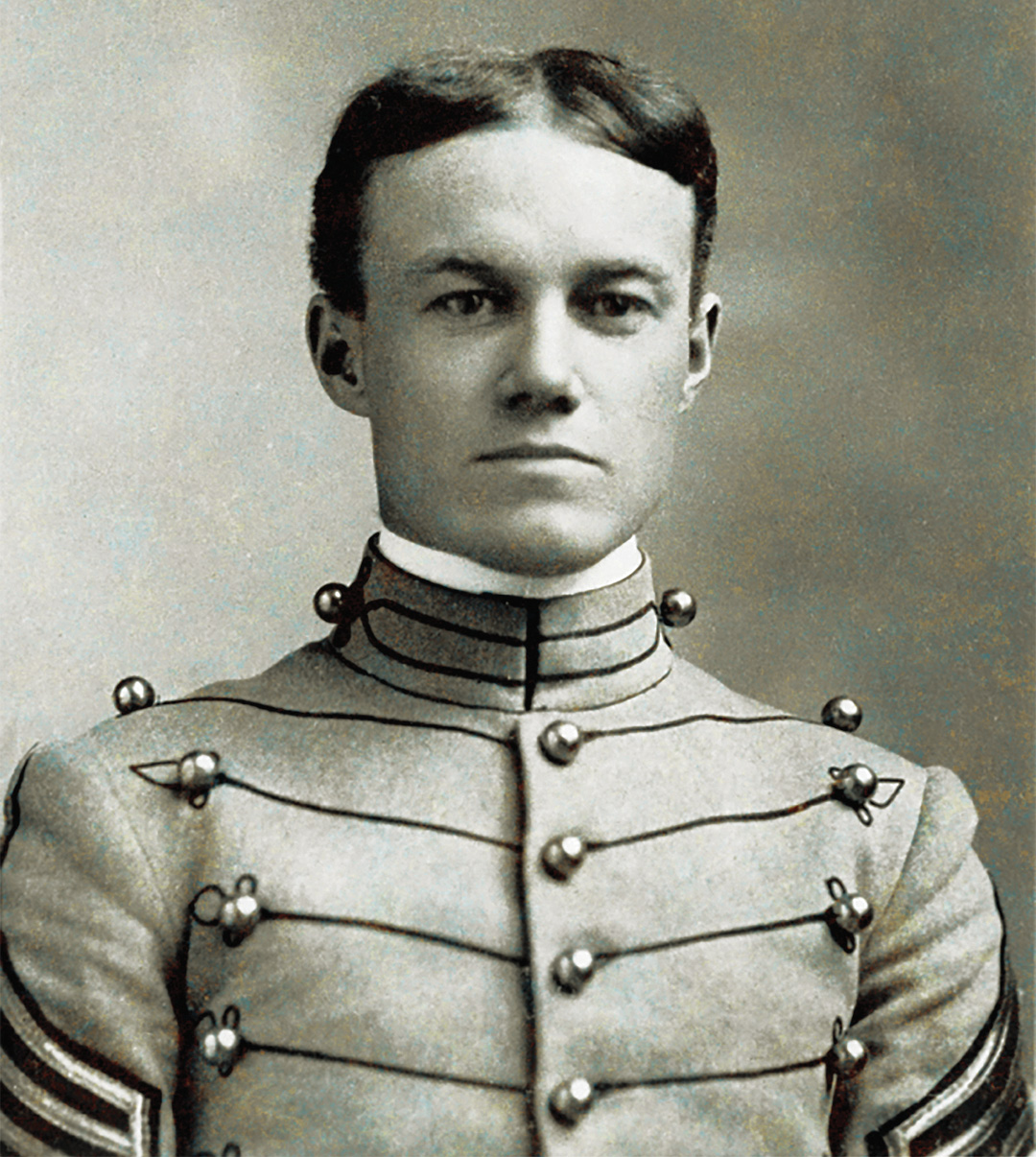
A long with Anthony McAuliffe’s defiant exclamation at Bastogne‚ “Nuts!” and Douglas MacArthur’s promise‚ “I shall return‚” one of the most famous phrases uttered by a soldier is Calvin Pearl Titus’ “I’ll try‚ Sir!” when he volunteered to scale the high wall surrounding the Chinese imperial city of Peking (today Beijing) on Aug. 14‚ 1900. The words epitomize the “can-do” attitude expected of American soldiers. The story behind it—which resulted in Titus being awarded the Medal of Honor by President Theodore Roosevelt—is worth telling‚ for it proves that the proverb “fortune favors the bold” can be very true. In June 1900‚ Titus and his fellow 14th Infantry Regiment soldiers were in China because the secret “Society of Righteous and Harmonious Fists” had attacked foreigners and foreign property with the goal of eradicating all foreign influences in China. Since many of the secret society members were skilled in martial arts or “Chinese boxing‚” English-speakers began calling them “Boxers.” The Boxers were convinced that economic hardship‚ recent floods‚ and droughts had been caused by foreigners in their midst. They detested the arrogance and aggression of foreigners‚ as well as their dismantling of China: the British had taken north Burma and Kowloon; the Japanese had seized Korea and Formosa (Taiwan); and the French had occupied Indochina’s Tonkin and Annan. The Germans had mining rights and the French had railroad concessions. While the United States denounced imperialism‚ America’s so-called “Open Door” policy was really more of the same—more foreign businesses and businessmen. The Boxers resented Christian missionaries and privileges they enjoyed; they also hated Chinese converts. The Boxer Rebellion Starting in 1899‚ the Boxers and their sympathizers began attacking foreigners in China‚ slaughtering scores of missionaries and Chinese Christians. They tore up railroad tracks‚ cut telegraph lines and murdered foreign engineers. The Qing dynasty government made half-hearted attempts to stop the Boxers but secretly many in the government were pleased by these attacks. Soon all foreigners were in grave danger‚ especially those living in Beijing. In June 1900‚ after convincing themselves that their martial arts rituals made them invulnerable to bullets‚ the Boxers arrived in Beijing and began attacking the Western businessmen and diplomats‚ and their families living there.  The United States‚ joined by Great Britain‚ France‚ Germany‚ Italy‚ Japan‚ and Russia‚ sent troops to protect their citizens. On June 10‚ 1900‚ a multinational relief force of some 2‚100 commanded by British Royal Navy Vice-Admiral Edward Seymour tried to reach Beijing from Tianjin‚ 70 miles away but was forced to retreat when Chinese imperial troops joined the Boxers in attacking his troops. Things got worse on June 20 when Qing dynasty ruler Empress Dowager Cixi ordered all foreigners to leave Beijing for Tianjin. When the German minister went to discuss this order with Cixi‚ he was murdered. About 3‚500 foreigners and Chinese Christians‚ afraid that they also would be killed‚ sought safety in that area of Beijing by international forces called the Legation Quarter. While about 400 soldiers of various nationalities set up a defensive perimeter‚ they were outnumbered by thousands of Boxers. When Empress Cixi learned that the foreigners in Beijing were refusing to obey her order‚ she decided to back the Boxers in their rebellion and declared war on all foreign powers on June 21. Fortunately for those in the Legation Quarter‚ the siege by the Boxers and imperial troops was disorganized‚ half-hearted and poorly led.  This U.S. Army illustration shows the intrepid Titus after he has successfully scaled the wall and has planted an American flag there for all to see‚ inspiring fellow soldiers to follow. Other men are visible climbing up to join Titus. The United States deployed the 9th Infantry Regiment and a Marine battalion to Taku on July 7. Two battalions of the 9th took part in the assault on Tianjin‚ which surrendered on July 13. On Aug. 4‚ an allied expedition of about 19‚000 men left Tianjin for Beijing. The U.S. force‚ under the command of Army Maj. Gen. Adna R. Chafee (future US Army Chief of Staff)‚ consisted of the 9th and 14th Infantry Regiments‚ elements of the 6th Cavalry‚ the 5th Artillery and a Marine battalion. Since the siege of the Legation Quarter continued‚ the United States—along with Great Britain‚ France‚ Japan and Russia—organized a Relief Expedition of 55‚000 men. On Aug. 14‚ 1900‚ the Americans were in Beijing. Facing them was a very tall wall which blocked entry into the “Forbidden City”—so called because common people‚ including foreigners‚ were prohibited from entering it. The Forbidden City had been the home of the Chinese emperors and their families for nearly 500 years. A Musician To The Rescue Musician (Pvt.) Calvin P. Titus‚ a bugler with Company E‚ 14th Infantry‚ was in the very small first group of Americans to reach the Tung-Pien Gate in Beijing’s eastern outer wall. It was 7:00 a.m. The soldiers included Col. Aaron S. Daggett‚ a tough and experienced soldier who had fought in the Civil War; First Lt. Joe Gohn‚ a company commander‚ Second Lt. Hanson‚ and Titus himself. The Americans immediately came under fire from the top of the ancient 30-foot wall and adjacent Fox Tower. Recognizing that scaling the wall would be the best way to lay down suppressive fire and counter the enemy’s fire‚ Daggett mused out loud: “I wonder if we can get up there.” Titus remembered what happened next: “Well‚ I was just standing there. The bugler was always up front with his company commander.” Daggett knew Titus because he had been his bugler and orderly on more than one occasion at Daggett’s headquarters in Manila. Titus said to Daggett‚ “I’ll try‚ sir‚ and see if we can get up‚ if you want me to.” Titus later remembered: “The Old Man [Daggett] just stood there‚ and sized me up from head to foot‚ and said ‘All right‚ if you think you can do it.’ I was a good climber‚ so up I went.” Titus took off his canteen‚ pistol belt‚ hat‚ and haversack. The wall was “made of brick…mortar had fallen out in places making it possible for me to get fingers and toeholds in the cracks.” About halfway up‚ a bush growing from the bricks gave Titus something better to hold on to.  Climbing Into the Forbidden City Titus managed to reach the top of the wall and looked through the firing ports on the top of the wall. No one was there. He slid over the top of the wall and dropped down to the floor behind it. Following the trail just blazed by Titus‚ more soldiers followed him to the top—climbing unarmed as he had done. The men then hoisted their weapons and ammunition to the top of the wall by tying their rifle slings together in a rope.  Daggett later described watching Titus make the treacherous climb. “With what interest did the officers and men watch every step as he placed his feet carefully in the cavities and clung with his fingers to the projecting bricks! The first 15 feet were passed over without serious difficulty‚ but there was a space of 15 feet above him. Slowly he reaches the 20-foot point. Still more carefully does he try his hold on those bricks to see if they are firm. His feet are now 25 feet from the ground. His head is near the bottom of the embrasure. All below is breathless silence. The strain is intense. Will that embrasure blaze with fire as he attempts to enter it? Or will the butts of rifles crush his skull? Cautiously‚ he looks through and sees and hears nothing. He enters‚ and as good fortune would have it‚ no Chinese are there.”  Titus’s willingness to climb the wall—unarmed and without knowing what might face him at the top—inspired those around him. The American flag was soon flying atop the wall for all to see. This opened the way for British troops to relieve the Legation Quarter. The following day‚ 5th U.S. Artillery pounded the gates of the Inner City. Empress Cixi fled the city. Following negotiations‚ the Boxer Protocol was signed Sept. 7‚ 1901‚ ending hostilities and mandating reparations to all Allied powers. The Qing dynasty‚ now very much in decline‚ lasted another 10 years before it was overthrown in 1912. Medal of Honor Titus’s fearlessness earned him an “at large” appointment to the U.S. Military Academy in 1901‚ where as a “Plebe” (first-year cadet)‚ he was presented the Medal of Honor by President Theodore Roosevelt during West Point’s centennial celebration in spring 1902. It was a unique event; no cadet had been awarded America’s highest military award‚ and no other has to this day. The cadets were drawn up in front of the President’s flag. Roosevelt‚ accompanied by Lt. Gen. Nelson A. Miles (also a Medal of Honor recipient)‚ walked on both sides of the line to inspect the Corps. The adjutant ordered Titus to step to the front‚ then read his citation‚ which was‚ as typical in that era‚ quite simple. It said only that he was being awarded the medal “for gallant and daring conduct in the presence of his colonel and other officers and enlisted men of his regiment; was first to scale the wall of the city.” According to an article in the Army and Navy Journal‚ Roosevelt then advanced‚ bearing the medal. He then pinned it on Titus’ coat and shook his hand with great cordiality. “Now‚ don’t let this give you the big head!” Roosevelt reportedly said to Titus. After the ceremony‚ a third-year cadet named Douglas MacArthur approached Titus‚ looked at his medal and commented‚ “Mister‚ that’s something!” MacArthur had seen the decoration previously‚ since his father Lt. Gen. Arthur MacArthur Jr. had been awarded the Medal of Honor for his heroism as a lieutenant during the 1863 Civil War Battle of Missionary Ridge. MacArthur would receive his Medal of Honor some 40 years in the future. Graduating in 1905‚ Titus returned to the 14th Infantry in the Philippines as a second lieutenant. From August 1916 to February 1917‚ then Capt. Titus served with the 24th Infantry Regiment in Gen. John J. Pershing’s Punitive Expedition into Mexico. He subsequently was on the Mexican Border Patrol with his unit in New Mexico. World Wars I and II During World War I‚ Maj. Titus commanded a battalion in the 24th Infantry in Columbus‚ New Mexico until he attended the Army War College in Washington‚ D.C. He then deployed to Germany where he commanded the 16th Infantry in the Army of Occupation. Lt. Col. Titus also taught Reserve Officer Training Corps cadets at Coe College in Cedar Rapids‚ Iowa. He retired from active duty in 1930.  On Dec. 13‚ 1941‚ days after the Japanese attack on Pearl Harbor‚ Titus asked he be recalled to active duty. In a letter to the commanding general at the Presidio of San Francisco‚ he asked if there was “some staff or desk job that I could hold down! It is true‚” he wrote‚ “that I have been completely away from Army stuff for years but I . . . can still think straight and make decisions.” The Army declined his request‚ but his letter showed that his “can do” spirit still was a part of his character. Sometime after scaling the wall on Aug. 14‚ 1900‚ Calvin Titus had been wounded in the neck by a shell fragment. It was not a serious injury but it was not forgotten: the Army awarded then retired Lt. Col. Titus the Purple Heart in 1956—more than a half century after he was wounded in combat. Titus died at a Veterans Hospital in Sylmar‚ Ca. on May 27‚ 1966 at 86. The Army commissioned an H. Charles McBarron painting of the scene at the Chinese wall‚ which featured in the popular “The U.S. Army In Action” series of posters. Titus’s famous “I’ll Try‚ Sir!” is the official motto of the 5th U.S. Infantry Regiment. In 1995‚ the Military Sealift Command renamed a Logistics Prepositioning Ship (AK-5089) Lieutenant Colonel Calvin P. Titus. While no longer afloat‚ it was used to carry cargo to U.S. military units around the globe. this article first appeared in military history quarterly See more stories subscribe now!  
Like
Comment
Share
History Traveler
History Traveler
2 yrs

His Sergeant in Vietnam Became His Hero. He Never Forgot It.
Favicon 
www.historynet.com

His Sergeant in Vietnam Became His Hero. He Never Forgot It.

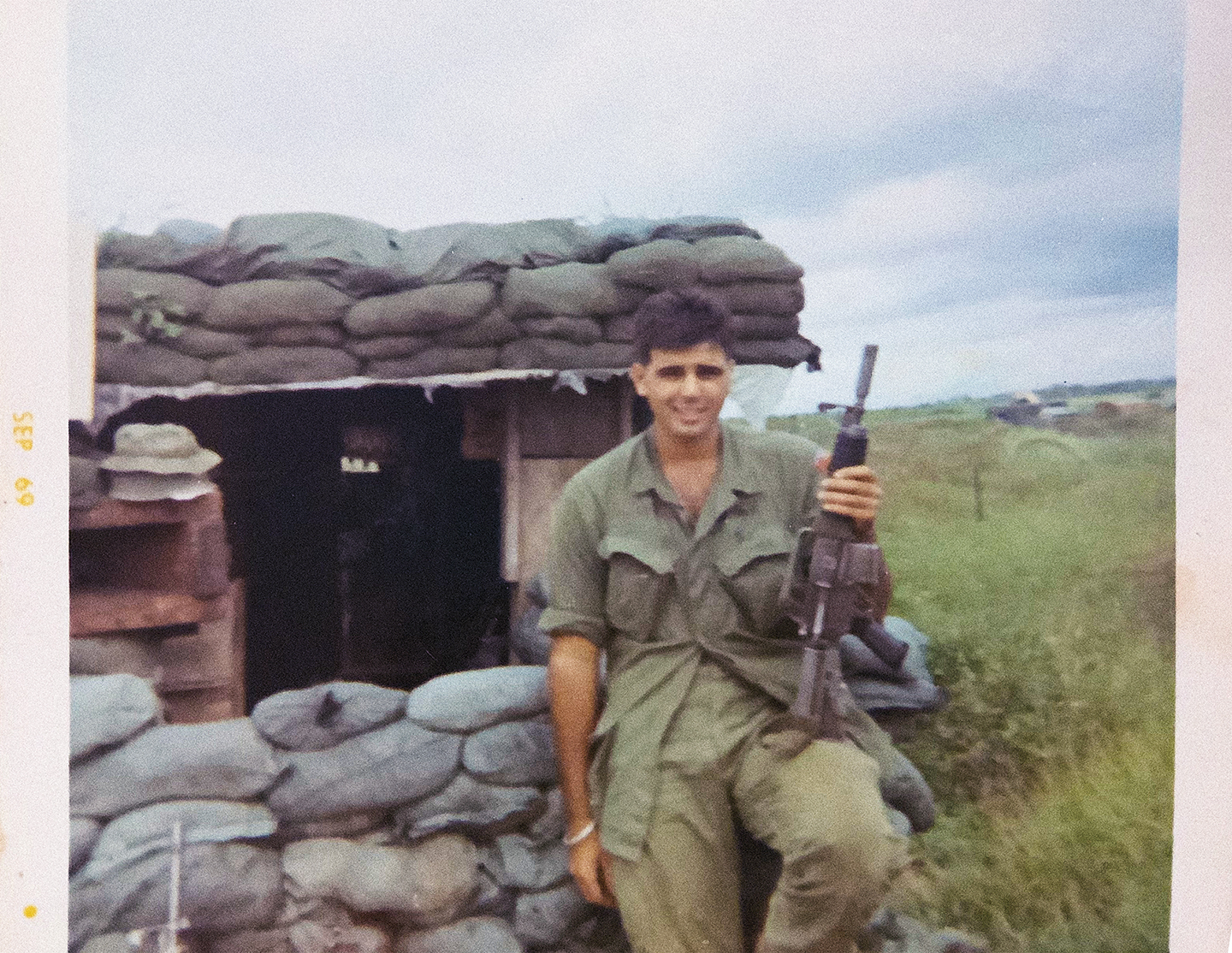
Willie Johnson was a 35-year-old African American from South Carolina with a wife and six kids. What did I‚ a 20-year-old single white kid from Quincy‚ Mass.‚ have in common with him‚ other than being stationed in Vietnam with the 11th Armored Cavalry Regiment? Well‚ living with someone in an Armored Cavalry Assault Vehicle (ACAV) for five months will make for close relationships. Willie was a career soldier‚ our first sergeant‚ a leader‚ advisor‚ confessor‚ and friend. He was firm but fair and full of life. He taught me to play pinochle‚ a card game I never played before and have never played since. I never called him Willie‚ but always “Top.” He was killed by a rocket propelled grenade (RPG) a few feet from me.   Near the Cambodian Border On March 5‚ 1970‚ we moved from a location near the Cambodian border to a place just four or five miles away. The rolling terrain was a challenge for our 12-ton armored vehicles. We arrived at our night defensive position just before dusk and deployed our 20 ACAVs similar to how covered wagons would circle in Western movies. The track commander was Capt. Max Bailey‚ who sat on top of our vehicle behind a .50-caliber machine gun. The driver was Don‚ whose last name I forget. Top and I were the rear gunners behind M60 machine guns. I dismounted our track‚ set up trip flares covering our part of the perimeter‚ and positioned Claymore mines in front of our vehicle. We had been in constant contact with the enemy for months and were always prepared for battle. Our enemy was not the Viet Cong but the North Vietnamese Army (NVA)‚ and we never knew where or when they would hit us. I was still awake at probably around 10:00 p.m. when I heard the distinctive thump of a mortar tube being fired. Seconds later the first rounds hit in and around our perimeter. This was followed immediately by a barrage of enemy AK-47 and RPG fire. We responded with volleys of machine gun and tank cannon fire. With 20 vehicles firing at once‚ the sound was deafening and the smell of cordite filled the air. Ground and aerial flares lit the night sky. Claymore mines exploded all around as the enemy closed in. The enemy attack died down after about 20 or 30 minutes. Bailey dismounted our vehicle and walked the perimeter to check on damage and wounded. Top‚ Don‚ and I pulled up more ammunition for our weapons. The Fateful Call Top received a call from Bailey that some enemy wounded had been spotted in a bomb crater a few ACAVs down from us. We had a directive from our headquarters’ G-2 Intelligence that if possible we should take prisoners for interrogation. Top would never order someone to do something he wouldn’t do himself. So he jumped off our vehicle and told Don and me to follow him to get more information. Bailey confirmed there were two or three NVA wounded about 20-40 meters from our perimeter. Without blinking‚ Top said: “Let’s go get them.” So Top‚ Don‚ Bailey‚ and I lined up about five meters apart and headed for the bomb crater.   We made it about halfway to the crater when a figure jumped up with an RPG and fired at us. The rocket landed between Top and Don who were at the end of our line. We received more mortar and RPG rounds‚ followed by small-arms fire. I hit the dirt and returned fire at the shadowy figure. I lost sight of the other three as bullets whistled above me. I was caught about 20 meters outside our perimeter. Bad News Just as concerned about friendly fire from behind as enemy fire in front‚ I crawled back to our perimeter. I looked for Top‚ Don‚ and Bailey but couldn’t find them. As the battle raged‚ I returned to my ACAV‚ took my position and continued to return fire. When the other three hadn’t returned‚ I assumed they jumped on other ACAVs to continue the battle. Eventually things quieted down. This time we were sure the enemy had retreated.   Some time later‚ Bailey returned to our vehicle and told me that Top was killed by the RPG round and Don was wounded. Bailey was also wounded but continued to lead the battle and was awarded the Silver Star for his efforts. I was stunned. I had been in country for 10 months and through a lot. Although other men in my unit had paid the ultimate sacrifice‚ this was different. Because I was so close to Top‚ it hit me hard. What made it worse was having to stay alert and man my vehicle in case of another attack. There was nothing I could do except live with the thoughts going through my head. You don’t plan for someone to get killed so you don’t know how to react. At first light I went over to the medical area and saw Top’s body on the ground covered with a rubber poncho. I can’t remember if I cried‚ but I was in a state of disbelief. Here was a person I truly respected‚ confided in‚ told stories with‚ and a few short hours earlier had been laughing and joking with‚ and now he was gone.   A Step Closer to Closure At my computer about 33 years later‚ I went to the 11th Armored Cavalry website and scrolled to Top’s name on a list of 700 troopers killed in Vietnam. Over the years I’ve thought about him many times and wondered about the family he left behind. I saw a message that made me freeze. It was signed by a Ricky Johnson who wanted to hear from anyone who had served with his dad. I summoned the courage to give Ricky a call. It was extremely emotional. Ricky was 11 years old when his father was killed‚ and the Army never told the family how he died. It was difficult for me to recount the events‚ but it was a step closer to the closure that neither of us will probably ever achieve. Memories fade with time but for the rest of my life I will remember my friend Willie and all that he taught me. To all the Willie Johnsons who never came home‚ may you always be remembered.   Adapted from the author’s book‚ 11B10: Memories of a Light Weapons Infantryman in Vietnam. This story appeared in the 2024 Winter issue of Vietnam magazine. this article first appeared in vietnam magazine See more stories SubscriBE NOW!  
Like
Comment
Share
Hot Air Feed
Hot Air Feed
2 yrs

Reuters: The 'Spectre of Donald Trump Hangs Over Davos'
Favicon 
hotair.com

Reuters: The 'Spectre of Donald Trump Hangs Over Davos'

Reuters: The 'Spectre of Donald Trump Hangs Over Davos'
Like
Comment
Share
Hot Air Feed
Hot Air Feed
2 yrs

Israel Presents Defense Against Claims of Genocide
Favicon 
hotair.com

Israel Presents Defense Against Claims of Genocide

Israel Presents Defense Against Claims of Genocide
Like
Comment
Share
Hot Air Feed
Hot Air Feed
2 yrs

Rand Paul Launches an Anti-Nikki Haley Campaign
Favicon 
hotair.com

Rand Paul Launches an Anti-Nikki Haley Campaign

Rand Paul Launches an Anti-Nikki Haley Campaign
Like
Comment
Share
Science Explorer
Science Explorer
2 yrs

The US Could Have Thousands Of Ghost Cities By 2100
Favicon 
www.iflscience.com

The US Could Have Thousands Of Ghost Cities By 2100

By 2100‚ the US could be scattered with thousands of ghost towns. That’s according to new research by the University of Illinois that’s suggested almost half of the nearly 30‚000 cities in the US will face depopulation by the end of this century. These impacted cities are estimated to experience depopulation of 12 to 23 percent‚ a radical demographic change that would likely cause all kinds of disruptions to basic services‚ including transportation‚ clean water‚ electricity‚ and internet access.“The projections suggest that‚ by 2100‚ all states will have cities facing some type of depopulation‚ except the District of Columbia and Hawaii‚” the study authors write.However‚ they added that the situation will vary across the country from region to region. The results show that 43 percent of US cities are losing population‚ while 40 percent are gaining population and the remaining 17 percent show fluctuating trends. “The number of depopulating cities in the Northeast and Midwest will be higher than in the South and West regions (although many cities in the North and Midwest will still grow). In California‚ the southern coast may lose population‚ while the northern coast may gain population. Although they are growing substantially as of this writing‚ Texas and Utah will also see a fair share of their cities going through population loss‚” they added. To reach these findings‚ the team looked at data collected from 2000 to 2020 by the US Census and the American Community Survey. Using five possible future climate scenarios‚ known as the shared socioeconomic pathways‚ they used mathematical models to forecast changes in urban populations. Speaking to Scientific American‚ lead study author Uttara Sutradhar explained that several different variables will drive the trends they identified‚ including rising property prices‚ industrial decline‚ lower birth rates‚ different levels of state taxes‚ and the impacts of climate change.To face this problem‚ the researchers believe that the US needs to have a radical paradigm shift away from growth-based planning and‚ instead‚ start embracing the principles of adaptability‚ modularity‚ and multifunctionality.More broadly speaking‚ it’s become well-established that the global population will decline by the end of the 21st century. A study in 2020 concluded that the population of the world will peak in 2064 at around 9.7 billion people‚ before falling to 8.8 billion by 2100. Another (more pessimistic) report argued that the global population will peak at 8.6 billion in 2050 and then decline to just 7 billion by 2100.The new study is published in the journal Nature Cities.
Like
Comment
Share
Science Explorer
Science Explorer
2 yrs

Desire Leaves A Chemical Mark On The Brain‚ And Scientists Just Found It
Favicon 
www.iflscience.com

Desire Leaves A Chemical Mark On The Brain‚ And Scientists Just Found It

Compare these two scenarios: meeting your significant other for a romantic dinner‚ or going for an after-work coffee with that guy you barely know from HR. We’ll bet one of these sounds a lot more appealing than the other‚ right? Scientists have just cracked the code for why we crave spending time with some people more than others‚ and they did it with help from some super-cute furry critters.The prairie vole is one of only a handful of animals that‚ like humans‚ form monogamous bonds. That’s made them invaluable to generations of researchers analyzing all aspects of human connection and relationships‚ and it’s why they were an obvious choice for Zoe Donaldson and colleagues in their study of what happens in the brain when partnerships are made and broken.Protect them at all costs.Image credit: Todd Ahern“What we have found‚ essentially‚ is a biological signature of desire that helps us explain why we want to be with some people more than other people‚” Donaldson‚ an associate professor of behavioral neuroscience at CU Boulder‚ said in a statement. “As humans‚ our entire social world is basically defined by different degrees of selective desire to interact with different people‚ whether it’s your romantic partner or your close friends. This research suggests that certain people leave a unique chemical imprint on our brain that drives us to maintain these bonds over time.”The study used state-of-the-art neuroimaging to watch what was happening in the voles’ brains in real time when they were separated from their partners. In one scenario‚ two paired voles were separated by a door that one had to open with a lever; in another‚ the female vole was forced to clamber over a fence to reach her beloved.Using a miniature fiber optic sensor‚ the team tracked activity in a part of the brain called the nucleus accumbens‚ which we know from human studies is vital in motivating us to seek reward. When an animal engages in behaviors that should lead them to something they desire – like a fuzzy little vole searching for its life partner – the neurotransmitter dopamine floods the brain’s reward system.The fiber optic sensors used in the study lit up each time they picked up a hit of dopamine. When the voles were finally reunited with their loved ones‚ first author Anne Pierce said the light show was “like a rave”. By contrast‚ while they were separated‚ the lights dimmed.“This suggests that not only is dopamine really important for motivating us to seek out our partner‚ but there’s actually more dopamine coursing through our reward center when we are with our partner than when we are with a stranger‚” Pierce explained.   Okay‚ tissues at the ready people. In the next experiment‚ a vole couple was kept apart for four whole weeks. In the wild‚ this would be long enough for a vole to seek a new mate‚ so in many ways it is akin to a bereavement‚ or at least a very painful breakup‚ in humans.When the voles were finally reunited‚ they hadn’t forgotten each other‚ but that characteristic flood of dopamine had gone. In other words‚ they’d lost their strong desire for one another.“We think of this as sort of a reset within the brain that allows the animal to now go on and potentially form a new bond‚” said Donaldson. While this may sound sad‚ it could actually be good news for humans who have experienced loss or a relationship breakdown – this could be the brain’s way of allowing us to move on.More research will be needed before we know how well these findings translate from prairie voles to humans‚ but the authors believe their work could have important implications for humans coping with grief‚ or those who struggle to form intimate relationships.“The hope is that by understanding what healthy bonds look like within the brain‚ we can begin to identify new therapies to help the many people with mental illnesses that affect their social world‚” Donaldson said.The study is published in Current Biology.
Like
Comment
Share
Science Explorer
Science Explorer
2 yrs

What Is Mach 1 and Why Does It Matter?
Favicon 
www.iflscience.com

What Is Mach 1 and Why Does It Matter?

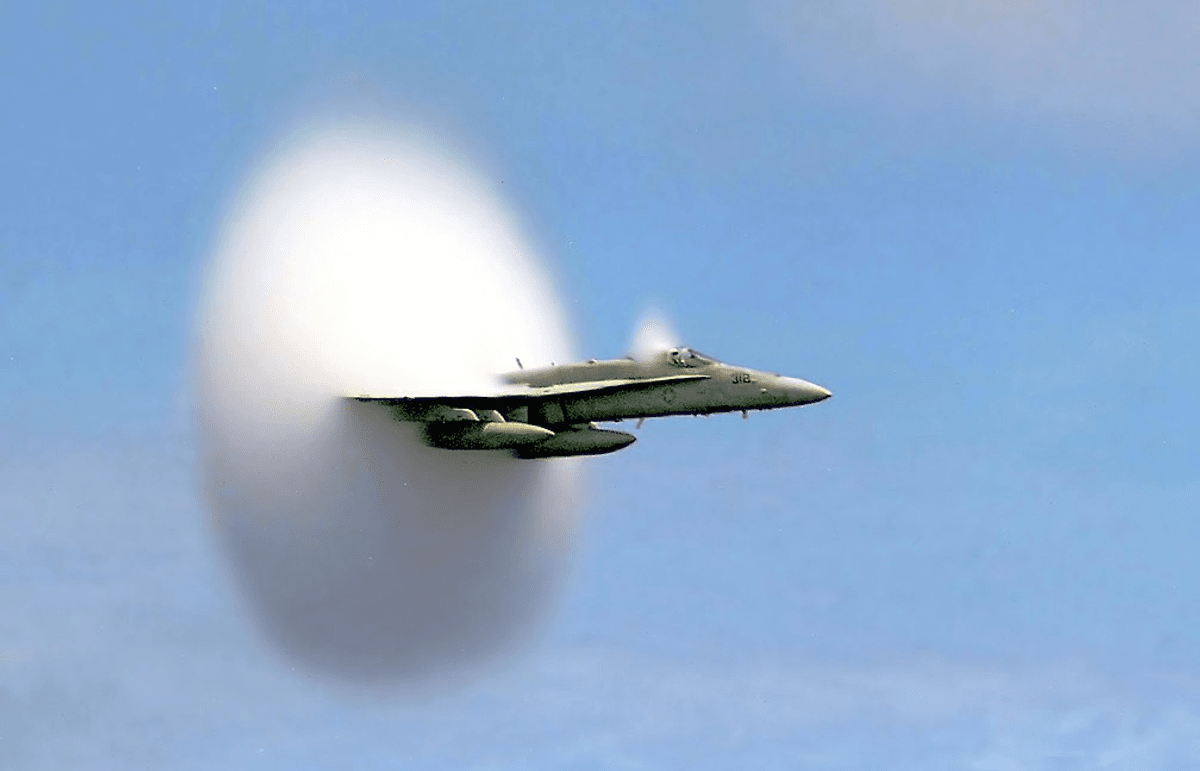
Mach numbers compare the flow velocity of a fluid past a boundary to the speed of sound. Crucially‚ however‚ there is no universal speed of sound. Instead‚ sound travels at different rates depending on the medium the sound is travelling in and the temperature. Consequently‚ Mach 1 is equal to the local speed of sound‚ that is the speed in the medium through which an object is traveling.The local nature of the measure might make it seem unimportant‚ compared to universal constants. For anyone trying to surpass Mach 1‚ it’s sound’s local speed that matters‚ and it can become important for those nearby as well if they succeed.Mach 1 can vary dramatically depending on temperature and the material through which one is moving‚ as well as weakly with some other factors. However‚ while there is a Mach 1 for water or any other medium‚ it’s almost always used to refer to movement through air‚ particularly at the heights at which airplanes usually fly. In air‚ Mach 1 is determined primarily by temperature‚ which decreases with altitude. Consequently‚ while the speed of sound is frequently given as 343 m/s (772 mph‚ or 1‚242 kmph)‚ representing room temperature‚ airplanes can often break Mach 1 at less than 300 m/s.  A solid object traveling through gas creates pressure waves in front of and behind it. These travel at the speed of sound in that gas‚ and for something as large as an aircraft they’re a force to be reckoned with. As the object’s speed increases‚ the waves get forced together‚ which at Mach 1 creates the famous sonic boom‚  which is not only disturbingly loud‚ but can rattle objects hard enough to cause pieces of houses to fall off. Objections to this inevitably led to restrictions on flights that would cause such booms. These in turn have raised costs‚ which is why you can’t now buy a passenger flight from New York to London in three hours anymore‚ although NASA hopes to fix that. Even approaching Mach 1 poses problems. As aircraft get close to the speed of sound‚ they experience greatly increased aerodynamic drag and can become harder to control. This led to Mach 1 being referred to as the “sound barrier”‚ with suggestions in newspapers it was impossible to exceed.An inaccurate analogy between Mach 1 and c‚ the speed of light in a vacuum‚ has led many people astray. Exceeding Mach 1 was considered almost impossible to do safely in an aircraft‚ until Chuck Yeager did it‚ leading to the term the “sound barrier”. Consequently‚ once the apparent limit was broken‚ and jets proceeded to exceed the speed of sound on a regular basis‚ many people assumed the speed of light would prove similarly permeable. This contributed to concepts like Warp Factor 5 in Star Trek being widely accepted‚ as if this was just an engineering problem like building planes that can fly at Mach 5. It makes for great science fiction‚ but the problems start when people believe it despite the real differences. Importantly‚ the fact that the local speed of sound could be exceeded was never in doubt. The crack of a bullwhip comes from the small sonic boom when a skilled user makes the cracker travel faster than Mach 1. Thunder is produced by a similar shockwave in the air. The challenge was to scale up.Meanwhile‚ more than a century after Einstein published the theory of Special Relativity‚ we have no evidence of anything traveling faster than the speed of light‚ whether it be tachyons or ordinary matter accelerated to pass that speed. By the way‚ the official definition of Mach 1 refers to the speed at which a fluid flows past a boundary‚ but we usually think of it as the speed at which a solid object like an airplane moves. Don’t be concerned by this discrepancy. Since all motion is relative‚ if the speed at which a plane is moving is measured compared to the air around it‚ rather than to the ground‚ the air will be flowing past it at the same rate in the opposite direction. It’s the relative motion of the two that matters. Consequently‚ a plane traveling with the wind can travel faster relative to the ground‚ than the speed of sound in the air it’s moving through‚ without exceeding Mach 1 and creating a sonic boom.
Like
Comment
Share
Showing 102390 out of 113782
  • 102386
  • 102387
  • 102388
  • 102389
  • 102390
  • 102391
  • 102392
  • 102393
  • 102394
  • 102395
  • 102396
  • 102397
  • 102398
  • 102399
  • 102400
  • 102401
  • 102402
  • 102403
  • 102404
  • 102405
Advertisement
Stop Seeing These Ads

Edit Offer

Add tier


Select an image
Delete your tier
Are you sure you want to delete this tier?

Reviews

In order to sell your content and posts, start by creating a few packages. Monetization

Pay By Wallet

Payment Alert

You are about to purchase the items, do you want to proceed?

Request a Refund