YubNub Social YubNub Social
    #music #tew #tuba #euphonium #militarymusic #tew2026 #armymusic #armyband #uk #jazz #quartet #history #warmup #bigband #armyblues
    Advanced Search
  • Login
  • Register

  • Night mode
  • © 2026 YubNub Social
    About • Directory • Contact Us • Developers • Privacy Policy • Terms of Use • shareasale • FB Webview Detected • Android • Apple iOS • Get Our App

    Select Language

  • English
Night mode toggle
Featured Content
Community
New Posts (Home) ChatBox Popular Posts Reels Game Zone Top PodCasts
Explore
Explore
© 2026 YubNub Social
  • English
About • Directory • Contact Us • Developers • Privacy Policy • Terms of Use • shareasale • FB Webview Detected • Android • Apple iOS • Get Our App
Advertisement
Stop Seeing These Ads

Discover posts

Posts

Users

Pages

Blog

Market

Events

Games

Forum

History Traveler
History Traveler
2 yrs

There Were Reasons Why American Submariners Damned Their Own Torpedoes
Favicon 
www.historynet.com

There Were Reasons Why American Submariners Damned Their Own Torpedoes

Lieutenant Commander Lawrence Randall “Dan” Daspit‚ captain of the U.S. submarine USS Tinosa (SS-283)‚ was astounded at his luck. Framed in the periscope eyepiece was a 19‚250-ton Japanese tanker‚ and it had no escort. The Tonan Maru No. 3 was making only 10 knots. It was a sitting duck. Tinosa was on its second war patrol‚ having departed from Midway on July 7‚ 1943‚ to prowl the Japanese sea lanes between Truk and Borneo. On the afternoon of July 24 Daspit‚ having been alerted by his surface-search radar‚ spotted a thin trail of gray funnel smoke on the horizon. He submerged and headed for the target. Once in range‚ he fired four Mark 14 torpedoes at the tanker. All four torpedoes ran true. Thirty seconds later‚ the sonarman heard four distinct “thumps” of the torpedoes striking the hull‚ but no explosions. The tanker turned away and increased speed. Daspit surfaced and began the pursuit with his diesel engines. After a long nighttime chase‚ he was finally in position to try again. His torpedomen checked every fish to make sure they were working perfectly. Then‚ coming at the tanker from the starboard quarter‚ Daspit fired two more torpedoes. Both hit and detonated. The muted rumble echoed through Tinosa’s hull‚ eliciting cheers from her crew They had hit the tanker’s engine room. The vessel slowed to a stop. Daspit took his time approaching the ship’s port side. He planned to fire one torpedo at a time from 1‚000 yards‚ aimed to strike the tanker at the perfect 90-degree angle. The 680 pounds of high explosive in a Mark 14 would tear a huge hole in the hull. Two or three fish would send the vessel to the bottom. It appeared that the Tonan Maru was doomed. Crews aboard U.S. submarines like this one found that defective torpedoes drastically reduced their effectiveness against enemy shipping. At 9:30 a.m.‚ Tinosa fired the first torpedo. It ran straight and true‚ its wake a long‚ white trail aimed at the helpless ship. But the torpedo failed to explode. Daspit fired again. Another dud. Daspit fired again. And again. Six deadly Mark 14 torpedoes‚ the most advanced anti-ship weapon in the U.S. arsenal‚ failed to explode. The fifth one appeared to raise a tall plume of white water as a muted “Whanng!” noise came through the hull. The sixth torpedo broached after striking the enemy’s hull‚ then sank.    Then the tables turned as a Japanese destroyer approached. Daspit fired two more torpedoes from his stern tubes as the sub turned away. The sonarman reported two hits but no explosions. As Tinosa raced eastward‚ Daspit wrote in the patrol log. “I find it hard to convince myself that I saw this.” Out of fifteen fish fired‚ only two had detonated‚ and those had been fired from an oblique angle. The others were so carefully set up as to be right out of the textbook. Not one of them had exploded. Upon his return to Pearl Harbor‚ Daspit was met at the sub pier by Rear Admiral Charles Lockwood‚ Commander‚ Submarines‚ Pacific (COMSUBPAC). A career submarine officer‚ Lockwood was determined and meticulous and had the reputation for giving full support to his crews. He led Daspit up to his office where the infuriated sub skipper related what happened with the Tonan Maru.                   Lockwood later wrote‚ “I expected a torrent of cuss words‚ damning me‚ the Bureau of Ordnance‚ the Newport Torpedo Station and the base torpedo shop. I couldn’t have blamed him. Twenty thousand-ton tankers don’t grow on trees. I think Dan was so furious as to be practically speechless.” But when the only torpedo Tinosa brought back to Pearl Harbor was examined at the torpedo shop‚ it was found to be in perfect working order. The United States submarine fleet ended World War II as one of the most effective forces of the Pacific War. By August 1945‚ the U.S. sank 2‚728 Japanese merchant and naval vessels‚ for a total of 9‚736‚068 tons. Of those‚ 55 percent were sent to the bottom by American submarines. The Tonan Maru should have met its doom on July 24‚ 1943‚ when the submarine USS Tinosa had the Japanese tanker in its sights. But there was a period when U.S. submarines were virtually useless‚ even unarmed‚ in the savage Darwinian world of undersea warfare. That time was from December 1941 to October 1943‚ a total of 22 months. While there were an increasing number of excellent submarines‚ well-trained and motivated crews‚ and superb skippers‚ they lacked one all-important tool: good torpedoes. When Daspit and Tinosa had left Midway‚ the submarine carried 24 of the best torpedoes in the navy‚ the powerful Mark 14. The Mark 14 had been in service since 1931. Designed in 1926 at a cost of $143‚000 by engineers at the navy’s Bureau of Ordnance (BuOrd)‚ the Mark 14s were built at the Naval Torpedo Station (NTS) in Newport. They were complex weapons that required meticulous machining and assembly. Each Mark 14 was powered by contra-rotating bronze propellers driven by a “wet heater” motor that used ethanol steam and compressed air to propel the weapon to up to 46 knots for 4‚500 yards and up to 9‚000 yards at 31.5 knots. It was armed with a 668-pound Torpex warhead. By 1940 each torpedo cost $10‚000‚ five times as much as a new automobile. When the war began‚ nearly every U.S. sub carried the Mark 14 and its crews had full confidence in its reliability‚ but that confidence appeared misplaced by 1943.  Tinosa’s patrol was the most recent and extreme case of what had been a growing problem within the submarine force since the beginning of the war. From the first patrols after the Pearl Harbor attack on December 7‚ 1941‚ submarine commanders complained of torpedoes that failed to work properly. On December 14 the USS Seawolf (SS-197) encountered a Japanese freighter near the Philippines and fired eight torpedoes at it. Seven missed. The one that hit failed to explode. In the first three months of war‚ American subs fired 97 torpedoes at enemy shipping but sank only three ships. Some torpedoes failed to explode‚ while others‚ aimed with care‚ seemed to run beneath their targets. Most exasperating of all‚ several had blown up long before hitting the side of a Japanese ship. The torpedo’s most important component was the Mark 6 exploder. The surest way to sink a ship was to break its back at the keel‚ and to do that the torpedo had to explode directly under the hull. With that in mind‚ BuOrd designed a new exploder based on successful British Duplex and German magnetic mines. Its most important feature was the magnetic influence exploder‚ Project G53‚ which was such a closely guarded secret that even though a maintenance and operating manual had been written‚ it was never distributed to the submarine bases. The exploder was triggered by magnetic influence as it passed directly beneath a ship‚ where there was no armor. This was why the first Mark 14s carried a relatively light warhead. The USS Tinosa fired 15 Mark 14 torpedoes but only two of them detonated‚ leaving the Tonan Maru damaged but still afloat. The Mark 6 also came with a contact exploder‚ which was a backup in case the magnetic exploder failed. It consisted of a trigger‚ firing pin‚ and detonator. The device was not much different from that of a gun‚ in which a firing pin hits the primer in a cartridge to cause a detonation. When a torpedo struck a ship’s hull‚ the collision rammed the head backward‚ driving the firing pin into the detonator over the warhead. BuOrd was under a tight budget and saw no reason to spend money to test the expensive torpedoes. It conducted only one test of the Mark 6‚ in May 1926. Ironically‚ the target was a derelict submarine. Two Mark 14s armed with the magnetic exploder were fired at the sub. One ran under the target and failed to detonate. The second one exploded and sank the sub. No further testing was done.  That meant the United States submarine force entered World War II with a torpedo that had a 50 percent failure rate. By mid-1942 submarines had fired more than 800 torpedoes in the Pacific war. Eighty percent had failed. In one instance‚ Lieutenant Commander Tyrell D. Jacobs of the submarine USS Sargo (SS-188) fired eight Mark 14s at a Japanese transport near the Philippines on Christmas Eve‚ 1941. Not one exploded. Charles Lockwood‚ at that time COMSUBSOWESPAC in Australia‚ was listening to his own submarine skippers. He conducted an unofficial test of the torpedoes in June 1942‚ the first real test of the Mark 14 since 1926. Lockwood had torpedoes set to specific depths fired through a submerged net. The holes the torpedoes left in the net showed that they were running far below the depth to which they had been set‚ sometimes as much as 10 to 15 feet deeper. This was conclusive proof of a problem‚ but BuOrd dismissed the findings and blamed the submarine commanders for not setting the torpedoes properly. At Pearl Harbor‚ the then-COMSUBPAC Admiral Robert H. English sided with BuOrd and blamed his sub skippers for what he called their “lack of initiative.”   The Mark 14 torpedo was a complex and‚ at a cost of $10‚000 each‚ expensive device. Finally‚ under pressure from Admiral Chester Nimitz‚ himself a former submariner‚ BuOrd conducted its own tests in August 1942‚ which determined that blame for the depth-setting problem lay with BuOrd. It had increased the size of the warhead but failed to make changes in the mechanism that controlled depth. The pressure sensor had been moved from the nose of the torpedo to near the tail‚ where water pressure became lower as the torpedo sped through the water. The lower pressure indicated that the depth was too shallow so the torpedo automatically went deeper‚ guaranteeing it would pass too far beneath the target. This should have been recognized long before the war‚ but due to BuOrd obstinacy and budget restrictions‚ it became an issue that sub skippers had to discover during combat. The problems continued as late as April 1943; when Commander John A. Scott’s USS Tunny (SS-282) fired 10 torpedoes at three Japanese light carriers that month the crew heard seven explosions‚ but they all proved to be premature and caused no damage. Dozens of torpedoes exploded well before reaching the target. The cause was the hyper-sensitive magnetic exploder‚ which was being triggered by a combination of the Earth’s magnetic field and the approach to a ship’s hull. These problems should also have been discovered and fixed long before the war began. Nonetheless‚ BuOrd maintained there was nothing wrong with the torpedoes and blamed the issues on bad approaches and poor maintenance. Such obtuse stubbornness naturally started a furor among the submarine fleet. U.S. sub crews were risking their lives for nothing. Japanese transports and warships sailed on‚ unmolested. After Tinosa’s cruise‚ Lockwood requested permission to disconnect the magnetic exploder‚ but BuOrd wouldn’t allow it. The submarine crews were forbidden to do anything beyond performing regular maintenance. To prevent any unauthorized tampering‚ BuOrd ordered that the torpedo shop at the submarine base apply dabs of paint to the screws that held the exploder mechanism to the torpedo body. Any attempt to remove or tamper with it would mar the paint. With the zeal American military men take when going against orders‚ some torpedomen obtained small cans of matching paint so they could retouch the screw heads after they had personally worked on the exploders. Submarine crewmembers load one of their fish aboard their boat. Each Mark 14 was 21.5 feet long and weighed 3‚000 pounds‚ so moving them within the cramped confines of a sub was not an easy task. However‚ no matter how carefully torpedomen inspected and overhauled the Mark 14s‚ their efforts were useless. The problem was in design and materials‚ issues beyond the skills of even the most experienced torpedomen. Making matters worse‚ politics became involved. Rhode Island‚ traditionally a state with strong bonds between the electorate and legislature‚ looked upon Newport’s NTS with overprotective eyes. One naval officer stated that “If I had the temerity to fire an incompetent or insubordinate worker‚ the Secretary of the Navy would be visited by both Rhode Island senators and at least one congressman‚ demanding the man be reinstated.” This virtually guaranteed American torpedoes would be poorly manufactured.  By 1943‚ the navy was building 70 Mark 14s per day‚ all carrying the flawed Mark 6 exploder. One of the manufacturers was the American Can Company‚ the primary producer of tin cans for food products. Later International Harvester and Pontiac became producers as well. In the early summer of 1943 Lockwood‚ now COMSUBPAC in Pearl Harbor‚ flew to Washington and demanded action. This time someone was listening. Chief of Naval Operations Admiral Ernest J. King issued an order to disconnect the magnetic exploder from all the torpedoes. But Tinosa’s failure to sink the Tonan Maru in July proved the so-called fix had not solved all the problems. The complaints continued to mount. Some torpedomen told of torpedoes they had set to run at a depth of two feet that still passed under a ship. Lockwood took personal action. In order to convince BuOrd the problem was with the torpedoes‚ not with his subs‚ skippers‚ or crews‚ he called in Commander Charles B. “Swede” Momsen‚ the commander of Submarine Squadron (SubRon) 2 at Pearl. In 1939 Momsen had overseen the rescue of the crew of the USS Squalus (SS-192) after it sank off Portsmouth‚ New Hampshire‚ but his habit of speaking his mind had earned him few friends in the Pentagon. Still‚ he was one of the most innovative submarine engineers in the navy and he began to apply his talent to the torpedo problem. Momsen set out to determine if the flaw lay with the contact exploder. He studied charts of the waters around the Hawaiian Islands to find a spot where sheer vertical cliffs descended to deep water and a sandy bottom. An area on the coast of the small island of Kahoolawe was perfect. Momsen‚ along with COMSUBPAC’s gunnery and torpedo officer‚ Commander Art Taylor‚ began supervising live firings from the submarine USS Muskallunge (SS-262) at the cliffs beginning on August 31. The first two exploded. The third one did not. Momsen himself went into the water to examine the torpedo. It had broken in two‚ with the warhead split. Taking extreme care‚ the crew hoisted the unexploded torpedo onto a barge and returned it to Pearl Harbor. Sometimes torpedoes worked‚ as this image of a Japanese destroyer taken through the USS Wahoo’s periscope attests. Momsen and his team also took torpedo warheads filled with sand and a live exploder and slid them down a cable from a 90-foot tower onto a steel plate to simulate different angles and impact speeds. Seventy percent failed to explode. This confirmed something that Momsen suspected. The general belief was that the best angle to fire a torpedo at a target was from exactly 90 degrees‚ or broadside. But‚ as Tinosa’s experience demonstrated‚ this was not true. By studying the unexploded torpedo from the Muskallunge test and the results from the tower‚ Momsen and Taylor realized that a head-on impact distorted the contact exploder’s firing pin‚ and the forces of sudden deceleration when the torpedo hit a target slowed the pin’s motion in its track. Examination of the primers showed dents from the pin were not nearly enough to ignite the warhead. The Mark 14 seemed to be more reliable when traveling at its lower‚ 31-knot speed. When fired at the faster 47 knots‚ the firing pin was almost always damaged. The drop tests also demonstrated that a glancing impact allowed the firing pin to act properly. In other words‚ the best angle to fire was anything other than dead on. Interestingly‚ BuOrd had made a small attempt to find the root of the problem by consulting famed physicist Albert Einstein at Princeton University. Einstein examined the Mark 6 blueprints and concluded that the firing pins were being distorted by the impact. He recommended adding a void between the outer shell and the firing mechanism. But BuOrd did not follow his suggestion. Momsen showed his test results to Lockwood‚ who then took them to Washington. He returned a few days later‚ as he said in his official war diary‚ “madder than hell.” BuOrd finally admitted the exploder was at fault and agreed to design a new one. But that would take a year or more. Momsen advised Lockwood it should be possible to rebuild the contact exploder with different materials. Because the exploder had to be both light and strong‚ the key proved to be the adoption of exotic alloys. The machine shop at the sub base obtained light alloys from‚ ironically‚ the melted-down engine of a Japanese fighter shot down during the Pearl Harbor attack and used the metal to machine and assemble new firing pins‚ springs‚ and guide tracks. The new designs performed exactly as hoped. The project needed a lot more metal than one engine could provide‚ but the team found the perfect source nearby at the Army Air Forces’ Hickam Field—airplane propellers. One Army Air Forces officer reportedly said after being asked for as many damaged propellers as he could provide‚ “A better use for a busted prop couldn’t be found anywhere.” Momsen was promoted to captain and awarded the Legion of Merit for his work on finding and solving the torpedo problem. He had played a significant but little-remembered role in assuring that every U.S. submarine was able to go to war against Japan with reliable torpedoes.  Admiral Charles Lockwood (left) and Commander “Swede” Momsen (right) played vital roles fixing the torpedo issues. With every machine shop at the sub base working on the problem‚ by the fall of 1943 the Pacific Fleet’s submarines were finally armed with reliable weapons. “From that moment on‚ all major exploder problems suddenly disappeared‚” said Lockwood. Underruns were still a concern‚ though. Taylor and Momsen again had torpedoes fired through a series of evenly spaced nets. The tests showed that not only were the Mark 14s running well below their set depth‚ they were not even running flat. They ran alternately deep and shallow‚ like a sine wave through the water. It was sheer luck if the weapon was at the right depth when it reached its target. This was not something that could be fixed at Pearl Harbor. It would have to go right to BuOrd and the NTS. But at least Lockwood’s skippers could make allowances for the erratic depth settings. Knowing that the sine wave had a cycle of about five hundred yards‚ crews could set a torpedo so it was on the high point of the curve at impact. By the time the first reliable torpedoes went to sea‚ the war had been going on for 21 months. Dozens of patrols had been wasted‚ hundreds of American lives lost‚ and important enemy targets missed. Now aggressive‚ skilled‚ and innovative submarine commanders—men like Dudley “Mush” Morton of USS Wahoo (SS-238)‚ Richard O’Kane of Tang (SS-306)‚ and Eugene Fluckey of Barb (SS-220)—had the torpedoes they needed and were adopting the tactics to use them. They patrolled on the surface by day‚ keeping a sharp lookout for planes and scanning the seas with radar. This doubled the area they could patrol. With the reliable torpedoes virtually guaranteeing a kill‚ the men under Lockwood’s command began sweeping the Pacific Ocean of Japanese ships. All they needed was good intelligence‚ initiative—and luck. As Lockwood told one new sub skipper‚ “If you’re not lucky‚ I can’t use you.” It was still a dangerous game of cat and mouse‚ but now the fleet’s subs were no longer unarmed. They were deadly sharks hunting for prey.  this article first appeared in world war II magazine See more stories SubscriBE NOW!  
Like
Comment
Share
Hot Air Feed
Hot Air Feed
2 yrs

Maddow's Meltdown When Trump Won the Iowa Caucuses Exposed Media's Path Forward
Favicon 
hotair.com

Maddow's Meltdown When Trump Won the Iowa Caucuses Exposed Media's Path Forward

Maddow's Meltdown When Trump Won the Iowa Caucuses Exposed Media's Path Forward
Like
Comment
Share
Hot Air Feed
Hot Air Feed
2 yrs

Ramaswamy Gone But Not Forgotten
Favicon 
hotair.com

Ramaswamy Gone But Not Forgotten

Ramaswamy Gone But Not Forgotten
Like
Comment
Share
Science Explorer
Science Explorer
2 yrs

Rivers On Mars Flowed On And Off For Hundreds Of Millions Of Years
Favicon 
www.iflscience.com

Rivers On Mars Flowed On And Off For Hundreds Of Millions Of Years

Mars is a frigid desert‚ but we know in the past that it had rivers‚ lakes‚ and even maybe an ocean. Those features are still carved in its rocks today. Most of the valleys and lakes were carved before 3.7 billion years ago‚ but something that is not clear is how long these water features were around. A new study argues that the rivers flowed for only a fraction of that epoch.Previous work estimated that it took at least tens of thousands of years for the valleys to form – that's the minimum amount of time for those rivers to have flowed. But what is the maximum time? Planetary Science Institute Research Scientist Alexander Morgan has estimated just that. He found that‚ at most‚ water was carving the rocks for 100 million years‚ but it was not a constant flow."In this study‚ I used craters that predate and postdate valley systems to place maximum bounds of hundreds of millions of years on the era over which these systems formed. Previous work had only determined minimum timescales‚ so these new results provide an upper bound on the timescale over which Martian valleys were active‚" Morgan said in a statement."Given what we know about erosion rates on early Mars‚ longer timescales imply that conditions permitting rivers were highly intermittent‚ with long arid periods interspersed with brief episodes of fluvial activity."The reason why the activity appears to be intermittent is not clear. Maybe erosion was impeded by boulders and terrains that were more difficult to carve out. Or maybe‚ rivers only began to flow when the weather got warm enough‚ or after some particularly strong volcanic activity. The climate of a planet can change‚ like the changes responsible for Earth’s periodic glacial periods.The work adds some nuance to the past history of Mars. Was the Red Planet "warm and wet" with an ocean? Or was Mars "cold and icy" with massive ice sheets? It could have had its periods of warmth over longer frigid and dry epochs."Over the past decade or so we've come to realize that these descriptors are far too general‚ and it doesn't really make sense to try to condense hundreds of millions of years of climate history into a two-word description‚" Morgan said."Like Earth‚ early Mars was complex‚ and the conditions permitting surface water likely varied considerably. Earth has undergone massive climatic changes throughout its history – for example‚ 20‚000 years ago‚ the area that is now Chicago was beneath half a mile of ice – and surface conditions permitting rivers on early Mars likewise probably waxed and waned."The study is published in Earth and Planetary Science Letters.
Like
Comment
Share
Science Explorer
Science Explorer
2 yrs

What Happens When You Catch Multiple Viruses At Once?
Favicon 
www.iflscience.com

What Happens When You Catch Multiple Viruses At Once?

As winter rages‚ and viruses continue to spread‚ you might find yourself wondering: Can I catch two at once? What about three‚ or four‚ or (gulp) more? And‚ perhaps most importantly‚ what happens if I do?It’s a question that was posed a lot back in 2022 when fears of a so-called “tripledemic” of COVID-19‚ flu‚ and respiratory syncytial virus (RSV) were rife.“Most of what we know about virus infection‚ virus pathogenesis‚ [and] virus epidemiology is based on the one virus-one disease approach‚” Pablo Murcia‚ a virologist at the MRC-University of Glasgow Centre for Virus Research‚ told The Scientist at the time. “And that’s not real.”Can you be infected with multiple viruses at once?Unfortunately‚ yes – you can be infected with more than one virus at a time. However‚ we know relatively little about how these viruses interact‚ Murcia added.In one 2019 study‚ Murcia and colleagues analyzed respiratory illness cases in Scotland between 2005 and 2013‚ finding that of all patients who had at least one virus‚ 11 percent also had another – some unlucky individuals harbored up to five.What happens if you are?If you do catch more than one virus at once‚ it is possible that the symptoms of one could compound the symptoms of the other‚ leaving you feeling worse off than if you simply had one virus. Although‚ not necessarily.“The best data about coinfection come from studies of more serious viruses‚ such as HIV and hepatitis‚” wrote Dr Richard Klasco in a 2018 piece for The New York Times. “These studies show that coinfection can worsen‚ ameliorate or have no impact on the course of an illness. The outcome depends on the viruses involved.”For example‚ coinfection with HIV and hepatitis C virus can result in a worse outcome‚ Klasco adds.Referring to respiratory co-infections‚ Dr Armando Paez‚ chief of the Infectious Disease Division‚ Baystate Health‚ said: “Hospitalization is often required for those suffering from co-infections due to their more serious cases of illness.”But it’s not all bad news. As Klasco mentioned‚ not all co-infections will have a negative outcome. A dual infection with influenza A and B‚ he says‚ doesn’t seem to worsen symptoms. The same is probably true of the common cold:“While you can get two colds at once‚ you probably won’t feel any worse than you would with one. The difference that you might experience is being sick for longer than you might otherwise expect.” Viral interferenceSometimes‚ viruses can block one another in what is known as viral interference. This is what‚ according to some experts‚ likely happened during the pandemic: COVID may have taken precedence over flu and RSV‚ effectively blocking them.Similarly‚ in the autumn of 2009 during the swine flu pandemic‚ rhinovirus‚ which is responsible for the common cold‚ began to dominate in some parts of Europe‚ before swine flu took over again. That same year‚ the pandemic delayed the onset of RSV by up to two and a half months.This sort of interference can arise in a number of ways. For example‚ different viruses can target the same receptors on host cells‚ meaning that the first to gain entry can prevent other viruses from getting access. Viruses can also compete for resources once inside host cells‚ resulting in a "survival of the fittest" type situation.The best-understood mechanism of interference involves interferons – defensive molecules produced by the cells of vertebrates when they sense a virus is present. Interferons trigger the expression of genes that can prevent more than one virus from entering a cell or stop viruses that are present from replicating or exiting the cell.Although viral interference can provide short-term immunity against other viruses‚ using these and other methods‚ it’s by no means a given and it’s still very much possible to catch multiple viruses at the same time.All “explainer” articles are confirmed by fact checkers to be correct at time of publishing. Text‚ images‚ and links may be edited‚ removed‚ or added to at a later date to keep information current. The content of this article is not intended to be a substitute for professional medical advice‚ diagnosis‚ or treatment. Always seek the advice of qualified health providers with questions you may have regarding medical conditions. 
Like
Comment
Share
Classic Rock Lovers
Classic Rock Lovers  
2 yrs ·Youtube

YouTube
Classic Rock 60s 70s 80s - Best Classic Rock Greatest Hits 60s &; 70s and 80s
Like
Comment
Share
Pet Life
Pet Life
2 yrs

Radio DJ vows to rescue abandoned pittie who’s been living alone in orchard for 15 months
Favicon 
animalchannel.co

Radio DJ vows to rescue abandoned pittie who’s been living alone in orchard for 15 months

It’s heartbreaking to witness the plight of pets abandoned by their owners‚ left to fend for themselves. This story‚ however‚ shines a light on the resilience of a dog named Mama and the compassion of those who helped her. Mama‚ a pit bull‚ found herself alone in an orchard near Ducor‚ California‚ after her owners... The post Radio DJ vows to rescue abandoned pittie who’s been living alone in orchard for 15 months appeared first on Animal Channel.
Like
Comment
Share
NewsBusters Feed
NewsBusters Feed
2 yrs

Scarborough Rants Biden Is The Best Economic‚ Military President Since 1945
Favicon 
www.newsbusters.org

Scarborough Rants Biden Is The Best Economic‚ Military President Since 1945

MSNBC Morning Joe co-host Joe Scarborough reacted to Donald Trump’s Iowa Caucus victory on Tuesday by going on a fact-free‚ pro-Biden rant where he asserted that economy has never been better and that‚ under Biden‚ the military is now the strongest that it has been since 1945. On the economy‚ Scarborough claimed anyone with concerns is guilty of “perversion‚” declaring that “But you talked about the economy and you talked about people worrying about where things are. This is the perversion. This is the perversion of these networks that twist and contort the reality if their guy or woman is not in office. We have an economy that's stronger than ever. I've said it before that one of the most conservative columnists‚ Gerard Baker‚ said the U.S. economy was the winner in 2023.”     The most recent inflation report was worse than expected‚ but Scarborough was just getting started‚ “You have a military stronger than ever relative to the rest of the world‚ stronger than any time since 1945. Anybody who understands military strength and power will tell you that.” That is simply not true‚ people who understand military strength‚ including the military itself‚ will tell you precisely the opposite. Nevertheless‚ Scarborough kept rolling‚ “And for all of its failings‚ and elite colleges have a hell of a lot of failings‚ for all its failings‚ our educational system‚ our colleges and universities still the best in the world.” Scarborough would proceed to repeat himself on the three areas where things are allegedly going great‚ starting with higher education‚ “People send their children to America from all over the world because our educational system‚ with all of its failings‚ the best in the world. Guess what? Another really conservative Wall Street Journal writer said that last week in a column. Why? Because it's true.” Circling back to the economy‚ he proclaimed‚ “So‚ I don't understand these networks that trash America. I don't understand politicians like Donald Trump who trash America. I don't understand people who hate America when America's economy is stronger than it's been in a long‚ long time.” Returning to the military‚ Scarborough insisted‚ “Our military’s stronger than it's been in generations” before returning to colleges yet again “and yes‚ our educational system‚ with all its failings‚ with elite universities‚ still the best in the world and there's not a close second. Not a close second in any of these areas.” Finally‚ if anyone does not think things are going perfectly‚ Scarborough thinks they are a hater and a liar‚ “So‚ if people are out there preaching hate‚ talking about how America is weak‚ they are lying to you. They are lying through their teeth‚ and they're doing it for their own reasons. America is strong. America is powerful and America is great.” It is amazing Scarborough did not fall out of his chair from getting dizzy after all that spinning. Here is a transcript for the January 16 show: MSNBC Morning Joe 1/16/2024 7:30 AM ET JOE SCARBOROUGH: But you talked about the economy and you talked about people worrying about where things are. This is the perversion. This is the perversion of these networks that twist and contort the reality if their guy or woman is not in office. We have an economy that's stronger than ever. I've said it before that one of the most conservative columnists‚ Gerard Baker‚ said the U.S. economy was the winner in 2023. You have a military stronger than ever relative to the rest of the world‚ stronger than any time since 1945. Anybody who understands military strength and power will tell you that.  And for all of its failings‚ and elite colleges have a hell of a lot of failings‚ for all its failings‚ our educational system‚ our colleges and universities still the best in the world.  People send their children to America from all over the world because our educational system‚ with all of its failings‚ the best in the world. Guess what? Another really conservative Wall Street Journal writer said that last week in a column. Why? Because it's true. So‚ I don't understand these networks that trash America. I don't understand politicians like Donald Trump who trash America. I don't understand people who hate America when America's economy is stronger than it's been in a long‚ long time.  Our military’s stronger than it's been in generations and yes‚ our educational system‚ with all its failings‚ with elite universities‚ still the best in the world and there's not a close second. Not a close second in any of these areas.  So‚ if people are out there preaching hate‚ talking about how America is weak‚ they are lying to you. They are lying through their teeth‚ and they're doing it for their own reasons. America is strong. America is powerful and America is great. 
Like
Comment
Share
NewsBusters Feed
NewsBusters Feed
2 yrs

CNN Democrat Commentator Jamal Simmons: Trump A 'Walking‚ Talking‚ Middle Finger'
Favicon 
www.newsbusters.org

CNN Democrat Commentator Jamal Simmons: Trump A 'Walking‚ Talking‚ Middle Finger'

And the funny thing is‚ he didn't really mean it as an insult! On today's CNN This Morning‚ in a segment analyzing the results of the Iowa caucuses and looking ahead to New Hampshire‚ CNN commentator Jamal Simmons‚ who stuck it out for a year as Vice President Kamala Harris's communications director before bailing‚ said: "Trump is like a walking‚ talking middle finger‚ right? People think about him like‚ oh‚ this guy is the way we get back at the elites. The way we get back at the people who are in charge‚ who are leaving the rest of us behind while they continue to make more money and divide up the spoils amongst themselves. He does have this persona." In a sense‚ Simmons' description of Trump aligns with how Trump has described himself as his supporters' "retribution." Co-anchor Phil Mattingly was so taken by Simmons' line that he ended the segment by saying‚ "Jamal Simmons: huge respect. I will never see Donald Trump the same again after you called him a walking‚ talking‚ middle finger‚ which is now going to stick with me forever‚ which I give you a lot of credit for."    In another highlight‚ CNN resident wiseacre John Avlon literally laughed out loud at Lee Carter‚ a Republican strategist‚ who attributed Trump's success to the fact that he makes it about the people‚ whereas Haley and DeSantis make it about themselves. Avlon argued that Trump actually makes it all about himself‚ but that people project themselves onto him. Here's the transcript. CNN This Morning 1/16/24 6:08 am ET LEE CARTER: Republican voters are looking for a fighter. 82% of voters that voted for Donald Trump voted for him because he was a fighter. He had such a strong ground game. When you heard his‚ his caucus advocates out there talking about what it was about him‚ they were talking about‚ he cares about people like us. He's going to fight for us. That's the message that carried him right‚ right to victory here.  DeSantis and Haley‚ I think really struggled to get a a message that was about the people. When you hear what people said about Haley‚ a lot of people said‚ well‚ she's a next generation leader about her. When you hear what people said about DeSantis‚ he did a good job in Florida. It's about him. Trump has made it about the people. And as much as a lot of people don't understand how Donald Trump -- and you're laughing. JOHN AVLON: I am. CARTER: Donald Trump makes it about everybody else. It's what people feel. And that's what we're seeing in the polls. . . .  JAMAL SIMMONS: In New Hampshire‚ you may see people like‚ oh my gosh‚ Donald Trump is really coming. We've to to figure something out and so something. But remember‚ Donald Trump is like a walking‚ talking middle finger‚ right? And so‚ people are thinking about‚ people think about him like‚ oh‚ this guy is the way we get back at the elites. The way we get back at the people who are in charge‚ who are leaving the rest of us behind while they continue to make more money and divide up the spoils amongst themselves. So he does have I think what we were talking about earlier from the polls‚ he does have this‚ this persona. . . .  CARTER: I do think that‚ whatever‚ at the end of the day‚ Ron DeSantis and Nikki Haley have made it all about them and not about the American people. And they're going to have to translate their value -- they do have to translate their value to themselves. Hillary Clinton made the same mistake. AVLON: I agree‚ but the irony of course being that Donald Trump‚ it is all about him‚ in terms of his world view‚ but people project themselves on him. PHIL MATTINGLY: I mean‚ look‚ we're going to get back to you guys‚ we've got a lot more to get to in this hour.  Jamal Simmons: huge respect. I will never see Donald Trump the same again after calling him a walking‚ talking‚ middle finger‚ which is now going to stick with me forever‚ which I give you a lot of credit for.
Like
Comment
Share
The Blaze Media Feed
2 yrs

Why removing Biden cabinet members would be a stupid and futile move
Favicon 
www.theblaze.com

Why removing Biden cabinet members would be a stupid and futile move

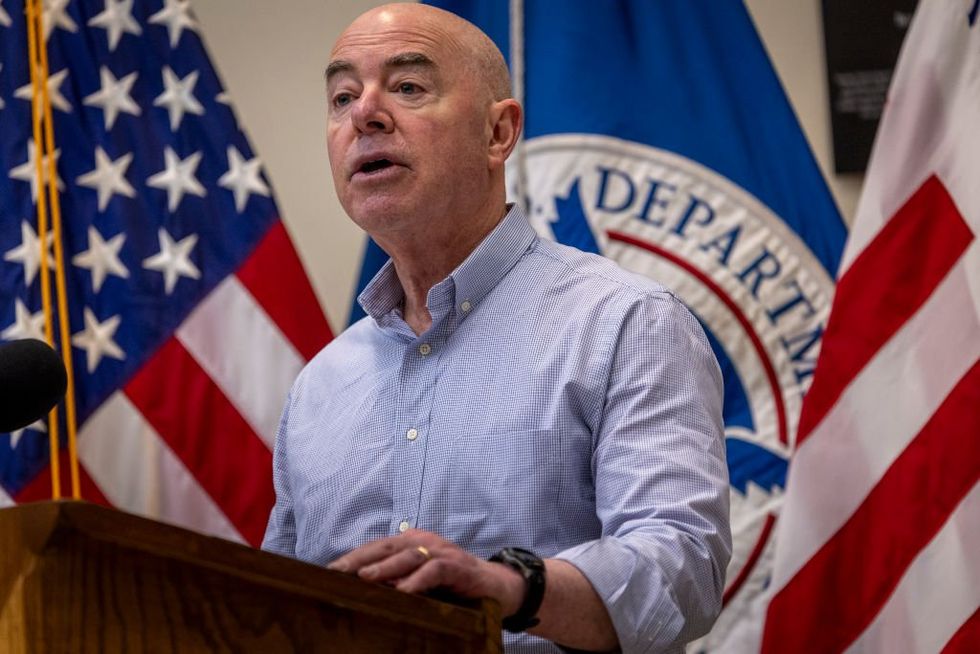
Lately‚ I’ve been hearing calls from Republican congressmen and conservative commentators for the removal of Joe Biden’s cabinet members. The person targeted most frequently in Biden’s cabinet has been Alejandro Mayorkas‚ the Department of Homeland Security secretary who has facilitated the arrival of millions and millions of illegal aliens at our southern border‚ 85% of whom have been let through. Biden and his DHS secretary have generously welcomed these foreigners‚ including drug traffickers and likely terrorists‚ and provided them with transportation into the interior of the country. The reason this Democratic administration‚ with the energetic collaboration of Mayorkas‚ has assisted in this massive invasion is obvious. Democrats are trying to create a one-party state and will attempt to enfranchise the flood of illegal aliens as soon as the occasion permits. Stop trying to remove cabinet officials‚ which wastes time and energy. Prepare for the only contest that counts: the one that will take place on November 5. Biden and Mayorkas deserve to be removed from office for such gross violations of their oath to protect the citizens of this country. But it’s unlikely to happen. Among other reasons‚ Republicans don’t have the votes in Congress to proceed beyond a preliminary impeachment inquiry. Moreover‚ neither Biden’s handlers (we may doubt that our titular chief executive is capable of volition) nor congressional Democrats will assist in removing a cabinet official whose actions they presumably support. After all‚ the obvious endgame in allowing our border to be overrun is to give their party perpetual control over the federal government. It’s the same story when Republicans demand that Secretary of Defense Lloyd Austin resign because neither Austin nor Biden was forthcoming about the reasons for his recent absence. We now know Austin underwent treatment for prostate cancer but hid the fact from the public and let his office go unattended during his hospital stay. Republicans have insisted that this constituted a dereliction of duty‚ given all the international crises we now face‚ largely because of the sloppiness with which the administration conducts international relations. Exactly what would be gained if those Republicans who demand these resignations got their way — which‚ of course‚ will never happen? Do these lawmakers honestly believe that those who would replace Mayorkas and Austin would be more to their taste? It is utterly inconceivable that our new DHS and defense secretaries would be politically or operationally different from the people they’d be replacing. The Biden administration makes cabinet appointments that suit its electoral needs. Whoever replaces Mayorkas would have to practice the same deceptions as the man now holding the office. That would be a precondition for the appointment. Austin has reached his present eminence because he is useful in promoting the identity politics of his party‚ which seems to be the Democrats’ strong suit with their core voters. Austin‚ as we know‚ is a black government official who is committed to critical race theory and has obligingly inflicted this doctrine on the military. If Austin goes‚ then his successor‚ in all likelihood‚ would need to fit a similar job description. Republicans must notice by what criteria the Democrats fill cabinet and subcabinet posts. They use them to virtue-signal. And even if Republicans vote down flakey nominees for subcabinet or judicial positions‚ the Democrats believe that they are still sending a message to those who fancy their identity politics. From their perspective‚ the perfect transportation secretary is the one they now have‚ Pete Buttigieg‚ an ostentatiously gay advocate for gay rights who since 2019 has been on record regretting that he said “all lives matter.” If Mayor Pete left his office‚ one could be sure that his replacement would not be a white heterosexual aeronautical engineer. Nor does it seem likely that if Biden’s press secretary‚ the first foreign-born black lesbian in her position‚ left her job‚ she would be replaced by a white-bread normie. Ditto for our gay rights-happy ambassador to Hungary‚ who obviously got his post as a gesture of defiance toward Prime Minister Viktor Orbán’s conservative government. And I’m still marveling at the alacrity with which our usually bumbling secretary of state required all American embassies to fly the rainbow banner during Gay Pride Month. The proudest boast of the Biden administration is that 15% of its appointees identify as gay‚ lesbian‚ bisexual‚ or just “queer.” This administration can also boast of Rachel Levine‚ the first proudly transgender assistant secretary of health‚ who has been promoted to the rank of four-star admiral. The LGBTQ bragging rights of the Biden administration were not acquired accidentally. Wokeness is what Democratic voters and the corporate media like. If Republican political leaders are as nauseated as I am by this virtue-signaling maladministration‚ there is a way to drive it into the wilderness. Take care to win key elections and‚ as a path forward‚ ensure the Democrats are forced to keep their cheating to a minimum. If the Republicans manage to recapture the presidency in November‚ they shouldn’t hold back about replacing vulnerable Democratic functionaries and abolishing agencies the left has weaponized. Stop trying to remove cabinet officials‚ which wastes time and energy. Prepare for the only contest that counts: the one that will take place on November 5.
Like
Comment
Share
Showing 102443 out of 114228
  • 102439
  • 102440
  • 102441
  • 102442
  • 102443
  • 102444
  • 102445
  • 102446
  • 102447
  • 102448
  • 102449
  • 102450
  • 102451
  • 102452
  • 102453
  • 102454
  • 102455
  • 102456
  • 102457
  • 102458
Advertisement
Stop Seeing These Ads

Edit Offer

Add tier


Select an image
Delete your tier
Are you sure you want to delete this tier?

Reviews

In order to sell your content and posts, start by creating a few packages. Monetization

Pay By Wallet

Payment Alert

You are about to purchase the items, do you want to proceed?

Request a Refund