YubNub Social YubNub Social
    #music #tew #tuba #euphonium #tew2026 #militarymusic #armymusic #armyband #band #concertband #uk #tusab #jazz #armyorchestra #orchestra
    Advanced Search
  • Login
  • Register

  • Night mode
  • © 2026 YubNub Social
    About • Directory • Contact Us • Developers • Privacy Policy • Terms of Use • shareasale • FB Webview Detected • Android • Apple iOS • Get Our App

    Select Language

  • English
Night mode toggle
Featured Content
Community
New Posts (Home) ChatBox Popular Posts Reels Game Zone Top PodCasts
Explore
Explore
© 2026 YubNub Social
  • English
About • Directory • Contact Us • Developers • Privacy Policy • Terms of Use • shareasale • FB Webview Detected • Android • Apple iOS • Get Our App
Advertisement
Stop Seeing These Ads

Discover posts

Posts

Users

Pages

Blog

Market

Events

Games

Forum

Conservative Voices
Conservative Voices
2 yrs

Freedom as License Is Slavery in Disguise
Favicon 
spectator.org

Freedom as License Is Slavery in Disguise

Last week‚ teaching‚ for Thales College‚ one of the sequences of classes in Western Civilization‚ I and four students‚ by chance all of them young men‚ discussed Machiavelli’s The Prince. It is utterly refreshing when you know‚ from the start‚ that you need not censor yourself‚ not for crude or obscene language‚ but for ideas. That relaxed atmosphere lends itself to intellectual inquiry. When you have to walk a tightrope‚ you don’t walk at all. READ MORE from Anthony Esolen: The Modern Phenomenon of Ignorance to the Third Degree This coming week we’ll be reading Martin Luther’s The Freedom of a Christian‚ which postdates The Prince and‚ in one sense‚ is utterly foreign to Machiavelli’s patterns of thought — for Luther is Christian‚ and that means he must believe in a divine governance of human affairs‚ though neither he nor his Roman opponents would understand that governance in a simplistic way‚ as if every decision made by every earthly ruler were a matter of God’s enforcement‚ for reward or correction or self-punishment as the case might be. Yet the question I will ask — a question almost impossible to ask at any other college not affiliated with a religious body‚ as Thales College is not — has to do with what freedom is taken to mean‚ and what the students themselves assume that it means. I am guessing that they will tell me what they have been taught‚ though they may not put it in these words: that freedom is a negative‚ a license. You are free to the extent that you may do as you please without interference from the church or the state. And the next question will be whether‚ if freedom is so defined‚ there are suggestions of that definition in the works of both men‚ as there will be in the works of Hobbes‚ Locke‚ Rousseau‚ and others we will be reading this term. Or‚ to put it another way‚ we will be talking about a continental divide in human thought‚ with the ancient world and the Middle Ages on one side‚ and modernity on the other. I think that they will be up to this discussion. My impressions after this first week of class are wholly pleasant and optimistic: We can think; we can speak! Such thought and speech as we will engage in are predicated upon the ability to read. I don’t mean‚ by that‚ the ability to decipher the letters on a page and make words out of them. I mean the ability to grasp an author’s train of thought‚ his tone of voice‚ the logical connections he attempts to draw‚ what he soft-pedals and what he hits hard‚ what he brings to bear upon the matter at hand‚ and what he dismisses as impertinent or omits outright. To read a Machiavelli or a Luther‚ then‚ you require the long habit of interpretation‚ and‚ lest everything fall into a confusion of persons and events‚ objects and places‚ books and more books‚ you require also a fund of general knowledge. That doesn’t mean that you need to know who Hiero of Sicily was‚ though that does help. It does mean that you know roughly where Sicily is‚ and where Carthage was‚ and what Carthage had to do with the Romans. And when it came to that knowledge‚ my students — homeschooled or taught at classical Christian schools or both — were in the ballgame. I believe‚ by the way‚ that this definition of freedom is wrong‚ partly because it takes one aspect of freedom and makes it out to be the whole‚ and partly because‚ in never attributing any end or purpose for freedom‚ it mistakes man; he is reduced to an instantiation of will or desire‚ colliding‚ as Lucretian atoms do‚ against other instantiations of will or desire‚ with the state left to adjudicate among them. There is then no inner dynamism to freedom: It is not a virtue but an extrinsic condition‚ secured by the mechanism of politics. Jesus — and again I say‚ at what other secular college could I bring him up in such a class‚ and with clear approval‚ without risking my job? — says that he who sins is a slave to sin. Paul continued along this path‚ to which the great wisdom-lovers of Greece and Rome would be amenable‚ and Luther certainly agrees. But if that is so‚ then license is a fine way to make slaves of everybody‚ with the state conniving at the enslavement‚ because genuinely free people are hard to control. A churchman may well say that every heresy gets God wrong‚ usually by taking one strand of truth and detaching it from others‚ thus distorting it and making something silly or pathetic or grotesque or monstrous of it. But what if the assumptions underlying modernity get man wrong‚ via the same kind of oversimplification‚ by the same detachment of one truth from the rest‚ resulting in things similarly silly‚ pathetic‚ grotesque‚ or monstrous? Can you ask that question at a secular school? I don’t know. I’ll be asking it. Now‚ even if we were not a nation full of cowardly informants‚ eager to rat on their professors or their fellow students‚ so that — I am told — classrooms are eerily silent before the professor comes in‚ this question is not a comfortable one. It can’t be. It’s a question about the air we all breathe. It’s a question that turns a mirror upon us‚ and not a mirror of our own devising; or a laser that pierces beneath clothes and flesh to show things we might prefer not to see. Now‚ I am certainly not one of those teachers animated by a desire to debunk and no more: the professorial equivalent of flippancy. I usually do the reverse. I debunk the debunkers. I say that they are foolish to ignore Aristotle‚ and here is why. I say that Kant ought to have read Thomas Aquinas a lot more carefully than he did‚ if he read him at all‚ and here is why. I say that to dismiss a hundred scenes from Shakespeare’s plays as if they were no more than “comic relief” for the groundlings is to be a blockhead yourself‚ and here is why‚ and here is how the glory of Shakespeare’s art of interwoven motifs comes forth in those comic scenes in the most unexpected and enlightening ways. I will not say that Hobbes and Locke were blockheads or villains. Why study what you simply despise or hate? In all but the rarest of subjects‚ studying the stupidity and villainy of Hitler‚ for example‚ nothing good or intelligent will come of that. The definition of freedom as license does reach a part of the truth: Even Pericles‚ in his famous funeral oration at the beginning of the great Peloponnesian War‚ says that in Athens every man lives as he pleases‚ and nobody pays him any mind. That‚ of course‚ was the kind of exaggeration you can engage in at a public event meant to rouse the courage and the patriotism of your fellow citizens. But it is not wholly wrong. It does occur to me‚ with some pain‚ that we are at the onset of another quadrennial national election‚ and that you could hardly have this conversation at any political convention or caucus‚ not to mention with the candidates and their staffs‚ or with the political reporters for our major newspapers and television networks. Why not? I don’t put much stock in the machinery of elections‚ but if you are going to have a machine‚ why must it ferret out all depth of learning and subtlety of thought? Another question for another day. The post Freedom as License Is Slavery in Disguise appeared first on The American Spectator | USA News and Politics.

Like
Comment
Share
Conservative Voices
Conservative Voices
2 yrs

The Spectacle Ep. 59: Trump Is Inevitable
Favicon 
spectator.org

The Spectacle Ep. 59: Trump Is Inevitable

On Monday night‚ former President Donald Trump had an unsurprising win in Iowa‚ pulling 51 percent of the vote compared to Ron DeSantis’ 21.2 percent and Nikki Haley’s 19.1 percent. In today’s episode of The Spectacle podcast‚ hosts Melissa Mackenzie and Scott McKay talk election stats and speculate that Trump’s followers have become less concerned with Trump himself and more concerned with his ability to defeat the establishment types in Washington‚ D.C. Melissa points out that both DeSantis and Haley have received comparatively gentle treatment by the leftist media‚ and Scott lays out the path forward to a successful DeSantis campaign in 2028. (READ Scott’s analysis: DeSantis Must Stay in the Race) Order Scott’s new book‚ Racism‚ Revenge and Ruin: It’s All Obama‚ here. Read Scott’s and Melissa’s writing here and here. Listen to The Spectacle with Melissa Mackenzie and Scott McKay on Spotify. Watch The Spectacle with Melissa Mackenzie and Scott McKay on Rumble.    The post <;i>;The Spectacle<;/i>; Ep. 59: Trump Is Inevitable appeared first on The American Spectator | USA News and Politics.

Like
Comment
Share
Intel Uncensored
Intel Uncensored
2 yrs

Davos: From Proto-Fascism to Post-Fascism
Favicon 
www.sgtreport.com

Davos: From Proto-Fascism to Post-Fascism

by Gary Gindler‚ American Thinker: The political adage “If you cannot beat them‚ join them” has been well-known for centuries. So‚ the Left made one extra step and arrived at the “if you cannot beat them‚ lead them.” The Left has been trying (unsuccessfully) various methods to eliminate capitalists and private property. Eventually‚ Leftists learned […]
Like
Comment
Share
Intel Uncensored
Intel Uncensored
2 yrs

NeoCon Nikki Haley Gushed Over Depopulationist Bill Gates and His Massive “Vaccine” Investments
Favicon 
www.sgtreport.com

NeoCon Nikki Haley Gushed Over Depopulationist Bill Gates and His Massive “Vaccine” Investments

by J.D. Rucker‚ The Liberty Daily: The New Hampshire primary is next week and corporate media is aflutter over the prospects of Nikki Haley beating Donald Trump. One can argue that the UniParty Swamp and their Deep State puppet masters are betting everything on the state as their last desperate attempt to stop Trump from […]
Like
Comment
Share
RSBN Feed - Right Side Broadcast
2 yrs

Trump brings presidential energy to New Hampshire: ‘We’re going to unify our country through SUCCESS’
Favicon 
www.rsbnetwork.com

Trump brings presidential energy to New Hampshire: ‘We’re going to unify our country through SUCCESS’

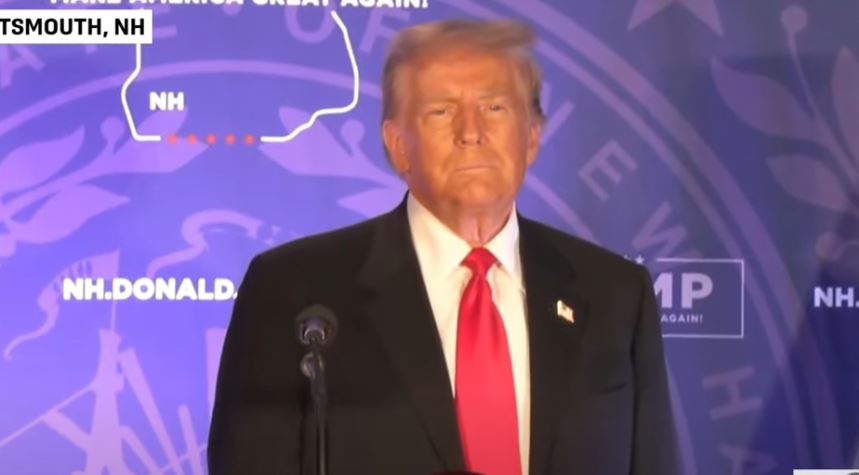
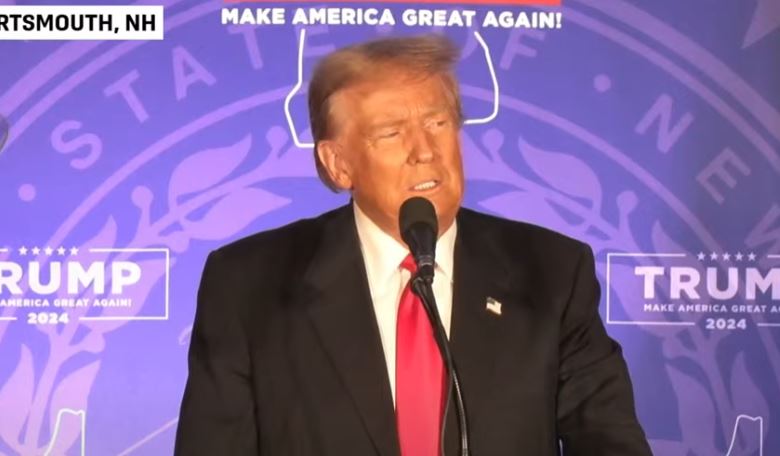
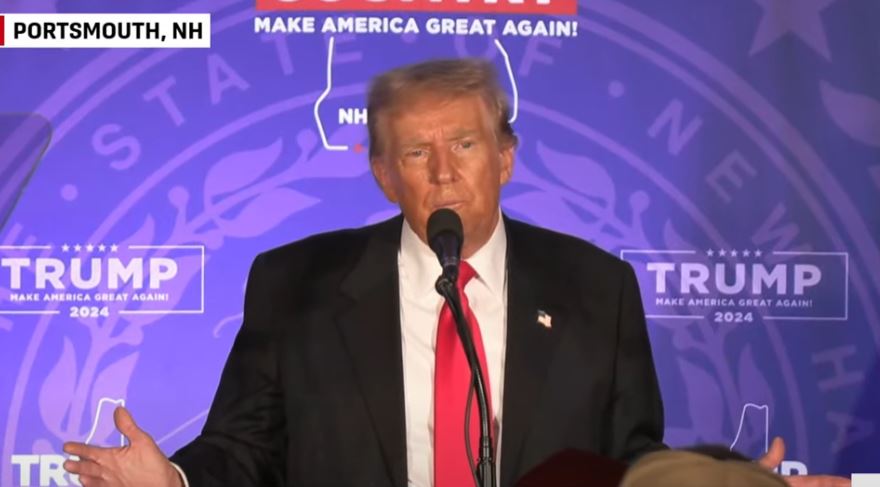
President Donald Trump looked as presidential as ever in Portsmouth‚ New Hampshire‚ on Wednesday night at a campaign event‚ just hours after sitting in court in New York City. The… The post Trump brings presidential energy to New Hampshire: ‘We’re going to unify our country through SUCCESS’ first appeared on Right Side Broadcasting Network (RSBN).
Like
Comment
Share
RSBN Feed - Right Side Broadcast
2 yrs

Trump reminisces about his favorite political nicknames
Favicon 
www.rsbnetwork.com

Trump reminisces about his favorite political nicknames

President Trump poked fun at a few political figures on Wednesday night‚ lambasting U.S. Secretary of Transportation Pete Buttigieg and Sen. Elizabeth Warren‚ D-Ma.‚ during remarks in Portsmouth‚ New Hampshire… The post Trump reminisces about his favorite political nicknames first appeared on Right Side Broadcasting Network (RSBN).
Like
Comment
Share
RSBN Feed - Right Side Broadcast
2 yrs

Trump seeks to CRUSH Nikki Haley in New Hampshire primary
Favicon 
www.rsbnetwork.com

Trump seeks to CRUSH Nikki Haley in New Hampshire primary

President Donald Trump brought the heat to Portsmouth‚ New Hampshire this week‚ where he is seeking to decisively crush former South Carolina Gov. Nikki Haley in the state’s rapidly approaching… The post Trump seeks to CRUSH Nikki Haley in New Hampshire primary first appeared on Right Side Broadcasting Network (RSBN).
Like
Comment
Share
RSBN Feed - Right Side Broadcast
2 yrs

Trump makes NEW pledge: ‘I will never allow the creation of a Central Bank Digital Currency’
Favicon 
www.rsbnetwork.com

Trump makes NEW pledge: ‘I will never allow the creation of a Central Bank Digital Currency’

President Trump made a brand new pledge on Wednesday night while speaking to supporters in Portsmouth‚ New Hampshire‚ taking a strong stance against allowing digital currency to take hold in… The post Trump makes NEW pledge: ‘I will never allow the creation of a Central Bank Digital Currency’ first appeared on Right Side Broadcasting Network (RSBN).
Like
Comment
Share
History Traveler
History Traveler
2 yrs

Conservative Resurgence in the US: Traditional‚ New Right‚ &; Tea Party
Favicon 
www.thecollector.com

Conservative Resurgence in the US: Traditional‚ New Right‚ &; Tea Party

  After a wave of conservatism during the post-World War I economic boom known as the Roaring Twenties‚ the Great Depression soured most Americans on laissez-faire economics and ushered in a rapid cultural shift toward social and fiscal liberalism‚ often known as the New Deal Coalition. Until the late 1960s‚ most Americans supported strong government intervention in the economy and‚ to varying degrees‚ in public policies to increase the rights of women and minorities. In 1968‚ however‚ American culture began to shift back toward conservatism in what is now known as the conservative resurgence. Between 1968 and the early 2000s‚ followed by a brief Tea Party eruption‚ how and why did America become more politically conservative?   Previous Era: The New Deal Coalition (1932-68) A poster for US President Franklin D. Roosevelt’s unprecedented 1940 campaign praising his New Deal reforms‚ via Roosevelt House Public Policy Institute at Hunter College   In November 1932‚ Democratic presidential nominee Franklin Delano Roosevelt (FDR)‚ governor of New York‚ won in a huge landslide. He had famously promised a “new deal” for the American people‚ meaning direct federal aid for the millions of unemployed and struggling citizens affected by the ongoing Great Depression. His Republican opponent‚ incumbent president Herbert Hoover‚ had believed in laissez-faire economics and resisted the idea that the federal government should directly intervene in the economy. The depths of the Depression had soured most Americans on the laissez-faire economics of the Roaring Twenties‚ and Roosevelt’s New Deal‚ which he swiftly enacted upon taking office in March 1933‚ was extremely popular.   Active federal government intervention in the economy continued throughout the 1930s and into World War II‚ shortly after Roosevelt’s unprecedented election to a third term as president. Wartime spending finally healed the US economy fully from the Great Depression‚ and wartime executive orders pushing equal pay and anti-discrimination measures helped plant the seeds of both the Civil Rights and Women’s Rights movements. The New Deal Coalition of broad support for federal government intervention in both the economy and to support the disenfranchised – such as GI Bill benefits for veterans – remained relatively strong after the war ended.   Setting the Stage: Post-World War II Conservatism Democratic US President Harry S. Truman famously holding a newspaper pre-printed in anticipation of his loss to Republican Thomas Dewey in the 1948 presidential election‚ via PBS   The Republican Party‚ damaged by Herbert Hoover’s hesitancy to provide direct federal aid between 1930 and 1932‚ did not return to prominence until 1946 when it retook control of Congress for the first time since 1931. Many voters were tired of wartime economic controls‚ such as rationing. The abolishment of wartime controls led to inflation‚ keeping voters aggravated at Democratic president Harry S. Truman‚ who had replaced FDR in April 1945. In 1947‚ the Republican-controlled Congress passed the Taft-Hartley Act‚ placing restrictions on the actions of labor unions and weakening their power. This was the first major reversal of a New Deal reform.   Despite the sudden re-emergence of conservatism‚ especially against organized labor‚ the New Deal Coalition held‚ aided by a surprise re-election upset victory by Truman. Reinvigorated Republicans‚ plus Southern Democrats breaking away from their party due to anger over Truman’s civil rights executive orders‚ made it seem that Truman would not win a second term in the White House. However‚ Truman campaigned aggressively and appealed to the common person‚ advocating strengthening the New Deal with his Fair Deal proposals. In the end‚ the incumbent won a narrow re-election‚ surprising many journalists. Famously‚ the Chicago Tribune had been so prepared for a victory by Republican nominee Thomas E. Dewey that it pre-printed the headline “Dewey Defeats Truman.”   Undercurrent: The Cold War and the Second Red Scare A photograph of the first Soviet atomic bomb test on August 29‚ 1949‚ which caused Cold War tensions to soar‚ via Radio Free Europe   Beginning in the late 1940s‚ a growing movement of anti-leftist sentiment emerged due to the brewing Cold War between the capitalist United States and the communist Soviet Union. Despite the popularity of FDR’s New Deal reforms‚ carried on by Truman‚ conservatives criticized new proposals of government economic programs as “socialist” or “communist.” In 1952‚ Truman famously criticized Republicans for labeling New Deal reforms as “socialism.” However‚ Truman was aggressively anti-communist when it came to foreign policy and adopted the policy of containment to prevent the geographic spread of communism.   Fear of communist infiltration in the late 1940s and early 1950s created the Second Red Scare‚ which led to government policies that curtailed the liberalism of many Democrats‚ lest they be considered “soft on communism.” Therefore‚ despite the continued success of the New Deal Coalition and overall liberalism‚ threats of being a socialist or communist sympathizer were an effective political weapon used by conservatives. This weaponization of anti-communism weakened after 1954 with the implosion of US Senator Joseph McCarthy (R-WI)‚ who had enjoyed a meteoric rise as a virulent anti-communist. Still‚ it would remain a tool of political conservatives throughout the Cold War era.     1965-68: Turbulent Times Hurt New Deal Democrats Fires burning during the Detroit Riots in July 1967‚ resulting in increased racial tensions‚ via National Public Radio (NPR)   The New Deal Coalition held through the two terms of Republican president Dwight D. Eisenhower‚ a political moderate who had been courted by both political parties when deciding to run for office. Eisenhower continued the New Deal Coalition trend of strong fiscal stimulus through infrastructure with his support for the interstate highway system and many civil defense programs and agencies. These programs covered both Cold War fears and natural disaster relief. Thus‚ when Democrats returned to prominence in 1960 with the election of young John F. Kennedy as president‚ there had been no return to conservatism. Kennedy amplified Truman and Eisenhower on the path of increasing civil rights for minorities.   Under Kennedy’s successor‚ Vice President Lyndon Johnson‚ the growing Vietnam War and Civil Rights Movement began causing cultural clashes. After the legislative victories of the Civil Rights Act of 1964 and the Voting Rights Act of 1965‚ tensions grew as many African Americans felt insufficient progress was being made in reducing discrimination and mistreatment. In 1966‚ the Black Panther Party was created and advocated for armed self-defense for African Americans rather than the strict nonviolence of Martin Luther King‚ Jr. Large race riots between 1965 and 1968 eroded some white moderate support for the Civil Rights Movement‚ and rising inflation from Vietnam War spending and Johnson’s Great Society and War on Poverty programs eroded support for his administration.   1968: Downfall of Liberal Icons A photograph of Robert F. Kennedy‚ younger brother of former US President John F. Kennedy‚ who was assassinated during his 1968 presidential campaign‚ via the National Park Service   The Conservative Resurgence that began with Richard Nixon was likely aided by the tragic demise of two liberal icons shortly before the 1968 presidential election: Democratic presidential candidate Robert F. Kennedy and Civil Rights Movement icon Martin Luther King‚ Jr.   On April 4‚ Dr. King was shot dead on a hotel balcony by escaped fugitive James Earl Ray‚ prompting a wave of distress and mourning across the country. In the year prior to his assassination‚ King had been active in championing liberal causes beyond the Civil Rights Movement‚ such as the anti-war movement and pro-labor actions.   On June 6‚ US Senator Robert F. Kennedy (D-MA)‚ younger brother of former president John F. Kennedy‚ was assassinated in a hotel kitchen with a .22 caliber revolver. Similar to King‚ “Bobby” Kennedy was a strong supporter of the Civil Rights Movement (though‚ ironically‚ he had ordered King’s phones tapped in 1963 as Attorney General because he thought King might be a communist) and the poor. Kennedy was performing well in the Democratic presidential primaries and had just won the California primary on June 5‚ meaning he had a realistic shot of potentially winning the Democratic presidential nomination and‚ therefore‚ the presidency. With Kennedy’s assassination‚ the liberal New Deal Coalition had lost two major icons in 1968.   1968-69: Richard Nixon Calls for “Law and Order” &; the “Silent Majority” A postage stamp praising a wholesome image of law and order‚ via The Marshall Project   The race riots of 1965-68 and the growing protests against the Vietnam War and the draft led many political moderates and independents to support the “law and order” message of Republican presidential candidate Richard Nixon in 1968. This message was aided by the fact that the 1968 Democratic National Convention in Chicago was affected by riots. Many Americans had grown weary of the Johnson administration’s inability to control unrest and were receptive to Nixon’s appeal to conservative values.   After winning the presidential election in 1968‚ Richard Nixon also appealed to the “silent majority” of middle-class moderates who were not protesting in a famous speech on November 3‚ 1969. Positive reactions to Nixon’s speech‚ where he outlined his policy of Vietnamization to gradually withdraw US forces from Vietnam and transfer combat responsibilities to the military of South Vietnam‚ led the president to continue to war. Voters were also supportive of Nixon’s plans to reform some of Lyndon Johnson’s expensive Great Society welfare programs; he criticized the existing welfare system as “perpetuating dependency” on government support.   Early 1970s: Busing Debate Causes Rifts Children in December 1971 about to be bused to a public school far from their neighborhood‚ via WHYY/National Public Radio (NPR)   Around the time of Richard Nixon’s elevation to the White House‚ a new policy was further weakening support for the Civil Rights Movement: desegregation busing. In the years since the Supreme Court decision in Brown v. Board of Education (1954)‚ relatively little had been achieved by banning the racial segregation of public schools. This was because most American cities were relatively racially segregated by neighborhood‚ meaning wealthier schools remained almost entirely white‚ and poorer schools remained almost entirely Black or Hispanic. Following the Swann v. Charlotte-Mecklenburg Supreme Court decision in 1971‚ desegregation busing was declared constitutional and became a policy for many school districts.   Controversially‚ many white parents resisted busing‚ even in Northern cities. In some cities‚ like Boston‚ protests erupted upon enactment of desegregation busing. Black students were often subject to hostility upon entering schools that had recently been almost entirely white. Support for the program was not universally popular among minorities‚ either‚ as it often required their children to be bused far from home. As expected‚ Republican president Richard Nixon was opposed to desegregation busing‚ which did not hurt his record-setting 1972 re-election landslide‚ where he won the greatest popular vote margin in history.   1978: Bakke v. California Weakens Affirmative Action A courtroom drawing of the oral arguments in the Bakke v. California Supreme Court case in October 1977‚ via the Library of Congress   Despite the humiliation of Richard Nixon between 1973 and 1974 due to fallout from the end of the Vietnam War and the infamous Watergate scandal‚ culminating with Nixon’s resignation from the presidency in August 1974‚ the nation did not return to a liberal political culture. Despite some environmental policy and foreign policy liberalism under Democratic president Jimmy Carter‚ elected in 1976 over Nixon’s former vice president Gerald Ford‚ there remained opposition to a return to the Civil Rights Movement policies of the 1960s.   In a move that some consider the end of the Civil Rights Movement era‚ the US Supreme Court significantly curtailed the use of affirmative action by universities in its 1978 decision in California v. Bakke. The decision declared that specific seats could not be set aside for minority applicants and that race could only be considered part of a holistic application process.   Affirmative action had become a popular tool in the early 1970s to remedy continued racial and gender discrimination in hiring and promotion‚ especially in government jobs like law enforcement. Mandatory affirmative action for federal contractors had begun in 1965 under Lyndon Johnson‚ but enforcement was often lax. Public opinion was often mixed‚ and survey results were highly variable based on the wording of questions. Many moderates and independents who had supported civil rights reforms up to 1965 were critical of affirmative action‚ likely due to fears that it could limit their own educational and career opportunities.   1980: Rise of the New Right With Ronald Reagan Ronald and Nancy Reagan at the January 1981 presidential inauguration following Ronald Reagan’s victory‚ via the Minnesota Library Publishing Project   The Bakke v. California decision arrived at the same time as a growing backlash to the Women’s Rights Movement and its goal of an Equal Rights Amendment. Many conservative factions united in 1980 around Republican presidential candidate Ronald Reagan‚ former governor of California. The “New Right” included Protestant evangelicals‚ defense hawks‚ and business leaders who supported traditional conservative goals of lower taxes and reduced government regulations. They won support from many Americans who felt the Carter administration had placed too many burdensome regulations on businesses.   Reagan also reinvigorated conservatism by focusing on aggressive foreign policy‚ returning the Cold War to tensions not seen since the Cuban Missile Crisis by denouncing communism and substantially increasing US military spending. He invaded the small island nation of Grenada in the Caribbean to overthrow a radical socialist regime‚ winning a geopolitical victory when the USSR did not respond. Finally‚ Reagan also cut taxes‚ handing a victory to traditional conservatives. Between the increased defense spending and the tax cuts‚ the US economy saw strong growth for the first time since the 1960s. Reagan’s reforms were popular‚ and he won a landslide re-election victory in 1984. His popularity continued through his second term and helped buoy his vice president‚ George Bush Sr.‚ to victory in the 1988 presidential election over Democratic nominee Michael Dukakis.   1994: Republican Congress &; Contract With America Republican Newt Gingrich‚ Speaker of the House in 1994‚ with his Contract With America proposal to return conservatism to the federal government‚ via National Public Radio (NPR)   Despite the strong popularity of Reagan and his New Right coalition‚ a popular‚ youthful Democratic presidential nominee named Bill Clinton defeated Republican incumbent George Bush Sr. in the 1992 election. In the 1994 midterms‚ however‚ Republicans made a strong comeback. Borrowing from the ideas of Ronald Reagan‚ the Contract With America proposal unveiled by congressional Republicans listed eight promises they would pursue if they regained control of the legislature. They involved conservative fiscal and political reforms like auditing federal spending for waste‚ balancing the federal budget‚ and making it more difficult to pass tax increases.   Republican US presidents (left-to-right) Ronald Reagan‚ Richard Nixon‚ George Bush Sr.‚ and Gerald Ford in 1990‚ via the National Archives   With a strong economy similar to the Roaring Twenties‚ many moderates and liberals felt it was acceptable for the federal government to take a step back on social welfare programs. A welfare reform act in 1996 made several changes to “welfare”: it would now be primarily administered by the states‚ and the goal would be to limit the length of time one could receive benefits in order to incentivize people to find employment. Conservatives also complained about high crime rates‚ which peaked in 1991‚ and successfully pushed through a 1994 crime bill that increased punishments for violent crime. High crime rates in urban areas up through the early 1990s helped make conservative messaging on “law and order‚” similar to Richard Nixon’s 1968 presidential campaign‚ continuously popular.   Early 2000s: “Compassionate Conservatism” &; Terrorism Fears An image by Barbara Kelley illustrating the concept of compassionate conservatism‚ referenced by US President George W. Bush‚ via the Hoover Institution   The two terms of the Clinton presidency saw strong economic growth‚ reduced crime rates‚ and relative peace worldwide. This forced conservatives to change their messaging to remain competitive as the 2000 election rolled around. Texas governor George W. Bush‚ a relative moderate by today’s standards‚ introduced the concept of “compassionate conservatism” when running for president in 2000. He argued that conservative principles like competition and choice could be used to help ensure the welfare of children and those who were struggling. He praised the 1996 welfare reform and promoted education reform in 2002 using his new philosophy‚ arguing that the struggling deserved government support – but with accountability attached.   During George W. Bush’s presidency‚ conservative defense hawks received a major political boost after the September 11 terror attacks. Fears of future terrorist attacks on American soil helped solidify support for the Bush administration and its increased spending on the military and federal intelligence agencies. Despite significant protests against the Iraq War‚ which began in March 2003 with a US invasion of that nation due to allegations of its possession of weapons of mass destruction (WMDs)‚ Bush won re-election in 2004 with help from “security moms” who wanted to retain a president who was tough on terrorism and crime. Many considered security moms to be swing voters‚ making them a crucial voting bloc.   2010-12: Tea Party Republicans Battle New Liberal Reforms A protester supporting the Tea Party wing of the Republican Party‚ exemplified by her teapot signs and Gadsden flags‚ via the Brookings Institution   The defense hawk wing of the Republican Party lost some support after 2004 due to the dismal situation in Iraq. By February 2005‚ with rising American casualties during the controversial occupation of Iraq‚ support for the conflict had dropped below 50 percent. When the 2008 election rolled around‚ the Iraq War had weakened public support for the Republican Party. The victory of Democratic nominee Barack Obama‚ the first nonwhite president in America’s history‚ seemed to predict a cultural shift back toward political liberalism. However‚ Obama’s election and the rapid passage of the Affordable Care Act‚ done by a slim Democratic majority in both chambers of Congress‚ resulted in the rise of a new conservative movement: Tea Party Republicans.   In 2010 and 2012‚ conservative Republicans made gains in Congress‚ largely campaigning on reducing taxes and government intervention in the economy – especially health care. Tea Partiers were successful in increasing media attention on government spending and the national debt. However‚ critics accused much Tea Party zeal to be based more on racism against Barack Obama‚ an African American‚ than genuine concern about fiscal issues. The Tea Party faction fizzled shortly after the 2012 elections‚ and some argue that it was the end of the true Conservative Resurgence. The election of Republican presidential nominee Donald Trump in 2016 is seen as part of a populist resurgence rather than the continuation of conservatism‚ with Democratic populist candidate Bernie Sanders also achieving unexpected success in the primaries.
Like
Comment
Share
Conservative Voices
Conservative Voices
2 yrs ·Youtube Politics

YouTube
Biden-Blinken Actively Trying To Overthrow The Netanyahu Government
Like
Comment
Share
Showing 102666 out of 114699
  • 102662
  • 102663
  • 102664
  • 102665
  • 102666
  • 102667
  • 102668
  • 102669
  • 102670
  • 102671
  • 102672
  • 102673
  • 102674
  • 102675
  • 102676
  • 102677
  • 102678
  • 102679
  • 102680
  • 102681
Advertisement
Stop Seeing These Ads

Edit Offer

Add tier


Select an image
Delete your tier
Are you sure you want to delete this tier?

Reviews

In order to sell your content and posts, start by creating a few packages. Monetization

Pay By Wallet

Payment Alert

You are about to purchase the items, do you want to proceed?

Request a Refund