YubNub Social YubNub Social
    Advanced Search
  • Login
  • Register

  • Night mode
  • © 2025 YubNub Social
    About • Directory • Contact Us • Developers • Privacy Policy • Terms of Use • shareasale • FB Webview Detected • Android • Apple iOS • Get Our App

    Select Language

  • English
Install our *FREE* WEB APP! (PWA)
Night mode toggle
Community
New Posts (Home) ChatBox Popular Posts Reels Game Zone Top PodCasts
Explore
Explore
© 2025 YubNub Social
  • English
About • Directory • Contact Us • Developers • Privacy Policy • Terms of Use • shareasale • FB Webview Detected • Android • Apple iOS • Get Our App
Advertisement
Stop Seeing These Ads

Discover posts

Posts

Users

Pages

Blog

Market

Events

Games

Forum

Daily Caller Feed
Daily Caller Feed
1 w

Iconic ‘Star Wars’ Painting Sells Makes History After Selling For $3.8 Million At Auction
Favicon 
dailycaller.com

Iconic ‘Star Wars’ Painting Sells Makes History After Selling For $3.8 Million At Auction

'You see this piece, your heart starts racing'
Like
Comment
Share
Daily Caller Feed
Daily Caller Feed
1 w

US Plans To Seize More ‘Shadow’ Tankers Off Venezuela, Per Reports
Favicon 
dailycaller.com

US Plans To Seize More ‘Shadow’ Tankers Off Venezuela, Per Reports

'Not going to stand by and watch'
Like
Comment
Share
Daily Signal Feed
Daily Signal Feed
1 w

Hans von Spakovsky Explains Why DOJ Rejection of Disparate Impact Matters
Favicon 
www.dailysignal.com

Hans von Spakovsky Explains Why DOJ Rejection of Disparate Impact Matters

Attorney General Pam Bondi and Assistant Attorney General Harmeet Dhillon announced Tuesday that the Justice Department will no longer have “disparate impact” regulations. “For decades, the Justice Department has used disparate-impact liability to undermine the constitutional principle that all Americans must be treated equally under the law,” Bondi said in a statement. “No longer. This Department of Justice is eliminating its regulations that for far too long required recipients of federal funding to make decisions based on race.” Hans von Spakovsky, senior legal fellow at The Heritage Foundation, joined the Dec. 10 episode of “The Tony Kinnett Cast” to discuss the Justice Department’s decision. Read a lightly edited transcript, pasted below, or watch the interview, which starts at around 26:50. Tony Kinnett: She’s done it. Harmeet Dhillon, assistant attorney general on civil rights, she has announced that disparate impact be gone. It is on its way out, finally. And man, it has overstayed its welcome. So, we go to the legal expert of legal experts, Hans von Spakovsky from The Heritage Foundation, because you may be out there going, “Disparate impact—Tony, I hate corporate words. What are we talking about?” Hans, give us a little bit of perspective here. Why do the words “disparate impact” mean so much to the United States? Hans von Spakovsky: Well, unfortunately, this is a, frankly, very dubious legal theory that has been used now for decades in a wrong way to violate the equal protection we’re all entitled to. And what we’re talking about is Title VI of the Civil Rights Act, Civil Rights Act 1965—it banned racial discrimination. It basically put into force the equal treatment requirements of the 14th Amendment. And Title VI specifically says that if you’re getting federal money for some kind of program, you can’t discriminate on the basis of race. Well, unfortunately, the Justice Department, decades ago, issued these regulations in which they said, Oh, you know what? You don’t violate that statute just if you intentionally set out to discriminate, but also if whatever you do has a disparate impact. And what they’re talking about is, let’s say you have a totally neutral policy. Race is not considered. But for some reason, it affects members of one race more than others. Well, then the Justice Department said, well, you’re violating the law. And therefore, your federal funding can get cut off. And let me give you—can I give you an example of the absurdity of this? Kinnett: Please. We are all about examples and receipts here on “The Tony Kinnett Cast.” Von Spakovsky: OK. And that’s why what the Justice Department did is so important and long overdue. In 2001, there was a Supreme Court decision. It was called Alexander v. Sandoval. And what happened was this woman sued the Alabama Department of Motor Vehicles, claiming disparate impact. Why? Because you could only take the driver’s license exam in English. And she said that English-only requirement meant that it had a disparate impact on people who don’t speak English … Now, fortunately, the Supreme Court, Justice [Antonin] Scalia, said, No. Title VI only prohibits intentional racial discrimination. But the Justice Department never changed its regulations. They kept this disparate impact provision in there. And now, finally, finally, the Justice Department has said, no, that’s no longer going to be the way we enforce the law. Kinnett: So, just as a manner of receipt-keeping here, there really is a huge decision by the Department of Justice to roll back some of these because some of the bigger cases in our nation’s history—Griggs v. Duke Power in 1971 said that Duke Power was discriminating against black people, even though there was nothing that showed Duke Power was actually going out of their way to discriminate against black people in signing up for energy services. Von Spakovsky: Right. Kinnett: The Albemarle Paper Company v. Moody in 1975. The Supreme Court held that, well, I mean, once a plaintiff shows that there was disparate impact, the company has to prove they’re innocent. Which is wild. This precedent that stood in this country where if someone says, “I think this is racist,” it’s not that they have to prove you were racist. It’s that you have to prove your innocence. Because, obviously, the only reason that you know the driver’s test in Alabama would be in English is to exclude people who speak other languages. This kind of harebrained mental gymnastics really started ratcheting up, though, in the Obama years. And that’s when the Department of Justice kicked it into nitrous. Von Spakovsky: That’s right. Kinnett: You were on the forefront of that at the time with boxing gloves on. Tell us about the Obama years, throwing this harebrained mental gymnastics of disparate impact racism into high gear. Von Spakovsky: Well, for example, that attitude really affected elementary, K-12 students, ruining their educational experience. Why? Because the Obama administration went in and said, if you discipline more, for example, black students than white students, if the ultimate numbers at the end of the year are that you disciplined a greater percentage of black students than white students, then that’s disparate treatment and disparate impact, and you have violated the law. It didn’t matter. Kinnett: Because you’re clearly singling out black children, or so, as the administration said. Von Spakovsky: Right. It didn’t matter if, in fact, the reason for that was because, perhaps, those children actually had greater discipline problems than other kids. That didn’t matter. It didn’t matter what kind of discipline problems the school was experiencing. So, what did that mean? The schools started changing what they did. They didn’t want their percentages to be out of whack, and so, they would keep disruptive students in classrooms rather than discipline them. So, who did that punish? All the good students, no matter what their race was. They had to be in class with these disruptive students who weren’t disciplined. Why? Because they basically had to meet the quota, the quota system set up by the Obama administration. And that’s what it was. It was a quota system. Department of Justice Rule Restores Equal Protection for All in Civil Rights Enforcement“The prior ‘disparate impact’ regulations encouraged people to file lawsuits challenging racially neutral policies, without evidence of intentional discrimination,” said @AAGDhillon. “Our… pic.twitter.com/EjhLR6WhWe— DOJ Civil Rights Division (@CivilRights) December 9, 2025 Kinnett: So, this is now going to shift into [President Donald] Trump One because [former President Barack] Obama had all these practices, of course, not to mention the Civil Rights Division going after housing during the Obama years. I think Texas Department of Housing and Community Affairs v. the Inclusive Communities Project back in 2015. Now, Trump One gets in and we’re looking for some major rollbacks of this at long last. And that first Department of Justice, they try to roll some stuff back, but it’s a little slow and it’s a little sluggish. And then [President Joe] Biden brings it right back. Then comes in Pam Bondi in the second administration. Why is this time, this Department of Justice, with what Bondi is doing, with what Harmeet Dhillon is doing, why is this different? Von Spakovsky: Because the leadership is different. Plus, the preparation is different. Look, Donald Trump came into office the first time. He appointed a lot of what I call retreads. You know, people from prior Republican administrations who weren’t interested in taking the kind of bold action needed to roll back a lot of these things. Plus, he just wasn’t experienced in—look, he was a businessman. He didn’t realize how much resistance he was gonna get from the bureaucracy, the swamp, as we all call it. Kinnett: How bad the rot was. Von Spakovsky: I actually think one of the best things that happened to him was losing that 2020 election. Why? Because it gave him four years to prepare and for his people to prepare for his second term. They came in and were doing things immediately, and we didn’t have any of the kind of delays that we had in the first administration. Plus, the people who he’s appointed are real loyalists and people who really want to roll back the bad things the federal government has done. Kinnett: I think that’s so understated. And it really, by the way, when I pointed out when Trump was elected, the team of mavericks he already had ready to go, he didn’t just run as himself in 2024, he ran as a team. I mean, he was announcing his picks before the election took place and building this large tent that, essentially, their motto was all right, that’s it. And it was this idea in the first administration, this sludge that dragged everything down, to come in with a team of mavericks after four years of planning, of course, some of it with The Heritage Foundation, some it with the America First Policy Institute, over 200 different organizations, state officials, federal officials, this massive movement of people that have come in and started digging through the rot, or you’ve called it this pushback, eternal pushback from the bureaucracy. Now, to see the leadership coming in and writing these decades of wrongs and a Supreme Court that seems pretty equally willing—Producer Nick and I have talked about this quite a bit. It really appears that [Chief Justice] John Roberts and [Justice] Clarence Thomas have axes to grind with these years and years of just disgusting SCOTUS decisions. I mean, Thomas himself has been on how many dissents in some of these cases that we’ve talked about? Von Spakovsky: Right. Kinnett: I’m not just trying to pull daisies out of concrete here. This is some naturally good news that, I mean, how long have we heard about the bakers getting harassed because they wouldn’t bake the LGBTQ+2IA cake? Von Spakovsky: Right. Kinnett: This stuff’s huge. Von Spakovsky: Right. And look, we just on Monday, you know, Dec. 9, we had a case before the Supreme Court, Trump v. Slaughter, in which Trump, the first president in 90 years to challenge a very bad Supreme Court decision issued in 1935, in which the Supreme Court said that, oh, yeah, Congress could set up all these supposedly independent agencies that actually carry out executive branch functions and oh, the president, he’ll have no supervisory control over those organizations and that’s OK. And Trump has challenged that, as he should, because that was a bad decision. And like I said, no other president, certainly no other Republican president, has ever challenged that. Kinnett: It really is an important facet of the new administration to challenge why something is there, this worship of the status quo that has enshrined every single legal institution in our country, this idea that, well, I mean, it isn’t killing us all actively, so therefore, it must be fine, and ignoring those who are being targeted directly by these outdated, old systems or bad actors using these old, outdated systems against Americans. Von Spakovsky: Right. Kinnett: I wanted to bring it back really quickly, though, to Bondi and to Harmeet Dhillon, just one more time here. Now that we have seen the DOJ roll back some of these longstanding procedures and policies, what do those two, Harmeet Dhillon and Pam Bondi, need to advocate for? What do they need to push for? What do they need to demand from Congress or demand from the president’s office or demand from the judicial system so that these changes are made permanent? Von Spakovsky: I think, I mean, the best thing that could happen is for Congress to pass a bill making it clear that only intentional discrimination is covered by the Civil Rights Act. It does not cover disparate impact. And in fact, disparate impact is a violation of the Civil Rights Act. That’s very important. Now, that’s Congress. But what Bondi and Harmeet Dhillon have got to do now is, remember, this has enormous effect because it affects any program that receives federal money. Well, Tony, you and I know—look, every single government department, every single government agency, they dole out huge amounts of federal funds to not just private organizations, but local and state governments. And what Bondi and Dhillon are now going to have to do is make sure that all of those programs at the state and local level that have been discriminating stop discriminating. Kinnett: If the boom isn’t leveled and those who are vehemently breaking said laws and going against legal practices and going against civil rights practice aren’t not only caught, but then made an example of, hit with the full weight of the law—we’ve talked about this. I know you and I have talked about this on immigration, on those who are violating labor laws, hiring illegal immigrants, need to be made an example of so that it is made clear what happens when you break the law. Ten out of 10 stuff. Hans von Spakovsky, the legal mastermind himself over at The Heritage Foundation, who I know you’re grinning from ear to ear at the excellent updates from the DOJ. Thanks for hopping on with us. Von Spakovsky: Sure. Thanks for having me. The post Hans von Spakovsky Explains Why DOJ Rejection of Disparate Impact Matters appeared first on The Daily Signal.

Like
Comment
Share
Hot Air Feed
Hot Air Feed
1 w

Trump to Thune: End the Senate Blue Slip And Confirm My Nominees ASAP
Favicon 
hotair.com

Trump to Thune: End the Senate Blue Slip And Confirm My Nominees ASAP

Trump to Thune: End the Senate Blue Slip And Confirm My Nominees ASAP
Like
Comment
Share
The Blaze Media Feed
1 w

Indiana Republicans vote with Democrats to block redistricting — despite Trump's threat to unseat them
Favicon 
www.theblaze.com

Indiana Republicans vote with Democrats to block redistricting — despite Trump's threat to unseat them

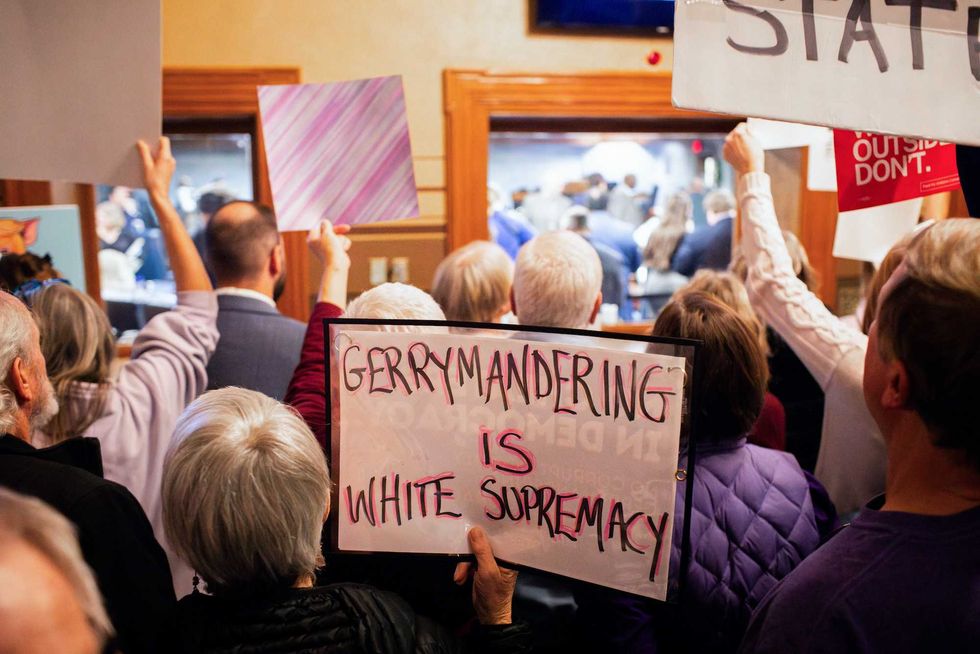
The state Senate in Indiana voted against a redistricting map that would have helped President Donald Trump's plan to continue Republican control of the U.S. House of Representatives.The president has successfully persuaded Republican-controlled legislatures in other states to redistrict their maps ahead of the midterm elections, but the effort failed in Indiana after a vote on Thursday.'Living in a free constitutional republic means we empower voters to make those decisions.'All 10 of the state Senate's Democrats and 21 Republicans voted to reject the map which had been passed by the Indiana House of Representatives. Only 19 voted in favor of redistricting. In a lengthy statement on Wednesday, the president lambasted the Indiana Republicans who had come out against the redistricting map and threatened to support primary opponents to unseat them."Anybody that votes against Redistricting, and the SUCCESS of the Republican Party in D.C., will be, I am sure, met with a MAGA Primary in the Spring," the president wrote on social media. "If Republicans will not do what is necessary to save our Country, they will eventually lose everything to the Democrats."Vice President JD Vance also criticized those Republicans after the vote."Rod Bray, the Senate leader in Indiana, has consistently told us he wouldn't fight redistricting while simultaneously whipping his members against it. That level of dishonesty cannot be rewarded, and the Indiana GOP needs to choose a side," he wrote on social media.One Republican who opposed redistricting said the voters should decide the midterm elections, not through redrawing district maps."I, like a supermajority of you, do not want to see another Democrat Speaker of the House," said Republican state Sen. Spencer Deery. "But that isn't for me to decide, and it isn't for anyone in this body to decide either. Living in a free constitutional republic means we empower voters to make those decisions."Some Republicans have reported violent threats over the redistricting debate."Unfortunately, my house was the target of a pipe bomb threat on Saturday evening. This is a result of the D.C. political pundits for redistricting," state Sen. Jean Leising said.RELATED: Supreme Court allows Texas redistricting map for midterm elections despite liberal dissent "I fear for this institution, I fear for the state of Indiana, and I fear for all states if we allow intimidation and threats to become the norm," said Republican state Sen. Greg Walker, who also claimed to have received threats about his opposition to redistricting.Now those Republicans will likely face the ire of the president in future re-election campaigns."I will do everything within my power to make sure that they will not hurt the Republican Party, and our Country, again," the president said regarding the Republican dissenters.Like Blaze News? Bypass the censors, sign up for our newsletters, and get stories like this direct to your inbox. Sign up here!
Like
Comment
Share
History Traveler
History Traveler
1 w

Archaeologists Believe They’ve Discovered The Earliest-Known Evidence Of Fire Made By Humans
Favicon 
allthatsinteresting.com

Archaeologists Believe They’ve Discovered The Earliest-Known Evidence Of Fire Made By Humans

Pathways to Ancient Britain Project & Jordan MansfieldThe archaeological site in Barnham, England, where researchers have found the oldest-known evidence of humans making fire. While excavating an ancient site near Barnham, Suffolk, England, archaeologists found a wealth of remains from prehistoric wildlife, including bison, elephants, deer, frogs, fish, and even monkeys. But the most exciting artifacts that they uncovered were two small pieces of pyrite — evidence that early humans were making fire here. Archaeologists estimate that this fire-making took place some 400,000 years ago — about 350,000 years earlier than experts thought this milestone in human development was first achieved. Evidence suggests that the early humans living here not only knew how to make fire, but had also learned how to control it and had already started benefitting from this advancement in multiple ways. Researchers now believe that the story of when fire was first discovered has just been rewritten. Discoveries At Barnham Provide Evidence Of The Oldest-Known Fire-Making In Human History According to a study published in Nature, the discovery of the fire-making pyrite rocks was made at a disused clay pit near Barnham. Researchers have been working at the site since the 1980s, but it was only during a recent dig that archaeologists started to document evidence of humankind’s earliest-known creation of fire. Specifically, they found “fire-cracked flint handaxes” as well as sediment that showed signs of repeated burning. Fires, of course, can occur naturally. But the small pieces of pyrite that researchers found at the site suggest that the fires here had been set intentionally, especially because pyrite was not a local material. Early people would have carried the pyrite from somewhere else, seemingly with the intention to use it to produce sparks in order to make fires. Pathways to Ancient Britain Project/Jordan MansfieldThis small piece of pyrite is the “smoking gun” proving that this site had been used for fire-making 400,000 years ago. “As soon as we saw the pyrite, we realized we had found something remarkable,” study co-author Simon Parfitt of University College London remarked to the National History Museum. “Because pyrite doesn’t occur naturally in that landscape, its presence shows they had the ability to make fire at will. It would have been an essential part of a fire-making toolkit.” This discovery is especially remarkable because it suggests that early humans were intentionally making fire far earlier than previously known. Researchers have found evidence of intentional fire-making at a 50,000-year-old site in northern France, but the Barnham site pushes the timeline of fire-making back by an astounding 350,000 years. But who exactly was making these fires? Who Made The Historic Fires Uncovered At Barnham? At the time of the Barnham fires, some 400,000 years ago, our human ancestors, Homo sapiens, were still in Africa. So, the fire-makers here in Barnham were a different species of early human, though researchers aren’t positive who it was. Craig Williams/The Trustees of the British MuseumA depiction of an early human making fire by using pyrite to produce a spark. For now, researchers suspect that the fire-makers at Barnham were early Neanderthals. However, it’s difficult to know for certain, as they haven’t yet discovered any human remains at the site. Whoever these fire-makers were, researchers suspect that they migrated from continental Europe — where they probably first learned to use pyrite to make fires — during a cold period. Once in England, their fire-making technology would have helped them to ward off predators, keep warm on icy nights, and experiment with cooking food. However, recent research suggests that there’s no definitive answer to the question of why humans first began making fires. Regardless, researchers argue that the advent of fire-making would have also led to better nutrition, which helped early humans grow bigger brains and develop new skills. Meanwhile, fires also became social nexuses, where people could gather and share knowledge. “Fire is a source of warmth, and on cold, dark nights it can extend the day,” said Dr. Silvia Bello, a National History Museum expert on human behavior. “Surely at times when people couldn’t hunt, the fire was a good space to gather, interact with each other and potentially learn and teach.” She added: “There is always this aspect, that is a bit less visible in archaeology, which is the transmission of knowledge. The knowledge from adults to the kids, or the opportunity of learning from each other how to make and use tools. I imagine that fires were good learning areas.” After reading about the discovery of humankind’s earliest-known fire-making, learn about the most fearsome prehistoric animals. Then, go inside the question of when woolly mammoths went extinct. The post Archaeologists Believe They’ve Discovered The Earliest-Known Evidence Of Fire Made By Humans appeared first on All That's Interesting.
Like
Comment
Share
History Traveler
History Traveler
1 w

Researchers Just Discovered A New Prehistoric Sea Cow Species That Lived 21 Million Years Ago
Favicon 
allthatsinteresting.com

Researchers Just Discovered A New Prehistoric Sea Cow Species That Lived 21 Million Years Ago

Alex BoersmaAn illustration of prehistoric sea cows. Today, it is known that dugongs, also known as sea cows, play an important role in their ocean ecosystems by consuming seagrass, digging up important nutrients, and reshaping the seafloor. These animals are sometimes even dubbed “ecosystem engineers.” Now, a new study suggests that sea cows have been doing this crucial ecosystem work for tens of millions of years, and that a previously unknown — but now extinct — sea cow species once played a part in that prehistoric “engineering.” Research conducted on 21-million-year-old fossils from Qatar by experts at the Smithsonian’s National Museum of Natural History (NMNH) and the Qatar Museums revealed the new species, Salwasiren qatarensis. The analysis also suggested that the sea cow’s role as an ecosystem engineer is not a recent one. The Salwasiren qatarensis was likely a smaller version of today’s dugongs. Their presence in the Al Maszhabiya site suggests that the area was once rich with seagrass, and that other types of sea cows evolved in the Persian Gulf over the millennia, changing the seafloor again and again. All About Salwasiren Qatarensis, The Newly Identified Prehistoric Sea Cows Qatar Museums, Doha, State of Qatar. Photo by James Di Loreto/SmithsonianSalwasiren qatarensis fossils. The Salwasiren qatarensis was described in a recent report in the journal PeerJ, which also highlights the crucial role the sea cows played as ecosystem engineers. The animals were smaller than modern dugongs, which can weigh up to eight times more than the Salwasiren qatarensis (the prehistoric creature probably weighed about 250 pounds). The discovery came after researchers identified fossils at the Al Maszhabiya site in Qatar that resembled modern dugongs, but contained hind limb bones, which modern dugongs no longer possess due to evolution. These prehistoric sea cows also had straighter snouts and smaller tusks. Due to the amount of Salwasiren qatarensis fossils present at the site, researchers suggested that Al Maszhabiya was once a hotspot for biodiversity. The region likely boasted plentiful seagrass beds that flourished in the area tens of millions of years ago. Clare FieselerNicholas Pyenson, who helped lead the new study, excavating fossils at Al Maszhabiya. “The density of the Al Maszhabiya bonebed gives us a big clue that Salwasiren played the role of a seagrass ecosystem engineer in the Early Miocene the way that dugongs do today,” Nicholas Pyenson, who helped lead the new study, said in a statement. “There’s been a full replacement of the evolutionary actors but not their ecological roles.” As the Salwasiren qatarensis grazed the seagrass, they likely dug up nutrients from the seafloor, which benefitted the other living things in the area. As they feasted, they probably also helped reshape the seafloor itself, further adding to the impact they had on the environment. “We know today that many marine mammals can have a disproportionate impact on ocean ecosystems. [But] we don’t know how long that’s been going on,” Pyenson explained to the Smithsonian Magazine. “So, this is one of the first times, I think, we can point and say, ‘Gosh, this has probably been going on for tens of millions of years.'” The Al Maszhabiya Site And Its Massive Trove Of Prehistoric Fossils Nicholas D. Pyenson/SmithsonianQatar Museums staff members at the Al Maszhabiya site. The Al Maszhabiya site was first discovered in the 1970s, but at the time, it wasn’t clear that the fossils came from sea cows. Instead, it was thought they belonged to prehistoric reptiles. Upon revisiting the site in the early 2000s, paleontologists realized the true nature of the remains. However, it took many years for thorough research on these sea cow fossils to get started. After Pyenson and his co-author Christopher Marshall learned about the treasure trove of fossils in the 2010s, delays like the COVID-19 pandemic and the 2022 FIFA World Cup, which was hosted in Qatar, meant that they couldn’t start properly analyzing the fossils until 2023. Since their arrival at the site, the research team has been able to identify 200 different locations of sea cow fossils. Many of the fossils were found less than 10 miles away from a bay where dugongs live today. The Smithsonian’s National Museum of Natural History (NMNH) and the Qatar Museums are continuing to work together to further study the sea cow fossils and other prehistoric finds at Al Maszhabiya. Researchers with Qatar Museums are also working to get the site recognized as a UNESCO World Heritage Site. Next, see how bison are revitalizing Yellowstone’s ecosystem. Then, learn about the prehistoric polar rhino recently identified by researchers. The post Researchers Just Discovered A New Prehistoric Sea Cow Species That Lived 21 Million Years Ago appeared first on All That's Interesting.
Like
Comment
Share
Twitchy Feed
Twitchy Feed
1 w

Revolutionary Genius: Progressives to Dump Little Blocks of Water Into a Big Body of Water to Protest ICE
Favicon 
twitchy.com

Revolutionary Genius: Progressives to Dump Little Blocks of Water Into a Big Body of Water to Protest ICE

Revolutionary Genius: Progressives to Dump Little Blocks of Water Into a Big Body of Water to Protest ICE
Like
Comment
Share
Twitchy Feed
Twitchy Feed
1 w

Congressman Plays Gotcha With Kristi Noem Deporting Military Veterans, Loses
Favicon 
twitchy.com

Congressman Plays Gotcha With Kristi Noem Deporting Military Veterans, Loses

Congressman Plays Gotcha With Kristi Noem Deporting Military Veterans, Loses
Like
Comment
Share
Twitchy Feed
Twitchy Feed
1 w

Monster in a Tie: Kirk's Killer Giggles in Court While Theorists Play Right Into His Hands
Favicon 
twitchy.com

Monster in a Tie: Kirk's Killer Giggles in Court While Theorists Play Right Into His Hands

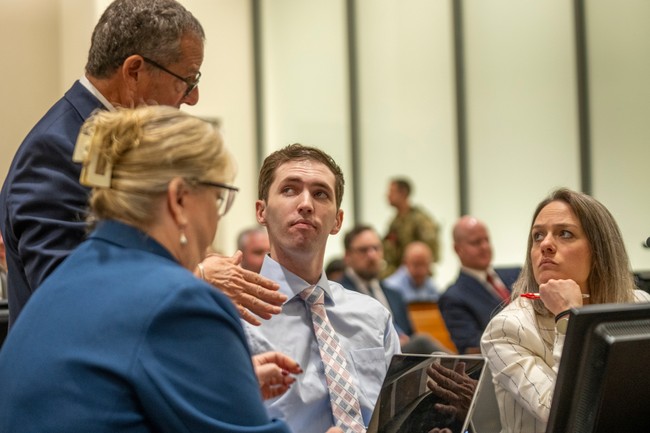
Monster in a Tie: Kirk's Killer Giggles in Court While Theorists Play Right Into His Hands
Like
Comment
Share
Showing 1252 out of 103527
  • 1248
  • 1249
  • 1250
  • 1251
  • 1252
  • 1253
  • 1254
  • 1255
  • 1256
  • 1257
  • 1258
  • 1259
  • 1260
  • 1261
  • 1262
  • 1263
  • 1264
  • 1265
  • 1266
  • 1267
Advertisement
Stop Seeing These Ads

Edit Offer

Add tier


Select an image
Delete your tier
Are you sure you want to delete this tier?

Reviews

In order to sell your content and posts, start by creating a few packages. Monetization

Pay By Wallet

Payment Alert

You are about to purchase the items, do you want to proceed?

Request a Refund