YubNub Social YubNub Social
    #k #streetingtrial #wesstreeting #saynottopubertyblockers
    Advanced Search
  • Login
  • Register

  • Night mode
  • © 2026 YubNub Social
    About • Directory • Contact Us • Developers • Privacy Policy • Terms of Use • shareasale • FB Webview Detected • Android • Apple iOS • Get Our App

    Select Language

  • English
Night mode toggle
Featured Content
Community
New Posts (Home) ChatBox Popular Posts Reels Game Zone Top PodCasts
Explore
Explore
© 2026 YubNub Social
  • English
About • Directory • Contact Us • Developers • Privacy Policy • Terms of Use • shareasale • FB Webview Detected • Android • Apple iOS • Get Our App
Advertisement
Stop Seeing These Ads

Discover posts

Posts

Users

Pages

Blog

Market

Events

Games

Forum

Constitution Watch
Constitution Watch
1 w ·Youtube Politics

YouTube
5.8 Million Dirty Names Removed from Voter Rolls Thanks to Judicial Watch!
Like
Comment
Share
Constitution Watch
Constitution Watch
1 w ·Youtube Politics

YouTube
Judicial Watch Senior Attorney T. Russell Nobile to Testify Before Congress on Election Integrity
Like
Comment
Share
Constitution Watch
Constitution Watch
1 w

An interim docket with long-term effects
Favicon 
www.scotusblog.com

An interim docket with long-term effects

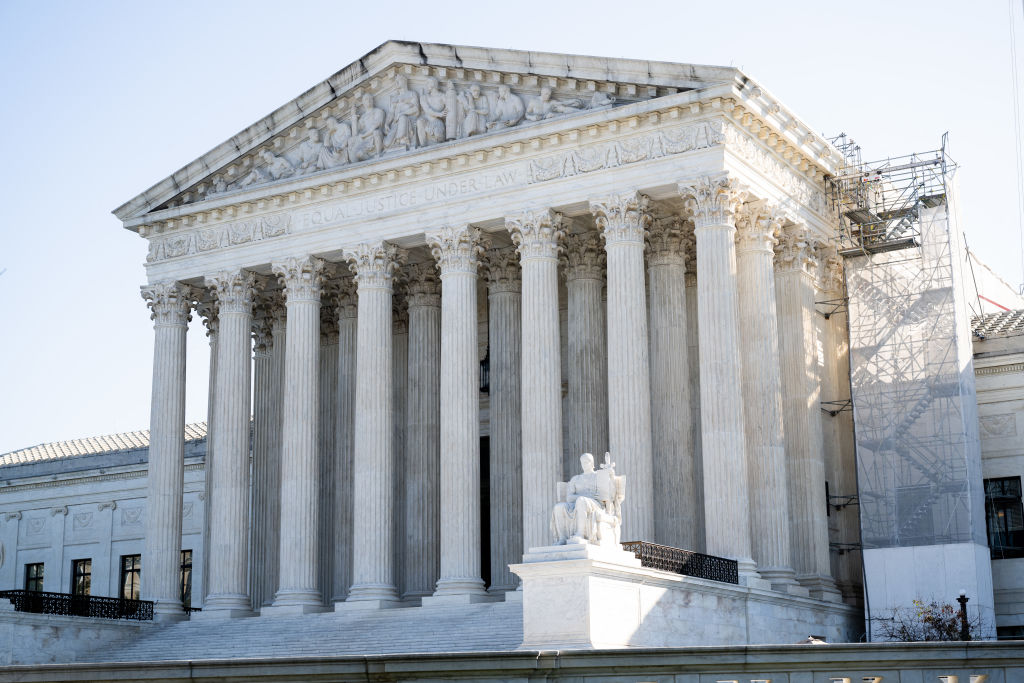
Last week, the Supreme Court issued a one-sentence order that cleared the way for California to use a new congressional map intended to add five Democratic seats in the U.S. House of Representatives. The California map was a response to Texas’ adoption of a new map that created five House seats favorable to Republicans. The justices in December had allowed Texas to use its new map. Both cases came to the court on its “interim” docket, so that the court’s rulings merely granted or denied requests for preliminary relief while the challenges to the map continue. But both cases also illustrate an important, and often underappreciated, aspect of this docket: even if the rulings are theoretically only temporary, they can have lasting, if not permanent, consequences. The following is not exhaustive, but I explore below some other cases that, although on the interim docket, have had such effects. Temporary Protected Status One stark example of this can be seen in the Trump administration’s efforts to end protected status for hundreds of thousands of Venezuelan nationals under federal immigration law. Under a program known as Temporary Protected Status, the Department of Homeland Security can designate a country’s citizens as eligible to remain in the United States and work when they cannot return to their home country because of a natural disaster, armed conflict, or other “extraordinary and temporary conditions” there. In 2021, then-DHS secretary Alejandro Mayorkas designated Venezuela under the TPS program and then redesignated it in 2023. In 2025, shortly before leaving office, he announced that the program would be extended through October 2026. In February 2025, the new DHS secretary, Kristi Noem, terminated both Mayorkas’ 2023 designation of Venezuela and his 2025 extension of the program. A group representing TPS holders and several individual Venezuelan TPS holders went to federal court in San Francisco, where U.S. District Judge Edward Chen first issued a preliminary order barring the Trump administration from ending the TPS designation and its extension and, on Sept. 5, a final judgment concluding that Noem’s revocation of TPS for Venezuela violated the federal law governing administrative agencies. But the Supreme Court twice paused Chen’s rulings, giving the Trump administration the green light to move forward with stripping Venezuelan nationals of protected status while the litigation continues. As the U.S. Court of Appeals for the 9th Circuit observed in a Jan. 28 decision that upheld Chen’s Sept. 5 ruling, Noem’s actions “have had real and significant consequences for the hundreds of thousands of Venezuelans” who were in the United States under the TPS program. A declaration filed with the district court in July 2025 by Emilia Garcia, an investigator for the ACLU, which represents the challengers, recounted stories of several Venezuelans with TPS who had been deported after the Supreme Court’s initial order in May 2025 pausing Chen’s ruling. Ahilan Arulanantham, a UCLA law professor who also represents the Venezuelan TPS holders, said that although it is difficult to know precisely how many TPS holders have been detained and deported since the court’s decisions on the interim docket, the number was likely “at least in the hundreds” and “probably in the thousands.” And because the TPS program only applies to people who are already in the United States, without providing legal permission to enter the United States, TPS holders who have already been deported are unlikely to be able to return even if Noem’s termination of the program were ultimately struck down. Transgender people in the military A May 6, 2025, order by the Supreme Court that allowed the Trump administration to begin enforcing a Department of Defense policy prohibiting transgender people from serving in the U.S. military provides another example. The court’s order came less than four months after President Donald Trump revoked a 2021 executive order that allowed transgender troops to serve openly in the military. On Feb. 26, 2025, the Department of Defense issued a new policy that generally disqualified anyone with gender dysphoria, which is the medical term for the psychological distress caused by a conflict between someone’s biological sex at birth and that person’s gender identity, from military service. Several transgender members of the military and a nonprofit with members who either are transgender troops or would like to be went to federal court in Washington state to challenge the new policy. U.S. District Judge Benjamin Settle agreed with them that the ban violated (among other things) the Constitution’s guarantee of equal protection. After the 9th Circuit rejected the government’s request to freeze Settle’s order while the government’s appeal went forward, the Trump administration came to the Supreme Court on April 24, asking the justices to intervene. Approximately two weeks later, with the court’s three Democratic appointees indicating that they would have denied the request, the court paused Settle’s order while the litigation continued. The 9th Circuit heard arguments in October 2025 on the government’s appeal of the preliminary injunction that Settle issued last year, but it has not yet issued its decision. And back in the district court, Settle set a four-day bench trial for Nov. 3 of this year. But in the wake of the Supreme Court’s ruling in May, the Department of Defense moved forward with the process of separating transgender service members from the military. The lead plaintiff in the case, Cdr. Emily Shilling, was a naval aviator for nearly two decades and would have been eligible for retirement in September 2025. She told ABC News that, “under duress,” she began to voluntarily separate from the Navy. “You know, I was coerced into it,” she said, “because … the voluntary separation would give me an honorable discharge with some portion of my retirement, and I’d be able to keep all of my benefits.” In a separate case pending in the U.S. Court of Appeals for the District of Columbia Circuit, lawyers representing the challengers told the court in a letter late last month that “many transgender servicemembers … have undergone the so-called ‘voluntary separation’ process or early retirement process under the Hegseth Policy and been discharged from military service.” The National Guard On Dec. 23, 2025, the Supreme Court turned down a request from the Trump administration to pause a ruling by a federal judge in Chicago that barred the government from deploying National Guard troops in Illinois. The order – which came over the objections of three of the court’s Republican appointees (Justices Clarence Thomas, Samuel Alito, and Neil Gorsuch) – meant that an Oct. 9, 2025, temporary restraining order issued by Judge April Perry would remain in place while litigation continued. But here too the court’s “temporary” order had broader effects: on Dec. 31, Trump indicated that he would remove National Guard troops from Los Angeles and end his efforts to deploy troops in Chicago and Portland. (By most accounts he has done so.) Temporary relief? When the court is considering whether to grant temporary relief, one factor that it considers is whether the litigant seeking that relief is ultimately likely to prevail on the merits of the dispute. If that’s true, some may ask, wouldn’t these consequences occur eventually anyway? Not necessarily. You don’t have to look far to find cases in which the Supreme Court reached one result at a preliminary stage but then reached the opposite result after additional briefing and oral arguments. In Allen v. Milligan, for example, the court allowed Alabama to use a new congressional map in the 2022 elections despite a lower court’s finding that the map likely violated the federal Voting Rights Act. Republicans went on to win six of the state’s seven House seats in November 2022. But in June 2023, by a vote of 5-4, the court reversed course and agreed with the lower court that the new map likely did violate the Voting Rights Act. That led to the adoption of a new map, in which Democrats picked up an additional House seat in the 2024 elections. Also in 2022, the Supreme Court turned down the Biden administration’s request to pause a ruling by a federal district court in Texas that invalidated a new federal policy that prioritized certain groups of unauthorized immigrants for arrest and deportation. The justices heard oral arguments in the dispute four months later; seven months after that, they ruled that Texas and Louisiana, the two states that brought the lawsuit, did not have a legal right to sue, known as standing, to challenge the policy in the first place. To be sure, not all of the court’s orders on the interim docket necessarily have lasting repercussions. Just a few days before the court declined to block the order barring the Trump administration from deploying National Guard troops to Illinois, it also refused to intervene in a dispute over a policy restricting speaking engagements by immigration judges. And in September, it turned down a request from a South Carolina school district to pause a federal appeals court ruling that required the district to allow a transgender boy to use the boys’ bathroom while litigation over the state’s bathroom policy continued. But as the TPS, transgender military, and National Guard cases illustrate, sometimes the effects of the court’s orders on the interim docket can be profoundly significant. The post An interim docket with long-term effects appeared first on SCOTUSblog.

Like
Comment
Share
Constitution Watch
Constitution Watch
1 w

No invitation necessary: when the solicitor general weighs in unsolicited
Favicon 
www.scotusblog.com

No invitation necessary: when the solicitor general weighs in unsolicited

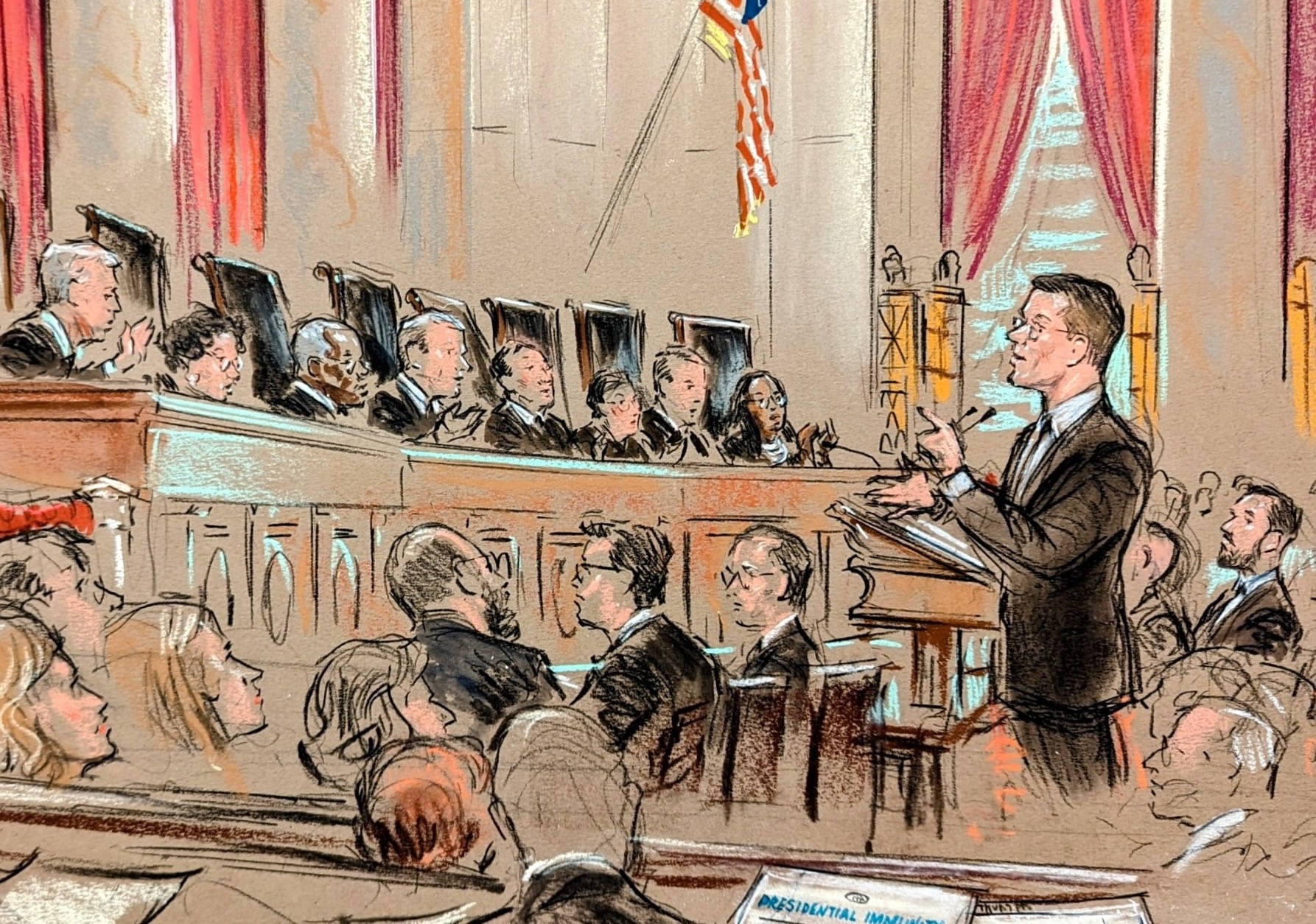
For decades, the U.S. solicitor general’s most familiar role at the certiorari stage has been reactive rather than proactive: When the Supreme Court wants the federal government’s views on a certiorari petition in a case in which the United States is not a party, it usually has to ask for them – through a call for the views of the solicitor general, or CVSG. That process began in 1957 and became institutionalized in the 1960s. CVSGs are unusual but not rare, happening around 10 or 11 times every term, and they serve as powerful signals that a petition has attracted the court’s serious attention. Alongside that familiar practice has existed a second, rarer one: the filing of uninvited amicus briefs by the solicitor general at the certiorari stage. Historically, such briefs were exceptional. But during the second Trump administration, they have become noticeably more frequent. That development raises an obvious institutional question: what happens when a practice that has long been extraordinary becomes more routine? Some lawyers in the office of the solicitor general have worried that increased filings would risk diluting the signaling value of uninvited amicus briefs. But the court’s response so far suggests a more modest conclusion: success still turns on whether the solicitor general has made a persuasive argument, not merely on the unusual nature of the filing. The historical baseline – and why it existed The rarity of uninvited cert-stage amicus curiae (“friend of the court”) briefs was not accidental. It reflected a deeply embedded norm about the solicitor general’s institutional role. As Patricia Millett – writing in 2009 from her experience as an assistant to the solicitor general – explained, unsolicited cert-stage participation has long been considered appropriate only in cases involving “questions of profound and enduring institutional interest to the federal government,” where the United States had a “distinct message to bring to the certiorari debate.” So although the United States, alone among potential amici, has under the Supreme Court’s rules not needed party consent or leave of court, the solicitor general’s office applied a “weighty presumption against such filings” and would file only if the case for doing so was “extraordinarily compelling.” (The first court rules I have been able to locate that mention amicus practice, from 1939, also exempted the United States from the consent or leave requirement.) Millett also identified a secondary reason for restraint: capacity. She warned that “appearing as amicus at the certiorari stage more frequently would be unworkable,” explaining that if the solicitor general’s office were “to get into the habit of routinely filing uninvited amicus briefs, the Office—with its already spartan staffing levels—would likely be overwhelmed by the number of requests for such support.” Rarity, in other words, served a dual function. It preserved the credibility of the solicitor general’s voice with the court, as well as the solicitor general office’s resources. How rare was “rare”? From the beginning of the Clinton administration to the end of the Biden administration – a period of 32 years – I have been able to identify just 17 uninvited amicus briefs. (Readers should flag any I have missed – this piece will be updated accordingly.) Five during President Bill Clinton’s two terms; seven during President George W. Bush’s; two during President Barack Obama’s; two during President Donald Trump’s first term; and one during President Joe Biden’s single term (which was filed at the “motion for stay” stage rather than certiorari stage, but the posture is similar enough to warrant inclusion). The early years of the George W. Bush administration marked a notable departure from that baseline. In a two-year period under Solicitor General Theodore Olson, the solicitor general’s office filed five uninvited cert-stage briefs in cases involving school vouchers, antitrust, and foreign relations. But beginning in 2003, the pace of such filings slowed dramatically, with just seven filings over the next 21 years. That history makes the recent uptick all the more striking. In just over its first year, the solicitor general’s office during the second Trump administration has filed five uninvited cert-stage amicus briefs across a range of subject areas – including the Second Amendment, religious liberty, capital punishment, Bivens remedies, and federal preemption of climate-related suits against energy companies. In addition, although not technically at the petition stage, the solicitor general’s office has filed an amicus brief supporting Texas’s application for a stay, and in a separate redistricting case in California – where the government had intervened below – it filed an unsolicited brief as respondent supporting the applicants’ request for a stay. All told, the current administration has filed roughly seven briefs in cases not on the court’s merits docket in which it had no obligation to participate. In absolute terms, the numbers remain small. But relative to historical practice, the increase is meaningful. A mechanism once used sparingly is now being deployed with some regularity. Measuring success: grants, not judgments The natural question is how successful such filings have been. Answering that question requires choosing the right metric. At the certiorari (or stay) stage, the solicitor general’s principal objective is not to prevail on the merits, but to persuade the court that a case warrants review – or that interim relief is appropriate. Whether the court ultimately agrees with the government’s legal position after full briefing and argument is a separate matter, shaped by doctrinal, factual, and institutional considerations that extend far beyond the cert stage. Viewed through that lens, the government’s record has been impressive. Aside from three early Clinton-era briefs (whose lack of success may have reinforced the idea that frequent filings would be counterproductive), one Biden-era stay opposition, and a recent Trump-second-term stay brief (I’ve excluded from my count one Bush-era brief in a case where the court lacked a quorum to act), the court has acted consistently with the solicitor general’s recommendation. Specifically, the solicitor general has succeeded in 16 of 21 resolved cases (two petitions are still pending). That is an agreement rate of 76.19%. The grant rate in these cases far exceeds the baseline rate for paid petitions and compares favorably even to cases that attract significant amicus attention from private parties. But it is actually slightly lower than the court’s agreement rate with recommended dispositions in CVSG briefs, which hover around 80%. That high agreement rate does not mean the court is deferring reflexively to the solicitor general, at least on the merits. In several prominent cases – including Trump v. Vance, concerning the standard for the issuance of a state criminal subpoena to a sitting president – the court granted review after an uninvited brief and then rejected the government’s position on the merits. But those cases underscore, rather than undermine, the point: the court appears willing to take cases flagged by the solicitor general as cert-worthy even when it is unpersuaded by the government’s ultimate legal argument on the merits. That reflects respect for the solicitor general’s judgment about which cases merit the court’s attention, not blind acceptance of the government’s views. Busy periods and what they reveal Looking across administrations, patterns in subject matter are at least as revealing as raw numbers. Certain subjects seem evergreen: Bivens and federal agent liability (four briefs); foreign affairs (three); antitrust (two); and Indian law (two). Those issues fit comfortably within the traditional framework Millett described, as they involve questions of great institutional importance where the United States had a “distinct message to bring to the certiorari debate.” The three identifiable “busy periods” over the last thirty years – during the Clinton administration, during Solicitor General Olson’s tenure, and today – involved those recurring topics but also something more: issues of particular importance to the sitting administration or solicitor general. Clinton’s first solicitor general, Drew Days, filed two uninvited briefs involving affirmative action programs; Olson filed one involving school choice. As noted above, the current administration has filed uninvited briefs involving Second Amendment rights, federal preemption of climate-related suits against energy companies, and religious liberty. Each represent issues of importance to the sitting administration that were apparently at doctrinal inflection points – moments when the solicitor general concluded the court’s intervention was necessary, even without an invitation. Dilution versus discipline As uninvited cert-stage briefs become more common, each individual filing may carry less institutional weight. A justice encountering such a brief today may reasonably wonder whether it signals a truly exceptional case or merely reflects a more assertive cert-stage posture by the executive branch. There is also the question of sustainability. Concerns about staffing levels have not disappeared, and the solicitor general’s office remains responsible for an enormous docket as a party, as an invited cert-stage amicus, and as an amicus at the merits stage. At the same time, the court’s response suggests that substance still controls. The recent surge in filings – like the one during Olson’s tenure – has been overwhelmingly successful so far. By contrast, the Biden administration’s sole uninvited submission (a rare opposition to a stay request) was unsuccessful. Thus, dilution seems to be less of a factor than whether a particular submission has made a persuasive case to the court. It may be that ideological alignment plays some role in persuasion. But given the small numbers at issue here it is difficult to draw firm statistical conclusions; studying the success rates of the far more common CVSG briefs under different administrations would likely be a better indicator of the significance of that factor. Conclusion The increased use of uninvited cert-stage amicus briefs reflects a meaningful shift in Supreme Court practice. A tool once reserved for the most extraordinary circumstances is now being used more frequently and across a wider range of issues. That change carries risks – for the signal value of such filings and for the institutional capacity of the solicitor general’s office. Whether this recalibrated practice will endure across administrations remains to be seen. For now, the court continues to grant review. It would appear that the court does so not simply because the solicitor general has spoken, however, but – as proven by its careful consideration of the merits – because the solicitor general has made a compelling case for why the court should act. The post No invitation necessary: when the solicitor general weighs in unsolicited appeared first on SCOTUSblog.
Like
Comment
Share
Comedy Corner
Comedy Corner
1 w ·Youtube Funny Stuff

YouTube
Dating Jokes
Like
Comment
Share
Red White & True History
1 w

Today in World War II History—February 10, 1941
Favicon 
www.sarahsundin.com

Today in World War II History—February 10, 1941

RAF Short Stirling bomber N6101 of No 1651 Heavy Conversion Unit RAF, Waterbeach, Cambridgeshire, Apr 1942 (Imperial War Museum: TR 35) 85 Years Ago—Feb. 10, 1941: Adm. François Darlan becomes Vice President of the Council (deputy prime minister) of the French State (Vichy France), as well as foreign minister, minister of information, and minister of the navy. RAF Short Stirling heavy bombers are first used in combat, in a raid on German-occupied Rotterdam in the Netherlands. First British airborne mission: paratroops drop into Calabria, Italy, where they will destroy the Tragino Aqueduct the next day.The post Today in World War II History—February 10, 1941 first appeared on Sarah Sundin.
Like
Comment
Share
Entertainment News
Entertainment News
1 w

Christian Influencer Gives God Her Highs and Lows
Favicon 
www.movieguide.org

Christian Influencer Gives God Her Highs and Lows

Christian influencer Brittany Lutz took a moment to share “some honest thoughts and reflections from January," opening up about different...
Like
Comment
Share
Entertainment News
Entertainment News
1 w

‘You Are a Masterpiece,’ Reality Star Says. Here’s Why.
Favicon 
www.movieguide.org

‘You Are a Masterpiece,’ Reality Star Says. Here’s Why.

DUCK DYNASTY’s Sadie Robertson Huff says you are a masterpiece when you have God’s light shining in you. “You are a masterpiece, not...
Like
Comment
Share
Young Conservatives
Young Conservatives
1 w ·Youtube General Interest

YouTube
Chicago Judge ROBS Black War Hero
Like
Comment
Share
Young Conservatives
Young Conservatives
1 w ·Youtube General Interest

YouTube
'DEAD ICE AGENTS CAN'T KILL': poster calls for violence against federal law enforcement
Like
Comment
Share
Showing 1661 out of 111014
  • 1657
  • 1658
  • 1659
  • 1660
  • 1661
  • 1662
  • 1663
  • 1664
  • 1665
  • 1666
  • 1667
  • 1668
  • 1669
  • 1670
  • 1671
  • 1672
  • 1673
  • 1674
  • 1675
  • 1676
Advertisement
Stop Seeing These Ads

Edit Offer

Add tier


Select an image
Delete your tier
Are you sure you want to delete this tier?

Reviews

In order to sell your content and posts, start by creating a few packages. Monetization

Pay By Wallet

Payment Alert

You are about to purchase the items, do you want to proceed?

Request a Refund