YubNub Social YubNub Social
    #astronomy #nightsky #florida #humor #law #loonylibs #electionfraud #voterfraud #civilrights #trans #lawsuit #funny #jupiter #policemisconduct #lies
    Advanced Search
  • Login
  • Register

  • Night mode
  • © 2026 YubNub Social
    About • Directory • Contact Us • Developers • Privacy Policy • Terms of Use • shareasale • FB Webview Detected • Android • Apple iOS • Get Our App

    Select Language

  • English
Community
New Posts (Home) ChatBox Popular Posts Reels Game Zone Top PodCasts
Explore
Explore
© 2026 YubNub Social
  • English
About • Directory • Contact Us • Developers • Privacy Policy • Terms of Use • shareasale • FB Webview Detected • Android • Apple iOS • Get Our App
Advertisement
Stop Seeing These Ads

Discover posts

Posts

Users

Pages

Blog

Market

Events

Games

Forum

Intel Uncensored
Intel Uncensored
4 w

AI and Agenda 2030: The blueprint for total control?
Favicon 
www.sgtreport.com

AI and Agenda 2030: The blueprint for total control?

by Wallace Garneau, America Outloud: Recently, I was reading an article on Canada Free Press when an advertisement for AI (Artificial Intelligence) popped up. Since AI and data centers have become a hot issue recently, I read the advertisement. I could not believe how they laid out exactly how they plan to totally own and […]
Like
Comment
Share
Pet Life
Pet Life
4 w ·Youtube Pets & Animals

YouTube
Sally Field and Lewis Pullman Need To Know Who Ends Up Adopting Their Date… | The Dodo
Like
Comment
Share
History Traveler
History Traveler
4 w

How the Spear Became the Weapon That Shaped Empires
Favicon 
www.thecollector.com

How the Spear Became the Weapon That Shaped Empires

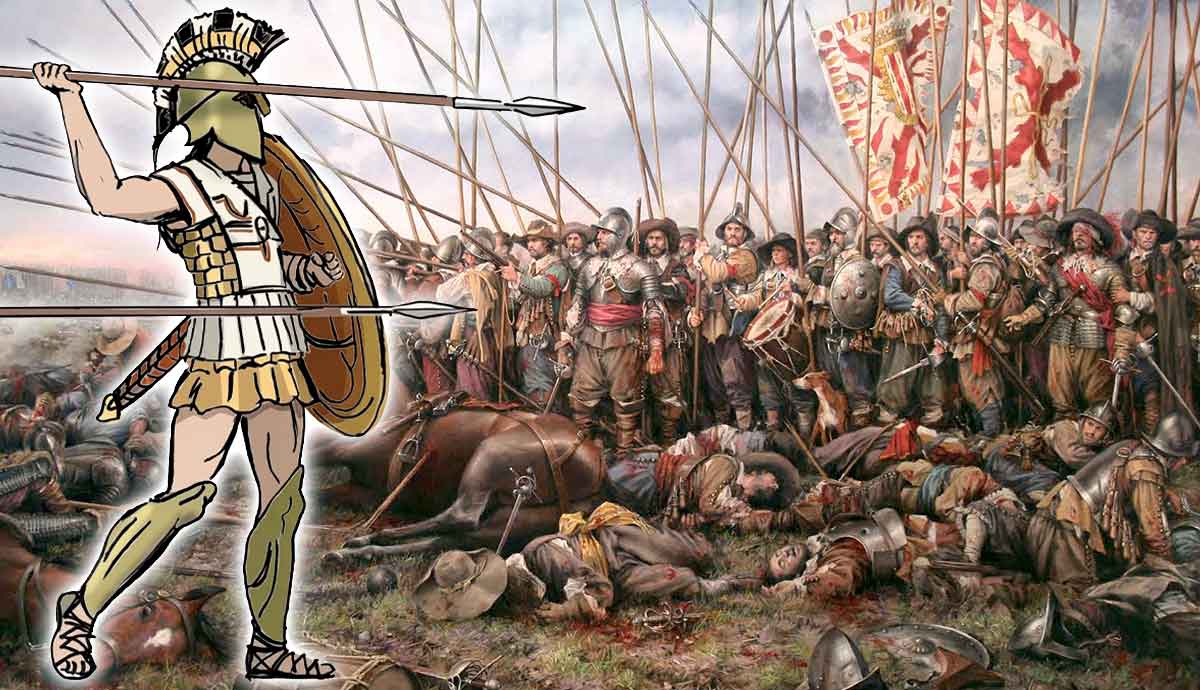
  Beginning as little more than a pointed haft, the spear is one of the simplest weapons ever designed. Yet it has seen pragmatic use from the dawn of mankind to the present day. It was, in many aspects, the perfect weapon, finding use in a variety of situations, whether it was on the battlefield, in the forest hunting deer and boar, or on the shores spearing fish for dinner.   The evolution of the spear is one that spans all of history, as well as prehistory, as it was not our Homo sapiens species who invented it, but our long-lost hominin brethren over a million years ago!   Prehistoric Beginnings A Neanderthal hunter with a fire-hardened spear designed for thrusting. Source: Gallo-Romeins Museum Tongeren (Belgium)/Wikimedia Commons   Spears have a story longer than our own species, and they didn’t evolve at a single moment of prehistory. It is likely that our Homo habilis ancestors (2.4 million to 1.4 million years ago) started the evolution with their use of pointed sticks. These tools were simple and a far cry from the spears that came later. Homo erectus (2 million to 250,000 years ago) also made use of pointed sticks with slight refinements. Evidence for these “spears” is lacking and is based on assumption rather than hard evidence. Wood requires specific conditions for preservation, and no spears (or pointed sticks) old enough to confirm these assumptions have been found. Nevertheless, pointed sticks represent a major technological leap in the history of our extended species.   Hard evidence in this quest for the usage of the spear comes from Schöningen, Helmstedt district, Germany. The spears are estimated to be between 337,000 and 300,000 years old and were made by Homo heidelbergensis, the ancestors of Homo neanderthalensis, and us, Homo sapiens. The age of these spears is open to debate, and different analysis suggests they may be older or younger. Nevertheless, they existed at the same time as the Neanderthals, and it is possible the two species met. It is even possible that the spears were made by Neanderthals instead, and this conjecture has gained momentum in recent years, with dating suggesting the spears are as recent as 200,000 years old. It had been suggested that the spears were for throwing and thrusting, but with heads that were carved directly from the wood, rather than made from stone.   The Schöningen spears, Dirk Leder, 2024. Source: Proceedings of the National Academy of Sciences   Nevertheless, this is not the earliest hard evidence for spears. That honor goes to stone spear tips found in Kathu Pan in South Africa, which are dated to be around 500,000 years old and are attributed to Homo heidelbergensis.   Neanderthal spears were thick and designed for confrontational hunting, with their mass optimized to deliver maximum impact force, which suited the high physical trauma associated with the Neanderthal lifestyle. The reality, however, may be a bit more complex. Modern research suggests the possibility that Neanderthals also used spears as throwing weapons; however, it is also suggested that Neanderthals did not have the same physiological (based on shoulder and arm morphology) ability for throwing as Homo sapiens, so the argument is one of great debate.   Neanderthal spears were often fitted with stone tips affixed with birch resin, which speaks to the intelligence of Neanderthals, as extracting birch resin is a notoriously difficult and complex process. Homo sapiens spears, on the other hand, were generally designed for throwing and were longer and thinner (although thrusting spears were still used).   A middle school student using an atlatl at the 2019 Camp Kwiyamuntsi, which is a STEM and culture camp for Southern Paiute youth. Source: Flickr/Wikimedia Commons   A later invention (at least 17,000 years ago) was the atlatl, a spear thrower, which allowed our ancestors to achieve greater distance, velocity, and penetrating power. The atlatl is based on the concept of a lever and fulcrum design, and has been so popular throughout the ages that it found continued use in Indigenous populations in the Americas and in Australia. Modern atlatl competitions exist, and in certain contexts, atlatls can even be legally used for hunting deer in several states in the US.   Ancient Times and the Spear’s Evolution on the Battlefield Greek hoplites. Source: Wikimedia Commons   The spear was invented primarily for hunting, but as the Neolithic Era evolved into the Bronze Age, the spear became a vital component as a primary weapon on the battlefield, as metallurgy provided the foundation for the mass production of these weapons. It was cheap and easier to produce in high quantities. It was also extremely effective.   Through the millennia from the Neolithic into the Ancient Era, spears progressed from having stone tips to bronze and then iron, and existed as both thrusting and throwing weapons. Further evolution happened with the Greek dory, which formed the backbone of the Greek hoplite forces. The dory was typically 6’7” to 9’10” long and was used en masse, coupled with the hoplon (round shield of the hoplite soldiers). When used in a shield wall, in close proximity to other spear wielders, the weapon’s effectiveness proved even deadlier, and tight-knit shield wall formations became a tactical standard that lasted through the eras that followed. It could be argued that lines of soldiers, standing shoulder-to-shoulder, were a direct consequence of the use of spears, and is a standard formation still used today in certain circumstances, such as riot control.   A late 17th-century illustration of the Battle of Gaugamela, showing Macedonian forces in phalanxes. Source: Wikimedia Commons   Of great significance in the era of Philip of Macedon and Alexander the Great were the phalanxes, bristling with long spears. Under the leadership of these conquerors, the dory was replaced with the sarissa, typically 16 to 18 feet long, evolving even longer to 23 feet during the time of Macedon’s successor states. In formation, these weapons presented a formidable power on the battlefield that was difficult to defeat without highly mobile troops that could outflank or disrupt the formation.   While these spiky formations were effective in their day, they eventually became obsolete with the advent of more mobile units (and the fact that the Macedonian phalanx couldn’t operate effectively on uneven terrain). Unlike the Greeks and Macedonians, the Romans designed their spears to be thrown to soften the enemy as a precursor to close-quarter melee. The pilum was a famous example of this. Nevertheless, thrusting spears were still used in melee combat and saw use throughout the entire timespan of the Roman state, although there were periods where they were uncommon.   The Spear and the Lance A mounted knight with a lance. Source: Wikimedia Commons   As warfare changed, so too did the spear. While spears of varying lengths were employed with great effectiveness by foot soldiers, the use of the spear as a cavalry weapon underwent massive evolution. Spears had been used in cavalry formations for centuries beforehand, and by the High and Late Middle Ages, European knights had extremely specialized spears (heavy lances), that had grapers (or gaffs) to attach to lance rests (specialized attachments to the breastplate) to absorb impact, and vamplates that stopped the wielders hand from sliding up the shaft upon contact with the target. The “couched” position of the lance rooted it firmly against the knight’s body, and used the horse’s momentum to deliver a powerful blow that ripped through enemy armor and formations with ease.   Meanwhile, spears used by soldiers on foot evolved into specialized polearms such as halberds and billhooks.   Rocroi, the Last Tercio (1643) by Augusto Ferrer-Dalmau, 1644. Source: Wikimedia Commons   Heavy cavalry charges were the “shock and awe” of their day, and they were powerful enough to be the deciding factor in many battles. Stopping this juggernaut required tactical evolution, and that evolution came in the form of the spear again. The spears of footmen became longer, evolving into the sturdy pike very similar to the Macedonian sarissa. The longer spears presented a major problem for cavalry in that horses simply would not charge headlong into a visible nest of spikes. Which is completely justifiable on the horse’s part, as doing so would mean guaranteed injury or death not just for the horse but for the rider. Accompanied by the advance of gunpowder weapons, the age of the pike signaled an end to the era of the knights.   The Decline of the Spear’s Importance A bayonet from the late 17th century, designed to be inserted directly into the muzzle of the firearm. Source: Museum of Art and History Geneva/Wikimedia Commons   The advent of gunpowder weapons being more common on the battlefield yielded significant changes across all forms of warfare. Pike formations were augmented with musketeers in “pike and shot” formations. As ranged weaponry increased in power, its combat effectiveness eclipsed that of spears. Efforts were made to attach melee weapons to muskets, and over the course of a few centuries, the ultimate winner was the bayonet, first as a plug and then as a socket, attached to the muzzle of the firearm. In so doing, muskets retained their power and added the pointy effectiveness of a spear. As a cavalry weapon, lances continued for some time, but were eventually replaced with pistols and swords.   While these advances primarily occurred in Europe, in parts of the world where gun technology was still relatively underdeveloped or nonexistent, the spear continued to be used well into the 18th and 19th centuries. In the 19th century, for example, the Zulu iklwa was invented as a short stabbing spear and was employed with great effect as a melee weapon, especially against the Zulu enemies who had traditionally used spears primarily as throwing weapons.   Chinese soldiers in 2007. Source: Wikimedia Commons   In modern armies, bayonets are still affixed to rifles, especially in ceremonial displays. In the 20th century, they were highly effective, but in recent decades, their use has declined as the battlefield continues to evolve in favor of ranged combat and drone warfare, rendering the opportunity to use the bayonet rare.   Bayonets are still issued as part of the standard kit, but they double as all-purpose knives and are generally used without being affixed to the front of a rifle. However, if the need arises, turning the rifle into a spear is always an option!
Like
Comment
Share
100 Percent Fed Up Feed
4 w

President Trump Says Cuba Is Asking for Help
Favicon 
100percentfedup.com

President Trump Says Cuba Is Asking for Help

President Donald Trump dropped a remarkable update on Truth Social early Tuesday morning: Cuba wants to talk. “Cuba is asking for help, and we are going to talk,” Trump wrote at 7:52 AM before adding that he was heading to China. The brief post carries enormous weight given what the administration has done to Havana over the past two weeks. Full text transcript: No Republican has ever spoken to me about Cuba, which is a failed country and only heading in one direction – down! Cuba is asking for help, and we are going to talk!!! In the meantime, I’m off to China! President DJT Trump claims that Cuba "is asking for help" and announces possible talksRead more in the first reply pic.twitter.com/nJLEx9RSOW— CiberCuba – Noticias de Cuba (@CiberCuba) May 12, 2026 The message came just days after the Treasury Department’s Office of Foreign Assets Control confirmed that the State Department had designated GAESA, Cuba’s sprawling military-run business conglomerate, under a new executive order. Foreign governments, banks, and companies doing business with GAESA were put on notice: wind down your dealings by June 5, 2026, or face U.S. sanctions risk. That designation was the enforcement hammer behind an executive order Trump signed on May 1, imposing a fresh round of sanctions on Cuban regime officials and entities responsible for repression and threats to U.S. national security. The White House laid out the sanctions pressure this way: Today, President Donald J. Trump signed an Executive Order imposing new sanctions on the Cuban regime, protecting U.S. national security.The Order broadens the existing sanctions on Cuba to include new restrictions under the International Emergency Economic Powers Act.The Order imposes new sanctions on entities, persons, or affiliates that support the Cuban regime’s security apparatus, are complicit in government corruption or serious human rights violations, or are agents, officials, or material supporters of the Cuban government.The Order also authorizes new sanctions on covered persons, entities, or financial institutions that have conducted or facilitated transactions with persons or entities sanctioned under the Order.The President is addressing the national security threats posed by the communist Cuban regime by taking decisive action to hold the Cuban regime, and those that perpetuate it, accountable for its support of hostile actors, terrorism, and regional instability that endanger American security and foreign policy. The move was not symbolic. IEEPA gives the president enormous authority to freeze assets and block transactions, and Trump used it to go directly at the economic machinery that keeps Cuba’s communist government afloat. Then came the GAESA designation. OFAC added the enforcement details behind that move: On May 7, 2026, the Department of State designated the Cuban entity Grupo de Administración Empresarial S.A. (GAESA) pursuant to E.O. 14404.Generally, yes, but the U.S. government does not intend to target foreign persons, including foreign financial institutions, pursuant to E.O. 14404 for engaging in transactions ordinarily incident and necessary to the wind down of transactions involving GAESA, or any entity in which GAESA owns, directly or indirectly, a 50 percent or greater interest, through June 5, 2026.However, non-U.S. persons, including foreign financial institutions, should proceed with caution in any dealings with a party sanctioned under this authority. Actions to return assets to a sanctioned party or transfer them to another jurisdiction for potential use by the target could expose non-U.S. persons to significant sanctions risk.Persons subject to U.S. jurisdiction have long been prohibited from transacting with GAESA, a Cuban military-controlled entity, absent OFAC authorization. GAESA has been identified on the List of Specially Designated Nationals and Blocked Persons and the State Department-administered Cuba Restricted List since December 21, 2020. GAESA is not some minor state agency. It controls hotels, ports, retail operations, and foreign exchange in Cuba. Targeting it is the equivalent of putting a financial tourniquet on the regime’s revenue stream. European and Canadian companies that have propped up the Cuban tourism sector for decades now face a very clear choice. With the June 5 deadline approaching and the regime’s finances under real pressure, it appears Havana is ready to come to the table. That is exactly how leverage is supposed to work. Reports indicate the administration has outlined a potential package that could include humanitarian aid, Starlink internet access for the Cuban people, agricultural assistance, and infrastructure support, all with conditions attached. The approach mirrors what Trump has done elsewhere: maximum pressure first, then offer a path forward that serves American interests and helps ordinary people on the ground rather than the regime. TRUTH from @POTUS @realDonaldTrumpMay 12, 2026, 7:52 AMNo Republican has ever spoken to me about Cuba, which is a failed country and only heading in one direction – down! Cuba is asking for help, and we are going to talk!!! In the meantime, I’m off to China! President DJT…— TRUTH CAVIAR (@TruthCaviar) May 12, 2026 Trump mentioned Cuba and China in the same post, moving from one diplomatic front straight to another. He is juggling multiple adversaries at once, and in both cases the leverage is economic, not military. That is a deliberate choice, and it puts the other side on defense before negotiations even begin. Cuba has been a thorn in America’s side for more than six decades. Previous administrations tried appeasement, most notably the Obama-era opening that delivered cash and prestige to the regime while the Cuban people saw nothing. Trump is trying something different: squeeze first, then negotiate from a position of undeniable strength. If Cuba genuinely wants to talk, the sanctions campaign is working. And if the regime is hoping for a lifeline without real concessions on human rights and security, they are about to find out that this president does not hand out free passes.
Like
Comment
Share
The People's Voice Feed
4 w

Favicon 
thepeoplesvoice.tv

Netanyahu Warns Iran War Not Over Until Enriched Uranium Is ‘Taken Out’

Israeli Prime Minister Benjamin Netanyahu said the US-Israel military campaign against Iran had “accomplished a great deal,” but argued the conflict cannot truly be considered over until Iran’s stockpile of enriched uranium is removed from [...] The post Netanyahu Warns Iran War Not Over Until Enriched Uranium Is ‘Taken Out’ appeared first on The People's Voice.
Like
Comment
Share
Classic Rock Lovers
Classic Rock Lovers  
4 w

“Most of the audience reaction was negative. It was messing with my focus. So we decided to do something different”: A change of approach allowed Sunn O)))’s prog influences to run wild
Favicon 
www.loudersound.com

“Most of the audience reaction was negative. It was messing with my focus. So we decided to do something different”: A change of approach allowed Sunn O)))’s prog influences to run wild

If you can’t connect the drone metal heroes with King Crimson, Mahavishnu Orchestra and Miles Davis, allow co-founder Greg Anderson to explain
Like
Comment
Share
NEWSMAX Feed
NEWSMAX Feed
4 w ·Youtube News & Oppinion

YouTube
I would support temporary pause on federal gas tax: Rep. Dan Meuser | Wake Up America
Like
Comment
Share
Front Page Mag Feed
Front Page Mag Feed
4 w

26 Years After Islamic Terror Attack on USS Cole, Justice Delayed is Justice Denied
Favicon 
www.frontpagemag.com

26 Years After Islamic Terror Attack on USS Cole, Justice Delayed is Justice Denied

Relatives have died waiting for the trials to begin. The post 26 Years After Islamic Terror Attack on USS Cole, Justice Delayed is Justice Denied appeared first on Frontpage Mag.
Like
Comment
Share
Front Page Mag Feed
Front Page Mag Feed
4 w

Dismantling Racial Gerrymandering Is Not Racial Gerrymandering
Favicon 
www.frontpagemag.com

Dismantling Racial Gerrymandering Is Not Racial Gerrymandering

No voting district should be drawn based on race The post Dismantling Racial Gerrymandering Is Not Racial Gerrymandering appeared first on Frontpage Mag.
Like
Comment
Share
Front Page Mag Feed
Front Page Mag Feed
4 w

Mamdani’s Pogroms
Favicon 
www.frontpagemag.com

Mamdani’s Pogroms

Is it time for federal civil rights intervention? The post Mamdani’s Pogroms appeared first on Frontpage Mag.
Like
Comment
Share
Showing 3585 out of 125301
  • 3581
  • 3582
  • 3583
  • 3584
  • 3585
  • 3586
  • 3587
  • 3588
  • 3589
  • 3590
  • 3591
  • 3592
  • 3593
  • 3594
  • 3595
  • 3596
  • 3597
  • 3598
  • 3599
  • 3600
Advertisement
Stop Seeing These Ads

Edit Offer

Add tier


Select an image
Delete your tier
Are you sure you want to delete this tier?

Reviews

In order to sell your content and posts, start by creating a few packages. Monetization

Pay By Wallet

Payment Alert

You are about to purchase the items, do you want to proceed?

Request a Refund