www.newsbusters.org
Springsteen Claims CBS Has No Idea What America Is About In Ode To Colbert
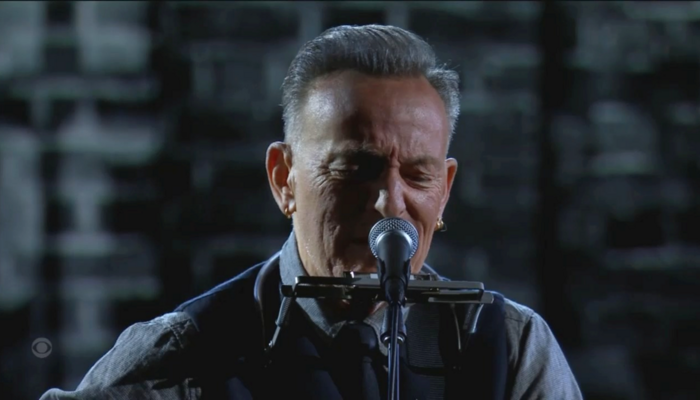
On Wednesday’s penultimate episode of CBS’s The Late Show singer Bruce Springsteen delivering his ode to host Stephen Colbert where he declared that the show is going away because President Trump can’t take a joke and because Paramount’s leaders “feel they need to kiss his ass.” Earlier, on ABC, Jimmy Kimmel sang a similar tune when he declared that they should be ashamed of themselves, even if they are not.
Before launching into his anti-Trump and anti-ICE song “Streets of Minneapolis,” Springsteen gave his ode to Colbert, “I am here in support tonight for Stephen, because you're the first guy in America who's lost his show because we got a president who can't take a joke. And because Larry and David Ellison feel they need to kiss his ass to get what they want. So, these are— Anyway, Stephen, these are small-minded people, they got no idea what the freedoms of this beautiful country are supposed to be about. This is for you.”
Bruce Springsteen closed out the penultimate episode of "The Late Show" by giving his ode to Stephen Colbert before singing "Streets of Minneapolis" "I am here in support tonight for Stephen, because you are the first guy in America who's lost his show because we got a president… pic.twitter.com/TpkjvgADDU
— Alex Christy (@alexchristy17) May 21, 2026
Springsteen was just echoing the party talking points. Earlier, Kimmel began his show with a programming announcement, “We will be off tomorrow night out of respect for our friend and colleague, Stephen Colbert, and the writers, producers, staff and crew at The Late Show, whose final show on CBS airs opposite ours. I think you know how I feel about the fact that they're being pushed out.”
Taking his own shot at Paramount management, he added, “I hope the people who did the pushing feel ashamed of themselves tonight, although I know they probably won't, but that being said, I think it's most important to congratulate Stephen and the team at The Late Show for all the great work over the last several years, and all the great work they will continue to do in other venues, I have no doubt. Everyone at that show has always been very gracious to us.”
Jimmy Kimmel began his show by declaring "We will be off tomorrow night out of respect for our friend and colleague, Stephen Colbert, and the writers, producers, staff and crew at The Late Show, whose final show on CBS airs opposite ours. I think you know how I feel about the… pic.twitter.com/gmi8riwwiT
— Alex Christy (@alexchristy17) May 21, 2026
Kimmel concluded by urging viewers to watch Colbert’s finale and then never watch CBS again:
We never felt like we were competing against them. It was nothing like the old days of late night. I always loved being on Stephen's show, I loved having him here on ours. I hope we’re able to do that again. I hope he comes to visit as many times as possible, and on behalf of everyone at our show, we want to say at your show, it has been a pleasure to work alongside you. I will be watching tomorrow night. I hope that those of you who watch our show will also tune in to CBS for the last time. Don't ever watch it again, but watch tomorrow night to wish Stephen and our friends at The Late Show a fond farewell.
The idea that The Late Show was canceled because of Trump simply does not hold water. Not only is CBS not the MAGA-coded network that people like Springsteen want to say it is, but The Daily Show—another Paramount property—is as vicious and left-wing as it has ever been.
Here is a transcript for the May 20-taped shows:
CBS The Late Show with Stephen Colbert
5/21/2026
12:33 AM ET
BRUCE SPRINGSTEEN: I am here in support tonight for Stephen, because you're the first guy in America who's lost his show because we got a president who can't take a joke. And because Larry and David Ellison feel they need to kiss his ass to get what they want. So, these are— Anyway, Stephen, these are small-minded people, they got no idea what the freedoms of this beautiful country are supposed to be about. This is for you.
***
ABC Jimmy Kimmel Live!
5/20/2026
11:36 PM ET
JIMMY KIMMEL: We will be off tomorrow night out of respect for our friend and colleague, Stephen Colbert, and the writers, producers, staff and crew at The Late Show, whose final show on CBS airs opposite ours. I think you know how I feel about the fact that they're being pushed out.
I hope the people who did the pushing feel ashamed of themselves tonight, although I know they probably won't, but that being said, I think it's most important to congratulate Stephen and the team at The Late Show for all the great work over the last several years and all the great work they will continue to do in other venues, I have no doubt. Everyone at that show has always been very gracious to us.
GUILLERMO RODRIGUEZ: They’re very nice, yes.
KIMMEL: We never felt like we were competing against them. It was nothing like the old days of late night. I always loved being on Stephen's show. I loved having him here on ours. I hope we’re able to do that again. I hope he comes to visit as many times as possible, and on behalf of everyone at our show, we want to say at your show, it has been a pleasure to work alongside you.
I will be watching tomorrow night. I hope that those of you who watch our show will also tune in to CBS for the last time. Don't ever watch it again, but watch tomorrow night to wish Stephen and our friends at The Late Show a fond farewell.









 New Posts (Home)
 ChatBox
 Popular Posts
  Game Zone
 Top PodCasts