YubNub Social YubNub Social
    #bible #god #jesuschrist #youtube #kjv #kingjamesbible #kjb #scriptures #scripture #psalms #acts #jews #bibles #2timothy
    Advanced Search
  • Login
  • Register

  • Day mode
  • © 2026 YubNub Social
    About • Directory • Contact Us • Developers • Privacy Policy • Terms of Use • shareasale • FB Webview Detected • Android • Apple iOS • Get Our App

    Select Language

  • English
Night mode toggle
Featured Content
Community
New Posts (Home) ChatBox Popular Posts Reels Game Zone Top PodCasts
Explore
Explore
© 2026 YubNub Social
  • English
About • Directory • Contact Us • Developers • Privacy Policy • Terms of Use • shareasale • FB Webview Detected • Android • Apple iOS • Get Our App
Advertisement
Stop Seeing These Ads

Discover posts

Posts

Users

Pages

Blog

Market

Events

Games

Forum

Alexander Rogge
Alexander Rogge  shared a  post
1 y

Donte Money to Conservative Voices

.


Amount

$
Search by username or email
Conservative Voices
Conservative Voices
1 y

Now 2 Percent of Federal Government Workforce Has Taken Trump's Exit Deal: Exodus of 40,000 Is Growing
Favicon 
www.westernjournal.com

Now 2 Percent of Federal Government Workforce Has Taken Trump's Exit Deal: Exodus of 40,000 Is Growing

President Donald Trump recently offered the vast federal workforce a buyout that would be hard to refuse, and many seem to be taking him up on the deal as the administration proves they are serious about downsizing. At the end of January, the Office of Personnel Management sent an email...
Like
Comment
Alexander Rogge
Alexander Rogge  shared a  post
1 y

Donte Money to Conservative Voices

.


Amount

$
Search by username or email
Conservative Voices
Conservative Voices
1 y

Trump Should Shutter USAID — Development Economics Is a Hotbed for Corruption
Favicon 
spectator.org

Trump Should Shutter USAID — Development Economics Is a Hotbed for Corruption

In 2007 New York City-based professor and economist William Easterly published his intentionally provocative book, White Man’s Burden: Why the West’s Efforts to Aid the Rest Have Done So Much Ill and So Little Good. In it, he argued that after more than half a century of Western aid to the “third world,” there was no positive correlation between the amount of money given and a rise in a recipient nation’s GDP. This was followed by another book in 2014 by the same author called The Tyranny of Experts: Economists, Dictators, and the Forgotten Rights of the Poor. In this book, he carried his argument even further by pointing out that one of the main reasons that so many third-world countries were still “developing” is that Western experts have invented a field called “development economics.” This failed and failing branch of economics argues for command economies that ignore all the factors and reasons why OECD free-market countries and economies have succeeded. Instead, it predicates development assistance upon these failed models sold by overconfident “development economists,” who manage to ignore the amount of development assistance that has been stolen by third-world dictators and reinvested in the West. As “long ago” as 2002 the British newspaper, the Independent, reported that African leaders alone had stolen more than 140 billion dollars from their own people since independence in the 1960s. No doubt this trend has continued. And so we should not be surprised that President Donald Trump and his administration have frozen all projects and funds for the United States Agency for International Development (USAID) whose annual budget is in the hundreds of millions of dollars provided by law-abiding tax-paying citizens. This is during a time of inflation and an extreme rise in the cost of living for American citizens whose institutions are barely functioning and whose border is as porous as a sponge. History of Western Foreign Aid Can Americans afford this largesse? Before I answer this question let me tell those readers who are not experts in this field a little bit of its history and social organization, as one cannot make a decision for or against international aid without first doing so. “Aid” or international development assistance is, or perhaps more aptly was, a function of the Cold War. After WWII, the United States leaned heavily on Britain, Belgium, Holland, and France to give their former colonies independence and membership in the United Nations. And so by the 1960s, the U.N. was filled with new countries from Africa and Asia. The Russians were eager to take advantage of this changing geopolitical bloc and as most of the new ruling elites of these newly independent countries leaned towards Marxism and command economies, it was an alliance made in heaven. The Americans had to respond so they airlifted thousands of young college students from Africa and Asia to U.S. institutions of higher learning to create their own sympathetic ruling elites. And then, they invented “the development project” — a soft power tool meant to prove to these elites that through Yankee expertise and the creation of representative institutions their native and newly independent countries could achieve “lift off” and a standard of living for its citizens that, if it not the same as that in America, was on the road to this goal. During the 1960s and until the fall of the Berlin Wall, this approach did not work as planned or was constantly “treading water” and so “new approaches” to development were invented by universities, think tanks, and government bureaucrats. Thousands of new projects were funded across the developing world and managed by a growing cadre of Western and American “development workers” who never managed to work themselves out of a job as “development” kept changing its spots every five years with new philosophies, economic models, programs, and projects. These people became a self-perpetuating bureaucratic class of lobbyists and “poverty alleviation” experts often supported by glitterati and pop stars (95 percent of them vote Democrat). This was enormously complicated by the many proxy wars fought in Africa and Asia between America and its allies and the Russians from the 1960s to the fall of the Berlin Wall in 1990. This is a tragic story in and of itself and an aggravating factor. During the second half of the 20th Century, a plethora of growing U.N. institutions were created that have and continue to attempt to put the U.N. extraterritorially “above” the efforts of specific countries (bilaterals, as they are called in the development jargon). These proliferating U.N. institutions hired more and more people from these new countries — especially from the growing Arab oil money-funded Islamic bloc. (READ MORE: Are the Protests in Slovakia Due to NGO and USAID Interference?) The salaries, benefits, privileges, and perks of U.N. workers are hard to fathom. They are way above USAID salaries and benefits, far beyond the private sector, and once “inside” the system it is almost impossible to get fired. Since the U.N. is largely funded by the U.S. and its NATO/OECD allies, you get a situation where well-paid, Marxist, third-world ideologues from the ruling elites of “developing” countries live the life of luxury at the U.N. while preaching egalitarianism and economic growth with, of course, the wrong theoretical models as provided by the “development economists” so well described in the book by Easterly. But U.N. types know this. It is no secret. I have met so many of them. Privately they are luxury-seeking cynics. And so many of them admit it. Yet so many of them, despite their inflated salaries and perks, still manage to steal vast sums from their employers within the U.N. system. These stories can be found all over the internet but are rarely covered in the mainstream media. Here is just one example reported by the Daily Caller in 2019: More than a dozen United Nations workers in Yemen are under investigation for allegedly embezzling millions of dollars of humanitarian aid in the war-torn nation, according to a Monday Associated Press report. Most U.N. bureaucrats just want to retire in Paris, New York, or the south of France. They want to join the transnational elites and live lives of conspicuous consumption on their bloated pensions. The last thing they want is the creation of more successful countries like Singapore. That would spoil their party and make them unemployed in short order. Also, because of the dominance of the Islamic bloc, these apparatchiks would rather turn the U.N. into an Israel-bashing machine or at least watch passively from the sidelines. This is wonderful and rational job protection from their narrow and selfish perspective. The Current Crisis With USAID The United States today has sent a strong message to its own “fellow travelers” within USAID, the left-leaning U.S. NGO world (so much of which is funded by USAID), and to the U.N. that it will no longer fund corrupt “developing” countries or so-called multilateral institutions like the U.N., facilitated by an endless round of American funded “ soft power” interventions. (READ MORE: Foreign Aid Reform: USAID Has a History of Funding Terrorists and Anti-American Organizations) If the United States wants to create a new program of famine relief, refugee relief, and intellectual and scientific cooperation with “developing” countries then it must go back to the drawing board and reject the Marxism of the NGOs and the command economy models of “development economists.” USAID has had the chance but has chosen not to do this. (LISTEN FOR MORE: The Spectacle Ep. 188: Why America Needs to Defund USAID) And so a first step would be to repatriate the stolen aid taken by third-world dictators and invest it in the West — put it into an “international development fund” run by the U.S. and distributed to countries whose governments do not endorse terror and respect the rights of their own citizens. I am all for humanitarian spending and development when the host country can afford it. And if the recipients use it wisely and the receiving government is not mile high in corruption. But none of that has been the case for the last 20 years. I once met a Dane who was closing down a failing development project in Kenya. I asked if it could not be reformed as the intention behind the project was noble. He looked at me with disbelief and said, “No failed project, program, or institution can be successfully reformed. Look at the U.N.! It must be terminated.” This came from a left-leaning Dane who had worked in Africa. That day I learnt an important lesson from him. READ MORE from Geoffrey Clarfield: The Wisdom of Sir Moses Montefiore Much To Know about the Roman Coliseum An American Return to the Polis The post Trump Should Shutter USAID — Development Economics Is a Hotbed for Corruption appeared first on The American Spectator | USA News and Politics.
Like
Comment
Alexander Rogge
Alexander Rogge  shared a  post
1 y

Donte Money to Conservative Voices

.


Amount

$
Search by username or email
Conservative Voices
Conservative Voices
1 y

Elizabeth Warren and Democrats’ Hypocrisy
Favicon 
spectator.org

Elizabeth Warren and Democrats’ Hypocrisy

Ya can’t make it up. The other day Democrats rallied at an outdoor rally outside the Treasury Department where they spent their time complaining about Trump appointee Elon Musk. The Wall Street Journal reported this: Democrats are focusing their fire on billionaire Elon Musk — not President Trump — as they push back against the administration’s lightning-fast moves to dismantle parts of the government and dig into sensitive federal data. “In the building behind me, Elon Musk is seizing power from the American people. We are here to fight back,” said Sen. Elizabeth Warren (D., Mass.), at a large rally Tuesday at the Treasury Department headquarters. Musk “wants the power to decide whether or not every road repair in America goes forward, whether or not every Head Start center in America opens and whether or not every military base anywhere in the world operates according to Elon,” she said. She added: “No one elected Elon Musk to nothing.” Then there was this: “‘Not one Democrat in America voted for Elon Musk,’ adding that not one Republican or Libertarian had voted for him either.” Congresswoman Maxine Waters chimed in: “‘We have got to tell Elon Musk: Nobody elected your ass,’ Democratic Rep. Maxine Waters of California told a raucous crowd assembled on 14th Street outside the Treasury building on Tuesday night.” And on went the ravings of a similar nature. So: Stop. Full stop with this deliberate — hypocritical — dishonesty. The fact of the matter is that Donald Trump was elected. Big time. And the president of the United States gets to appoint his staff, which essentially is what Musk has become. Newsflash? Elizabeth Warren and Maxine Waters and all those other complaining Democrats do — wait for it — exactly the same thing. How, you ask? Every single elected Member of the Senate and House — the Congress — has the right to do exactly what the elected president does: Appoint their own decidedly unelected staff. And give them power. Having worked for a congressman, a senator, and a president I can say with certainty they all have two things in common. First: They are all elected by the American people, whether in a congressional district (congressmen), a state (senators), or nationally state-by-state (a president). Second: To a person, all senators and members of the House have working for them unelected staff members. Say again, unelected staff members. Every last one of them. In short, deliberately not stating the obvious to mislead unaware Americans, Elizabeth Warren has an entire staff of her own unelected Elon Musks. They have various titles such as administrative assistant, chief of staff, legislative director, committee staff or press secretary. And in that capacity, they do some version of what Elon Musk does for the elected President Trump — wield power. And unlike Elon Musk, it is a safe bet that they are unknown to the vast majority of their elected boss’s constituents. How many people in Massachusetts — outside a tight circle that deals with him or her — know who is Warren’s chief of staff? Legislative director? Committee staffer? Or knows his or her name? Answer? Doubtless zero. Warren’s multitudes of unelected staff members wielding power — as is true with all 100 senators and 435 House members — are utterly unknown to her constituents. But as that decidedly dishonest Warren presser silently illustrated, just like elected President Trump’s unelected Elon Musk, so too does Warren herself have powerful, unelected, and — unlike Musk, unknown to the public — staff members. This is to say, the presser of outraged Democrats including Warren and Waters was thoroughly dishonest. Hypocritical to the max. They themselves have whole staffs of unelected Elon Musks. Wielding power. Ya can’t make it up. READ MORE from Jeffrey Lord: Three Cheers for Kash Patel Jim Acosta and the Tyranny of the Liberal Media RFK Jr: Like Father, Like Son The post Elizabeth Warren and Democrats’ Hypocrisy appeared first on The American Spectator | USA News and Politics.
Like
Comment
Alexander Rogge
Alexander Rogge  shared a  post
1 y

Donte Money to Conservative Voices

.


Amount

$
Search by username or email
Conservative Voices
Conservative Voices
1 y

THEY'RE BOILING OVER!
Favicon 
api.bitchute.com

THEY'RE BOILING OVER!

⚠️ Order your shirts here: https://www.markdice.com ? Order my new book from Amazon here: https://amzn.to/40vEC9U ⚡️ Join my exclusive Locals community here: https://markdice.locals.com/support ? Sponsor me through Patreon here: https://Patreon.com/MarkDice Order my book "Hollywood Propaganda: How TV, Movies, and Music Shape Our Culture" from Amazon: https://amzn.to/30xPFl5 or download the e-book from Kindle, iBooks, Google Play, or Nook. ? Order my book, "The True Story of Fake News" ➡️ https://amzn.to/2Zb1Vps ? Order my book "The Liberal Media Industrial Complex" here: https://amzn.to/2X5oGKx Mark Dice is an independent media analyst and bestselling author of "Hollywood Propaganda: How TV, Movies, and Music Shape Our Culture.” He has a bachelor's degree in Communication from California State University and was the first conservative YouTuber to reach 1 million subscribers (in 2017). He has been featured on Fox News, Newsmax, the History Channel, E! Entertainment, the Drudge Report, and news outlets around the world. This video description and the pinned comment contains Amazon and/or other affiliate links, which means if you click them and purchase the product(s), Mark will receive a small commission. Copyright © 2025 by Mark Dice. All Rights Reserved.
Like
Comment
Country Roundup
Country Roundup
1 y

Kelsea Ballerini Ends Buffalo Show After Just Five Songs Due To Illness: “I Couldn’t Do It”
Favicon 
www.whiskeyriff.com

Kelsea Ballerini Ends Buffalo Show After Just Five Songs Due To Illness: “I Couldn’t Do It”

Another show cut short due to illness. If you remember a couple of weeks ago, Parker McCollum was forced to end his show in State College, Pennsylvania after just a handful of songs when he tried to push through a stomach bug and wasn't able to finish. Parker apologized to fans, saying that he was "violently sick" and refunding all the tickets while promising to return soon to give them the show they deserve. And now apparently the flu has hit Kelsea Ballerini and forced her to cut a show short too. The pop country superstar was performing in Buffalo, New York at the KeyBank Center tonight, and some fans were already surprised that the show wasn't canceled after Kelsea told the crowd that she was suffering from the flu during her show at Little Caesars Arena in Detroit Michigan on Tuesday: https://www.instagram.com/reel/DFrJrXFOYY3/?utm_source=ig_web_copy_link But everything seemed to be getting better, with Kelsea providing an update today that the show would go on and that she was on the mend, saying that the meds were doing their job even though she still wasn't 100%. Apparently once she got out on stage though, Kelsea realized she wasn't going to be able to keep going. After just five songs, a member of Kelsea's team appeared on stage and let the crowd know that the show was over and that they would have to reschedule: "This is the conversation I did not want to have tonight. She just can't finish, she is too sick, and we've given everything, we've tried to do it, and we unfortunately cannot finish the show tonight. I do not know much beyond that. We are going to look at options and you will be receiving emails. Beyond that, there is not much that I can say right now... The show's officially over tonight. Communication will be sent out. Thank you very much for your understanding." https://www.tiktok.com/@courtlangelotti/video/7468503080451984686 You could tell from the videos of the songs that she was able to perform that Kelsea clearly wasn't feeling well and was struggling to make it through, so it was obviously for the best that she ended the show to get some rest and heal up: https://www.tiktok.com/@therealclarissa2013/video/7468500540767604014?is_from_webapp=1&sender_device=pc&web_id=7079551662505215534 And after the show was called off, she took to social media to apologize and provide an update to fans, announcing that not only would tonight's show be rescheduled but her next two shows would also be rescheduled: "Buffalo, I am so so sorry that I could not finish the show tonight. I am sicker than I'm trying to be, and I did not want to let anyone down tonight, and I just got through the first few songs and I couldn't do it. And I am so sorry, but I never want to give you a half-ass show. We are rescheduling tonight, Buffalo, tomorrow, Pittsburgh, and the next day, Toronto, to the end of the tour... And I will make them the best shows I've ever played in my whole life, and I will pull out every stop for you, and I will make it so worth it. I'm going to go rest now, and get better, so I can really show up for the rest of this tour, and I hope you understand, and thank you for the grace to be human." https://twitter.com/KelseaBallerini/status/1887712047451738119 The Buffalo show is now scheduled for April 11, while Kelsea will be in Pittsburgh on April 12 and Toronto on April 13. Hopefully she gets better soon and is able to get back out on the road.
Like
Comment
Share
Conservative Voices
Conservative Voices
1 y

America First’s Forgotten Founder
Favicon 
www.theamericanconservative.com

America First’s Forgotten Founder

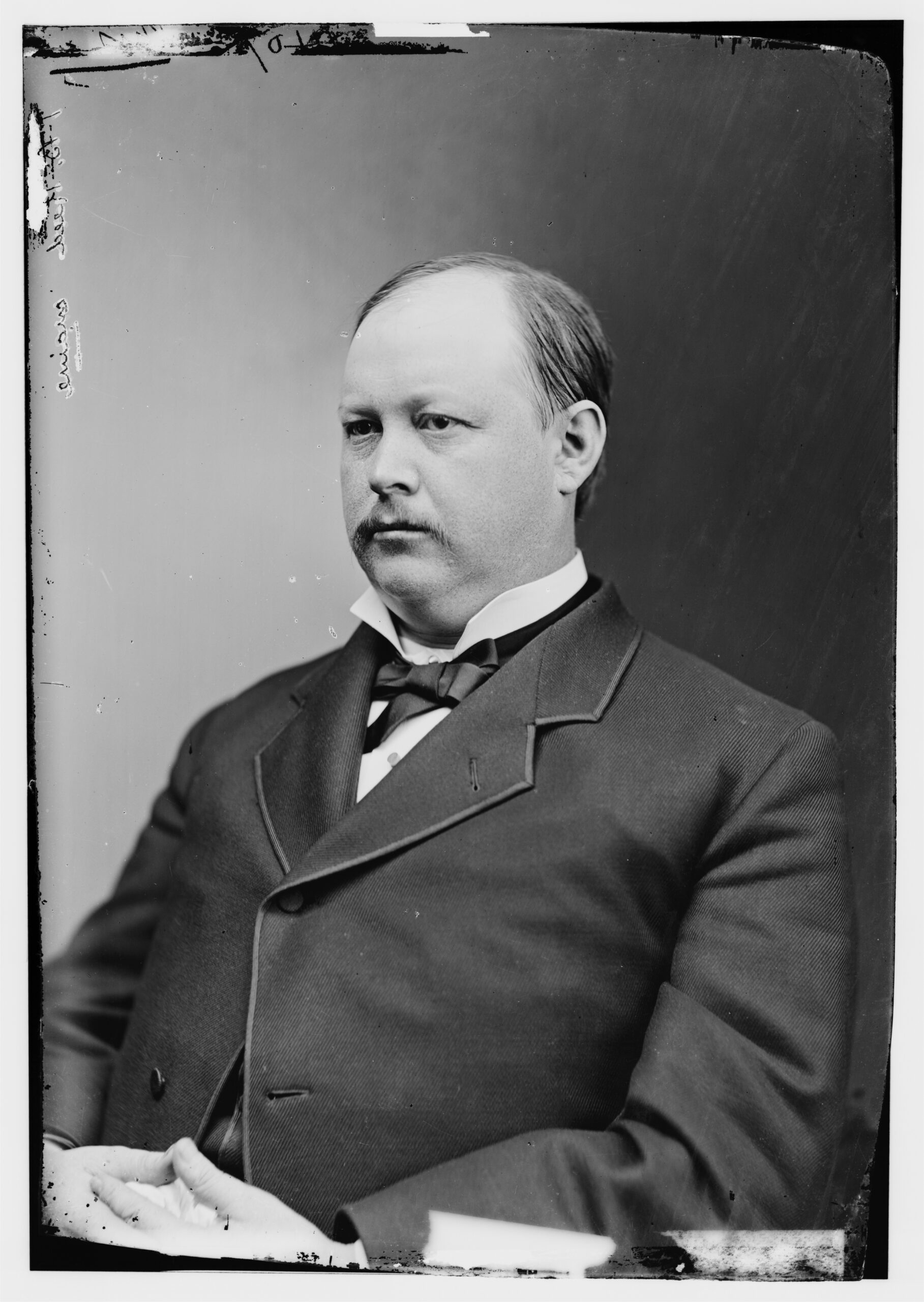
The 25th president is having a moment in the spotlight. William McKinley, twice elected to the presidency before being felled by an assassin’s bullet in 1901, won praise from President Donald Trump during the latter’s inaugural address last month. Trump praised McKinley for making “our country very rich through tariffs and through talent.” Trump also pledged to restore McKinley’s name to North America’s highest peak, “where it belongs.” As the esteemed editor and McKinley biographer Robert Merry recently observed, “It isn’t difficult to see how Trump, once he became familiar with the McKinley story, would embrace it as a model for his own White House leadership.” While it makes sense that Trump would see much to emulate in McKinley’s record on tariffs and trade, McKinley seems a less sure guide on matters of war and peace. On that front, there are better models than McKinley, on whose watch the US engaged in an unnecessary and unjust war against Spain which resulted in the subsequent occupation of the Philippines (McKinley should also earn demerits for inflicting Teddy Roosevelt on the nation). Unlike today, at the fin de siècle America’s role as a global power was subject to debate. Mark Twain, then among the country’s most renowned literary voices, was a founding member of the Anti-Imperialist League. Twain remarked at the time, “I am opposed to having the eagle put its talons on any other land.” Henry Adams, author, professor and scion of America’s first and finest political dynasty, wrote to his brother Brooks (who unlike Henry was an ardent proponent of empire) that he thought “our Philippine excursion” was “a false start in the wrong direction and one that is more likely to blunt our energies than to guide them.” He continued: “It is a mere repetition of the errors of Spain and England.”  Despite these objections, the Washington establishment set off in search of monsters to destroy. Adams’ confidante John Hay, who served as McKinley’s ambassador to the Court of St. James and then, later, as Roosevelt’s secretary of state, enthused about McKinley’s “splendid little war; begun with the highest motives, carried on with magnificent intelligence and spirit, favored by that fortune which loves the brave.” The imperial fever of that time was a byproduct of new theories of naval superiority promoted by Admiral Alfred Thayer Mahan as well as Darwinian notions of racial superiority such as those infamously expressed in Rudyard Kipling’s White Man’s Burden (1899) which described native Filipinos as “new-caught, sullen peoples, half devil and half child.” Such was the distance we traveled from the days of Jefferson who, in 1791 wrote, “if there is one principle more deeply rooted in the mind of every American, it is that we should have nothing to do with conquest.” In Congress the charge against empire was led by the speaker of the House, Thomas B. Reed, a Republican from Maine. Reed was witty, principled and—at six-foot-three, three-hundred pounds—imposing. He ruled the House with an iron fist. Said one contemporary, “He commands everything by the brutality of his intellect.” Democratic opponents took to calling him “Czar Reed”—an epithet, quips Reed’s biographer James Grant, that he didn’t seem to mind. The great historian Barbara Tuchman notes that as House speaker, Reed was “unalterably opposed to expansion and all it implied.” He believed that “American greatness lay at home and was to be achieved by improving living conditions,” rather than by embarking on adventures in Venezuela, Cuba, Hawaii and elsewhere.  But by 1898 the war fever was catching. Two months following the explosion, in February, of the USS Maine off the coast of Cuba, McKinley declared war on Spain. Like too many progressives in present-day Washington who have spent the last three years plastering yellow and blue flags onto their bumpers, progressives in Reed’s day, including William Jennings Bryan, Albert J. Beveridge and New Republic (some things never change) founder Herbert Croly, all eagerly jumped aboard the pro-war bandwagon. “I would like to see Spain swept from the face of the earth,” said suffragist Elizabeth Cady Stanton. Reed knew that, despite his best efforts, he could not hold back the tide of empire in the House for long. He penned an article for the magazine Illustrated American titled “Empire Can Wait” and he held off legislation authorizing the annexation of Hawaii for as long as he could. The final straw for Reed was the Senate’s approval, by a 57-21 margin, of the Treaty of Paris, which ceded control of the Philippines (for $20 million), Puerto Rico and Guam to the United States. An America-First foreign policy, properly understood, is one that eschews imperial conquests. Reed knew this intuitively but ultimately lost the debate to McKinley, Roosevelt and their pro-expansionist supporters.  At the time of Reed’s death, on December 6, 1902, his successor, Joe Cannon, eulogized him as having “the strongest intellect crossed on the best courage of any man in public life I have ever known.”  Today, however, Reed is the unjustly neglected founder of America First. Politics America First’s Forgotten Founder There are better models for President Trump than William McKinley. The post America First’s Forgotten Founder appeared first on The American Conservative.

Like
Comment
Share
Conservative Voices
Conservative Voices
1 y

Trump Can Transform Middle East Policy
Favicon 
www.theamericanconservative.com

Trump Can Transform Middle East Policy

Foreign Affairs Trump Can Transform Middle East Policy The president should do in his second term what he failed to do in his first. President Donald Trump speaks at the Trump National Golf Club in Bedminster, New Jersey, following his arraignment on 37 charges in Miami, June 13, 2023. (Chip Somodevilla/Getty Images) President Donald Trump has entered the White House with an ambitious international agenda. Whether it’s expanding the 2020 Abraham Accords between Israel and the Arab world, ending the three-year-long war in Ukraine or pushing Europe to spend more on its own defense, Trump isn’t wasting any time outlining his expectations.  Some of them, like taking over Gaza and turning the territory into a U.S.-administered haven for the “world’s people,” are downright bonkers. Others, like higher European defense budgets, are far more conventional and increasingly recognized as urgent and necessary. All of these items, however, are small ball compared to what has the potential to be a crowning accomplishment for the Trump administration: a total and complete reform of U.S. policy in the Middle East.  Despite Trump’s reputation for unpredictability, his rhetoric on this region has been consistent since his first run for the White House nearly a decade ago. Then as now, Trump blasts U.S. regime change wars over the last two decades as a calamitous waste of U.S. resources, blames past presidents for foolishly sending the U.S. military on missions it shouldn’t have been asked to fight and laments the life-altering damage those wars inflicted on U.S. servicemembers. After decades of foreign wars, many Americans share the president’s perspective. The conflicts in Afghanistan, Iraq, Syria and Libya either lasted too long, destabilized the Middle East or created a host of additional security problems that the U.S. proved incapable of managing. Military operations in Iraq and Syria cost U.S. taxpayers nearly $3 trillion between 2003 and 2023, a period when U.S. deficits grew at a fast clip. In Afghanistan, U.S. troops were mired in a civil war against a resilient Taliban insurgency on behalf of a government in Kabul more skilled at corruption than governing. None of this made the United States safer or stronger—if anything, Washington’s adversaries were content with watching the Americans shoot themselves in the foot by plunging into never-ending black holes. Trump, however, failed to match his clear-headed rhetoric with concrete action during his first term. By the time Trump left office in January 2021, there were more U.S. troops stationed in the Middle East than when he entered the White House. In Syria, a country he rightly wanted to withdraw troops from, Trump instead listened to hawkish advisers who argued that holding Syria’s meager oil fields was a prerequisite to stability. And on Iran, notwithstanding his dealmaking instincts—Trump was even prepared to talk with then-Iranian President Hassan Rouhani directly during the September 2019 U.N. meetings—the president catered to hardline policy advisers who believed that a “maximum pressure” campaign against Tehran would compel Supreme Leader Ali Khamenei to surrender on America’s terms. It didn’t happen. Today, the Iranian regime is closer than ever to producing nuclear-weapons-grade fuel.  Fortunately, Trump doesn’t have to be as submissive to the foreign policy establishment in his second term as he was in his first. In terms of U.S. grand strategy, the Middle East is far less important than meets the eye. The historical and geopolitical arguments for downsizing the U.S. military presence and deprioritizing the region overall are persuasive though rarely acknowledged.  First, recent history makes it abundantly obvious that interventionism in the Middle East is a fool’s errand. U.S. policymakers have frequently overstated America’s influence and under-appreciated the agency of local actors whose interests may not square with our own. Our good intentions often led to disastrous results, and our plans typically got torn apart by forces out of our control.  Even worse, U.S. policymakers have demonstrated a lack of awareness of the big picture and a seemingly systemic inability to account for unintended consequences. Getting rid of a bloodthirsty dictator in Iraq gave us a sense of moral superiority but also produced a proliferation of terrorism, sectarian warfare and a years-long occupation that claimed the lives of thousands of Americans. The U.S. invasion of Afghanistan 2001 was justified after 9/11 but soon degenerated into a social science experiment in a country with no history of democracy. Ridding Libya of Muammar al-Qaddafi’s four decades of brutal, uber-eccentric authoritarian rule provided Libyans with hope for a time, until the situation deteriorated into militia-infested anarchy that the country is still grappling with today. Trump understands all of this even if the so-called experts don’t. From a geopolitical perspective, the Middle East is largely insignificant to maintaining U.S. power and influence around the world. This claim would undoubtedly elicit eyerolls from many Mideast hands who value the region as a center of energy production. But outside of natural resources, the region has very little to offer. According to the World Bank, it accounts for only four percent of the world’s entire gross domestic product, a consequence of ineffective governments, multiple wars, bloated public sectors and economies that remain highly dependent on the extraction of natural resources. Of course, the United States can’t write off the region entirely, if only for the fact that crude oil and natural gas continue to power the global economy. But it’s a mistake to assume Washington needs to station a large, near-permanent U.S. force presence to ensure worldwide oil prices are stable. Indeed, there is no evidence that maintaining U.S. troops in the Middle East keeps the oil flowing at a reasonable cost—prices actually rose during the U.S. occupation of Iraq. What about the prevalence of anti-U.S. terrorist groups in the Middle East? As long as such groups exist, they will of course remain a threat to U.S. interests. This isn’t news to Trump; the counter-ISIS campaign in Iraq and Syria was at its most lethal during his first administration. Trump will want to ensure the ISIS territorial caliphate doesn’t regenerate on his watch.  Yet this can be done without having a U.S. troop presence on the ground in perpetuity, which is essentially what U.S. policy calls for now. The U.S. intelligence community has decades of experience finding and neutralizing high-profile terrorists who seek to attack the United States directly, and they’ve been quite proficient in conducting these types of operations. The notion, so often argued in the months and years after 9/11, that terrorist groups need a safe haven abroad to orchestrate attacks against America is simply wrong. As we saw during the car ramming in New Orleans after New Year’s Eve celebrations, terrorism inside the U.S. is more likely to be perpetrated by lone wolves who self-radicalized and have no direct connection to a terrorist group overseas. Preventative measures on the home-front, not constant U.S. deployments in troubled spots in the Middle East, are a better strategy. Donald Trump has good instincts on the Middle East. He didn’t follow them in his first term. But he has an opportunity to do so in his second. The post Trump Can Transform Middle East Policy appeared first on The American Conservative.

Like
Comment
Share
Conservative Voices
Conservative Voices
1 y

How Turkey Is Pulling the Strings in Syria
Favicon 
www.theamericanconservative.com

How Turkey Is Pulling the Strings in Syria

Foreign Affairs How Turkey Is Pulling the Strings in Syria Ankara may be jeopardizing core U.S. interests. Turkey has taken complete charge of the situation in Syria following the downfall of former president Bashar al-Assad, per comments made from the ground to The American Conservative. While many of the disclosures should not necessarily be a cause of worry for the United States and its allies, some pertaining to ISIS do warrant concern. It remains to be seen whether president Donald Trump is willing to adapt a policy which thus far appears to have given a stamp of approval to an outsized Turkish role in Syria. According to a well-informed source, who spoke to TAC on condition of anonymity, Turkey has become the ultimate decision-maker in Damascus. The source says that Turkish intelligence has effectively established a major hub in the heart of the Syrian capital, where it is overseeing and even intervening in the daily functions of the post-Assad Syrian state. “The fourth floor of the Four Seasons hotel in Damascus is now in the hands of the Turkish intelligence,” he said. “They have transformed it into a major base for them in Damascus”. Turkish agents, the source explained, were even involved in the day to day activities of president Ahmed al-Sharaa, formerly known as Abou Mohammad al-Jolani, who had previously led the Al Qaeda–affiliated Nusra Front and has close ties with Turkey. “Meetings with any foreign official or even Syrian figures from Jolani’s government take place upon the approval of Turkish intelligence officers; they play a direct role in planning and organizing meetings and talks between Jolani and domestic and foreign parties,” the source said. What is most worrisome from a Western standpoint is that Ankara—as per the source—is also employing the services of extremists, some of whom were previously affiliated with ISIS: “A large number of Syrian and non-Syrian Takfiris [a term commonly used when describing Salafi-Jihadi groups like ISIS] have been transferred to Damascus by Turkish officers to help the Turks.” These elements, the source explained, include “those who have a history as members of ISIS” and are being used to “take control of Damascus.” That Turkey would employ former ISIS members is plausible; Ankara has flirted with the terrorist group in the past. President Recep Tayyip Erdogan is said to have given his personal approval to seek the assistance of former militants from the terror organization against Syrian Kurds. Turkey’s border with Syria served as effectively a state-sanctioned transit route for those seeking to join the ranks of ISIS. Statements coming out of Ankara pledging to fight the terrorist group in post-Assad Syria do not suffice to alleviate concerns. During the reign of the former regime in Damascus, Turkish officials spoke of taking the fight to ISIS after the organization conducted deadly attacks on Turkish soil. In practice, however, Ankara was more focused on what it perceived as the more dangerous threat from the Kurdistan Workers’ Party (PKK).   That Turkey may pursue a similar approach this time round cannot be ruled out, especially given that PKK forces—otherwise known as the Syrian Democratic Forces (SDF)—are still an organised independent paramilitary entity in the post-Assad era. Ankara may rely on the former ISIS fighters in particular against the Kurds, taking advantage of the animosity that exists between the two sides.  In other words, former ISIS fighters will likely be eager to seek revenge against the SDF which was instrumental to the fall of the terrorist group in Syria, and therefore may be seen as a valuable asset by Turkey, at least in the short term. This goes against what should be Washington’s primary interest in Syria: preventing an ISIS or ISIS-like comeback, which would pose a grave threat to American regional interests and even national security. If anything, the ISIS threat to the security of the United States has grown more acute, as evidenced by a New Year’s truck attack in New Orleans in which an ISIS-inspired individual killed fourteen people. This only increases the urgency of the situation and must give pause to the Trump administration’s thinking towards Syria. Allowing Turkey free reign in that country is likely to increase the odds of a dangerous Salafi-jihadi threat metastasizing once again in the heart of the Middle East. This will only lead to more pressure on Trump to increase—rather than end—American military presence in Syria and the wider region, and upend any hopes he may have of pursuing a foreign policy that will not be disturbed by the turbulence of the Middle East. An ISIS-style comeback also threatens to tarnish Trump’s own legacy, given that his first term saw the fall of the terror group’s caliphate and the killing of its “golden-era leader” Abu Bakr al-Baghdadi. Against this backdrop caution is warranted in Washington regarding its policy towards Syria. If Turkey is the one calling the shots and at the same time employing the services of former ISIS militants, this undercuts the sincerity of Sharaa’s statements of reassurance that Syria under his rule will not pose an external threat.   The United States would be better served by continuing to abstain from establishing diplomatic ties with Damascus under its new regime, at least for the time being.  American interests will also be better served more broadly by recognizing that Turkey’s rise as a regional hegemon at the expense of Iran need not necessarily be a good thing, notwithstanding the fact that Ankara is a NATO ally. Erdogan has not hidden his desire to return to the glory days of the Ottoman Empire and probably perceives Trump’s embracement of Turkish guardianship over Syria as a golden opportunity to expand his regional clout. Trump should make sure this does not occur at the expense of American interests. There are those in Trump II who came of in the era of the 9/11 attacks and the Global War on Terror. Such individuals like Vice President JD Vance and likely Director of National Intelligence Tulsi Gabbard may yet convince Trump against embracing an outsized Turkish role, be it in Syria or the wider region. The post How Turkey Is Pulling the Strings in Syria appeared first on The American Conservative.

Like
Comment
Share
Conservative Voices
Conservative Voices
1 y

The Shocking Collapse Of The Left’s Empire Of LIES
Favicon 
conservativefiringline.com

The Shocking Collapse Of The Left’s Empire Of LIES

The following article, The Shocking Collapse Of The Left’s Empire Of LIES, was first published on Conservative Firing Line. We all have a hard time believing that President Donald Trump took office just two-plus weeks ago. All those phenomena we accepted as givens – DEI, transgenderism, DoJ weaponization, medical tyranny, foreign aid, fentanyl deaths, endless wars, illegal immigration, bureaucratic bloat, government censorship – were, to say the least, no longer inevitable. For 30 years … Continue reading The Shocking Collapse Of The Left’s Empire Of LIES ...
Like
Comment
Share
Classic Rock Lovers
Classic Rock Lovers  
1 y

Is Tom Petty’s ‘Casa Dega’ a real place?
Favicon 
faroutmagazine.co.uk

Is Tom Petty’s ‘Casa Dega’ a real place?

"Poetic license, I guess." The post Is Tom Petty’s ‘Casa Dega’ a real place? first appeared on Far Out Magazine.
Like
Comment
Share
Showing 57675 out of 118320
  • 57671
  • 57672
  • 57673
  • 57674
  • 57675
  • 57676
  • 57677
  • 57678
  • 57679
  • 57680
  • 57681
  • 57682
  • 57683
  • 57684
  • 57685
  • 57686
  • 57687
  • 57688
  • 57689
  • 57690
Advertisement
Stop Seeing These Ads

Edit Offer

Add tier


Select an image
Delete your tier
Are you sure you want to delete this tier?

Reviews

In order to sell your content and posts, start by creating a few packages. Monetization

Pay By Wallet

Payment Alert

You are about to purchase the items, do you want to proceed?

Request a Refund