YubNub Social YubNub Social
    #music #tew #tuba #euphonium #tew2026 #militarymusic #armymusic #armyband #band #freedom #concertband #tusab #armyorchestra #orchestra #warmup
    Advanced Search
  • Login
  • Register

  • Night mode
  • © 2026 YubNub Social
    About • Directory • Contact Us • Developers • Privacy Policy • Terms of Use • shareasale • FB Webview Detected • Android • Apple iOS • Get Our App

    Select Language

  • English
Night mode toggle
Featured Content
Community
New Posts (Home) ChatBox Popular Posts Reels Game Zone Top PodCasts
Explore
Explore
© 2026 YubNub Social
  • English
About • Directory • Contact Us • Developers • Privacy Policy • Terms of Use • shareasale • FB Webview Detected • Android • Apple iOS • Get Our App
Advertisement
Stop Seeing These Ads

Discover posts

Posts

Users

Pages

Blog

Market

Events

Games

Forum

Survival Prepper
Survival Prepper  
1 y ·Youtube Prepping & Survival

YouTube
The Most Accurate .22 LR Bolt-Action Rifles for 2025
Like
Comment
Share
Independent Sentinel News Feed
1 y

X Posters Rage About Something Elon Musk Didn’t Do
Favicon 
www.independentsentinel.com

X Posters Rage About Something Elon Musk Didn’t Do

There is a lot of conjecture on X about a change in the algorithm that will put negative comments and their posters in some kind of purgatory. However, Elon Musk has been transparent, so we can expect him to be transparent about this. He said he hasn’t made any changes and will let us know […] The post X Posters Rage About Something Elon Musk Didn’t Do appeared first on www.independentsentinel.com.
Like
Comment
Share
Independent Sentinel News Feed
1 y

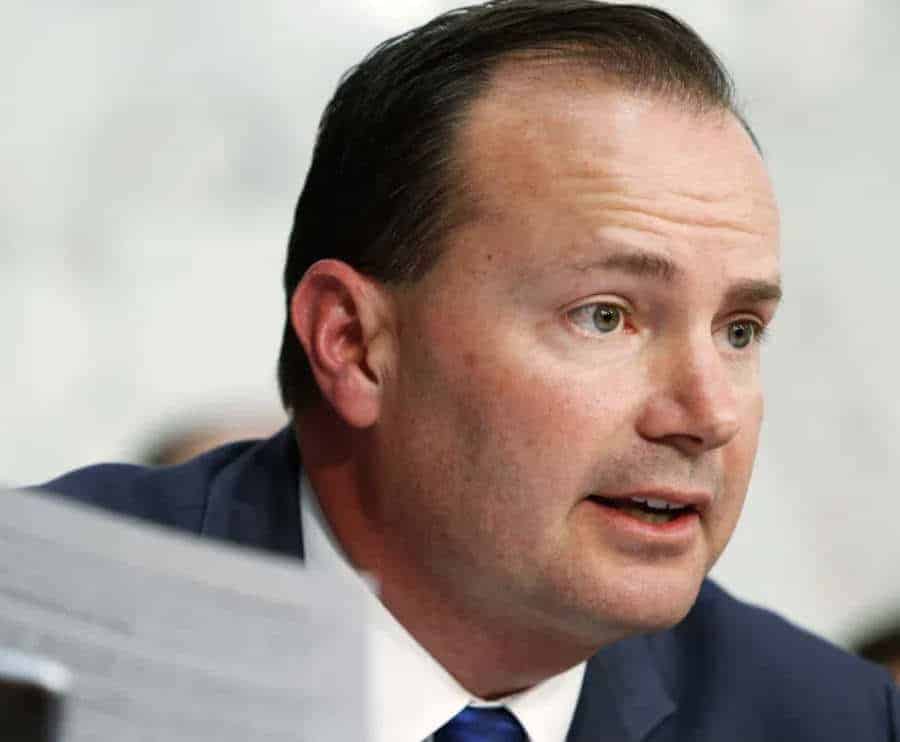
Sen. Lee: The Democrat Party Has Lost Its Soul
Favicon 
www.independentsentinel.com

Sen. Lee: The Democrat Party Has Lost Its Soul

Sen. Mike Lee believes the Democrat Party has “lost its soul.” One prominent example can be seen in the inexplicable vote not to agree to deport foreigners who commit sex crimes. They should be deported for any crime, including drunk driving, but not even sex crimes that ruin people’s lives? Would you ever vote to […] The post Sen. Lee: The Democrat Party Has Lost Its Soul appeared first on www.independentsentinel.com.
Like
Comment
Share
BlabberBuzz Feed
BlabberBuzz Feed
1 y

Marjorie Taylor Greene Makes FROSTY Pledge Amid Trump Election Certification Drama!
Favicon 
www.blabber.buzz

Marjorie Taylor Greene Makes FROSTY Pledge Amid Trump Election Certification Drama!

Like
Comment
Share
Hot Air Feed
Hot Air Feed
1 y

Troubling the Powers of Worldliness: Sunday Reflection
Favicon 
hotair.com

Troubling the Powers of Worldliness: Sunday Reflection

Troubling the Powers of Worldliness: Sunday Reflection
Like
Comment
Share
Strange & Paranormal Files
1 y

Altered States of Consciousness Distort Time, But No One Knows Why
Favicon 
anomalien.com

Altered States of Consciousness Distort Time, But No One Knows Why

Steve Taylor: We all know that time seems to pass at different speeds in different situations. For example, time appears to go slowly when we travel to unfamiliar places. A week in a foreign country seems much longer than week at home. Time also seems to pass slowly when we are bored, or in pain. It seems to speed up when we’re in a state of absorption, such as when we play music or chess, or paint or dance. More generally, most people report time seems to speed up as they get older. However, these variations in time perception are quite mild. Our experience of time can change in a much more radical way. In my new book, I describe what I call “time expansion experiences” – in which seconds can stretch out into minutes. The reasons why time can speed up and slow down are a bit of a mystery. Some researchers, including me, think that mild variations in time perception are linked to information processing. As a general rule, the more information – such as perceptions, sensations, thoughts – that our minds process, the slower time seems to pass. Time passes slowly to children because they live in a world of newness. New environments stretch time because of their unfamiliarity. Absorption contracts time because our attention becomes narrow, and our minds become quiet, with few thoughts passing through. In contrast, boredom stretches time because our unfocused minds fill with a massive amount of thought-chatter. Time expansion experiences Time expansion experiences (or Tees) can occur in an accident or emergency situation, such as a car crash, a fall or an attack. In time expansion experiences, time appears to expand by many orders of magnitude. In my research, I have found that around 85% of people have had at least one Tee. Around a half of Tees occur in accident and emergency situations. In such situations, people are often surprised by the amount of time they have to think and act. In fact, many people are convinced that time expansion saved them from their serious injury, or even saved their lives – because it allowed them to take preventative action that would normally be impossible. For example, a woman who reported a Tee in which she avoided a metal barrier falling on to her car told me how a “slowing down of the moment” allowed her to “decide how to escape the falling metal on us”. Tees are also common in sport. For example, a participant described a Tee that occurred while playing ice hockey, when “the play which seemed to last for about ten minutes all occurred in the space of about eight seconds”. Tees also occur in moments of stillness and presence, during meditation or in natural surroundings. However, some of the most extreme Tees are linked to psychedelic substances, such as LSD or ayahuasca. In my collection of Tees, around 10% are linked to psychedelics. A man told me that, during an LSD experience, he looked at the stopwatch on his phone and “the hundredths of a second were moving as slow as seconds normally move. It was really intense time dilation,” he said. But why? One theory is that these experiences are linked to a release of noradrenaline (both a hormone and an neurotransmitter) in emergency situations, related to the “fight or flight” mechanism. However, this doesn’t fit with the calm wellbeing people usually report in Tees. Even though their lives might be in danger, people usually feel strangely calm and relaxed. For example, a woman who had a Tee when she fell off a horse told me: “The whole experience seemed to last for minutes. I was ultra-calm, unconcerned that the horse still hadn’t recovered its balance and quite possibly could fall on top of me.” The noradrenaline theory also doesn’t fit with the fact that many Tees occur in peaceful situations, such as deep meditation or oneness with nature. Another theory I have considered is that Tees are an evolutionary adaptation. Maybe our ancestors developed the ability to slow down time in emergency situations – such as encounters with deadly wild animals or natural disasters – to improve their chances of survival. However, the above argument applies here too: this doesn’t fit with the non-emergency situations when Tees occur. A third theory is that Tees aren’t real experiences, but illusions of recollection. In emergency situations, so this theory goes, our awareness becomes acute, so that we take in more perceptions than normal. These perceptions become encoded in our memories, so that when we recall the emergency situation, the extra memories create the impression that time passed slowly. However, in many Tees, people are certain that they had extra time to think and act. Time expansion allowed complex series of thoughts and actions that would have been impossible if time had been passing at a normal speed. In a recent (not yet published) poll of 280 Tees, I found that less than 3% of the participants believed that the experience was an illusion. Some 87% believed it was a real experience that happened in the present, while 10% were undecided. Altered states of consciousness In my view, the key to understanding Tees surrounds altered states of consciousness. The sudden shock of an accident may disrupt our normal psychological processes, causing an abrupt shift in consciousness. In sport, intense altered states occur due to what I call “super-absorption”. Absorption normally makes time pass faster – as in flow, when we are absorbed in a task. But when absorption becomes especially intense, over a long period of sustained concentration, the opposite occurs, and time slows down radically. Altered states of consciousness can also affect our sense of identity, and our normal sense of separation between us and the world. As the psychologist Marc Wittmann has pointed out, our sense of time is closely bound up with our sense of self. We usually have a sense of living inside our mental space, with the world “out there” on the other side. One of the main features of intense altered states is that sense of separation fades. We no longer feel enclosed inside our minds, but feel connected to our surroundings. This means the boundary between us and the world softens. And in the process, our sense of time expands. We slip outside our normal consciousness, and into a different time-world. Steve Taylor, Senior Lecturer in Psychology, Leeds Beckett University This article is republished from The Conversation under a Creative Commons license. Read the original article. The post Altered States of Consciousness Distort Time, But No One Knows Why appeared first on Anomalien.com.
Like
Comment
Share
NewsBusters Feed
NewsBusters Feed
1 y

TOP 20 Quotes Showing Lefty Journalists' Contempt for Capitalism
Favicon 
www.newsbusters.org

TOP 20 Quotes Showing Lefty Journalists' Contempt for Capitalism

At its core, capitalism is about freedom: the freedom of people to buy and to sell, to negotiate a price for the value of their work, and to reap the rewards of that work. Alternatives to capitalism would deny that freedom: an overbearing government that confiscates honestly-earned property from some to distribute it to others, or uses subsidies and/or regulations to reward favored businesses while pushing others out of existence. For decades, left-wing journalists have belittled the notion that a free market works best, blaming capitalism for a host ills both here and abroad. “I think that capitalism is inherently amoral,” then-ABC News correspondent John Hockenberry professed in 1995. When the old communist dictatorships collapsed in Eastern Europe, left-leaning reporters trumpeted the “misery” brought about by the introduction of freedom. “The transition from communism to capitalism is making more people more miserable every day,” CBS’s Bert Quint reported from Poland in 1990, a few months after the country’s communist dictatorship collapsed. Certainly, there were hardships during the transition from communism. But thirty years later (in 2019), Politico senior policy editor Jan Cienski presented a more complete picture: “[Poland is] one of the most economically successful nations in the world....The transformation that began in 1989 — when Poland became the first country in the world to ditch communism to recreate a market economy — has been the best time in the country’s 1,000-year history.” Anti-corporate and anti-capitalist protesters have been treated as darlings by the media. On October 5, 2011, NBC’s Brian Williams actually led off Nightly News by touting the importance of the now-forgotten “Occupy Wall Street” protests: “It has spread steadily and far beyond Wall Street, and it could well turn out to be the protest of this current era.” Since the 1980s, the Media Research Center and NewsBusters have chronicled lefty journalists’ contempt for capitalism and free markets. Here are the top 20 quotes from our archives demonstrating the radical perspective that’s become all-too-commonplace within the liberal media: ■ “You wouldn’t expect someone who has written for the Monthly Review, The National Guardian, and The Daily Worker to have reported for The Wall Street Journal and the Los Angeles Times as well. But I have. [Socialist presidential candidate] Eugene V. Debs may be my all-time favorite American and Karl Marx my favorite journalist. But my employer for a decade was The Wall Street Journal, and for another decade it was the Los Angeles Times.”— Then-journalism professor A. Kent MacDougall revealing his Marxist views in an article published in the November 1988 Monthly Review. ■ “Communism got to be a terrible word here in the United States, but our attitude toward it may have been unfair. Communism got in with a bad crowd when it was young and never had a fair chance...The Communist ideas of creating a society in which everyone does his best for the good of everyone is appealing and fundamentally a more uplifting idea than capitalism. Communism’s only real weakness seems to be that it doesn’t work.”— 60 Minutes commentator Andy Rooney in The New York Times, June 26, 1989. ■ “Instead of reveling in the collapse of communism, we could head off economic and social havoc by admitting that for most of us, capitalism doesn’t work, either...Homeless, jobless, illiterate people, besieged by guns and drugs, are as bereft of a democratic lifestyle as anybody behind the old Berlin Wall...If we look within ourselves, we will see that a capitalistic order that is dependent upon cheap labor and an underclass to exploit is too dangerous a concept to continue.”— USA Today Inquiry Editor Barbara Reynolds, December 8, 1989. ■ “This is Marlboro country, southeastern Poland, a place where the transition from communism to capitalism is making more people more miserable every day....No lines at the shops now, but plenty at some of the first unemployment centers in a part of the world where socialism used to guarantee everybody a job.”— CBS News reporter Burt Quint on the April 11, 1990 CBS Evening News. ■ “East Germany is staggering toward unification, and may get there close to dead on arrival, the victim of an overdose of capitalism.”— ABC reporter Jerry King, October 1, 1990 World News Tonight. ■ “Poles had hoped that the long wait had ended, but it has not. After four decades of standing in communism’s food lines, capitalism has created a new place to wait: at the unemployment office.”— NBC reporter Mike Boettcher, November 16, 1990 Nightly News. ■ “Welcome to capitalism, the best little economic whorehouse on earth. The rich squeeze the rest of us until our screaming gets loud enough to make them step back from the trough for a couple of years. What is the deficit except 10 years of checks written by the rich on the bank accounts of everyone else?”— Washington Post sports writer Tom Boswell in a March 22, 1992 Washington Post Magazine profile of the highly-paid Baltimore Orioles star Cal Ripken. ■ “Americans often castigate individual companies but rarely question the competitive, free-market culture that gives companies huge, sometimes dangerous, power....But hubris and the abuse of power are numbingly familiar phenomena.”— Newsweek General Editor Jolie Solomon, September 27, 1993. ■ “I think that capitalism is inherently amoral and it is folly to expect that a system run on greed will be able to adopt some virtuous precepts to prevent the violations of human rights.”— ABC News correspondent and former NPR reporter John Hockenberry, in an America Online auditorium, March 2, 1995. ■ “The Communist Manifesto is well worth the $12 that Verso is asking. Despite the hype, its message is a timeless one that bears repeating every century or so: The meek shall triumph and the mighty shall fall; the hungry and exhausted will get restless and someday — someday! — rise up against their oppressors. The prophet Isaiah said something like this, and so, a little more recently, did Jesus.”— Time columnist Barbara Ehrenreich in an April 30, 1998 book review for the Web site Salon. ■ “Ten years later, many are saying the unbridled capitalism that followed communism has unleashed misery on citizens who had all their social needs taken care of, especially in the former Soviet Union.”— CNN’s Christiane Amanpour talking about the fall of the Berlin Wall, The World Today, November 8, 1999. ■ “The downward spiral of the economy is challenging a notion that has underpinned American economic policy for a quarter-century — the idea that prosperity springs from markets left free of government interference.”— New York Times economics reporter Peter Goodman in an April 13, 2008 “Week in Review” piece headlined: “The Free Market: A False Idol After All?” ■ “East Germany Had Its Charms, Crushed by Capitalism”— Headline over an October 29, 2008 New York Times review of a book bemoaning the introduction of Western capitalism to the former Warsaw Pact country. ■ “If we fail to acknowledge the reality of the growing role of government in the economy, insisting instead on fighting 21st-century wars with 20th-century terms and tactics, then we are doomed to a fractious and unedifying debate....Whether we like it or not — or even whether many people have thought much about it or not — the numbers clearly suggest that we are headed in a more European direction.”— Jon Meacham and Evan Thomas in Newsweek’s February 16, 2009 cover story, “We Are All Socialists Now.” ■ “I don’t think that left to its own devices, capitalism moves along smoothly and everyone gets treated fairly in the process. Capitalism is like a child: if you want the child to grow up free and productive, somebody’s got to look over the shoulder of that child.”— PBS host Tavis Smiley in a Time magazine symposium on “The Future of Capitalism,” May 25, 2009 issue. ■ “Thanks to globalism’s discontents and the financial crisis that has spread across the planet, Karl Marx and his analysis of capitalism’s dark, wormy side are back in vogue.”— New York Times book critic Dwight Garner in an August 19, 2009 review of a new biography of Friedrich Engels. ■ “How does it defame a person to call him a ‘socialist’ (outside of nutty far-right circles) — a set of ideas many advanced Western democracies find congenial, what with the accessible health-care, affordable higher education and good public transportation?”— Randy Cohen, author of “The Ethicist” column in The New York Times Magazine, June 20, 2010. ■ “We know we live in a free-market capitalist society. And in this society, individuals, more today than ever, have been able to amass billions of dollars in personal wealth. Do we need to revisit capitalism, seeing that the disparity between the rich and the poor has become so exaggerated?”— Host Stephanie Ruhle’s question to Melinda Gates on MSNBC Live with Stephanie Ruhle, April 24, 2019. ■ “I wonder if you think, fundamentally, capitalism needs to change and, if you do, what the Biden administration plans to push for on that front?”— Host Poppy Harlow to White House economic advisor Jared Bernstein on CNN Newsroom, January 28, 2021. ■ “Karl Marx and Friedrich Engels’ slender volume appeared in 1848. For many of those betrayed by the so-called free market, in the years since, the pamphlet has offered refuge, inspiration and argument....Like Hamlet’s ghost, The Manifesto is both impossible and imperative in its call for action.”— NPR’s On the Media host Brooke Gladstone talking about The Communist Manifesto, February 24, 2023. For more examples from our flashback series, which we call the NewsBusters Time Machine, go here.

Like
Comment
Share
The Blaze Media Feed
1 y

2025 will be a landmark year for Christendom — here's why
Favicon 
www.theblaze.com

2025 will be a landmark year for Christendom — here's why

This year will be a significant year for Christendom.While the United States is experiencing a Bible boom — with a significant number of first-time buyers — suggesting Americans are searching for God in a chaotic and disordered world, 2025 is going to be a significant year for Christians worldwide for two important reasons.1. EasterThis year, all Christians (Catholic, Orthodox, Protestant) will celebrate Easter — the most holy holiday in Christianity — on the same Sunday.While all Christians agree on the significance and the timing of Easter — it takes place on the first full moon after the spring equinox, which is called the paschal full moon — Orthodox Christians typically celebrate Easter later than Catholics and Protestants because they follow the Julian calendar while the Catholic Church and Protestants use the Gregorian calendar.But this year, the paschal full moon on the Julian and Gregorian calendars align — so Christians worldwide will celebrate Easter on the same day: April 20.Though it is rare, the last time the Easter dates coincided happened in 2017, and it will happen again in 2034.2. 1700th anniversary of NicaeaEven more significant, this year marks the 1700th anniversary of the Council of Nicaea, otherwise known as the first ecumenical council.Convened by Roman Emperor Constantine I in 325 AD, Christian bishops met in the Bithynian city of Nicaea (now a city in modern-day Turkey) for approximately two months. The primary issue the council sought to address was Arianism, a popular ancient heresy. Arianism taught that Jesus was a mere creation of God, making him neither co-eternal nor consubstantial with God the Father. The teaching is a rejection of Jesus' divinity and the Trinity. At Nicaea, however, the ecumenical council affirmed that Jesus Christ, the incarnate Son of God, is "of one substance" with God the Father. It was not only a wholesale rejection of Arianism but a complete affirmation of the Trinity.Importantly, the council formulated a creed to communicate the church's teachings and beliefs. That creed is known as the Nicene Creed, which has been recited by Christians throughout history and is regularly recited by countless Christians each week.The First Council of Nicaea is one of the most important events in the history of the church, and its impact cannot be understated.If you are a Christian, this year would be a good time to learn about the First Council of Nicaea, how the decisions of Nicaea impact your faith today, and why the Nicene Creed is important for Christians.
Like
Comment
Share
Twitchy Feed
Twitchy Feed
1 y

Harry Sisson Says Everything Has Gotten Worse Since Trump Won SOOO X Breaks Out the Puppets and Crayons
Favicon 
twitchy.com

Harry Sisson Says Everything Has Gotten Worse Since Trump Won SOOO X Breaks Out the Puppets and Crayons

Harry Sisson Says Everything Has Gotten Worse Since Trump Won SOOO X Breaks Out the Puppets and Crayons
Like
Comment
Share
NEWSMAX Feed
NEWSMAX Feed
1 y

NYC Toll Tax Gouge Hits Democrat Opposition
Favicon 
www.newsmax.com

NYC Toll Tax Gouge Hits Democrat Opposition

New York Democrat Gov. Kathy Hochul's congestion pricing - ostensibly a tax on the working class commuters to fund liberal spending in the state - has its vocal opponents even from the left.
Like
Comment
Share
Showing 59052 out of 115217
  • 59048
  • 59049
  • 59050
  • 59051
  • 59052
  • 59053
  • 59054
  • 59055
  • 59056
  • 59057
  • 59058
  • 59059
  • 59060
  • 59061
  • 59062
  • 59063
  • 59064
  • 59065
  • 59066
  • 59067
Advertisement
Stop Seeing These Ads

Edit Offer

Add tier


Select an image
Delete your tier
Are you sure you want to delete this tier?

Reviews

In order to sell your content and posts, start by creating a few packages. Monetization

Pay By Wallet

Payment Alert

You are about to purchase the items, do you want to proceed?

Request a Refund