YubNub Social YubNub Social
    #astronomy #newyork #physics #astrophysics #cosmology #privacy #blackhole #keckobservatory #plasma #surveillance #facialrecognition #accretion #galaxy #at2024wpp #lowresolutionimagingspectrometer
    Advanced Search
  • Login
  • Register

  • Night mode
  • © 2026 YubNub Social
    About • Directory • Contact Us • Developers • Privacy Policy • Terms of Use • shareasale • FB Webview Detected • Android • Apple iOS • Get Our App

    Select Language

  • English
Install our *FREE* WEB APP! (PWA)
Night mode toggle
Community
New Posts (Home) ChatBox Popular Posts Reels Game Zone Top PodCasts
Explore
Explore
© 2026 YubNub Social
  • English
About • Directory • Contact Us • Developers • Privacy Policy • Terms of Use • shareasale • FB Webview Detected • Android • Apple iOS • Get Our App
Advertisement
Stop Seeing These Ads

Discover posts

Posts

Users

Pages

Blog

Market

Events

Games

Forum

Conservative Voices
Conservative Voices
1 y ·Youtube Politics

YouTube
Justin Kite: A Teacher’s Fight for Students over a Failed System | Stories of Us | PragerU
Like
Comment
Share
Living In Faith
Living In Faith
1 y

Avoiding the Trap of Want – Senior Living – October 8
Favicon 
www.godupdates.com

Avoiding the Trap of Want – Senior Living – October 8

Avoiding the Trap of Want "You shall not covet your neighbor's house. You shall not covet your neighbor's wife, or his male or female servant, his ox or donkey, or anything that belongs to your neighbor." – Exodus 20:17 A fly was buzzing around one day when he saw a large crowd of flies dancing below him on a piece of brown paper. Intrigued, he flew in for a closer look. What fun they were having! He just had to be a part of it. But as he got ready to land, a bee suddenly stopped him. "Don't land there... that's flypaper and it will kill you!" said the bee. "Stop being silly," the fly retorted. "Look at how much fun they're all having!" And with that, the little fly landed and joined the ‘party'. Appearances can be deceiving, especially when it looks like things are working out so well for other people. They have nice cars, expensive clothes, and from the outside looking in, they seem to have it all together. But what you don't see with so many people who ‘have it together' are the mounds of debt they're drowning under, the self-image issues they're constantly battling, and the toxic, crumbling relationships they have with others. When it comes to coveting what others have, things are rarely what they seem. No good ever comes from coveting what someone else has. So instead of wishing you had more of this or a better that, thank God for what you have today. Live free from coveting and you'll experience much more joy! Prayer Challenge: Pray and ask God to release you from the trap of want so you'll find satisfaction in His blessings today. Questions for Thought: Think of something you want but you don't have today. Is it possible that want may have more control over life than God would desire? How might your life look differently if you were completely content with everything God has already given you? Visit the Senior Living Ministries website The post Avoiding the Trap of Want – Senior Living – October 8 appeared first on GodUpdates.
Like
Comment
Share
Classic Rock Lovers
Classic Rock Lovers  
1 y

BEAT | October 6, 2024 | Keswick Theatre | Glenside, PA – Concert Review w/ Photos
Favicon 
vintagerock.com

BEAT | October 6, 2024 | Keswick Theatre | Glenside, PA – Concert Review w/ Photos

Review & photos by Ira Kantor I’ll be honest… after witnessing in-person the BEAT quartet of Adrian Belew, Danny Carey, Tony Levin, and Steve Vai tear into tracks from the three of a perfect pair album lineup of King Crimson’s classic 1980s period, I gave serious thought to having this review be the following lyrics from the song “Indiscipline:” “The more I look at BEAT, the more I like it. I do think it’s good! The fact is no matter how closely I study it, No matter how I take it apart, No matter how I break it down, It remains consistent… I wish you were here to see it!” But that would have been taking the easy way out. Another variation I toyed with ─ also inspired by lyrics from the same track ─ was the following: “I repeat myself when I’m impressed, I repeat myself when I’m impressed, I repeat myself when I’m impressed, I repeat myself when I’m impressed, I repeat…” But again, perhaps a bit too concise and cliché… Either way, the one definitive sentiment I couldn’t get out of my head after watching BEAT all but blow the ceiling off the 1,300-seat Keswick Theatre over the course of two hours and close to 20 tracks was Belew’s same concluding, primal thought at the end of the song: “I LIKE IT!!!” Now, if you’ll indulge me, I’d like to go back a bit in time… I was a sophomore at Binghamton University and a friend of mine named Bill Grant introduced me to Crimson’s seminal 1981 masterwork Discipline. I did not know at that time (but I would over the next 20 years) how influential that album would be in my life. Never before had I heard music so cerebral and so appealing at the same time. I couldn’t get enough of Belew’s slashing guitar soundscapes, Robert Fripp’s complex guitar arrangements, Tony Levin’s unique use of a Chapman Stick (a what??), and Bill Bruford’s intricate drum patterns ─ both on traditional and electronic kits. From there, I would discover the group’s next two albums, Beat and Three of a Perfect Pair, each one individual in exciting ways. Two hours of collective music that I go back and revisit time and time again despite their disregard for commerciality. The vinyl album trio purposely sits above my desk so I can stare at them multiple times each day. To get my then toddler son interested in music, I would play “Waiting Man” on repeat and finger mimic the double drum parts. For me, and the other 1,299 individuals in attendance, we came for a one-of-a-kind experience. We left jubilant and enthralled. I mean, anytime you walk into a venue and the background music playing is Steve Reich’s Music for 18 Musicians, settle in and get comfy as you’re in for a real artistic treat! Stepping onto the stage for their 20th show in a 65-show tour one-by-one at promptly 7:30 pm, each member acknowledged the crowd, plugged in, and proceeded to give it all they had mind, body, and soul. Four Beat tracks opened the show: a pulsating “Neurotica,” followed by the wonderful “Neal and Jack and Me,” “Heartbeat,” and “Sartori in Tangier.” Belew, donned in a black porkpie hat and black suit, let loose his distinctive vocal wail (which remains fully intact more than 40 years later) as Vai, looking like an expertly tailored amalgam of Billy Gibbons, Stevie Ray Vaughan, and Zorro, made sure to contort his face to every thrust and blast of his multicolored psychedelic-looking guitar. “Math rock!” said one photographer standing next to me with a smile. He wasn’t wrong. To play the tracks on these albums requires tremendous concentration and virtuosity. I mean math was a subject I was always good at but could easily lose focus while working on problems. For these guys though, the fun came in fitting the complex musical pieces together and letting loose with abundant smiles when the puzzle came together. Even when there was a one-off pedal glitch or slowdown in tempo, the band just grinned and shrugged it off making for an overall non-pressure-filled night. Synergy between members was top priority. From my seat, I would look at Belew and Levin’s movements and be instantly taken back to the classic Crimson concert footage I’d watch on repeat of shows in Frejus in ’82 and Japan in ’84. Vai is no stranger to difficult melodies and technique. This is a man after all who managed to impress the unimpressible Frank Zappa when he was a teenager. But by not being a carbon copy of Robert Fripp, that alone brought a different energy and dynamic to what BEAT showcased here. The simple fact that Vai stood for the show and fired up his guitar with everything from tapping to shredding proved to be something unforgettable. His multi-minute solo on “The Sheltering Sky” in the second half of the show recalled everyone from Al Di Meola to Steve Hackett; it was a lesson in brilliance and we all eagerly took notes with our eyes and applause. And speaking of being blown away, the collective sound of BEAT proved to be so loud within the cavernous walls of the Keswick that I couldn’t help but wonder if the residents of Cherry Hill, New Jersey – a 45-minute drive away from the venue – could hear the concert. Helping the music come alive, was a glorious light display encircling members in red, yellow, and blue colors throughout the concert. Excitement also built when Belew brought out his multi-colored axe from the Three of a Perfect Pair touring period. “I thought I left this one at home,” Belew exclaimed, before adding it was the first time the guitar came “off the wall” in 40 years. “Now it’s the happiest guitar in the world,” he added. From here, the band would plow though several tracks from that same album – “Dig Me,” “Model Man,” “Man With an Open Heart,” and “Industry,” included. As mechanical as those tracks tend to sound on record, the group was a finely tuned well-oiled musical machine here. After their brief intermission, Carey, the most casual looking member of the bunch in T-shirt and shorts, came on stage right as the house lights went down to start playing “Waiting Man.” Switching to a red suit reminiscent of his Lone Rhino days, but still keeping his black porkpie hat, Belew gleefully picked up another pair of sticks and proceeded to play right along with Carey who truly looked like a kid on Christmas morning. You could see his teeth radiating from the back of the venue. Levin also shone through tremendously throughout the night, standing out in a stark white suit jacket and black clothes (perhaps in tribute to Peter Gabriel). “Sleepless” was particularly fun to watch, especially as Levin switched from his slapping days of yore to his trademark funk fingers. “Are you having fun yet?” Belew smugly asked. He already knew the answer. Even though the band didn’t have to prove anything to us, members proceeded to keep dazzling us with one stellar track after another. “Frame by Frame” was flawless, followed by the beautiful slide work of Belew on “Matte Kudasai.” Myself, I had goosebumps when I saw Belew play his guitar at the top of the neck during “Elephant Talk;” to me, this embodied earliest footage I had seen of the ‘80s Crimson lineup now personified in real time. If Vai was worried about pulling off Fripp’s guitar mastery, he needn’t have feared – he peeled back the layers of his talents just as he shed his hat and jacket for the second half of the show. Before BEAT kicked into its encore, Belew made sure to acknowledge Fripp and Bruford for their respective contributions to this music. In tribute, the band kicked into a meaty cover of “Red” before closing out the night with the powerhouse “Thela Hun Ginjeet.” As I made my way out of the venue, I could still hear the concert reverberating down the street. Overall, the consensus proved both undeniable and palpable: Belew, Carey, Levin, and Vai are actually four of a perfect pair!

Like
Comment
Share
Classic Rock Lovers
Classic Rock Lovers  
1 y

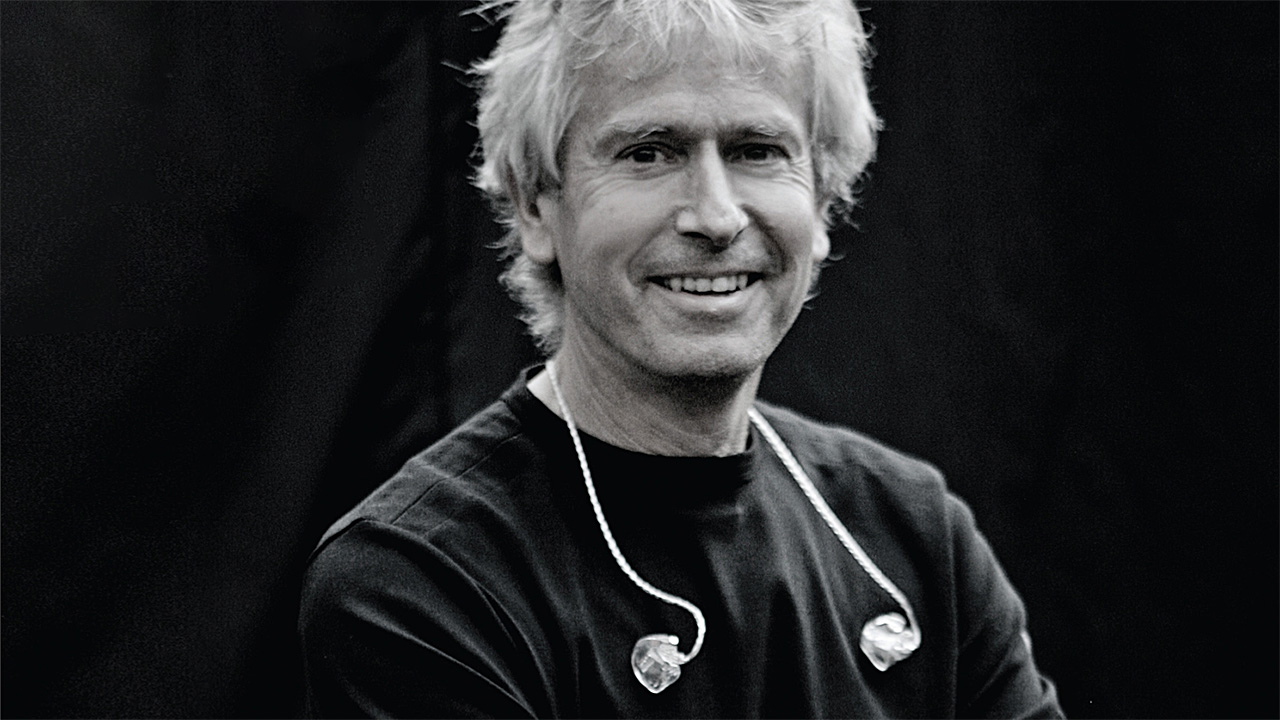
“In interviews they’d talk about Phil and Mike then say, ‘What have you been doing while these guys have been in the charts?’ It takes as long to make a record that’s not a success as it does to make one that is”: Tony Banks on his career outside Genesis
Favicon 
www.loudersound.com

“In interviews they’d talk about Phil and Mike then say, ‘What have you been doing while these guys have been in the charts?’ It takes as long to make a record that’s not a success as it does to make one that is”: Tony Banks on his career outside Genesis

Keyboardist’s solo albums may not have reached the heady heights of his bandmates’ output – but he’s had a great time making “more progressive” music with artists of his own choosing, including Fish, Toyah and Nik Kershaw
Like
Comment
Share
BlabberBuzz Feed
BlabberBuzz Feed
1 y

The Billionaire Puppet Masters Behind Kamala Harris: From The Mouth Of A Former Democrat...
Favicon 
www.blabber.buzz

The Billionaire Puppet Masters Behind Kamala Harris: From The Mouth Of A Former Democrat...

Like
Comment
Share
The Lighter Side
The Lighter Side
1 y

Greece’s sea turtle nests reach record numbers as conservation efforts pay off
Favicon 
www.optimistdaily.com

Greece’s sea turtle nests reach record numbers as conservation efforts pay off

BY THE OPTIMIST DAILY EDITORIAL TEAM After decades of tireless conservation efforts, the endangered Caretta caretta sea turtle is making a spectacular recovery on Greece’s coastlines. This ancient mariner, which has been around for over 100 million years, was nearly extinct due to human activity and environmental threats. Conservationists’ efforts led to a record number of sea turtle nests in Greece, marking an enormous triumph for wildlife preservation. The return of an ancient mariner Something amazing has been happening on the sandy beaches of Sekania on the Ionian island of Zakynthos, which is the largest nesting place for loggerhead sea turtles in the Mediterranean. Charikleia Minotou, the WWF program manager in this protected area, has monitored loggerhead turtles for nearly 25 years. Her discoveries are nothing short of amazing. “The message sea turtles are sending is very clear,” says Minotou. “The measures we have taken over the past 25 years to ensure conditions are right for the marine turtles to nest here are working … It’s fantastic.” This year, more than 1,200 nests have been discovered on the beach—an incredible number, with one nest per 50 cm. Minotou and her crew have seen record numbers of both nests and surviving hatchlings, indicating a remarkable rebound for the species. Conservation wins in the Mediterranean The Mediterranean region has seen an extraordinary increase in sea turtle nesting numbers, from Spain to Cyprus. This recovery is the consequence of a coordinated effort by conservationists dedicated to saving the species. Although only one in every 1,000 sea turtle hatchlings survives to adulthood, the number of nests is increasing, demonstrating the effectiveness of these conservation programs. Greece, which contains 60 percent of the Mediterranean’s loggerhead turtle nests, has seen the most dramatic recovery. According to Archelon, the Sea Turtle Protection Society of Greece, the average number of nests each year has increased from 5,000-7,000 to more than 10,000 since 2023. Dr. Aliki Panagopoulou, research coordinator for Archelon, explains the significance of this increase: “Throughout the 2000s, we were registering annual declines of about six percent on Crete, for example. Now we are looking at a dramatic increase in nest numbers, the result of decades of conservation efforts.” These efforts have centered on getting as many hatchlings as possible into the water, giving them the highest chance of survival. Early challenges in sea turtle protection The success of these conservation programs did not come easily. Thirty years ago, Greek authorities mostly neglected the plight of the Caretta caretta, putting the species on the brink of extinction. Human activities, particularly the expanding tourism industry, posed a significant threat to turtles. Speedboats, beach equipment, and an increase in people all interfered with crucial hatching locations. Few people understood these early battles better than Lily Venizelos, the founder of the Mediterranean Association to Save Sea Turtles (Medasset), based in the United Kingdom. In the 1980s, she aggressively advocated for legislation to protect turtles. “I spent years when they were endangered running around different ministries with pieces of paper because back then no one cared to listen,” Venizelos says. The loggerhead turtle population’s comeback encourages Venizelos, now in her nineties. “It’s been the most wonderful news, at my age, to find out that the Caretta caretta are no longer so threatened,” she declares. However, she emphasizes that the fight is far from done. “It’s crucial protective measures continue to be enforced. One false move and everything could be lost.” The new threats to sea turtles Despite positive advances, sea turtles in the Mediterranean still confront major obstacles. The region’s expanding tourism economy could jeopardize conservation efforts. Greece, which hopes to attract 40 million tourists by 2028, has seen an increase in “last-chance tours” offered to travelers who want to visit sites threatened by climate change and excessive tourism. Venizelos describes this trend as “catastrophic” for sea turtles, as the influx of visitors endangers fragile marine habitats. “On the one hand, the EU wants to protect the species and, on the other, organizations are taking tourists on these ‘last chance’ tours,” Venizelos says. “It makes no sense at all.” In addition to tourism-related pressures, additional dangers such as climate change, overfishing, pollution, and plastic waste are increasingly endangering sea turtles. Conservationists are working to fight these threats, but they warn that their progress might be jeopardized without ongoing support and enforcement of protective measures. Nadia Andreanidou, Medasset’s programs and policy officer, underscores the need for ongoing vigilance: “There’s no doubt that across the Mediterranean, the increase in the Caretta caretta population is a nature-based reaction to all the conservation efforts of NGOs over the last few decades. But now, more than ever, we need the support of the government to implement the laws we have pushed for if we are to build on the momentum and keep this extraordinary animal out of danger.” A bright future for sea turtles—if we stay the course The resurgence of the Caretta caretta sea turtle demonstrates the strength of prolonged conservation efforts. Record nesting numbers in Greece and throughout the Mediterranean bring optimism for the future of this iconic species, but the task is far from over. Minotou, Venizelos, and Andreanidou all underline the importance of maintaining vigilance and taking action to protect the loggerhead turtle’s long-term survival. With the correct regulations in place and dedication to safeguarding marine habitats, the Caretta caretta can continue to thrive.The post Greece’s sea turtle nests reach record numbers as conservation efforts pay off first appeared on The Optimist Daily: Making Solutions the News.
Like
Comment
Share
The Lighter Side
The Lighter Side
1 y

5 ways a ‘no-spend month’ can transform your life for the better
Favicon 
www.optimistdaily.com

5 ways a ‘no-spend month’ can transform your life for the better

BY THE OPTIMIST DAILY EDITORIAL TEAM Every day, social media bombards us with the most recent must-have products: a “life-changing” device, viral fashion pieces, or the hottest new beauty item. It’s easy to fall into a loop of endless buying, adding to your cart only to feel overwhelmed and unfulfilled. A no-spend month could be the solution for people wishing to break away from this cycle and regain control of their finances. Traci Williams, PsyD, a board-certified clinical psychologist and financial therapist, receives frequent inquiries from clients who are battling with overspending. “They’ve been charging things to their credit cards, carrying a balance every month, and accumulating debt,” Dr. Williams explains. Financial problems can have a negative impact on both mental and physical health, causing anxiety and sleeplessness. That’s where the no-spend challenge comes in—a straightforward, organized approach to resetting financial habits and reducing money-related stress. A no-spend month often entails refraining from non-essential spending for a defined period. You only spend money on necessities like groceries, utilities, housing, and transportation, avoiding discretionary spending like dining out, shopping, and entertainment. The criteria are flexible—each individual can establish their own guidelines—but the idea is to reduce wasteful spending so you can focus on financial goals. Here are five ways having a no-spend month could transform your life: 1. Improve your financial health It’s no surprise that spending simply on necessities can benefit your money. For Jazmine Waller, a month without spending was a game changer. “I decided I needed to do a no-spend month to stop spending money, see where it was going, and save to get ahead,” she said. After canceling superfluous subscriptions and following a strict budget, she was able to pay off $17,000 in debt in nine months. Dr. Williams notes that no-spend months are especially advantageous to people who live paycheck to paycheck. “By engaging in this practice, they become more conscientious of what they’re doing with their money. It can lead to lasting changes in their financial behavior,” she says. 2. Reduce stress and financial anxiety Money-related stress is far too prevalent. A 2023 study discovered a relationship between money anxieties and psychological distress. For Waller, the relief of paying off debt and avoiding late bills was life-changing. “Not receiving phone calls about overdue bills is a huge benefit,” she says. “I’m not running away from my phone anymore, or avoiding 1-800 numbers. It’s a great feeling.” When you actively manage your money and stick to a plan, you can feel in control, which is empowering. Waller reports that after completing her first no-spend month, she felt more confident and capable of reaching future financial goals. 3. Make the most of what you already have Elyse Lyons, a 29-year-old who does no-spend months four times a year, sees these trials as opportunities to rediscover the worth of what she currently has. “I have a bookshelf full of books, a closet full of clothes. I should be using those things before buying new ones,” she says. This shift in perspective from consuming more to appreciating what you already have might result in a more intentional and rewarding relationship with your things. Lyons has also devised innovative ways to use public resources such as libraries and community centers to take part in new experiences without paying money. She tells others that they can partake in hobbies or trends without continually purchasing new items. “No-spend months force you to take a step back and really appreciate what you already have,” she says. 4. Be creative with your free time A no-spend month challenges you to think outside the box and discover free or low-cost alternatives to your typical activities. Dr. Williams observes that breaking habits such as eating out or buying creates new opportunities. “Instead of brunch every Saturday, you may find yourself thinking, ‘What else can I do that’s cost-free?’” she explains. This transformation typically results in more meaningful experiences with loved ones. Lyons believes that it is important to find delight in small moments. “We’re more intentional about making quality time together,” she adds. Instead of going to a trampoline park or a movie theater, she may organize a fun family night at home, complete with homemade snacks and a movie. These kinds of activities not only save money but also help create lasting memories. 5. Reduce your environmental impact Aside from the financial and mental rewards, a no-spend month promotes more sustainable habits. Avoiding impulsive purchases, particularly low-quality items, helps you keep waste to a minimum. In 2018, Americans discarded nearly nine million tons of clothing, while the global fashion sector emitted more than two billion tons of greenhouse gases. Resisting the temptation to engage in fast-fashion or viral fads during a no-spend month will help you reduce your environmental impact. Lyons, who is now making more deliberate purchases, also looks for used products wherever possible. “I see things differently now. Instead of being stuck in the consumerism cycle, I enjoy my purchases more,” she explains. Tips for a successful no spend month If you’re considering starting a no-spend month, Dr. Williams recommends a balanced approach. “Avoid being too restrictive. Give yourself a little flexibility, or set a limit on how much you can spend on non-essentials,” she says. Lyons adds that it’s important to give yourself grace: “Don’t get wrapped up in perfection. If you slip up, reflect on why and learn from it.” Share your plans with friends and family to hold yourself accountable, and unsubscribe from any email lists or social media pages that may tempt you. Keeping track of your success throughout the month, such as marking a calendar for each no-spend day, will help you keep motivated and focused on your goals. A no-spend month is more than just a financial reset; it’s an opportunity to reduce stress, be creative, and live more deliberately. And at the end of the month, you may discover that the benefits go far beyond simply saving money.The post 5 ways a ‘no-spend month’ can transform your life for the better first appeared on The Optimist Daily: Making Solutions the News.
Like
Comment
Share
Living In Faith
Living In Faith
1 y

Growing Strong in Your Faith (Romans 4:20) - Your Daily Bible Verse - October 8
Favicon 
www.christianity.com

Growing Strong in Your Faith (Romans 4:20) - Your Daily Bible Verse - October 8

We may feel like God could never forgive us, but like Abraham, we must believe God’s promise of grace.
Like
Comment
Share
Living In Faith
Living In Faith
1 y

Generation Z’s Prodigal Sons
Favicon 
www.thegospelcoalition.org

Generation Z’s Prodigal Sons

Young men are turning back to the church. As per recent reporting from The New York Times, Gen Z men are more religious than our female counterparts. Young men are staying in churches even as young women leave them—the gender breakdown of Gen Zers disaffiliating from religion is 54 percent to 46 percent, with women in the majority. In a world where two-fifths (40 percent) of Gen Z women describe themselves as “religiously unaffiliated,” only about a third (34 percent) of Gen Z men are willing to adopt the same label. As researchers ponder this unprecedented trend, a question emerges: Ought the church to view this reversal optimistically, as a sign of abnormal spiritual renewal; or cynically, as the inevitable result of widespread institutional disparity in which young men get the short end of the stick? Young Men as Patients Augustine is often attributed as saying, “The church is not a hotel for saints but a hospital for sinners.” If this is the case, American masculinity is a population of perfect patients. Young men in America are, by many meaningful metrics, not doing well. As I’ve written elsewhere, On average, men my age are underperforming academically and taking fewer specialized courses—if they pursue higher education at all, which we’re also doing less on average. In three decades, the number of men reporting having zero close friends has jumped fivefold, while suicide rates among men 25–34 years old have risen by 34 percent. My generation’s tragic decline is, in far too many cases, quite literally a matter of life and death. Social scientist Arthur Brooks lists four building blocks for human happiness: faith, family, work, and friends. Men are struggling with at least the latter two. Add to this the decreasing prominence of social spaces curated specifically for men, and you can begin to understand why many young men perceive themselves as having been cast aside even as the culture ran to support and empower young women. Young men in America are, by many meaningful metrics, not doing well. As researcher Richard Reeves points out, “The trend has been for male organizations to become co-ed, even as female ones remain single-sex, or at least keep their specific mission to serve girls and women. . . . We’ll look back on the decision of so many organizations, especially those focused on boys and young men, to abandon a single-sex approach as a mistake.” Church as Hospital Against that backdrop, then, why are young men picking the church? It isn’t an institution with a single-sex approach—arguably, its desire to be a space for both genders has played a major role in its status as a formative institution that shapes both congregant and culture, as opposed to a performative institution shaped by culture. And yet, that’s just it—young men are staying in the church because we believe the church actually offers something more than a pro-masculine space. It offers an anthropology rooted in biblical responsibility instead of earthly identity. If, as sociologist Philip Rieff noted in the 1960s, the church is once again becoming an institution people seek out for “a rationale for their misery,” Gen Z men’s willingness to stick with religion is no surprise at all. Young men who feel cast aside by a culture where fixing female struggles means ignoring male ones will be better served by a culture where fixing earthly struggles means reorienting to a heavenly philosophy of human purpose and vocation. To the Gen Z man, the one battling loneliness or disenfranchisement or the PornHub tab that’s too easy to click on, the postmodern vision of enforced gender parity where all are one in the equal sharing of identity-based misery is far inferior to the Christian vision of human equality where all are one in Christ. Opportunity So how should the church view this surge of young, meaning-starved, community-hungry men coming through its doors? The temptation to view this as an opportunity to immediately pump them full of culture-war training points is strong. But that comes later. The church offers an anthropology rooted in biblical responsibility instead of earthly identity. Before channeling that formative energy into what the church can get young men to do for society, we need to view young men’s willingness to stick with the church as an unexpected opportunity to correct the errors the world’s philosophy has fed them, whether through the godless extremes of the manosphere or the insidious male guilt that progressivism has so widely sown to teach young men their struggles are some oppressor’s burden to be borne in silence. The church needs to view young men rediscovering the value of church the same way as anyone who comes through the doors on a Sunday—as an individual capable of profound virtue and excellence, and one whose soul can be cared for best by lifting the profoundly heavy burden of postmodernity and replacing it with the easy yoke and light burden of the only One by whom man’s chief end is ever to be achieved.
Like
Comment
Share
Living In Faith
Living In Faith
1 y

Let the Bible’s History Amaze You
Favicon 
www.thegospelcoalition.org

Let the Bible’s History Amaze You

If there’s one statistic everyone knows about the Bible, it’s that it’s the best-selling book of all time. Less known is that the best-selling artist of all time is a Swiss Bible illustrator; that the earliest illustrated Bible may well come from Ethiopia; or that the country that produces the most Bibles today is China, the same country that banned many Bible apps. This is just a sample of “Bible superlatives” that reflect the Good Book’s global reach. According to Wycliffe stats, just over 50 percent of all languages have some portion of the Bible, reaching up to 98 percent of all people. For a set of books written in a small sliver of the ancient world, that’s a remarkable feat. And everywhere the Bible has gone, it has changed its readers and, in turn, been changed by them. As Bruce Gordon, professor of ecclesiastical history at Yale Divinity School, writes in The Bible: A Global History, “Every new Bible lay at the crossroads of cultures, and no translation existed without inheriting linguistic, theological, ritual, and political legacies” (55). The Good Book as a Great Book In telling how this ancient book of books has gained audiences that stretch into every corner of the globe, Gordon has done something unique. Yes, we get the usual coverage of the English Bible: Wycliffe’s controversial defense of putting the Bible in English, Tyndale’s inspiring sacrifice to give it to the plowboy, the towering achievement of the King James translators—it’s all here. But we get so much more. We get a history of Bible illumination; the Bible in the age of science; the Bible and global missions; and, notably, whole chapters on the Bible in Africa, Asia, and global Pentecostalism. This is a book that delivers on its subtitle. The Bible’s value for its many readers is reflected in a range of splendid Bibles. This includes the 6th-century Rossano Gospels whose parchment was dyed purple and inscribed with silver ink. Jerome famously decried such opulence as sinful decadence. But this didn’t stop illuminators. Another famously illustrated Bible is the gigantic Codex Gigas, a Latin Bible from the 13th century weighing nearly 170 pounds and famous for its full-page depiction of a red-horned, green-faced Devil (from which it was nicknamed the Devil’s Bible). The value of the Bible for its many readers is reflected in a range of splendid Bibles. By the time of the Renaissance, a new set of Bibles appeared whose size wasn’t measured in pounds but in columns. Known as the great polyglots, these Bibles combined the biblical text from multiple ancient languages—Hebrew, Greek, Latin, Syriac, and so on—side-by-side in order “to demonstrate the breadth of God’s revelation and the frontiers of human learning” (150). The cost to make one of these great polyglot Bibles is the equivalent of about $30 billion in today’s dollars, comparable to the entire budget of NASA in the 1960s. The Good Book as a Misunderstood Book Far more than a history of particular Bibles, The Bible is a history of Scripture’s readers. Though consistently evenhanded, Gordon challenges popular misconceptions. He dispels what he calls “one of the greatest mistruths perpetuated by the Protestant Reformation”: the notion that “the Bible disappeared during the Middle Ages” (108). In fact, it was everywhere. There’s a risk, however, of overcorrection. The medieval church wasn’t as unified as Gordon sometimes suggests. One only needs to read Wycliffe’s writings to see that the Bible wasn’t always a source of “a universal bond” among the medieval faithful (129). The upheaval of the Reformation sometimes masks the disunity of the time before it. When it comes to the scientific revolution, far from being eclipsed by the new empiricism, the Bible was central to thinkers like Galileo, Newton, and Bacon. “The question with which these thinkers grappled,” Gordon writes, “was not really whether the Bible was still relevant in a world in upheaval but how it was so” (179). The Bible couldn’t be so easily shelved. Even in places like the antebellum South and the European colonies in Africa, the Bible had a way of finding a welcome home among those it was used to subdue. In the South, slaves found hope in the exodus account and in the story of Jesus who was abused and brutalized but ultimately vindicated by God. In Africa, Desmond Tutu was known to say the white man came to Africa and said to the Africans, “Let us pray.” When they got up, the white man had the land and the Africans had the Bible—to which Tutu was known to occasionally add, “And we got the better deal!” (373). As a result, there are more Anglicans today in Nigeria than in the United States and United Kingdom combined. The Good Book as the Laypeople’s Book Of course, the Bible hasn’t spread on its own. It has been translated, published, and carried to new lands. Laypeople have often been at the forefront of such efforts. Two organizations that deserve more credit for this than perhaps any other are the British and Foreign Bible Society and the Gideons. The former was inspired by the story of 16-year-old Mary Jones, who walked a reported 28 miles to obtain a Bible in her native Welsh. In its first 30 years, the society printed and distributed more than 8.5 million Bibles in 157 languages. The Gideons was another lay-led and lay-run Bible organization. Founded by two Bible salesmen in 1898, it has distributed over 2.5 billion Bibles in travel locations all over the world. Everywhere people go, the Bible has gone with them. The Bible has an amazing history. Everywhere people go, the Bible has gone with them. Gordon’s The Bible is a feat of good storytelling. Despite the narrative’s huge range, it never gets bogged down by any single character, place, or idea. If there’s one consistent thread, it’s the tension between the Bible as both a universal and a particular book. It always takes shape in particular places with particular people in their particular cultures—and yet it has a way of constantly breaking those bounds in new and surprising ways. From Gordon’s sprawling, fascinating history, we conclude the Bible isn’t just a global book but a living and active one too.
Like
Comment
Share
Showing 60912 out of 106009
  • 60908
  • 60909
  • 60910
  • 60911
  • 60912
  • 60913
  • 60914
  • 60915
  • 60916
  • 60917
  • 60918
  • 60919
  • 60920
  • 60921
  • 60922
  • 60923
  • 60924
  • 60925
  • 60926
  • 60927
Advertisement
Stop Seeing These Ads

Edit Offer

Add tier


Select an image
Delete your tier
Are you sure you want to delete this tier?

Reviews

In order to sell your content and posts, start by creating a few packages. Monetization

Pay By Wallet

Payment Alert

You are about to purchase the items, do you want to proceed?

Request a Refund