www.theamericanconservative.com
Germany’s Turning Point
Foreign Affairs
Germany’s Turning Point
Voters have shifted to the right, but a right-wing government is prohibited by the “firewall.”
Credit: Maja Hitij/Getty Images
The hyperventilating reactions to Vice President J.D. Vance’s Speech at the Munich Security Conference serve only to prove that he was dead on target in his critique. Some establishment figures almost got heart attacks when listening to his words about the retreat of free speech in Europe and the dangers of mass immigration. “This is unacceptable,” gasped Germany’s Minister of Defense Boris Pistorius, a Social Democrat.
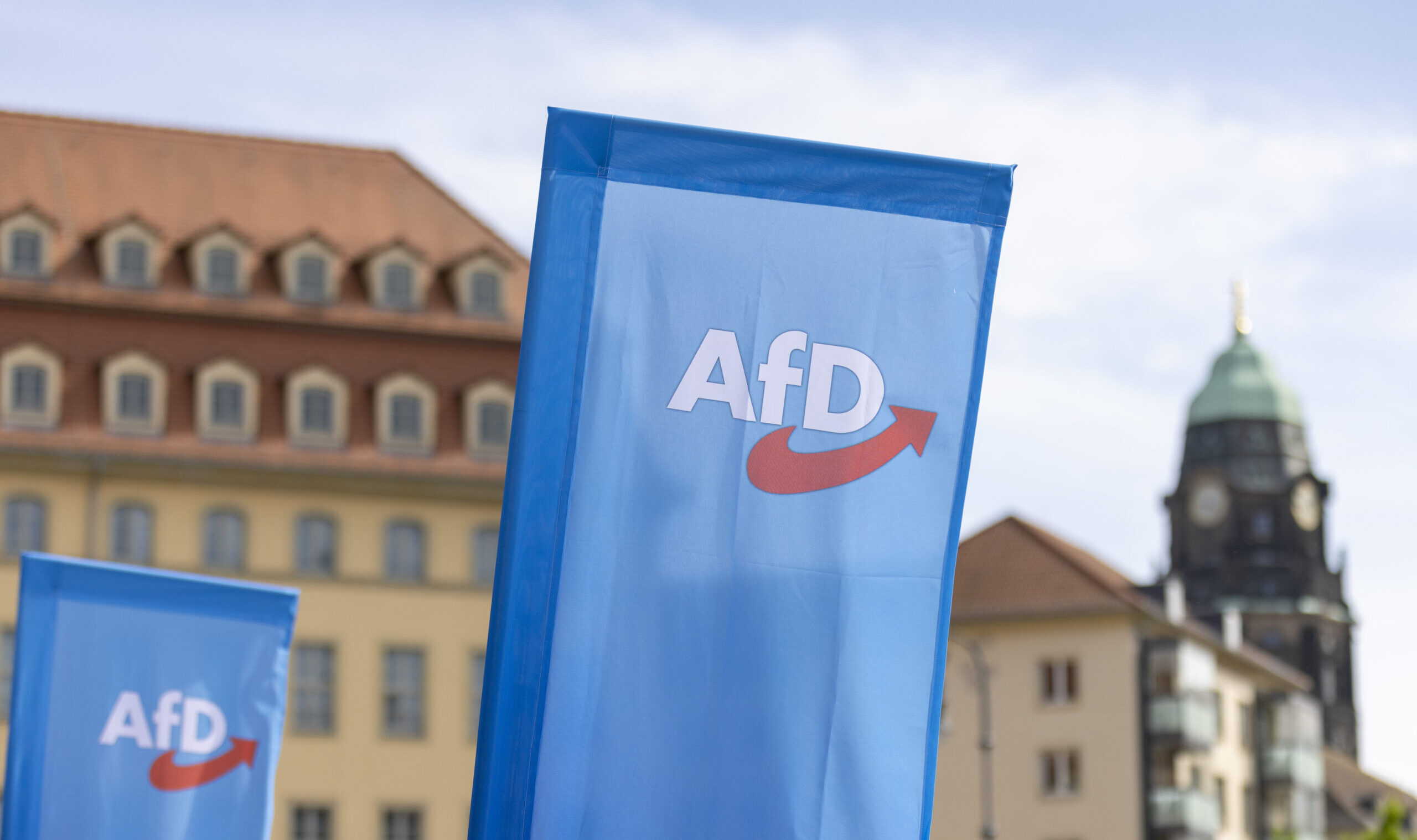
He is right to be nervous. In the general election in Germany this Sunday, the deeply unpopular Social Democrats (SPD) of Chancellor Olaf Scholz are set to receive a hammer-blow from the German voters. The polls predict the SPD share of the vote to crash to only 15 percent. On the contrary, the populist right-wing party Alternative for Germany (AfD) is on course for a breakthrough. The AfD is predicted to take second place with 20 percent of the votes or above, which is double their previous results. According to the polls, the AfD will be the strongest party in all the eastern German states.
The party benefits from widespread discontent about the consequences of more than a decade of uncontrolled mass migration from the Middle East and North Africa as well as voters’ worries about economic decline, deindustrialization, costly green energy policies, high cost of living, and deteriorating security in many German cities. Vance’s remarks at the conference came just one day after a rejected Afghan asylum seeker had committed a brutal car-ramming attack on a trade union demonstration in Munich, close to the conference venue. The attack killed a mother and her 2-year-old daughter. Multiculturalism is increasingly showing its ugly, deadly face.
A series of heinous attacks by migrants, like the Afghan knifeman who stabbed to death a toddler and a man in the Bavarian town of Aschaffenburg, or the horrible incident at a Christmas market in Magdeburg in which a Saudi-Arabian doctor killed six and injured more than two hundred with his SUV, has placed the problems of mass migration and the failed asylum system at the center of the election debates.
The Christian Democrats (CDU) of Friedrich Merz, who is the frontrunner in polling to become next German chancellor, have hastily moved to distance themselves from former CDU Chancellor Angela Merkel’s open-door asylum policies, presenting tougher measures on border control and the rejection of illegal immigrants. A CDU motion for a stricter asylum policy was passed with the support of AfD in the Bundestag, the German parliament, two weeks ago, much to the horror of the left-wing progressive camp.
And yet, despite the spectacular rise in support among the voters for AfD, the establishment parties have vowed to keep the party strictly excluded from policy making and from power. The much talked-about “firewall” against the AfD is a central premise of mainstream politics. Vance was right to say that it is undemocratic to refuse to work with a party that represents a fifth of the population and not to let their voices be heard.
For years, the establishment has pushed the newcomer party around. They are denied some of the normal parliamentary rights and are vilified as extremist “enemies of the state.” The establishment media turned a blind eye to antifa intimidation and violent attacks against right-wing politicians. (Only recently, when antifa activists turned against the CDU after the vote in the Bundestag, have some woken up and begun to decry a worsening civilizational climate).
Our so-called political center has supported the political persecution of right-wingers as normal practice. The domestic spy agency (under the pompous name of the “Office for the Protection of the Constitution”) is allowed to tap the phones and hack into the email accounts of leading AfD members. Civil servants and police officers are threatened with the sack if they actively get involved in AfD politics. Some “progressive” politicians have even tried to get the AfD banned altogether, although it would look extremely totalitarian and undemocratic if the second-most popular party of a country were to be banned ahead of an election.
Vance was also right to mention that the frequent violations of civil rights eat away at the reputation of Europe’s democracies. At the same time, there has been a remarkable process of “normalization” of the AfD in recent months. The party obtained the endorsement of Elon Musk and has overcome the international isolation that had previously restricted their ability to form alliances on the European level. Only last week at Budapest, AfD’s co-leader Alice Weidel met Hungary’s prime minister Viktor Orbán, who praised her as “the future of Germany.”
The AfD is now seen as part of a much broader movement of similar parties critical of mass immigration making headway in many European countries. Some of them are even part of governing coalitions. It seems odd that AfD is demonized in Germany as “unconstitutional” while similar parties occupy ministerial posts in neighboring democracies. This demonization has lost its credibility.
Stopping the existential threat of continued mass immigration is increasingly understood as the pivotal issue for preserving Germany’s national identity and culture, halting the erosion of public security, and slowing down the huge financial drain of welfare payments to immigrants and their dependents. More than three million asylum seekers plus their families have been allowed into the country since Merkel’s fateful “refugees welcome” decision 10 years ago. The costs—not only in financial terms but also in terms of loss of safety—have been enormous. Slowly, Merz’s CDU has realized that they must make a U-turn on Merkel’s policies even though that means a confrontation with the dominant liberal forces in the mainstream media.
However, the prospects of a real turning point at the election remain dim. The self-imposed firewall prevents the CDU from choosing coalition partners other than from the left. Although on many points of domestic and economic policy the CDU proposes ideas not so dissimilar from the AfD’s moderate wing (the more radical talking points of the hard-right wing about leaving the EU or abandoning NATO are a different issue), the hard right in the AfD serves as an excuse for the CDU that forbids them to even contemplate any cooperation.
Thus, the CDU is left with coalition options only to the left. Most likely, Merz will try to form a coalition with the Social Democrats after the election, as the Greens have gone out of favor. But a coalition with the SPD also precludes any chance of a real move towards a much stricter immigration policy. The firewall against the right leaves the center-right in Babylonian captivity to the left. Besides, the SPD is part of 12 state governments (out of 16 federal states in Germany) which gives them veto power in the Bundesrat (Federal Council), the second legislative chamber.
Yet there is a glimmer of hope that the situation will start to change. The undemocratic firewall cannot stand forever. Most likely, there will be a gradual opening to some forms of informal cooperation and alliances on the local level and then the state level in the East German regions, where AfD is simply much too strong to be permanently ignored and excluded from majority voting. German voters are shifting to the right en masse. At present, polls indicate that around 60 percent of Germans support right-of-center parties. It would be deeply paradoxical if such an electoral pressure does not translate into right-of-center coalitions in due course.
You can clearly see the signs of panic among left-wing party activists who sense that the Zeitgeist is turning against them. For many years, the Greens held a position of cultural hegemony and were a dominant part of the ruling “traffic light” coalition since 2021. They represented the dominant thinking in the urban, academic elites; they thought an unstoppable tailwind was blowing for the causes dear to them, like climate policies or LGBT and gender issues they are obsessed about. The Green vision of a rainbow “Lala Land” was massively supported in the public broadcasting media. For them, Germany should have been the global champion of woke human rights policies. However, we have entered into an era where more realist thinking has come back to the forefront.
Merz now faces major challenges on the international level. An Atlanticist by heart, the 69-year-old lawyer has frankly expressed his dislike of the new Trump administration. Undeniably, he would have much preferred Kamala Harris. He is now faced with a U.S. government that represents policies that align with his greatest enemy at home, the AfD. The Trump administration stands for a hard-nosed pursuit of national interests, something German “post-national” politicians abhor.
As the U.S. has backed away from further commitments to Ukraine, Merz has professed that he will do anything he can to support Ukraine and ensure a Ukrainian victory. Yet it is clear that Germany’s capacities for support—financial and military—are limited. It would be delusional to assume that Germany or the other European mid-sized countries can step into the breach that the U.S., thus far the key backer of Ukraine, would leave. The German armed forces are just a shadow of their former self, with depleted inventories and second-rate military equipment at best. Trump will teach Europe the hard way to take much more responsibility for our own security and participate in a fair burden sharing within NATO. For decades, Germany has missed the two percent NATO target for military spending. That target will now likely be raised substantially. A Merz government will struggle to meet these obligations.
At the same time, it is hard to conceive a Christian Democratic coalition with the SPD, which has turned more left-wing recently, can find common ground for the sweeping reforms necessary to revive the fortunes of the ailing German economy. The one-time economic powerhouse of Europe is on a downward trajectory. It has been in a recession for two years, and its industry has been declining much longer, reeling from high energy costs due to green policies, high taxes, and absurd levels of red tape. Merz has promised reforms, but he will lack a partner to enact them.
One not unrealistic result of this election is a dysfunctional coalition government that will not deliver much more than muddling-through policies. Public dismay at economic weakness and at high immigration will continue. This may well lead to the worst nightmare of the CDU and the progressives becoming a reality: a continuing increase in support for the AfD until their participation in government becomes unavoidable.
The post Germany’s Turning Point appeared first on The American Conservative.








 New Posts (Home)
 ChatBox
 Popular Posts
  Game Zone
 Top PodCasts