YubNub Social YubNub Social
    #libtards #terrorism #patriots #antifa #americafirst #loonyleft #police\ #foundingfathers #patriotichistory #wethepeople
    Advanced Search
  • Login
  • Register

  • Night mode
  • © 2026 YubNub Social
    About • Directory • Contact Us • Developers • Privacy Policy • Terms of Use • shareasale • FB Webview Detected • Android • Apple iOS • Get Our App

    Select Language

  • English
Community
New Posts (Home) ChatBox Popular Posts Reels Game Zone Top PodCasts
Explore
Explore
© 2026 YubNub Social
  • English
About • Directory • Contact Us • Developers • Privacy Policy • Terms of Use • shareasale • FB Webview Detected • Android • Apple iOS • Get Our App
Advertisement
Stop Seeing These Ads

Discover posts

Posts

Users

Pages

Blog

Market

Events

Games

Forum

Conservative Voices
Conservative Voices
1 y

Dems struggle to unite on Trump resistance
Favicon 
www.brighteon.com

Dems struggle to unite on Trump resistance

Follow NewsClips channel at Brighteon.com for more updatesSubscribe to Brighteon newsletter to get the latest news and more featured videos: https://support.brighteon.com/Subscribe.html
Like
Comment
Share
Conservative Voices
Conservative Voices
1 y

'FOOL OF HIMSELF': Zelenskyy called out for 'ridiculous reaction' in Oval Office
Favicon 
www.brighteon.com

'FOOL OF HIMSELF': Zelenskyy called out for 'ridiculous reaction' in Oval Office

Follow NewsClips channel at Brighteon.com for more updatesSubscribe to Brighteon newsletter to get the latest news and more featured videos: https://support.brighteon.com/Subscribe.html
Like
Comment
Share
Conservative Voices
Conservative Voices
1 y

Volodymyr Zelensky was ‘out of line’ during heated meeting with Trump
Favicon 
www.brighteon.com

Volodymyr Zelensky was ‘out of line’ during heated meeting with Trump

Follow NewsClips channel at Brighteon.com for more updatesSubscribe to Brighteon newsletter to get the latest news and more featured videos: https://support.brighteon.com/Subscribe.html
Like
Comment
Share
Conservative Voices
Conservative Voices
1 y

Banned Book Bonanza
Favicon 
www.theamericanconservative.com

Banned Book Bonanza

Books Banned Book Bonanza In 2025, you can’t afford for your book not to get banned. Credit: OJUP/Shutterstock I got a call today from an author friend. He’s distraught. “What’s wrong?” I ask. “My books—they haven’t been banned.” “So—that’s good, isn’t it?” “Good? No, it’s awful. It’s terrible.” “How so?” “I’m ruined. My sales have tanked.” “I’m confused.” “Haven’t you noticed? All anybody talks about these days is ‘banned books.’ It’s all the rage. The best bookstores now have special displays of ‘Banned Books.’ To Kill a Mockingbird. Handmaid’s Tale. Maus. Harry Potter. Huckleberry Finn. Gender Queer…If your books aren’t on those displays, nobody pays any attention to you. The online booksellers post lists of ‘banned books.’” “But those books are still available, right?” “Not in some school libraries!” he says. “But—” Getting a little peevish, my friend interrupts. “You obviously don’t understand what ‘banned’ means, do you?” he says. “I guess not. I mean it isn’t like they’ve been taken out and put in piles of other verboten books and burned.” “It’s the same thing!” he says. Now I really am confused. “But people can still read those books, right? They can still buy them!” Now my friend sounds hurt. “Technically, yeah, but I’ve never been in it for the money. I do have a reputation to maintain, though,and that is important to me.” “I know. That I understand.” “And I have done everything I can to get banned,” he says. “I put a gay character—a very sympathetic gay character—in my most recent novel, just to get it banned. I wrote a love scene for him. A torrid love scene. And nothing. No one even noticed.” There’s a pause in the conversation.  “Here’s an idea,” I say. “I have a sister-in-law in Tennessee. Her babysitter is an avid reader. She borrows books from her local library. Maybe—just maybe—we could bribe her to complain about that novel of yours and try to get it removed?” “That’s not a bad idea. How much do you think it might cost?” I tell him I’ll look into it.  “Here’s another possibility,” I say. “Maybe, plot-wise, you need to try something different next time.” “Like what?” “How about making your hero someone who wants to ban books,” I say. “Now I’m the one who’s confused.” “Bear with me. Your hero wants to ban books, but he really means it. He’s banning books not to promote book sales—but for all the wrong reasons!” “Like he’s a…Nazi?” “Something like that, yeah. He wants to really ban them. Make them illegal not just to sell, not just to buy, but to own and to read! He wants public gatherings, late at night, in the dark, where people throw the condemned books into a big pile and set ’em on fire.” “And make s’mores?” “Maybe.” “That’s not a bad idea, actually: A book about someone who wants to ban books could really get banned!” “NPR couldn’t wait to book you.” “This is a good idea, but it means I’d have to make my hero someone I disagree with totally—a really despicable character. Someone who wants to ban books!” “I thought you said you wanted your books banned.” There’s another pause in the conversation. Then my friend says, “Thanks. You’ve given me a lot to think about. I’ll have to get back to you.” “Not at all,” I say. “Anything for a friend.”  That was 15 minutes ago. Since then, the doorbell rang, and my neighbor—the world’s most conscientious woman—wanted to show me something. “I just got back from Books Plus,” she says. “You mean the store that sells squishies or plushies, or whatever they call them—you know, those things well-traveled, college-educated young people carry around airports to calm their nerves?” “Well, they do sell those, yeah.”  “And Harry Potter ‘action figures’?” “They sell those, too, yeah. And books. But that’s not what I wanted to show you.” She drops her shopping bags on my floor and proceeds to pull the purchases out, one by one. There’s a book bag that says, “I read banned books.” ($12) A bookmark, listing banned books. ($4) A tee-shirt that says, “I’m with the banned.” ($11.99) A banned books coffee mug ($20). A pair of socks, with banned books listed on them. ($12), on one of which all the titles are blacked out. Another tee-shirt says, “Bans off our books.” ($23). Still another pair of “read banned books” socks with ominous images of flames leaping from the general area of the toes, ($23). “These are great,” I say, picking up the bookmark. “Look—there’s Heart of Darkness. Are people reading Conrad these days?” “Some of his books, yeah.” “You mean there are some they aren’t reading? Like what? “I really can’t say.” “Why not?” Looking away, she quickly pulls another item from the shopping bag. It’s a onesie, cute as pie. It says, “If I could read, I’d read banned books.” “That is so adorable,” I say. “And you are so brave.” The post Banned Book Bonanza appeared first on The American Conservative.

Like
Comment
Share
Conservative Voices
Conservative Voices
1 y

Bridget Brink: A Hawkish Holdout in Trump’s State Department?
Favicon 
www.theamericanconservative.com

Bridget Brink: A Hawkish Holdout in Trump’s State Department?

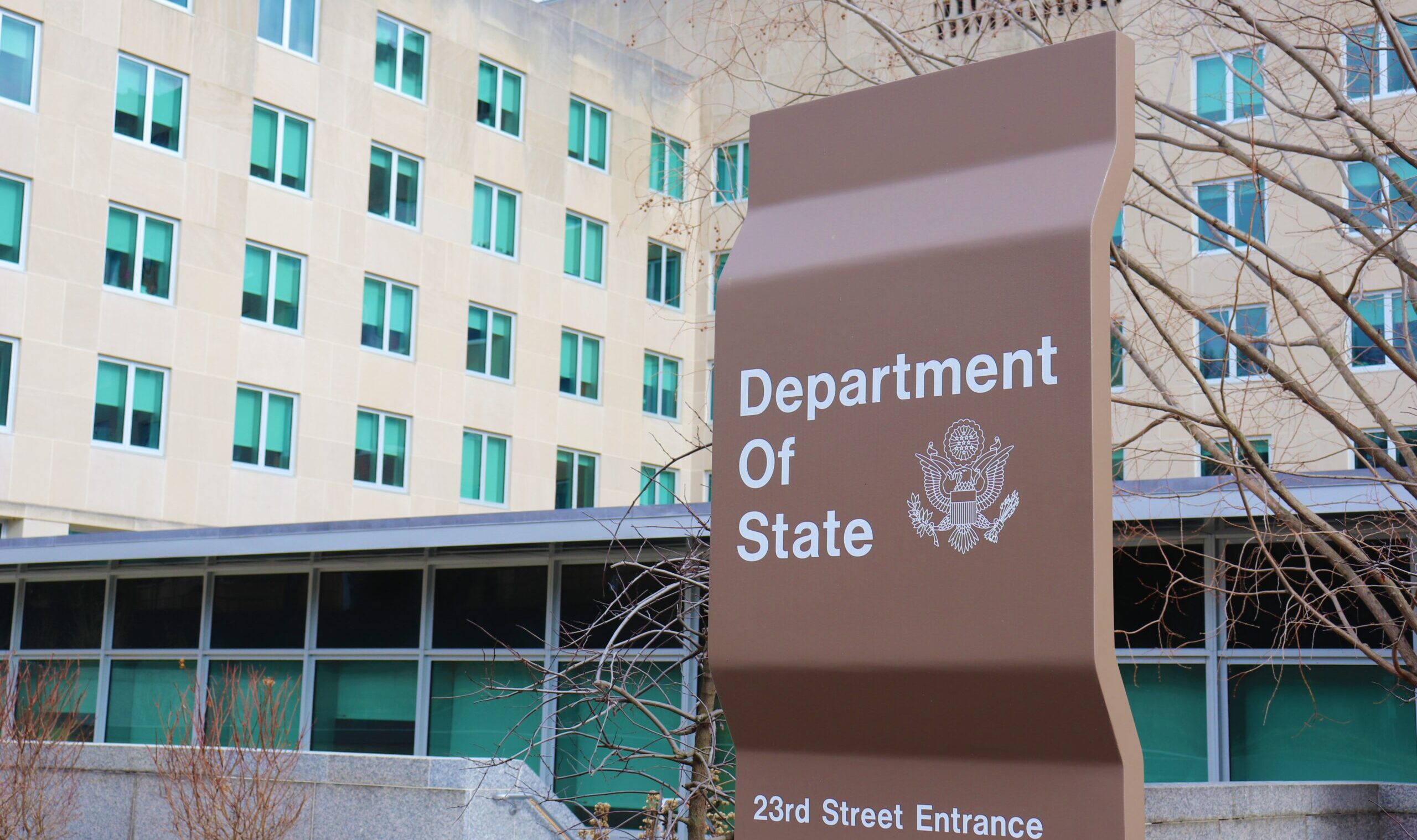
Politics Bridget Brink: A Hawkish Holdout in Trump’s State Department? Personnel battles continue at Foggy Bottom, with the U.S. ambassador to Kiev drawing additional scrutiny. Credit: image via Shutterstock Victoria Nuland resigned from the State Department in March 2024, a year ago.  Over her career, Nuland built a reputation as a hawk of hawks, having worked as an aide to Vice President Dick Cheney and as spokeswoman for Secretary of State Hillary Clinton. Even before her tenure as President Joe Biden’s undersecretary of state for political affairs, Nuland was widely seen as an avatar of the United States’ post–Cold War tendency to spend billions intervening in remote foreign conflicts. Nuland is also the wife of historian Robert Kagan, seen by many as the godfather of modern neoconservatism. Kagan’s public profile is immense. He recently appeared on a program with Weekly Standard founder William Kristol in which he bemoaned the United States’ clear lapse into a dictatorship (his framing). But some in the new Trump Administration—which considers itself antithetical to not only the Biden and Obama presidencies, but also the Bush set—are concerned Nuland’s (and perhaps Kagan’s) sway over the government is far from extirpated. Enter Bridget Brink. Brink is the current ambassador to Ukraine—an unusual Biden holdover for such a key position. Her portfolio is, of course, under fresh scrutiny following the president and vice president’s startling throwdown with Ukrainian leader Volodymyr Zelensky last week in Washington.  Brink is a career Foreign Service officer. Civil servants are, of course, officially nonpartisan. But many civil servants develop—especially further along in their careers—unofficial alliances with certain politicians and their perspectives. Few deny this.  For several years, before becoming ambassador, “Brink was my deputy assistant secretary for Ukraine,” Victoria Nuland said in a transcribed interview with the Senate Homeland Security Government Affairs Committee. And some Ukrainian press reports friendly to the Biden administration indicate Nuland likely played a role in getting Brink the ambassador job.  Other hardline pro-government media in Ukraine have reported that Brink has an excellent relationship with Nuland, heralding her past work in Georgia, another state fighting off the Russian Bear, and observed that Brink perhaps had limited command of the Ukraine conflict itself—but that’s of little concern because of her choice alliances in Washington.  The day of Nuland’s resignation, Brink posted on X, “Deep thanks and respect to Under Secretary Victoria Nuland. She spent her career defending freedom and democracy. Her values-based diplomacy served the U.S., Ukraine, and the world, setting the example for a generation of American diplomats. We are proud to continue her legacy.”  Brink’s employment of the term “values-based diplomacy” would seem a clear jab at realist and restrainer perspectives that value ending the war over a hawkish commitment to regime change in Moscow, and, at the very least, would seem out of step with the new sheriffs in town in Washington.   The association is clear. Nuland and Brink started working on Ukraine very closely a decade ago—in the Obama presidency. As a fellow traveler of Nuland, Brink became the deputy assistant secretary in the European bureau with responsibility for six countries including Ukraine. During this time, Brink reported to Nuland and worked with her and others to formulate U.S. policy on Ukraine. Most dangerous and partisan for Brink’s tenure is her potential enmeshment with the Hunter Biden imbroglio—or so say some detractors in Marco Rubio’s new State Department.   In 2014, Hunter Biden joined the board of Burisma Holdings, a Ukrainian natural gas company. The younger Biden’s role lasted until 2019. Hunter is reported to have advised on corporate governance and transparency. At the time, Burisma was under investigation over its founder, Mykola Zlochevsky, a former Ukrainian government minister accused of corruption during his tenure (allegations he denies). During this time the Obama administration, including then–Vice President Biden, supported anti-graft reforms in Ukraine. There was pressure to remove officials perceived as corrupt, such as Prosecutor General Viktor Shokin. Nuland aggressively pushed efforts to oust Shokin from his position of power. “So by the time we get to December of 2015, we concluded that [Ukraine] is not going to get cleaned up under Shokin and that there needs to be—and to encourage Poroshenko to demonstrate his commitment by replacing Shokin,” Nuland has testified. Joe Biden has publicly acknowledged urging Ukraine to fire Shokin, citing concerns over Shokin’s failure to pursue corruption cases, including those involving Burisma. Critics have alleged Biden sought to protect his son with these actions. Regardless, the cavalcade of outlandish personal and financial scandals eventually exposed Hunter Biden to federal prosecution and conviction. (Biden pere, as president, subsequently pardoned his son.) While evidence is far from conclusive, there is concern that Brink was part of the inner circle of Department of State staff that coordinated the-then Obama administration’s response to the Burisma matter. Brink is no one-sided Democrat. She was appointed to roles by Donald Trump in his first administration, including as ambassador to Slovakia (which today is one of the most dovish EU countries on the Russia–Ukraine conflict). But Trump has fallen out with all manner of officials from establishment Washington, including dozens of former officials from his cabinet and presidential campaigns.  And with the changed tone set by his second administration, on full display last week with Zelensky, many are left to wonder whether the new government will turn the page on the past—and if Brink’s time is up.   The post Bridget Brink: A Hawkish Holdout in Trump’s State Department? appeared first on The American Conservative.

Like
Comment
Share
Conservative Voices
Conservative Voices
1 y

How Trump Can Succeed Where Reagan and Gore Failed
Favicon 
www.theamericanconservative.com

How Trump Can Succeed Where Reagan and Gore Failed

Politics How Trump Can Succeed Where Reagan and Gore Failed Headcounts aren’t the be-all and end-all of reform. Credit: Frederic Legrand – COMEO Disclaimer: Then–Vice President Al Gore awarded my State Department team in Seoul in the mid-’90s a Hammer Award for helping “reinvent government.” Gore was in charge of the Clinton-era plan to create a government that costs less and works better. The plan mostly depended on us run-of-the-mill employees to come up with cost-saving hacks and strategies within our own offices. The award, a mounted gold-painted hammer, was supposed to remind us of the expensive, wasteful procurement by the military, in this case an ashtray that would break into no more than three pieces when hit by a hammer. It’s true! So while as a Gore team award-winner I might seem a bit biased toward what Donald Trump and Elon Musk are doing, the truth is actually the opposite. And that’s because one strategy failed while the other still has a decent chance of succeeding. Trump is far from the first president to want to reform the federal government. Ronald Reagan in 1982 launched a group led by 150 private-sector CEOs to review federal agencies and make recommendations to reduce waste. “Be bold. We want your team to work like tireless bloodhounds. Don’t leave any stone unturned in your search to root out inefficiency,” the president told commission members. Officially called the President’s Private Sector Survey on Cost Control in the Federal Government, it was better known as the Grace Commission after its chair, Peter Grace. Grace was well-known at the time for a speech where he said food stamps were basically a subsidy for Puerto Ricans. In due time, the Grace Commission issued a report suggesting over 2,500 recommendations to increase government efficiency. Most of them required Congressional action, so in the end not much was done. As mentioned, Gore’s National Performance Review had similar aims as the Grace Commission, but went about achieving them in a different way. Rather than bringing on private sector outsiders like Reagan, the Clinton administration relied on federal employees. “It is career bureaucrats who know, better than anyone else, what works and what doesn’t,” said a Gore aide. “A successful reform effort cannot take place without their wisdom and without their participation.” Part of that wisdom came from my team out in Seoul. We were then the busiest visa-issuing embassy in the world, and were struggling for air amid Korean visa applications for travelers to the United States. Our wisdom was to couple a hiring blitz with a range of kinda-makes-sense administrative changes to our workflow. Because we were processing close to a million visas a year, even small adjustments could have a big impact (a small thing times one million is a big number). It made it all seem dramatic, and we wrote it up nicely, hence the award from Gore. We hung it on the wall near the restrooms where everyone could see it daily. Gore’s program got a little help, and not just from my team. Between January 1993 and September 2000, the federal workforce shrunk by 426,200, making it the smallest one since the administration of Dwight Eisenhower. The reduction was brought about through a large-scale buyout program and about 25,000 layoffs. Still, overall only $136 billion was saved and the workforce grew back again under subsequent administrations. A 2013 Government Executive article criticized how the shrinkage was achieved: “The reduction didn’t happen in a way that matched workforce needs because they used a strategy for downsizing to hit a target. The effort got in the way of the ‘making government work better’ piece. Many with special skills left, and people who stayed might have been those we’d have wanted to leave.” Here’s where, with lessons learned, Trump may have a chance to succeed where Reagan and Clinton did not. No commissions or blue ribbon panels. One of Reagan’s mistakes was to create a commission with the power to peer into all aspects of government without the power to do anything about the problems they uncovered. A report was produced (purposeful use of the passive tense there) and dumped into Congress’s lap, where it slowly faded from memory. Though the wire diagram is a bit fuzzy here in 2025, Elon Musk clearly has more power in his hands than simply to produce a report. His ability to act, whether by ordering in Trump’s name actual de facto closures of agencies like USAID, or by offering government-wide buyouts ahead of a RIF, is significant. That alone may make DOGE more successful than its predecessors. Understanding that people are the problem, unlike Gore. Gore made the mistake of handing over uncovering waste to the very people perpetuating it, trusting them to hack themselves into efficiency. Musk, instead of encouraging workers to flush out waste, assumes those employees are actually the drivers of it. The hammer this time is a pink slip. Gore did produce some nice optics and had a publicity-forward edge to it all, but resulted in little actual money-saving change or added efficiency. (On the other hand, contrast the media response to Gore’s approach versus Musk’s on-purpose bull-in-a-china shop tactics as an indicator to how long he’ll get away with what he is doing.) But without some guidance as to who to cut, Musk risks encountering the same problem Reagan and Gore had, throwing out the good, needed employees with the bad ones when the only criteria is headcount. You can bet that nearly every employee inside the government is considering how to bail out right now. The problem is that given lucrative government retirement and pension plans, anyone close to “real” retirement is going to try to tough it out. These may not be the best employees, but they’ll be the ones to cling to their jobs for another six months or a year or whatever. Statistically they are more likely to have a coronary at their desks than to leave without a fight. The second group of government employees who will hang on like a dog with a turkey leg in its mouth are the worst of the worst, those employees who have no transferable skills into the private sector. They have nowhere to go and nothing to lose and unless identified and micro-targeted by RIFs may be who is left to turn out the lights in many government offices a year or two from now, the true Deep State, dug in even deeper. Musk needs guidelines in his efforts beyond “move fast and break things” and creating some commission a la Reagan which will spend a year creating a report of little value. With that said, so far so good. Unlike Gore, who also just used crude headcount goals, Musk will need to engage departmental leadership for those agencies he hopes to redeem and make informed choices over which employees to RIF and/or which sub-departments to close. Of course, none of that matters if your goal is to delete an entire agency, as with USAID or Education. Then the wood chipper has its uses, too. The post How Trump Can Succeed Where Reagan and Gore Failed appeared first on The American Conservative.

Like
Comment
Share
Bikers Den
Bikers Den
1 y ·Youtube General Interest

YouTube
Messed With The Wrong Biker | @AM-iy4xe
Like
Comment
Share
Worth it or Woke?
Worth it or Woke?
1 y

The 97th Academy Awards Recap: Oscars Continue Their Slow Crawl Into Irrelevance
Favicon 
worthitorwoke.com

The 97th Academy Awards Recap: Oscars Continue Their Slow Crawl Into Irrelevance

The 97th Academy Awards have come and gone, and if you didn’t bother tuning in, it’s hard to blame you. Hollywood’s annual self-congratulatory spectacle has long been a platform for pampered celebrities to preach hollow “values” while rewarding films and performances that most of us don’t relate to—or even hear about. And thanks to the Academy’s ongoing obsession with identity politics and official diversity quotas for nominations, the Oscars have continued their freefall from genuine cultural relevance into a curated echo chamber. Cynthia Erivo and Ariana Grande singing at the 97th Academy Awards This year’s awards ceremony delivered more of the same, complete with political grandstanding, questionable decision-making, and yet another reminder of how out of touch this organization is with the general audience. That said, in case you care to know who actually won (even if the judges themselves didn’t bother watching some of the movies they voted on), here’s this year’s recap. The Big Winners (and Losers We All Saw Coming) Best Picture went to Anora, the latest hyper-artsy flick directed by Sean Baker, which also took home awards for Best Director, Best Actress (Mikey Madison), Best Editing, and Best Original Screenplay. With domestic ticket sales scraping in at an underwhelming $15.7 million, it’s now the lowest-grossing Best Picture winner in history. A true “win” for mass appeal, right? Best Actor was awarded to Adrien Brody for his performance in The Brutalist, his first win since The Pianist 22 years ago. The Brutalist also bagged Best Cinematography and Best Original Score, proving once again that critics prefer their art films cold and detached. Kieran Culkin nabbed Best Supporting Actor for A Real Pain, while Best Supporting Actress went to Zoe Saldaña for her role in Emilia Pérez—a film surrounded by more controversy than acclaim. Check out my interview on the @AlexCuestaShow. It was a ton of fun and we cover a bunch of topics. Captain America Fantastic Four Emilia Perez Will Hollywood change More Be prepared for me to sound kike RFK throughout. https://t.co/Huaz59O8wT pic.twitter.com/Buf01GmAra — Worth it or Woke? (reviews) (@worthitorwoke) February 7, 2025 Flow secured an unsurprising victory in the Best Animated Feature Film category. And yes, Dune: Part Two did predictably clean up two technical categories, winning Best Sound and Best Visual Effects—even though more than one Academy judge admitted they hadn’t even bothered to watch the movie. A Ceremony of Errors Adding fuel to the dumpster fire, it was revealed that several Oscar voters didn’t fully watch—or in some cases, even start—certain nominated films. Dune: Part Two, a major blockbuster and critical contender, became a prime victim of this. One voter called the first Dune “boring” and just decided to skip the sequel entirely. Another abstained because it wasn’t a priority on their list. This raises the obvious question—if they aren’t watching the films, then why are they voting? It doesn’t stop there. Some voters even confused Ralph Fiennes as a past Best Actor winner to justify not voting for him in Conclave. (Spoiler alert—they’re wrong; he’s never won an Oscar.) That’s the kind of high-stakes decision-making you’d expect from an elite organization that prides itself on celebrating the “best” in cinema. Political Soapboxes and Virtue Signaling, as Usual The Award speeches weren’t short on politics either because Hollywood can never resist the opportunity to virtue signal. While host Conan O’Brien kept most of it light, the political moments still reared their predictable head. Zoe Saldaña managed to get a jab in about “borders,” and Basel Adra went on a tirade about ethnic cleansing during his speech for No Other Land (Best Documentary Feature). Subtlety clearly isn’t in their vocabulary. If you’re someone looking for escapism, you’re not going to find it here. For an industry that loves to claim it reflects the audience, these moments only emphasize just how disconnected it really is. A Nostalgia Grab That Fizzled To appease the few people still tuning in, the ceremony leaned heavily on nostalgia. An extended tribute to Los Angeles was thrown in just in case people forgot what city the event was taking place in, while Gene Hackman was honored during the in memoriam segment—a bittersweet moment considering his recent and tragic passing. Otherwise, the proceedings felt like more of the same tired template, complete with Ariana Grande’s and Cynthia Erivo’s duet that came and went without much impact. Final Thoughts This year’s Oscars once again reminded us that Hollywood isn’t exactly trying to win back the general public’s trust or attention. Between their out-of-touch nominees, transparent identity quotas, and voters who can’t be bothered to watch the films, the awards can’t help but feel like their old gold-glam veneer is wearing thinner than ever. Sure, Anora, The Brutalist, and Wicked will slap “Oscar-winning” on their posters to squeeze a few extra bucks out of their audience, but it’s clear the Oscars mean little more than an insider’s popularity contest at this point. If you’re like most of us and tuned out long ago, this year’s results provide little reason to tune back in anytime soon.The post The 97th Academy Awards Recap: Oscars Continue Their Slow Crawl Into Irrelevance first appeared on Worth it or Woke.
Like
Comment
Share
Classic Rock Lovers
Classic Rock Lovers  
1 y

The Elton John song Tina Turner turned down: “I made a mistake”
Favicon 
faroutmagazine.co.uk

The Elton John song Tina Turner turned down: “I made a mistake”

A force.
Like
Comment
Share
Intel Uncensored
Intel Uncensored
1 y

You Don’t Have the Cards
Favicon 
www.sgtreport.com

You Don’t Have the Cards

by Andrew Anglin, The Unz Review: Well, the best thing ever finally happened. As you probably know. Volonodonomodor Zeeleniniskiyey came to the White House to meet Donald Trump and it turned into the most public diplomatic breakdown in known history. First, James Bowman, who was at the meeting for some reason, began lecturing Zelensky with […]
Like
Comment
Share
Showing 63747 out of 127542
  • 63743
  • 63744
  • 63745
  • 63746
  • 63747
  • 63748
  • 63749
  • 63750
  • 63751
  • 63752
  • 63753
  • 63754
  • 63755
  • 63756
  • 63757
  • 63758
  • 63759
  • 63760
  • 63761
  • 63762
Advertisement
Stop Seeing These Ads

Edit Offer

Add tier


Select an image
Delete your tier
Are you sure you want to delete this tier?

Reviews

In order to sell your content and posts, start by creating a few packages. Monetization

Pay By Wallet

Payment Alert

You are about to purchase the items, do you want to proceed?

Request a Refund