YubNub Social YubNub Social
    #freedom #law #civilrights #ai #fourthamendment #utah #privacy #lawenforcement #warrant #environmentalscience #surveillancestate #eff #alpr #flocksafety #licenseplate
    Advanced Search
  • Login
  • Register

  • Night mode
  • © 2026 YubNub Social
    About • Directory • Contact Us • Developers • Privacy Policy • Terms of Use • shareasale • FB Webview Detected • Android • Apple iOS • Get Our App

    Select Language

  • English
Community
New Posts (Home) ChatBox Popular Posts Reels Game Zone Top PodCasts
Explore
Explore
© 2026 YubNub Social
  • English
About • Directory • Contact Us • Developers • Privacy Policy • Terms of Use • shareasale • FB Webview Detected • Android • Apple iOS • Get Our App
Advertisement
Stop Seeing These Ads

Discover posts

Posts

Users

Pages

Blog

Market

Events

Games

Forum

Conservative Voices
Conservative Voices
1 y

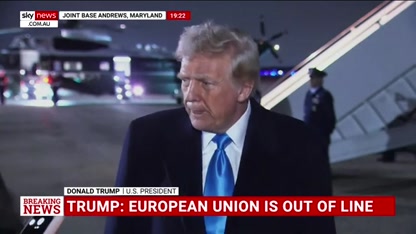
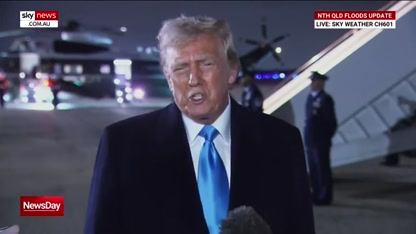
Trump: US ‘ripped off’ by ‘virtually every country’
Favicon 
www.brighteon.com

Trump: US ‘ripped off’ by ‘virtually every country’

Follow NewsClips channel at Brighteon.com for more updatesSubscribe to Brighteon newsletter to get the latest news and more featured videos: https://support.brighteon.com/Subscribe.html
Like
Comment
Share
Conservative Voices
Conservative Voices
1 y

Trump accuses Canada of being ‘very abusive’ of relationship with US
Favicon 
www.brighteon.com

Trump accuses Canada of being ‘very abusive’ of relationship with US

Follow NewsClips channel at Brighteon.com for more updatesSubscribe to Brighteon newsletter to get the latest news and more featured videos: https://support.brighteon.com/Subscribe.html
Like
Comment
Share
Conservative Voices
Conservative Voices
1 y

Breaking the String of Jewels
Favicon 
www.theamericanconservative.com

Breaking the String of Jewels

Culture Breaking the String of Jewels The Reagan National Airport crash was decades in the making. Credit: Ceri Breeze/Shutterstock When I was a child growing up in Northern Virginia, a favorite summer evening activity in my family was to pick up a pizza at the Italian Store and go down to Gravelly Point. There we watched the planes land just across the field at Reagan National Airport until sunset. As the jets flew over the park in their final descent, they always seemed so much closer to the ground than they actually were. And they came so often! My brothers and I chased them with our arms outstretched, up and down the field while they came screaming toward the runway in an endless line. Those summer evenings were all I could think about when I saw news of the plane crash on Wednesday night just short of the runway. The plane, a passenger jet carrying about 60 people inbound from Wichita, collided with an Army Black Hawk helicopter, carrying three soldiers. Everyone died. It was the first commercial airline accident in the United States since 2009 and the one with the most fatalities since 2001. The collision occurred at night, so the only footage available is of a blurry fireball over the Potomac River. I think it is for the best that the full horror remains occluded in darkness.  In the aftermath, once all the conspiracies were cleared away by the cold light of day, it became clear what had happened. The helicopter, which was on a routine mission, was in the wrong place at the wrong time. It was too high, the pilots couldn’t see the plane—no one knows exactly how a Black Hawk ended up in a passenger jet’s landing path. But it was not the first time that a helicopter and a passenger jet were caught occupying the same air space. In fact, around Reagan, it’s relatively common. The airport, though small, is heavily trafficked because of its proximity to Capitol Hill (flights land or take off every few minutes). And, to make matters more complicated, the airport is located just across from the military’s Joint Base Anacostia–Bolling, which regularly runs training exercises up and down the river. It was only a matter of time before, amid all the bustle, there was an accident. And, in fact, pilots have been warning of just such an accident for decades. A recent report in the Wall Street Journal found that there have been a few near misses in recent years. Last year, after a pilot nearly collided with a helicopter while coming in for a landing, he complained that the airport and military base needed “to have better separation for DCA traffic on the river visual to the helicopter traffic that is flying up and down the river.” And even earlier than that, in 2006, another pilot issued a similar warning. “Why does the tower allow such nonsense by the military in such a critical area?” he asked. “This is a safety issue, and needs to be fixed.” But until something went horribly wrong, there was little incentive to do anything. The details of what exactly occurred above the river on Wednesday are still forthcoming. I am not a pilot; I know nothing about air traffic control; I do not intend with this column to blame anyone or even offer a theory. More than anything I am reconsidering one of the golden memories of childhood. When my brothers and I were kids, we did not just chase the airplanes. We counted them. And the helicopters. And the power boats. And the hang gliders. There were so many, all at once. It was a thrill to be in the middle of it all, at the apex of the Bush Era, watching the world converge on that small strip of land where the narrow, dirty Potomac of Washington, D.C. opens to the broad, muddy expanses of Virginia. But now I see it all differently. What was a pleasant memory is tinged with a sense of foreboding. And I imagine the same is true of others who, like me, still enjoy watching the proceedings at Reagan with boyish delight.  Of all the reports filed since the accident, the one I found most affecting came from Ari Schulman, an editor in the city who witnessed the crash on his commute home. He writes that as he was driving down the George Washington Parkway, he found himself looking out the window at that “string-of-jewels effect” created by a long, regal line of landing planes. There was a gap in front, where the plane closest to the runway should have been. Then, out of the corner of his eye, he saw the flaming jet. When he doubled back to investigate further, there was nothing to be seen on the ground. And in the sky, “the line of jewels lined up for the airport was almost all gone—the planes had diverted.” The post Breaking the String of Jewels appeared first on The American Conservative.
Like
Comment
Share
Conservative Voices
Conservative Voices
1 y

A Dispatch from Japan 2025
Favicon 
www.theamericanconservative.com

A Dispatch from Japan 2025

Japan 2025 is a version of Japan 2000—albeit with fewer young people, many more old people, and a society that has no idea where it is going. Japan simply runs in place, waiting to see what might evolve next. Change comes slowly here, but eventually enough will accumulate to bite you in the oshiri. You want it to happen so badly, to be the future, but Japan stubbornly refuses to accept the assignment. None of that is visible at first or even second glance in a place like Tokyo. The trains run frighteningly on time, down to the second. The airport ticket machines are still overly complex but accept 10,000 yen notes (about $63) casually in a country where many people outside the big cities still conduct life almost entirely in cash. But Apple Pay from your American smartphone? Maybe not so much. The ticket machines do have an “English” button that removes some but not all of the mystery; if this is insufficiently clarifying, an attendant is nearby at the airport station to remove more, but still not all, of the mystery. In the news, you can’t miss what’s going on. Japan leads the world in per capita sales of adult diapers. Japan’s population is getting so old that one major diaper manufacturer is now making products only for adults, not for babies. Japan’s births dropped more than 5 percent in 2023, to their lowest level in centuries. Japan had more than twice as many deaths as births, leading to a natural population decline of over 800,000. There’s an article about the government asking schools and companies to schedule group excursions outside of peak season, because a labor shortage makes it impossible to serve everyone properly. Some of the blame falls on us, it says, the foreigners traveling to Japan to enjoy the weak yen—no matter that tourism is one of the few growing sectors nationwide, thanks to that cheap currency plus the lure of anime and manga. Plenty of that, no shortages there. Forget steel and Toyotas; Japan wants to double the number of foreign tourists over the next few years as a major industry. But even if you’ve missed the news, signs of a labor shortage are not hard to spot. More and more of Japan’s famous convenience stores and supermarkets are nearly entirely vaguely supervised self-checkout now, taking advantage of the extreme honesty of the Japanese people. In smaller subway stations, there are no longer attendants to resolve problems. You’re on your own with the machines there alongside 124 million (and decreasing) Japanese. One solution in play is promoting elderly employment. To address the labor shortage, Japan has been encouraging older people to remain in the workforce longer. The government raised the retirement age and is promoting “silver workers.” But many of these jobs appear to be makework rather than real responsibilities—ushers in a bank lobby to show patrons to a seat, human light poles to direct traffic around construction, that sort of thing. It feels like too little, especially as 20 percent of people over 65 live in poverty. The country’s population peaked in 2008 and has since been steadily decreasing due to low birth rates and an aging society. In 2023, approximately 29 percent of Japan’s population was aged 65 or older, making it one of the oldest populations in the world. The proportion of elderly people is projected to rise even further, possibly reaching 40 percent by 2050 if current trends continue. This is coupled with a low birth rate—one of the lowest in the world. This is due to various factors, including social and economic pressures, high cost of living, delayed marriages, and changing attitudes toward family life. On the other end of the scale, Japan has one of the highest life expectancies globally, with an average at birth of around 82 for men, 87 for women. At the residence of a Japanese friend in a Tokyo suburb, there’s a daily announcement at 5 p.m. asking everyone in the massive Eastern European–style block apartment complex to look for the handful of Alzheimer’s-afflicted residents who have wandered off during the day. This is treated as if it has always been the case. People look out their windows, and moms at the playground are especially alert, as many of the old people like to gather there to watch the children. It would make you cry if you let it, but no one in Japan lets it. With a rapidly growing elderly population, Japan has seen an increasing demand for caregiving services. The burden is often placed on family members, particularly women, taking them out of the workforce. The government has been trying to address this with various reforms, including allowing more foreign caregivers to work in Japan, but talk is talk. These improvements feature more on Sunday morning political talk shows than on the street (or on the playground) where they are needed. It can be hard to sort out, this modern Japan. It is so clean, everywhere. Crime only exists in the most organized fashion and rarely touches the average person, at least one who shies away from loan sharks. If you drop something, someone will pick it up and try to return it to you. There are few public trash cans because there is no one to empty them. People thus carry their daily trash of food wrappers and cigarette butts with them, until they get home if necessary. You could eat off the subway floor. (Contrast New York, where the homeless on the trains are immolated for kicks.) Even the growing homeless population gathered near Japanese train stations is quiet and neat, not wanting, it seems, to make a fuss or cause a disturbance. In nearly every such way Japan is a better, cleaner, and safer place than anywhere else in the world. It can be hard to look past such a miracle to criticize her. And that’s what makes a visitor want to scream out loud, “You are almost there.” Just let in some immigrant nurses to care for the elderly and create a subsidized childcare system so mothers who want to work can. That would also encourage women to have children, alongside a national campaign to assure people working moms are a valuable part of the economy. But no one seems to be listening; the government’s current effort is to offer women only a measly sum of about the equivalent of $630 as an incentive to have children. If Japan does not successfully address its demographic challenges, the country will face long-term economic stagnation, reduced productivity, and increased societal pressures. Japan’s advanced infrastructure and technological innovations may allow it to continue to mitigate some of the most severe impacts of its aging population and run in place for many more years. The popular culture version of this answer takes the form of robots, either in the form of a movie-like android walking awkwardly the classic Japanese femmebot receptionist. (No robots lifting an elderly woman out of the tub or changing a diaper on the TV.) Perhaps it’s all for the good, but Japan 2025 seems to have left too many questions unanswered to really know. Politics A Dispatch from Japan 2025 Aging dominates more and more of Japanese public life. The post A Dispatch from Japan 2025 appeared first on The American Conservative.
Like
Comment
Share
Conservative Voices
Conservative Voices
1 y

Biden’s Legacy of Unprincipled Stagnation
Favicon 
www.theamericanconservative.com

Biden’s Legacy of Unprincipled Stagnation

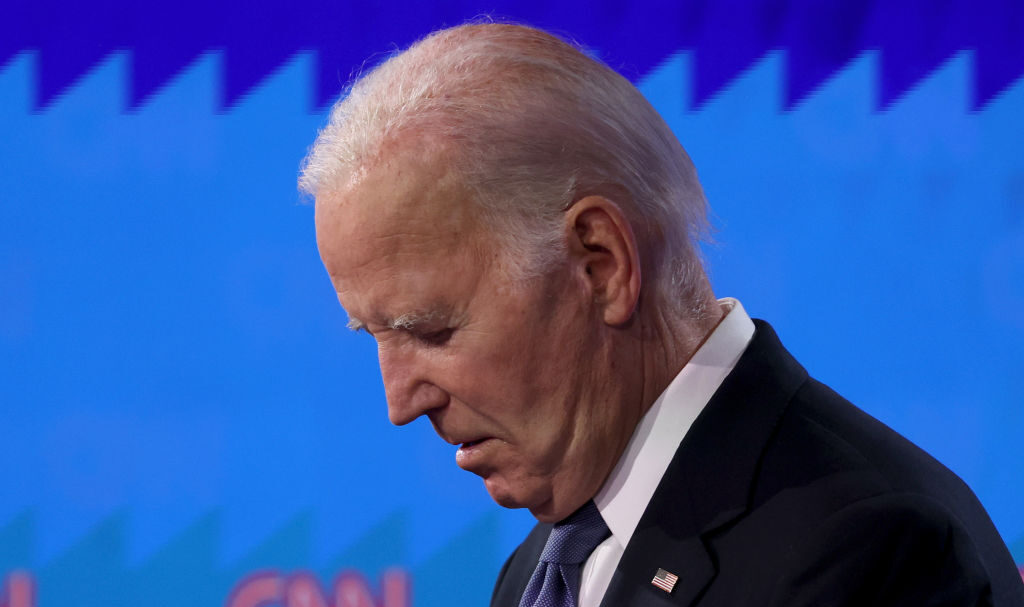
Foreign Affairs Biden’s Legacy of Unprincipled Stagnation The 46th president mixed foreign weakness with domestic fecklessness to make his administration an era-defining bad example. Joe Biden assumed the presidency repeating the bumper-sticker phrase, “America is Back,” by which he meant a “glorious restoration” of American primacy—a spirited return to the pre-Trump, post-Cold War foreign policies the world had come to expect of a benign hegemon dutifully managing its rules-based international order in the interest of the world community. The self-proclaimed essence of Biden’s foreign policy, in the words of National Security Advisor Jake Sullivan, was to “sustain the country’s core advantages in geopolitical competition” and “rally the world to address transnational challenges from climate change and global health to food security and inclusive economic growth.”  Four years later, Joe Biden’s foreign policy legacy is best characterized as a series of strategic missteps and policy decisions that have diminished American influence abroad, exacerbated regional conflicts, and introduced significant risks to American national security and international stability. Biden’s foreign policy has been reactive rather than proactive, often extending conflicts rather than resolving them, as seen in Ukraine and the Middle East. Given that Biden sold himself to the American people as a leader with half a century of experience, why might this be the case? Primarily because the Biden administration (and Biden himself) have lacked a discernible set of values or a grand strategy. Their notion of the national interest has been vague to nonexistent. This has resulted in a series of reactive decisions aimed at desperately trying to maintain the status quo. Biden’s lack of strategic vision has been particularly evident in his inconsistent handling of alliances, and in the failure to robustly address the strategic challenges posed by China and Iran. Further, operational failures, such as the Afghan withdrawal, and policies like the open border initiative, not only had domestic repercussions but also affected U.S. foreign relations, signaling policy approaches that failed to effectively adapt to the evolving world order and promote American interests on the world stage.  This reactive stance, without guiding principles or long-term goals, has left the United States lurching from one crisis to another, attempting to patch up situations rather than moving them towards a coherent end-state, thus contributing to a legacy of policy incoherence and missed opportunities. It is a foreign policy of “sterility and stagnation, of… boldness where it ought to be restrained, of… weakness where it ought to be strong, of… militarization where it is militarily useless and politically self-defeating, and of… defense of an indefensible status quo”—phrases that Hans Morgenthau used to define Dwight Eisenhower’s foreign policy in late 1958, but which more accurately describe the past four years. The botched withdrawal operations from Afghanistan in 2021 was Biden’s first major foreign policy failure. While the decision to end the U.S. military presence after nearly two decades of conflict and the defeat of al-Qaeda was not a mistake, the manner in which the withdrawal was executed—which left the country in the hands of the Taliban—undermined its strategic logic. The Biden administration’s decision to withdraw was executed with such disarray and chaos that it left behind 13 dead servicemembers and billions in military hardware for the Taliban. This debacle not only tarnished the image of the U.S. but also left allies skeptical of American foresight and competence. In Ukraine, the Biden administration’s policy has been one of perpetuation rather than resolution. Despite committing over $175 billion in aid—and an additional $50 billion in loans that will never be repaid, announced in December 2024—there seems to be no plausible Ukrainian victory on the horizon. This support has paradoxically fueled a war that has led to immense human suffering, strategic overextension, and a dangerous escalation of conflict with Russia, as well as dangling an absurd promise of eventual Ukrainian admission to NATO. The administration’s refusal to seek or encourage peace negotiations only adds to the narrative of a policy that is more about prolonging conflict than achieving peace.  It is worth recalling that prominent realists called for a negotiated settlement, before the West’s efforts became not about the freedom of Ukraine but a war against Russia itself—a war that, in Henry Kissinger’s words to the World Economic Forum in May 2022, would needlessly create “upheavals and tensions that will not be easily overcome.” Contrary to such advice, Biden declared that “Putin cannot remain in power,” with Defense Secretary Lloyd Austin adding that America’s aim should be to “permanently weaken” Russia. Portraying the conflict as a stark choice between a system of shared responsibility for security versus a system of power rivalry and spheres of influence, Secretary of State Antony Blinken announced that the administration would not discuss Russian concerns over Ukrainian membership in NATO, for “one country does not have the right to exert a sphere of influence. That notion should be relegated to the dustbin of history.” Ironically, the Biden administration continued to treat the entire world as an American sphere of influence, failing to accept limits on U.S. power after unipolarity.  And just as his administration was nearing its end, and despite promises that he would not “send to Ukraine rocket systems that can strike into Russia,” Biden authorized the use of American-provided ATACMS missiles for deep strikes inside Russia, embracing a policy of dangerous escalation in an already tense situation. (Recall that seven months into the war, the U.S. intelligence community warned of a 50 percent chance of Russian use of tactical nuclear weapons if Russian forces were on the verge of defeat in Kherson.) If that weren’t bad enough, shipments of U.S. munitions have likewise created critical shortages in U.S. stockpiles and limited our options for sending aid to other partners, like Israel and Taiwan. Additionally, the Biden administration has failed to consider the broader geopolitical consequences of its policy in Ukraine, particularly the strengthening of the Russia-China axis. Russia’s increasingly close ties with China, North Korea, and Iran are a direct result of the ongoing war and the West’s continued support for Ukraine. This has shifted the balance of power in Eurasia, making it more difficult for the United States to contain China and Russia simultaneously. Biden’s approach to China and the broader Indo-Pacific region has been equally muddled. The administration’s frequent use of the terms “guardrails,” “red lines,” and “steering” to describe U.S.–China relations suggests a “Driver’s Manual” method for crafting indecisive American foreign policies. There has been no clear strategy beyond economic sanctions and military posturing. While there have been token mentions of economic decoupling and military competition, the administration has failed to articulate a cohesive, long-term strategy for dealing with China’s rising influence and military assertiveness. Inconsistent messaging on Taiwan has compounded the problem, as the United States has vacillated between supporting Taiwan’s right to self-defense and warning of the risks of provoking China. At the same time, the administration has failed to encourage Taiwan to significantly enhance its defense capabilities or to adopt a strategy that would make it more resilient in the face of a potential Chinese invasion. This lack of clear direction has left both Taiwan and regional allies uncertain about U.S. intentions and the credibility of American deterrence. The Biden administration has also framed the competition with China as an ideological struggle between democracy and authoritarianism, which fails to address the more pragmatic aspects of U.S.-China relations, such as trade, technology, and military competition. By framing the relationship primarily in ideological terms, the United States risks alienating potential partners in the region, such as the ASEAN countries, that may not share Western democratic values but still view China’s rise as a threat. In the Middle East, the Biden administration’s handling of Iran has been particularly lackluster. Attempts to revive the Joint Comprehensive Plan of Action (JCPOA), commonly known as the Iran nuclear deal, were too accommodating, granting concessions without compelling the regime to curb its destabilizing activities in the region. Despite reentering the nuclear talks, Iran’s regional influence has only grown, emboldening its proxies in Yemen, Syria, Iraq, and Lebanon (the so-called “Axis of Resistance”). This has left the Middle East in turmoil, with Israel facing an array of enemies. Fortunately, in the wake of the October 7 attack, Israel has demonstrated the strength that the Biden administration has not, decimating Hamas and Hezbollah and standing tough against Iran itself. The administration’s simplistic deterrent strategy, encapsulated in the single word “Don’t” regarding Iran’s potential attacks on Israel, was predictably ineffective, necessitating significant ongoing naval operations against the Houthis to maintain open sea lanes. Its inconsistent support for Israel after one of the deadliest terrorist attacks in history raised questions about America’s commitment to its core allies. Yet, the administration’s hesitant backing of Israel didn’t garner Arab support for the United States. To the contrary, Arab opinion of the United States has plummeted since October 7, while China’s reputation has soared. Specifically, survey polls conducted by Arab Barometer in the winter of 2023-24 among five diverse Arab countries (Jordan, Kuwait, Lebanon, Mauritania, and Morocco) found that fewer than a third viewed the United States favorably in four of the five countries, while more than half the respondents in all five countries held favorable views of China.  Lastly, the Biden administration’s lack of clarity on Syria and its post-election decision to push for the fall of Bashar al-Assad further complicated an already tumultuous situation. President Trump’s immediate statement after the fall of Assad was that “the United States should have nothing to do” with the mess in Syria. “This is not our fight. Let it play out. Do not get involved.” The American people agree with those sentiments. As Mike Waltz, Trump’s nominee for national security adviser, put it: “President Trump was elected with an overwhelming mandate to not get the United States dug into any more Middle Eastern wars.” The Biden administration has also struggled to enhance European security beyond the Ukraine conflict. While the United States has been a vocal proponent of NATO’s role in deterring Russian aggression, it has failed to address the structural weaknesses within the alliance and the issue of burden-sharing. Despite Biden’s calls for NATO unity, the United States continues to shoulder the lion’s share of the financial and military burden for European security. At the same time, the administration has failed to consider alternative security frameworks beyond NATO. The lack of a more comprehensive approach to European security, which includes non-NATO countries and new security arrangements, has left Europe vulnerable to external threats and dependent on U.S. leadership. Sooner than later, Europe must wean itself off American power and security. Wealthy U.S. allies cannot expect American taxpayers to continue to foot the bill for their dependence on U.S. military protection in an increasingly competitive post-American world. Domestically, Biden’s open border policy has become a significant national security risk, with rampant exploitation by transnational criminal organizations and terrorists. This policy has not only fueled domestic debates but also weakened America’s position on the international stage, where border security is linked to sovereignty and national power. Biden’s inability to secure the border has left the United States vulnerable to drug and human trafficking, spillover violence, and other transnational threats, all of which have national and global implications. The Biden administration’s energy policy has failed to fully leverage U.S. energy resources to strengthen the country’s strategic position. While the administration has prioritized clean energy initiatives and the transition away from fossil fuels, it has neglected the potential of U.S. energy independence as a tool for geopolitical leverage. The decision to restrict domestic oil production and pipeline projects, while pushing for a shift toward renewable energy, has left the United States vulnerable to supply disruptions, especially as the global energy market remains heavily influenced by Russia and the Persian Gulf. By not prioritizing energy security, the Biden administration has failed to counterbalance the influence of competitors like Russia, who use energy exports as a geopolitical weapon. The sooner the United States can become energy independent, the faster it can cease to be held hostage by foreign oil producers. The Biden administration’s foreign policy was driven by ideology over strategic pragmatism, reactive crisis management over proactive leadership that placed American interests first, and a series of policy missteps that have collectively contributed to a less secure, less influential America. The administration’s approach has been more about maintaining the status quo and reacting to immediate crises—while squandering the nation’s finite resources—rather than steering international relations towards a coherent, beneficial end-state for U.S. interests. This is much to the nation’s detriment and needs an immediate corrective by the Trump administration. The Biden administration struggled to maintain a strategic balance in key regions, notably in the Indo-Pacific and Europe, where its policies have been marked by inconsistency and a failure to fully address the challenges of China and Russia. In the Middle East, the administration’s lack of a clear strategy to confront Iran’s growing influence has further destabilized the region, while its response to the Israel–Palestinian conflict has been tepid and inconsistent. Domestically, policies like the open border initiative have not only undermined national security but have had broader international repercussions, as transnational criminal organizations exploit the porous U.S. border. Similarly, the administration’s energy policies, aimed primarily at addressing climate change, have failed to capitalize on America’s vast energy resources, leaving the United States more vulnerable to geopolitical maneuvering by adversaries like Russia and the Middle East. For the new administration, Biden’s legacy is a stark reminder of the importance of a clear, principled strategy in foreign policy. It is also a reminder that states seeking to thrive must first accurately perceive their external environment. Guided by a solid grasp of the landscape, states can wisely define their core interests, assess threats and opportunities, bring power and commitments into balance, and anticipate the direction and magnitude of international change. Looking forward, the incoming Trump administration faces the daunting task of not only undoing this damage but also re-establishing an “America First” policy that truly advances U.S. national interests.  Immediate steps might include renegotiating what America’s allies bring to our alliances, reengaging on new terms with China and Russia, securing the borders, and leveraging U.S. energy resources for strategic, long-term gains. It is important to begin assessing the foreign policy failures of the last four years in order to develop a more robust strategic approach for navigating the complexities of global politics in the twenty-first century in ways that will place the United States back on top. The post Biden’s Legacy of Unprincipled Stagnation appeared first on The American Conservative.

Like
Comment
Share
Intel Uncensored
Intel Uncensored
1 y

Stakeholder Capitalism (Communism) Replacing Democracy & Capitalism.  Documentary by Richard Jeffs
Favicon 
api.bitchute.com

Stakeholder Capitalism (Communism) Replacing Democracy & Capitalism. Documentary by Richard Jeffs

Stakeholder Capitalism (Communism) Replacing Democracy & Capitalism. Documentary by Richard Jeffs - DIRECTOR RICHARD JEFFS *** BBC Director Turns Against the System After Becoming Witness to the Covid/Vax Plandemic Insanity. - Richard Jeffs was Driven to Expose the Nefarious Forces Behind the Global Conspiracy of the WEF, The Great Reset and Stakeholder Capitalism - Public Private Partnerships that are the Foundations of the NWO. - Of Course, All of this was Leading to the loss of his Career. - (SOME THINGS ARE MORE IMPORTANT THAN A JOB OR CAREER) *** Watch our feature documentary, Stakeholder Communism, to learn about our new political system that's discretely being mandated by the World Economic Forum and our governments. - Join tech entrepreneur, Richard Jeffs, as he investigates The Great Reset transition to Stakeholder Capitalism. Also available on the YellowForum YouTube channel and at http://Yellow.Forum - There remains a continued drive toward the transformation of our societies in ways that threaten democracy and our existing way of life. PANDA Open Sessions examine the scientific, political, societal and economic dimensions of these influences. Societal and economic dimensions of these secret influences that have taken over governments and economies throughout the world. - FAIR USE FOR EDUCATIONAL PURPOSES MIrrored From: https://www.youtube.com/@YellowForum
Like
Comment
Share
Intel Uncensored
Intel Uncensored
1 y

I Asked China's DeepSeek AI "Who really controls the world?" You Won't Believe What it said.
Favicon 
api.bitchute.com

I Asked China's DeepSeek AI "Who really controls the world?" You Won't Believe What it said.

I Asked DeepSeek "Who really controls the world?" You Won't Believe What it said. End Times Productions (LOL. DeepSeek Does Not Say Who Owns or Controls the Groups That Rule the World, but it is CORRECT About the Main Jist) - 1,344 views January 29th, 2025 End Times Productions *** IF US NEWS MEDIA SPREAD FALSE INFORMATION THAT CHINA ONLY SPENT 5 MILLION DOLLARS DEVELOPING IT- (NOT POSSIBLE) - AND REPORTING PROPAGANDA CRASHED THE STOCK MARKET, CAUSING 600 BILLION DOLLARS FOR Nvidia - - WOULDN'T THAT MEAN Nvidea CAN DUE MSM FOR 600 BILLION? - US media fell for CCP propaganda DeepSeek A.I. - Useful idiots in US media went out of their way to parrot propaganda that China created A.I. software for just $5 million — while American tech companies (now allied with Trump) have spent $billions on competitive models. - Anduril founder Palmer Luckey says 'useful idiots in US media' spread unconfirmed claims about Chinese AI startup DeepSeek - “… they put out the $5M number specifically to harm US companies. Neither China, the media nor DeepSeek have incentive to correct the record as US companies like Nvidia crashed to the tune of $100s of billions.” — Palmer Luckey - — New York Post - https://www.foxbusiness.com/technology/tech-mogul-doubts-deepseek-claims-says-us-media-fell-ccp-propaganda *** AI can now replicate itself — a milestone that has experts terrified Scientists say AI has crossed a critical 'red line' after demonstrating how two popular large language models could clone themselves. - https://www.livescience.com/technology/artificial-intelligence/ai-can-now-replicate-itself-a-milestone-that-has-experts-terrified
Like
Comment
Share
Intel Uncensored
Intel Uncensored
1 y News & Oppinion

rumbleRumble
The Flyover Conservatives Show
Like
Comment
Share
Intel Uncensored
Intel Uncensored
1 y

WHAT A JOKE: Florida Democratic Party Chair Nominates and Endorses David Hogg for DNC Vice Chair (VIDEO)
Favicon 
www.sgtreport.com

WHAT A JOKE: Florida Democratic Party Chair Nominates and Endorses David Hogg for DNC Vice Chair (VIDEO)

by Jordan Conradson, The Gateway Pundit: The Democrats have officially nominated gun-grabbing moron David Hogg, who built his livelihood grifting off of a school shooting and has done nothing meaningful with his life, for DNC Vice Chair. Hogg was nominated by failed candidate for Florida Governor, Nikki Fried. David Hogg rose to prominence as a gun […]
Like
Comment
Share
Country Roundup
Country Roundup
1 y

Beyoncé' Nods to Ms. Martell During Grammy Album of Year Speech
Favicon 
tasteofcountry.com

Beyoncé' Nods to Ms. Martell During Grammy Album of Year Speech

'Cowboy Carter' also won Best Country Album at the 2025 Grammy Awards. Continue reading…
Like
Comment
Share
Showing 66755 out of 126781
  • 66751
  • 66752
  • 66753
  • 66754
  • 66755
  • 66756
  • 66757
  • 66758
  • 66759
  • 66760
  • 66761
  • 66762
  • 66763
  • 66764
  • 66765
  • 66766
  • 66767
  • 66768
  • 66769
  • 66770
Advertisement
Stop Seeing These Ads

Edit Offer

Add tier


Select an image
Delete your tier
Are you sure you want to delete this tier?

Reviews

In order to sell your content and posts, start by creating a few packages. Monetization

Pay By Wallet

Payment Alert

You are about to purchase the items, do you want to proceed?

Request a Refund