YubNub Social YubNub Social
    #freedom #law #racism #civilrights #ai #fourthamendment #utah #privacy #lawenforcement #warrant #environmentalscience #surveillancestate #eff #alpr #blackfatigue
    Advanced Search
  • Login
  • Register

  • Night mode
  • © 2026 YubNub Social
    About • Directory • Contact Us • Developers • Privacy Policy • Terms of Use • shareasale • FB Webview Detected • Android • Apple iOS • Get Our App

    Select Language

  • English
Community
New Posts (Home) ChatBox Popular Posts Reels Game Zone Top PodCasts
Explore
Explore
© 2026 YubNub Social
  • English
About • Directory • Contact Us • Developers • Privacy Policy • Terms of Use • shareasale • FB Webview Detected • Android • Apple iOS • Get Our App
Advertisement
Stop Seeing These Ads

Discover posts

Posts

Users

Pages

Blog

Market

Events

Games

Forum

YubNub News
YubNub News
1 y

Winning Against Agents Of The State In Montana Only To Confront More In NC (Video)
Favicon 
yubnub.news

Winning Against Agents Of The State In Montana Only To Confront More In NC (Video)

Home»Commentary»Winning Against Agents Of The State In Montana Only To Confront More In NC (Video) Tim Brown 2025-01-15 In this episode, we welcome back Jesse Boyd for an update on his win in the state…
Like
Comment
Share
Science Explorer
Science Explorer
1 y

The Gaia Mission’s Science Operations are Over
Favicon 
www.universetoday.com

The Gaia Mission’s Science Operations are Over

The ESA has announced that Gaia’s primary mission is coming to an end. The spacecraft’s fuel is running low, and the sky-scanning phase of its mission is over. The ground-breaking mission has taken more than three trillion observations of two billion objects, mostly stars. The ESA launched Gaia in December 2013. It’s an astrometry mission that measures the positions, motions, and distances of stars with extreme accuracy. It created the largest and most accurate 3D map of space ever, including about one billion objects, mostly stars but also quasars, comets, asteroids, and planets. Gaia’s mission lasted twice as long as expected, and its data has changed astronomy. It serves as the foundation for many new discoveries and insights into the Milky Way. Astronomy and astrophysics would be far behind where they are now if it weren’t for Gaia. Regular Universe Today readers have encountered its data frequently. “Today marks the end of science observations and we are celebrating this incredible mission that has exceeded all our expectations, lasting for almost twice its originally foreseen lifetime,” says ESA Director of Science Carole Mundell. “The treasure trove of data collected by Gaia has given us unique insights into the origin and evolution of our Milky Way galaxy, and has also transformed astrophysics and Solar System science in ways that we are yet to fully appreciate. Gaia built on unique European excellence in astrometry and will leave a long-lasting legacy for future generations.” Gaia hasn’t always had it easy at its position at the Sun-Earth L2 Lagrange point, about 1.5 million kilometres from Earth. In April 2024, a tiny micrometeorite smaller than a grain of sand struck, puncturing a tiny hole in the satellite’s protective cover. The hole allowed a tiny bit of sunlight into the spacecraft, disrupting its sensors. In May 2024, a solar storm struck, and it suffered an electronics malfunction that led to an inordinately high number of false detections. In both cases, Gaia recovered and continued normal operations. Gaia has three instruments that allow it to be so accurate. Its astrometric instrument (ASTRO) determines the positions of stars in the sky. By measuring the same stars multiple times over different years, Gaia can measure a star’s position and proper motion. Gaia’s radial velocity spectrometer (RVS) measures the Doppler shift of a star’s absorption lines. This reveals the star’s velocity along Gaia’s line of sight. The photometric instrument (BP/RP) provides colour information on stars, allowing astronomers to measure critical stellar characteristics like mass, chemical composition, and temperature. These instruments have worked together to create the largest and most accurate map of the Milky Way ever. A model image of what our home galaxy, the Milky Way, might look like face-on: as viewed from above the disc of the galaxy, with its spiral arms and bulge in full view. In the centre of the galaxy, the bulge shines as a hazy oval, emitting a faint golden gleam. Starting at the central bulge, several glistening spiral arms coil outwards, creating a perfectly circle-shaped spiral. They give the impression of someone having sprinkled pastel purple glitter on the pitch-black background in the shape of sparkling, curled-up snakes. Image Credit: ESA/Gaia/DPAC, Stefan Payne-Wardenaar Among its other achievements, Gaia has captured pinpoint precision orbits of more than 150,000 asteroids, accurate enough to uncover possible moons. It also discovered a new type of black hole revealed only through its gravitational influence on nearby stars. Though its science operations are at an end, it still has data to deliver. “After 11 years in space and surviving micrometeorite impacts and solar storms along the way, Gaia has finished collecting science data. Now all eyes turn towards the preparation of the next data releases,” says Gaia Project Scientist Johannes Sahlmann. “This is the Gaia release the community has been waiting for, and it’s exciting to think this only covers half of the collected data.”Antonella Vallenari, Deputy Chair of DPAC, Istituto Nazionale di Astrofisica (INAF), Padua, Italy. Gaia’s Data Release 4 (DR4) is expected in 2026. The volume and quality of data have increased with each DR. DR 4 should contain 500 terabytes of data covering the mission’s first 5.5 years, corresponding to the length of the mission’s originally foreseen duration. “This is the Gaia release the community has been waiting for, and it’s exciting to think this only covers half of the collected data,” says Antonella Vallenari, Deputy Chair of DPAC based at the Istituto Nazionale di Astrofisica (INAF), Astronomical Observatory of Padua, Italy. “Even though the mission has now stopped collecting data, it will be business as usual for us for many years to come as we make these incredible datasets ready for use.” The data release will feature more binary stars and exoplanets, among other things. The Milky Way. This image is constructed from data from the ESA’s Gaia mission, which is mapping over one billion of the galaxy’s stars. Image Credit: ESA/Gaia/DPAC Gaia’s final data release, DR5, is a few years away. “Over the next months we will continue to downlink every last drop of data from Gaia, and at the same time the processing teams will ramp up their preparations for the fifth and final major data release at the end of this decade, covering the full 10.5 years of mission data,” says Rocio Guerra, Gaia Science Operations Team Leader based at ESA’s European Space Astronomy Centre (ESAC) near Madrid in Spain. Though the fuel that allows it to point itself with such accuracy is almost gone, Gaia won’t meet its demise just yet. It still has enough fuel for about 15 days of operations. Instead of using its final 15 days to take more astrometric measurements, it’s going to do some technology testing. “The Gaia spacecraft has been constructed using a wide range of technologies which have been combined to create a unique machine that operates in a very stable environment,” the ESA explains. “The spacecraft’s stability is essential for the science observations. These technology tests would have disrupted the spacecraft for an extended period and, therefore, could not be performed during the normal science observation campaign.” These tests will teach engineers more about Gaia’s instruments and will allow engineers to study their behaviour and the behaviour of the spacecraft as a whole. The goal is to improve the calibrations for future Gaia data releases. They will also inform the design of the next mission. “Some of the Gaia technologies have already been re-used, for example the mirror-drive electronics and cold-gas thrusters on EUCLID,” the ESA writes. Other future missions like LISA will require extreme accuracy, and the results of these tests can help them achieve that. Once its testing is complete, Gaia will be placed in a heliocentric orbit far away from Earth’s influence. At the end of March 2025, it will be passivated to avoid any potential harm or disruption to other spacecraft. Though the mission will end, Gaia’s data will be used for decades. So, in that sense, it will live on. The post The Gaia Mission’s Science Operations are Over appeared first on Universe Today.

Like
Comment
Share
Rocky Wells
Rocky Wells
1 y ·Youtube

Today's country sucks with people like Beyonce, Nas, jelly Roll and a whole bunch of others. So, I'm posting classic/traditional country music!!

Carl Lee Perkins (April 9, 1932 – January 19, 1998) was an American guitarist, singer and songwriter. A rockabilly and country great and pioneer of rock and roll, he began his recording career at the Sun Studio, in Memphis, beginning in 1954


Tonight's double shot of great country music!

"Blue Suede Shoes" is a rock and roll standard written and first recorded by American singer, songwriter and guitarist Carl Perkins in 1955.


"Birth of Rock and Roll" is a 1986 song written by Carl Perkins and Greg Perkins. The song was featured on the Class of '55 album which included performances with Johnny Cash, Roy Orbison, and Jerry Lee Lewis.


Bonus tracks

Carl Perkins - Country Boy's Dream


Carl Perkins - Class of '55


We Remember The King : Johnny Cash, Carl Perkins, Jerry Lee Lewis and Roy Orbison


Carl Perkins, Roy Orbison, Johnny Cash & Jerry Lee Lewis -"Big Train (from Memphis)"


"Dixie Fried" is a 1956 song written by Carl Perkins and Howard "Curley" Griffin


"Crazy Arms" is an American country song. The Million Dollar Quartet - Crazy Arms


THIS TRAIN - ROY ORBISON, JOHNNY CASH, CARL PERKINS, JERRY LEE LEWIS (FROM THE JOHNNY CASH SHOW)

YouTube
CARL PERKINS - Blue Suede Shoes
Like
Comment
Share
Bannon's War Room on Rumble
1 y Politics

rumbleRumble
Natalie Winters Reads Joe Biden's Lie-Filled Farewell Letter
Like
Comment
Share
Bannon's War Room on Rumble
1 y Politics

rumbleRumble
Rep. Jordan Pace Sounds The Alarm On Noncitizens Voting In Elections Nationwide
Like
Comment
Share
Ben Shapiro YT Feed
Ben Shapiro YT Feed
1 y ·Youtube Politics

YouTube
Pete Hegseth was AMAZING
Like
Comment
Share
Ben Shapiro YT Feed
Ben Shapiro YT Feed
1 y ·Youtube Politics

YouTube
LA Mayor was in AFRICA when the fires started
Like
Comment
Share
Tucker Carlson Fans
Tucker Carlson Fans
1 y Politics

rumbleRumble
Mother of Likely Murdered OpenAI Whistleblower Reveals All, Calls for Investigation of Sam Altman
Like
Comment
Share
Classic Rock Lovers
Classic Rock Lovers  
1 y

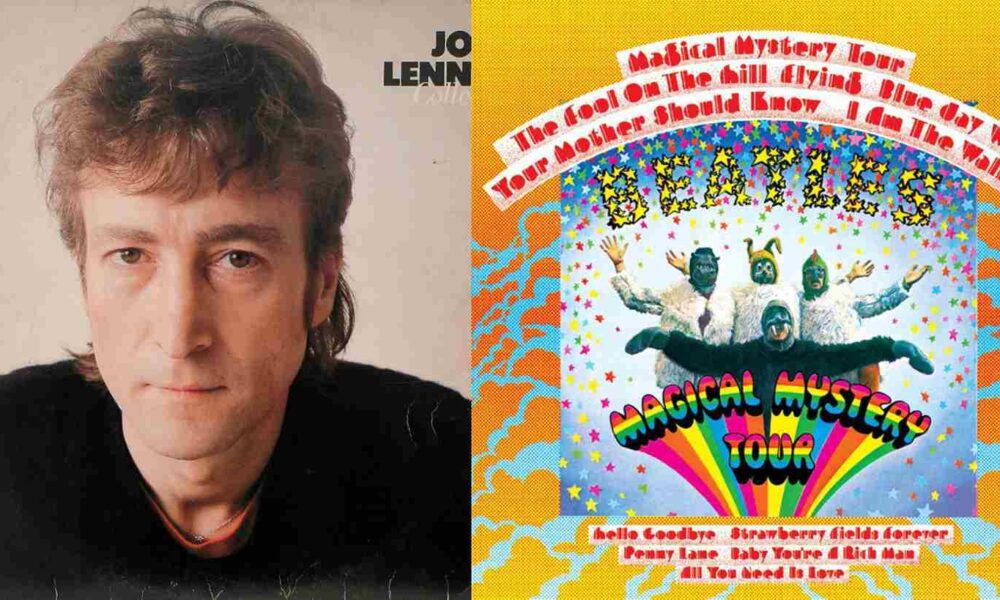
How “I Am The Walrus” was written according to John Lennon
Favicon 
rockandrollgarage.com

How “I Am The Walrus” was written according to John Lennon

Credited to Lennon and McCartney, the song "I Am The Walrus" was one of the most famous tracks of The Beatles' 1967 album "Magical Mystery Tour". The psychedelic track was quite different from what they were writing on the previous records and showed that the band was experimenting more in the studio. But what inspired the song? The late legendary John Lennon explained in an interview with Rolling Stone back in 1968. How "I Am The Walrus" was written according to John Lennon "With 'I Am A Walrus,' I had 'I am here as you are here as we are all together.' I had just these two lines on the typewriter, and then about two weeks later I ran through and wrote another two lines, and then when I saw something after about four lines I just knocked the rest of it off. Then I had the whole verse or verse and a half and then sang it. I had this idea of doing a song that was a police siren, but it didn’t work in the end (sings like a siren): 'I-am-here-as-you-are-here-as…' You couldn’t really sing the police siren," John Lennon said. Where did the idea of using 'Walrus' come from? Shortly before his tragic assassination, in an interview with Playboy magazine, the Beatle explained that the idea for the word "Walrus" in the song came from "The Walrus and the Carpenter" from "Alice in Wonderland". "It's from 'The Walrus and the Carpenter.' 'Alice in Wonderland.' To me, it was a beautiful poem. It never dawned on me that Lewis Carroll was commenting on the capitalist and social system. I never went into that bit about what he really meant, like people are doing with the Beatles' work. Later, I went back and looked at it and realized that the walrus was the bad guy in the story and the carpenter was the good guy. I thought, Oh, shit, I picked the wrong guy. I should have said, 'I am the carpenter.' But that wouldn't have been the same, would it? (singing) 'I am the carpenter,'" John Lennon said. The song curiously was a number 1 hit in Belgium but in the United States only peaked at number 56 on the US Billboard Hot 100. Lennon said a few times that he wrote the lyrics to confound listeners who had been affording serious scholarly interpretations of the Beatles' lyrics. https://youtu.be/t1Jm5epJr10The post How “I Am The Walrus” was written according to John Lennon appeared first on Rock and Roll Garage.
Like
Comment
Share
Classic Rock Lovers
Classic Rock Lovers  
1 y

What inspired “Run To The Hills” according to Steve Harris
Favicon 
rockandrollgarage.com

What inspired “Run To The Hills” according to Steve Harris

Like almost all Iron Maiden songs, "Run to The Hills" was also written by the band's founder, leader and bassist Steve Harris. The track was featured on "Number of The Beast" (1982), their third album, which also was the first one with Bruce Dickinson on vocals. It became one of their signature songs and one of the most famous ones with Bruce as the vocalist. But what inspired Harris to write "Run To The Hills"? What inspired "Run To The Hills" according to Steve Harris The bass player and songwriter explained in an interview with Rolling Stone magazine back in 2019 that the Western books and movies were the main inspiration behind that song. "We’ve always been fascinated with Western movies and books. I was interested in a lot of things. But I had never been to America at that point. So I just used to read a lot of books by an author (of Western novels) called Louis L’Amour and I got inspired." "The first few lines of the song were definitely inspired by reading those types of books. Back then, you’d get what you could from movies, and I ended up realizing later what I thought was America was really just Arizona: people with cacti and dry areas and stuff like that (laughs)." He continued: "(...) I grew up loving history. It was one of my favorite subjects at school. So a lot of it stems from that,  it’s just a fascination with the awful things people are capable of doing to each other and the positions normal everyday people get put in that they wouldn’t normally have to deal with. Also I have respect for anybody that has to go and do whatever they have to do to protect their country," Steve Harris said. Besides "Run to The Hills", the album also had other famous songs like "Number of The Beast", "Children of the Damned","The Prisoner" and "Hallowed Be Thy Name". At the time the band was formed by Steve Harris (Bass), Bruce Dickinson (Vocals), Adrian Smith (Guitar), Dave Murray (Guitar) and Clive Burr (Drums). It was a number 1 hit on the United Kingdom albums chart but peaked at number 33 on the United States Billboard 200. https://www.youtube.com/watch?v=86URGgqONvA&pp=ygUQcnVuIHRvIHRoZSBoaWxscw%3D%3DThe post What inspired “Run To The Hills” according to Steve Harris appeared first on Rock and Roll Garage.
Like
Comment
Share
Showing 69031 out of 126589
  • 69027
  • 69028
  • 69029
  • 69030
  • 69031
  • 69032
  • 69033
  • 69034
  • 69035
  • 69036
  • 69037
  • 69038
  • 69039
  • 69040
  • 69041
  • 69042
  • 69043
  • 69044
  • 69045
  • 69046
Advertisement
Stop Seeing These Ads

Edit Offer

Add tier


Select an image
Delete your tier
Are you sure you want to delete this tier?

Reviews

In order to sell your content and posts, start by creating a few packages. Monetization

Pay By Wallet

Payment Alert

You are about to purchase the items, do you want to proceed?

Request a Refund