YubNub Social YubNub Social
    #astronomy #christmas #astrophysics #nasa #cosmology #darkmatter #galaxies #xray #merrychristmas #christmas2025 #galaxycluster #sunrise #morning #champagnecluster #mergingcluster
    Advanced Search
  • Login
  • Register

  • Day mode
  • © 2026 YubNub Social
    About • Directory • Contact Us • Developers • Privacy Policy • Terms of Use • shareasale • FB Webview Detected • Android • Apple iOS • Get Our App

    Select Language

  • English
Install our *FREE* WEB APP! (PWA)
Night mode toggle
Community
New Posts (Home) ChatBox Popular Posts Reels Game Zone Top PodCasts
Explore
Explore
© 2026 YubNub Social
  • English
About • Directory • Contact Us • Developers • Privacy Policy • Terms of Use • shareasale • FB Webview Detected • Android • Apple iOS • Get Our App
Advertisement
Stop Seeing These Ads

Discover posts

Posts

Users

Pages

Blog

Market

Events

Games

Forum

Classic Rock Lovers
Classic Rock Lovers  
1 y

“It was never released because Chris thought it didn’t need him”: 20 years since The Streets’ Dry Your Eyes hit Number One, hear the unreleased version featuring Coldplay’s Chris Martin
Favicon 
www.loudersound.com

“It was never released because Chris thought it didn’t need him”: 20 years since The Streets’ Dry Your Eyes hit Number One, hear the unreleased version featuring Coldplay’s Chris Martin

The Streets' classic originally contained a chorus sung by the Coldplay frontman
Like
Comment
Share
Classic Rock Lovers
Classic Rock Lovers  
1 y

“You can stay small but, if you have something to say, you need to utilise these things”: Why James Hetfield is glad a Metallica fan spat on him in 1989
Favicon 
www.loudersound.com

“You can stay small but, if you have something to say, you need to utilise these things”: Why James Hetfield is glad a Metallica fan spat on him in 1989

Metallica’s singer/guitarist responded to a violent accusation of “selling out” with unbroken confidence
Like
Comment
Share
The Lighter Side
The Lighter Side
1 y

Golden Retriever Loves Doggy Daycare So Much He Refuses To Leave
Favicon 
www.inspiremore.com

Golden Retriever Loves Doggy Daycare So Much He Refuses To Leave

You know you picked a good daycare for your golden retriever when the pooch refuses to leave! In a hilarious video on social media, a dog owner captured footage of their four-legged friend trying to get in some more playtime before going home. Although it was probably a little exasperating for the employees, it’s still pretty funny to see this clever pup trying to evade the leash. Plus, in his defense, the daycare has a pool. In the clip, the dog was enjoying the water when one of the workers approached him with a leash. Knowing that this meant it was time to leave the daycare, the golden retriever swam toward the middle of the pool where he couldn’t be reached. He continued to paddle along at a leisurely pace, soaking up his last few moments of pool time while he could. Then, finally, he returned to the edge of the pool and allowed another employee to put the leash on him. “When you pick your dog up from daycare and you catch him dodging the workers cause he doesn’t want to leave,” the owner wrote over the footage. To be fair, that looks like a great pool. @adventuresofpilot Gotta be quicker than that @Pet Paradise #puppydogs #petdogs #puppies #puppiesoftiktok #puppiesonly #puppiesofinstagram #daycare #doggydaycare #puppytiktok #puppycheck #puppylife #puppytok #puppytraining #puppydogeyes #cutedog #goldenretriever #goldenretrieverlife #goldenretrieverpuppy #goldenretrievers #goldenretrieversoftiktok #goldenretrieverpuppies #goldenretrieverboyfriend #goldenretriever #dogtraining #puppytips #dogmom #dogmomlife #dogmoms #dogmomsoftiktok #fyp #fypシ゚viral #fyppppppppppppppppppppppp #fypage #fypsounds #foryou #foryoupage ♬ In the Summertime – Mungo Jerry Commenters loved the golden retriever’s silly antics as he tried to stay in the daycare pool for as long as possible. Many were impressed by this facility’s amenities for dogs! “I’m obsessed with the fact the daycare has a pool,” one person wrote. “Geez, I want to go to this dog camp,” said another. Screengrab from TikTok According to one user, it’s pretty common to see golden retrievers lingering in the daycare pool. “As a dog daycare worker with a small pool… the goldens and the labs NEVER want to leave,” they wrote. We’re glad this pooch decided to go home with his owner in the end. After all, the pool will still be there next time! You can find the source of this story’s featured image here. The post Golden Retriever Loves Doggy Daycare So Much He Refuses To Leave appeared first on InspireMore.
Like
Comment
Share
Science Explorer
Science Explorer
1 y

The People We Like Can Influence The Connections Our Memory Makes
Favicon 
www.iflscience.com

The People We Like Can Influence The Connections Our Memory Makes

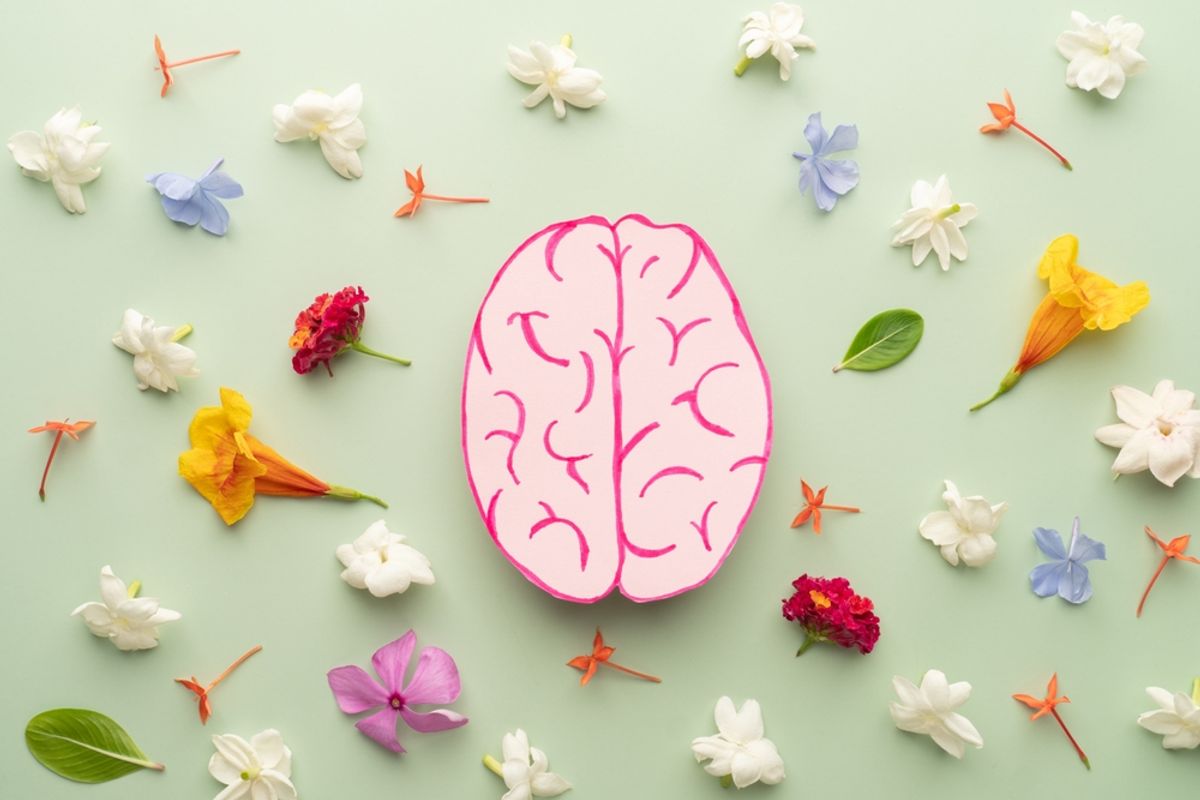
Memory is so much more than a storage unit in our minds. The people involved in memories influence what we recall, and, as our study shows, the connections we make between memories.Our memory helps us learn from experiences and develop new knowledge by integrating and updating information. This process goes beyond recalling individual events; it involves connecting elements from different experiences.For example, reading about a local park cleanup by a political group in the newspaper and then noticing the park’s cleanliness during a visit might lead you to credit that group. If you notice other parks in your city looking cleaner, you might assume the political group had something to do with that too. Memory can forge inferred connections beyond direct experiences.Forming these connections is an adaptive process and enhances our knowledge quickly and flexibly. However, these mental shortcuts can sometimes lead to false inferences.Our research investigated how a preference for certain groups of people influences our ability to make these inferential connections about the world. Previous studies have indicated that information from groups we like gives us better access to our memory. These groups can include anything from a football team or political party to a choir you sing in.However, before our study, it was unclear whether this phenomenon extends to the brain’s ability to connect information from different experiences to make inferences.The distinction between liked and disliked groups was based on participants’ own preferences. Our 189 participants were asked to create profiles of “teammates” and “opponents” by choosing faces for them and assigning attributes such as political orientation, eating habits, favourite sports and music preferences. They also completed a questionnaire to gauge how much they liked their teammates and opponents, responding to statements like “I would like to get to know this person better”.Participants then did a computer task involving a series of events set in various scenes, such as a park, and included everyday objects like an umbrella, presented by either a teammate or an opponent.Following this learning phase, participants were asked to make inferences by linking the objects presented in the same scene. We observed that information presented by liked sources was more readily connected. Participants inferred the connections between the objects more accurately and with greater confidence. For example, connecting the two objects shown in the park was easier if the information was presented by a teammate.This indicates that people may prioritise information differently based on the source’s likeability.Our data suggests that people may flag information from a distrusted or disliked source for cautious handling later, whereas they tend to trust information from a person or group they like. When liked or trusted people present information, participants focus on what is being presented rather than who is presenting it.Understanding polarised mindsOur knowledge often develops from synthesising different pieces of information. Imagine you’re in a new workplace. Even if you haven’t seen everyone together, you start connecting people. When you meet Anna and Maria, and a few days later Maria and Emilia, you might infer that Maria and Emilia also work together.If we aren’t as good at synthesising memories involving disliked groups, it can hinder our ability to expand our knowledge base. Since information from liked sources tends to align with our beliefs, partisan divides may also shape the knowledge networks of a community. So, the cleanliness of a park is more likely to be attributed to a fundraiser by a favoured organisation rather than a disliked one. This phenomenon may extend across societal debates, including climate change, where your alignment with different groups influences the attribution of causes to events like forest fires.The results of our study show that this tendency manifests even with neutral information. In real-world situations, where information is often contentious and elicits stronger reactions, these effects could be more pronounced. For example, deciding what new stories count as fake news.Not only are people who trust the source of false information more likely to remember it, but they are also more able to use it to make new inferences about the world. The fake news can branch out into people’s emerging knowledge.It’s currently unclear if raising awareness of these biases helps people integrate knowledge from different sources. Previous research suggests that simply making people aware of their biases doesn’t necessarily stop them from affecting their behaviour. Future work will need to evaluate if the same holds true for the new bias revealed in our study.Even when political divides are strong, people still identify with other groups, such as their hometown or nation. Emphasising these shared affiliations may make it possible to temporarily activate these identities and increase their influence over our thinking. While this won’t diminish the importance of other identities, it can reframe who we consider part of our group. This reframing may enhance our ability to make less biased inferences based on new information.Our study findings suggest that social polarisation between different groups can partly be explained in terms of basic cognitive functions. Social media posts are visible manifestations of polarisation, but the true battleground lies within people’s brains. Ines Bramao, Senior Lecturer in Psychology , Lund University; Marius Boeltzig, PhD Candidate in Psychology, University of Münster, and Mikael Johansson, Professor of Psychology, Lund UniversityThis article is republished from The Conversation under a Creative Commons license. Read the original article.
Like
Comment
Share
Science Explorer
Science Explorer
1 y

Why Does It Feel So Strange When You Hit Your "Funny Bone"?
Favicon 
www.iflscience.com

Why Does It Feel So Strange When You Hit Your "Funny Bone"?

What happens when you hit your funny bone? Learn more. 
Like
Comment
Share
Science Explorer
Science Explorer
1 y

Why Do Some People Always Wake Up At 3am Or 4am?
Favicon 
www.iflscience.com

Why Do Some People Always Wake Up At 3am Or 4am?

The modern world is so marked by sharp political divides and rampant misinformation that it’s led to the creation of a new term to describe the phenomenon: the “reality gap.”But even if we can’t agree on things like whether the entire country is being run by a group of Satan-worshipping pedophiles or not, there are some things we all know are true. Vaccines don’t cause autism; Nessie is real; and 3 or 4 am is just the worst time to be awake.“As a cognitive therapist, I sometimes joke the only thing good about 3 am waking is that it gives us all a vivid example of catastrophizing,” wrote Greg Murray, Director of the Centre for Mental Health at Swinburne University of Technology, Australia.“Waking and worrying at 3am is very understandable and very human,” he continued in his 2021 article for The Conversation. “But in my opinion, not a great habit to get into.”But what’s behind this collective wee-hours waking? If you regularly find yourself staring at the ceiling at 3 or 4 am, you’re in good company: it’s a phenomenon reported by around one in three of us, and probably more since the pandemic started.That’s because, according to sleep experts, these early ruminations are related to stress – though not quite directly. Being stressed doesn’t make us wake up more in the night, Murray explained, but it does make us more aware of it happening.“We actually wake up many times each night, and light sleep is more common in the second half of the night,” he wrote. “When sleep is going well for us, we are simply unaware of these awakenings. But add a bit of stress and there is a good chance that waking will become a fully self-aware state.”And stress isn’t the only factor that can jolt us awake at 3 am. Erratic schedules; doomscrolling; even a lack of fresh air can muddy our sleep hygiene enough to wake us up in the night.“Wake up at the same time every day, and don’t get in bed until you feel sleepy,” advised Stephanie Romiszewski, a sleep physiologist and director of the Sleepyhead Clinic, in Metro.co.uk.“You’ll notice that if you’re waking up at the same time every day, that will start to become your regular time,” she explained. “Try to keep up with exercise and [get] bright light exposure in the mornings. Make sure you have social time, too. We need … our brains to understand the only opportunity to sleep will be the usual nighttime.”So we know some reasons why we wake up in the night – but why does it seem to happen so specifically at 3 or 4 a.m.? Well, consider the following: most of us typically nod off between 11 pm and midnight, and wake up between seven and eight in the morning. What times sit slap-bang in the middle of those intervals?“Throughout the night, our sleep cycles between rapid-eye movement (REM) sleep and non-REM sleep. Each stage of sleep has a different threshold for how easy it is to be woken up,” explained Aneesa Das, assistant director of the Sleep Medicine Program at the Ohio State Wexner Medical Center.“One likely explanation for waking up at the same time each night is that you go to sleep at the same time and then, at the same time each night, you reach a light stage of sleep and wake up,” she wrote.You might think of the body’s sleep cycles as being just a repeating pattern, but in fact, we spend different lengths of time in each stage as the night goes on. Crucially, as the morning gets ever-closer, the amount of time we spend in REM sleep increases – meaning we’re spending more and more time in a comparatively light and dream-filled slumber.“Maybe it's possible that some of this [waking up in the early hours] reflects waking from anxiety dreams,” Michael K. Scullin, associate professor of psychology and neuroscience at Baylor University in Texas, told Newsweek. That needn’t be from nightmares about beasts from the dungeon dimensions either: “Scientists have suspected for about a hundred years now that unfinished tasks rest at a heightened level of activation in the brain until they can be completed,” he said.Luckily, this means that there’s a fairly simple fix: keep a to-do list.“Keeping a notepad by the bedside and writing out everything on your to-do list, as well as any other worries or stressors circulating in your mind, has been shown to help,” Scullin said. He was the author of a 2018 paper which showed that spending five minutes before bed compiling a list of future tasks made a significant difference in how quickly study participants fell asleep – and, he told Newsweek, the same principle should apply to nighttime waking too.This would make sense, according to Colin Espie, a professor of sleep medicine at the Nuffield Department of Clinical Neurosciences at the University of Oxford, who advocates what he calls “putting the day to rest.” Simply put, this means taking some time before sleep to review the past day’s events and plan ahead to tomorrow’s.“When people wake up during the night the thing that comes to mind that may worry them is usually quite predictable,” he told Newsweek. “That is, something that has been happening the previous day or something that's coming up the next day.”The practice of a to-do list could, therefore, “[assist] the brain” to process things without waking you up, he said.If that doesn’t work, though, it may be time to see a specialist – especially if the problem has been bothering you for more than a couple of months, advised Romiszewski.“If it’s been over three months, then absolutely [see a doctor],” she told Metro.co.uk.“After three months, any kind of sleep problem can become habitual, like a pattern for your brain. At that point, no amount of getting rid of the original trigger is going to get rid of the problem. You may get rid of the stress, for example, but the sleep [issue] can remain.”“That’s when you need insomnia treatment, such as Cognitive Behavioural Therapy (CBT), to help change the behavior pattern,” she said. “For [that] you’ll need to see your [doctor] or a sleep expert.”An earlier version of this article was published in December 2023.

Like
Comment
Share
History Traveler
History Traveler
1 y

Mystery of Early Bronze Age axeheads solved
Favicon 
www.thehistoryblog.com

Mystery of Early Bronze Age axeheads solved

The mystery of the pair of Early Bronze Age axeheads that were mailed anonymously to the National Museum of Ireland last month has been solved. The sender has come forward to tell his story. His name is Thomas Dunne, and he’s a farmer from County Westmeath. He found the axes on his land while looking for a lost piece of equipment. Thomas Dunne said he had found the items by chance on his silage field at Banagher at the end of June. “I was cutting silage [grass fodder for beef cattle] one day and a bit of metal fell off a mower,” he told the Irish Times. He said: “We started looking for it then because we thought it might go into the silage harvester and break it up. So, I got a man with a metal detector to look for it and that’s how it was found. It was in the side of a field underneath a row of beech trees; there would have been ancient forts on the land around here.” At first Dunne thought they were horse plough fragments or some other kind of scrap metal and almost tossed them back in the ditch, but the person who was helping him out thought they might be archaeologically significant, so he decided to send them to the museum instead of throwing them in a ditch. He packed them up carefully in a oat bar box and send them anonymously because any archaeological finds made in Ireland are property of the state, and there are serious penalties for people who illicitly seek them out. Dunne was not looking for archaeological objects, so he wasn’t actually breaking the law that requires written prior permission for metal detectorists or risk a large penalty of up to three months in prison or a $70,000 fine. He just figured discretion was the better part of valour and kept mum. He only found out their age and function when he read about his donation in the newspapers a week later. National Museum archaeologists are now surveying the find site, logging everything they can find that might shed light on the Bronze Age people who created the handaxes 4,000 years ago.
Like
Comment
Share
Science Explorer
Science Explorer
1 y

Will we ever reach Alpha Centauri, our closest neighboring star system?
Favicon 
www.livescience.com

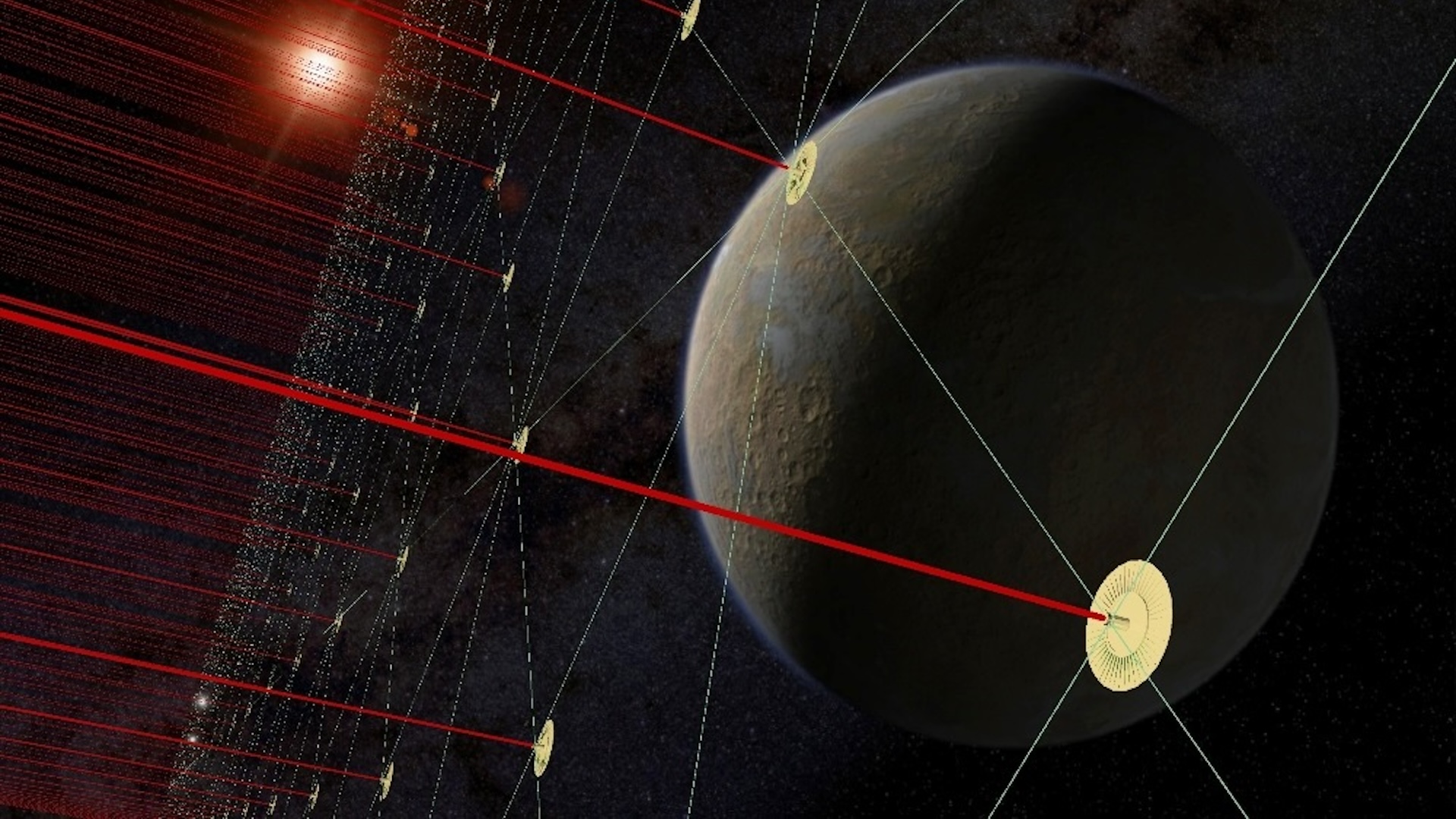
Will we ever reach Alpha Centauri, our closest neighboring star system?

Visiting our nearest stellar neighbor will take near-light-speed travel.
Like
Comment
Share
Survival Prepper
Survival Prepper  
1 y

The Editors’ Quote of the Day:
Favicon 
prepping.com

The Editors’ Quote of the Day:

“Then the Lord answered Job out of the whirlwind, and said, Who is this that darkeneth counsel by words without knowledge? Gird up now thy loins like a man; for I will demand of thee, and answer thou me. Where wast thou when I laid the foundations of the earth? declare, if thou hast understanding. Who hath laid the measures thereof, if thou knowest? or who hath stretched the line upon it? Whereupon are the foundations thereof fastened? or who laid the corner stone thereof; When the morning stars sang together, and all the sons of God shouted for joy? … The post The Editors’ Quote of the Day: appeared first on SurvivalBlog.com.
Like
Comment
Share
Survival Prepper
Survival Prepper  
1 y

Editors’ Prepping Progress
Favicon 
prepping.com

Editors’ Prepping Progress

To be prepared for a crisis, every Prepper must establish goals and make both long-term and short-term plans. In this column, the SurvivalBlog editors review their week’s prep activities and planned prep activities for the coming week. These range from healthcare and gear purchases to gardening, ranch improvements, bug-out bag fine-tuning, and food storage. This is something akin to our Retreat Owner Profiles, but written incrementally and in detail, throughout the year.  We always welcome you to share your own successes and wisdom in your e-mailed letters. We post many of those — or excerpts thereof — in the Odds … The post Editors’ Prepping Progress appeared first on SurvivalBlog.com.
Like
Comment
Share
Showing 69030 out of 104779
  • 69026
  • 69027
  • 69028
  • 69029
  • 69030
  • 69031
  • 69032
  • 69033
  • 69034
  • 69035
  • 69036
  • 69037
  • 69038
  • 69039
  • 69040
  • 69041
  • 69042
  • 69043
  • 69044
  • 69045
Advertisement
Stop Seeing These Ads

Edit Offer

Add tier


Select an image
Delete your tier
Are you sure you want to delete this tier?

Reviews

In order to sell your content and posts, start by creating a few packages. Monetization

Pay By Wallet

Payment Alert

You are about to purchase the items, do you want to proceed?

Request a Refund