YubNub Social YubNub Social
    #freedom #libtards #patriots #privacy #americafirst #loonyleft #surveillancestate #police\ #alpr #flock
    Advanced Search
  • Login
  • Register

  • Night mode
  • © 2026 YubNub Social
    About • Directory • Contact Us • Developers • Privacy Policy • Terms of Use • shareasale • FB Webview Detected • Android • Apple iOS • Get Our App

    Select Language

  • English
Community
New Posts (Home) ChatBox Popular Posts Reels Game Zone Top PodCasts
Explore
Explore
© 2026 YubNub Social
  • English
About • Directory • Contact Us • Developers • Privacy Policy • Terms of Use • shareasale • FB Webview Detected • Android • Apple iOS • Get Our App
Advertisement
Stop Seeing These Ads

Discover posts

Posts

Users

Pages

Blog

Market

Events

Games

Forum

History Traveler
History Traveler
1 y

Who Was Carl Linnaeus? (Life, Works, & Legacy)
Favicon 
www.thecollector.com

Who Was Carl Linnaeus? (Life, Works, & Legacy)

  The Swedish naturalist Carl Linné (1707-1778), better known by his Latinized name Carl Linnaeus, and later knighted as Carl von Linné, is the undisputed father of modern taxonomy —  the science of identifying, naming, and classifying organisms. His seminal work Systema Naturae (1735) outlined his ideas about the hierarchical classification of the natural world into the animal, plant, and mineral kingdoms. His Species Plantarum (1753), on the other hand, is the book that taught botanists how to name plants. However, Linnaeus’ work on the classification of man also formed a critical starting point for the emergence of modern scientific racism. His contribution to our understanding of the natural world is immense, but not without controversy.   Carl Linnaeus: Early Life and Education Possible picture of a young Carl Linnaeus, by a follower of Thomas Hudson, 18th century. Source: The Welcome Collection   Carl Linné was born in 1707 in Råshult, a small village nestled in the province of Småland, southern Sweden. The son of a county parson, albeit one with an interest in botany, Linné developed a liking for plants at an early age. He spent much time in the family garden with his father, was given his own patch of the garden to grow plants, and began to develop prodigious botanical knowledge. Although he grew up in an impoverished region of Sweden he managed to gain a place at university.   Linnaeus went to a gymnasium (secondary school) and then, at age 21, enrolled at Lund University where he was tutored in Botany and gained access to the library of Professor Killian Stobaeus. He subsequently went on to study medicine and botany at Uppsala University. At both universities, Linnaeus successfully sought patronage from important professors — gaining access to their libraries in the process. Rather than attend lectures, he was largely self-taught and privately tutored — often for free.   Illustrations from Systema Naturae, by Carl Linnaeus, 1748. Source: The Internet Archive   The young Carl Linnaeus demonstrated prodigious knowledge in botany and a fine ability to develop situations and opportunities to his advantage. He was a bright and capable student, with an interest in botany close to that of many of his professors. Before he was even awarded his degree at Uppsala, as a second-year student he began to give lectures on botany and he was tasked with instructing students in the botanical gardens.   Following the academic norms of the era, Linnaeus ventured for a time to the Netherlands for further study (1735-1738). In 1735, he was awarded a doctorate in medicine from the Guelders Academy in the small Dutch town of Hardwijk. Yet despite his medical credentials Linnaeus’s passion—and talent—was for natural history.   Following his sojourn in the Netherlands, he practiced as a physician in Stockholm between 1738 and 1741. Subsequently, he returned to Uppsala University, where he became Professor of Medicine and Botany until his death in 1778.   Linné Goes to Lapland A painting of Carl Linnaeus dressed in the traditional attire of the “Lapps” whom he considered to be of anthropological interest, 1737. Source: Wikimedia Commons   Early modern Swedish Lapland emerged as a captivating Arctic world, characterized by vast stretches of glistening tundra, illuminated by the midnight sun. Towering mountain peaks punctuate the horizon, while dense forests of Pine, Spruce, and Birch stretch as far as the eye can see. The landscape is studded with giant lakes and powerful rivers flowing towards the Gulf of Bothnia, the northernmost reach of the Baltic Sea.   Throughout its history, Lapland has been inhabited by the Sami people, Europe’s sole indigenous group, whom the Swedes called “Lapps.” Lapland has long been of interest to Scandinavian Swedes. However, unlike Sweden’s southern and eastern expansions won by military means after 1611, northern expansion was undertaken under the auspices of the church. By the beginning of the 17th century, Lutheranism was effectively integrating Lapland and its indigenous inhabitants into the Swedish realm. The 18th century brought both romantic fascination and scientific inquiry to Lapland.   In 1732, Carl Linnaeus set off for Lapland after receiving a grant from the Royal Society of Sciences in Uppsala. His journey marked one of the earliest scholarly ventures into the far north. Over six months he covered over 2000 kilometers (1242 miles) on horseback and on foot. Linnaeus meticulously documented close to 100 previously unknown species of plant. His findings were published in his now-famous Flora Lapponica (1732).   However, plants were not the sole focus of the book. Flora Lapponica was rich with illustrations of plants but also laden with romanticized descriptions of the Sami people, whom Linné deemed of great anthropological interest. The Sami were idealized as “noble savages” of the wilderness, unspoiled by the advance of civilization. As Sweden moved further toward the embrace of the new scientific age, Linnaeus’s harmful descriptions became instrumental in shaping racial stereotypes of the Sami for centuries to come.   Systema Naturae The title page of Systema Naturae, 10th edition, 1758. Source: Wikimedia Commons   Carl Linnaeus revolutionized the field of taxonomy with his seminal work, Systema Naturae (1735), published in Latin, the scientific lingua franca of the day, Linné’s work proved so popular and influential that it was expanded into several further editions.   At the core of Systema Naturae is the systematic arrangement of the natural world into three “kingdoms” of animals, vegetables, and minerals — establishing a system of hierarchical classification applicable to both organic and inorganic matter. In the all-important 10th edition, the three kingdoms of the “empire of nature” were further subdivided into classes, orders, genera, and species — with each species distinguished by a unique binomial.   For instance, Linnaeus categorized human beings (classified as animals) as mammals, in the order of primates, of the genus homo, and assigned them the binomial Homo Sapiens. The use of binomials in Linnaean taxonomy—known today as binomial nomenclature—was a major innovation. Linnaeus insisted on brevity and descriptive precision: the first part lists the genus and the second succinctly characterizes the species and how it is differentiated from others. In the case of Homo Sapiens, the Latin sapiens means “to be capable of discerning.”   In the first nine editions of Systema Naturae Linnaeus classified the human species into four varieties: Europaeus albus (European white), Americanus rubescens (American reddish); Asiaticus fuscus (Asian tawny), and Africanus niger (African black). However, in the 10th edition, he added several more pages of detail, expanding on these categories with detailed descriptions of skin color, bodily posture, and “medical temperament” (drawing in Humoral theory), physical traits, behavior, manner of clothing, and form of government.   Linnaeus’s hierarchical system placed Black people at the bottom and white Europeans at the top. Europeans were described positively while native Americans, Asians, and especially Black people were consistently associated with negative moral and physical attributes.   Species Plantarum  The title page of Linnaeus’ masterwork of plant taxonomy, Species Plantarum, 1753. Source: Wikimedia Commons   Species Plantarum (1753) or Species of Plants marked a pivotal moment as the first botanical work to consistently and systematically apply binomial nomenclature to the naming of plants. Published five years before the 10th edition of Systema Naturae, it represented the earliest scholarly effort to apply the binomial system to a large group of organisms.   The first edition of Species Plantarum meticulously cataloged and described 5,940 plants, reflecting the entirety of Linnaeus’s botanical knowledge at the time. Published as a two-volume work, Species Plantarum stands as the cornerstone of modern botanic nomenclature. Before Species Plantarum, plants were often given long, unwieldy Latin names, assigned at random by different observers. Linnaeus’s solution, designating a plant by a genus name and a terse description of the species, was a revelation.   When it comes to plants Linnaeus is perhaps most famous for his production of a general key for the classification of plants: the systema sexuale (sexual system). Talk of the sex of plants was a controversial topic in Linnaeus’s time — he was slandered as a “botanical pornographer” among other things. However, building on the proven existence of male and female reproductive organs in plants, Linnaeus chose to classify and order plants based on the number of their reproductive organs: stamens (male) and pistils (female). Despite the controversy that it generated, the sexual system proved to be very useful.   Taken together, Linnaeus’s innovations standardized and formalized plant classification, fostering enhanced communication and possibilities for collaboration among botanists and scientists. Moreover, they democratized the joys of botanical exploration and discovery, making it accessible to a wider public. Species Plantarum advanced the field of botanical science but also had a profound impact on ecology, agriculture, and conservation.   Carl Linnaeus’s Legacy  Portrait of Carl Linnaeus three years before he died, by Alexander Roslin, 1775. Source: Wikimedia Commons   In one of his several autobiographies, Carl Linnaeus unabashedly listed his achievements: “No one has been a greater Botanicus or Zoologist. No one has written more books, more correctly, more methodically, from his own experience. No one has more completely changed a whole science and initiated a new epoch. No one has become more of a household name throughout the world…”   Johann Wolfgang von Goethe equated Linnaeus’s influence upon him with that of Shakespeare and Spinoza. Jean Jacques Rousseau once claimed that he knew of no greater man on earth than Linnaeus. Yet the title that Linnaeus truly coveted—and wanted to be engraved on his tombstone—was princeps botanicorum (“prince of botanists”).   Before Linnaeus, publications on the natural world were confined to bestiaries—medieval compendiums of “beasts” listed in alphabetical order—and descriptive catalogs of herbs and local fauna and flora. While the English naturalist John Ray (1627-1705) was the first to take a major step toward the production of modern taxonomy, Linnaeus’s approach was revolutionary.   Rather than simply going out into the natural world and observing and describing things, Linnaeus developed a practical cataloging system of the natural world that was both hierarchical and relational. His most renowned innovation—binomial nomenclature, the labeling of all known plants and animals with two-part Latin names—continues to structure human knowledge of the natural world.   Yet Linnaeus’s legacy is a complex tapestry, as controversial as it is awe-inspiring. His hierarchical classification of human beings laid the groundwork for the birth of scientific racism. As a central, highly influential figure in natural science, Linnaeus’s portrayal of Africans as “unemotional, sly and lazy” as opposed to hierarchically superior “wise, inventive” white Europeans, laid “scientific” foundations for European imperialism and racial stereotypes that continue to this day.

Like
Comment
Share
History Traveler
History Traveler
1 y

Astrolabes & Sextants: How Our Ancestors Navigated the High Seas
Favicon 
www.thecollector.com

Astrolabes & Sextants: How Our Ancestors Navigated the High Seas

  With modern GPS, we often don’t think too hard about how to navigate, but GPS does not work very well on the open sea. That is why modern ships are equipped with technology such as radar and a gyrocompass. But how did our ancestors manage to navigate the high seas and discover new lands without modern technology? Discover some of the incredible tools, from astrolabes to sextants, that ancient sailors used to navigate the world.   Astrolabes: Astronomical Maps Astrolabe made by Ibrahīm ibn Sa’īd as-Sahlī, from Toledo, Spain, 1068 CE. Source: Museum of the History of Science, Oxford   Astrolabes are sometimes described as ancient Swiss Army Knives or smartphones because they had so many applications. They are essentially handheld star charts that model the locations of the visible celestial bodies.   While that might seem simple enough, you can do a lot with that information. According to the 10th-century astronomer Abd Al-Rahman Al-Sufi, there are more than 1,000 applications for an astrolabe, from astronomy to architecture to farming and, of course, navigation.   Astrolabes were first invented in the ancient Greek world in the 3rd or 2nd century BCE and were used by astronomers. It is said that the famous astronomer Ptolemy from Roman Egypt, also used one, in the first century CE.   By the medieval era, astrolabes were adopted by Muslim astronomers. Among other things, they used astrolabes to determine precise daily timing for prayer and the direction of Mecca. But they also made changes to the device to make it more effective for navigation at sea. Muslim astrologers would go on to invent the spherical astrolabe in the early 10th century, and a geared mechanical astrolabe in the 13th century.   Component Parts of an Astrolabe Astrolabe and its component parts. Source: Muslim Heritage, Foundation for Science, Technology, and Civilization, UK   A basic astrolabe begins with the mater, which is a disc that is prepared to hold together all the elements of the device. Around the outside rim of the mater is a degree scale and scale for hours. In the center of the mater, the plate is placed, which shows a two-dimensional flat representation of a three-dimensional sphere, constructed using a mathematical technique known as stereographic projection. These models need to look different depending on latitude, so most astrolabes come with several plates that can be stacked on top of each other in the womb of the astrolabe when not in use.   On top of the plate, a rete is placed, which is a cut-out plate with star pointers to mark the relative locations of certain stars. This can be rotated on top of the plate to create a star map. The rete will also have an elliptical ring that tracks the annual path of the Sun as seen from Earth. On top of all of this is a simple rule, which is used to locate positions on the plate and rete and relate them to the scale on the rim of the mater.   On the very bottom of the astrolabe on the back of the mater is an alidade. It has small pinholes that are used as sights to measure the altitude of an object above the horizon.   Navigating With an Astrolabe Spherical astrolabe, from Musa, Palestine, 1480 CE. Source: Museum of the History of Science, Oxford   When it came to navigating at sea, the astrolabe was primarily used for determining the current latitude of the ship. This was done by measuring the altitude of the Sun at noon or a specific star at night. The degrees of the object above the horizon gave you an idea of how far north or south you were. Of course, what the measurement meant varied depending on the time of year, so the rete is used to adjust the instrument based on which zodiac sign the Sun is currently in.   While astrolabes were effective, they were also elaborate and expensive, so they were not always the preferred tool for sailors. Also popular was the Kamal, a simple Arabian navigational tool that worked on the same principle. It was a rectangular plate that a person could hold up in front of their face so that the top edge aligned with the North Star and the bottom edge with the horizon. They would then measure the distance between the plate and the tip of their nose with a string tied to the center of the plate to get the angle.   Sextants: Look to the Horizon Sextant, made by Jesse Ramsden, London, c. 1770. Source: National Maritime Museum Greenwich, London   Sextants use a similar premise to astrolabes to navigate at sea, but sextants were designed specifically for this purpose. You use the sextant to determine the angle between the horizon and a celestial body to determine your latitude.   But the sextant, with its simpler design, means that you can only measure the angle, and cannot use the instrument to account for things like the time of year. Instead, you must measure the angle of the Sun at noon or the Polaris star in the northern hemisphere at night, then you need to consult an almanac prepared by astronomers to interpret what the angle tells you that your latitude is on that date.   How did your latitude help with navigation? You might know the latitude of your home port or your destination, or explorers may have a latitude they wanted to keep to. Therefore, knowing your latitude helped you determine whether you needed to move further north or south.   Navigators based their longitude on their speed, how long they had been traveling, and whether they had been traveling in a direct line. Again, measuring latitude was useful for this final component. This longitude calculation is called “dead reckoning” and doesn’t account for variables such as ocean currents. So, navigators needed to be good mathematicians, and could still miscalculate their location.   Before the Sextant Example of a quadrant, c. 1725. Source: National Maritime Museum, Greenwich, London   Until the 1400s, European sailors mainly used the position of Polaris to determine their latitude. But as the Portuguese started sailing south down the African coast and past the equator, the star was no longer visible. Instead, they had to start determining the angle of the Sun at noon.   Initially, this was done with a quadrant, which was based on an astrolabe but only measured 90 degrees. It used a hanging plumb bob to establish a vertical line of reference, but this was very difficult to use on the deck of a moving ship.   Consequently, the quadrant was then replaced by a cross-staff, which worked a lot like a Kamal, but looked more like a Christian cross that the navigator would hold up to the eye like a bow and arrow. The user moved the intersecting piece of wood up and down the long piece until one end met the horizon and the other the sun. Where the shorter piece is on the longer one gives the angle.   The problem with cross-staff was that you had to focus on both the horizon and the sun at the same time. Also, using the naked eye, it was almost impossible to see nightly bodies, like Polaris.   Invention of the Sextant Diagram of a sextant. Source: Celestial Navigation Information Network   Inventors wanting to improve the instrument used the same principles but introduced mirrors and prisms to improve visibility and magnification. This eventually gave rise to the sextant, which uses two mirrors to view the heavenly body and the horizon.   To make it work, you hold the sextant vertically and point it toward the celestial body. Now sight the horizon through an unsilvered portion of the horizon mirror. Then adjust the index arm until the image of the sun or star, which has been reflected first by the index mirror and second by the silvered portion of the horizon mirror, appears to rest on the horizon. The altitude of the heavenly body can then be read from the scale on the arc of the instrument’s frame.   The instrument quickly became more complex, adding magnifying lenses and other features. These types of instruments were used by some of the world’s most famous explorers including Christopher Columbus, Vasco de Gama, Francis Drake, and Ferdinand Magellan.   Pelorus:  Polynesian Compass Recreation of the Polynesian star compass used by Mau Piailug, depicted with seashells. Source: World History Encyclopedia   It was not just Arabs and Europeans that were navigating the high seas. Polynesians living on the Pacific islands regularly navigated thousands of kilometers of open sea between Hawaii, Easter Island, and New Zealand.   The Polynesians quickly became expert navigators using a variety of techniques including monitoring bird movements, wave patterns, and patterns of bioluminescence that can indicate the direction of land.   They also tracked the position of the stars. They had a star map of 150 stars that rose on the horizon at different times throughout the year. They knew the islands that each passed over and used them to navigate. When a star rose too high for navigation or sunk beneath the horizon, they would choose another star to orient themselves. The Polynesians created physical star maps to pass on this knowledge.   This kind of “star compass” navigation was the inspiration for the modern Pelorus. A Pelorus looks like a compass with a telescope attached, but it doesn’t have a way to find magnetic north. Instead, it is set towards the front of the ship, and then the relative bearings of observable bodies are noted.   The Magnetic Compass Combined compass and sundial belonging to W. Watson, from Bristol, England, c. 1800. Source: Museum of the History of Science, Oxford   And what of the most familiar navigation tool, the magnetic compass? This is a fairly simple instrument. It has a magnetic pointer that is drawn to the Earth’s magnetic field. It is allowed to rotate freely on top of a plate showing the cardinal directions. If you always know where north is, then you know the other directions.   Around 2,500 years ago the Greeks understood magnetism, though they don’t seem to have utilized it for navigation. Around the same time, the Chinese also understood that you could temporarily magnetize an iron bar by rubbing it against a naturally occurring magnet, called a lodestone. They created early compasses where a magnetized iron needle was attached to a piece of wood or cork and allowed to float freely in a bowl of water, pointing north.   Dry compasses started to emerge around the world from around the 12th century, in Europe, the Middle East, and China. By the 15th century, explorers realized that magnetic north and true north were not the same. While this is barely noticeable at the equator, it becomes increasingly noticeable the closer you get to the poles. They created error correction tables to compensate.   Despite the initiation of the global positioning system by the US Defense Department in 1973, magnetic compasses are still a very common navigational tool found on most boats and airplanes.   For the curious, you do tend to get compasses designed to work in either the northern hemisphere or the southern hemisphere, though you can also get global compasses. This doesn’t mean that your single-hemisphere compass will stop working the moment you cross the equator, but it could become less accurate.
Like
Comment
Share
Classic Rock Lovers
Classic Rock Lovers  
1 y

"Every night I was living out my teenage fantasy." Lzzy Hale talks joining childhood heroes Skid Row
Favicon 
www.loudersound.com

"Every night I was living out my teenage fantasy." Lzzy Hale talks joining childhood heroes Skid Row

Lzzy Hale grew up watching 80s rock stars on TV. In 2024, she got to be one, playing with a beloved childhood band
Like
Comment
Share
NEWSMAX Feed
NEWSMAX Feed
1 y ·Youtube News & Oppinion

YouTube
LIVE: President Donald Trump Speaks at Victory Rally in Washington D.C. | NEWSMAX2
Like
Comment
Share
Front Page Mag Feed
Front Page Mag Feed
1 y

A Massive Clean Energy Environmental Disaster
Favicon 
www.frontpagemag.com

A Massive Clean Energy Environmental Disaster

Green energy is dirty as hell. The post A Massive Clean Energy Environmental Disaster appeared first on Frontpage Mag.
Like
Comment
Share
Front Page Mag Feed
Front Page Mag Feed
1 y

New York Times: Majority of Dems Oppose Men in Women’s Sports and Puberty Blockers for Kids
Favicon 
www.frontpagemag.com

New York Times: Majority of Dems Oppose Men in Women’s Sports and Puberty Blockers for Kids

Only 18% of Americans say transgender men should be allowed to compete in women's sports. The post New York Times: Majority of Dems Oppose Men in Women’s Sports and Puberty Blockers for Kids appeared first on Frontpage Mag.
Like
Comment
Share
Front Page Mag Feed
Front Page Mag Feed
1 y

Which ‘Trump Transition Official’ is Pushing ‘Palestinian’ Nation Building?
Favicon 
www.frontpagemag.com

Which ‘Trump Transition Official’ is Pushing ‘Palestinian’ Nation Building?

“If we don’t help the Gazans, if we don’t make their life better, if we don’t give them a sense of hope" The post Which ‘Trump Transition Official’ is Pushing ‘Palestinian’ Nation Building? appeared first on Frontpage Mag.
Like
Comment
Share
Fun Facts And Interesting Bits
1 y

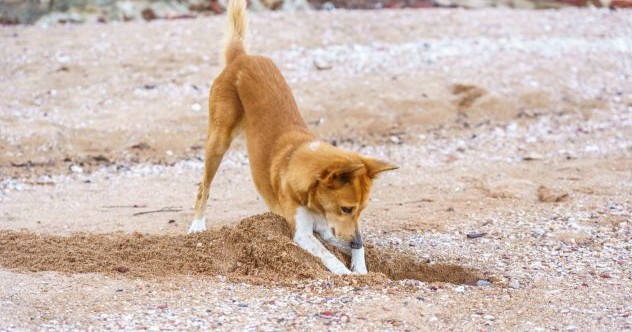
10 Animals That Made Archaeological Discoveries
Favicon 
listverse.com

10 Animals That Made Archaeological Discoveries

Every child dreams of finding buried treasure. They may long to be Indiana Jones-style adventurers delving into ancient mysteries. But at some point, they learn that archaeology is less about looting sites for gold and more about painstakingly excavating locations to preserve and record our shared past. Animals, however, have no concept of protecting history […] The post 10 Animals That Made Archaeological Discoveries appeared first on Listverse.
Like
Comment
Share
Fun Facts And Interesting Bits
1 y

10 Fashion Trends That Were Ruined by One Person
Favicon 
listverse.com

10 Fashion Trends That Were Ruined by One Person

It’s not always easy to stay on top of the newest trends. Whether it’s an exclusive pop-up shop or just raiding thrift stores, everyone wants to have the latest looks and express themselves. Some fashion choices have been spoiled by a single person or event, while others became taboo due to political associations. Here are […] The post 10 Fashion Trends That Were Ruined by One Person appeared first on Listverse.
Like
Comment
Share
Twitchy Feed
Twitchy Feed
1 y

President Trump’s Day One: ‘Common Sense’ Begins with 100+ Signed Executive Orders
Favicon 
twitchy.com

President Trump’s Day One: ‘Common Sense’ Begins with 100+ Signed Executive Orders

President Trump’s Day One: ‘Common Sense’ Begins with 100+ Signed Executive Orders
Like
Comment
Share
Showing 69226 out of 127220
  • 69222
  • 69223
  • 69224
  • 69225
  • 69226
  • 69227
  • 69228
  • 69229
  • 69230
  • 69231
  • 69232
  • 69233
  • 69234
  • 69235
  • 69236
  • 69237
  • 69238
  • 69239
  • 69240
  • 69241
Advertisement
Stop Seeing These Ads

Edit Offer

Add tier


Select an image
Delete your tier
Are you sure you want to delete this tier?

Reviews

In order to sell your content and posts, start by creating a few packages. Monetization

Pay By Wallet

Payment Alert

You are about to purchase the items, do you want to proceed?

Request a Refund