YubNub Social YubNub Social
    #astronomy #nightsky #biology #planet #blood #jupiter #brazil #mars #fossil #paleontology #redplanet #dinosaur #conjunction #dinosaurblood #aratasaurusmuseunacionali
    Advanced Search
  • Login
  • Register

  • Night mode
  • © 2026 YubNub Social
    About • Directory • Contact Us • Developers • Privacy Policy • Terms of Use • shareasale • FB Webview Detected • Android • Apple iOS • Get Our App

    Select Language

  • English
Community
New Posts (Home) ChatBox Popular Posts Reels Game Zone Top PodCasts
Explore
Explore
© 2026 YubNub Social
  • English
About • Directory • Contact Us • Developers • Privacy Policy • Terms of Use • shareasale • FB Webview Detected • Android • Apple iOS • Get Our App

Discover posts

Posts

Users

Pages

Blog

Market

Events

Games

Forum

YubNub News
YubNub News
2 yrs

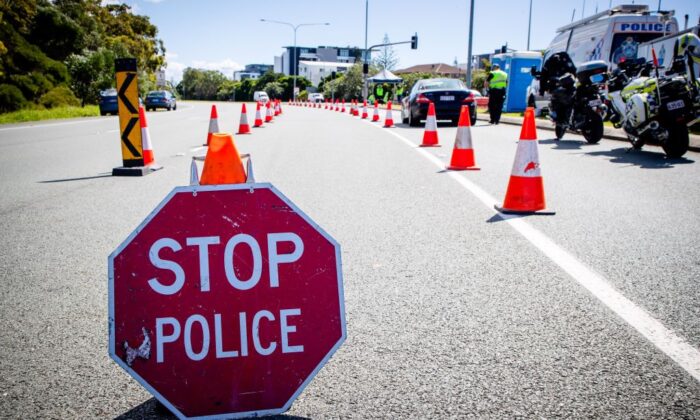
Hundreds of Vehicles Disabled by Scattered Steel Shards on Motorway
Favicon 
yubnub.news

Hundreds of Vehicles Disabled by Scattered Steel Shards on Motorway

Up to 380 cars left stranded after truck drops 750 kilograms of sharp metal across a stretch of motorway in Sydney. Hundreds of vehicles were damaged and traffic came to a standstill after sharp metal…
Like
Comment
Share
YubNub News
YubNub News
2 yrs

Tennessee Highway Patrol Bodycam Video of Kilmar Abrego Garcia’s Traffic Stop is Out - It's Bad for Dems
Favicon 
yubnub.news

Tennessee Highway Patrol Bodycam Video of Kilmar Abrego Garcia’s Traffic Stop is Out - It's Bad for Dems

‘Journalists’ and their fellow Democrats have picked one of the worst illegal aliens to push their anti-deportation agenda. It seems every day there’s some new revelation about Kilmer Abrego Garcia.…
Like
Comment
Share
YubNub News
YubNub News
2 yrs

Elon Musk and the DOGE Team Do Group Interview - What Big Balls Has Uncovered Will Infuriate You
Favicon 
yubnub.news

Elon Musk and the DOGE Team Do Group Interview - What Big Balls Has Uncovered Will Infuriate You

Elon Musk brought the DOGE team to Fox News on Thursday Night. The group interview included a first look at the hilariously nicknamed Big Balls. The young man is working on payment systems as part…
Like
Comment
Share
YubNub News
YubNub News
2 yrs

President Trump Must Reverse John Kerry’s Worst Concession to Iran
Favicon 
yubnub.news

President Trump Must Reverse John Kerry’s Worst Concession to Iran

On May 8, 2018, President Donald Trump withdrew the United States from what he called “the worst deal ever”—the 2015 nuclear deal with Iran, known as the JCPOA. For many reasons, President Trump…
Like
Comment
Share
YubNub News
YubNub News
2 yrs

We Don’t Need an Executive Order to Bar Illegals from Social Security—We Need a Government That Obeys the Law
Favicon 
yubnub.news

We Don’t Need an Executive Order to Bar Illegals from Social Security—We Need a Government That Obeys the Law

In what universe does it make sense that the President of the United States has to sign an executive order to stop illegal aliens from receiving Social Security benefits? That’s not just an absurd headline—it’s…
Like
Comment
Share
YubNub News
YubNub News
2 yrs

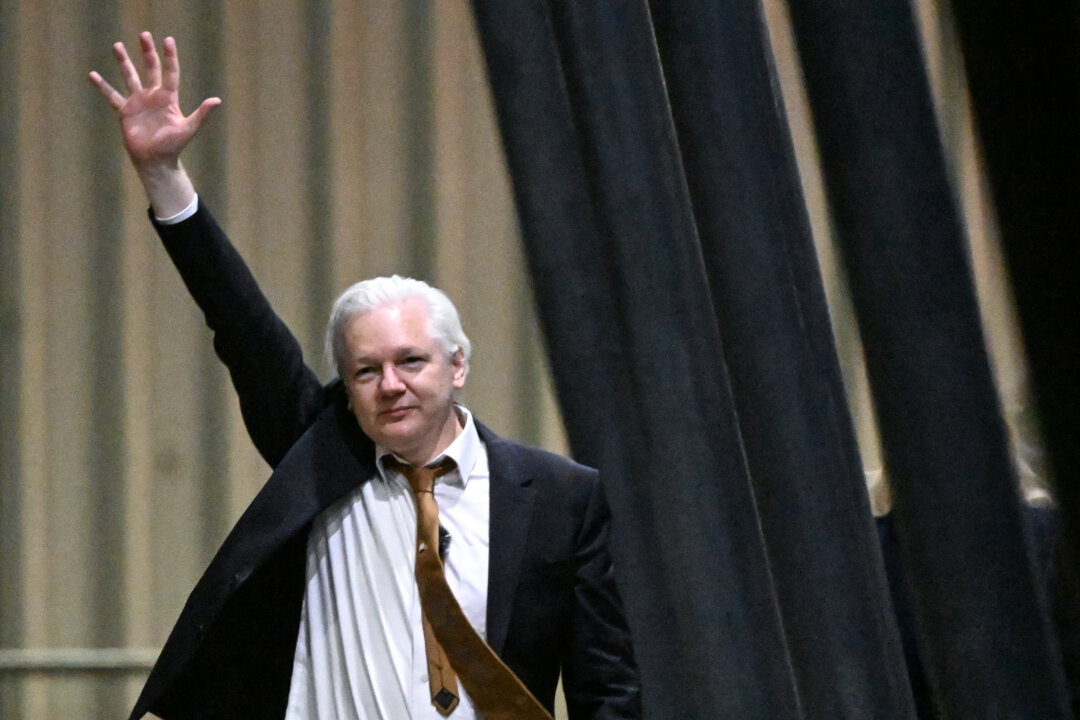
On Election Eve, Assange Endorses Albanese Saying, ‘He Kept His Word’
Favicon 
yubnub.news

On Election Eve, Assange Endorses Albanese Saying, ‘He Kept His Word’

After 14 years and six prime ministers who stayed silent, Assange says it was Albanese who broke the pattern and secured his freedom. A day before polls close, Prime Minister Anthony Albanese has received…
Like
Comment
Share
Conservative Voices
Conservative Voices
2 yrs

rumbleRumble
Refugees, terror and the west: Is America at risk?
VidWatchPolitics
Like
Comment
Share
History Traveler
History Traveler
2 yrs

Geta: The Short Reign and (Tragic) Death of a Roman Emperor
Favicon 
www.thecollector.com

Geta: The Short Reign and (Tragic) Death of a Roman Emperor

  The life of the Roman emperor Gera is, in some ways, a tragic tale of brotherly rivalry and parental miscalculation. He was also an emperor for whom we have little reliable historical information. His story is told mostly through the histories of his father, the emperor Septimius Severus, and his brother, the emperor Caracalla. This is because, when his father died, pre-eminent power was passed to both Geta and his brother Caracalla; the latter, who saw his brother as a rival, assassinated Geta.   Geta: Child of Civil War Bust of Septimius Severus, Roman, c. 193-211 CE. Source: Glypothek Museum, Munich   Geta (born 189 CE) was the younger son of Emperor Septimius Severus, who, in addition to being the first African emperor of the Roman Empire, emerged as the eventual victor of a protracted and chaotic civil war. This conflict arose after the assassination of the megalomaniacal emperor Commodus in 192 CE, whose death brought the Nerva-Antonine Dynasty to an infamous end.   After Commodus’s death, a series of different statesmen vied for power and fought with one another while asserting their status as the legitimate emperor. This “Year of the Five Emperors” (192-193 CE), as it became known, saw Pertinax, Didius Julianus, Pescennius Niger, Clodius Albinus, and Septimius Severus all acclaimed emperor by the senate or their troops, splitting the Empire and its armies between the rival claimants. It took Septimius until 197 CE to eventually unite the Empire again.   A notorious episode in this tumultuous period was the auctioning of the position of emperor by the Praetorian Guard. They declared for Didius Julianus after they had murdered the first incumbent, Pertinax. Thereafter, Septimius Severus championed himself as Pertinax’s rightful successor, defeating the other opponents who either proclaimed the same thing or argued that Pertinax should never have become emperor.   During this endeavor, Septimius had at one point allied himself with Clodius Albinus in an agreement that saw Albinus nominally established as (an albeit lower) co-emperor, administering several western provinces. This political cooperation of convenience allowed Septimius to focus his resources on defeating his rival in the east, Pescenniu Niger, while bringing some stability to the Empire.   A bust of Marcus Aurelius, who Septimius Severus absurdly claimed ancestry from, Roman, c. late 2nd century CE. Source: Louvre   However, when Septimius absurdly declared himself as the son of Marcus Aurelius, an esteemed Nerva-Antonine predecessor with whom he shared no relation, and named his elder son Caracalla as “Caesar,” a byword for heir and co-emperor, the proverbial writing was on the wall for Albinus.   Indeed, this series of events eventually led Septimus Severus to defeat Albinus at the Battle of Lugdunum in 197 CE. With all his rivals now dealt with, Septimius became the uncontested emperor of Rome. He was able to establish his own “Severan dynasty,” with his sons Caracalla and Geta as his chosen successors.   Son of the Emperor Bust of Geta, Roman, c. 208 CE. Source: Louvre   At just eight years old, Geta was designated as co-heir and named Caesar, along with his older brother Caracalla, in 198 CE. Part of the reason for such an early honor was that Septimius predicated his rule on the stability he had brought back to the Roman Empire with his new dynasty.   A key part of this stability was secure succession, which protected against the kind of chaotic infighting that had defined the Year of the Five Emperors. With these proclamations, Septimius was, therefore, making it clear that his stable “Severan” rule would continue after his death with his sons Caracalla and Geta.   To solidify these assertions of stability, Septimus even claimed ancestry from the Nerva-Antonines, particularly Marcus Aurelius and Commodus. As such, the Severans were presented, quite absurdly, as a continuation of the hallowed Nerva-Antonines. This even involved deifying the emperor Commodus to support these links, regardless of the fact that Commodus’s memory and reputation had been condemned due to his despotic and chaotic rule.   Therefore, Geta would have been brought up as co-heir, acutely aware of the precarious nature of emperorship and the need to work vigorously to reinforce one’s image. He also would perhaps have seen much of the Empire, as his father Septimius was a famously militaristic emperor, waging war with Rome’s perennial enemy in the east, Parthia, as well as various tribes and peoples in North Africa and Britain.   Remains of Leptis Magna, the birthplace of Septimius Severus. Source: Wikimedia Commons   Septimius also tried to ensure that both sons would be well educated, hiring the “sophist” Aelius Antipater to tutor the young heirs. This intellectual edification was complimented by experience in running the Empire, as Geta was made consul, along with his brother, on a number of occasions, and they accompanied their father on various provincial tours, particularly around their father’s place of origin, Leptis Magna.   Rivalry With Caracalla Caracalla and Geta, by Lawrence Alma-Tadema, 1907. Source: Wikimedia Commons   The sources make it apparent that from early on Caracalla and Geta were rivals, especially as far as the older brother Caracalla was concerned. Reminiscent of the brotherly rivalry between Romulus and Remus that led to the founding of Rome, there are stories in the dubious Historia Augusta that suggest Geta was always fated to die early at the hands of his older brother.   Although Caracalla was only born a year before Geta, in 188 CE, he was accorded greater honors and prestige. For example, Caracalla was named heir in 195 or 196 CE, and Geta in 198 CE. Caracalla was made co-emperor in 198 CE, while Geta had to wait until 209 CE to be made co-emperor with his brother and father.   Caracalla was also married at the age of 14 to the daughter of his highborn and apparently overbearing father-in-law, Plautianus, who was also a Praetorian Prefect. This did not stop Caracalla from framing his father-in-law and having him killed in front of his father, the emperor, leading to a purge of those associated with the deceased prefect.   The historian Cassius Dio tells us that Plautianus’ murder was a turning point, after which the young princes had free rein to act as they pleased. He remarks that “they outraged women and abused boys, they embezzled money, and made gladiators and charioteers their boon companions,” in all of which they were “full of strife in their rivalries.”   This meant always supporting rival teams at the chariot races or opposing gladiators in the arena. Witnessing this perverse rivalry and perhaps recognizing that Geta was surely in danger if Caracalla became emperor, Septimius abandoned what seemed to be an intentional policy and named Geta co-emperor with his brother in 204 CE. In addition, to teach them both discipline, he brought them along to Britain in 208 CE, where he had decided to wage war against the Caledonians in the north of the island.   Brothers in Britain Coin showing Geta on the obverse, Syria, c. 208-211 CE. Source: Wikimedia Commons   Cassius Dio tells us that Septimius wanted to surpass his predecessors by taking control of the whole island of Britain for Rome. Trying to do so, however, he was met by boggy terrain, untraversable forests, and an elusive enemy who would not meet him in open battle. While Septimus Severus was already advanced in age and suffering from declining health, he pushed on to a point where he forced the Britons to come to terms agreeable to Rome.   During this dreary campaigning, he was apparently alarmed at the idleness and excesses of Caracalla, who we are told was already plotting against both his brother and father. Nonetheless, an image of family harmony was promoted to the Empire during the campaign, which was completely contrary to reality.   From what we can gather, animosity between the two brothers, seemingly instigated principally by Caracalla, meant that they were kept apart. We are told that Geta took over much of the administrative and bureaucratic duties in the Roman-held parts of Britain, perhaps in York, while Caracalla was mostly on campaign with his father in the far north.   Unfortunately for Septimius, the Britons disregarded the terms made with Rome and broke out into rebellion, forcing Septimus and Caracalla to campaign against them again. Yet, it seemed this latest turn of events was too much for the infirm emperor, and after falling ill, Septimius passed away in Eboracum (York), which seems to have been his base of operations.   The Murder of Geta Bust of Caracalla, Roman, 212 CE. Source: Naples National Archaeological Museum   When Septimius died in 211 CE, he left his two sons as co-emperors, reportedly imploring them on his deathbed to “be harmonious” with each other in their joint rule. Both brothers soon left Britain, abandoning their father’s expansionist aims in the north and re-established Hadrian’s wall as the most northerly frontier of the Empire. This allowed them both to return to Rome to shore up their power. On the way back, they were said to argue incessantly, foreshadowing what was to come when they finally reached Rome.   Indeed, soon after arriving back, the palace was effectively split in two, with each brother isolating themselves against the other, carefully controlling access to their respective portions of the palace. In the midst of this domestic tension, their mother, Julia Domna, who elsewhere seems to have been an influential figure, tried in vain to reconcile the two brothers.   Spotting a perverse opportunity to get to his brother, Caracalla asked his mother to arrange a conciliatory meeting, unattended by any guards. Falling for the trap, Geta arrived alone, only to be stabbed by his brother’s agents and—like a scene out of Greek tragedy—die in his mother’s arms.   Geta Dying in his Mother’s Arms, by Jacques-Augustin-Catherine Pajou, c. 1766-1828. Source: Wikimedia Commons   With the deadly deed done, Caracalla assumed sole power and quickly aimed to erase all memory of his brother from architecture, art, sculpture and official records. This process, known as damnatio memoriae, had a long history going back to the Roman Republic or earlier and helps explain why so little reliable information survives about Geta.   Severan Family Portrait, with Geta’s face erased, Egypt, c. early 3rd century CE. Source: Altes Museum, Berlin   Any legacy that Geta may have left during his short reign was, therefore, eclipsed by his older brother Caracalla, who went on to rule for another six years, dying in 217 CE. During his reign, many Romans followed in Geta’s footsteps, falling victim to Caracalla’s cruelty, anger, and unpredictable temper.
Like
Comment
Share
History Traveler
History Traveler
2 yrs

Baths of Caracalla: Public Baths in Imperial Rome
Favicon 
www.thecollector.com

Baths of Caracalla: Public Baths in Imperial Rome

  Much of what we know about individual Roman emperors comes from what they chose to build. In the 1st century CE, Nero was vilified for his greed, hoovering up great tracts of the city to turn into a private palace, the infamous Domus Aurea. A decade later, Vespasian was lauded for his public beneficence, converting Nero’s palace into the Flavian Amphitheater, better known as the Colosseum, returning space and leisure back to the people of Rome. The baths of the emperor Caracalla are a curious case. A vast palace of leisure and culture for the people, they were built by one of Rome’s most reviled emperors!   A Steaming Tradition: Thermae in the Roman World View of the Interior of an Antique Roman Bath, by Charles-Louis Clerisseau, c. 18th century. Source: Sotheby’s   There was a rich tradition of bathing in the Roman world. Thermae were typically larger public venues for bathing, and balnae were smaller, often private, bathing facilities. In fact, by the end of the Late Antique period, it was said that there were some 956 balnae scattered across the imperial capital!   Bathing facilities became a defining feature of Roman civilization. As the Empire expanded around the ancient Mediterranean world, so did Roman bathing culture. Most cities in the Empire then had some form of bath building. Typically, these were built where natural hot springs made hot water readily available, such as at Bath in England. The thermae were multifunctional structures. They were not only venues for bathing and exercise but also spaces for socializing, learning, appreciating culture, and sometimes even worship.   View of the Baths of Caracalla, Rome, with Distinguished Visitors and a Coach, by Guilliam du Gardijn, c. 1625-30. Source: Rijksmuseum   Although the specific architectural form of the thermae varied considerably around the Empire, fundamentally, they were all built around three rooms. These were the tepidarium (the warm room), the caldarium (the hot room), and the frigidarium (the cold room). There would also be an apodyterium (changing room), and many would also have a palaestra, or exercise ground. In bathing culture, there was a prescribed order for visiting these various rooms, with the visitor finishing their trip to the thermae at the frigidarium to purify the skin of sweat and other impurities.   Many thermae were ornately decorated, with the baths used as venues for advertising the wealth and prestige of the builder. This was magnified in the imperial period, as emperors began building vast public baths in Rome. The construction of these public edifices should be considered ideological undertakings, material expressions of the emperor’s generosity and care for the people over whom he ruled. The first of these public baths was built on the Campus Martius by Agrippa, the trusted general of Augustus. Soon, a tradition of imperial thermae construction emerged, and not only from those emperors you might expect to be so generous: Nero, Titus, Trajan, Caracalla, Trajan Decius, Diocletian, and Constantine all ordered the construction of grand public baths in Rome.   Rebuilding Rome: Severan Construction Work Portrait of Septimius Severus, c. 200-206 CE. Source: Museo Arqueologico Nacional Madrid   In 197 CE, following a cataclysmic battle at Lugdunum in Gaul, the largest battle in Roman history, Septimius Severus was confirmed as the undisputed ruler of the Empire. Since 193, he had been engaged in a bloody civil war against three rivals. With his enemies dead and his power now indisputable, Severus returned to Rome and set about establishing what kind of emperor he wanted to be. Although he might have proclaimed himself to be an emperor in the vein of Marcus Aurelius—the philosopher emperor who he farcically claimed as his father—many elements of Severus’ reign reveal that Augustus, the first emperor, was a clear inspiration. In particular, this is seen in his attitude to restoring Rome.   Although Severus made no remark as pithy as Augustus’ claim to have found Rome a city of brick and left it a city of marble, the man from Leptis Magna was a prodigious builder. Across the city, he oversaw a spate of restoration work, including on the Pantheon, Agrippa’s architectural masterpiece, which still has the dedicatory inscription commemorating Severus’ work.   Alongside the restoration work, Severus was also responsible for several wholly new construction projects. Many of these were localized in the city’s southeastern corner. They included some thermae, the exact location of which remains unknown and debated by archaeologists, and the now-destroyed Septizodium. This vast nymphaeum, which looked like a theater, was positioned at the south-eastern base of the Palatine Hill, beneath the imperial palaces, which Severus had also revamped. This building work in the southeast of the city was a policy that would be continued by Severus’ eldest son Caracalla when he succeeded his father as princeps in 211.   Constructing the Baths of Caracalla Portrait of Caracalla, c. 212-217. Source: Metropolitan Museum of Art New York   Unlike his father, Caracalla was not in the position of needing to be seen as a “restorer” of Rome. Thanks to Severus’ planning, power had passed smoothly to his sons upon his death. However, within a year of taking power, Caracalla had orchestrated the murder and condemnation of his brother and co-emperor, Geta, jeopardizing much of the stability that his father had worked to cultivate. The emperor removed himself from any potential political maelstrom by launching a campaign against the Germanic tribes on the Empire’s northern frontiers, which was in keeping with his desire to be viewed as a soldier-emperor. Even before leaving for the campaign, however, and perhaps during the reign of his father, work had begun on a vast new set of imperial thermae.   The land for these new thermae had formerly been the vast estate of Gaius Asinius Pollio, a politician from the Augustan era who was responsible for building the first public library in Rome. At the time of the inauguration of the baths in 216, they were the largest thermae in the Empire and would remain so until the Baths of Diocletian were completed in the late 3rd century. They were also one of the largest structures in the entire Empire. They were serviced by two of Rome’s aqueducts: the Aqua Marcia and the Aqua Antoniniana.   View of the Baths of Caracalla today with a visual reconstruction of the original form. Source: Romewise   The rectangular site encompassed approximately 25 hectares, with the thermae orientated northeast to southwest, which meant that the heat of the sun helped heat the premises. The structure of the thermae followed the same symmetrical plan as had been implemented in the construction of the Baths of Trajan, and would be followed in the Baths of Diocletian. The Great Bath building was symmetrical. The main central space was occupied by the tepidarium, with the great vaulted space of the frigidarium to the north and the circular caldarium with its seven pools to the south. The dome that topped the caldarium measured almost 36 meters in diameter, rivaling the Pantheon. It is thought—though not known for sure—that this vast domed space was the cella solearis, which is referred to by the Historia Augusta, describing it as a vault which was “of such a size” that the ancient architects said, “cannot be reproduced.”   A Palace for the People: Art and Wonder in the Baths of Caracalla Athlete Mosaic from the Baths of Caracalla, c. 4th century CE. Source: Vatican Museum   The great imperial thermae were venues where an emperor could demonstrate his beneficence to the people of Rome. Bestowing leisure and luxury on the people of the imperial capital was a way to keep unrest quelled while also ensuring the longevity of one’s name. The Baths of Caracalla were no exception. An extraordinary quantity of marble was used in the construction of these baths, including at least 252 marble columns in the main bath building. Modern visitors to Rome can still see details of these decorations, but only if they go to the Basilica of Santa Maria in Trastevere. There are 22 granite columns with a combination of Ionic and Corinthian capitals, and these were taken from the Baths of Caracalla to adorn the place of Christian worship. On closer inspection, one can still make out the distinctive elephant heads curved into a number of these capitals; elsewhere, the faces of ancient deities, such as Isis and Serapis, were chiseled off on the orders of Pope Pius IX in the late 19th century.   As well as places of leisure, the great public baths in Rome served the cultural interests of the city’s populace. They became places of learning, with the Baths of Caracalla being home to two libraries, which were incorporated into the structure’s symmetrical plan. There was one library for texts in Latin, and another for texts in Greek, providing a reminder of the polyglot, cosmopolitan diversity of the Roman Empire.   Farnese Bull statue group, Roman copy of Greek original with heavy modern restorations, c. 3rd century CE. Source: Museo Archeologico Nazionale di Napoli   The Baths of Caracalla also functioned as a vast gallery for the public display of artistic masterpieces. The surviving pieces include some of the most striking artworks to have survived from antiquity. This includes the so-called Farnese Bull. The largest single sculpture to have survived from antiquity, it depicts the myth of Dirce; the wife of Lykos, King of Thebes, who was tied to a wild bull as punishment for the ill-treatment of Antiope. The statue at the Baths of Caracalla is a Roman copy of an earlier Hellenistic original, which Pliny the Elder attributed to Apollonius of Tralles. Intriguingly, the original was brought back to Rome and ended up in the possession of Asinius Pollio, the same individual whose private land became the future site of the thermae.   The Farnese Hercules from “Speculum Romanae Magnificentiae,” by Jacob Bos, 1562. Source: Metropolitan Museum of Art   As well as this dramatic, dynamic representation of Dirce’s punishment, the Baths of Caracalla were home to the Farnese Hercules. A colossal version of the “weary Hercules” statue type, this nude statue depicts the Greek hero at rest; he leans against his club, while in his other hand, behind his back, he holds the apples of Hesperides. While these sculptures are currently on display in Naples, other artistic remains from the Baths of Caracalla can be seen throughout the city of Rome itself. In the Vatican Museums, one can see the colossal mosaic flooring from the baths, which depict a variety of athletes. In the city itself, two enormous granite basins from the thermae now adorn the Piazza Farnese.   Subterranean Secrets: The Mithraeum at the Baths of Caracalla Marble statue of Mithras, c. 2nd century CE. Source: British Museum   In part because of their provincial backgrounds from North Africa and Syria, previous histories of the Severan emperors have been influenced by Orientalist tropes. Amongst these, and perhaps fuelled by a special fascination with Elagabalus and his singular devotion to his native Syrian sun deity, the Severan dynasty has been characterized as one of religious transformation. These interpretations suggest an increasing prominence of monotheistic religions and religions from the Empire’s eastern provinces. While such interpretations have been challenged by historical research, it is nevertheless striking that one of the largest known gathering places for the worship of the god Mithras was uncovered beneath the thermae of Caracalla.   The Mithraeum, excavated in 1912, was the place for initiates into this mystery cult. The Mithraeum at the thermae followed the typical layout for Mithraea found across the Empire, including a vaulted ceiling and benches for the worshipers lining each side. No image of the tauroch—the scene of Mithras slaying the bull—has been found at this particular site. The place of worship is actually part of a vast network of subterranean structures at the Baths of Caracalla. The vast majority of these are service tunnels. Running for hundreds of meters, these allowed the slaves who worked at the thermae to access the furnaces that kept the water and rooms heated for the visitors above.   After Empire: Uses and Reuses of the Baths of Caracalla A View of the Baths of Caracalla, by Giovanni Battista Piranesi, 1765. Source: Wellesley College   Rome’s great public baths were victims of the slow decline of the Western imperial capital. While investment was funneled into the aggrandizement of Constantinople, including the construction of public baths, Rome found itself increasingly beleaguered and sacked by invaders several times over the course of the 5th century. However, it was not until Belisarius, under orders from the emperor Justinian, tried to retake the Italian peninsula for the Byzantine Empire in the mid-6th century that the public baths finally ended. During a siege of the city in 537 CE, the city’s aqueducts were cut. Starved of water, the vast imperial thermae fell into disuse, with the artworks neglected and the buildings themselves despoiled for building material in the medieval city.   Interior of the Baths of Caracalla, by Giovanni Volpato, 1780. Source: Metropolitan Museum of Art   Despite this, the Baths of Caracalla had an especially long-lasting legacy, both in Rome and beyond. In the immediate aftermath of their construction, the thermae served as a model for future attempts to build vast public edifices. The thermae of Caracalla influenced the architecture of not only other imperial baths—such as the thermae of Diocletian—but also other public edifices, notably the Basilica of Maxentius in the Forum Romanum. Centuries later, after the rediscovery and excavation of the remains, the thermae would influence a number of modern structures. Perhaps the most famous of these was the original Penn Station in New York. Demolished in 1963, the main halls of the train station were modeled on the vast vaulted spaces of the frigidarium in the baths of Caracalla.   Back in Rome, the thermae of Caracalla have enjoyed a rich afterlife. Intriguingly, they have stayed mostly true to their original purpose. Just as in antiquity, the remains of the ancient baths have been used as a space of cultural enrichment for modern visitors. In the 20th century, concerts were held in the ruins, and in 1960 the gymnastic events at the Olympic games were hosted in the thermae.

Like
Comment
Share
History Traveler
History Traveler
2 yrs

The Devaluation of the Denarius Under Augustus: What Happened?
Favicon 
www.thecollector.com

The Devaluation of the Denarius Under Augustus: What Happened?

  In the 3rd century BCE, the Romans began using the silver denarius as their standard form of currency. As the Republic grew in size and stature, the denarius played an important role in the international economy, requiring more silver to mint the coins. The system continued to pay for itself until the Civil Wars and social problems of the 1st century BCE led to great change. As the political situation in Rome changed with the transformation of the Republic to the Empire, so too did the economic situation. Augustus required great funds to pay for his ambitious projects, and subsequent emperors followed suit with heavy spending on everything from construction to graft and personal vanity projects. The result was the devaluation of the denarius and extreme inflation cycles that played a role in the collapse of the Empire.   When Did the Romans Start Using Coins? Denarius with Julius Caesar on the obverse and Venus on the reverse, Roman, 44 BCE. Source: British Museum   In the modern world, currency as a medium of exchange is extremely important. Currencies have become a part of national identities, and their proper utilization ensures a country’s economic vitality. Ancient economics was no different. After the Lydians invented coinage as a medium of exchange and currency in the 7th century BCE, later peoples adopted the practice. The Romans adopted coinage directly from the Greeks, but instead of using the Greek drachma coin, they created their own coinage system.   When the denarius was introduced in the 3rd century BCE, it quickly became a simple to use and valuable currency. The coins were made of silver, which made them inherently valuable and subject to hoarding (Temin 2006). Because the denarius was not practical to carry all the time, smaller denominations were made. Four bronze sesterces, which were commonly used in everyday transactions, equaled one denarius. And four copper asses equaled one sesterces. These coins were all worth their weight in their respective metal, so they were not backed by government hordes of gold or silver. With that said, the Roman government usually held large reserves of gold as a policy.   Was There Inflation in the Ancient World? Bronze Coin of Ptolemy IV, Ptolemaic Egyptian, c. 222-205 BCE. Source: Metropolitan Museum of Art   Before moving forward, it is important to understand the concepts of inflation and devaluation as they relate to the denarius. The simplest definition of inflation is a process that refers to the rising costs of commodities. Connected to inflation is devaluation, which is the lowering of the value of a specific currency. Many economists argue that purposeful devaluation often leads to inflation. Governments sometimes purposefully devalue their currency so that the goods they export are cheaper to other countries and individuals. The easiest way for a government to do this is by printing, or in the case of the ancient world, minting more currency. Extra currency was also minted to pay for building projects and social programs. Both cases usually resulted in inflation. Even when Augustus made the decision to print more currency, he had recent precedents to know what the potential results could be.   Silver Coin of Ptolemy XII, Ptolemaic Egyptian, 23 BCE. Source: British Museum, London   Ptolemaic Egypt was a wealthy and powerful Hellenistic kingdom in the 3rd century BCE when things started to unravel economically. Due to economic problems caused by the Fourth Syrian War (219-217 BCE), Ptolemy IV (reigned 221-204 BCE) introduced the copper and bronze drachmas as the everyday currency of Egypt. Silver has traditionally had a higher value than copper or bronze, so minting copper and bronze coins was viewed as a cheap alternative. Ptolemy IV thought that he could recover silver drachmas in circulation to pay for the war and stabilize the economy. The policy had the opposite effect.   Silver all but disappeared from the land, as it was likely hoarded, while more copper was minted and circulated, creating an inflationary cycle. The inflationary cycle finally ended when Ptolemy VI (ruled 180-145 BCE) reintroduced silver into circulation. Inflationary cycles returned to Egypt when civil war from 130-128 BCE devalued copper coins, and a four-drachma silver coin was worth 2,000 copper drachmas. A final, major cycle of inflation and devaluation took place in 53-52 BCE when the purity of silver coins dropped from 90% to 33% (Chauveau 2000). The final round of Ptolemaic inflation and devaluation was largely the result of Ptolemy XII (reigned 80-51 BCE) purposely adding impurities to the currency to pay back debts he owed to Rome. The Romans would later devalue the denarius in much the same way as the Ptolemies did to their drachma.   When Did the Romans Start Devaluing Their Currency? Golden Coin of Augustus Showing the crocodile with the legend “Aegypto Capta” (Egypt Captured), Roman, 27 BCE. Source: British Museum   The denarius was truly the backbone of the Roman Republic’s economy and was a symbol of its strength and growth. The coin, though, was not without some inherent problems. Under fiscally responsible governments, the denarius held its value, but there was always a chance that less scrupulous leaders could manipulate the currency.   Adding impurities to the coins during the minting process or shaving small amounts off the coins were the most common ways that irresponsible leaders could purposely devalue the currency. The Ptolemies were masters at this, but the Roman emperors, too, would learn these methods. Counterfeiting could also be a problem, but much less so in the ancient world because it required specific skills and technology. In the wake of the civil wars of the 1st century BCE, as Rome transitioned from a Republic into an Empire, the emperors engaged in a more standard and less nefarious method of devaluation: increasing the money supply.   Forum of Augustus, Rome, built 27 BCE-14 CE. Source: Wikimedia Commons   After Augustus became emperor, he embarked on an ambitious social reform and building program to rejuvenate Rome. The Forum was refaced in marble, and many new structures were built, including the original Pantheon. Augustus also instituted many ambitious social and infrastructure programs to feed the poor and refurbish temples that had fallen into neglect or were burned in the civil wars. According to the 2nd-century Roman biographer Suetonius, it cost 50 million sesterces alone to refurbish the Temple of Jupiter.   Augustus paid for these projects by having more silver coins minted, which economists cite as a potential cause of inflation. Still, if an economy is strong, inflation can be managed, and devaluation can even be beneficial if the nation in question is a major exporter of goods. Thankfully for Augustus, this was the case during his reign.   Augustus of Prima Porta, Roman, c. 1st century CE. Source: Vatican Museum   According to historian Peter Temin, the gross domestic product (GDP) of early Imperial Rome is estimated to have been similar to that of 1700 Spain. This was largely the result of an economic boom in the wake of the civil wars, as Augustus’s projects employed thousands of formerly unemployed Romans. The Pax Romana also saw Rome’s extensive road network transformed. Originally, the roads were used primarily for military purposes, but in the early Empire, they were used to link widespread markets (Boardman et al. 2000). This had the effect of keeping the currency flowing and dispersed, thereby mitigating the deleterious effects of inflation.   Head of Nero, Roman, c. 64-68 CE. Source: Glyptothek, Munich   The denarius specifically and the Roman economy generally stayed strong under most of Augustus’s Julio-Claudian successors. Tiberius and other early Julio-Claudians followed sound fiscal policies whereby they increased the money supply proportionately as trade increased. Because the money supply was increased this way, inflation was minimal. Taxes were also generally low, which contributed to the economic Pax Romana, but the era was not without some problems. Caligula and Nero demonstrated how much damage one man with nearly unlimited power can do to a country by disregarding the systems that made it strong.   Why Was the Roman Empire Losing Money? Fragment of a Statue of Diocletian, Roman, c. 295-300 CE. Source: J. Paul Getty Museum   The sound fiscal policies of the early emperors, which considered the military and geographic expansion of the Empire, began to unfold by the late 2nd century. A combination of corruption, bloated bureaucracy, economic myopia, and unforeseen events combined to send Rome into near-constant inflation and the devaluation of the denarius. Inflation was only about 1% in the first two centuries of the common era, but the black swan event of the Antonine Plague (165-175 CE) changed things.   Brought to Rome from the east by soldiers, the Antonine Plague killed millions and played a role in transforming Imperial Rome’s economy. According to Temin, the widespread devastation led to wage increases in some parts of the Empire, which meant more money was needed for circulation. More money was also needed to pay for growing expenses.   Rebuilding projects after the Antonine Plague required plenty of currency, but by the 3rd century, most of the newly minted coins were used to pay for the military (Malchow and Thiel 2011). Rome’s economic expansion could not keep up with its military-industrial complex, so emperors made the fateful decision to devalue the denarius. The emperors of the early 3rd century went beyond merely having more coins minted. They decided to debase the coins by adding impurities to them.   Marble Statue of the Emperor Constantine I, Roman, c. 325-370 CE. Source: Metropolitan Museum of Art   Temin noted that, according to one source, the inflation rate in Rome was 15,000% between 200 and 300 CE. To put this into tangible perspective, one pound of gold was valued at 72,000 denarii in 301, which was near the end of the reign of Diocletian (ruled 284-306). Diocletian attempted to combat inflation by introducing price controls in 301 but did nothing about the debasement of the currency. The result was a massive increase in black markets, reducing the tax base and further harming the overall economic system. Diocletian’s successor, Constantine (306-337), is known for his many social and political reforms, though his greatest failure may have been following Diocletian’s failed economic policies.   Constantine was able to keep the Empire held together and revitalize it in many ways. But his successors were not nearly as successful as he was. None even remotely addressed the dire economic problems that were affecting every facet of Roman life.   When Did the Romans Start to Decline? Visigoth gold coin featuring Hermenegild, 584 CE. Source: British Museum   The immediate result of imperial Roman inflation and the devaluation of the denarius was increased taxes. Quite simply, as prices increased and the denarius was worth less, the government needed to raise taxes to keep pace. This led to Rome’s wealth being concentrated in fewer hands. Eventually, citizens in the provinces and even Italy itself began to identify less with the elites in Rome and more with their local communities.   Another result was that Rome was no longer able to pay for its large, standing army. This is somewhat ironic because a major reason for Rome’s inflation was the devaluation of the denarius to pay for the constantly growing military. By the late 4th century, Rome had come to rely on foreign auxiliaries and federate armies for defense. This proved to be another nail in Rome’s coffin.   The collapse of Rome was a complicated process with many determining factors. Often overlooked among those factors are economic processes, particularly inflation and the devaluation of the denarius. The denarius was the backbone of Rome’s economic vitality for centuries, but many of Augustus’s economic policies set a long-term process in motion. The process led to inflation and currency devaluation, which only worsened as the Empire faced many other problems.   Select Bibliography   Boardman, J., Griffin, J., and Murray, O. (2001) The Oxford History of the Roman World, Oxford University Press.   Chauveau, M. (2000) Egypt in the Age of Cleopatra, Cornell University Press.   Malchow, J. and Thiel P. (2011) “The Quantitative Easing (and Fall) of the Roman Empire,” Sovereignty, Technology, and Global Change, Winter 2011.   Temin, P. (2006) “The Economy of the Early Roman Empire,” The Journal of Economic Perspectives 20.1:133-151.
Like
Comment
Share
Showing 70641 out of 143048
  • 70637
  • 70638
  • 70639
  • 70640
  • 70641
  • 70642
  • 70643
  • 70644
  • 70645
  • 70646
  • 70647
  • 70648
  • 70649
  • 70650
  • 70651
  • 70652
  • 70653
  • 70654
  • 70655
  • 70656

Edit Offer

Add tier


Select an image
Delete your tier
Are you sure you want to delete this tier?

Reviews

In order to sell your content and posts, start by creating a few packages. Monetization

Pay By Wallet

Payment Alert

You are about to purchase the items, do you want to proceed?

Request a Refund