bgr.com
Here’s every iPhone model Apple has ever released
The iPhone has been part of our lives for quite some time now. Some people don't even know a world without this device. First launched in 2007, Apple is currently up to the iPhone 15 series. In 2025, we expect Apple to unveil the iPhone 17 series, with four new models (including a brand new one). After 17 years, there's a whole lot of story with this smartphone that changed mobile communications and even the world in general.
Here's a chronological list of every smartphone model that Apple has ever released.
The original iPhone
Image source: Apple Inc.
Launch date: June 29, 2007
With a 3.5-inch display, this multi-touch device had an interface different from everything people have ever used. It had 16GB of storage, featured a 2MP camera, and weighed just 135 grams.
Combining a mobile phone with Safari and the iPod, this smartphone still lacked an App Store, Cut and Paste function, and would only rely on a 2G or Wi-Fi connection. This is where the revolution started.
iPhone 3G
Image source: Apple Inc.
Launch date: July 11, 2008
The difference between this mobile phone and the original one was the introduction of 3G connectivity and the introduction of the App Store. With storage options ranging from 8GB to 16GB, this phone still featured a 2MP camera.
Apple offered a design change with the iPhone 3G with a full-black back but still maintaining the 3.5-inch display and the classic home button. There was also a white version for the first time ever.
iPhone 3GS – S is for Speed
Image source: Apple Inc.
Launch date: June 19, 2009
The iPhone 3Gs offered the first spec bump. It sold a million units in the first week of sale and offered a better processor, a 3MP camera with video recording capabilities, and up to 32GB of storage.
iPhone 4 – the first redesign
Image source: Apple Inc.
Launch date: June 24, 2010
With the iPhone 4, Apple offered its first iPhone product redesign. While it still featured a 3.5-inch display, it got more squared with a stainless steel finish, a front-facing camera (with FaceTime support), a 5MP main lens, and, for the first time, Apple's custom chip, the A4.
With the fourth iteration, Apple introduced its Retina display brand with a higher resolution. Last but not least, this iPhone had the first Apple gate, the antenna gate, in which users would have lower cellular coverage depending on how they would hold the smartphone.
iPhone 4S - S is for Siri
Image source: Apple Inc.
Launch date: October 14, 2011
The last model introduced while Steve Jobs was still alive. It got a spec bump on the camera with an 8MP main lens, up to 64GB of storage, and a dual-core A5 chip.
What made this device so important was the introduction of the virtual assistant Siri. At the time, Siri was way ahead of the competition and could answer almost anything you might need. Apple was also able to fix the antenna gate with this generation.
iPhone 5 - the second redesign
Image source: Apple Inc.
Launch date: September 21, 2012
With the iPhone 5, Apple redesigned its phone once again. This time, with a 4-inch Retina display with a nearly 16:9 aspect ratio, the company offered 1GB of RAM, the A6 chip, LTE connectivity, and ditched the 30-pin cable for the Lightning port.
That said, Apple still maintained an 8MP iSight camera and a 1.2MP FaceTime sensor. The company also offered up to 64GB of storage.
iPhone 5C and iPhone 5S
Image source: Apple Inc.
Launch date: September 20, 2013
By the time Apple released the iPhone 5S, the company was offering a year of revolution and a year of evolution. With this model, the most impressive change was the addition of Touch ID. This way, you can unlock your cell phone with a biometrical sensor.
Apple introduced the 64-bit A7 chip but maintained most of the features of the iPhone 5. One notable change was the addition of a gold color.
Last but not least, Apple opted to launch a 5c – which the company wanted to call the "C" as colorful, but ultimately people called it cheap. It was made of plastic and was pretty much an iPhone 5 without any of the good parts of the smartphone. It offered up to 32GB of storage and the older A6 chip. At least, those looking to buy an Apple phone would find a better price in this smartphone, as the company discontinued the previous version.
iPhone 6 and 6 Plus - Big and bigger
Image source: Apple Inc.
Launch date: September 19, 2014
After increasing the display size of the iPhone 5, Apple decided to tackle bigger screens one more time. The company bet on 4.7-inch and 5.5-inch options by launching two models at once.
With up to 128GB of storage, Apple finally brought a main 12MP camera, 2GB of memory, and the A8 chip for this series. These models had rounded edges, so it would be easier to hold them. In addition, Apple created a tweak called reachability, in which you could double tap the home button so the display information would lower half the screen.
iPhone 6s and 6s Plus
Apple's iPhone 6s comes in a variety of colors. Image source: Apple Inc.
Launch date: September 25, 2015
While the latest generation suffered from Apple's second gate, the bend gate, the company decided to add a 7000 series aluminum alloy to this smartphone. Since it was very thin and light, it could bend with some pressure on it.
With this generation, Apple introduced the A9 chip, added the 3D Touch sensor (with the Live Photo gimmick), a second-generation Touch ID, the ability to record 4k 30 fps for the first time ever, and a 5MP front-facing camera. The iPhone 6s is also the first smartphone made by Apple to come in a pink color called rose gold.
iPhone SE
Apple introduced the iPhone SE at its March 2016 media event. Image source: Apple
Launch date: March 31, 2016
After the iPhone 5c, Apple opted for a different approach. This time, the company brought back the stainless steel frame and a more premium look of the 5s to the SE. It had the same processor as the 6s model and the same camera capabilities, except for the 1.2MP front-facing lens.
This time, the iPhone SE offered a Touch ID sensor, 4G connectivity, and a premium look, but in a smaller format for those who didn't like big phones with a 4-inch display.
iPhone 7 and iPhone 7 Plus - Dual sensor cameras are here
Image source: Apple Inc.
Launch date: September 16, 2016
Starting with 32GB of storage, Apple opted to offer 128GB and 256GB options with the iPhone 7. This smartphone had 3GB of RAM and the A10 Fusion chip. At the time, this model was considered the thinnest smartphone in the world, as it was 7.1 mm thick. After that, Apple never again promoted its smartphones as "the thinnest available."
For the first time, besides the display size, Apple would differentiate phone models by adding a telephoto camera to the iPhone 7 Plus. This would improve zoom and also make Portrait Mode possible. Last but not least, Apple brought a spec bump to all cameras with a 7MP selfie lens and a second-generation sensor for the 12MP main camera.
This was also the model Apple brought a Jet Black finish, which was beautiful but also very successive to scratches. There was also a Matter Black finish as well. In addition, the iPhone 7 was the first smartphone made by Apple to remove the headphone jack. Long live AirPods.
iPhone 8 and iPhone 8 Plus
Image source: Apple
Launch date: September 17, 2017
With this generation, Apple made its best classic design, blending stainless steel and glass. With the A11 Bionic chip, the company opted for two storage options: 64GB or 256GB. This model included wireless charging for the first time. It shared IP67 for water and dust resistance from its predecessor, the iPhone 7.
iPhone X - Ten years celebration
Apple reveals the AirPower wireless charging mat in 2017. Image source: Apple
Launch date: November 3, 2017
To celebrate ten years of the first iPhone, Apple released the iPhone X. With a 5.8-inch OLED display, the company ditched its classic design in favor of an all-screen smartphone. Bigger than a Plus model but with the same dimensions as a regular phone, Apple also introduced the Face ID sensor and new gestures.
Interestingly enough, the dual-camera sensor was similar to the iPhone 8 Plus but vertical instead of horizontal. It was only available in black and white and was priced at $999 – a first for a smartphone.
iPhone XR, iPhone XS, and iPhone XS Max
Image source: Apple Inc.
Launch date: September 21, 2018
In 2018, Apple decided to continue selling three different iPhone models, but this time, they would all have a similar design to the iPhone X. The XR had a 6.1-inch LCD display, while the XS offered 5.8-inch or 6.7-inch OLED screens.
The XR model also only had one 12MP main lens, while the XS option offered dual-sensor cameras that people were already familiar with. The XR offered several colors to choose from, while Apple gave XS users black, white, and gold. All models offered the A12 Bionic chip.
iPhone 11 and iPhone 11 Pro series
Launch date: September 20, 2019
The Pro era is here. After users incorrectly said the name of the new iPhone models for two years, Apple was back with the numbers approach. This time, the company upgraded the XR successor with a dual-camera lens – although the second lens would be ultra-wide. Also, the iPhone 11 had a glass and aluminum finish in colorful options.
For the Pro models, the company bet on glass and stainless steel. This time, there was a triple system for the cameras, offering telephoto, wide, and ultra-wide lenses. At the time, people mocked the size of the 11 Pro lenses, but little they know how large they would become a few years later.
iPhone SE 2
Apple's iPhone SE line from 2020. Image source: Apple
Launch date: April 24, 2020
With the same design as the iPhone 8, the SE line got a second iteration at a $399 price tag. It offered the A13 Bionic chip, a single wide-angle lens, just like the iPhone XR, and featured the next generation Smart HDR 2 for photos, which was better than the one on the iPhone XS.
iPhone 12 and iPhone 12 Pro series
Image source: Apple
Launch date: October 23, 2020
With the iPhone 12, Apple decided the more models it would launch, the better. Using the A14 Bionic chip, Apple models ranged from a 5.4-inch iPhone 12 mini to a 6.7-inch 12 Pro Max. This generation introduced 5G support, shooting HDR video on Dolby Vision, improvements to all cameras, and OLED panels to all models. This is the generation that introduced MagSafe and MagSafe accessories for the first time.
These models also got a design tweak, as their edges were not rounded anymore, giving a more industrial vibe. In this generation, Apple ditched the 64GB storage version for the Pro models.
iPhone 13 and iPhone 13 Pro series
iPhone 13 Pro and iPhone 13 Pro Max design. Image source: Apple Inc.
Launch date: September 24, 2021
In the second year of the pandemic, Apple bet once again on a mini iPhone model. Even with the A15 Bionic chip improvements, Cinematic Mode function, fast charging, and 5G enhancements, the smaller phone was a failure in sales.
On the other hand, the regular and Pro versions were selling better than ever. With this iPhone, Apple also ditched the 64GB version for the regular model, bringing double the storage for the same price. In addition, Pro users could opt for a version with up to 1TB of storage. This was also the first time
iPhone SE 3
Image source: Apple Inc.
Launch date: March 18, 2022
Known as the iPhone that could turn a billion Android owners into switchers, the SE 3 didn't live for the success Apple expected. With the same design as its predecessor and the iPhone 8, this model offered the A15 Bionic chip, a single main 12MP camera, and 5G support – but not the mmWave 5G.
These changes and a price increase didn't entice customers to buy this phone, especially for its classic but outdated design with Touch ID.
iPhone 14 and iPhone 14 Pro series
The iPhone 14 Pro's new notch: Dynamic Island. Image source: Apple Inc.
Launch date: September 16, 2022
With the iPhone 14 series, Apple ditched the mini in favor of a Plus version. That said, the company also kept offering the same A15 Bionic chip of the last generation for the regular models, which now come in 6.1-inch and 6.7-inch displays.
Apple brought its first redesign for the iPhone 14 Pro models in years by introducing Dynamic Island. In addition to ProMotion, these models also have the long-awaited Always-On display feature. Another welcomed change was a new 48MP main sensor. While the Pro versions were a success in sales, the regular versions suffered from lower demand due to a few changes.
iPhone 15 and iPhone 15 Pro series
iPhone 15 Plus Dynamic Island. Image source: Christian de Looper for BGR
Launch date: September 22, 2023
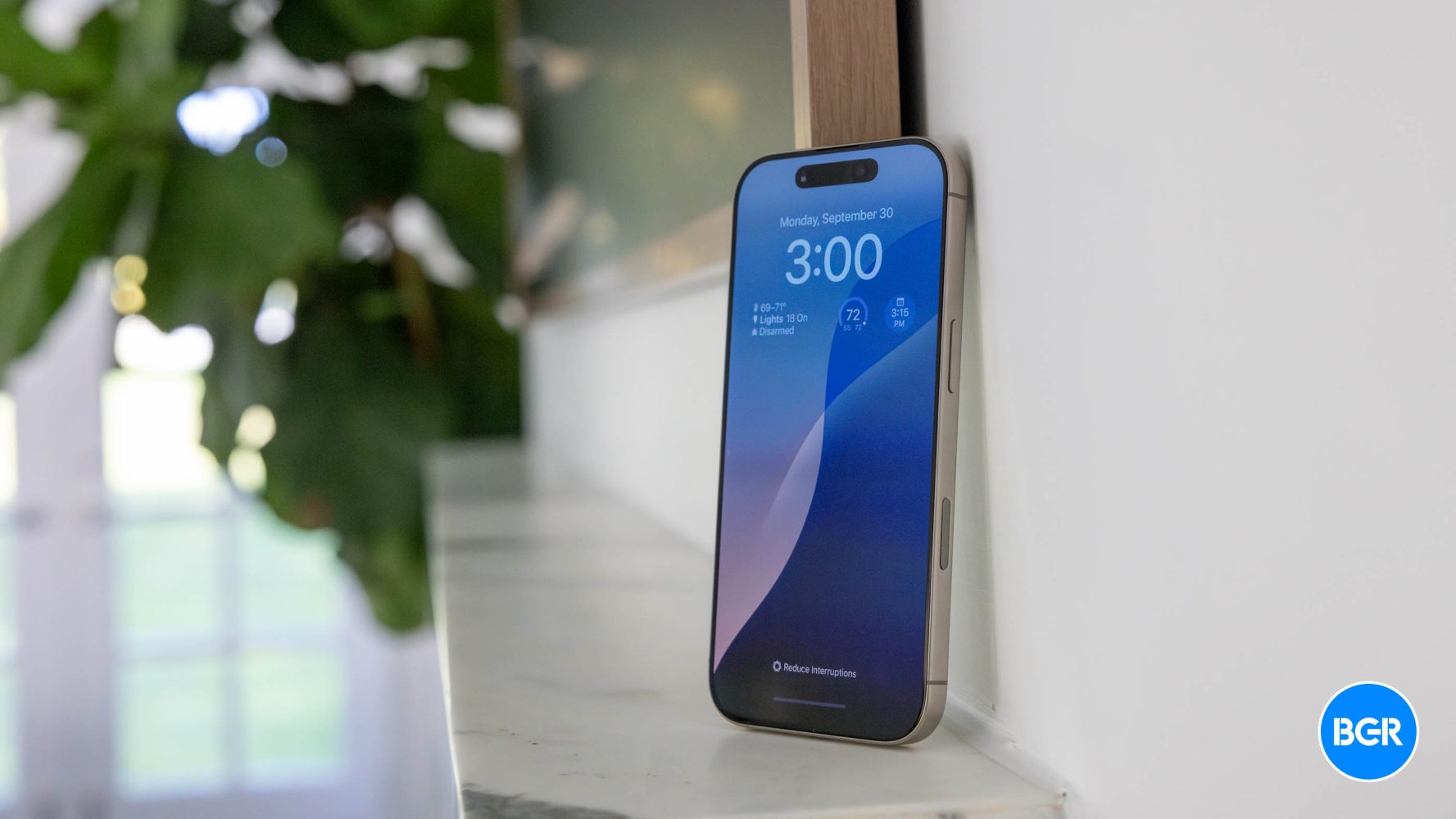
With these devices, the company finally brought the Dynamic Island to all models. The standard versions added a 48MP mains sensor, shot photos in 24MP by default, and switched to USB-C. In addition, this is the first time the color is craved into the glass panel.
For the Pro models, Apple added the A17 Pro chip, the first with a 3nm manufacturing process. The company also ditched stainless steel for titanium, making these devices lighter. With a USB-C 3.1 port, this phone lets you transfer data faster and connect to most accessories with no issue.
The newer iPhones also added the second-generation ultrawide band chip, which is great for locating people and items more precisely. The Pro Max version has an exclusive 5x optical zoom thanks to a tetraprism lens.
iPhone 16 and iPhone 16 Pro series
Image source: Christian de Looper for BGR
Launch date: September 20, 2024
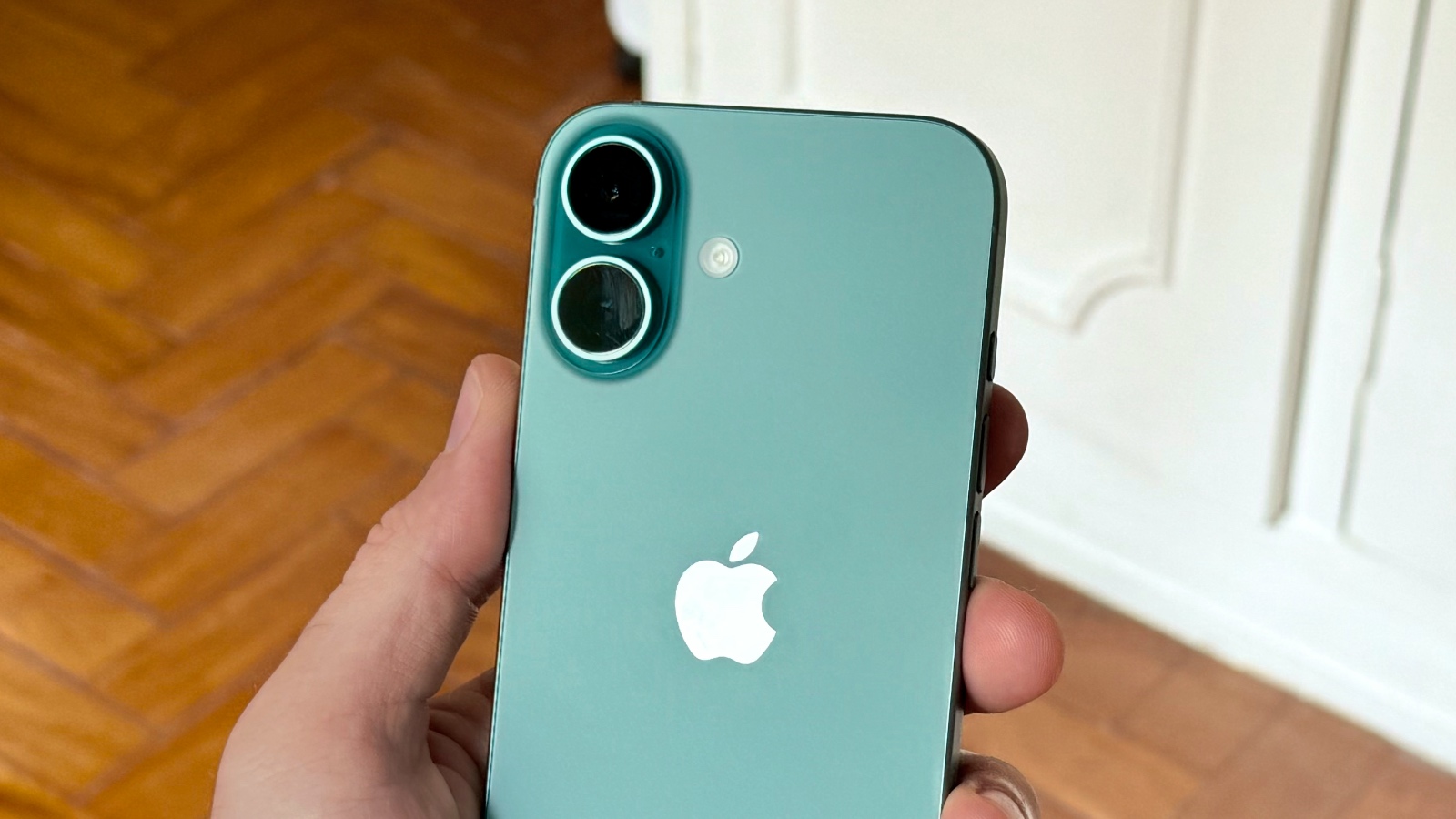
These devices' release marks the beginning of Apple Intelligence, Apple's AI platform. While users shouldn't expect a major revamp with this smartphone cycle, the company also added several new features to these devices. For example, the regular iPhone models now feature a new A18 chip, the Action Button, and the newest Camera Control functionality. Apple also tweaked the design of the rear cameras to help users record Spatial Videos for Apple Vision Pro.
The Pro models now feature a 48MP Ultra-wide camera, the A18 Pro chip, and the best battery life available on Apple smartphones. The displays also got bigger, with 6.3-inch and 6.9-inch options.
Don't Miss: iPhone 16: Release date, features, review, price, AI, and more
The post Here’s every iPhone model Apple has ever released appeared first on BGR.
Today's Top Deals
Today’s deals: $40 Magic Bullet, $38 Sony Bluetooth speaker, $25 myQ, Energizer batteries, more
Amazon gift card deals, offers & coupons 2024: Get $375+ free
Best Fire TV Stick deals for December 2024
Today’s deals: $374 PlayStation 5, Beats headphones, $399 Google Pixel 8a, $99 foot massager, more









 New Posts (Home)
 ChatBox
 Popular Posts
  Game Zone
 Top PodCasts